For a long time, I was convinced that analog notebooks were a relic of the past when traveling and no longer served a practical purpose. Why burden yourself with extra weight when your smartphone in your pocket seemingly can take over every conceivable function? Maps, notes, ticket bookings, and even the camera itself are combined in a single, flat device.
It almost seemed like an unnecessary romanticization to me to lug around paper and pen when digital efficiency was so tangible. But this perspective changed fundamentally when I decided to consciously take a different path for a longer trip. I wanted to try to make the planning and documentation of my photographic work physically tangible.
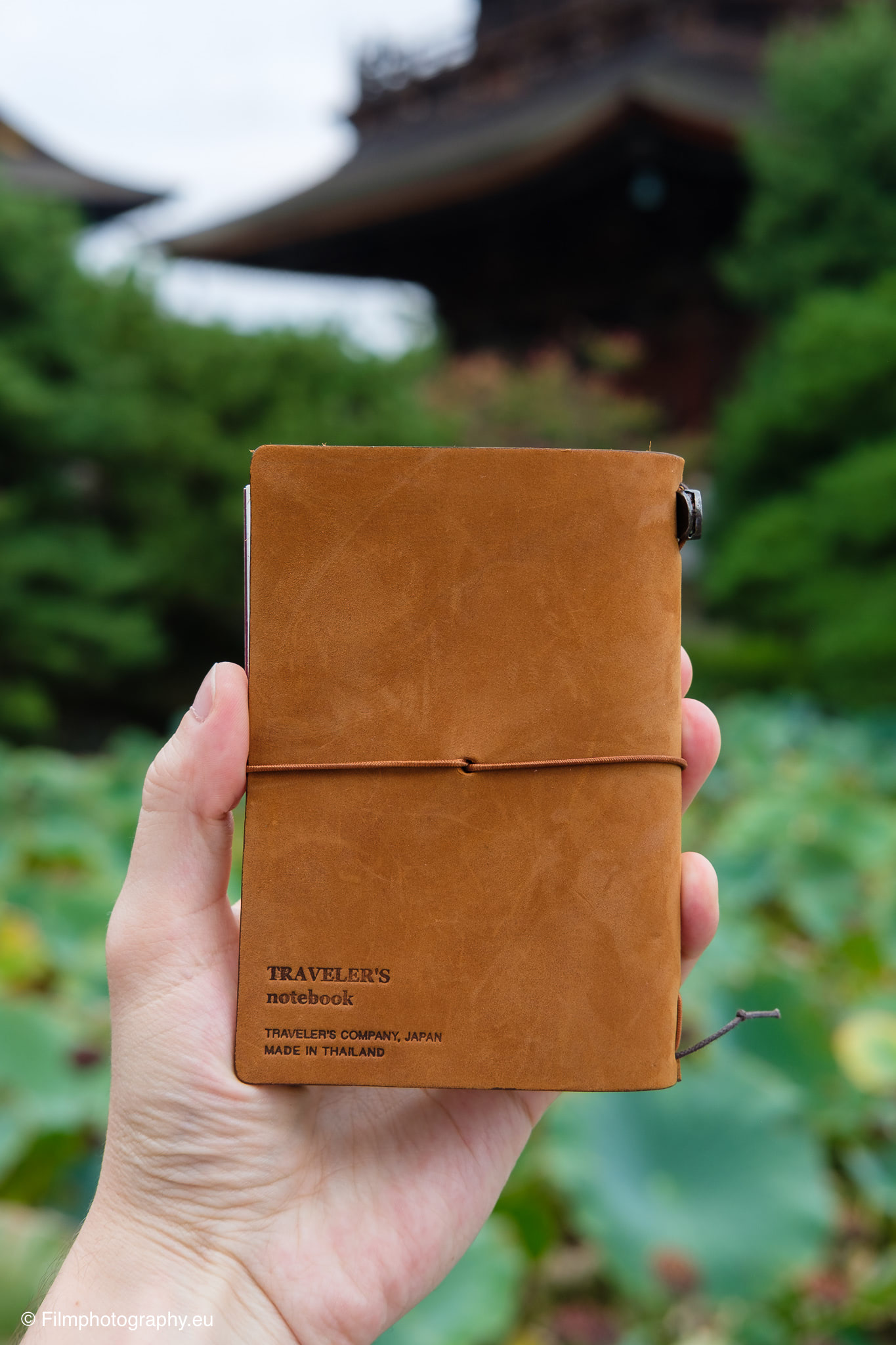
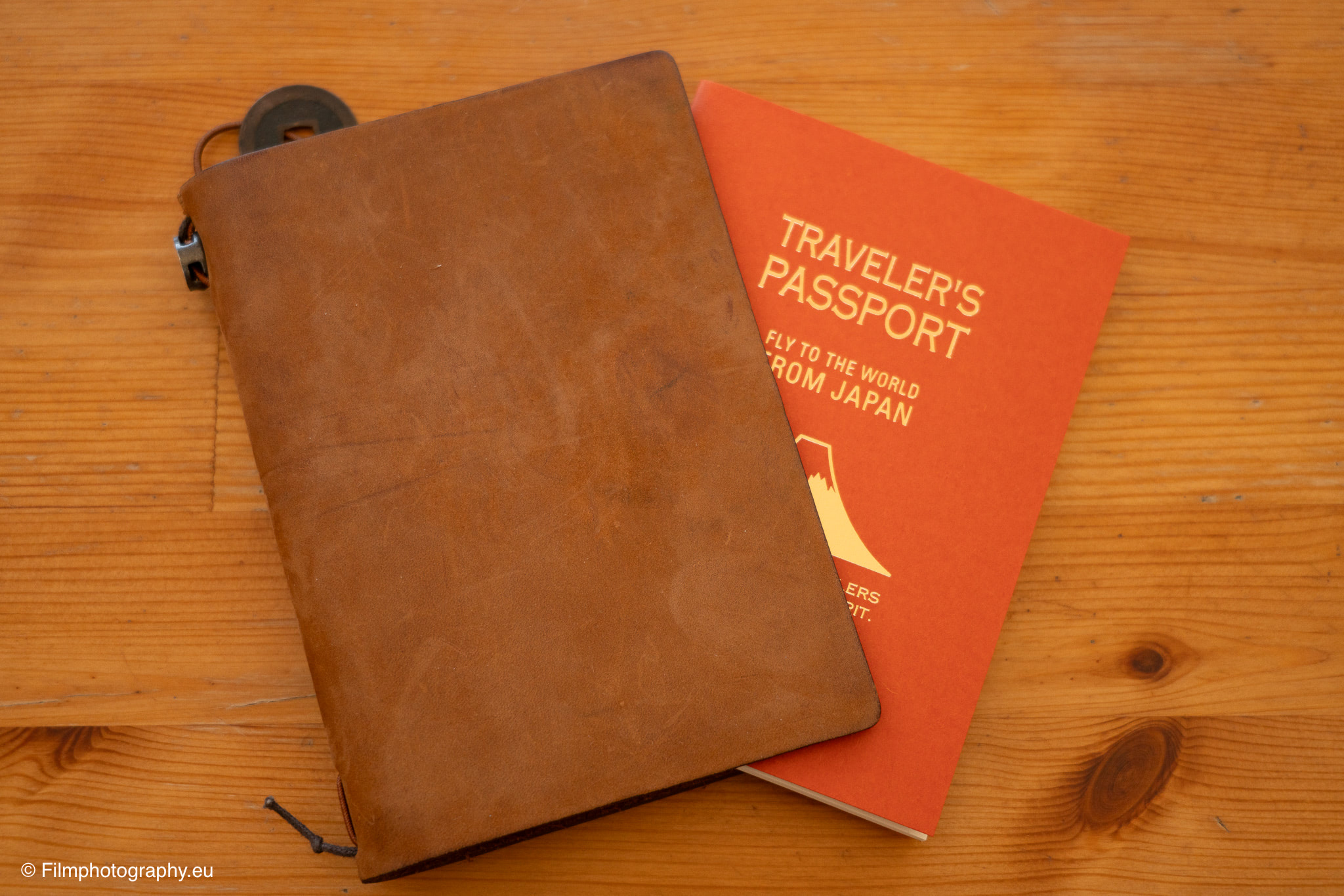
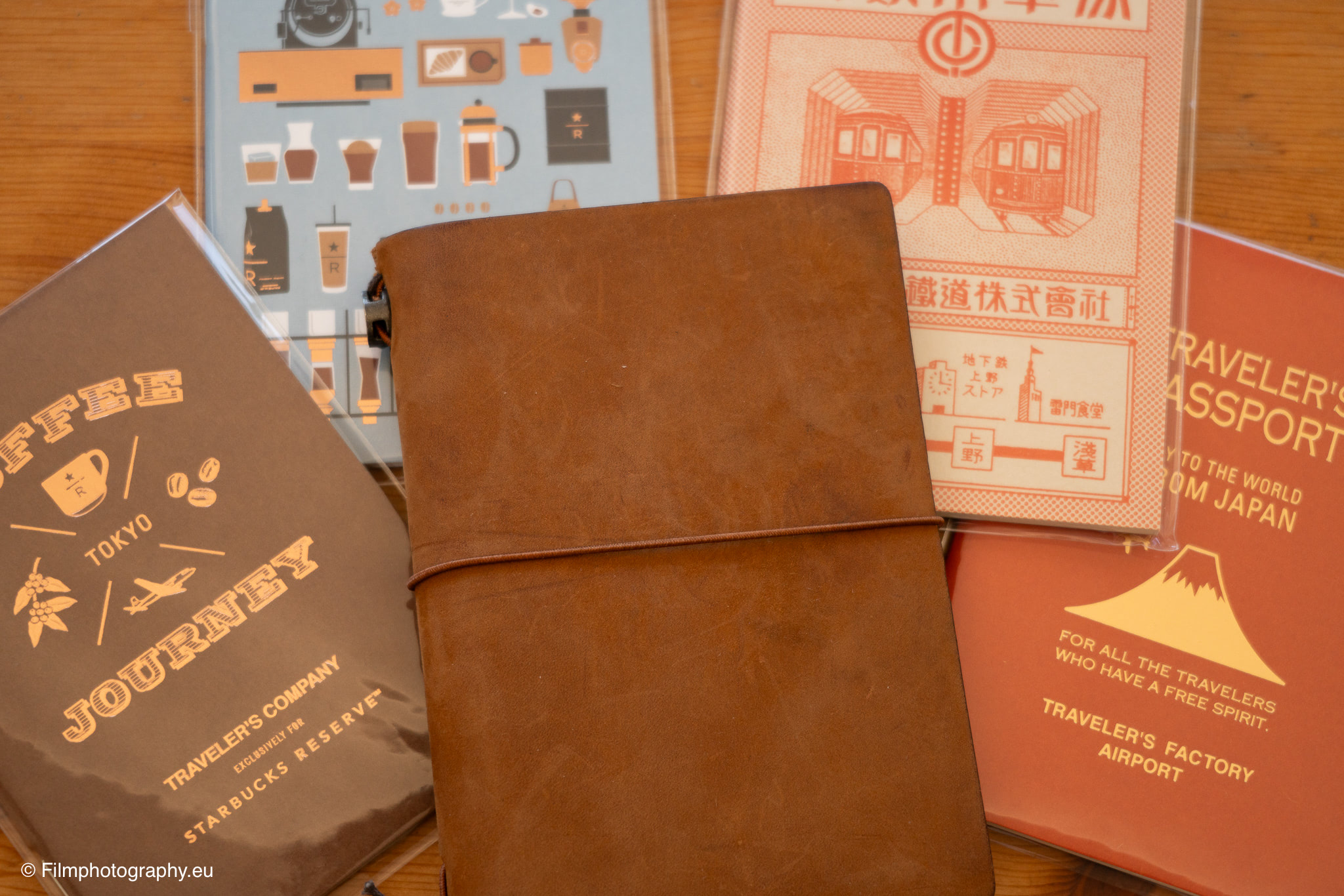
I chose the Traveler’s Notebook in Passport size and the Caramel color variant. What began as an experiment developed into an indispensable routine that has sustainably influenced my way of traveling and photographing.
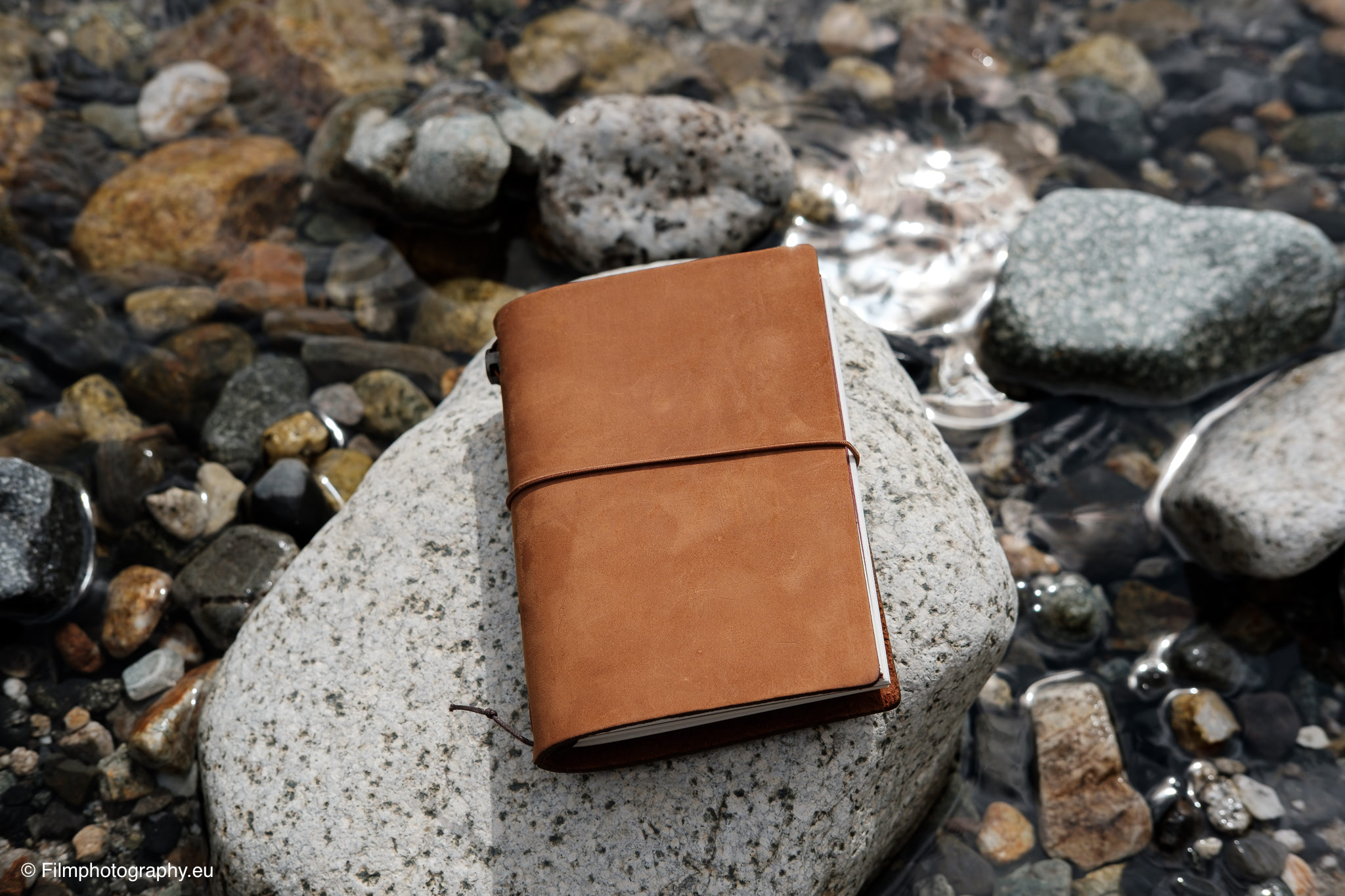
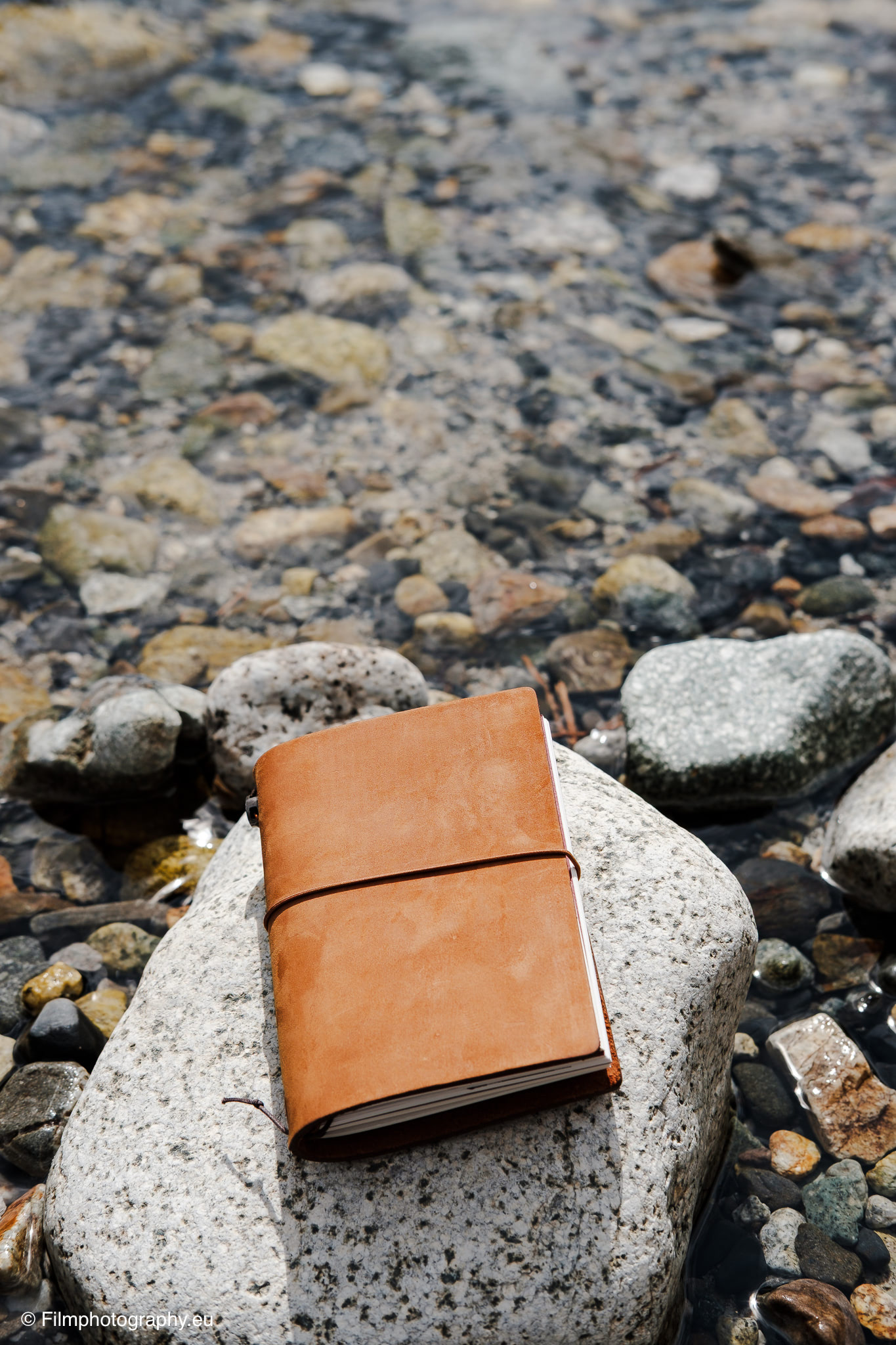
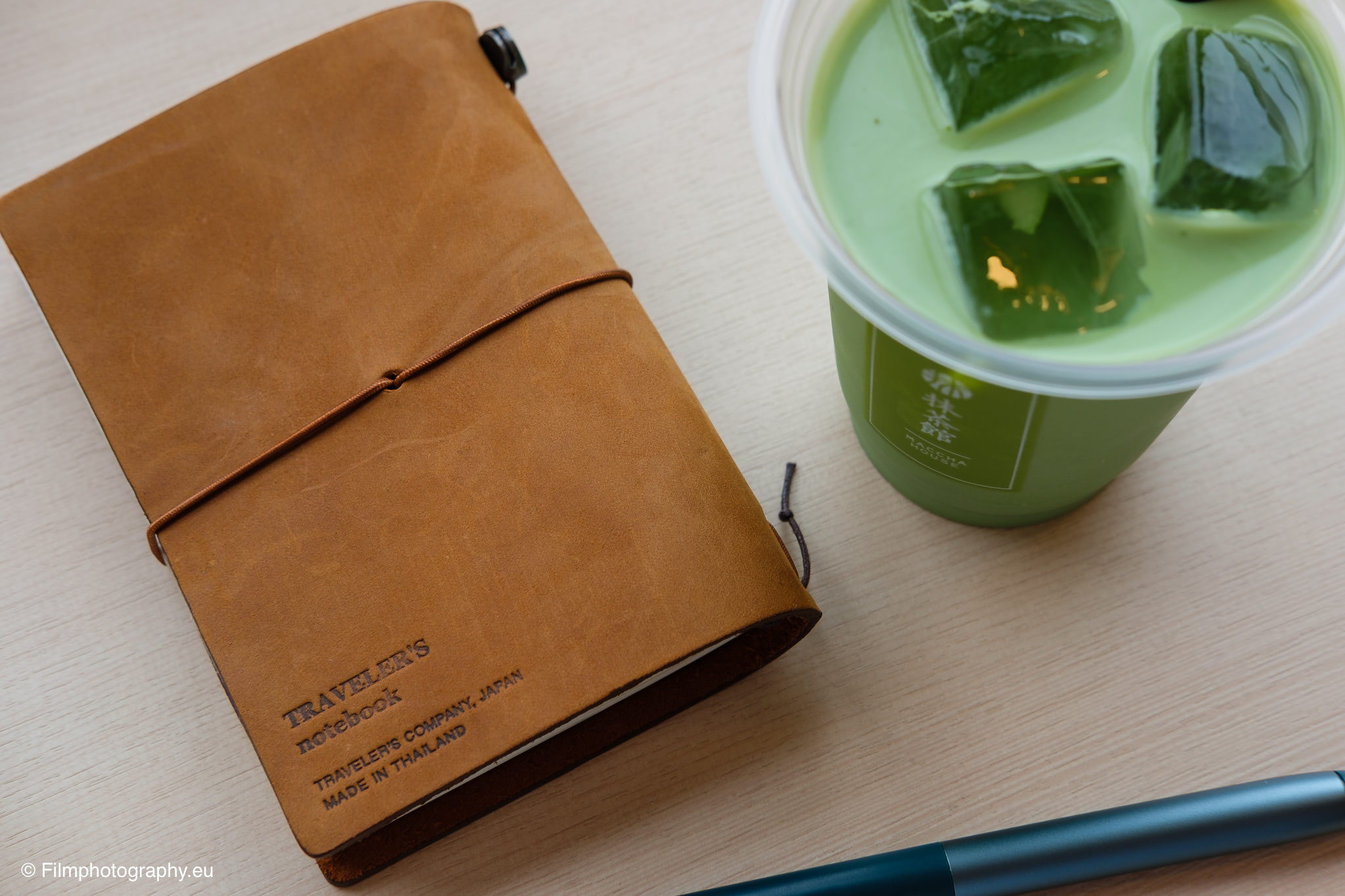
My first contact with the leather cover in Caramel was a completely different tactile experience than the cool glass and metal of a smartphone. The leather felt robust yet supple, and the light brown color promised to develop its own patina over time and with use.
It was no longer just about storing information, but about experiencing a process. The decision for this particular notebook was also a decision for a slower, more conscious approach.
When you’re on the road as a photographer, you tend to only look at the world through the viewfinder or on the display. The notebook forced me to look away, sit down, and formulate thoughts instead of just typing them fleetingly. It quickly became clear that writing down information gave it a different value.
The planning of the travel route, the equipment list, and the sketches of the surroundings were manifested through ink on paper and gained a meaning that a digital note app could never convey.
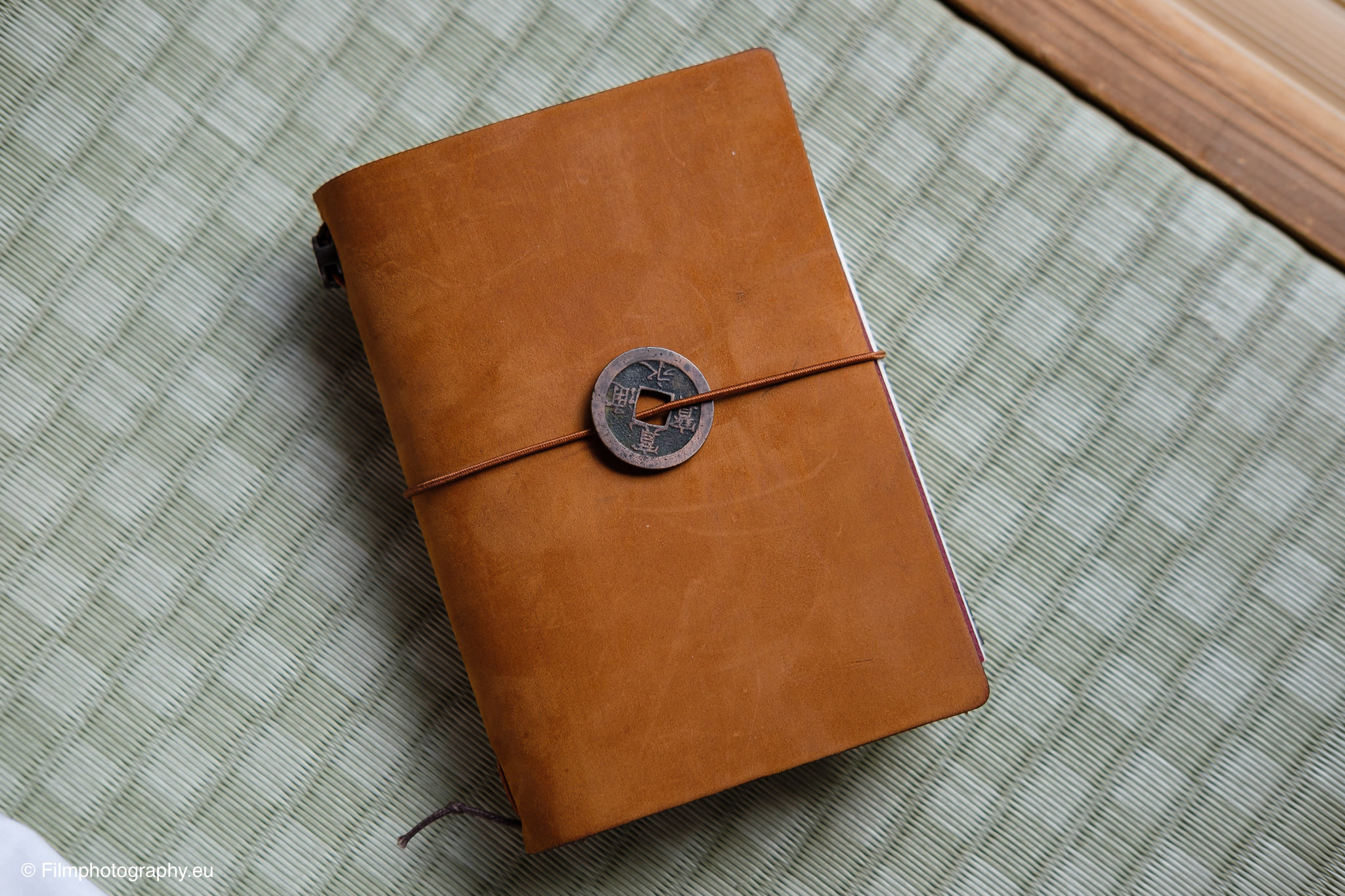
About the Traveler’s Company
The Traveler’s Notebook is manufactured by Traveler’s Company, a brand that emerged from the Japanese stationery manufacturer Designphil. Originally known as Midori, the brand has since established itself independently, but the philosophy has remained the same.
At its core, it’s about viewing everyday life itself as a journey. The concept is simple yet profound. A simple piece of leather, roughly cut and secured with a rubber band, holds one or more notebooks of high-quality paper together. This simplicity is not a deficiency but the central design element. It allows the user to make the book their own tool without being restricted by predefined structures.
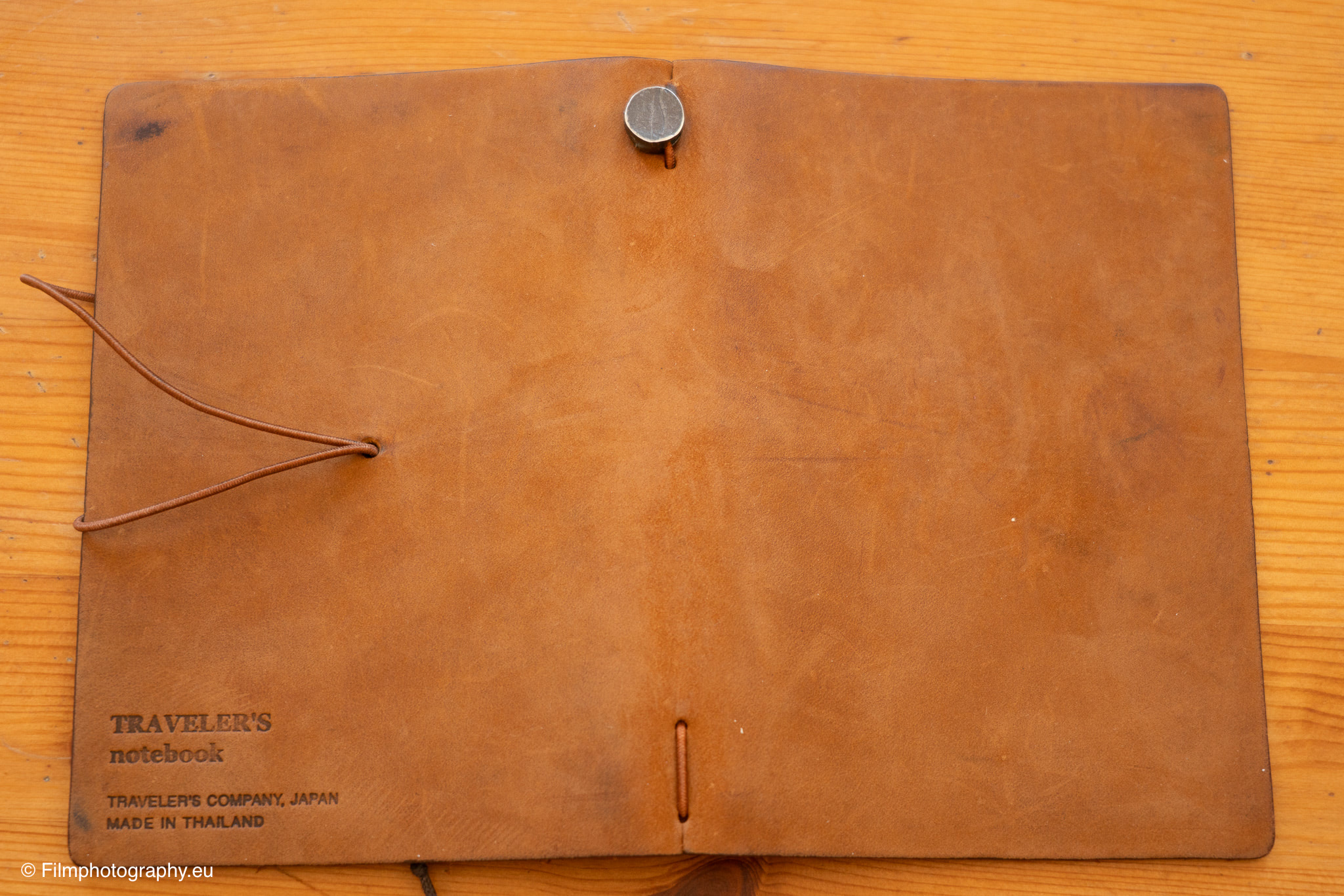
The leather cover itself comes from Chiang Mai in Thailand. It is vegetable-tanned and characterized by a very natural surface. Unlike heavily coated leather goods that are always meant to look flawless, the leather of the Traveler’s Notebook is designed to show marks.
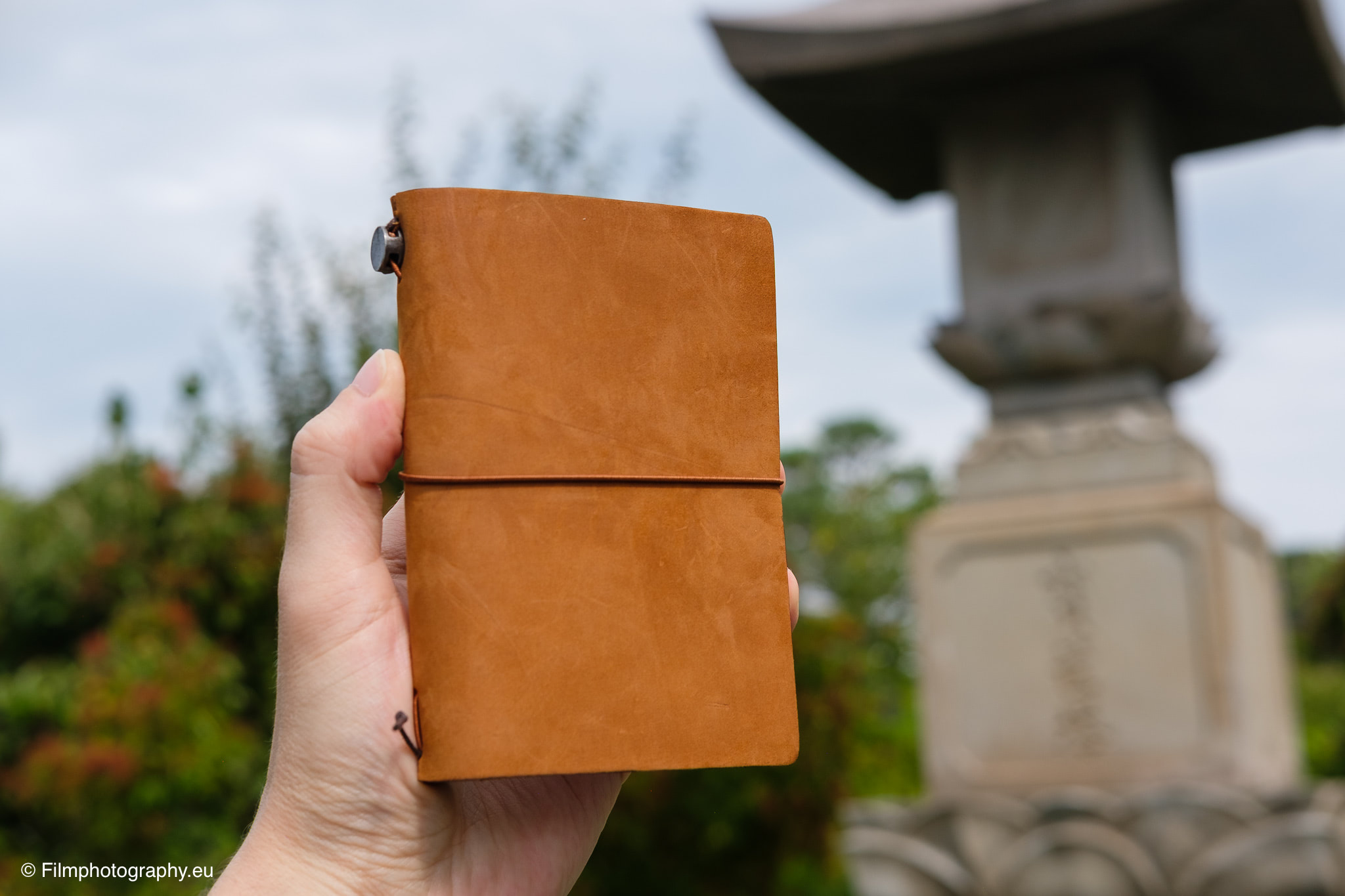
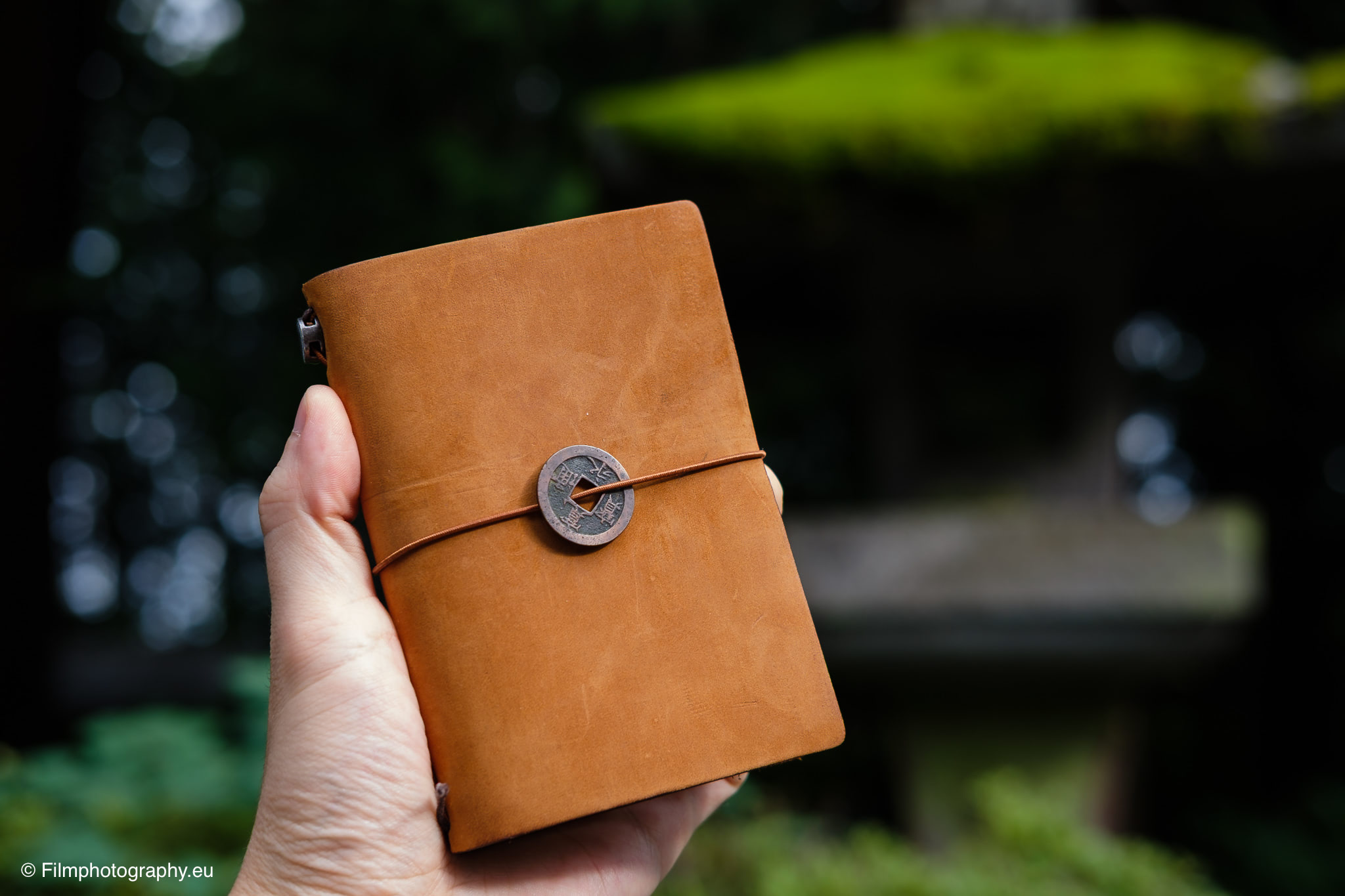
Every scratch, every stain, and every pressure mark tells a story. This effect is particularly noticeable with the Caramel variant. When new, the color resembles light caramel or honey, but under the influence of sunlight, skin oils, and mechanical stress during a trip, it darkens and develops a deep, amber sheen.
For a photographer who also appreciates the signs of use on their analog cameras, this characteristic of the leather is aesthetically very appealing. It is an object that is not consumed but gains character through use.
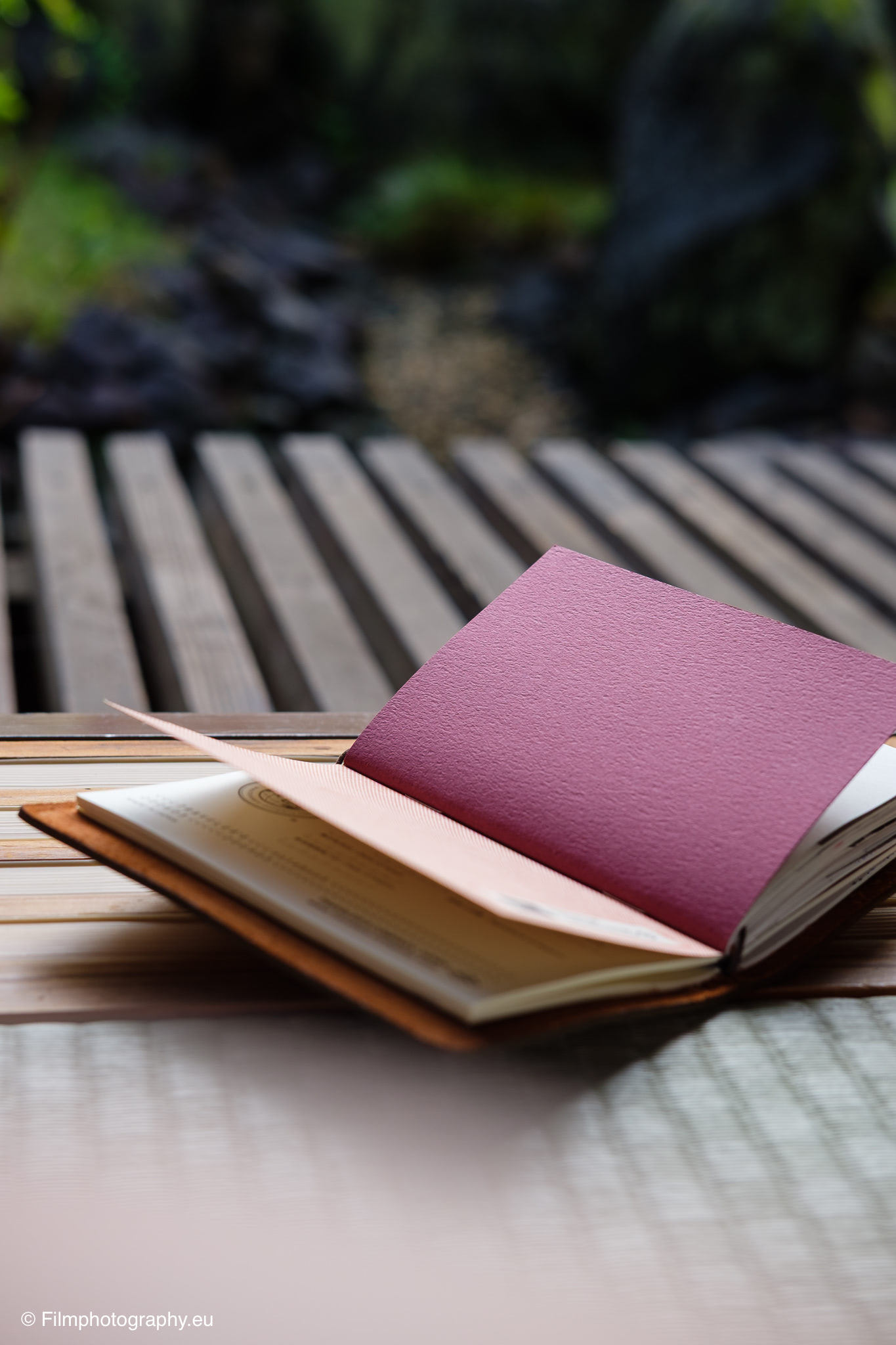
The paper used in the notebooks is so-called MD Paper (Midori Diary Paper). It is known for not feathering or bleeding through to the back, making it particularly interesting for fountain pen users. However, it also offers a pleasant resistance for pencil sketches or ballpoint pens, making writing a conscious act.
The Modular System
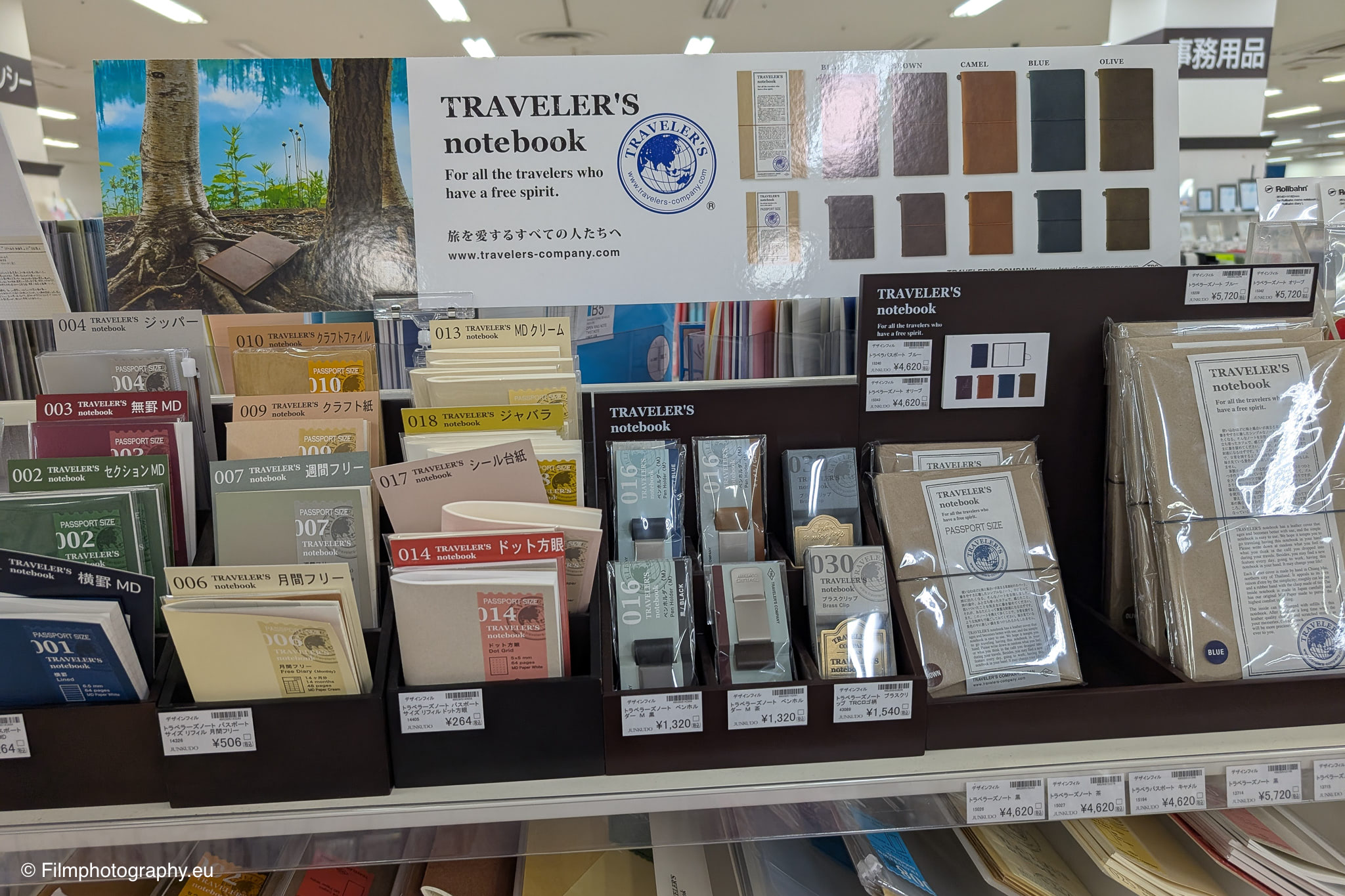
The Traveler’s Notebook is available in two main sizes: Regular Size and Passport Size. While the regular size has a slimmer A5 format, suitable for detailed journals and pasting in larger documents, the Passport Size is precisely dimensioned like an international passport.
For me, the Passport Size proved to be the more pragmatic choice. It easily fits into a back pocket, a jacket side pocket, or a small compartment in a camera backpack. Its compactness ensures that the notebook is always at hand, which lowers the inhibition threshold to actually use it.
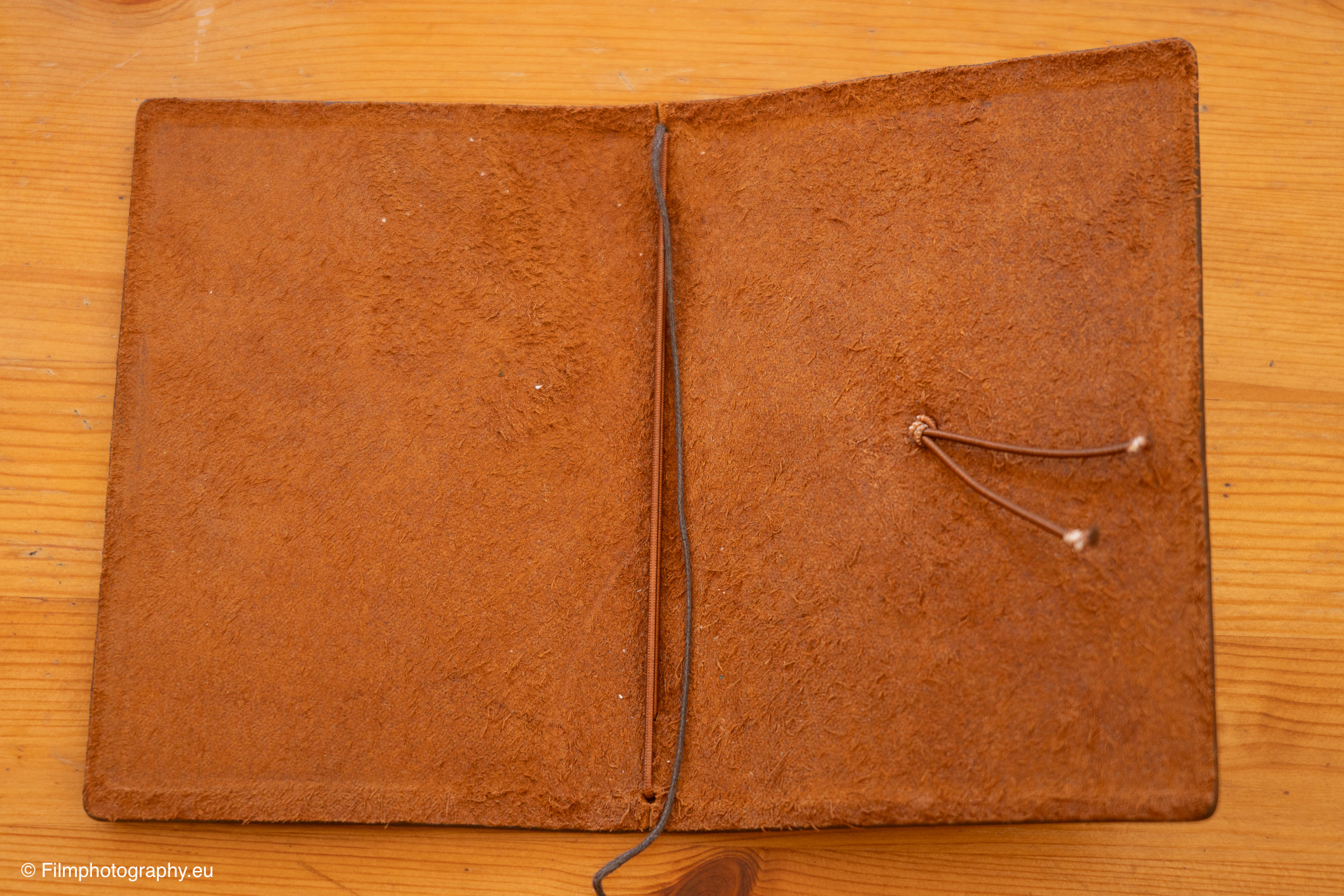
The mechanism holding the system together is a simple rubber band. It runs through the spine of the leather cover. A notebook is opened and slid through this band. If you want to use multiple notebooks, additional connecting rubber bands are used to connect a second or third notebook to the first.
This allows the slim leather cover to be transformed into a thick compendium that serves multiple functions simultaneously. A calendar for appointment planning, a blank notebook for sketches, and a lined notebook for notes can coexist.
The whole is closed by another rubber band stretched horizontally across the book, knotted at the back. A small tin clasp provides stability.
Refills
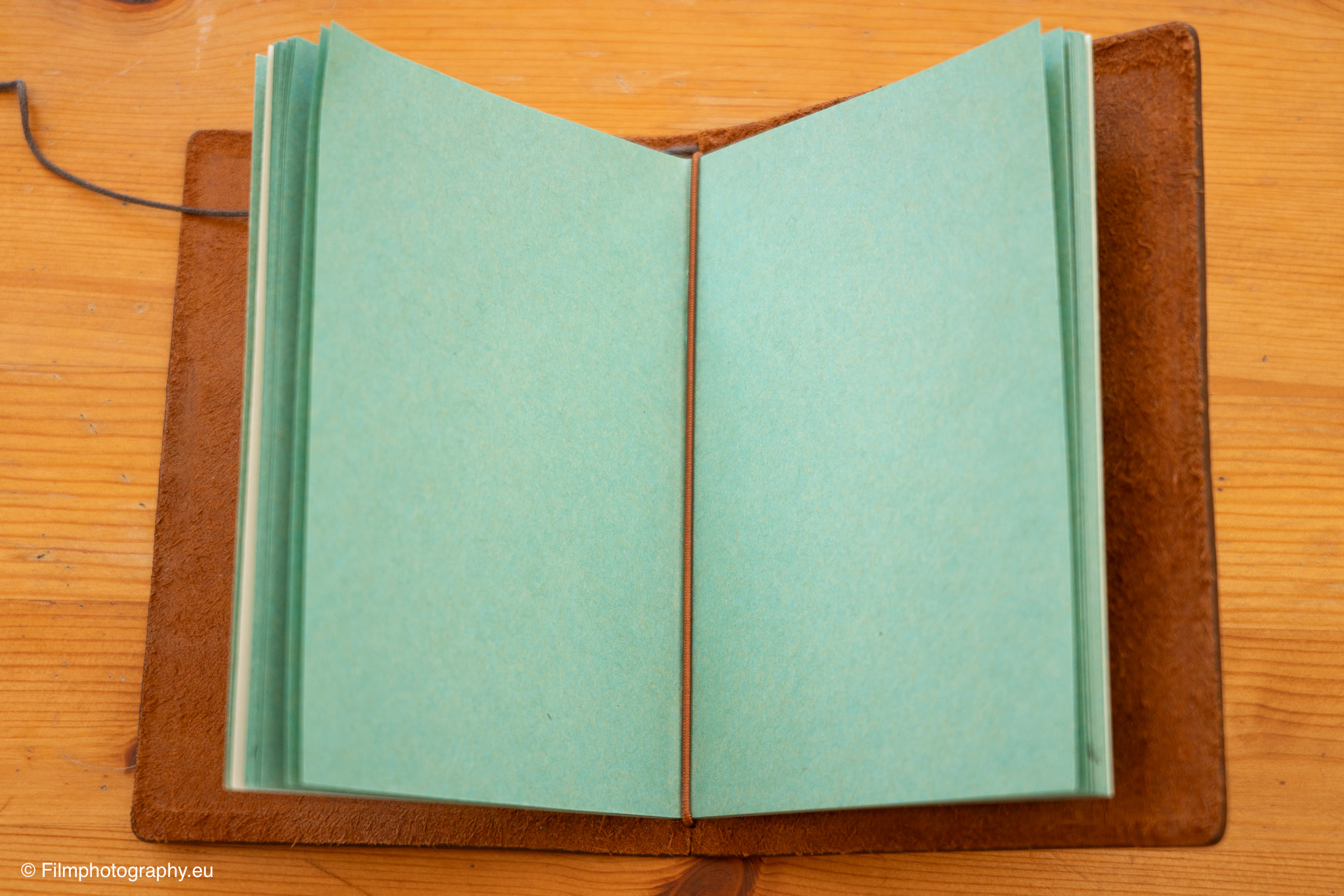
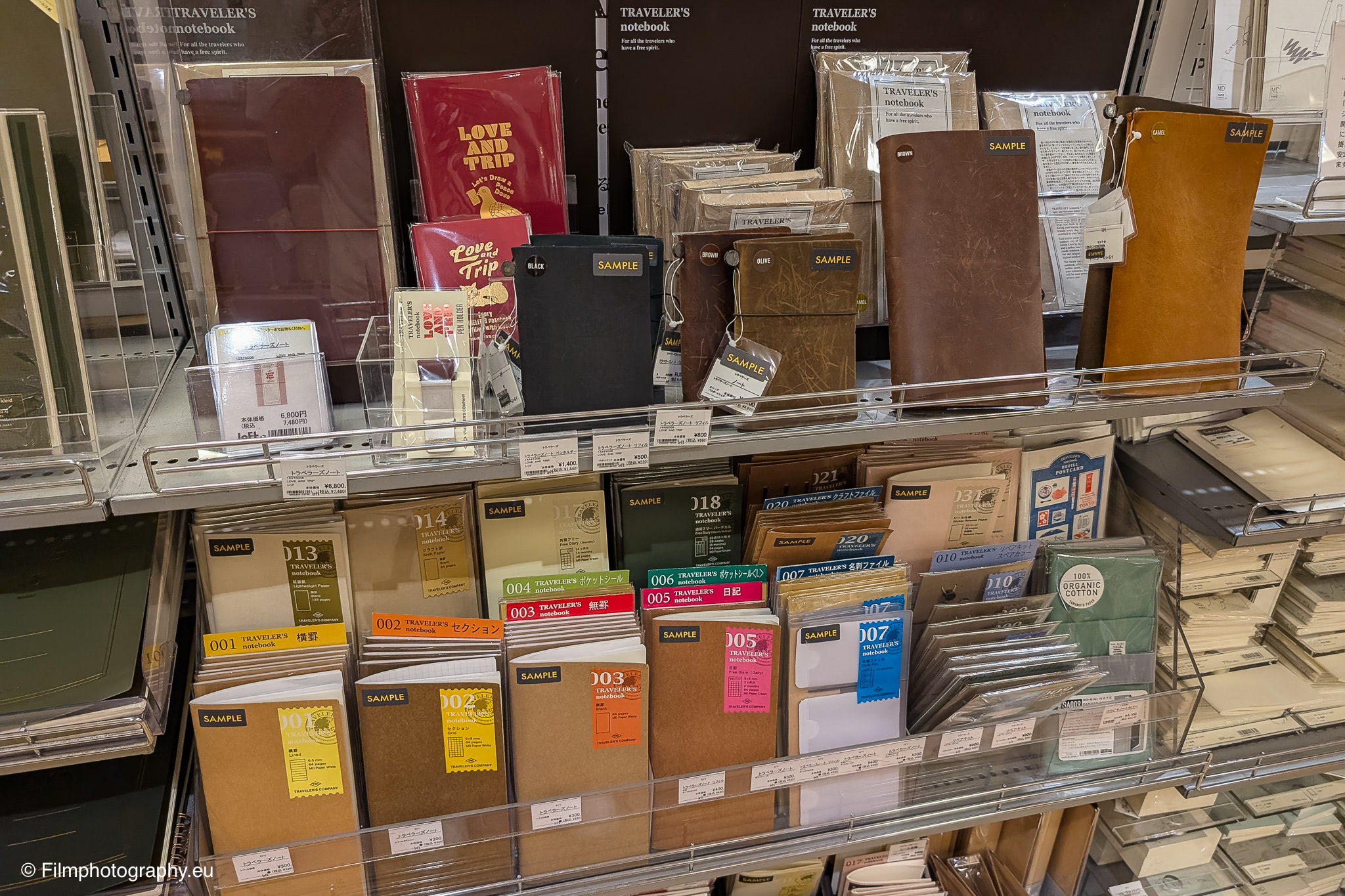
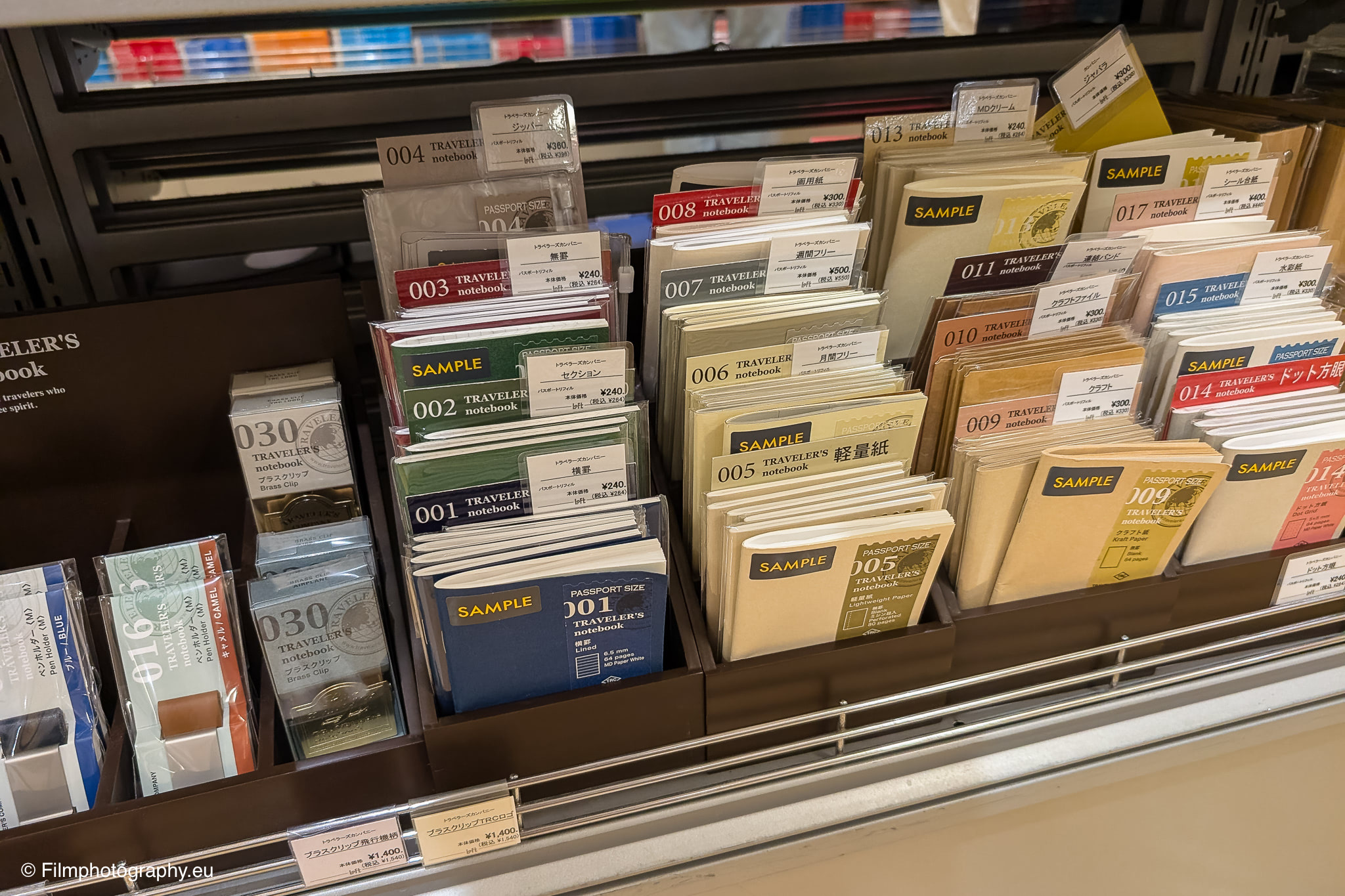
A key aspect that distinguishes the Traveler’s Notebook from bound notebooks is the variety of so-called refills, i.e., insert notebooks. The standard selection already covers most needs. There are notebooks with lined, grid, or blank paper.
For photographers who like to sketch lighting setups or compositions on the go, blank paper is often the first choice as it offers no visual limitations. However, the system goes far beyond these standards and offers specialized papers optimized for specific creative processes.
It gets interesting with the special editions that are occasionally released by Traveler’s Company. These editions are created with various partners and usually come with special cover designs.
There is also, for example, a refill with very thin paper that allows for double the number of pages at the same thickness. This is ideal for long journeys where you want to write a lot without making the book too bulky.
Another exciting refill is the Kraft paper, whose rough, brown texture offers a completely different aesthetic. There are also versions with colored paper or a refill with coated paper for temporary storage of stickers.
Planning, Anticipation, and Documentation
The true value of the Traveler’s Notebook became apparent to me, however, in practical use during the preparation and execution of a trip. A large part of the joy of traveling lies in anticipation. Planning the route, researching locations, and assembling the equipment builds excitement that is often just as fulfilling as the journey itself.
In my case, this process began long before departure, at my home desk. Instead of typing lists into an app, which is often done in a few seconds and forgotten just as quickly, I took the time to carefully write my packing list into the notebook.
I sketched my equipment. The sketch of my twin-lens reflex camera, a robust analog medium-format camera, found its place next to the list of films I wanted to bring. I noted which focal lengths I planned for which situations and how I wanted to organize my backpack. This process of drawing and writing is slow.
It forces you to truly engage with the items. Do I really need this lens? Do I have enough film for two weeks? Through slow writing, the plans solidified. The page in the notebook became a visual inventory of my creative tools.
During the trip itself, amidst a bustling metropolis like Tokyo or in the quiet alleys of a remote neighborhood, the Passport Notebook served as an anchor. It’s easy to get lost in the sensory overload of a foreign environment.
The smartphone is often more of a distraction than a help, as every notification interrupts focus. The notebook, on the other hand, is passive. It doesn’t demand attention but waits patiently.
I used it to jot down foreign phrases I needed for communication. Sentences like asking permission for a portrait or asking for directions were handwritten. Reading from one’s own notebook often seemed more approachable and less distant in interactions with locals than looking at a translation screen.
Another aspect was keeping an exposure log. In analog photography, there are no EXIF data automatically saved. Weeks later, when looking at the developed negatives, you’ve often forgotten at what aperture or shutter speed an image was taken, or where exactly the location was.
The Traveler’s Notebook was always readily available in my pocket. After taking a shot, I briefly noted the image number, exposure settings, and a note about the lighting conditions. These records are not only technically valuable for learning from mistakes but also serve as a diary. Reading later, “Image 12: 1/60, f/5.6, low sun, smell of rain,” the moment of capture is immediately brought back to life in memory.
Pasting in physical receipts became an evening ritual. Entrance tickets from museums, receipts from small noodle restaurants, or the label from a drink bottle found their way into the notebook with the help of adhesive rollers. These ephemera, which are normally discarded, formed a collage of the day together with the handwritten notes. The paper buckled slightly from the adhesive and ink, the book became thicker and unwieldy, but that was precisely its charm. It felt “used” in the best sense of the word.
Writing also forced me to reflect. In a quiet moment in a capsule hotel or a café, I reviewed the day. What had I seen? What had I felt? These thoughts took on a different form when writing than when typing. A depth emerged that is often lost in the rush of travel. I noted observations about the light, about the people, about the strange melancholy that sometimes overcomes you in foreign places.
The return to analog planning and documentation was not a rejection of modern technology. I continued to use digital maps for navigation and, of course, a digital camera alongside my analog equipment. However, the Traveler’s Notebook in Caramel took on the role of memory storage. It preserved the anticipation that arose during planning and held onto the small details of the journey that would otherwise have been lost in the digital noise.
In summary, the Traveler’s Notebook Passport Size is far more than just a fashionable accessory for hipsters or vintage lovers. It is a tool for deceleration and sharpening perception.