
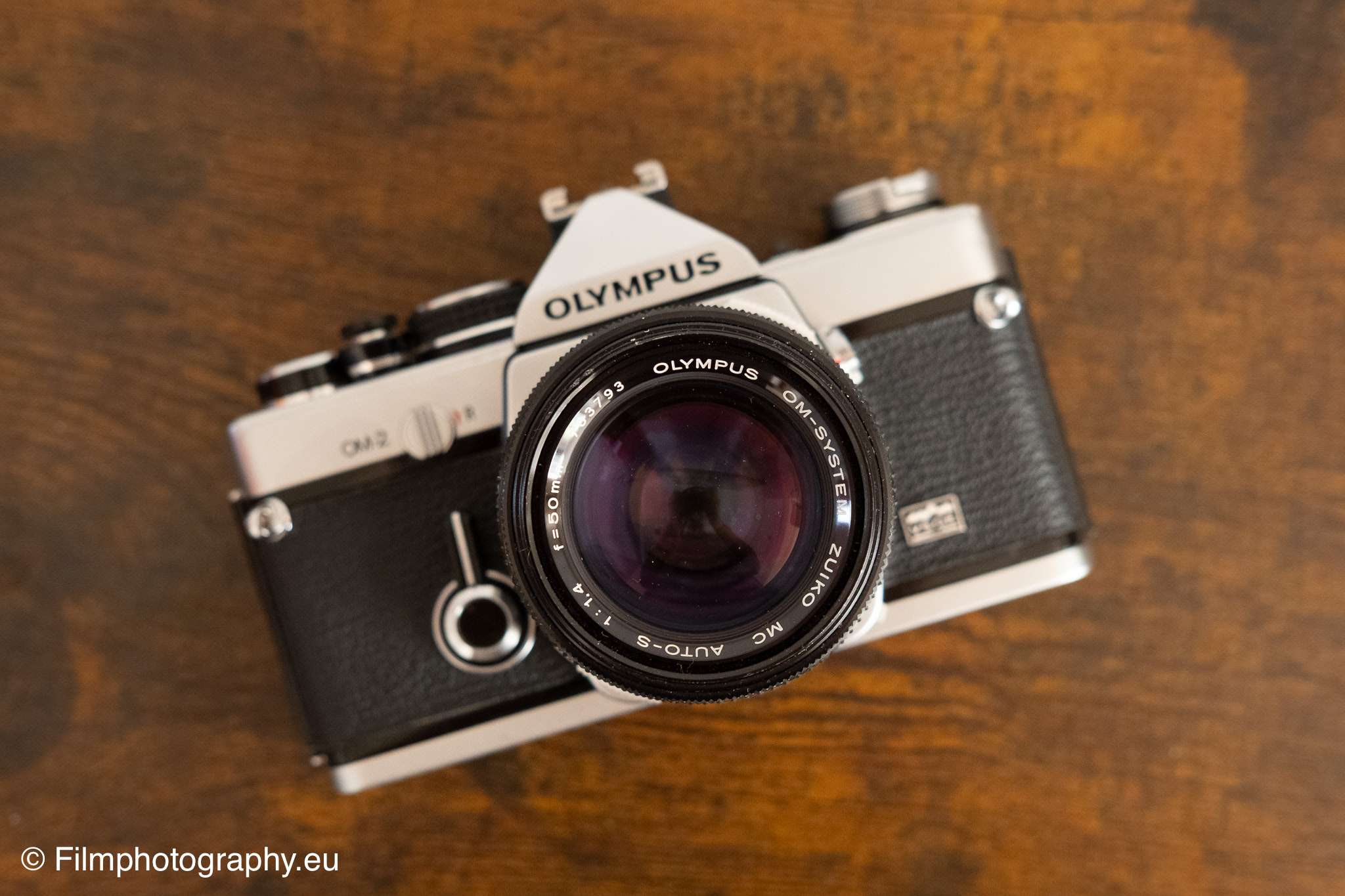
This article is dedicated to the Olympus OM-2, a camera that is one of my favorites for good reason and accompanies me regularly. It manages to harmoniously combine the pure analog photography experience with modern technical support, which leads to beautiful results every time.

The Olympus OM-2, introduced in 1975, is the successor to the OM-1 and expanded the OM system with a crucial feature: shutter speed priority. Little has been changed in the appearance of the 35mm camera, and rightly so. The team around chief designer Maitani Yoshihisa did a really good job back then and created a timeless design.
In general, Olympus cameras are among the most beautiful cameras for me. Whether it’s the Olympus OM-SLRs, the Olympus XA, the Olympus Trip 35, or the PEN cameras. The Olympus OM-2 is available in a black and a silver-black version. Personally, I think the latter version suits an analog camera better.
Today, as back then, the Olympus OM-2 impresses primarily with its size. For a SLR camera, the model is very small and light. The net weight of the body is just 520 grams. For comparison, many SLR cameras from that era easily weigh 700 grams or more.
Of course, the OM-2 doesn’t fit in your pocket. But you notice the weight difference significantly after a longer photo tour. Nevertheless, the camera feels good in the hand and feels solid. However, for people with large hands, gripping the somewhat smaller body might still be a bit uncomfortable in the long run.


One reason why I enjoy photographing with the OM-2 so much is the immediate, haptic experience it provides. You experience photography in its original form and are very close to the image. Every step has an effect and an influence on the final result.
Manual focusing through the viewfinder trains the eye for the essential. The split-image indicator in the center of the viewfinder is an intuitive aid for finding perfect sharpness. Every press of the shutter button is accompanied by the gentle click of the mirror and the quiet hum of the shutter.
And after each shot, there’s the satisfying manual film advance with the rapid-advance lever – a ritual that emphasizes the value of each individual shot. This deliberate slowing down of the photographic process encourages a more intense engagement with the subject and the image composition.
Despite its puristic character, the OM-2 offers a range of comfort features that make it easier for beginners and also appeal to advanced photographers. The centerpiece is the built-in exposure meter with its innovative “Off-The-Film” (OTF) metering method. This measures the light directly from the film surface during exposure, leading to extremely precise results, even in difficult lighting conditions or long exposures.
In “AUTO” mode, the camera functions as an shutter speed automatic. The photographer selects the desired aperture on the lens, and the camera automatically sets the appropriate shutter speed, which is displayed in the viewfinder. This allows for quick and uncomplicated shooting, where you can fully concentrate on the image composition while maintaining control over the depth of field.
For those who want full control over all parameters, there is the manual mode. Here, the exposure is balanced using a classic needle display in the viewfinder.
Another useful feature is the exposure compensation, which allows you to over- or underexpose the exposure suggested by the automatic by up to two stops. This is particularly advantageous for subjects with high contrast, such as backlit shots. The option to connect an external flash also expands the creative possibilities in low-light conditions.
The exposure meter is designed for films with a sensitivity between ISO 12 and ISO 1600. This covers all important values. The setting is manual, which also makes it possible to push film without difficulty.

A significant advantage of the Olympus OM system is the wide selection of high-quality Zuiko lenses. For me personally, the Zuiko 50mm f/1.4 is the ideal standard focal length and is perfectly sufficient for most of my photographic endeavors. It is fast and delivers sharp images with pleasing color reproduction. Especially at open aperture, it unfolds a special charm with a soft, appealing bokeh that wonderfully isolates subjects from the background.
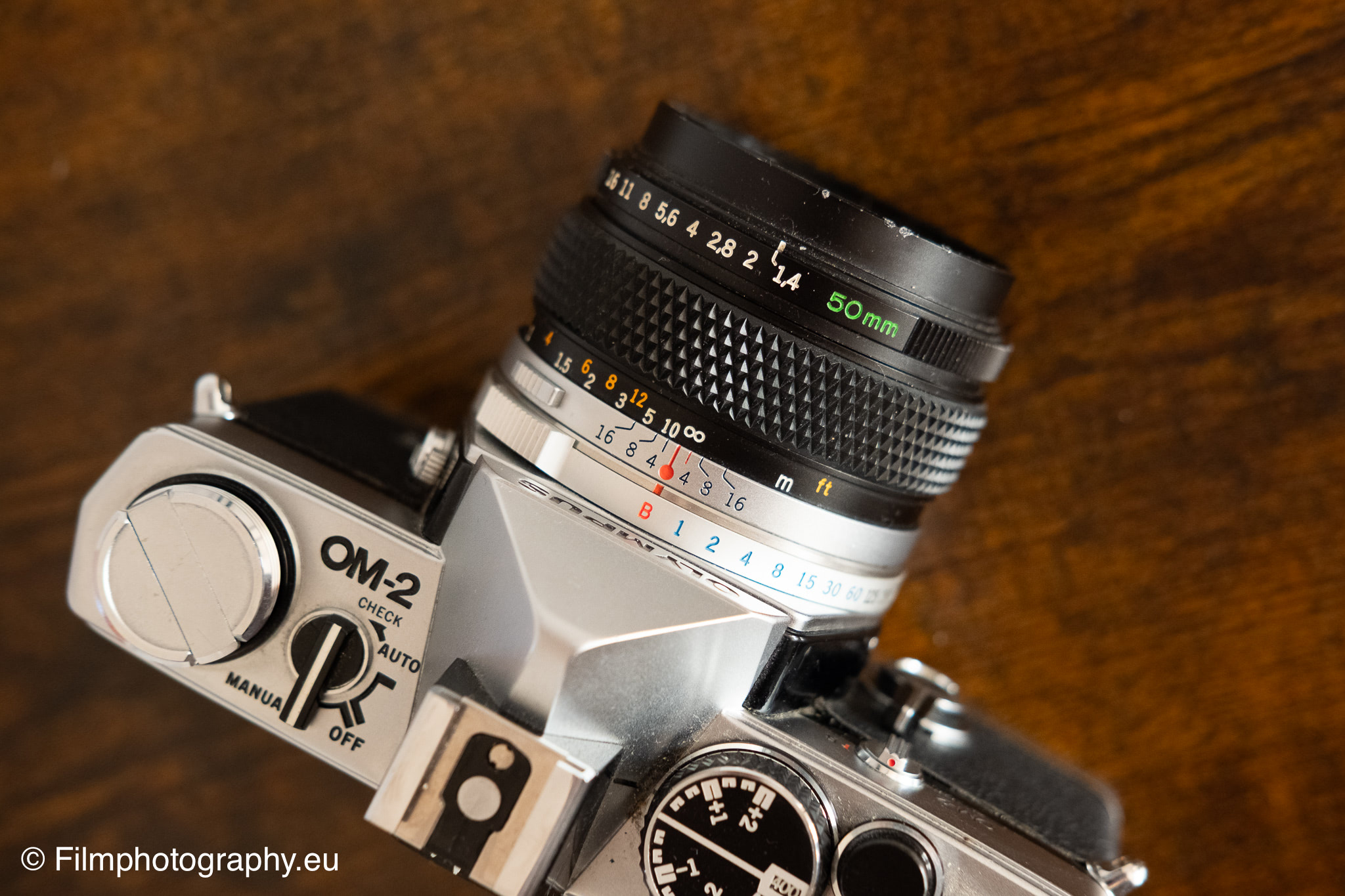
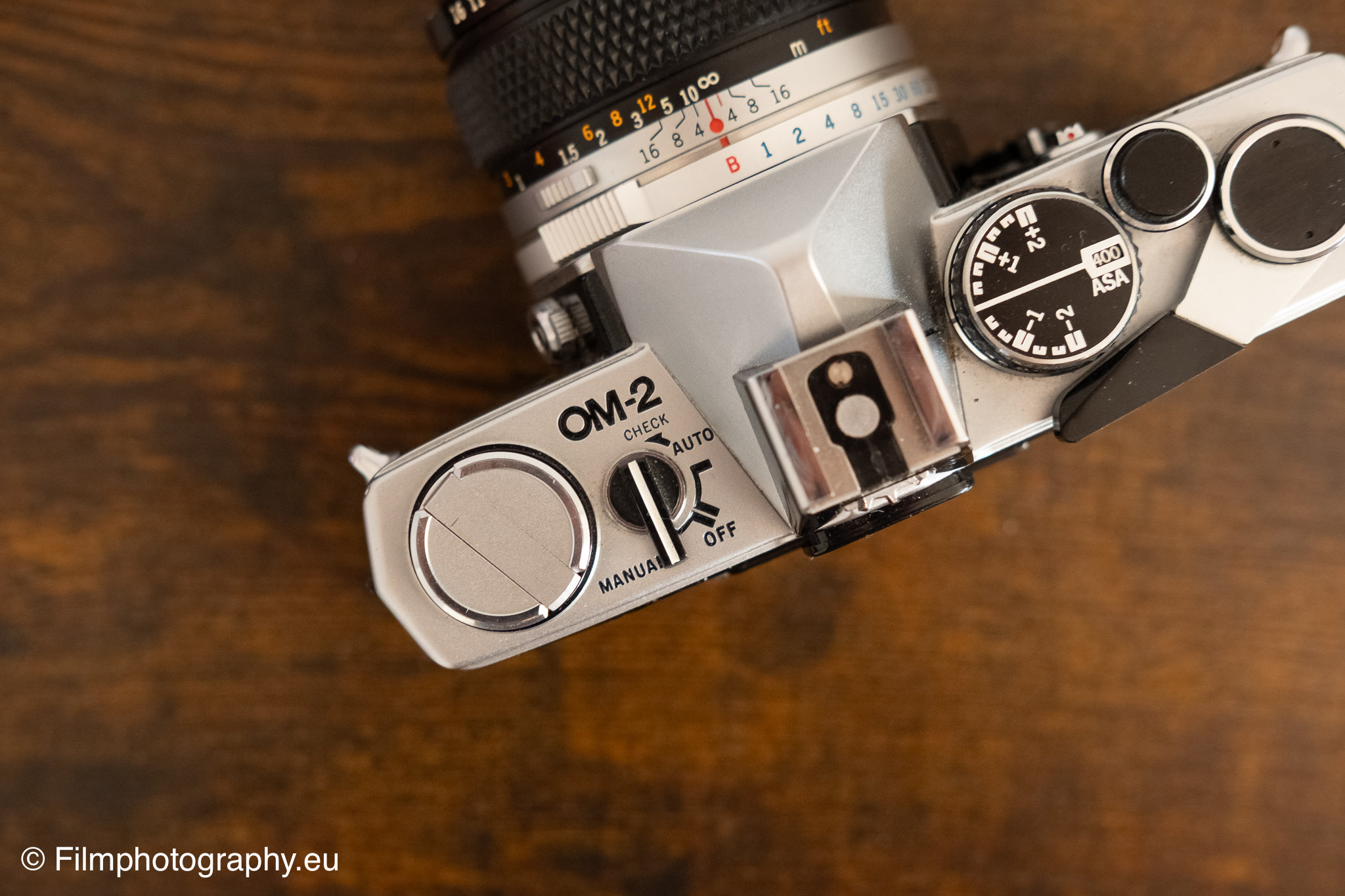
The operation of the OM-2 is largely intuitive, but it has one peculiarity: the shutter speed adjustment ring is not located on the top of the body, as with most SLR cameras, but around the lens mount. This arrangement may take some getting used to at first, but after a short familiarization period, it allows for quick operation, as all important settings – focus, aperture, and shutter speed – can be made with the left hand.
As it is an electronic camera, the OM-2 relies on batteries. It is advisable to always have a spare set with you, although a battery change is only necessary after many rolls of film.
Other useful features of the camera include the built-in self-timer, the connection for a cable release, a tripod socket, and a holder for information about the inserted film on the back of the camera.

Conclusion
The Olympus OM-2 is a well-thought-out and reliable camera that puts the photographer at the center of the creative process. Its combination of compact design, intuitive operation, and first-class image quality makes it an excellent choice for anyone who not only wants to try analog photography but also truly understand and experience it.
It is a camera that you enjoy holding, that inspires you to go out and look at the world through its viewfinder – one shot at a time, even 50 years after its introduction.
Film recommendations for the Olympus OM-2
Thanks to the wide range of film sensitivities of the exposure meter, essentially any 35mm film can be used with the camera. In combination with a fast lens, such as the 50mm f/1.4, films with low sensitivity can also be used.
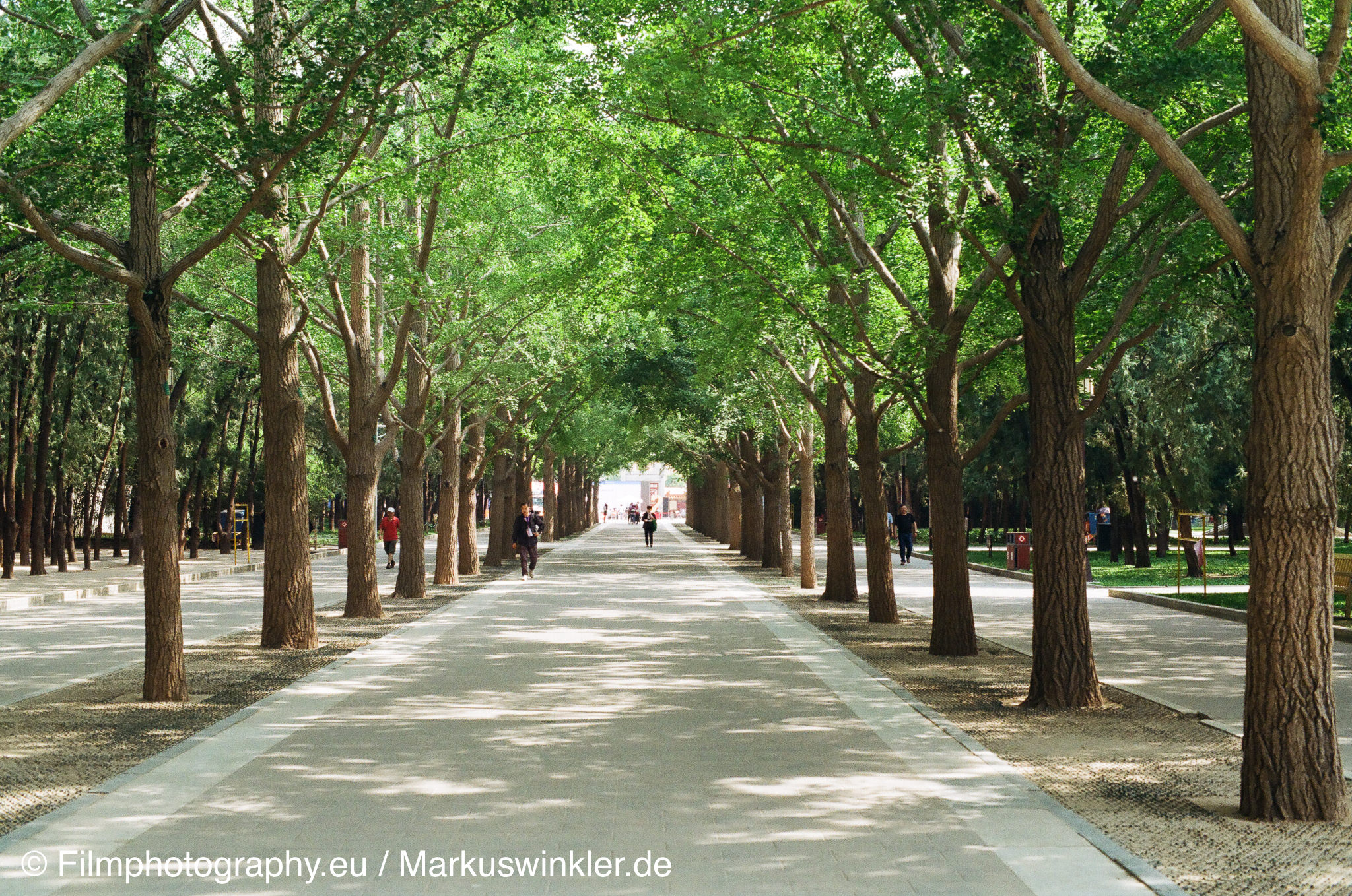
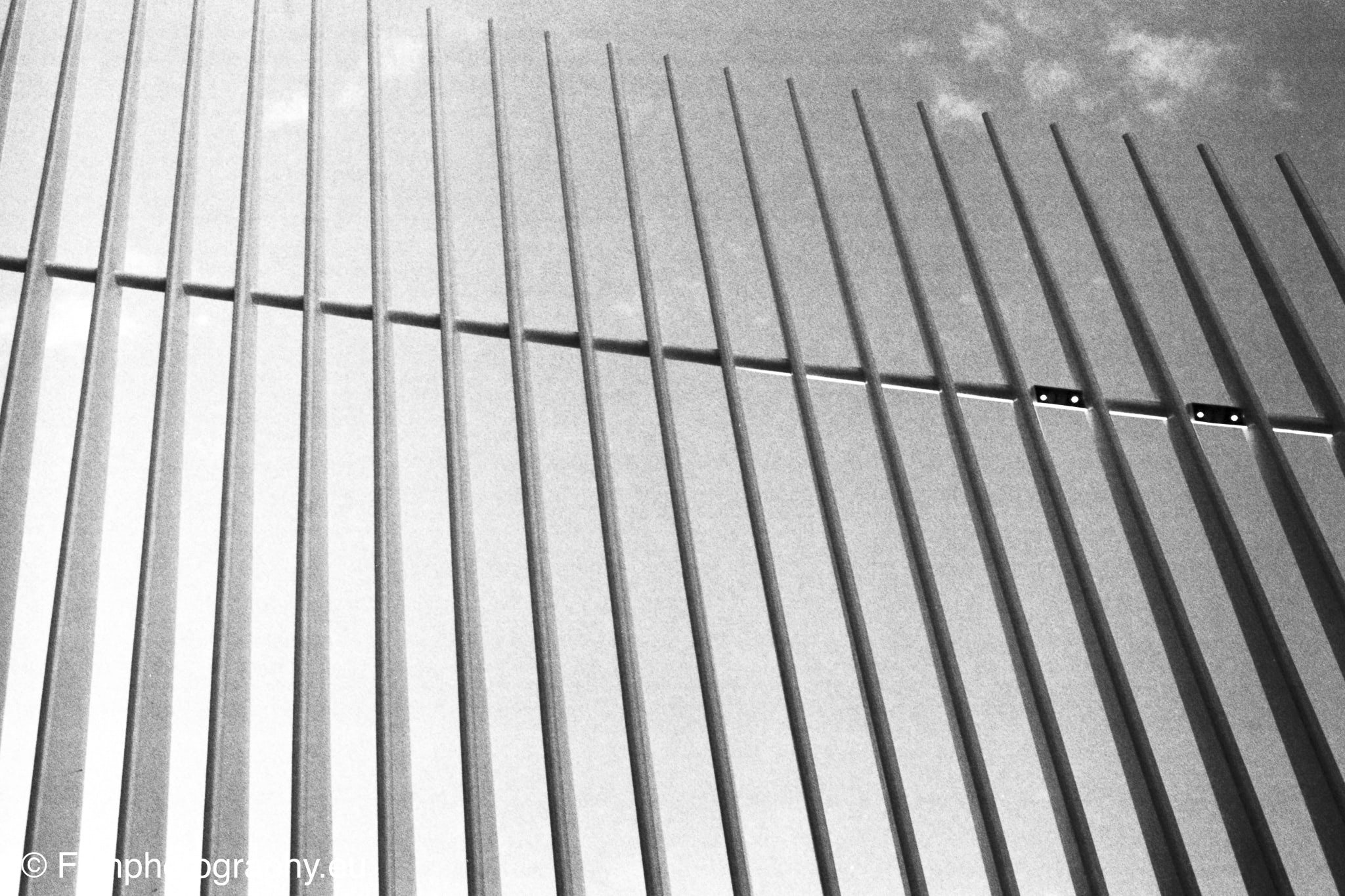
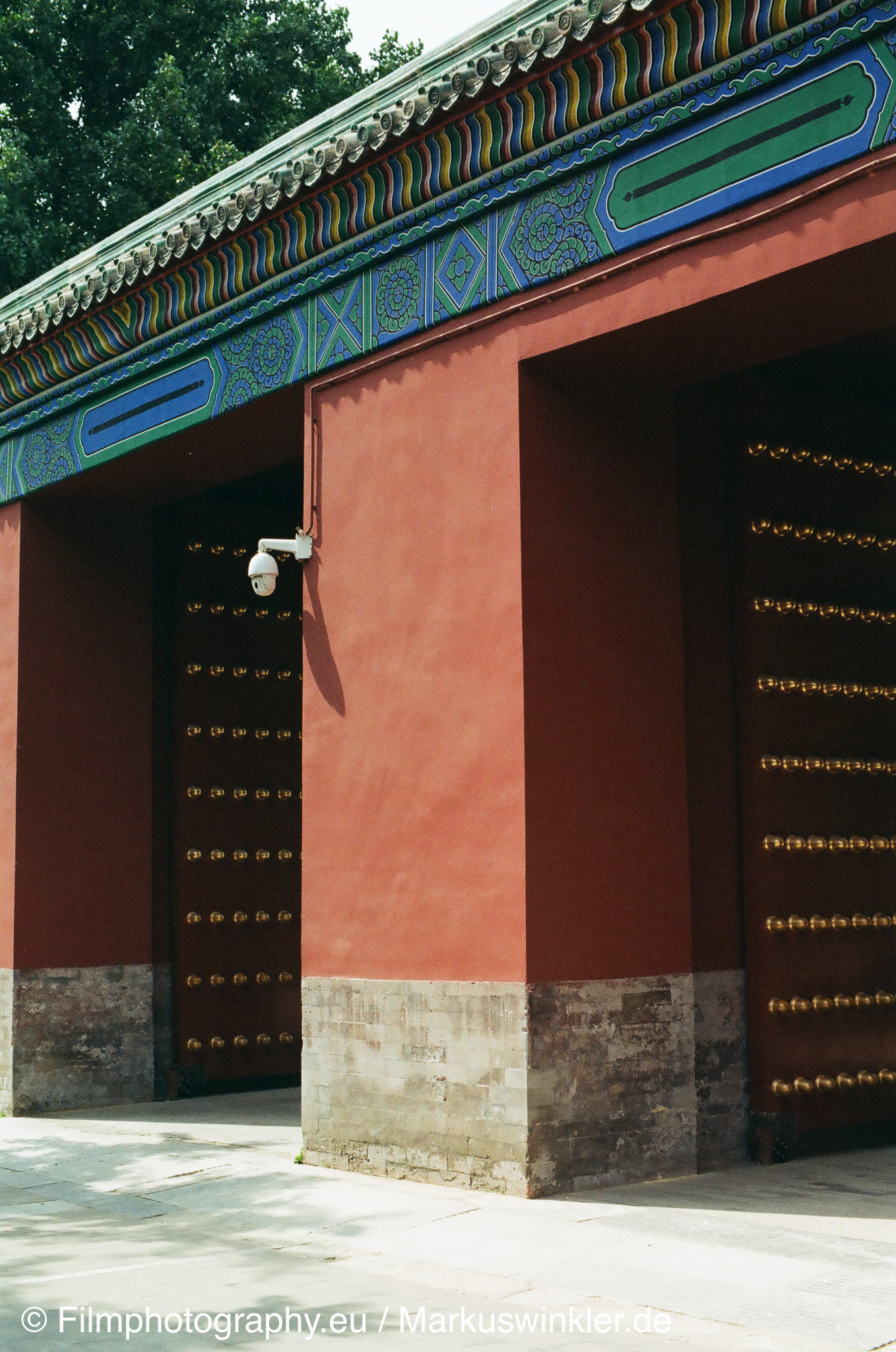
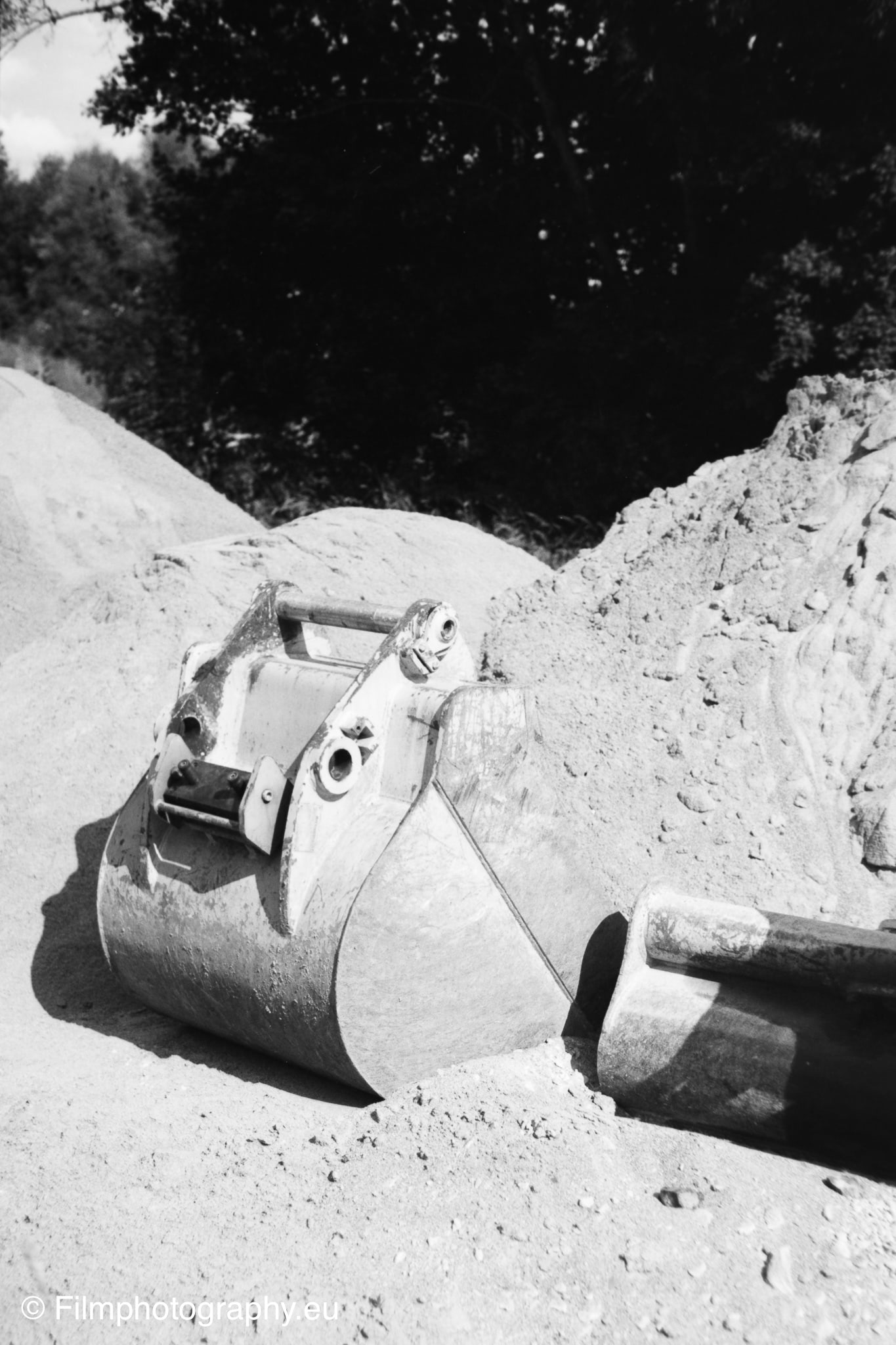
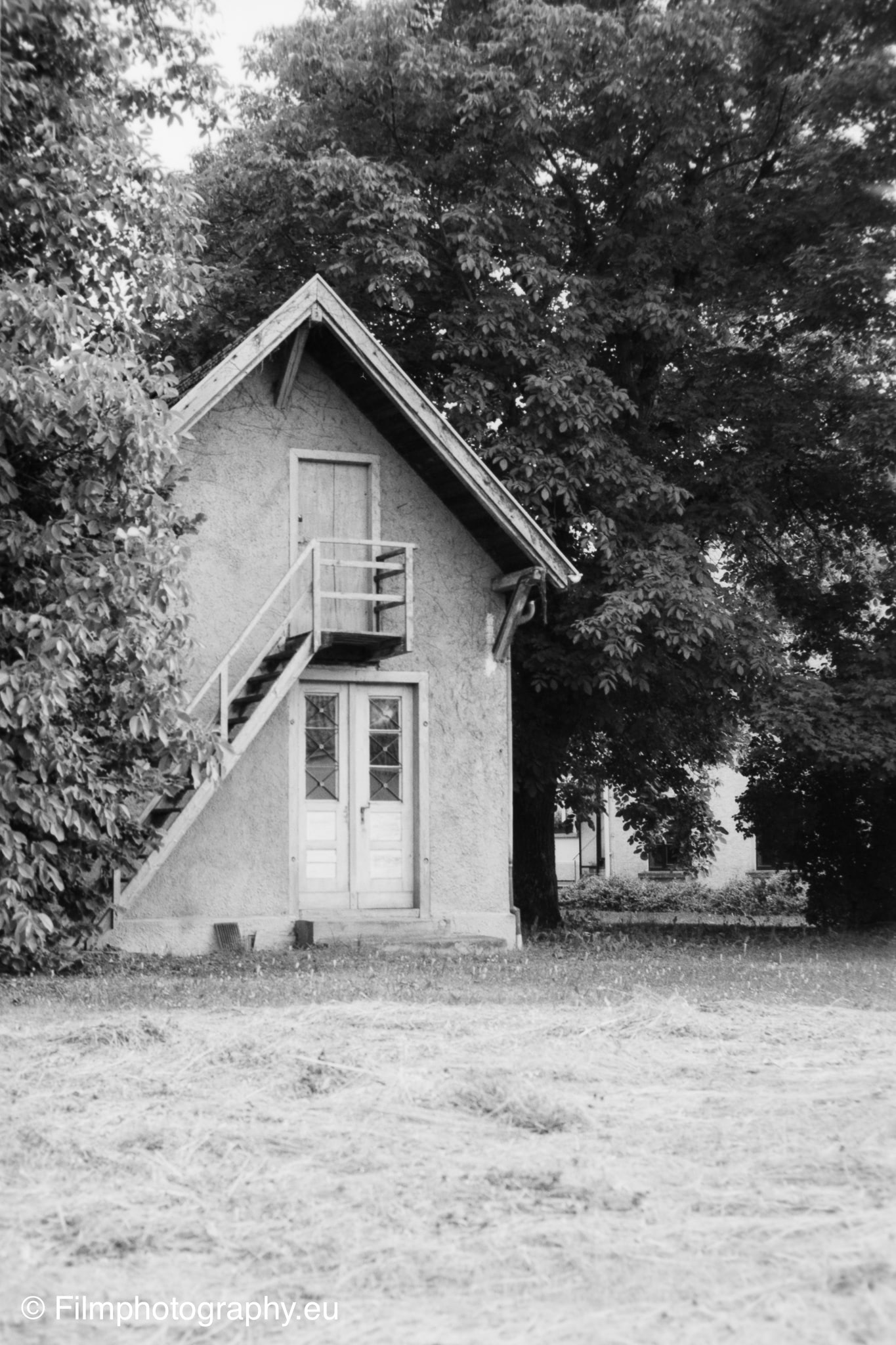
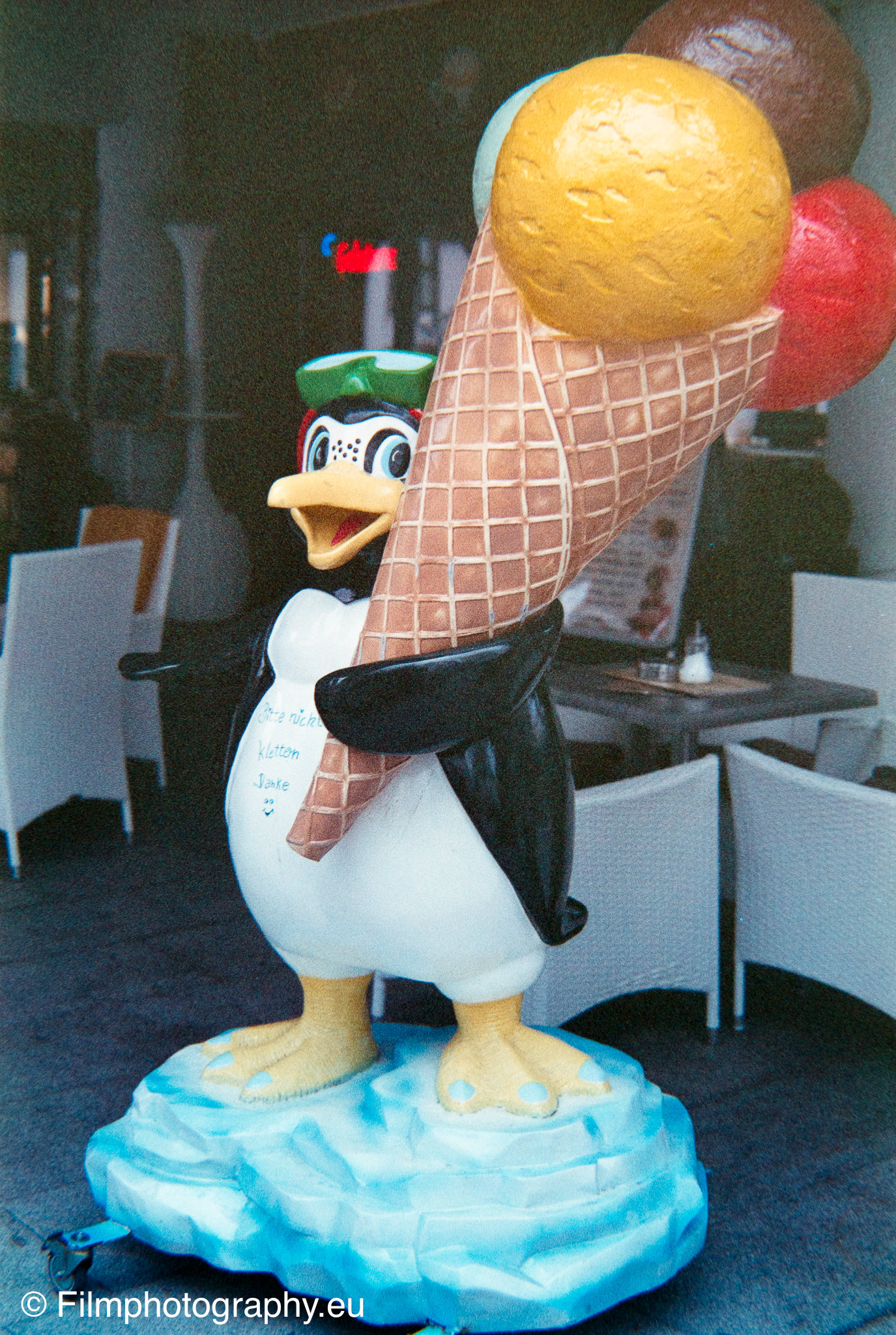
The images in this article were taken with, among others, DM Paradies 200, Adox CHS 100 II, Adox CHS 25, Rollei ATO 2.1, and Rollei Infrared Film.

i love the om series. Olympus was so awesome