I often get asked why I still shoot with analog cameras. Digital cameras are easier to use, easier to get, have lower running costs, you see the photo taken immediately, and many more functions are available. These and many other reasons actually contradict their use. Why do I, and many others, still reach for analog cameras today?
One reason is precisely these limitations. It’s fun to get to grips with the functions and peculiarities of a camera. The search for special, perhaps hard-to-find, models is just as nice an experience as bringing a broken camera back to life.
The costs associated with each image ensure that you think more about each image, which can lead to a higher quality of the resulting images and increases the value of individual images. If I only have one picture of a situation, it is naturally worth more as a single item than a hundred digital pictures.
The anticipation and nervousness of waiting for the pictures because you have to wait for the film to be developed. The lack of checking the picture on the display, which in turn prevents you from wanting to restage a special moment for a photo because the result did not meet expectations.
These are some of the characteristics that still make analog photography so exciting and unique today.
What is also very important to me are the cameras themselves. Over the decades, thousands, perhaps tens of thousands, of different models have been developed. A lot of experimenting and trying was done. Many of them were not successful back then for various reasons. Others were produced in the millions. Many of them are forgotten, others are still in the collective memory today, such as models from Polaroid.
What results from this great spirit of experimentation and long evolution is that you can choose from a wide range of models today. This is no longer the case with today’s digital cameras, certainly for good reasons.


If you look around this website a bit, you will quickly notice that not all analog cameras are the same. They differ in size, format, colors, and functions, among other things.
Another point that I find more and more exciting the older I get is the history of cameras. On the one hand, of course, how they were developed and built, but also what their life looked like after leaving the factory. For the latter, analog cameras are naturally a welcome subject, as they are still usable today due to their sometimes simple construction and/or high-quality production. An example is the camera with which grandparents took their vacation photos and with which you now capture your travels.
To use a camera with history, to experience your own stories with it, and then to pass it on at some point to someone who experiences their stories with it. A beautiful thought, I think.

Special Everyday Objects
I try to apply this thought more and more to other areas of my life, beyond photography. Surrounding yourself with objects that you use very frequently, that you hopefully have for a long time, and that you enjoy using.
Certain objects are naturally better suited for this than others. Objects that do not get consumed or heavily worn, that last, are best.
These include pens, watches, bags, jewelry, knives, tools. But also umbrellas, I think. Which brings us, after a long preamble, finally to the title of this article.
The Search for an Umbrella
I had set my mind on finding a high-quality item for the everyday object of an umbrella. Umbrellas were once a status symbol, my grandparents also always had great models, but unfortunately they got lost somewhere over time.
There is no shortage of options when searching for an umbrella. In most everyday shops, supermarkets, drugstores, department stores, you can find umbrellas. However, the quality leaves much to be desired. Some umbrellas are designed during production to be used only once and thrown away after the rain shower.
My search then led me to familiar territory, to Japan. As a photographer, this country has an important meaning; some of the best cameras and analog films come from the Asian country. Japan still plays a very important role today with Sony, Nikon, Canon, and Fujifilm.
Perhaps a bit cliché from an outsider’s perspective, but Japanese companies largely value quality and longevity.
One company that gave me this impression was Komiya Shoten.
History of Komiya Shoten
The history of Komiya Shoten begins in 1930 in Tokyo. The company was founded by Komiya Hosho, who originally came from Yamanashi Prefecture, a region known for its textile production. At that time, Western umbrellas were still luxury items and status symbols in Japan, while the general public used traditional “Bangasa” made of bamboo and oiled paper. Komiya Hosho recognized the potential and began to manufacture Western umbrellas in Tokyo, using the high-quality Koshu-ori fabric from his home region.
The early years were marked by challenges. World War II brought material shortages and destruction; Komiya Shoten’s business was also completely destroyed in an air raid. But after the war, the family rebuilt the company from the ruins and continued production in Higashi-Nihonbashi, a district of Tokyo. In the post-war years, the Japanese umbrella industry experienced a real boom. In the area around Komiya Shoten’s headquarters, there were at times over 70 umbrella-related shops and manufactories.
However, from the late 1960s onwards, the market changed drastically. Cheap, mass-produced umbrellas from abroad flooded the Japanese market, forcing many traditional manufacturers to close down. Komiya Shoten also faced major economic difficulties.
Instead of succumbing to the price war, however, the company relied on its core competencies: craftsmanship, quality, and longevity. It deliberately positioned itself in the luxury segment and focused on producing high-quality, handmade umbrellas designed to be long-lasting companions, not disposable items.

This strategy proved successful. Today, led by the third generation, Komiya Hiroyuki, the brand stands for the preservation of traditional manufacturing techniques dating back to the Meiji era (1868-1912).
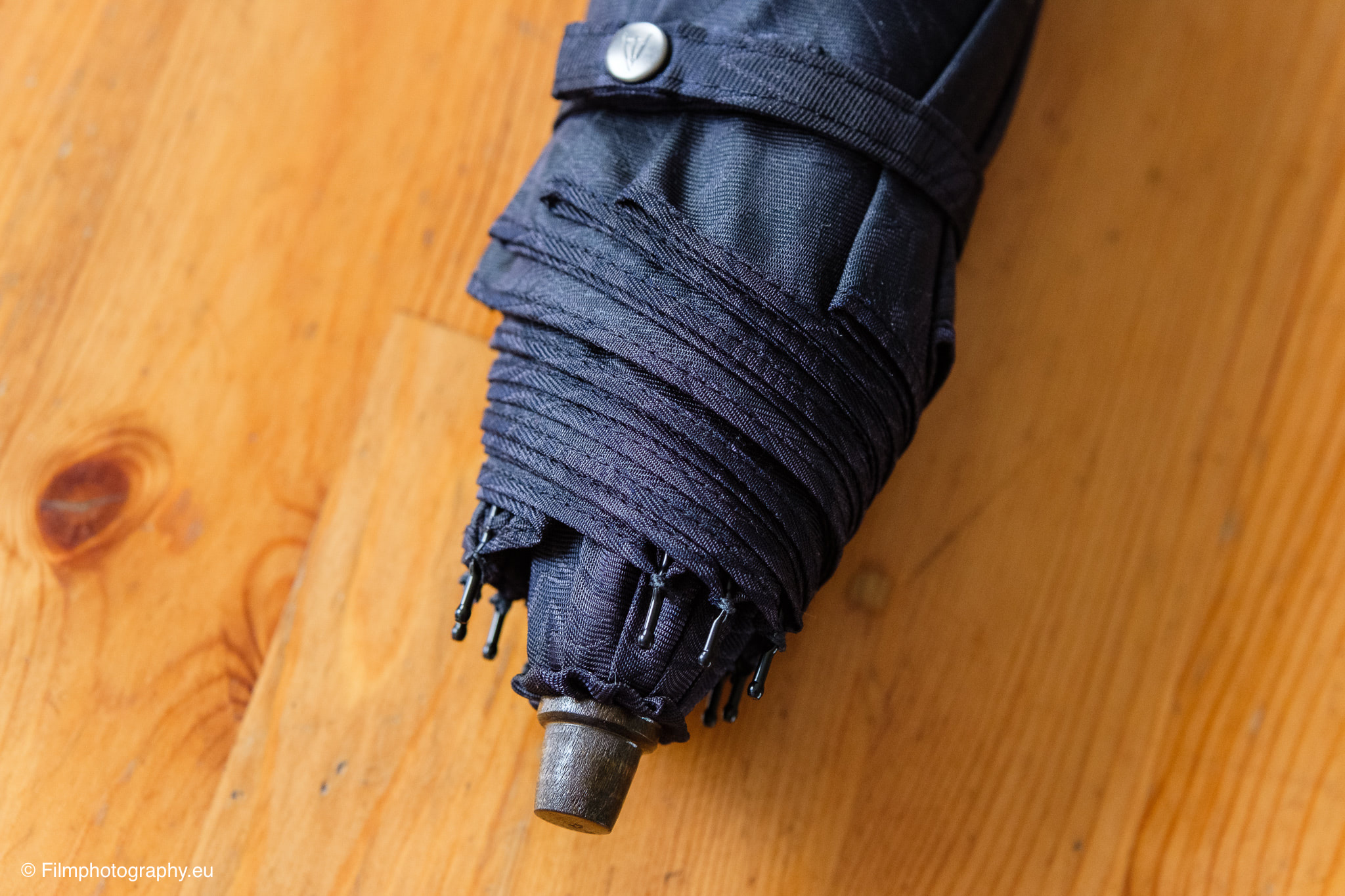
Each umbrella is crafted by experienced artisans, with great attention paid to details such as the “Rokuro-maki” (a fabric wrap around the slider to protect fingers) and the “Dabo-maki” (protection for the fabric at the points of contact with the ribs). These elaborate, traditional techniques have become rare but give the umbrellas their special quality and longevity.
In 2018, Komiya Shoten’s work was officially recognized when the “Tokyo Umbrella” was designated a traditional craft of the city of Tokyo.
The history and models of Komiya Shoten immediately captivated me. So much so that I wrote to them and asked if I could perhaps test their umbrellas for this article. They kindly agreed and sent me two models. Then, I had to wait for the Japanese postal service to transport the umbrellas from Japan to Germany. A few days later, they arrived.
One was the foldable Komiya Shoten and the Komiya Shoten long umbrella.
Komiya Shoten TwoPly / トゥープライ
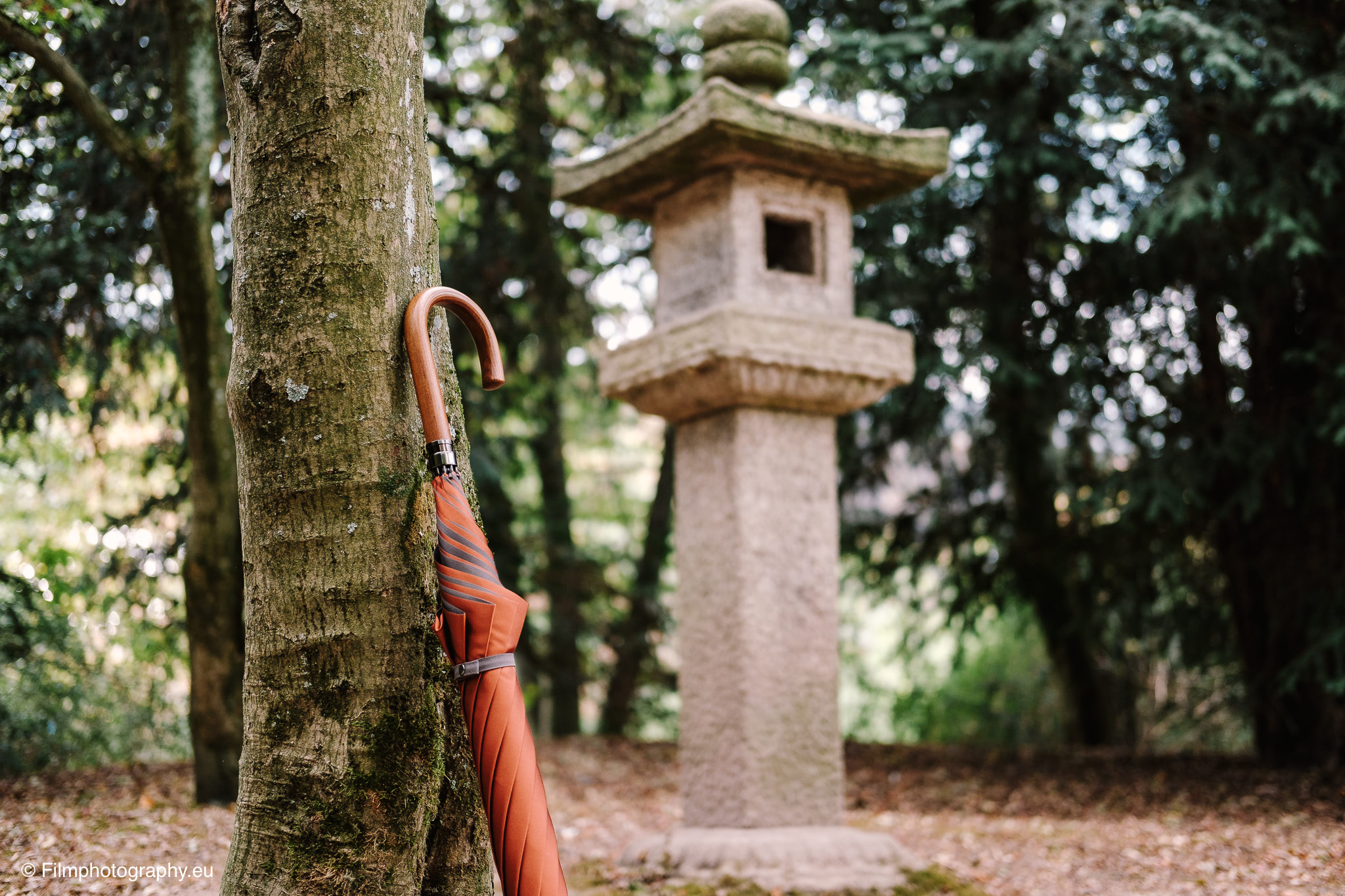
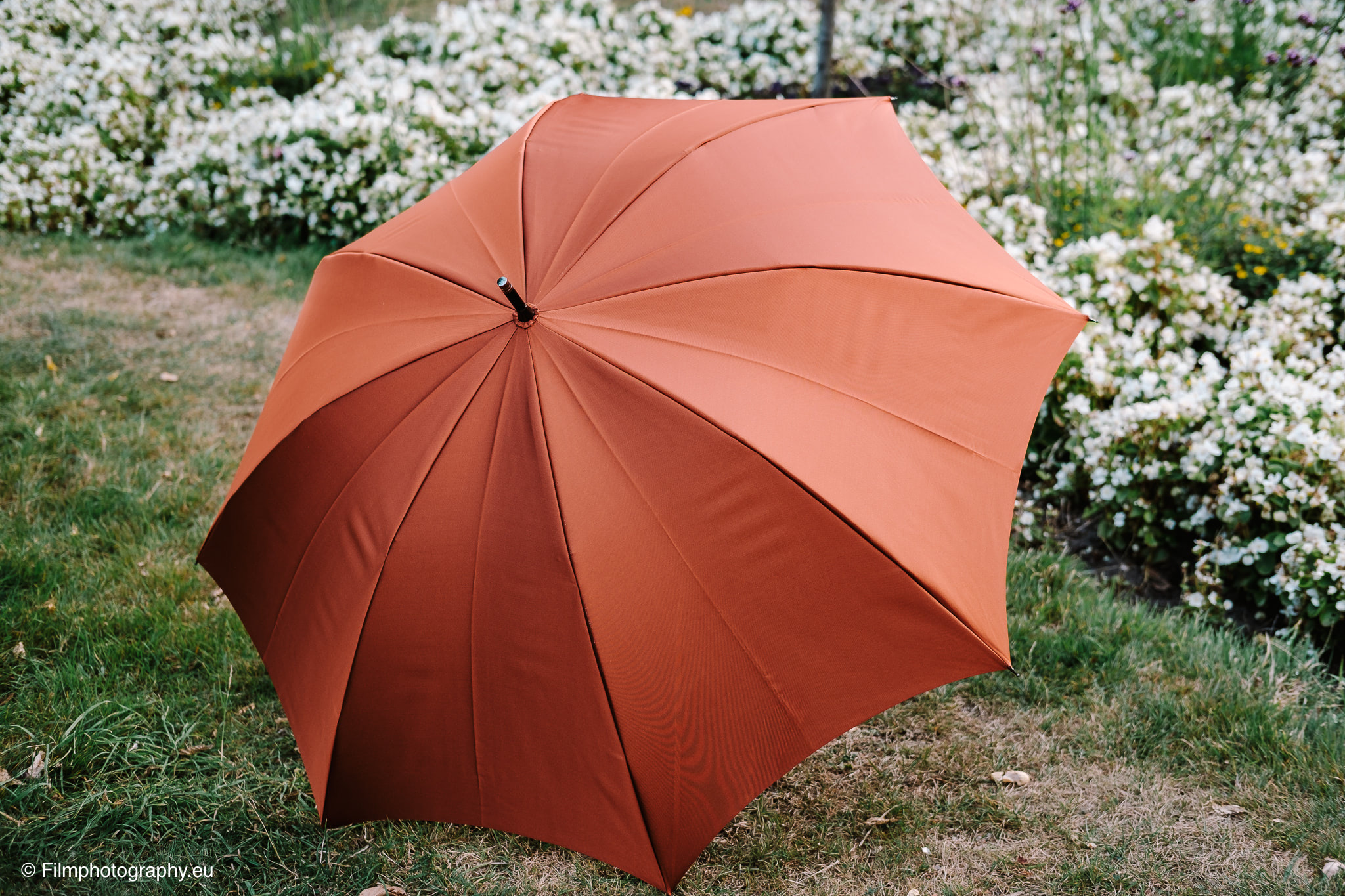
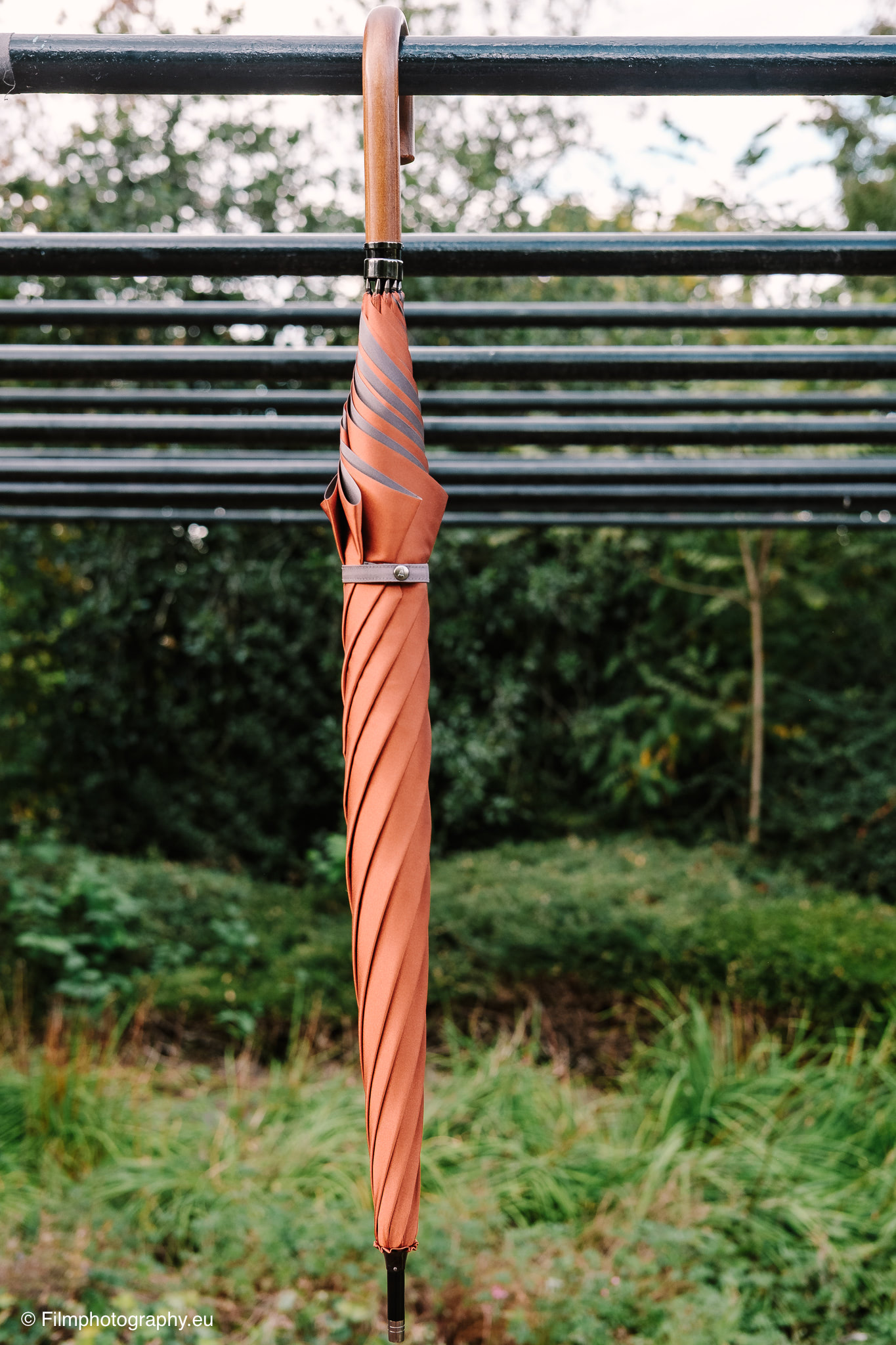
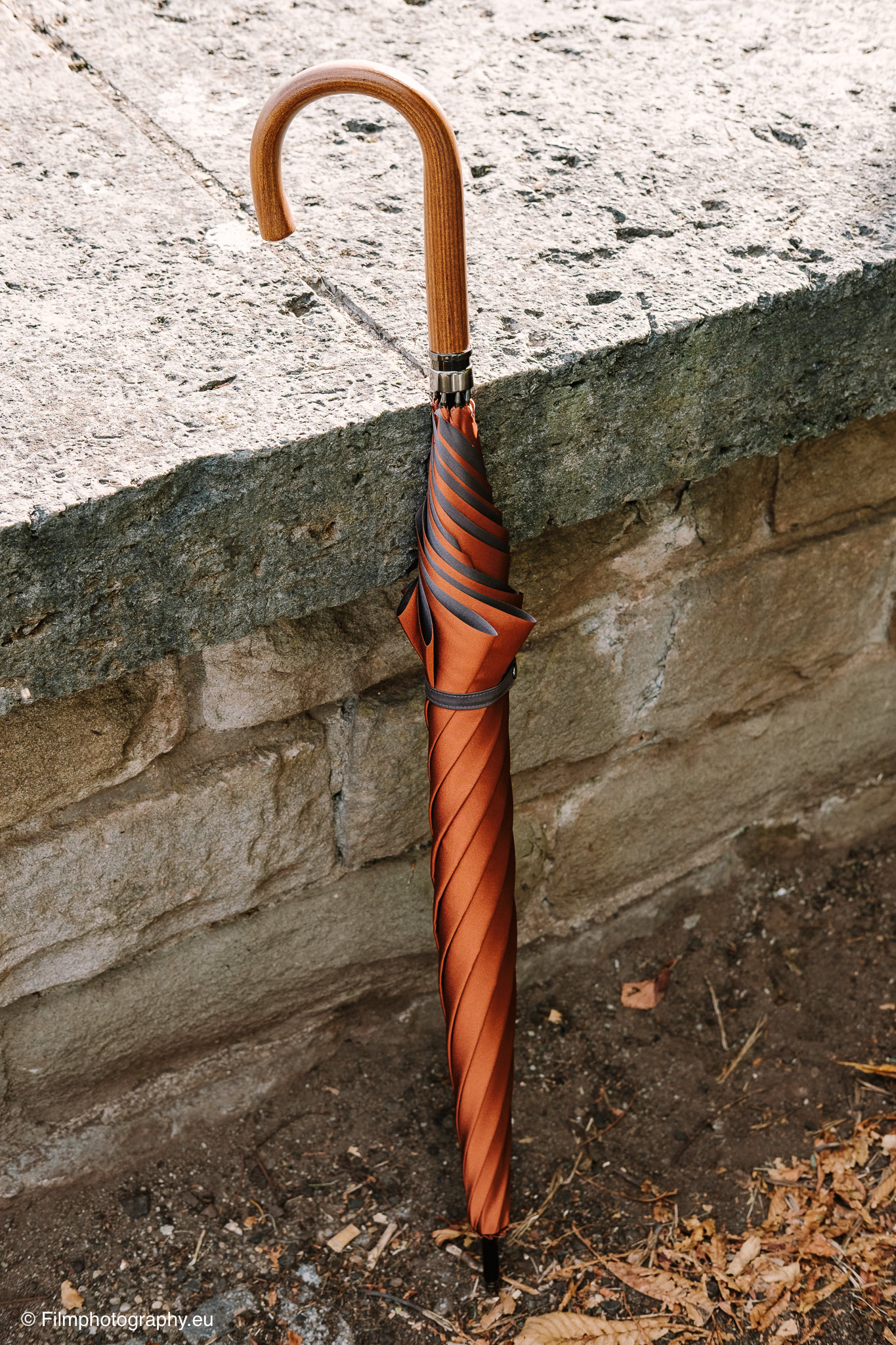
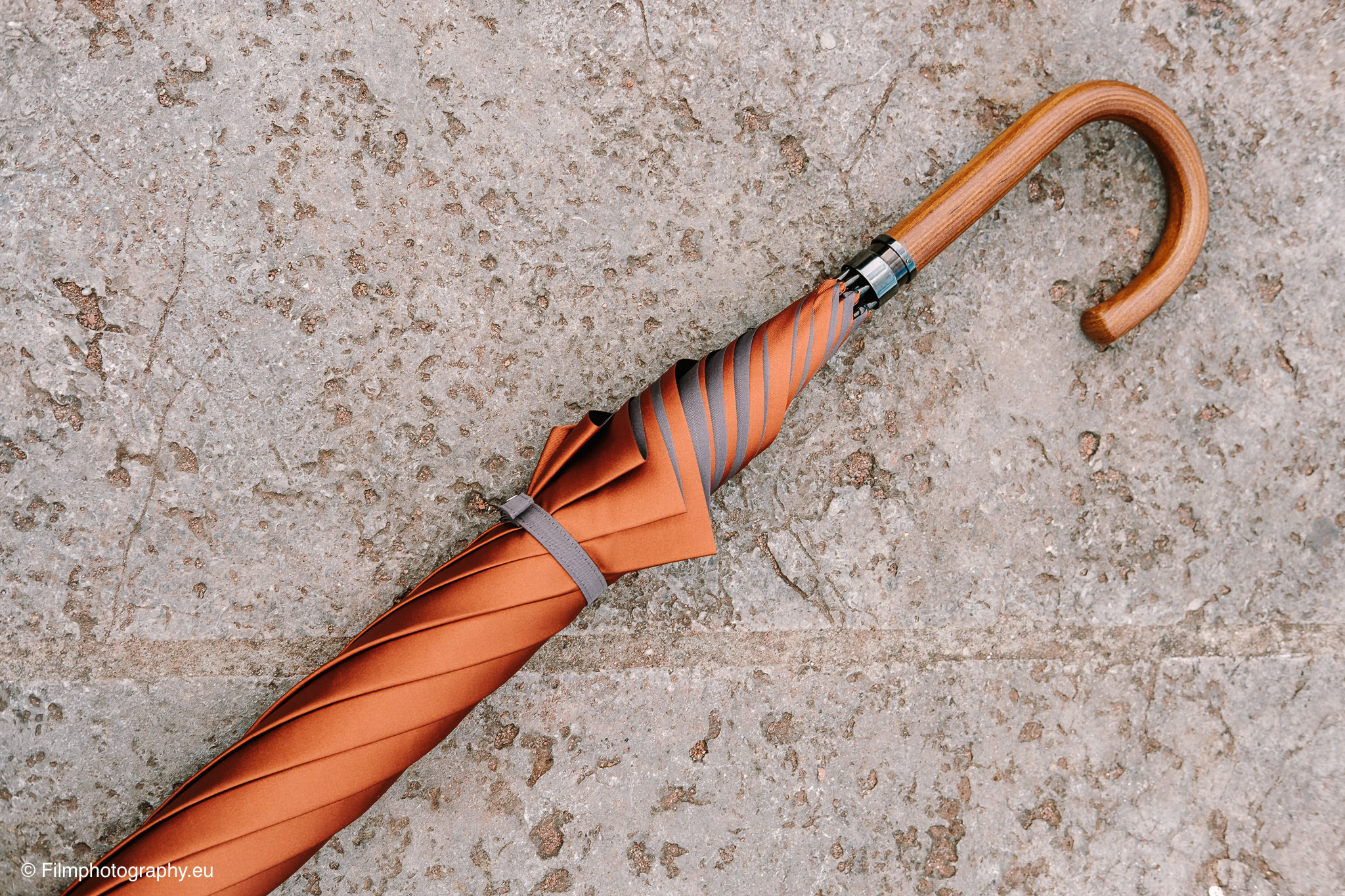
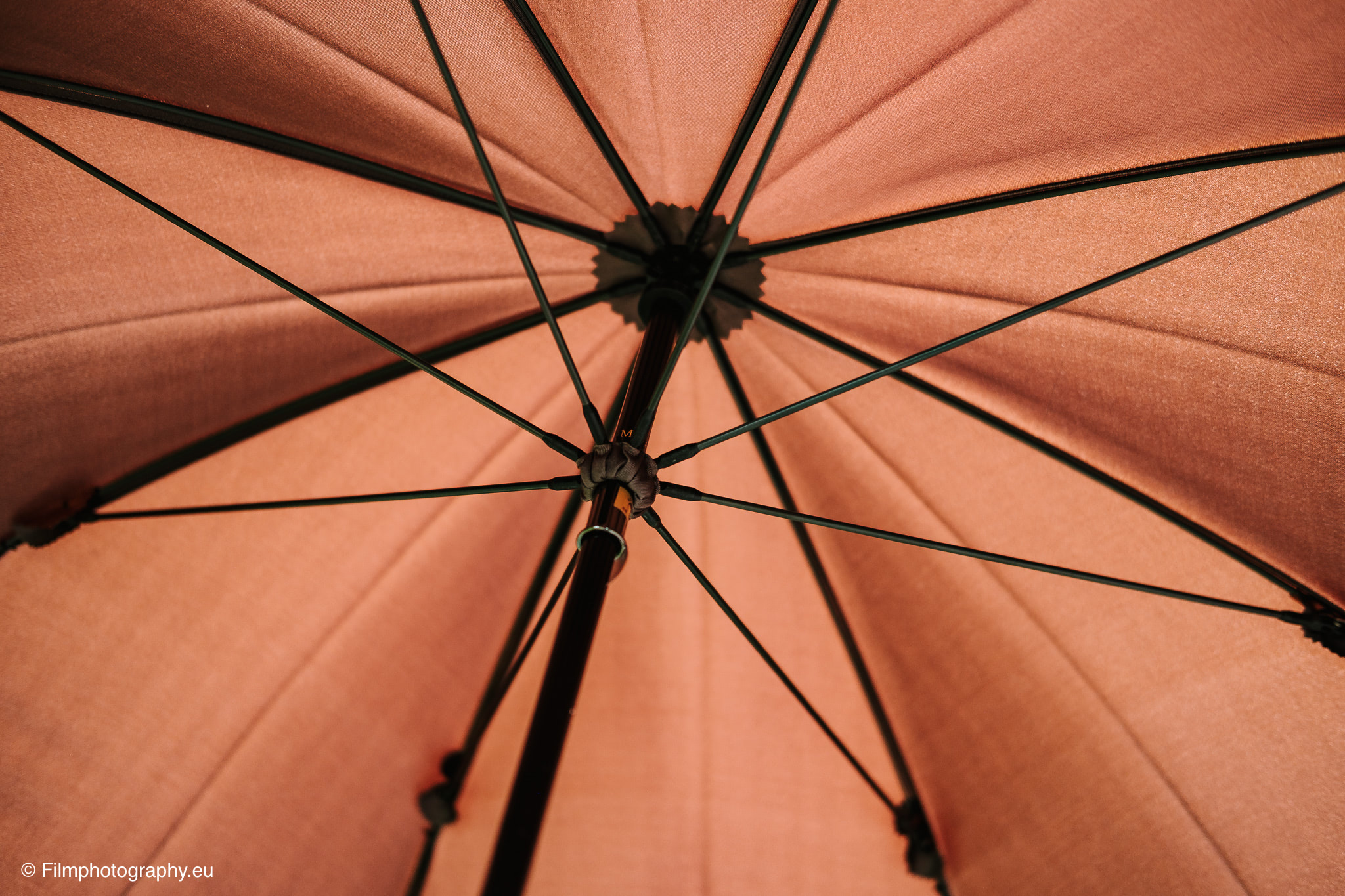
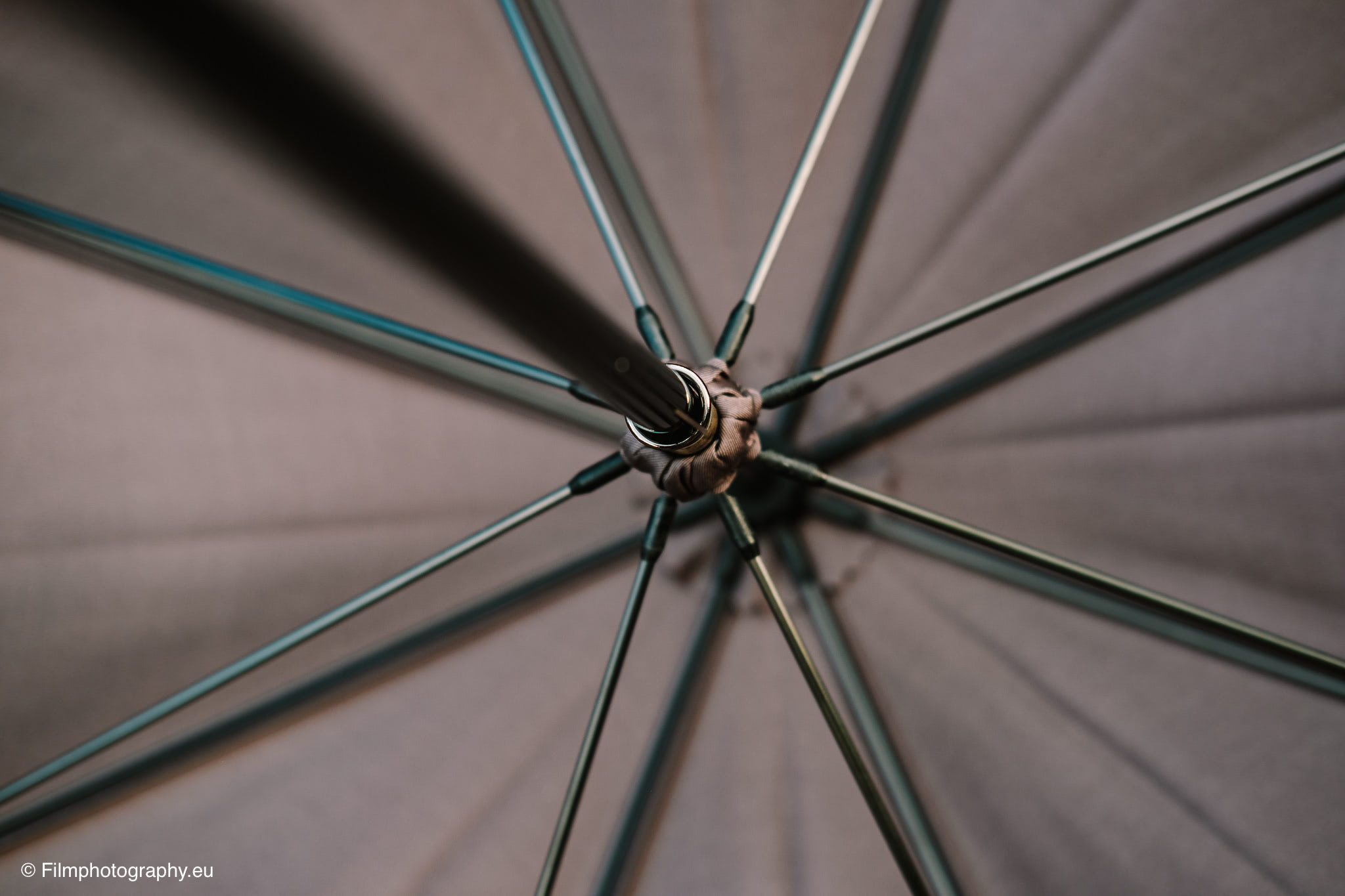
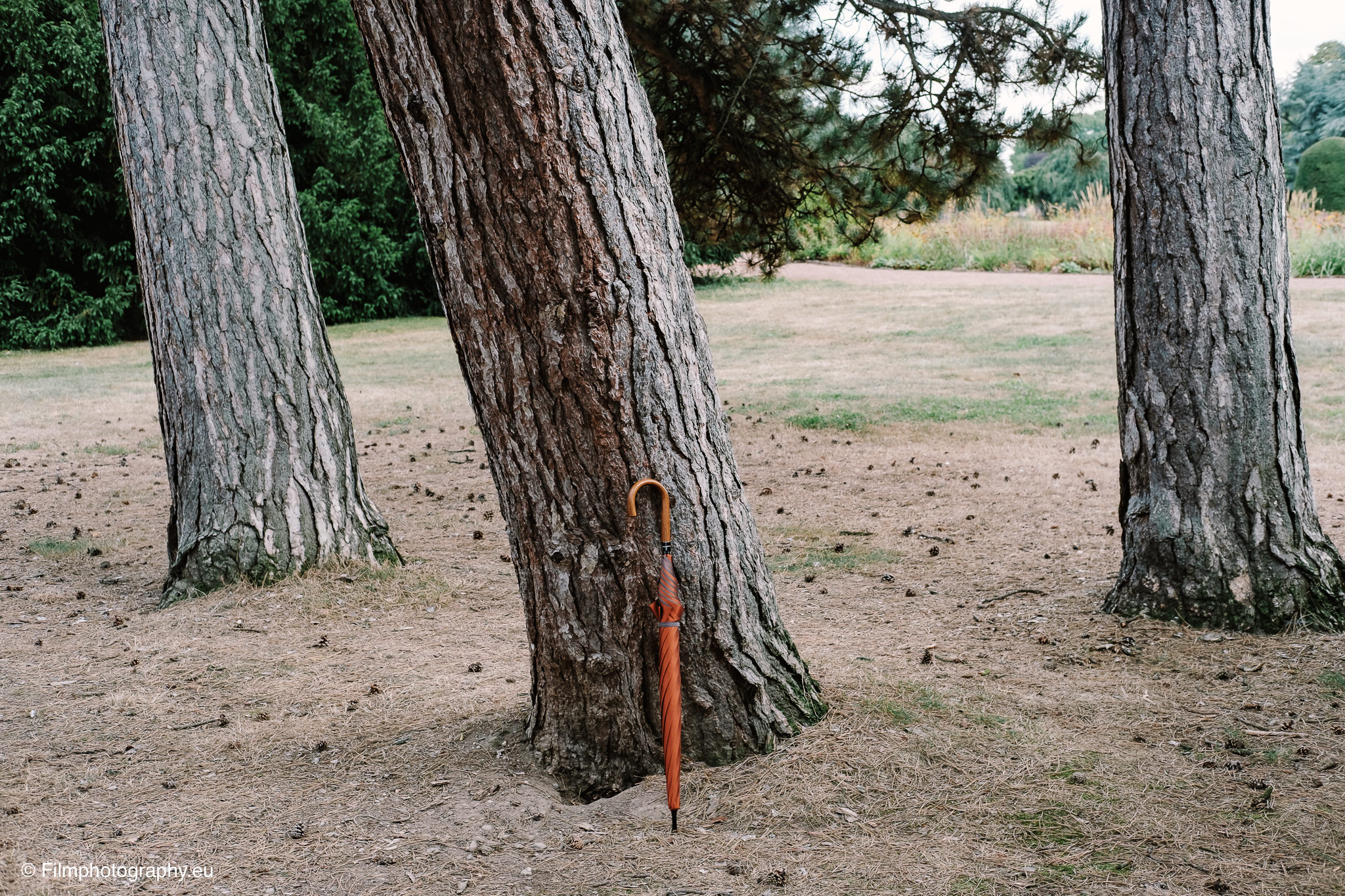
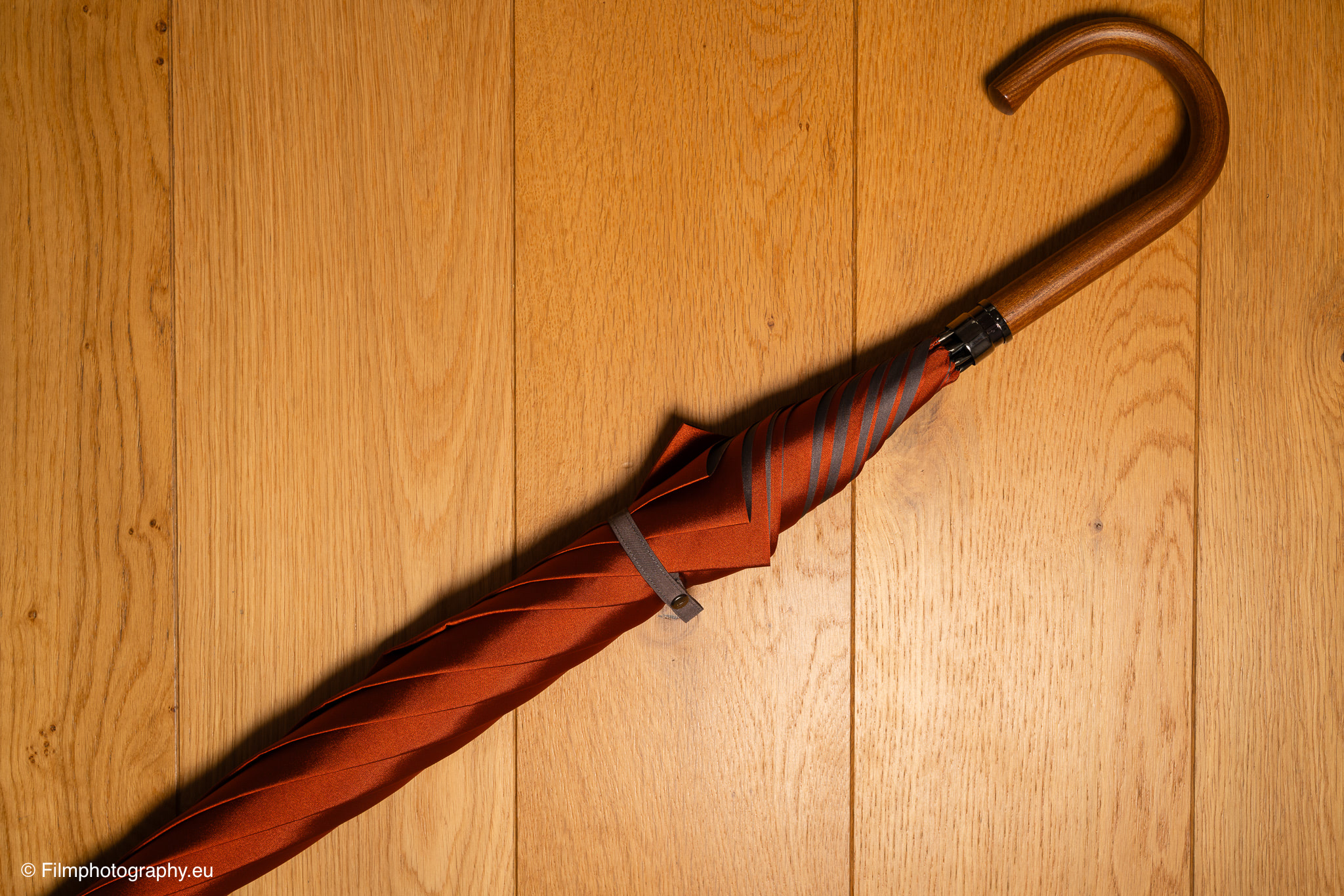
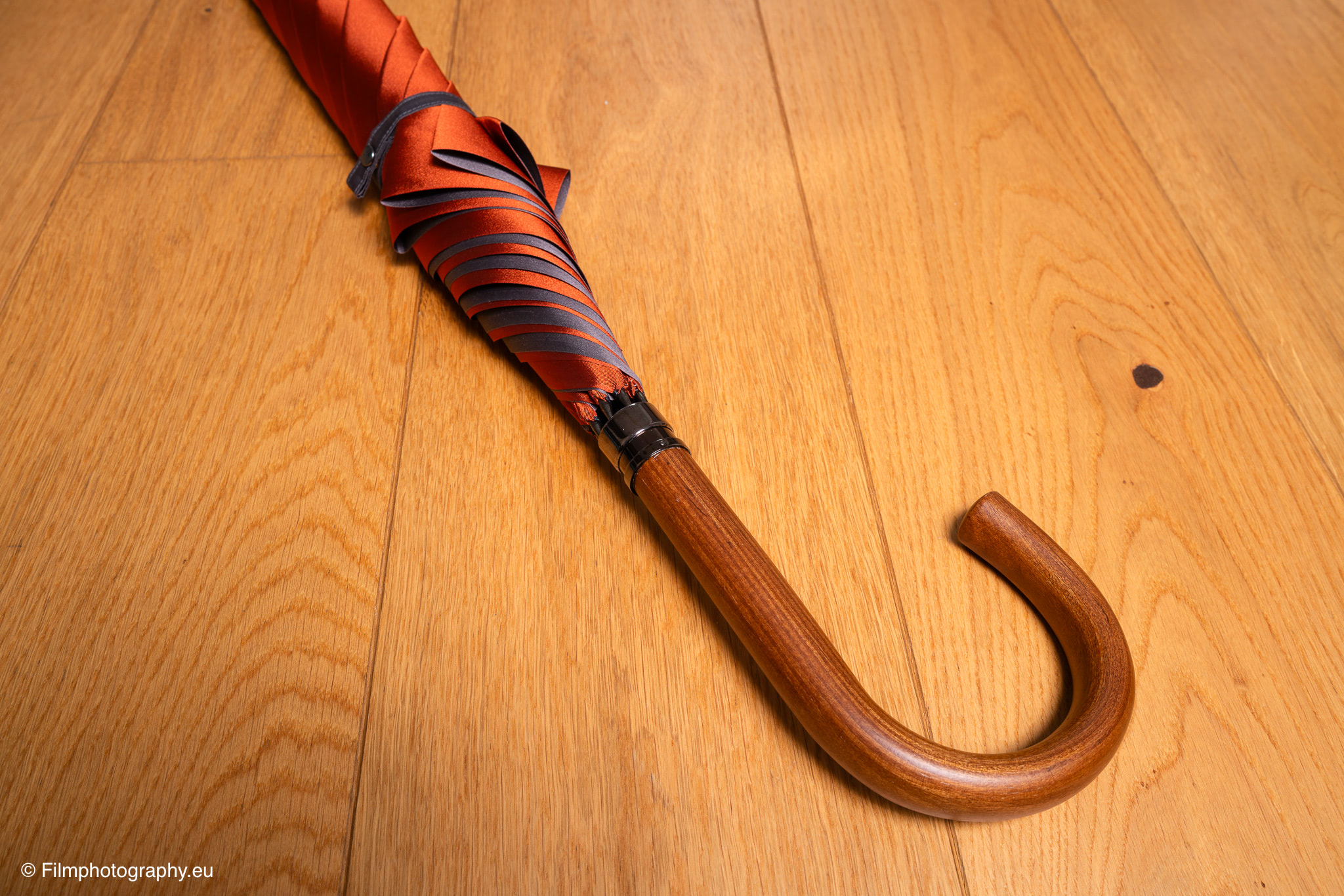
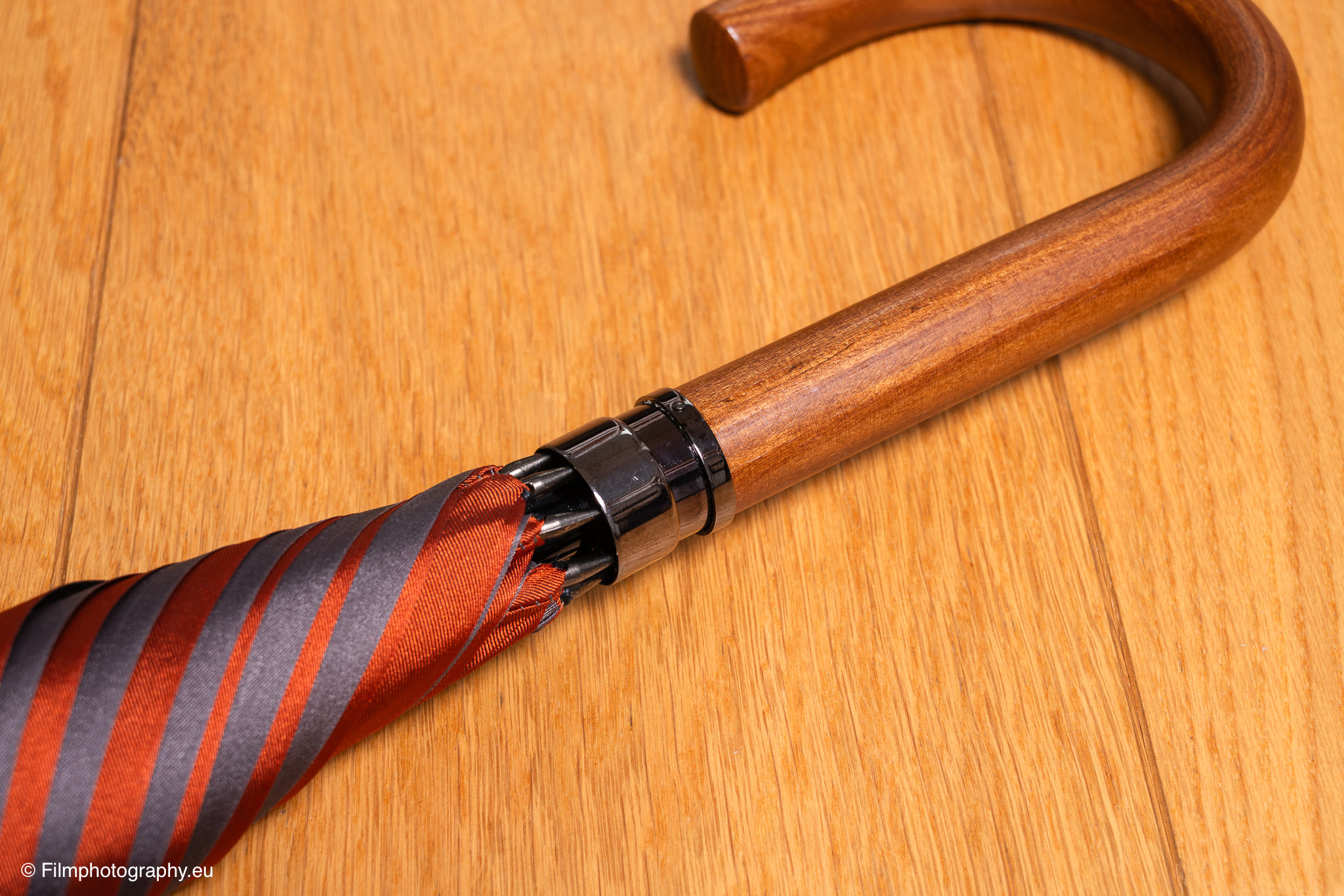
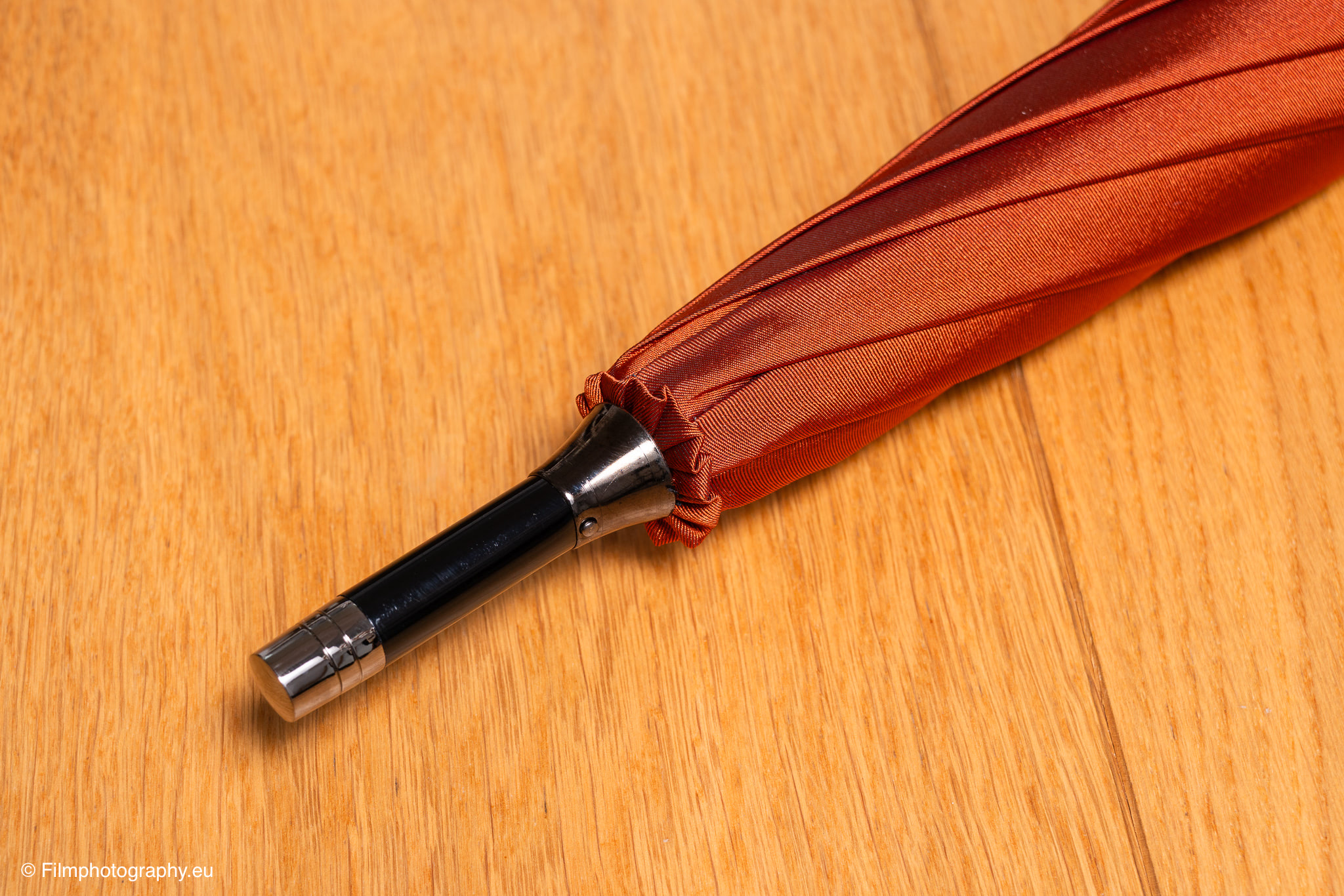
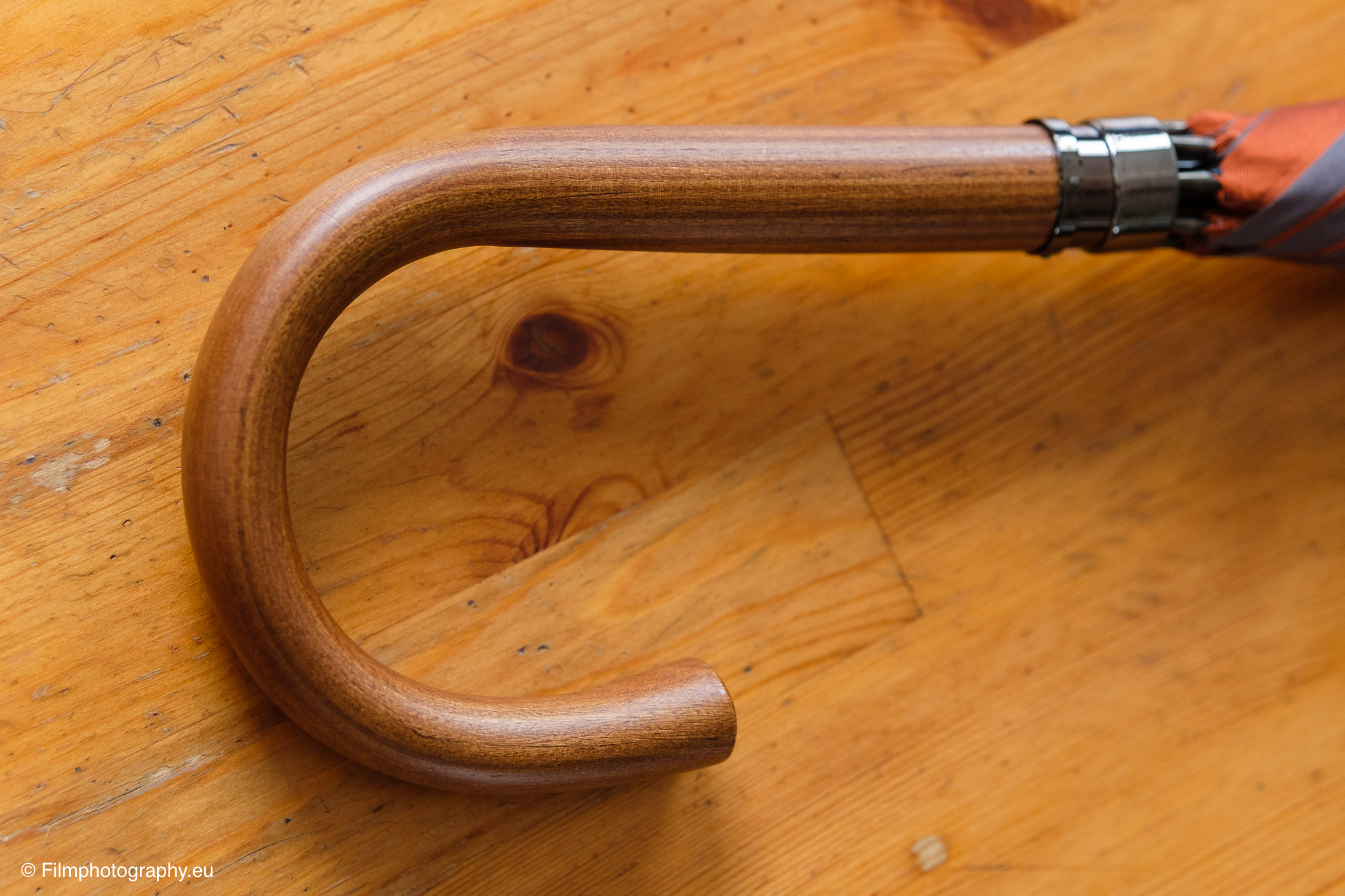
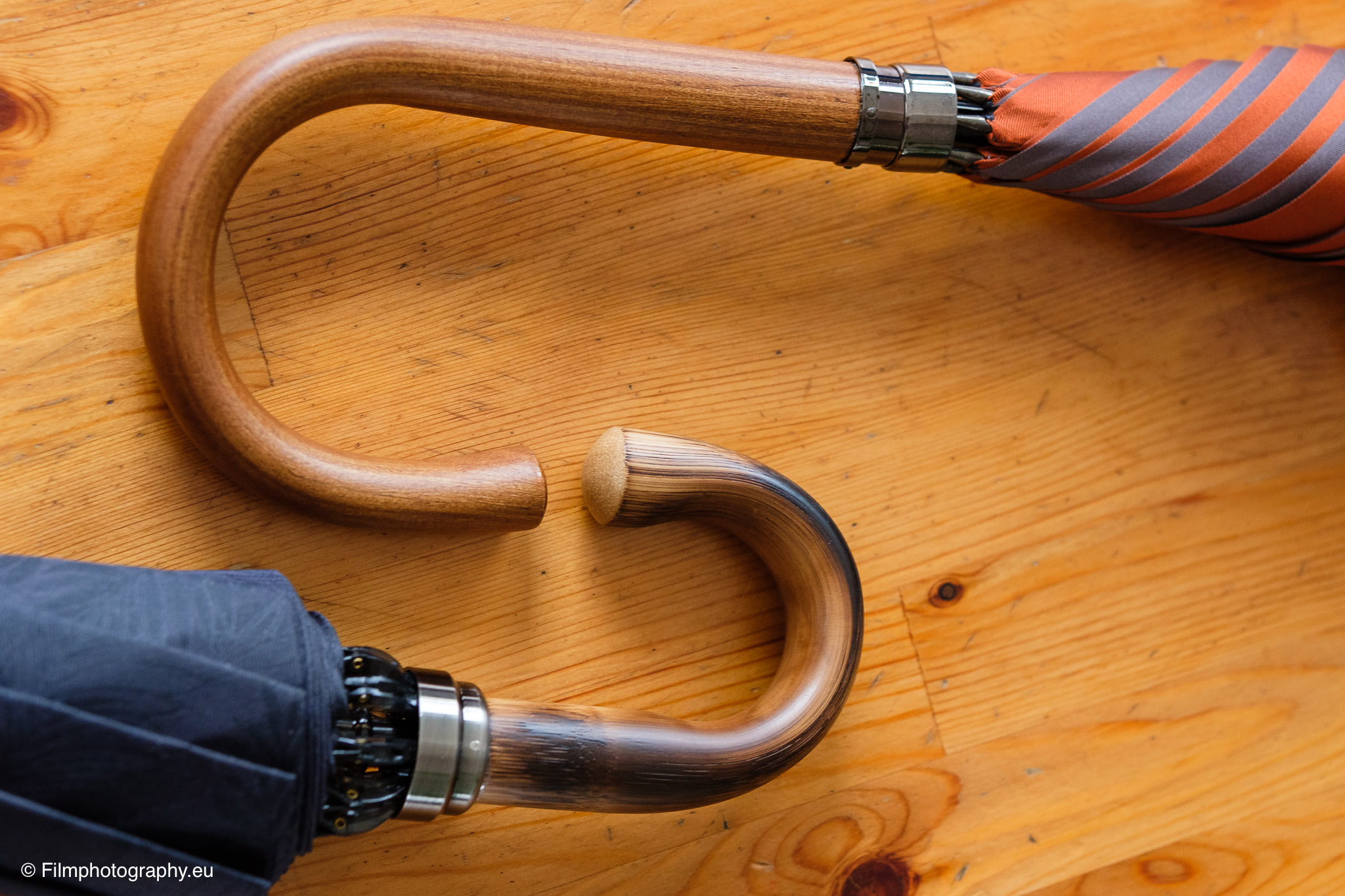
The first model I unpacked was the long umbrella from the “TwoPly” series. The first impression already conveys a sense of quality not found in ordinary umbrellas. The umbrella feels solid and yet surprisingly light. This is due to the well-thought-out choice of materials: the eight ribs are made of carbon fiber, a material also used in aircraft construction because it is extremely hard, light, and rustproof. The shaft is made of lightweight aluminum, and the handle is made of fine maple wood, whose fine grain remains subtly visible through the lacquer.
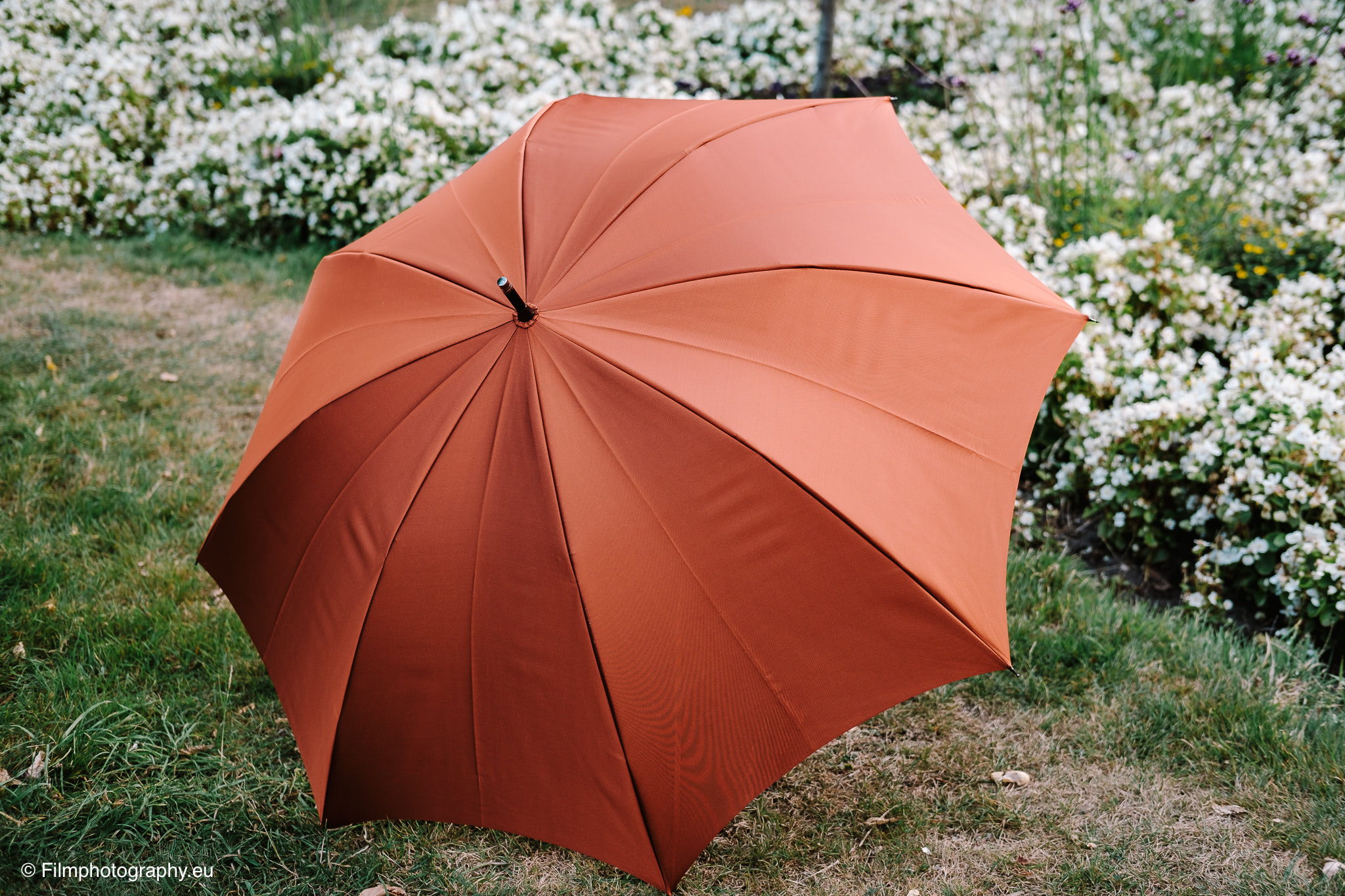
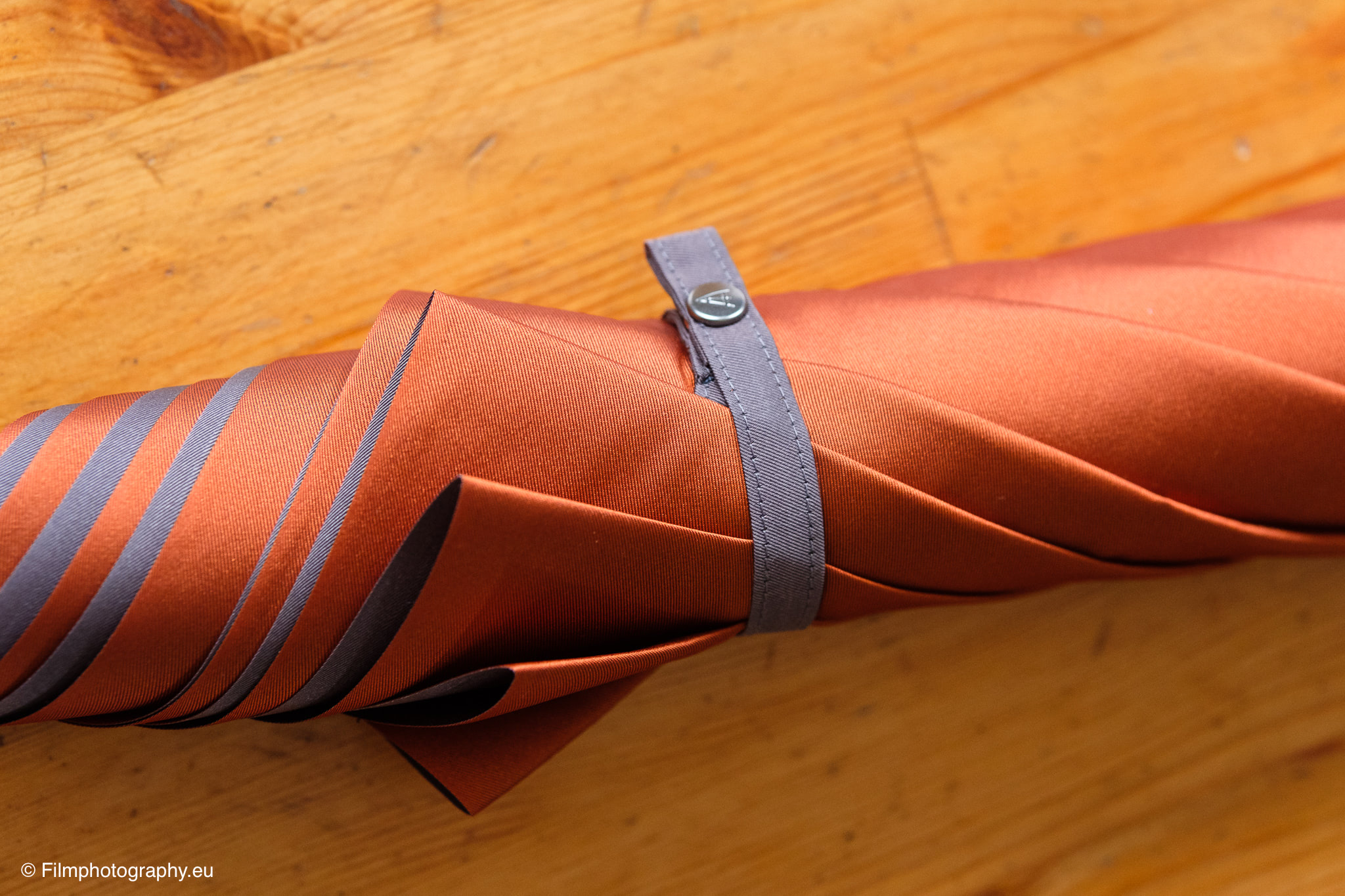
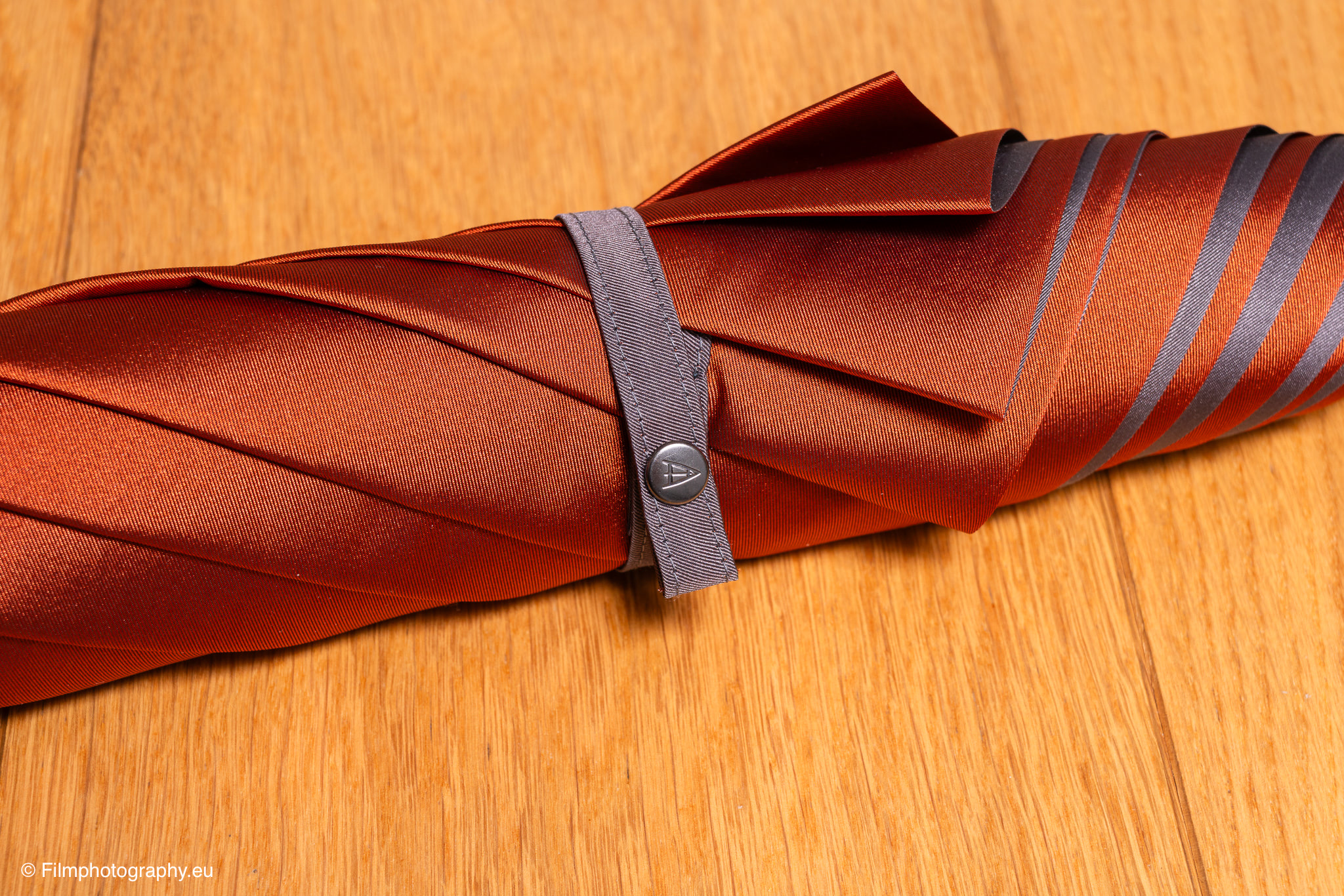
The heart of the umbrella, however, is the fabric, a so-called Koshu-ori weave. This weaving technique from Yamanashi Prefecture has a history of over 400 years. What’s special about it is that the threads are dyed before weaving (“yarn-dyed”). This results in particularly deep and vibrant colors.
In the TwoPly series, this technique is used to create a two-colored fabric where the inside and outside have different colors. The fabric is woven slowly and carefully on narrow looms that have become rare, leading to a high density and an elegant, slightly shiny texture. This elaborate manufacturing not only ensures a special look but also high water and abrasion resistance.
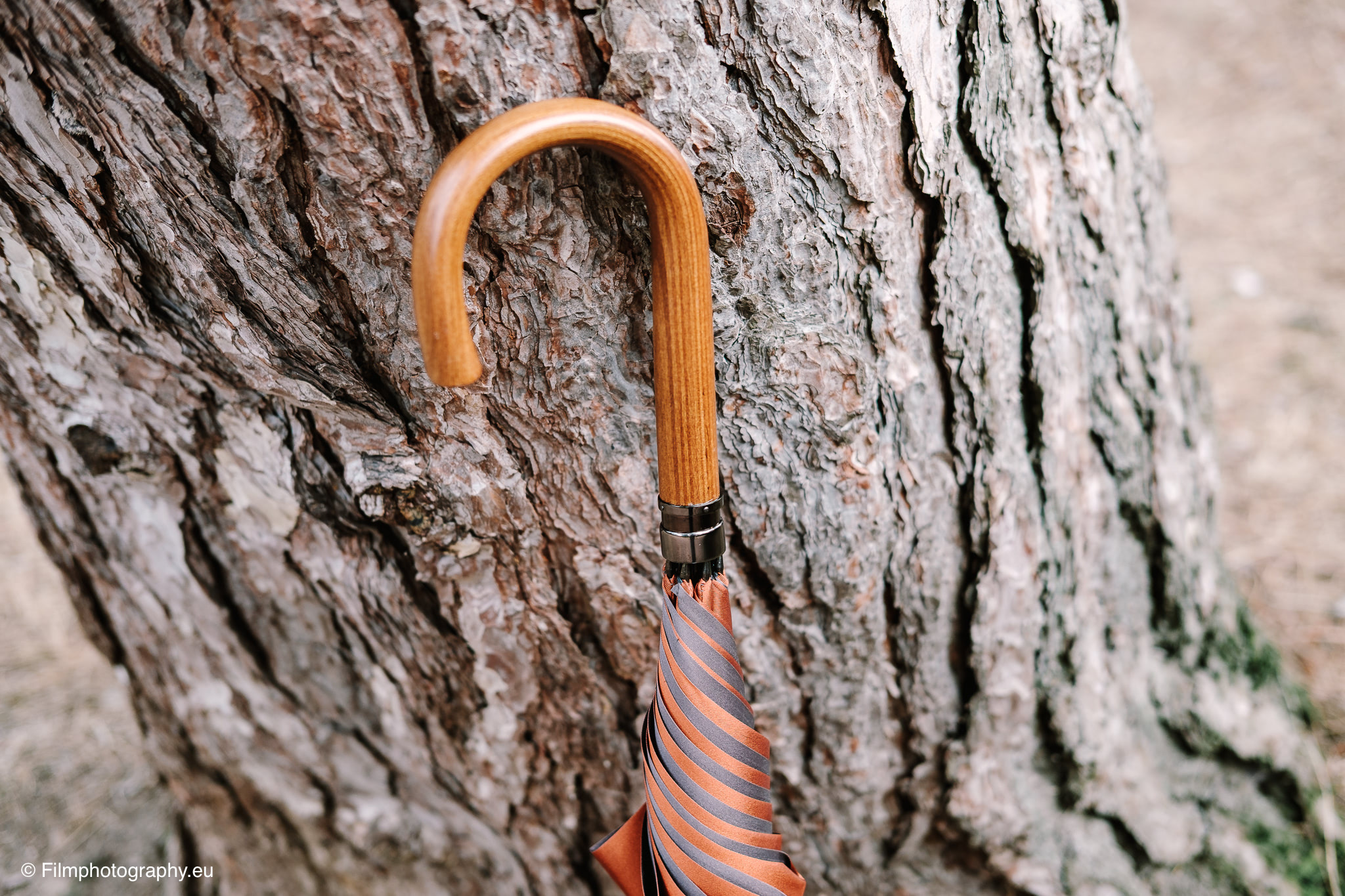
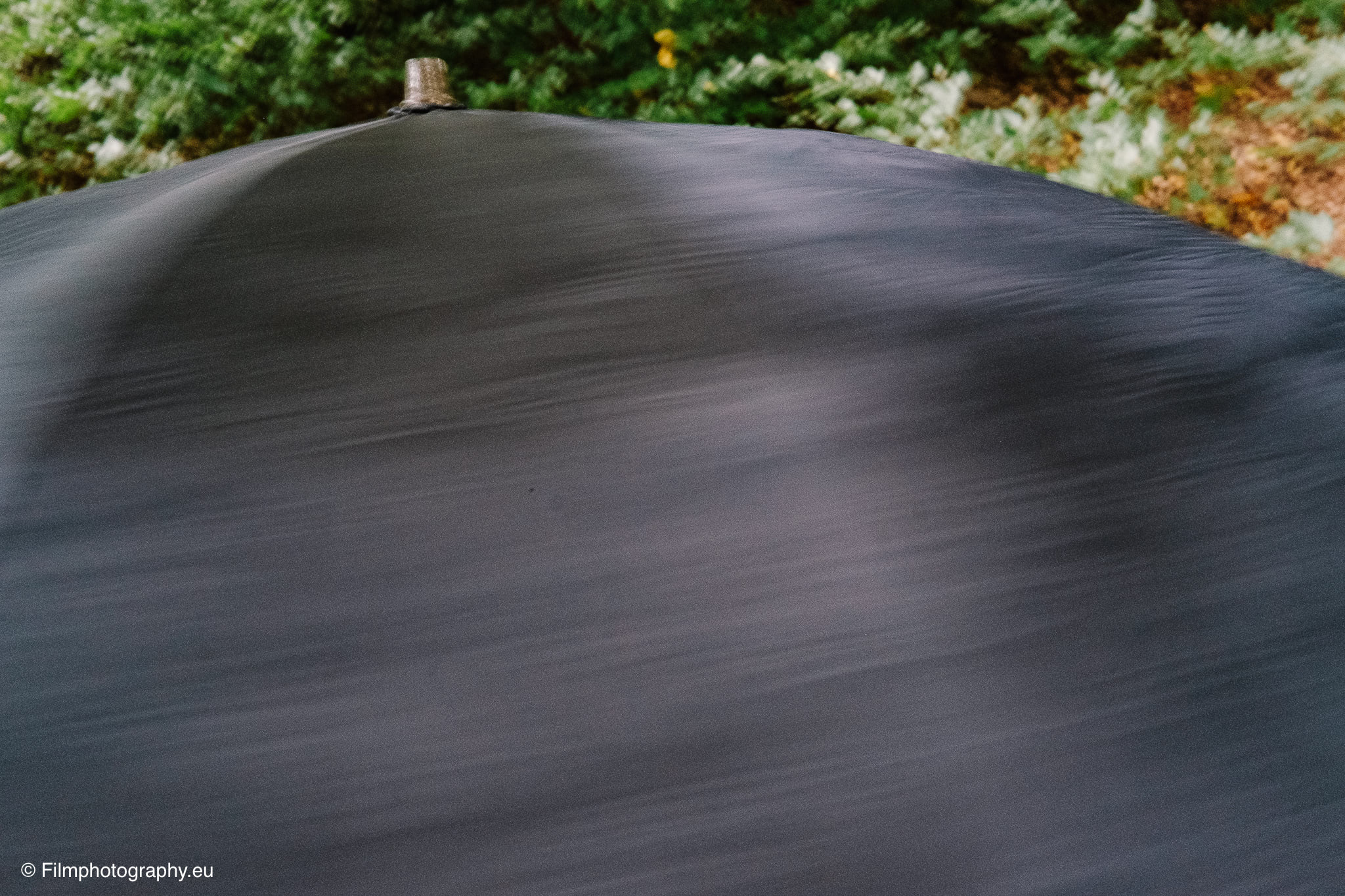
When opening the umbrella, the rich, almost musical click of the mechanism is immediately noticeable. It’s a sound that inspires confidence in the mechanics. The tension of the fabric is perfect, with no wrinkles or loose spots. The diameter of about 112 cm offers generous protection without feeling unwieldy. With a weight of about 425 grams, it is pleasantly light and well-balanced for a long umbrella of this size.
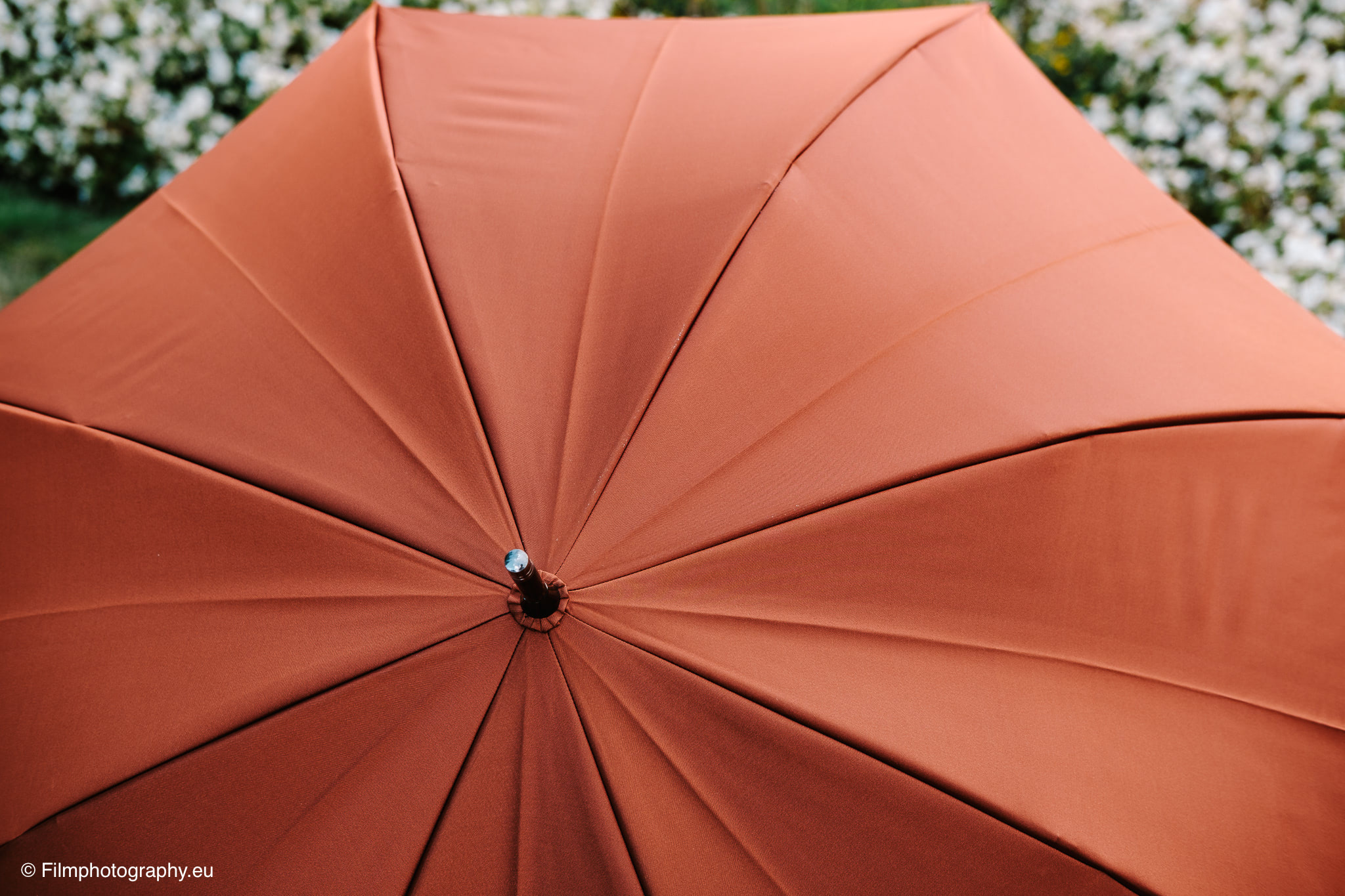
From the perspective of a photographer who often travels with a camera bag, a reliable umbrella is essential. You don’t just want to stay dry yourself, but above all protect your expensive equipment. The TwoPly umbrella provides exactly that security.
The robust construction made of carbon fiber gives you the feeling that it can withstand even stronger gusts of wind without immediately flipping over or even breaking. The maple wood handle fits comfortably and securely in your hand, which is a not insignificant comfort on longer walks in the rain.
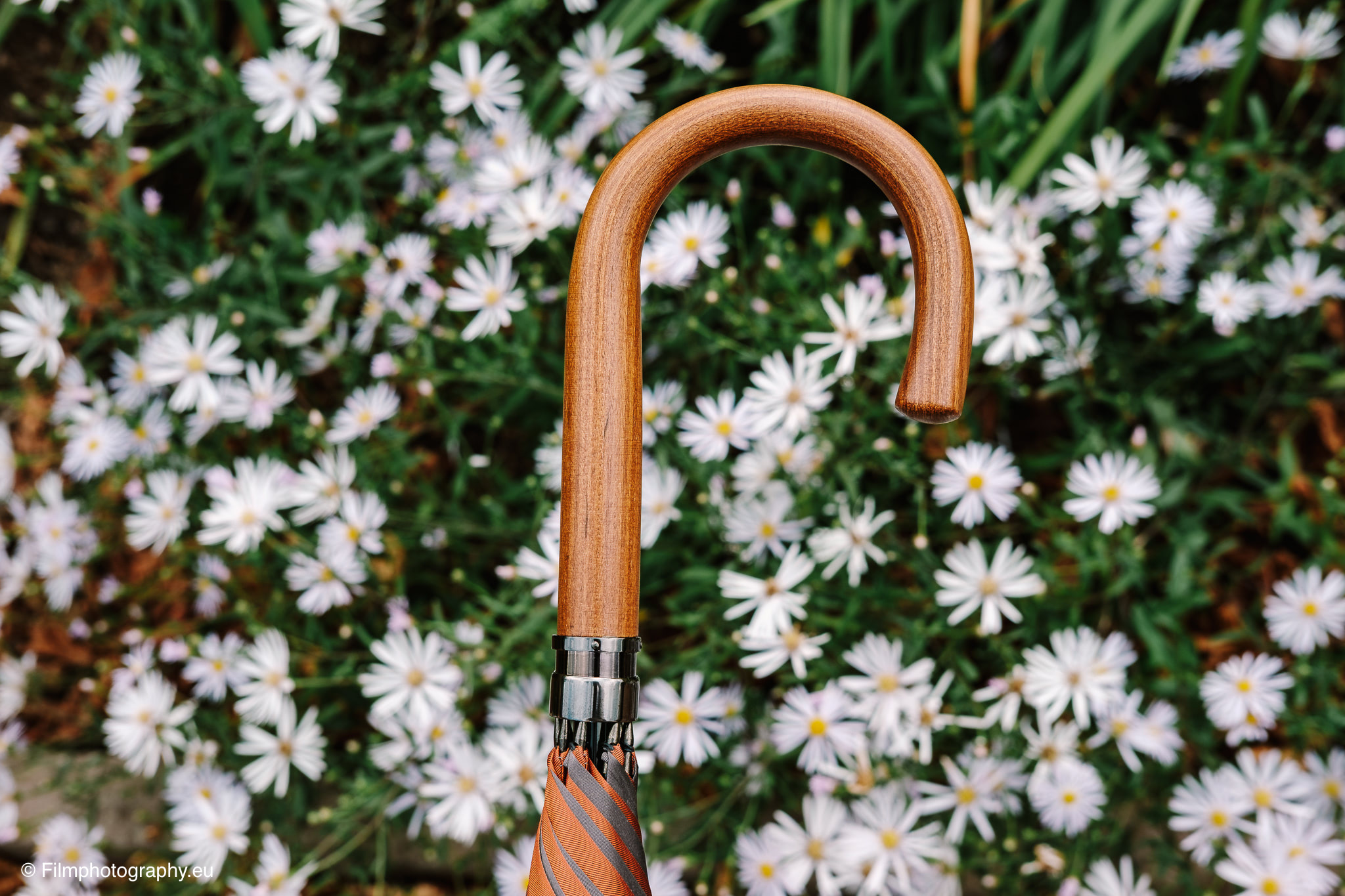
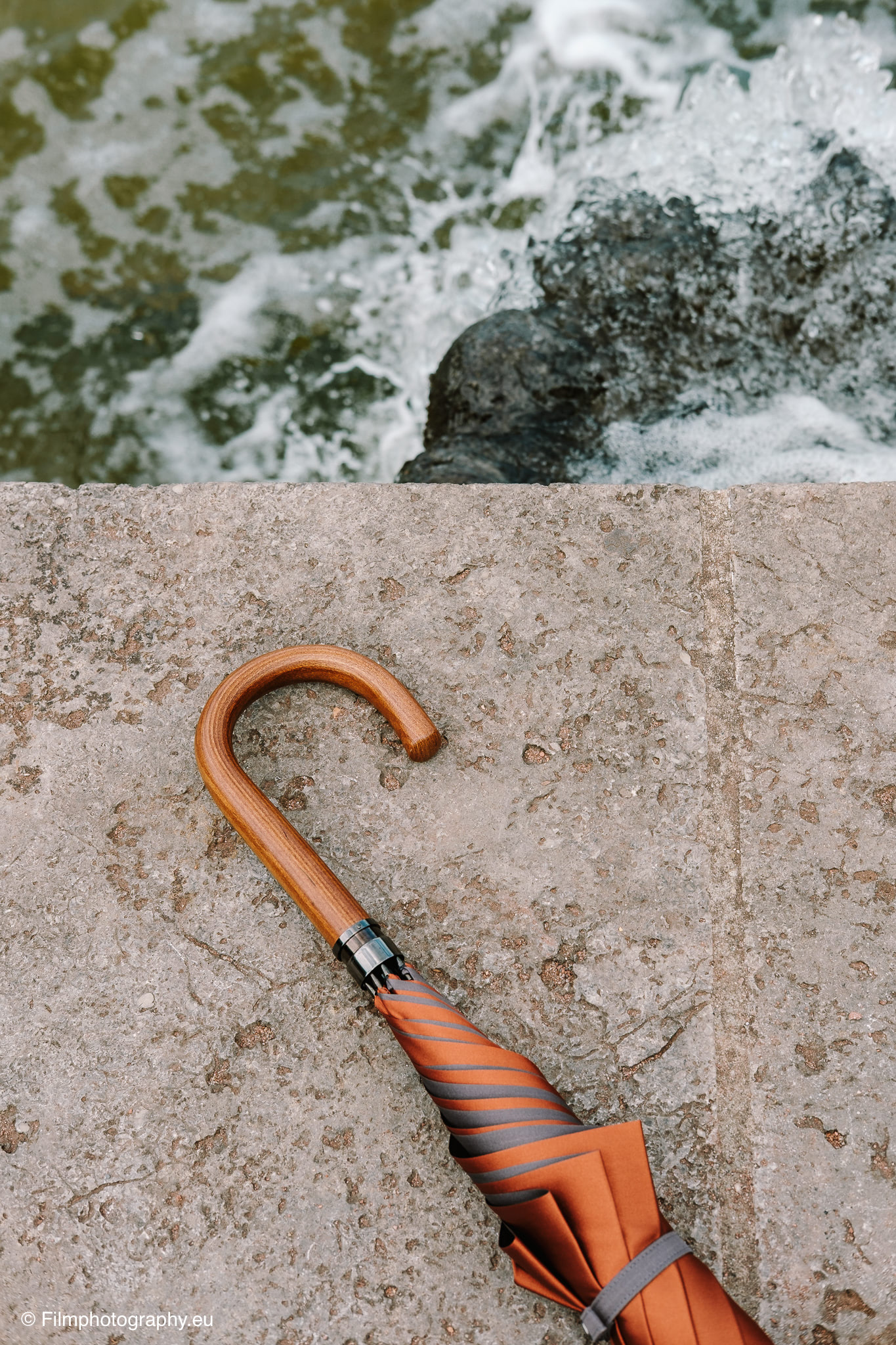
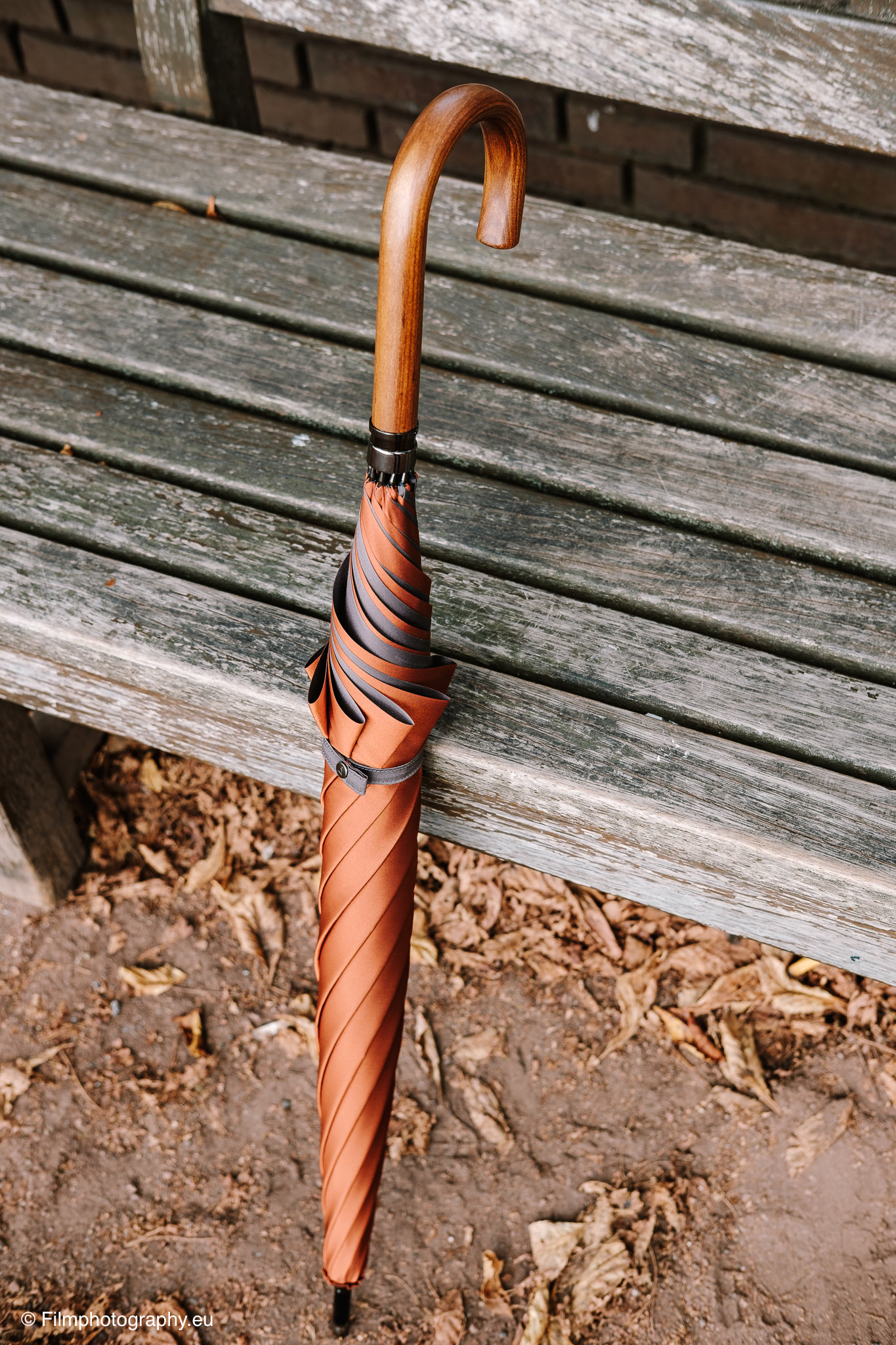
The design is simple and elegant, a combination of classic form and modern materials. It is an umbrella that does not loudly demand attention but impresses with its understated quality. It fits with a suit on the way to an assignment as well as with functional outdoor clothing for a landscape photo session in drizzling rain.
Komiya Shoten Forest / フォレスト
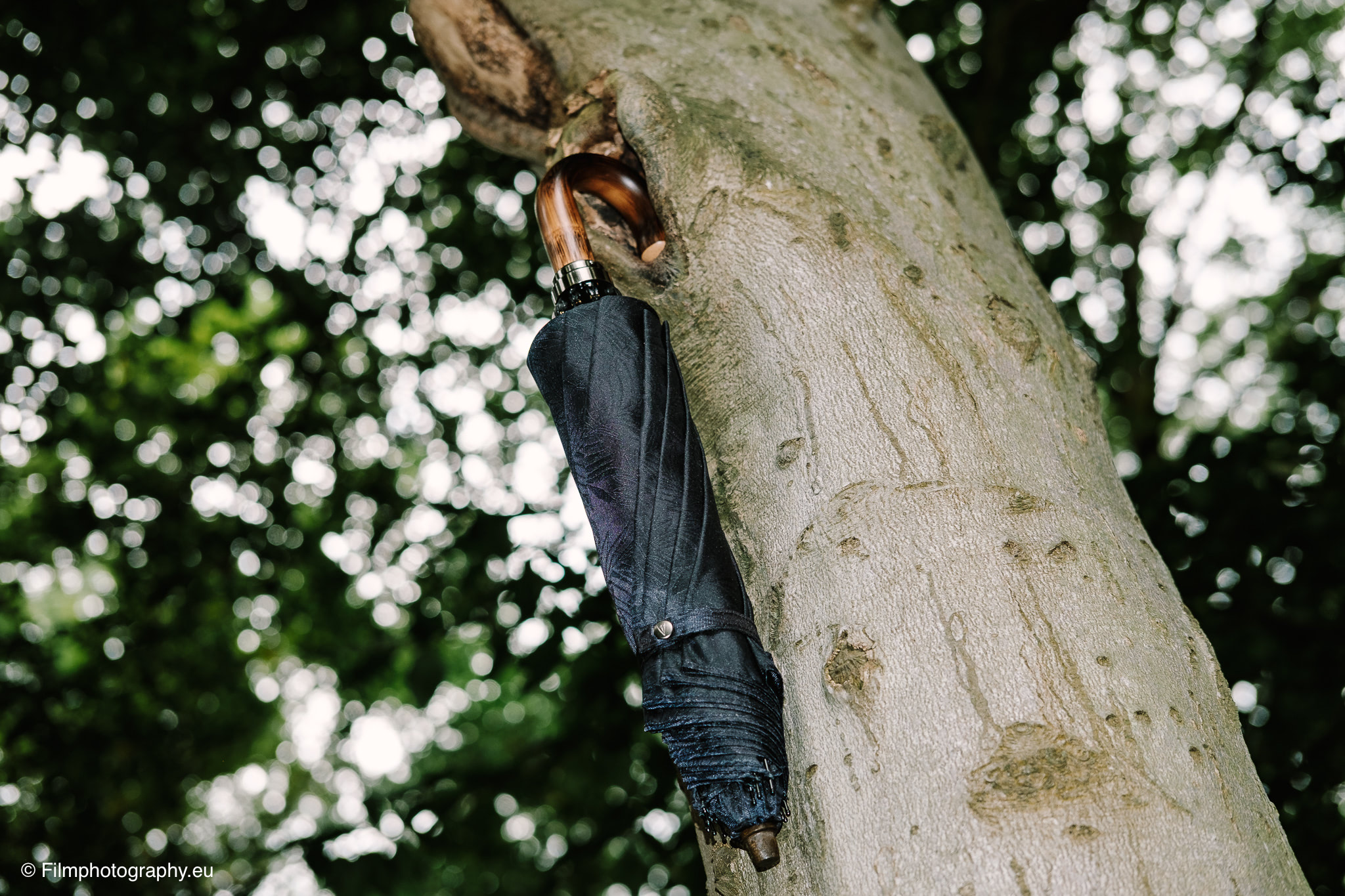
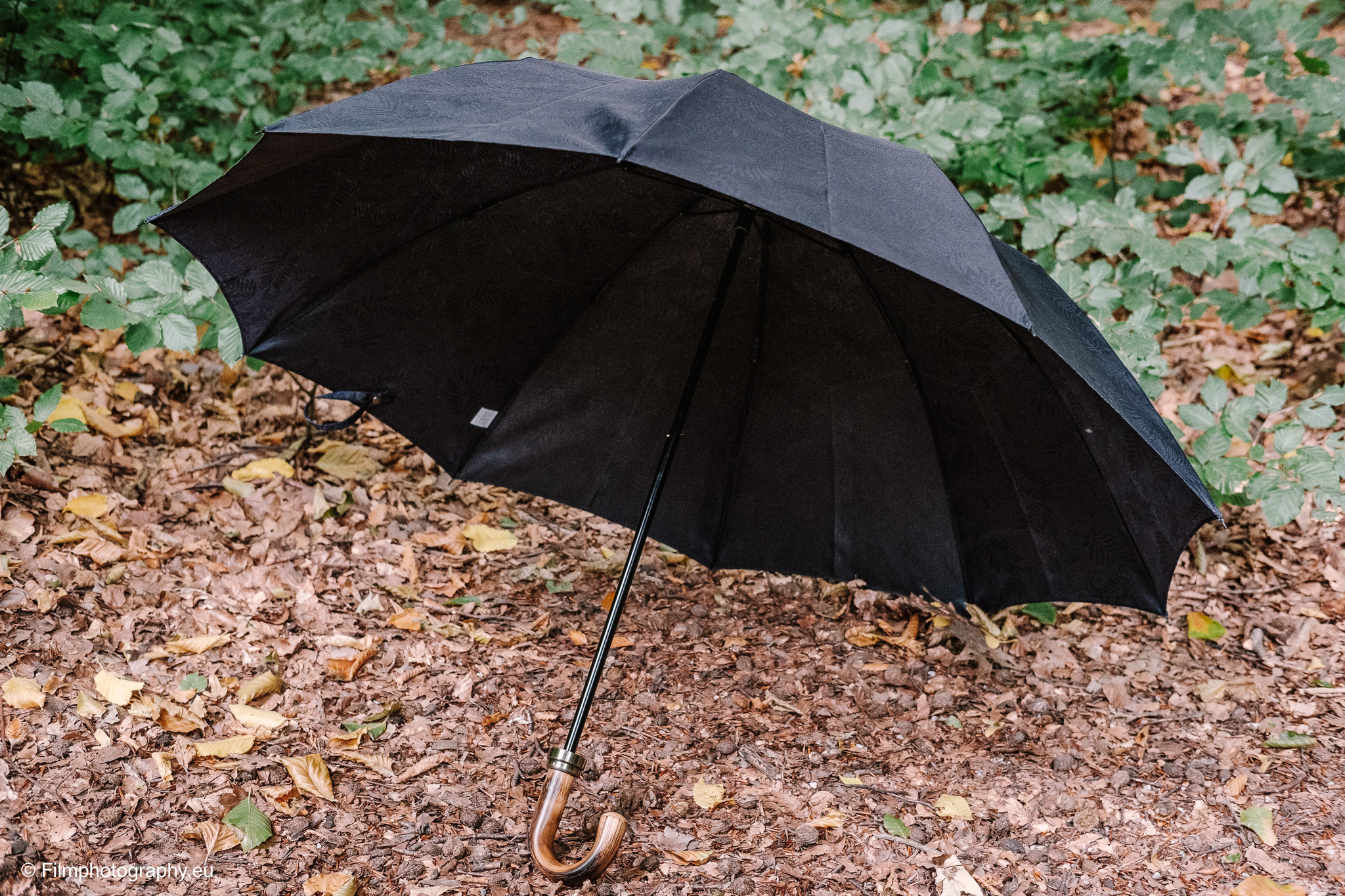
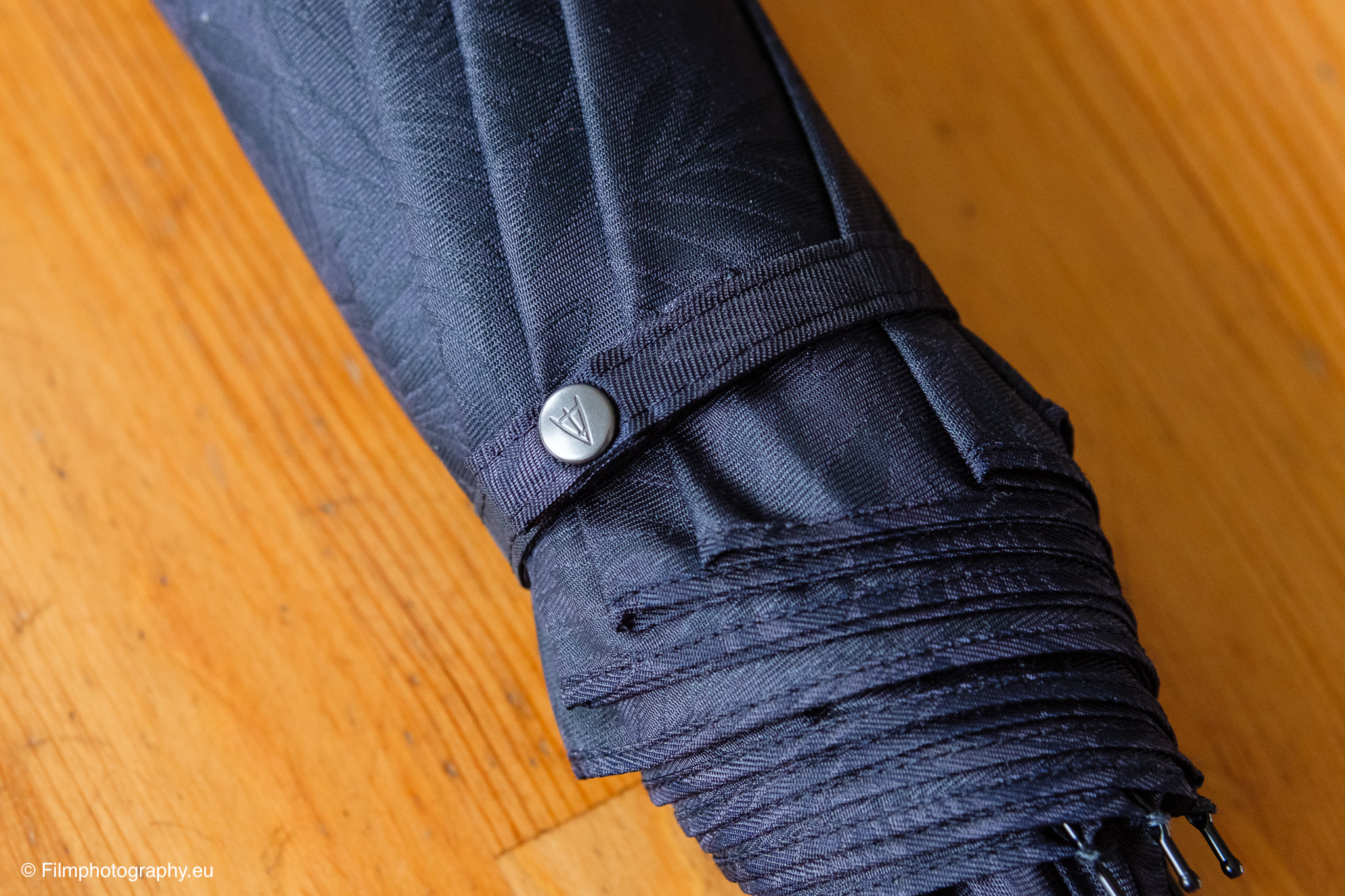
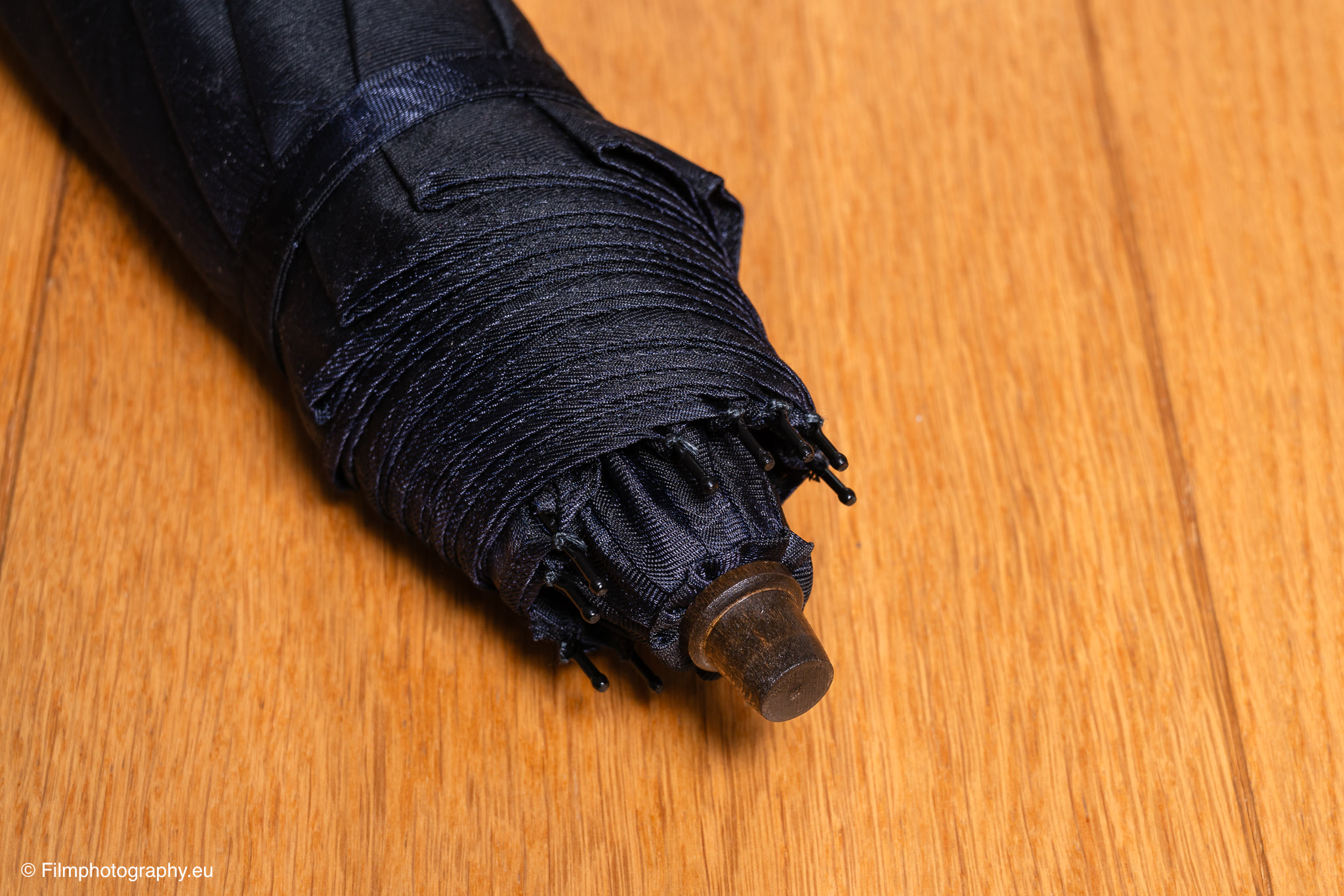
As a second model, I received the “Forest” folding umbrella, or more precisely the “Forest Jacquard Folding Umbrella”. This umbrella also embodies Komiya Shoten’s philosophy, but in a different, more compact way.
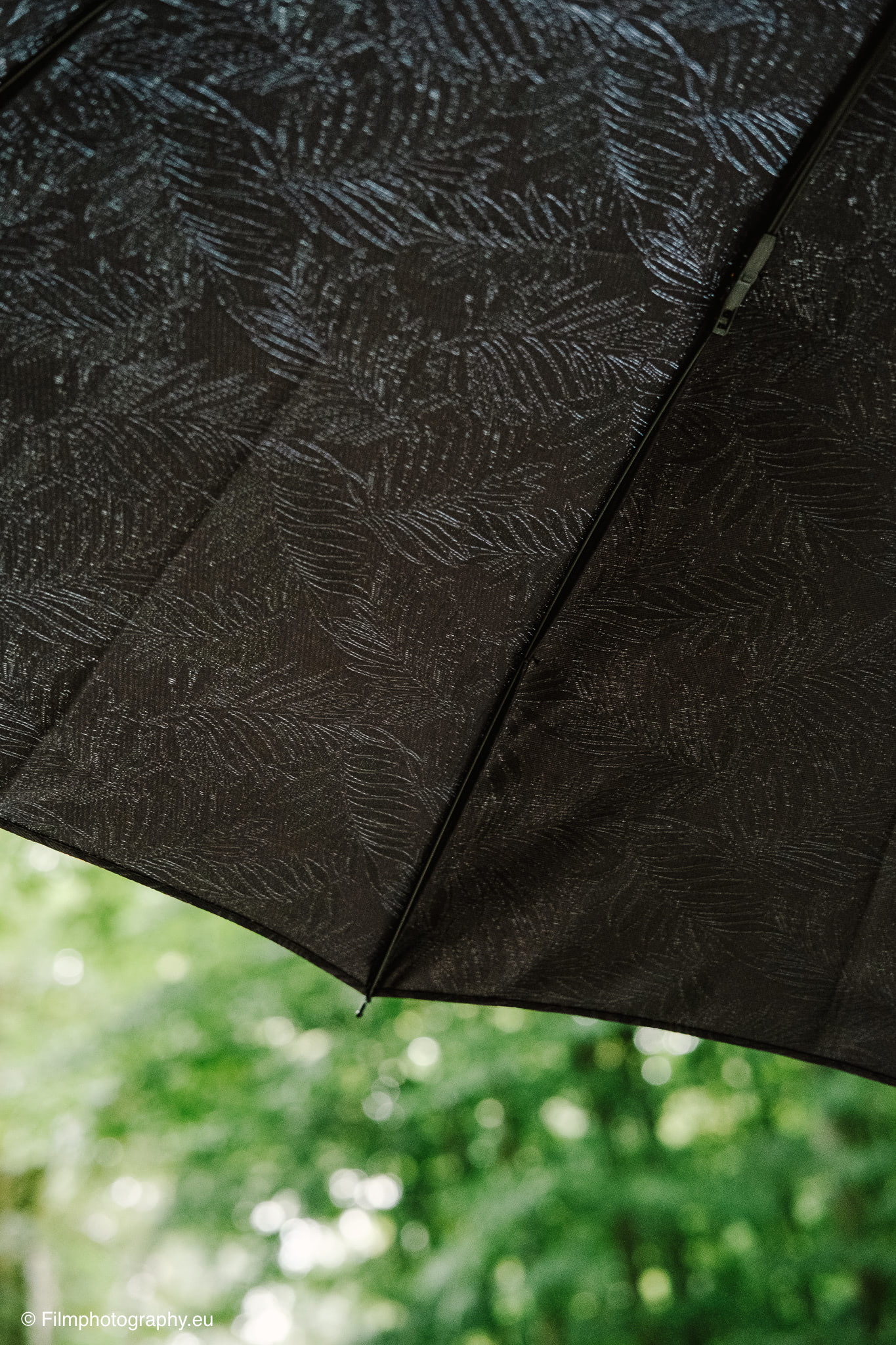
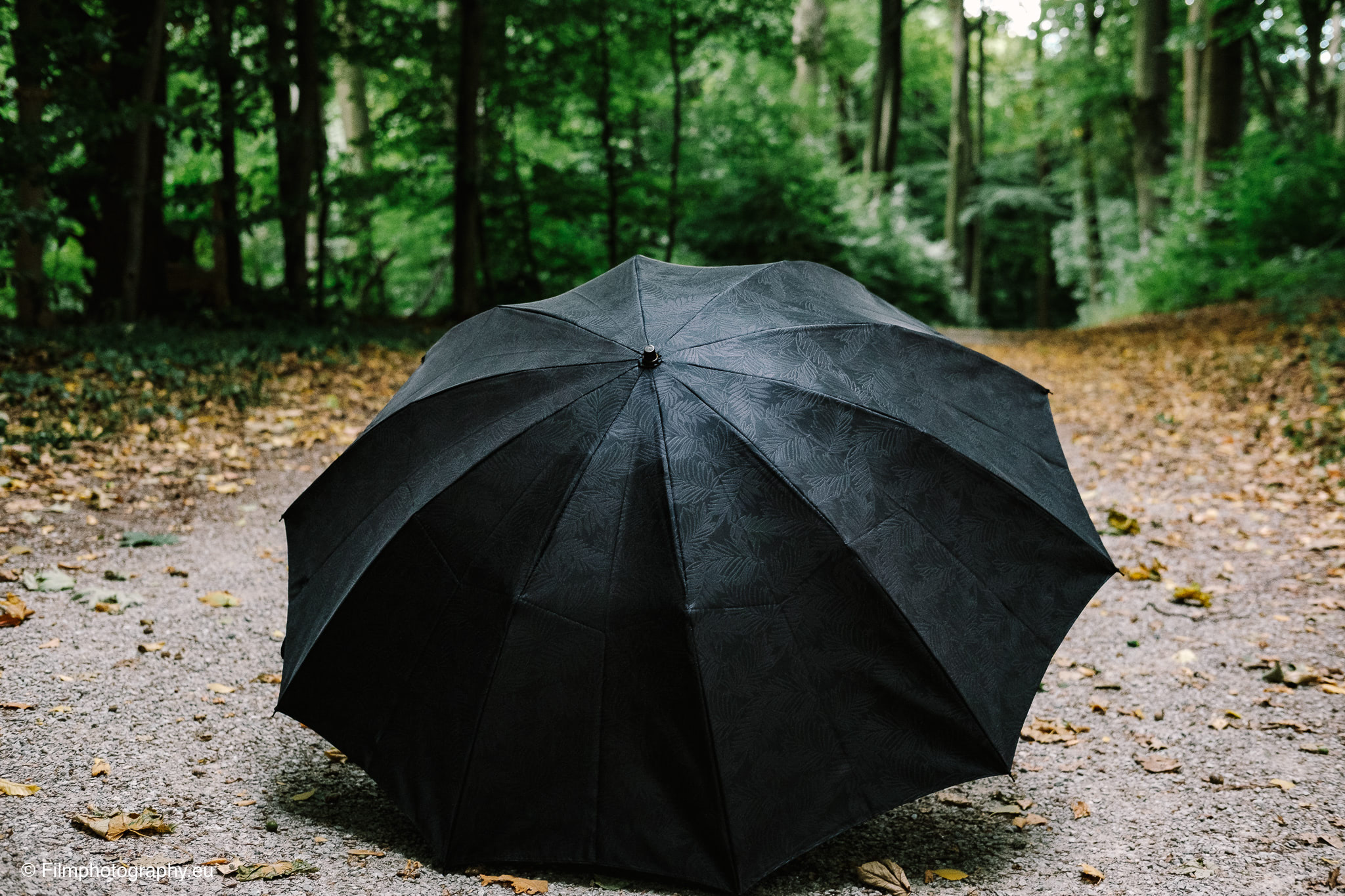
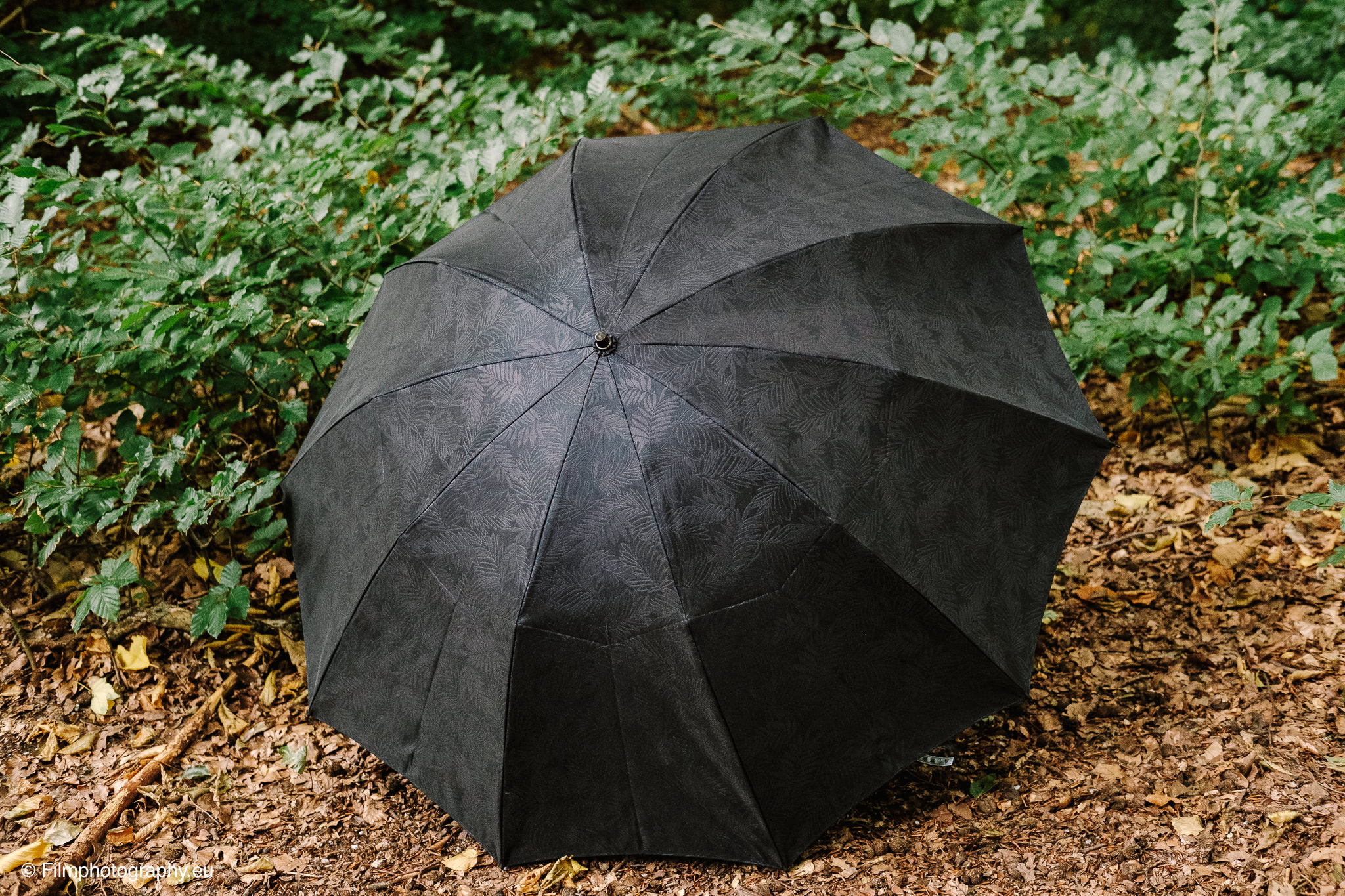
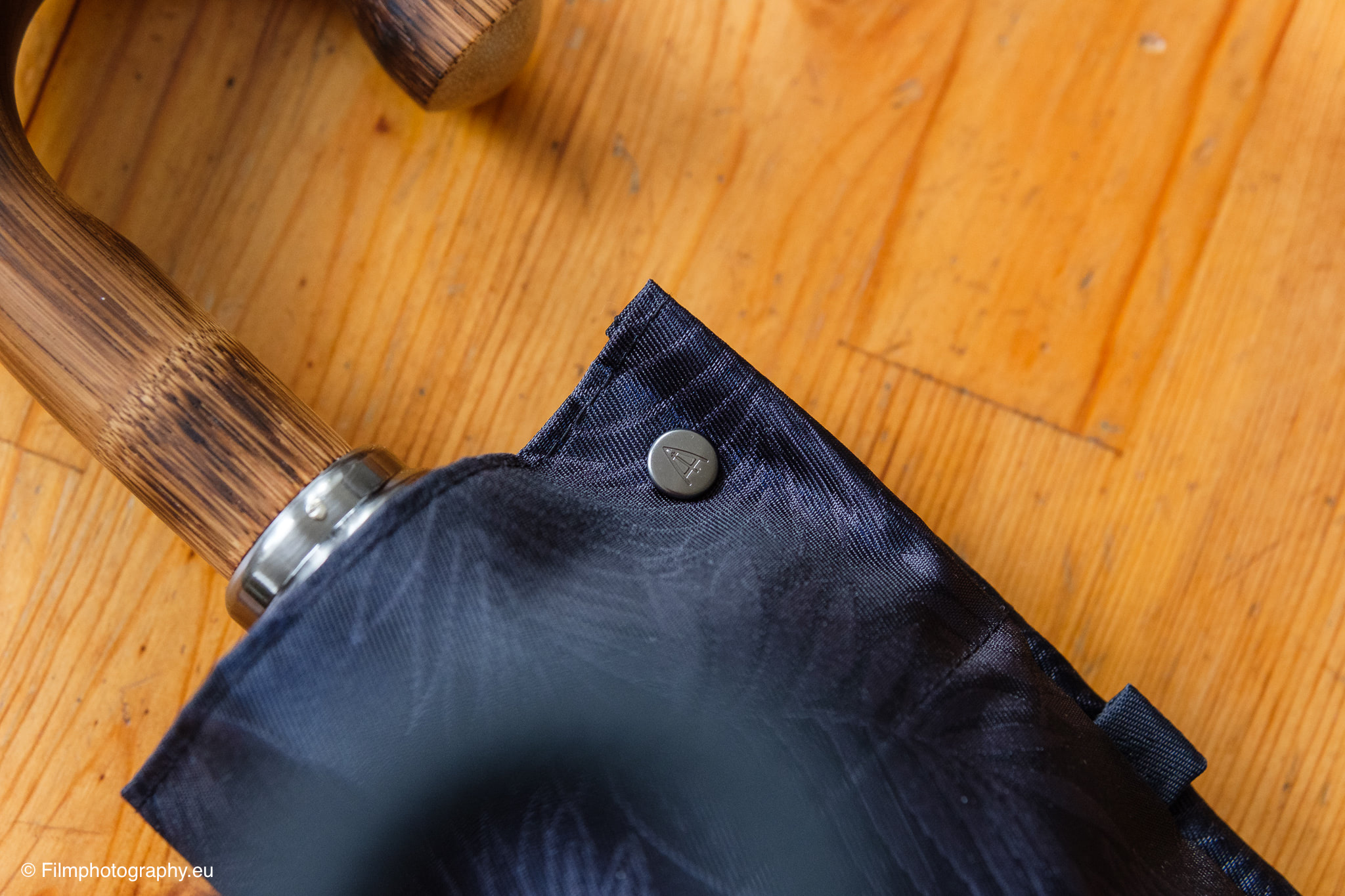
What immediately catches the eye is the elegant leaf pattern, which is woven into the Koshu-ori fabric using the Jacquard weaving technique. The pattern is subtle, but upon closer inspection, it reveals an impressive depth of detail and gives the umbrella a very elegant appearance.
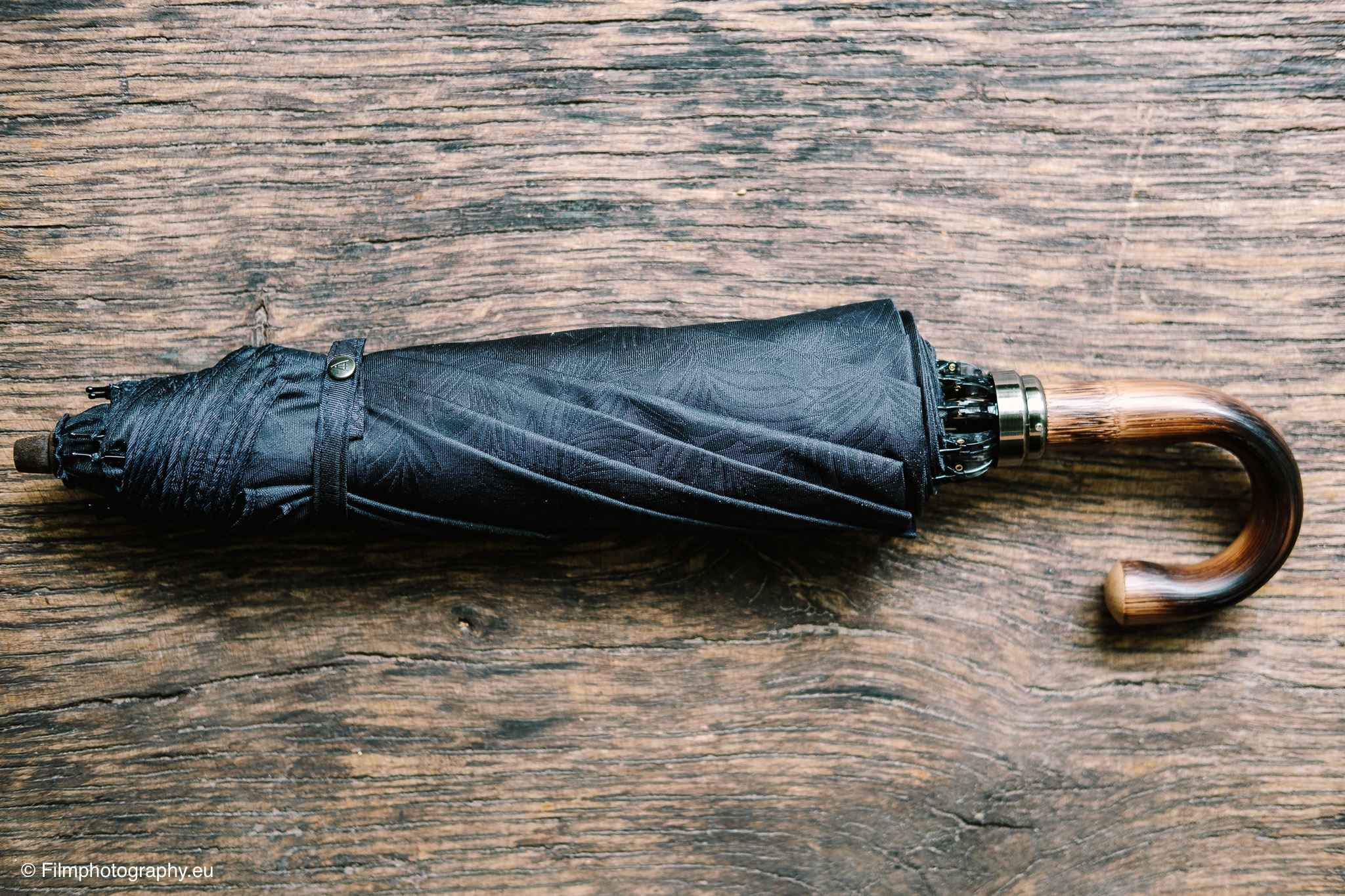
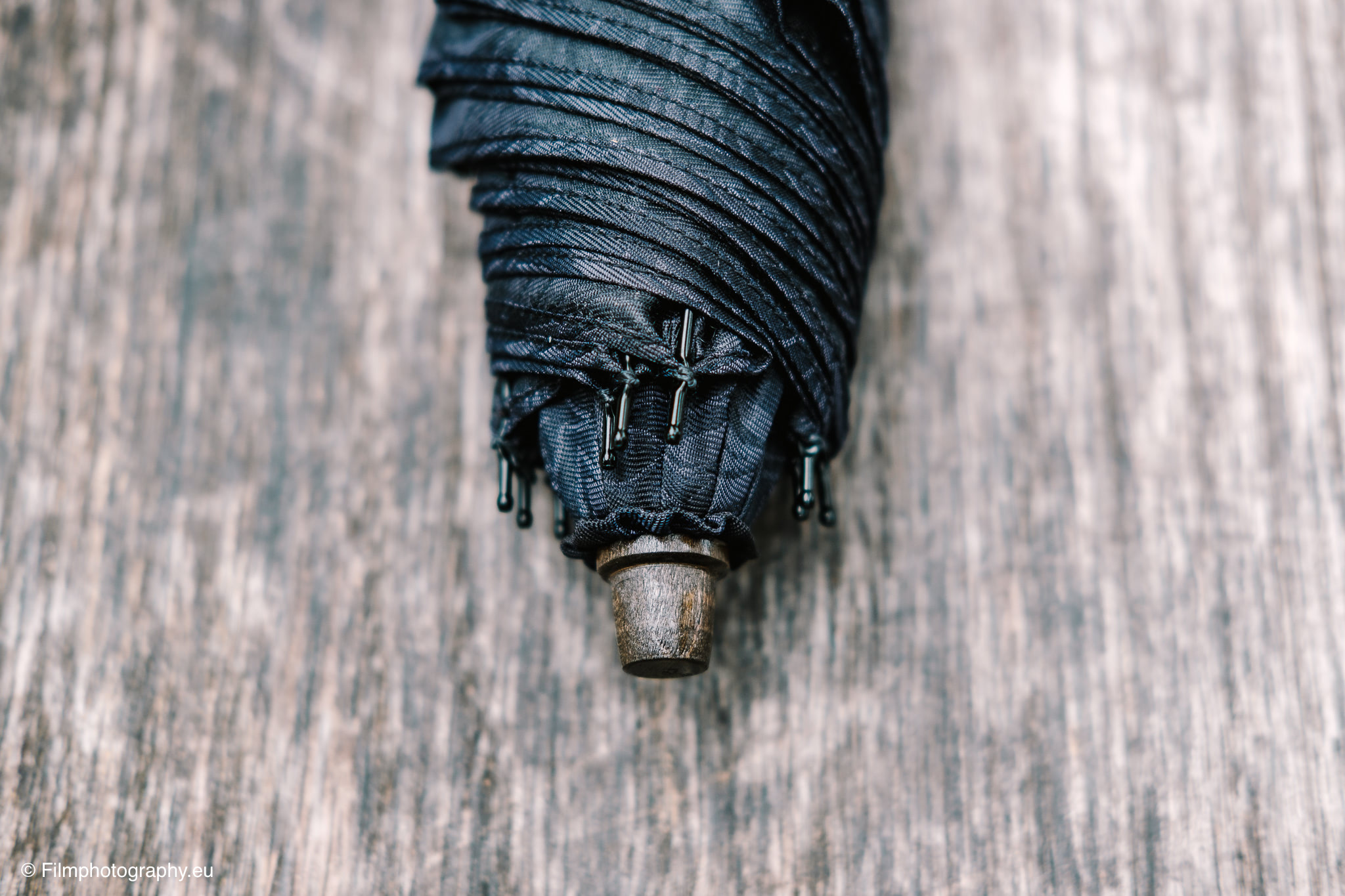
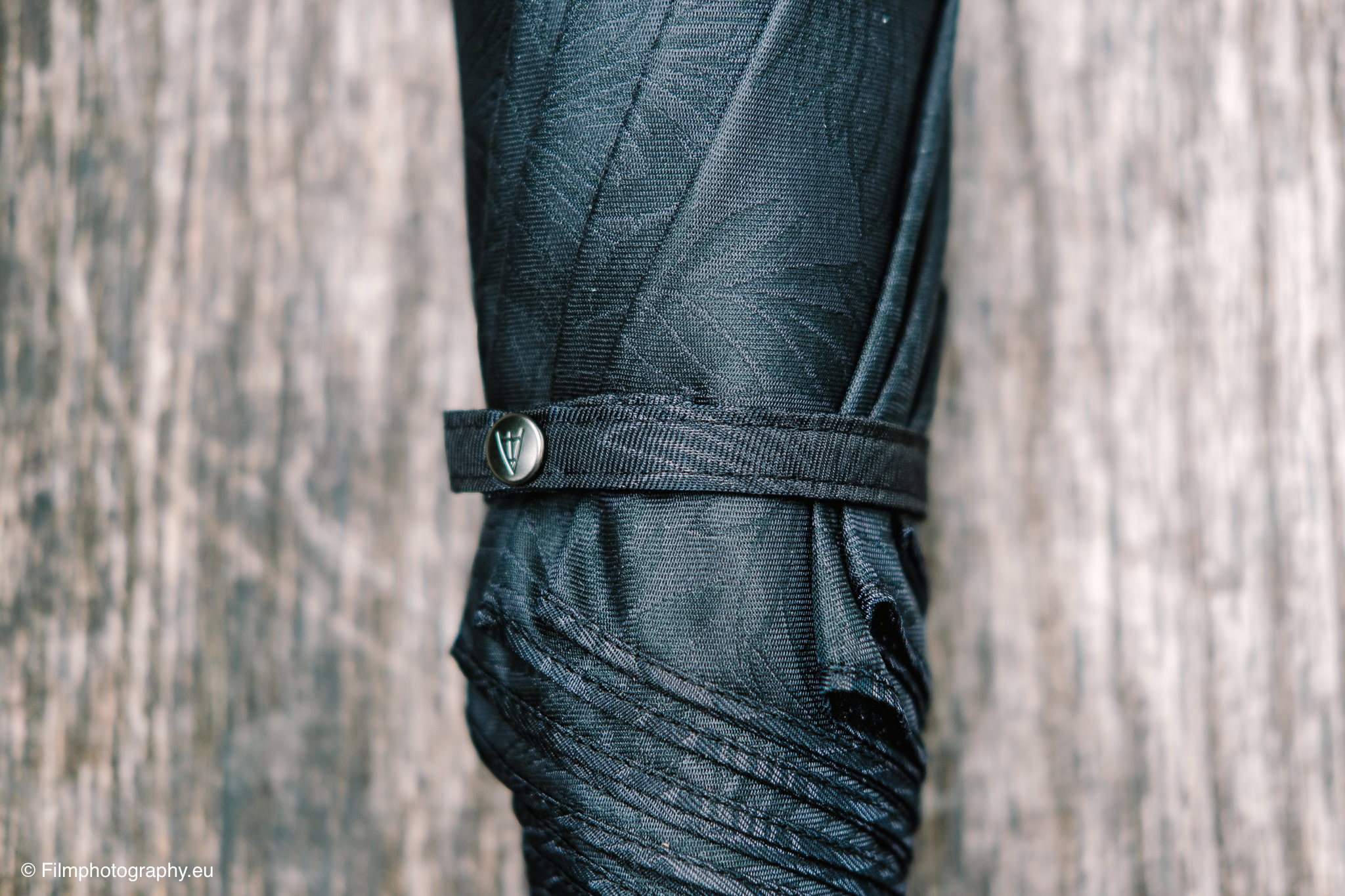
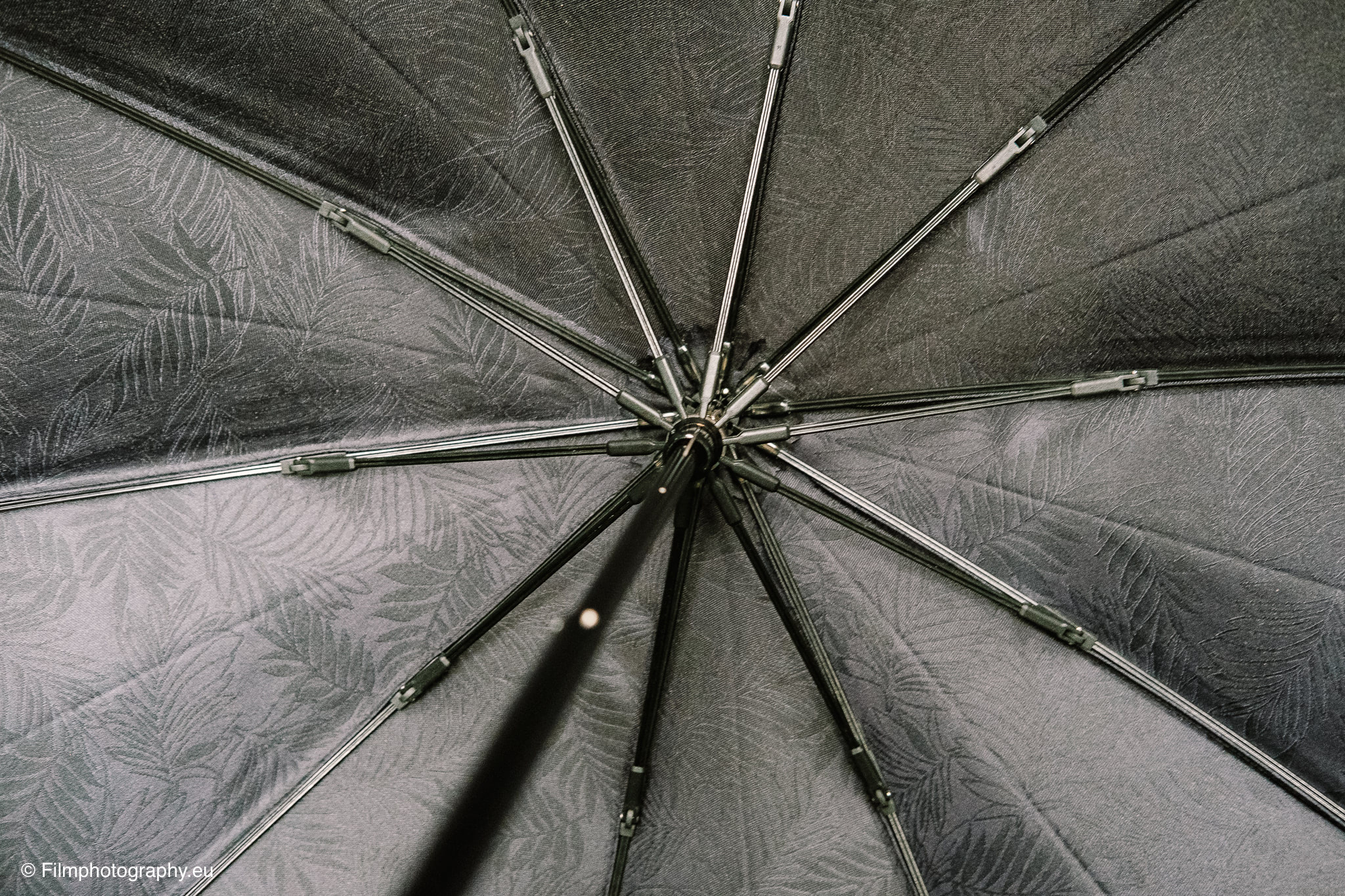
Unlike many folding umbrellas that are trimmed for maximum compactness and lose stability in the process, the Forest takes a different approach. With ten fiberglass ribs, it is built much more robustly than most of its peers.
This construction makes it resistant to wind and gives it a remarkably beautiful, almost round shape when open, reminiscent of a classic long umbrella. The diameter of 105 cm is generously sized for a folding umbrella and effectively protects against rain.
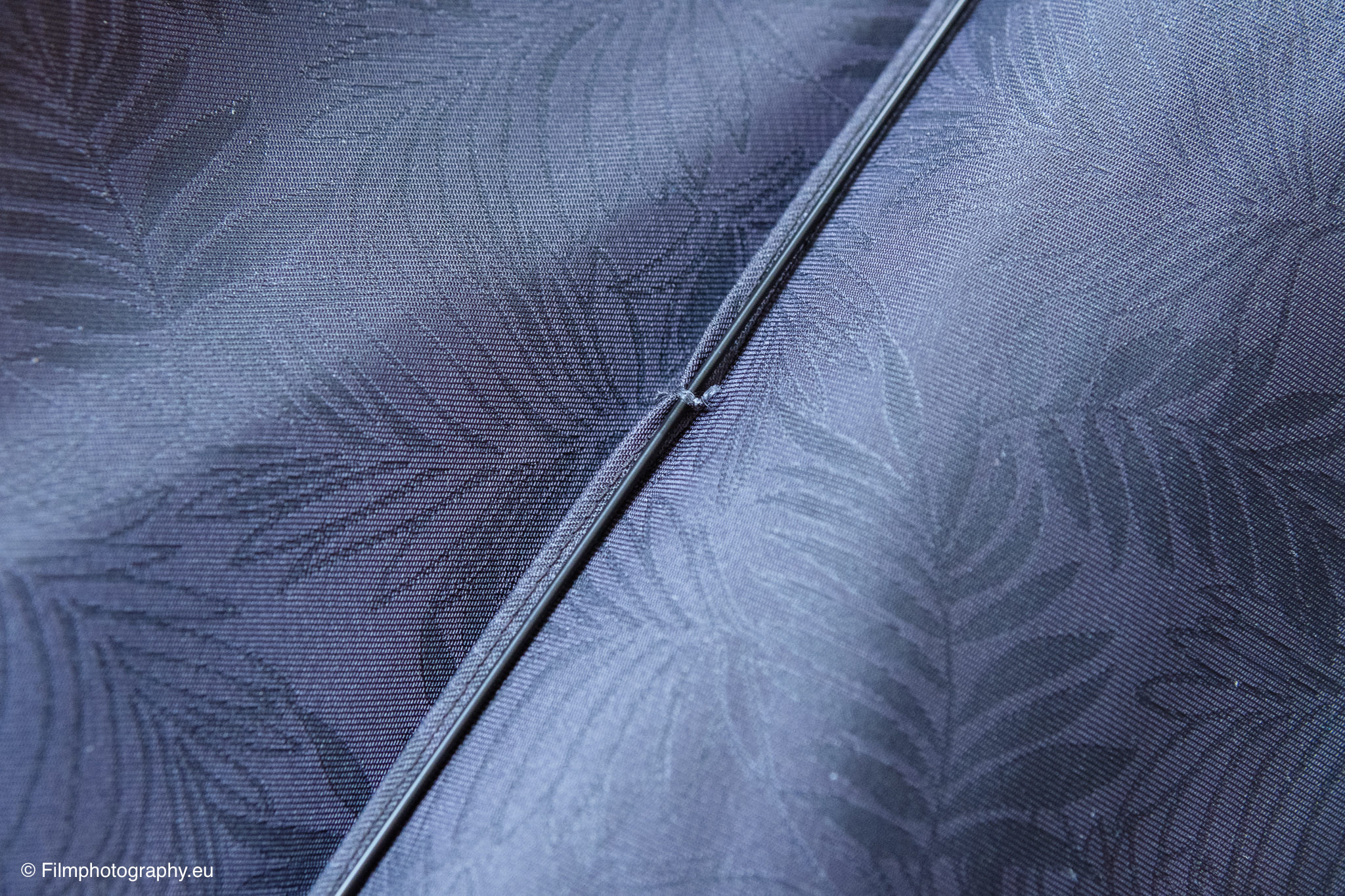
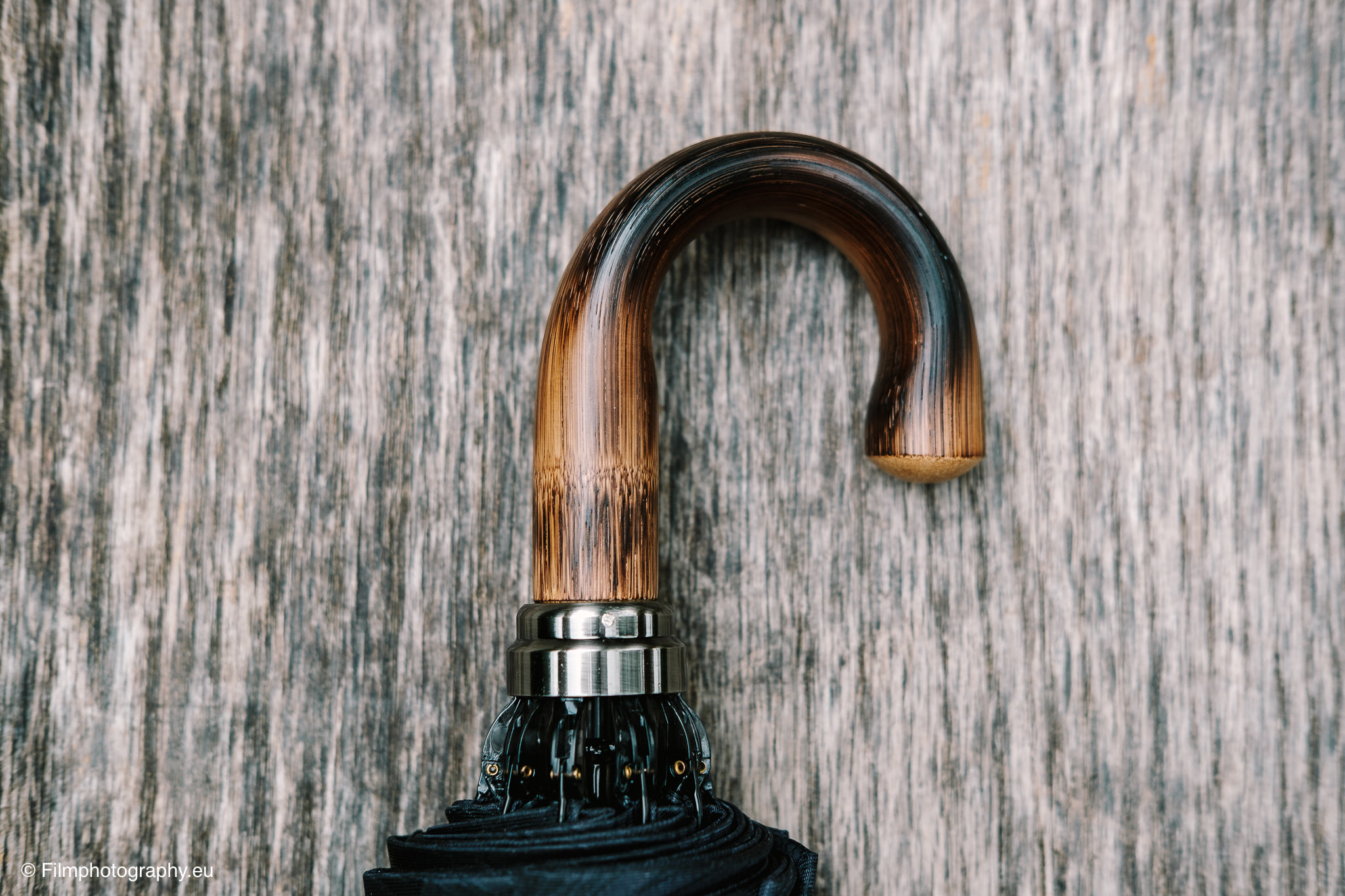
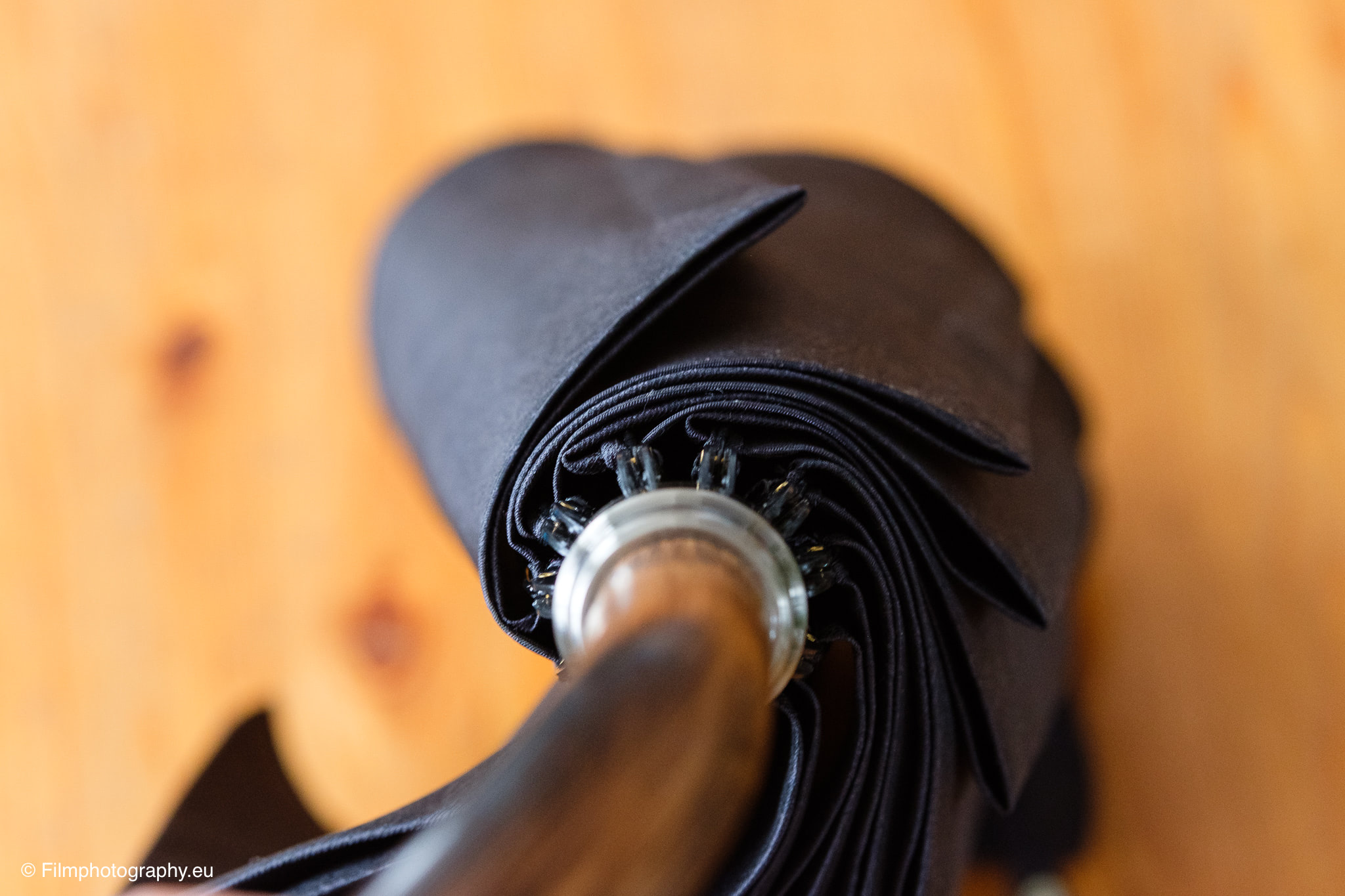
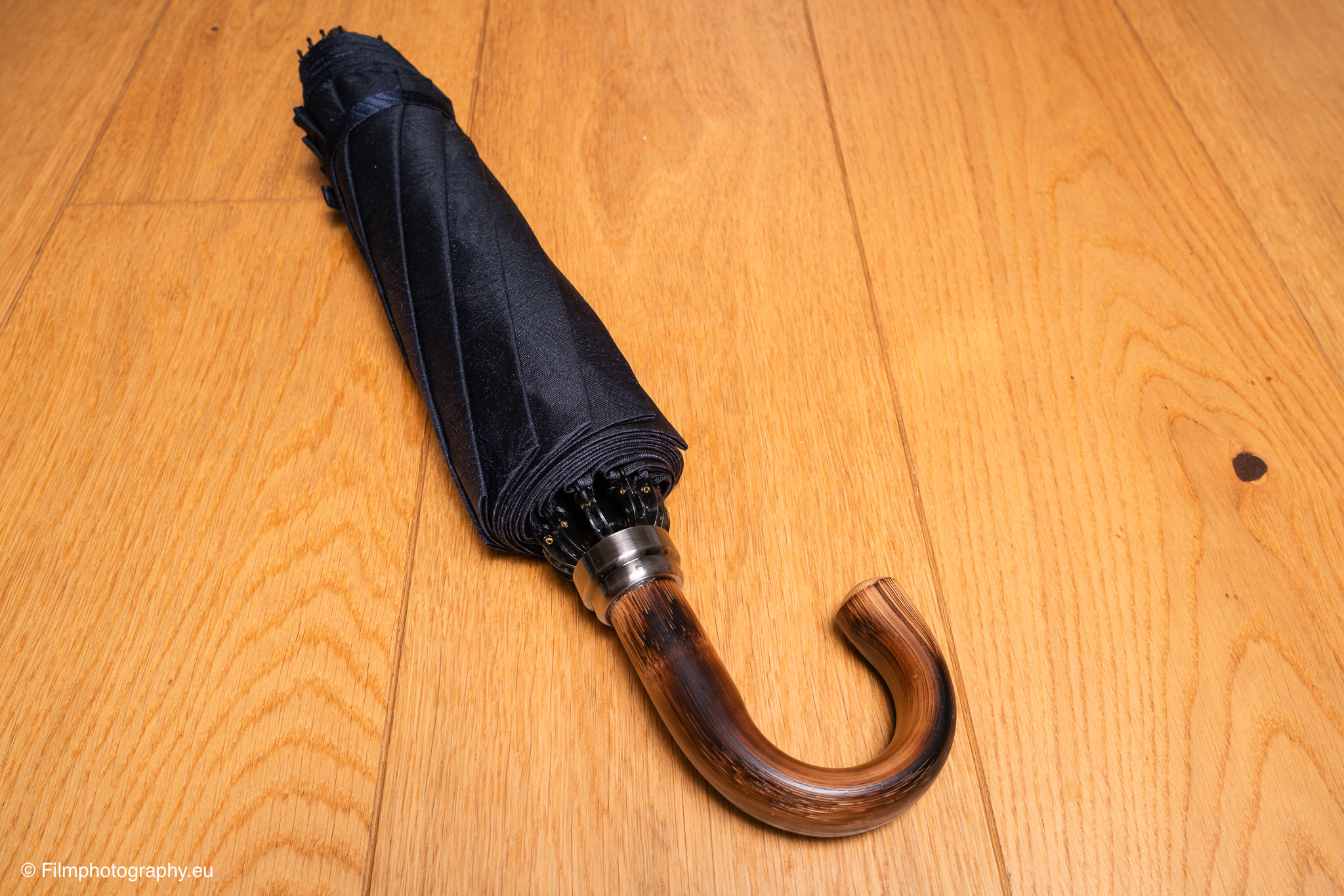
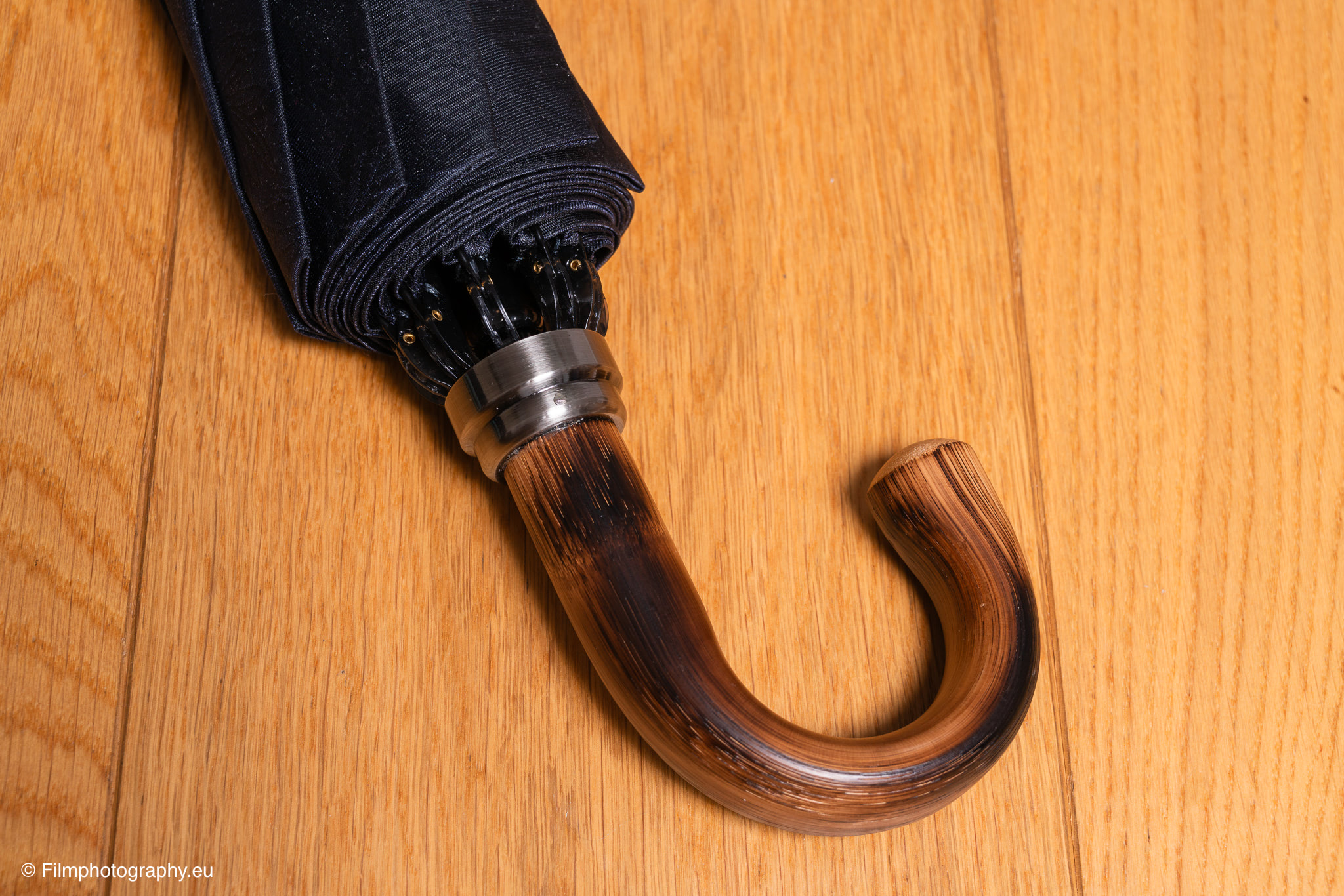
The rattan handle is not only a visual highlight but also functional. The material is light, durable, and very grippy due to its natural texture. Scratches or signs of wear are less noticeable, which benefits its longevity.
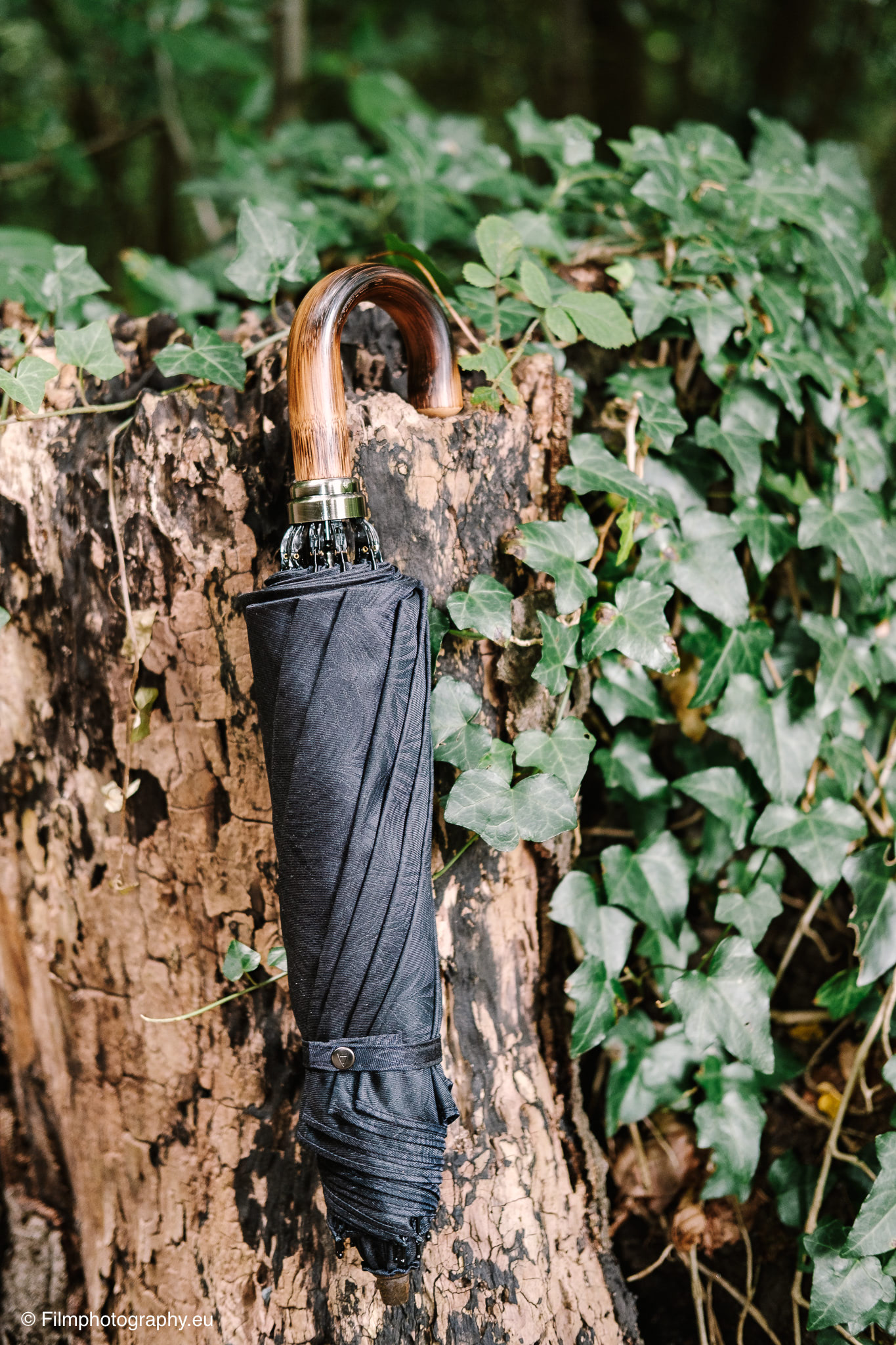
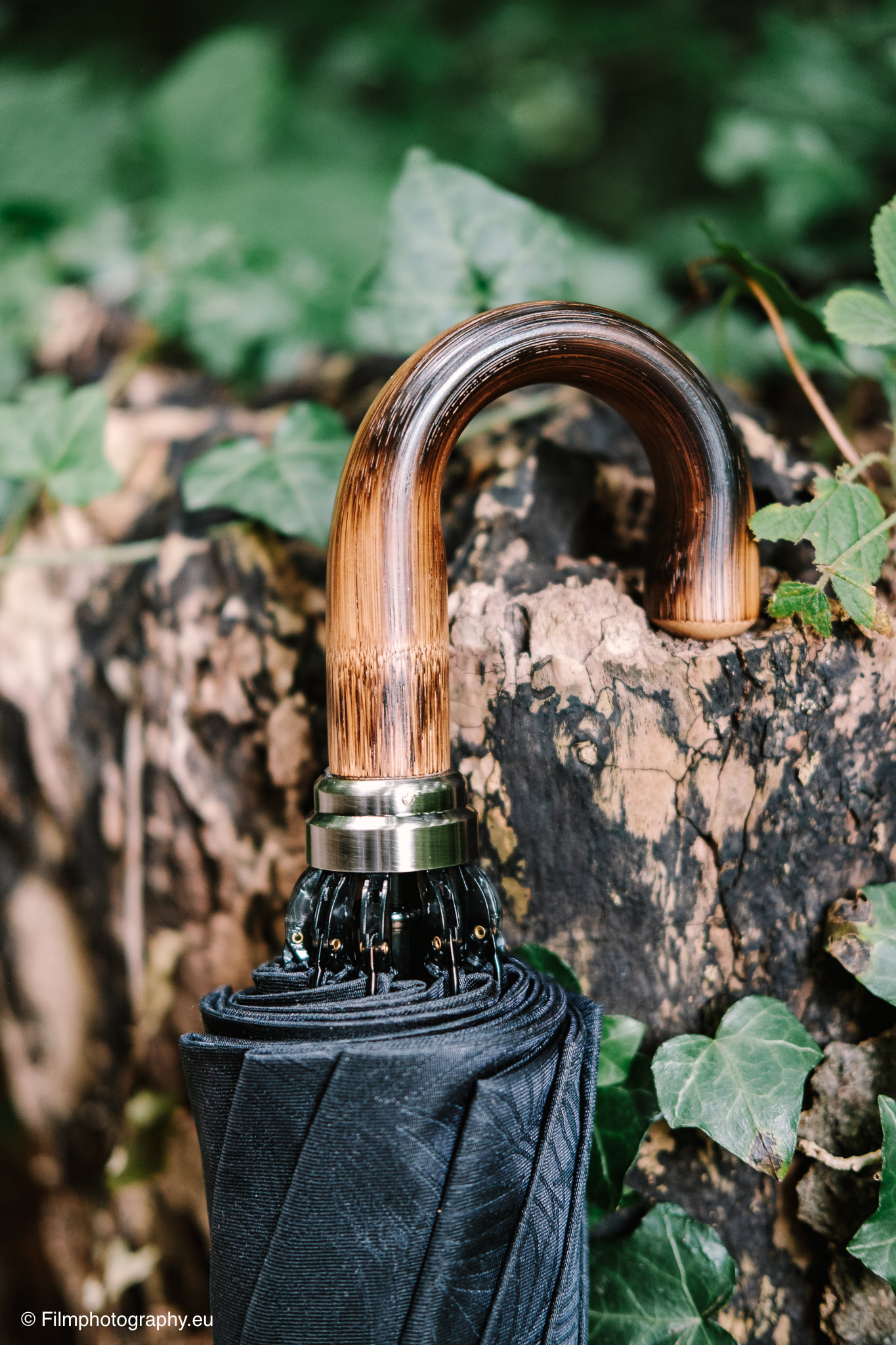
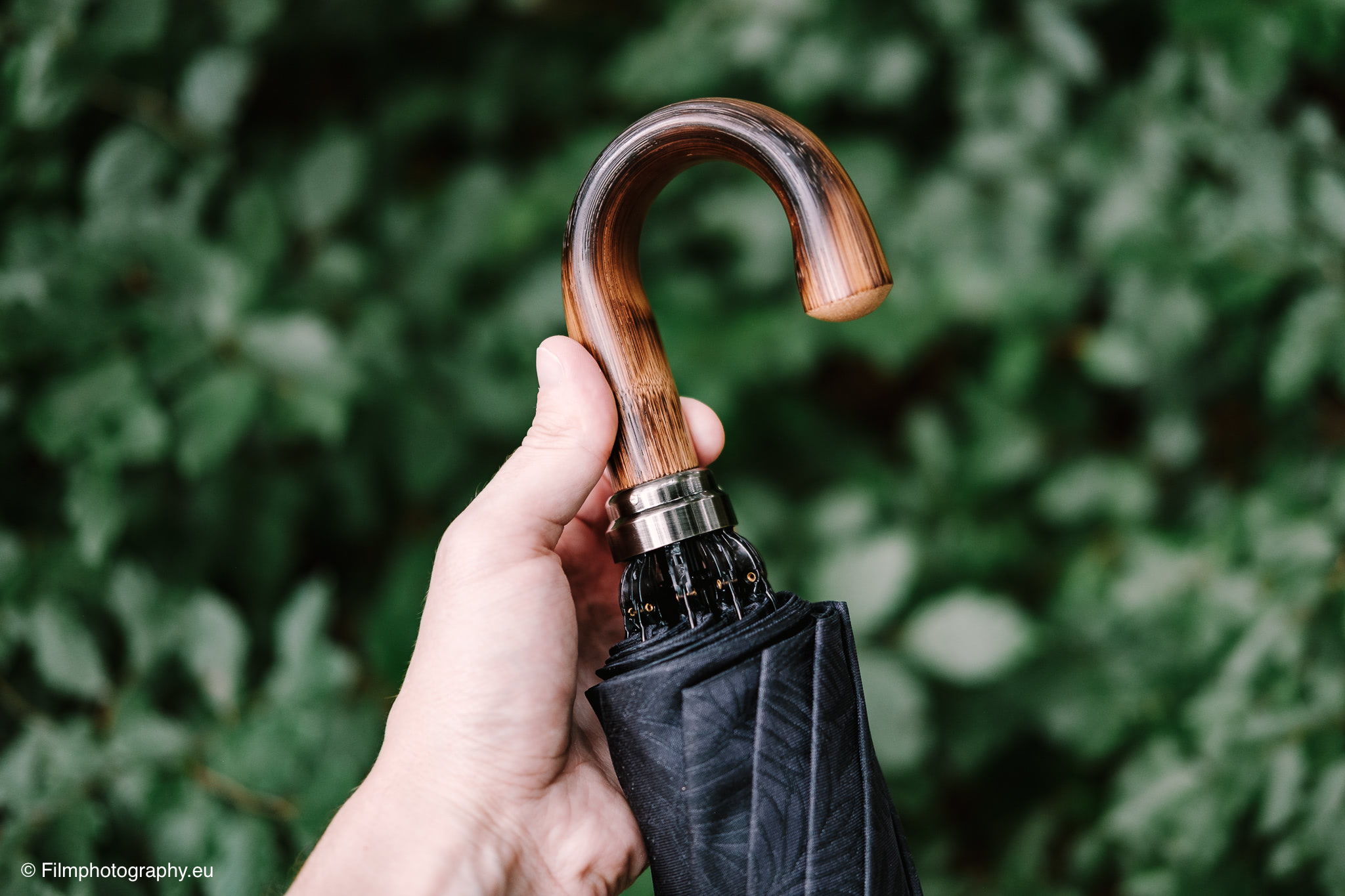
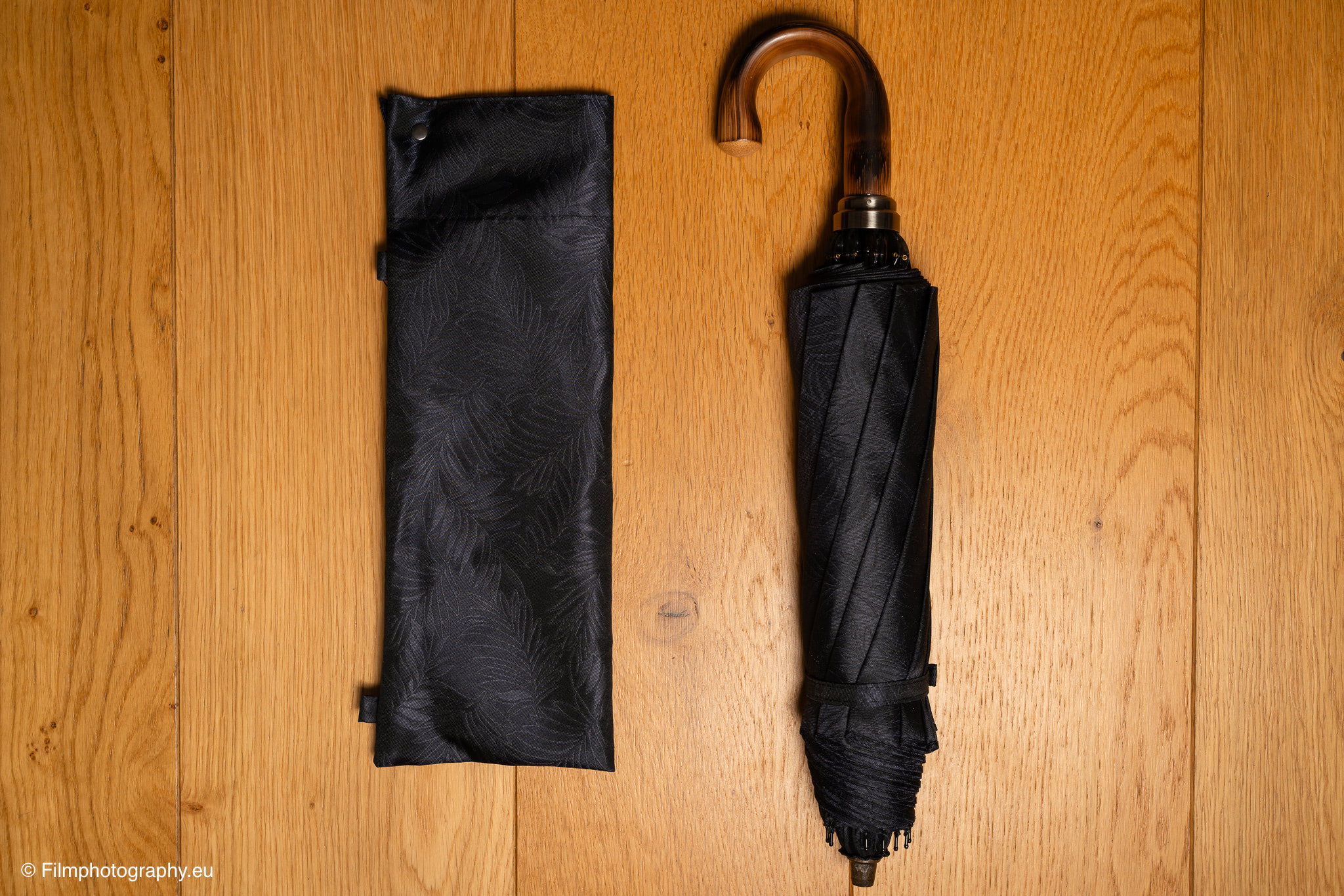
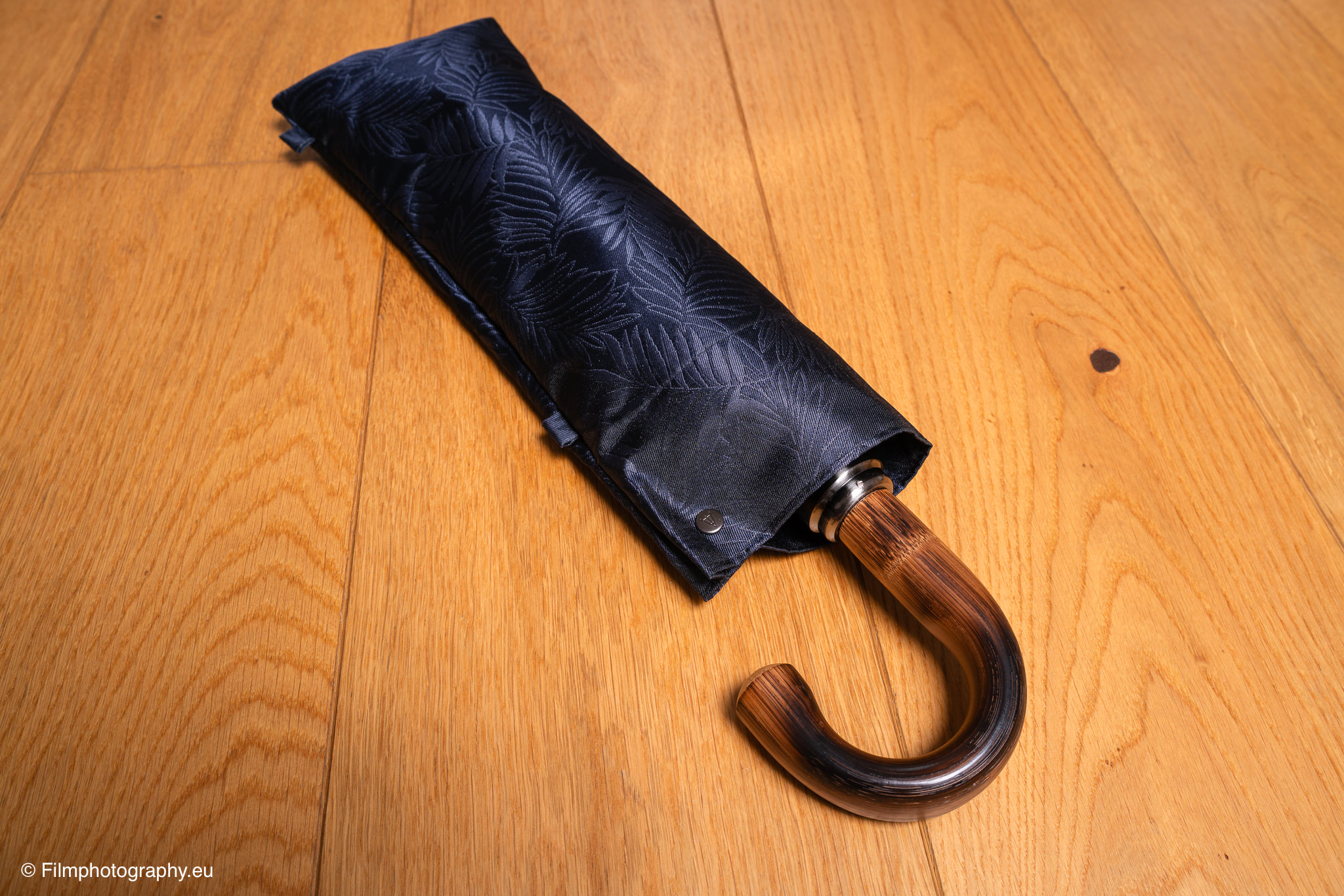
When folded, the umbrella measures approximately 44 cm, making it not the smallest, but a well-stowable companion in a camera bag or backpack. The weight of around 450 grams is due to the stable construction and conveys a sense of solidity.
For a photographer, a folding umbrella is often a compromise. You need it for emergencies but don’t want to sacrifice too much space. The Forest umbrella is an interesting option here. It is compact enough to always have with you, yet robust and large enough to offer full protection when needed.
The ten ribs provide the necessary assurance that the umbrella will not fail at a crucial moment during a shoot due to a sudden change in weather.
The combination of the elegant Jacquard pattern and the rattan handle also makes it an object that you enjoy using. It is more than just an item of utility; it is a piece of craftsmanship that makes the often gray rainy day a little more beautiful.
Craftsmanship and Photography
Engaging with Komiya Shoten’s umbrellas strongly reminds me of my passion for analog photography. In both worlds, it’s about more than just pure functionality. It’s about appreciating thoughtful design, high-quality materials, and craftsmanship that has become rare in a fast-paced world focused on mass production and interchangeability.
A Komiya Shoten umbrella is not a disposable product. It is designed to be a faithful companion for many years, perhaps even decades. The company even offers repairs should something break.
This philosophy of longevity and sustainability is a conscious counterpoint to consumer society. Just as I maintain and use an old, mechanical camera again and again, such an umbrella is an object with which you build a relationship.
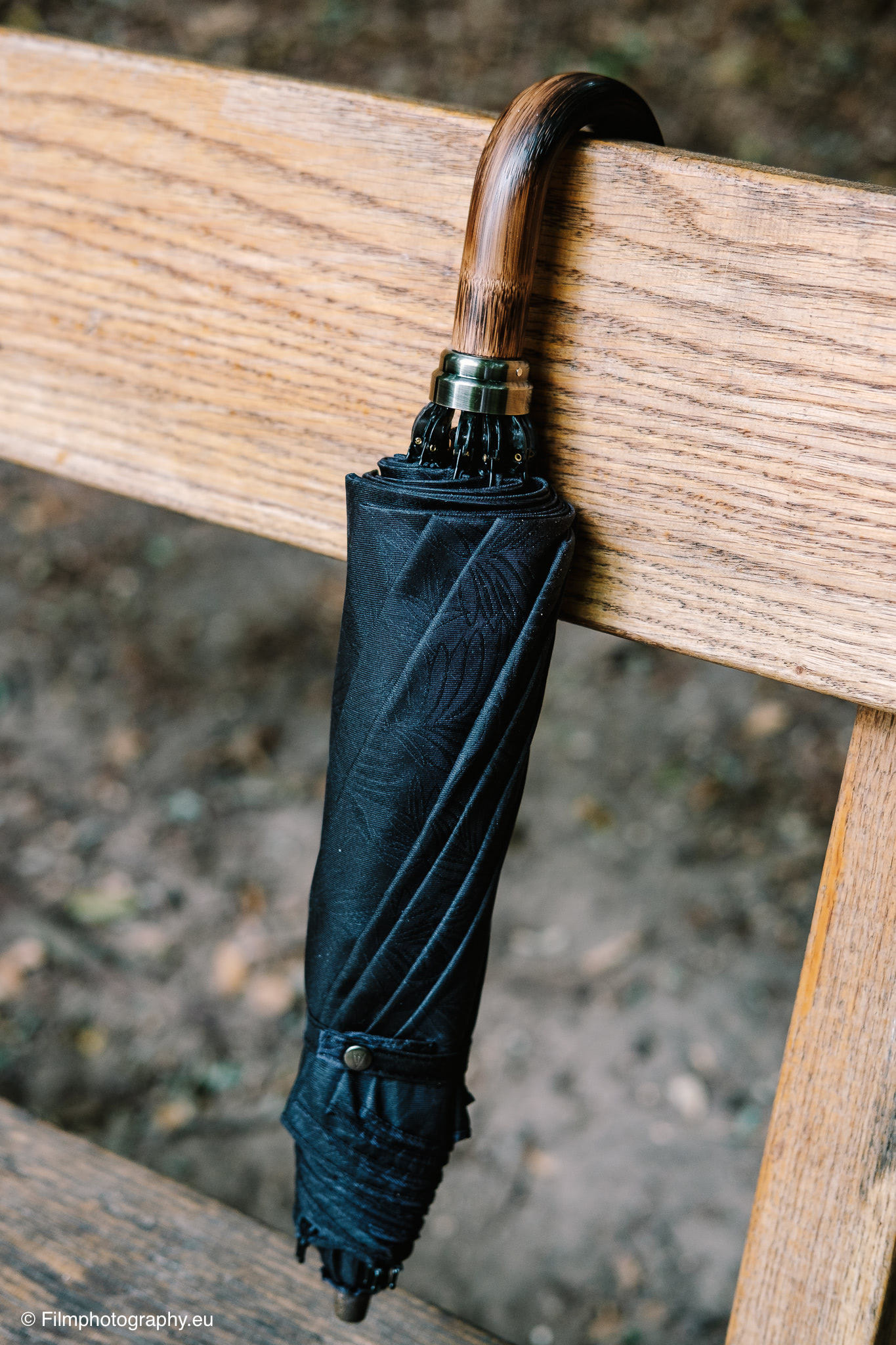
Komiya Shoten also offers more compact umbrellas; the length of the Forest is mainly due to the handle. However, the handle is much more comfortable to hold and looks much more stylish than the small handles found on normal folding umbrellas.
The balance of the design, with its simplicity and understated minimalism combined with classic, distinctive elements, is very impressive. This is also found, for example, in my favorite camera, the Olympus OM-2. The design is actually very simple, but still has a high recognition value, also due to the materials used.
Furthermore, both designs are timeless. An important characteristic for an object that you hopefully own for a long time.
Of course, the best design and the highest quality craftsmanship do not solve the fundamental problem that an umbrella is easily forgotten somewhere or is (un)intentionally taken. But perhaps that is also part of the idea. You might take a little better care of an object that you truly value, that you have consciously chosen, and whose history and quality you know. Just as you take special care of your favorite camera.
It’s about giving things value again, beyond their mere utility. And on a rainy day, unfurling an umbrella that not only keeps you dry but is also a joy for hand and eye is a small but fine luxury in everyday life.
Buy Komiya Shoten
You can easily buy Komiya Shoten umbrellas online. In the online shop, you will find the TwoPly and the Forest. International shipping is also available. If you are in Japan, you can visit the Komiya Shoten store in Tokyo.
More Pictures
TwoPly
Forest
Great review! As a fellow photographer, I totally get the need for reliable gear, including a good umbrella. You mentioned Komiya Shoten offers repairs, which is fantastic for longevity.
This article truly resonated with me! The idea of surrounding ourselves with ‘special everyday objects’ that are built to last and have a story is such a refreshing perspective in our disposable world. It’s exactly why I love my vintage fountain pen – it’s not just for writing, it’s a piece of history and craftsmanship. And the parallel to analog photography? Spot on. Thanks for articulating this so beautifully.
Fascinating dive into Komiya Shoten’s history. It’s incredible how many traditional businesses like theirs adapted and survived by doubling down on quality when the market shifted to mass production. The detailed descriptions of the Koshu-ori fabric and the specific weaving techniques really highlight the level of dedication involved. It’s more than just an umbrella; it’s a testament to preserving heritage.
Absolutely love the sentiment about cherishing objects and their stories. It reminds me of the artisan-made leather bag I finally invested in last year. It was a splurge, but the quality and the way it’s aging, developing character, makes it so much more meaningful than any fast-fashion equivalent. It truly changes your relationship with your possessions. Maybe I should look into a proper umbrella now too!
Yes! Someone finally gets it! The ‘limitations’ of analog photography are precisely what makes it so rewarding. That anticipation for the developed film, not being able to chimp, truly thinking about each shot – it all contributes to the unique magic. And connecting that to well-made everyday items makes perfect sense. Why wouldn’t you want to invest in tools that bring joy and last, whether it’s a camera or a fantastic umbrella?