My review of the new Fujifilm Instax Mini 8, or why instant photography is so great.
Why buy an instant camera, we all have our digital cameras, mobile phones and, and, and, which show us the pictures immediately. Of course, it is not suitable for everyday photography, which is due to the price of the films. But there are still areas in our digital world where an instant camera makes sense.
A typical case would be a wedding or a big birthday, where guests can take pictures for a guest book or similar. Another application would be taking pictures for a diary, in which you make a matching picture for each text. Or you take an instant camera with you on your travels to leave a memory for your new friends. Or, or, or.
There are a lot of areas where an instant camera still has a right to exist. Just the face and the joy of the person being portrayed when they get their picture in their hands is worth it. As cool as it is to take a photo and send it around the world in a few seconds, it’s just something else to see a picture in your own hands while watching it appear from seemingly nowhere. That’s why it’s so important that this type of photography and technology doesn’t disappear.
Unfortunately, Polaroid has not been very successful with its products, Zink paper and printers.
In my opinion, a digital camera with a built-in printer is simply the wrong way to go.
And a printer that you can connect to your normal camera is not so sexy either.
It’s all the more beautiful to see that Fujifilm is successful with its Instax system. There is simply a demand for this type of photography. That’s why Fuji continues to work on the system and presented a new camera, the Fujifilm Instax Mini 8, at Photokina in 2012. I had the opportunity to test the new instant camera.
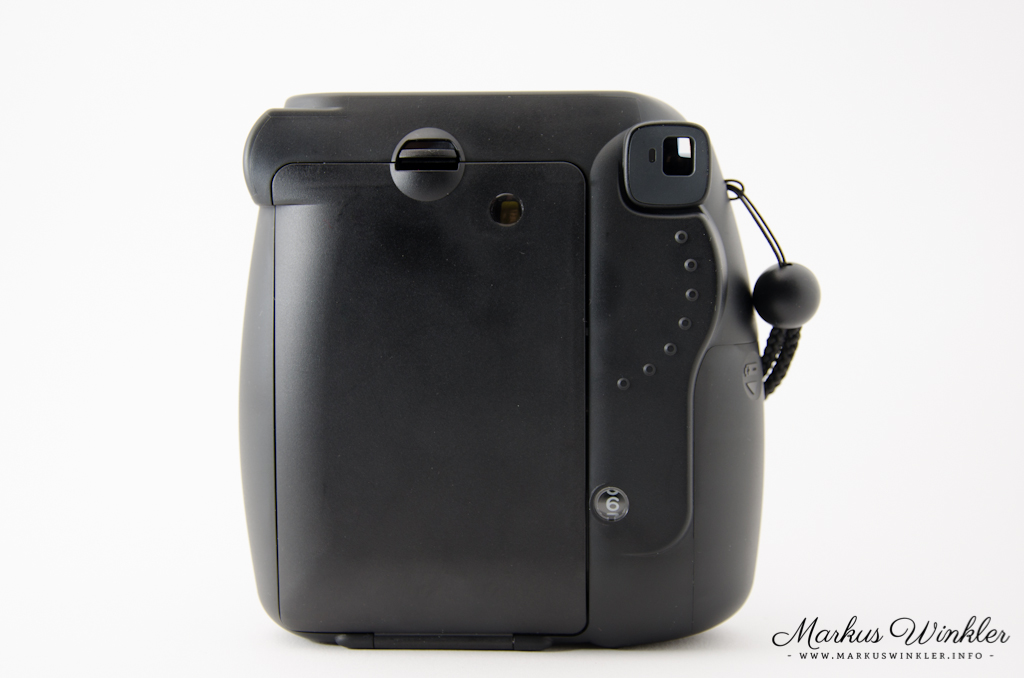
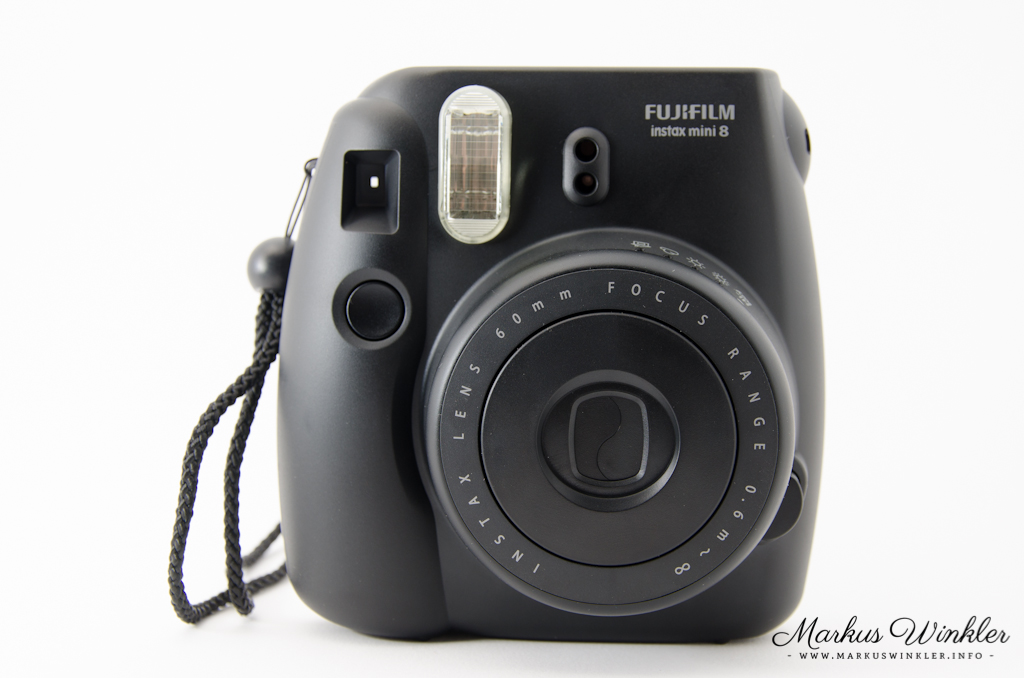
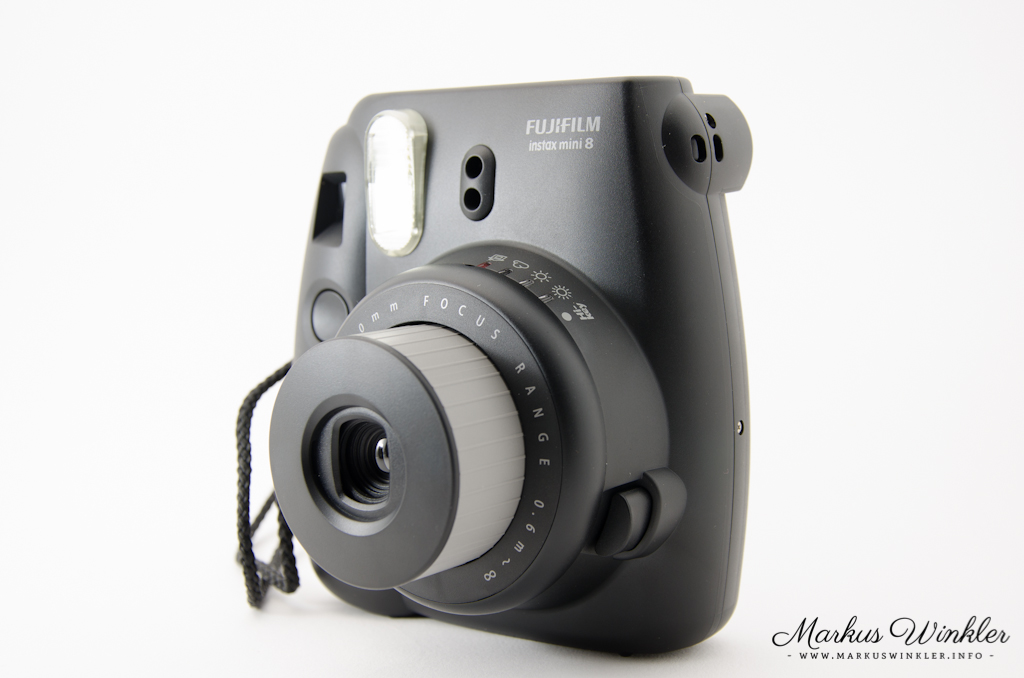
The Instax Mini 8 is the successor to the Instax Mini 7S. The first thing that stands out, of course, is the design of the camera. The 8 is significantly smaller than the 7S and is therefore more compact. It is slightly smaller than the Holga 120 N.
It is made of plastic and has a good weight with film and batteries, not too heavy but not too light either. The camera itself makes a stable impression, but I don’t think it would survive a fall from 2-3 meters without damage.
The Instax Mini 8 is available in five different colors. Black, white, pink, yellow and blue.
The last three are more pastel. Personally, I like black the best, but of course, this is a matter of taste. They do not differ in terms of functions, only in terms of packaging and, of course, appearance.
Something unusual for me is that the viewfinder is on the left side and not on the right or in the middle. But this is nothing new for the Instax Mini cameras.
The Instax Mini 8 comes in a very nice packaging with photos taken with the camera. The camera comes with the camera, 2 batteries, a short manual and a simple strap. The strap can be attached either on the right or left side or you can get a strap that can be attached on both sides to hang the Instax Mini 8 around your neck.


Taking photos with the Instax Mini 8 is child’s play. The camera is switched on with the small button on the side of the lens, the lens extends and the camera loads the flash, etc. When the red light on the viewfinder stops flashing, it is ready to use. You can switch it off simply by pushing in the lens.
The Instax Mini 8 is equipped with a built-in light meter, which is located above the lens. Unlike the Instax Mini 50S, for example, it does not simply select the correct exposure, but instead indicates with a small light on the lens which setting it considers to be correct.
You can choose between four levels, house for indoor use, cloud for cloudy skies, sun for photos in sunlight and a stronger sun for strong sunlight (e.g. on the beach). Now, what is the advantage of being able to set the level yourself? A good example would be backlight, here you can simply expose one level stronger to prevent the subject from being submerged in the foreground. No question, you wouldn’t need the light meter, but especially for beginners it is often difficult to choose the right exposure.
Another innovation is the new Hi-Key mode of the Instax Mini 8. The function is actually self-explanatory, with it you can take a high-key picture. Since the Instax films tend to be a little more than less bright for me, I have not used this mode very often.


That’s about it in terms of settings, the rest is done by the camera. The focus of the Instax Mini 8 is fixed at 0.6 meters to infinity.
As with all Instax cameras, a flash is also permanently installed. This fires every time and, according to Fuji, has a range of 0.6 meters to 2.7 meters.
The flash and the camera are powered by two normal AA batteries (LR6) (eBay / Amazon*), the Instax Mini 7S had four. So no expensive rechargeable batteries or hard-to-get special batteries. According to Fuji’s tests, one battery charge is enough for 10 film packs, i.e. 100 pictures.
If you want to determine the complete settings yourself, this camera is not the right choice for you. But it also says INSTANT camera and not a first-set-everything-and-then-take-a-picture camera. The easy operation has the advantage that even small children or total technology fools can use the camera.
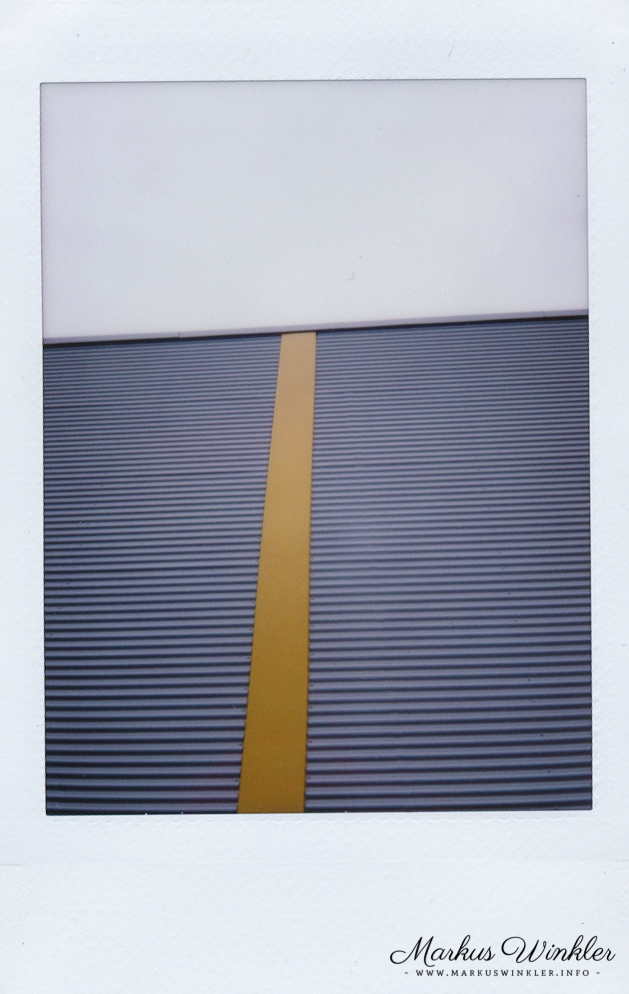
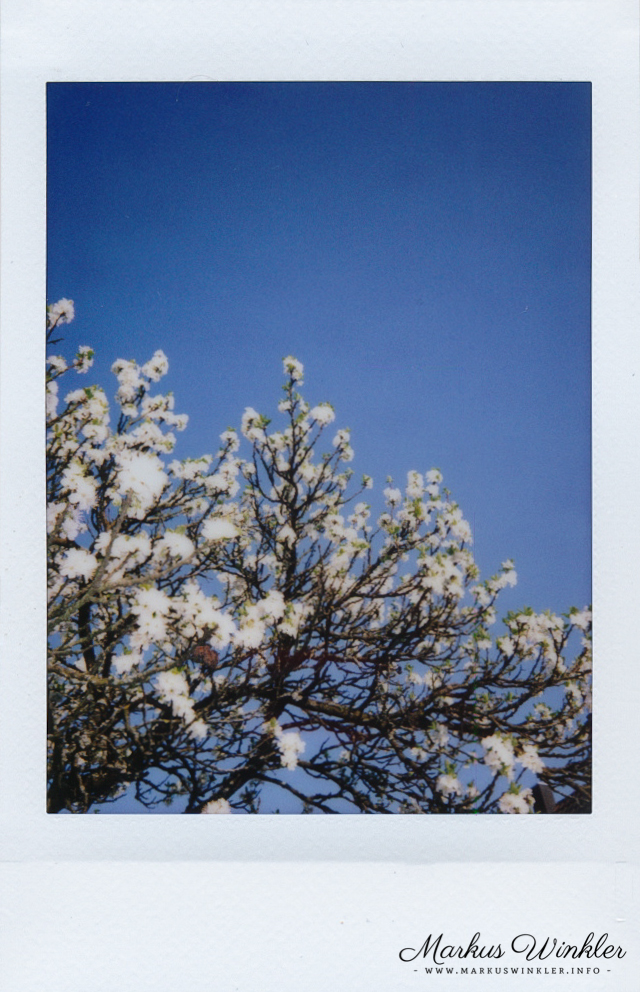
Let’s now come to the format, the Instax Mini 8 is loaded with Instax Mini film. The size of a picture is approximately the same as a credit card.
I’ve often thought about buying an Instax Mini, but what has stopped me is mainly the size of the pictures. My Instax 100 exposes Instax Wide film, which is about twice the size of the Mini. But the small format simply has its charm. Whether Wide or Mini ultimately depends on what you want to photograph and how much space the camera can take up.
Because of the film format, you hold the camera upright and the film is also designed for this. This fact makes it the perfect portrait camera.
The great thing about the Instax films is that they are easy to get, still manufactured and they are mature. As great as the films from Impossible are for the old Polaroid cameras, you have to like the look and also pay some attention when using them (protecting them from light, drying/long-term storage). Here, the Instax films are really at an advantage.
You don’t really have to pay attention to anything, no protection from light and they have a short development time, which is a real disadvantage for me with the new Impossible films. The results are also impressive, strong colors, good sharpness and depth in the picture. As you are used to with instant pictures, you can decorate the picture or write something on it with a felt-tip pen.
Only Fujifilm films can be used for the Instax Mini 8. In terms of price, a double pack of the film with 20 pictures costs about 15 to 16 euros. That’s about 75 cents per picture.
In times when you can quickly take a hundred photos and you can simply delete them again, this may be a bit expensive, but it also automatically gives the pictures a higher value. If you take a picture with a digital camera and the model has their eyes closed, you simply take another picture.
If the same thing happens with the Instax, you probably won’t take another picture. Nevertheless, the instant picture, even if it is not “correct”, has its own charm and a personal value.
This is what I have learned from analog photography and what is often forgotten, a good picture does not have to be perfect and correct. A good picture can also be blurry, grainy or shaky. Just because a photo is sharp in the 100% view and you don’t see any grain doesn’t mean it’s automatically a good picture.
The Instax Mini 8 does not have a tripod or remote release connection. Also missing is a small mirror on the lens for self-portraits and there is no self-timer.

Conclusion
That I like instant photography should have become clear in the course of the article.
So, buy recommendation or not? For me, the Instax Mini 8 is a fun camera, it’s just fun to use. I would definitely recommend it.
Due to its simple operation, it is also suitable for people who have never worked with a (instant) camera. With it you can simply put a smile on someone’s face or attract everyone’s attention.
Honestly, I can’t think of anything I would change about it, maybe the mentioned self-timer or a hot shoe for photography with external flashes. An option to deactivate the flash could also not hurt.
The only thing I don’t like is that there is no selection of films, a black and white film would be great, for example, and of course the prices for the films.
On the latter point, however, it must be said that the Instax Mini films are the cheapest films and that a part of the appeal is probably lost due to a lower price. Besides, I’d rather pay a reasonable price so that it’s worthwhile for Fujifilm and the films will still be around for a long time.
I can’t say exactly whether the upgrade from the 7S is worth it, as I don’t own one. The biggest points from my point of view are the more compact design (in my eyes, the design is also more beautiful than that of the 7S) and you only need half the batteries. The high-key mode, I think, is a nice gimmick, but not much more.
But if you don’t have an Instax yet, if I had to choose between the 7S and the 8, I would clearly go for the Instax Mini 8.
Thank you to Fujifilm for providing the camera.