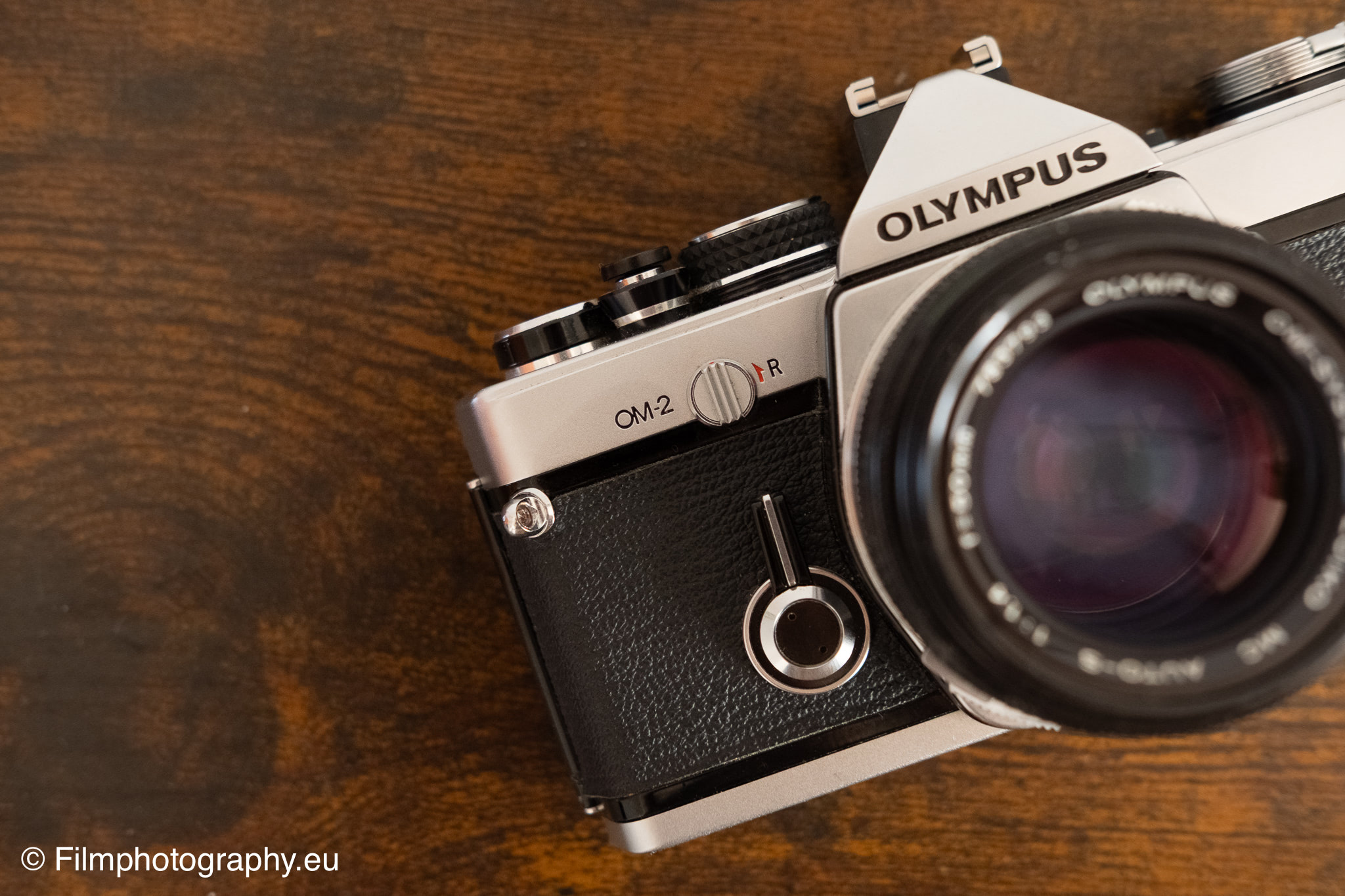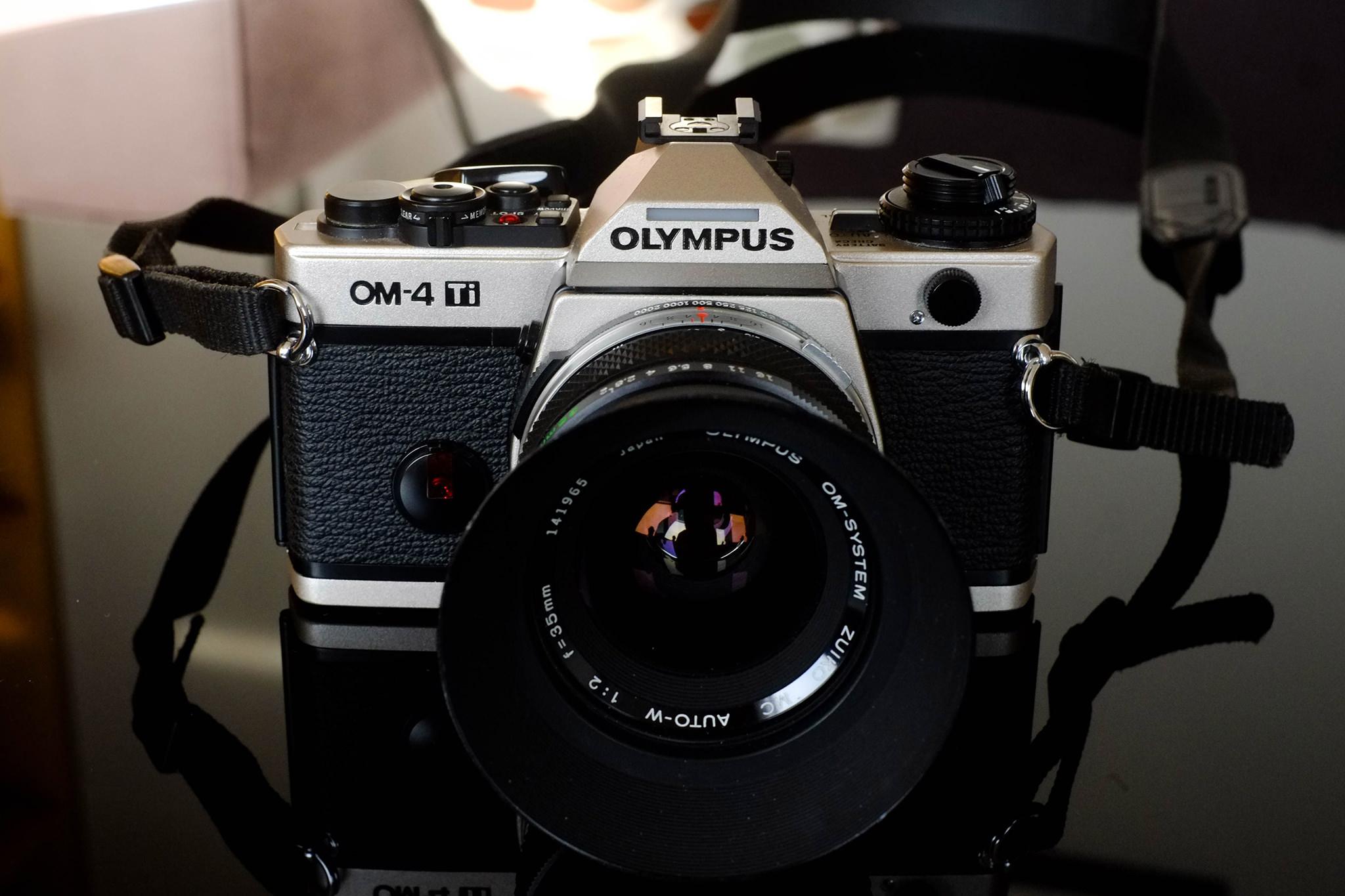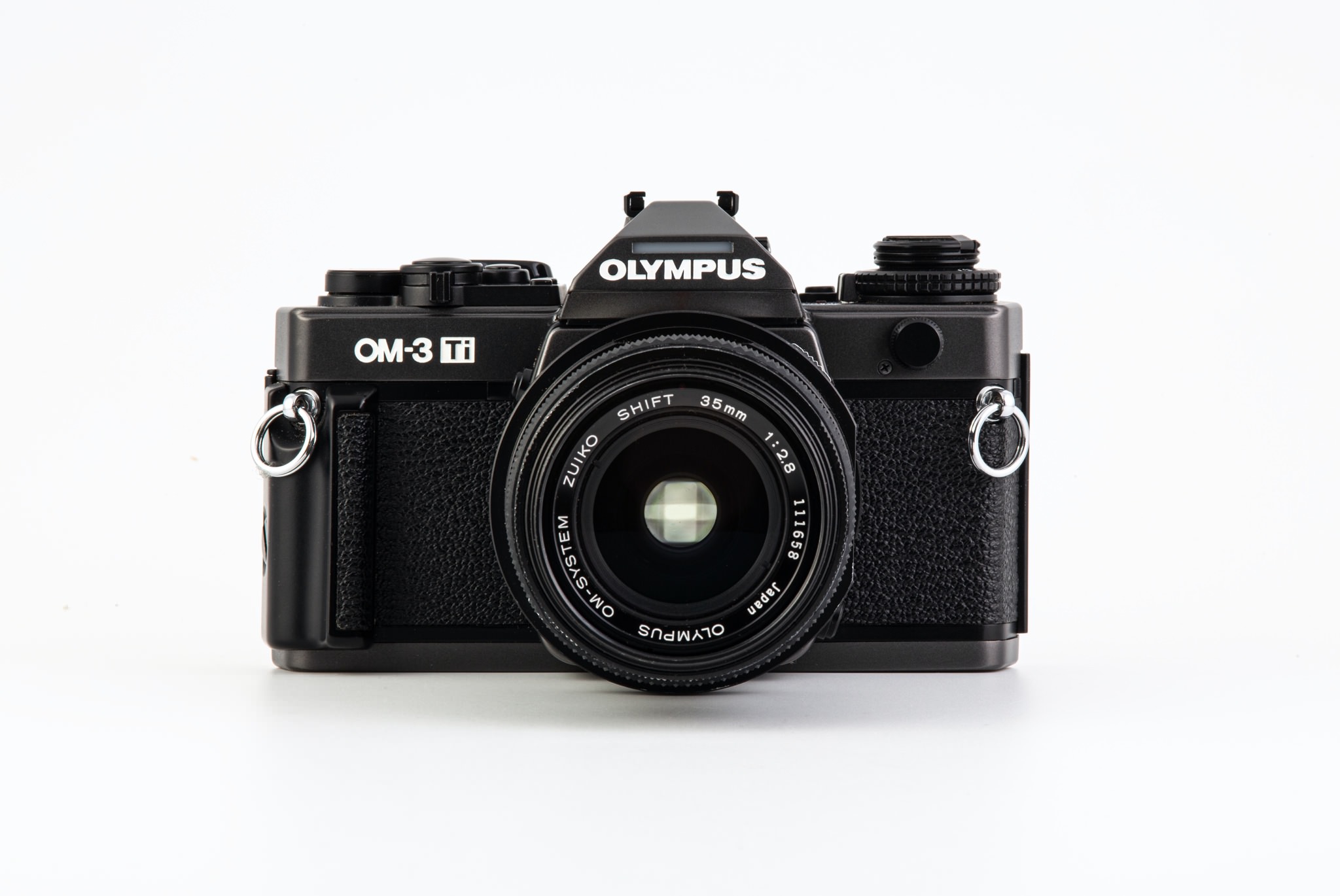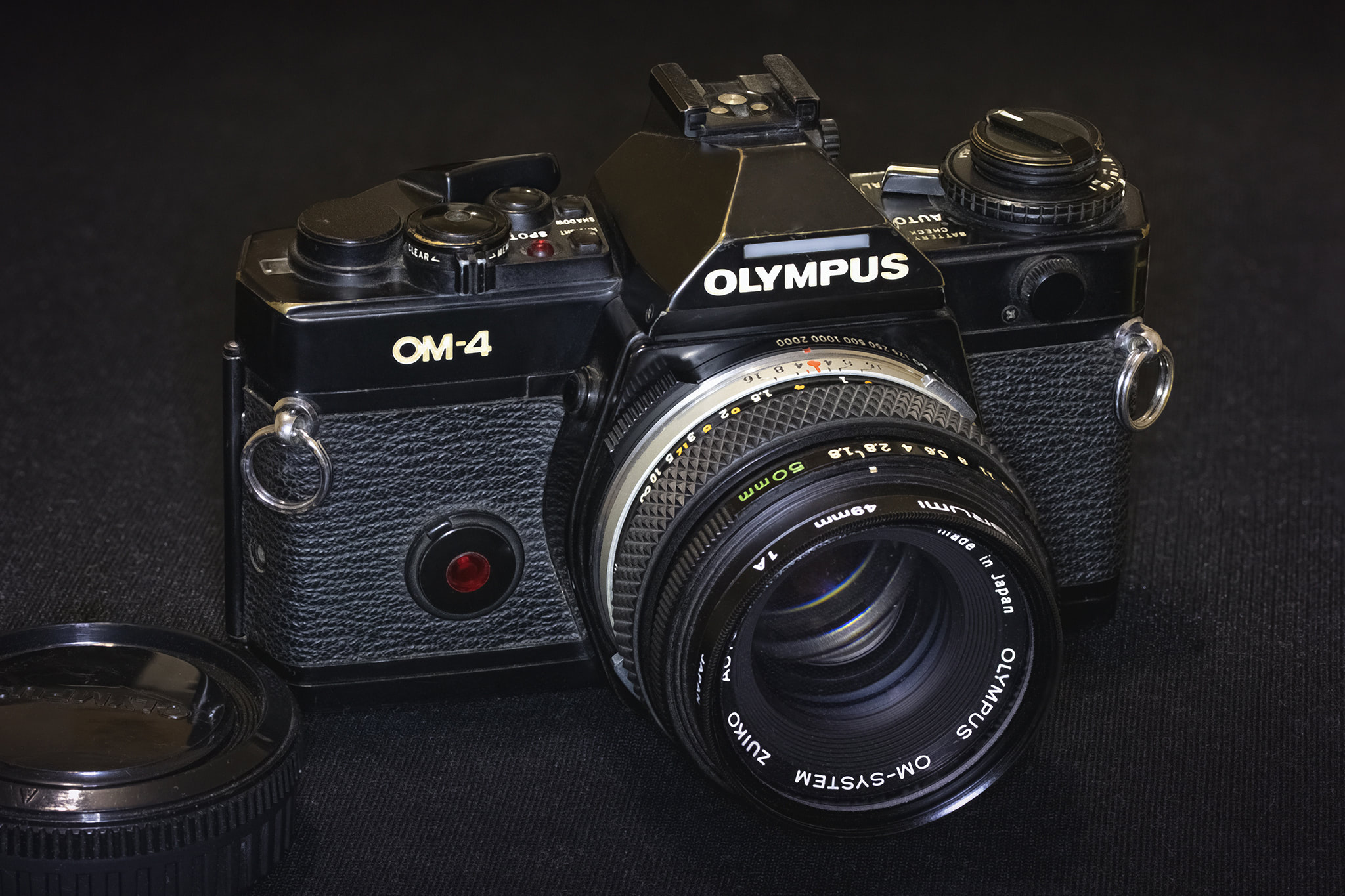
The Olympus OM-4 is a 35mm camera. It is the long-awaited successor to the Olympus OM-2n / OM-2. The model was introduced in the spring of 1983 at the PMA in Las Vegas, USA. The OM-1 successor, the OM-3, was also presented at the show, and consumers were able to purchase the OM-4 at the end of the same year. However, one had to wait another year for the OM-3, until summer 1984.
So what are the innovations of the camera? The fixed hot shoe, which can no longer be removed as with the predecessor, the possibility of TTL metering when using the flash socket, the use of an LCD display in the viewfinder, eightfold multispot metering, additional film speed levels for the light meter, one button each for a low-key and high-key mode, and the saving of the exposure time when using the continuous shooting function. Seals for repelling splashing water were also added in key places. But the camera could only in black and not as before in black or black/silver.
The lenses of the Olympus OM-4 can be exchanged. This is made possible by the Olympus OM bayonet. There are a variety of options for this lens mount. The camera is often found with a 50 mm standard lens.
Taking pictures is made easier by the built-in exposure meter. It is designed for films in a range from ISO 6 to ISO 3200. Thus, it clearly covers the most important film sensitivities. Exposure metering on the 35mm SLR takes place through the lens (TTL). When the aperture is set by the photographer, the camera can automatically set the exposure time. However, the desired exposure time can also be determined manually.
An external flash can be connected to the PC flash port or hot shoe to take pictures. To use TTL metering, it must be supported by the flash unit.
The Olympus OM-4 comes with an electronic self-timer, this for when used a mirror lock-up through. There is also a connection for a cable release and threads for a tripod. The required power for the camera comes from two LR44 / SR44 batteries (eBay / Amazon*). One drawback compared to the OM-2 is the lack of a dedicated off switch. If one does not use the camera, it still sees power from the button cells.
Films for the Olympus OM-4
The Olympus OM-4 was built for the 35mm format. The size of the image on negatives is 24 mm x 36 mm. On are normal film you can fit around 36 pictures on one roll of film.
There is still a good selection of material for color and black and white images for this film format. Nice 35mm films for color and black and white images respectively are the Fujifilm Superia 200* and the Kodak T-Max 400*. Development of the exposed film material is possible in most photo laboratories.