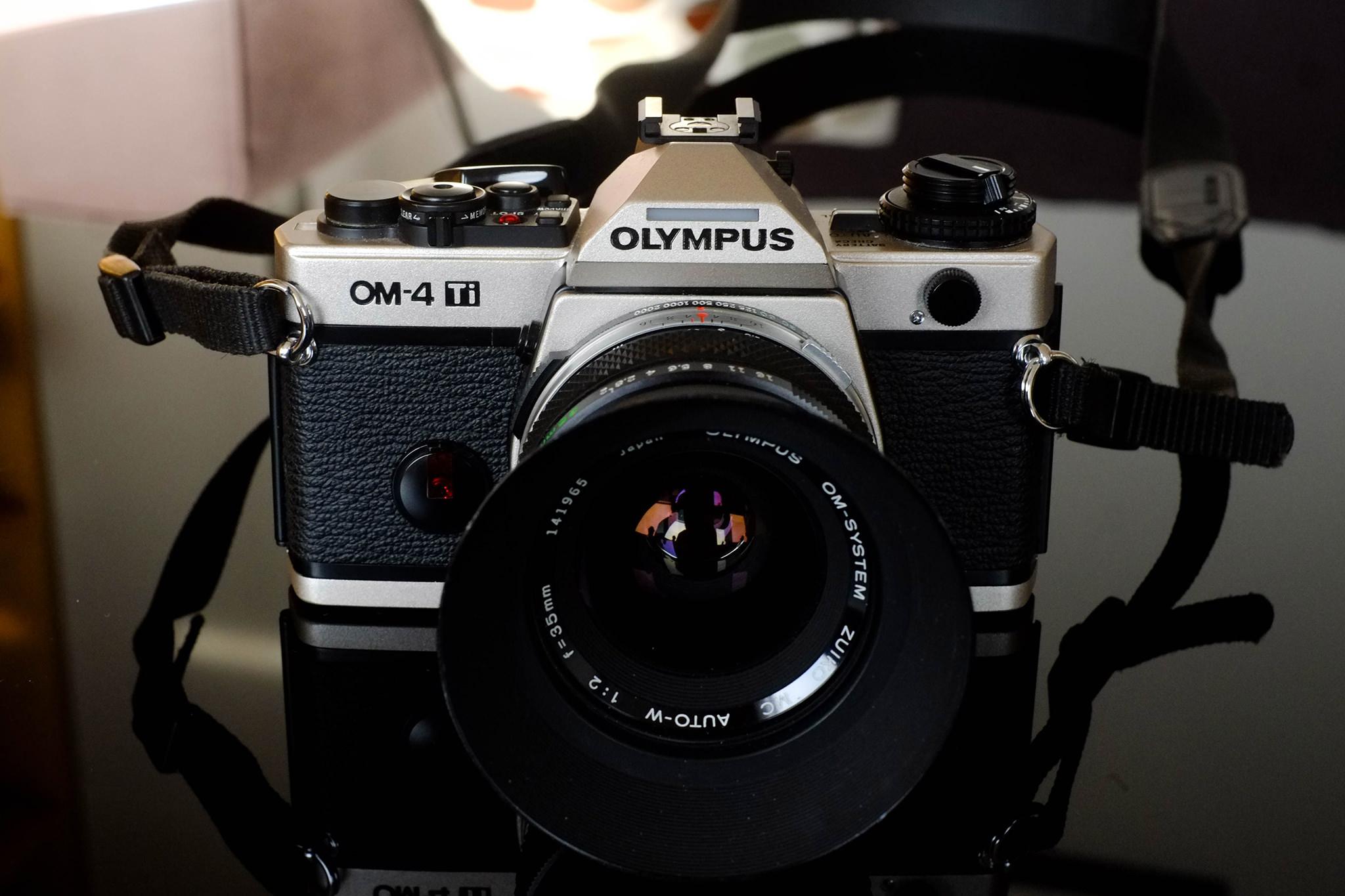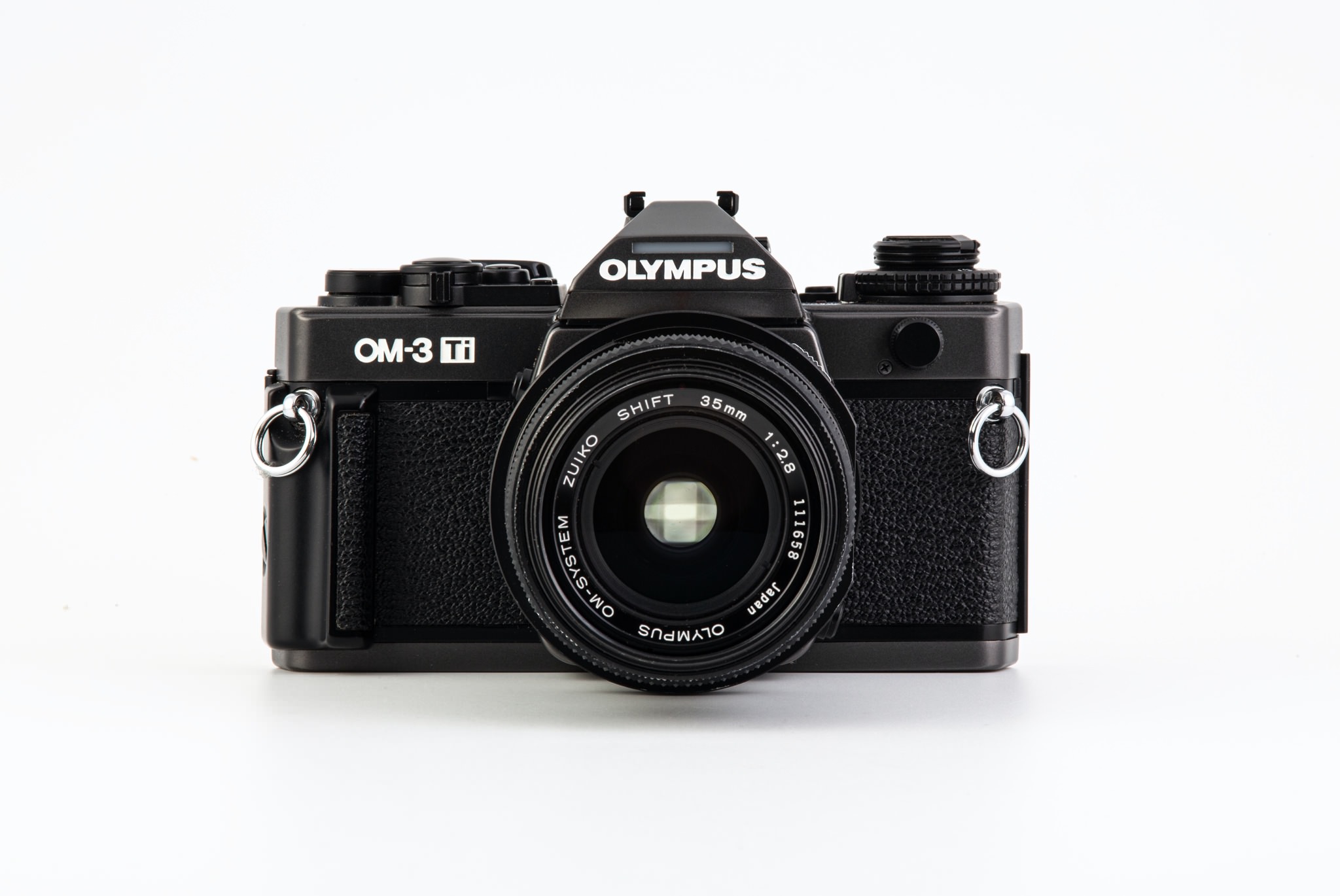
The Olympus OM-3 Ti is an SLR camera. It is the successor of the Olympus OM-3. The 35mm camera was produced from 1994 to 2002 and is the last analog OM model built by Olympus.
The lenses of the Olympus OM-3 Ti can be exchanged. Lenses with an Olympus OM bayonet can be used. The lens is focused manually. There is no autofocus system on this model.
For measuring the exposure, the Olympus OM-3 Ti has a light meter. It is designed for films from ISO 6 to ISO 3200. As with most SLR cameras, the exposure is measured through the lens. Spot metering, multi-spot metering and integral metering are supported. However, the aperture and exposure time can also be freely set.
The 35 mm camera has a Bulb mode. In this mode, the shutter remains open as desired. An external flash can be connected to the PC flash port or hot shoe for pictures.
The Olympus OM-3 Ti comes with a connection for a cable release and thread for a tripod. The dimensions of the camera body are 13.6 × 8.4 × 5 cm. The top and bottom of the body are made of titanium, so it weighs a bit more at 510 grams. The power needed for the camera comes from two LR44 / SR44 button cells (eBay / Amazon*).
Films for the Olympus OM-3 Ti
The Olympus OM-3 Ti was built for the 35mm format. This type of film is still produced and can be processed by most photo labs without any problems. One option for color images is the Kodak Ultramax 400* and the Ilford Delta 400* for black and white photos.
The color negative film is developed using the C-41 development process. The C-41 process is standardized and offered by most developing laboratories.