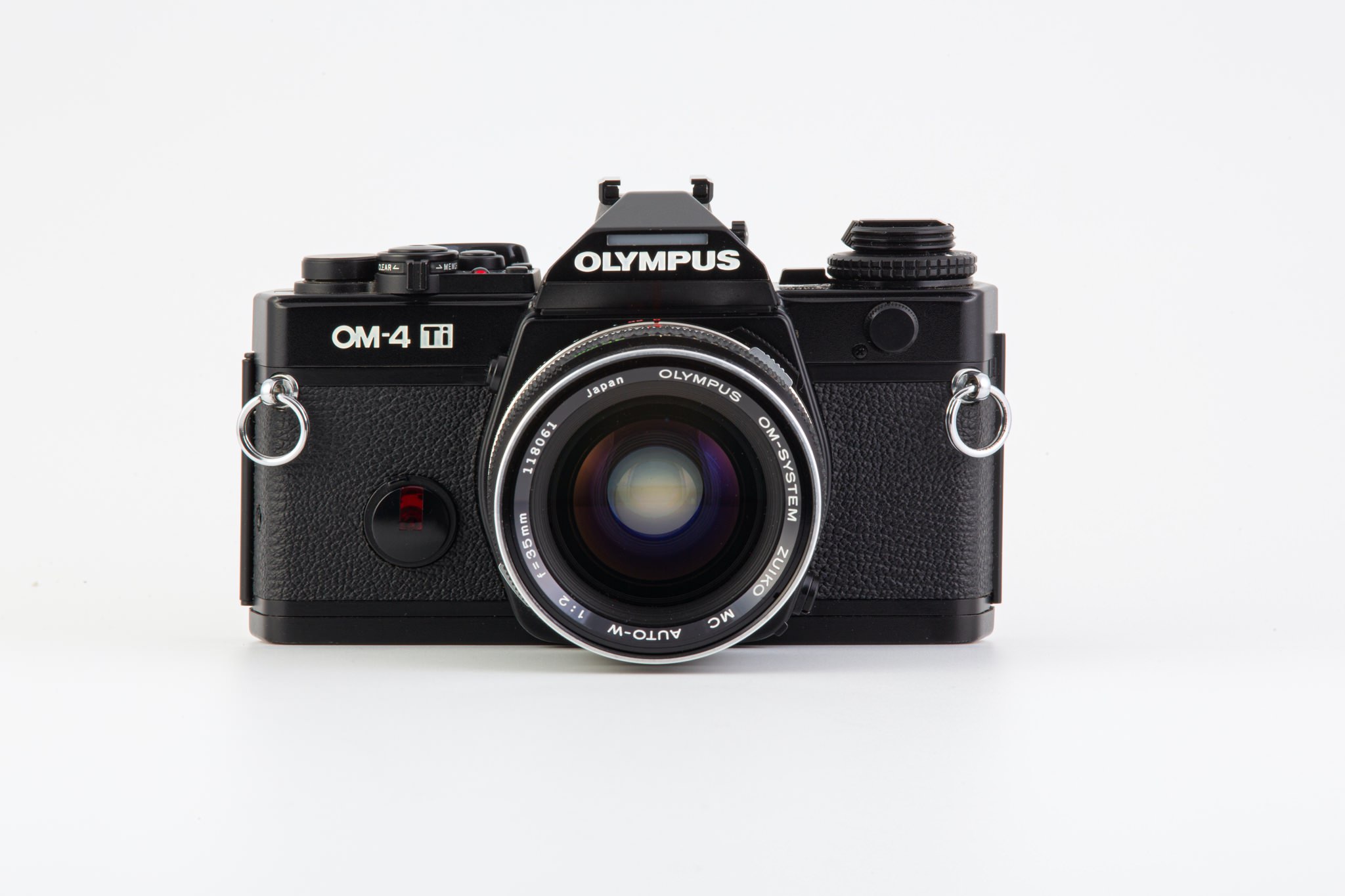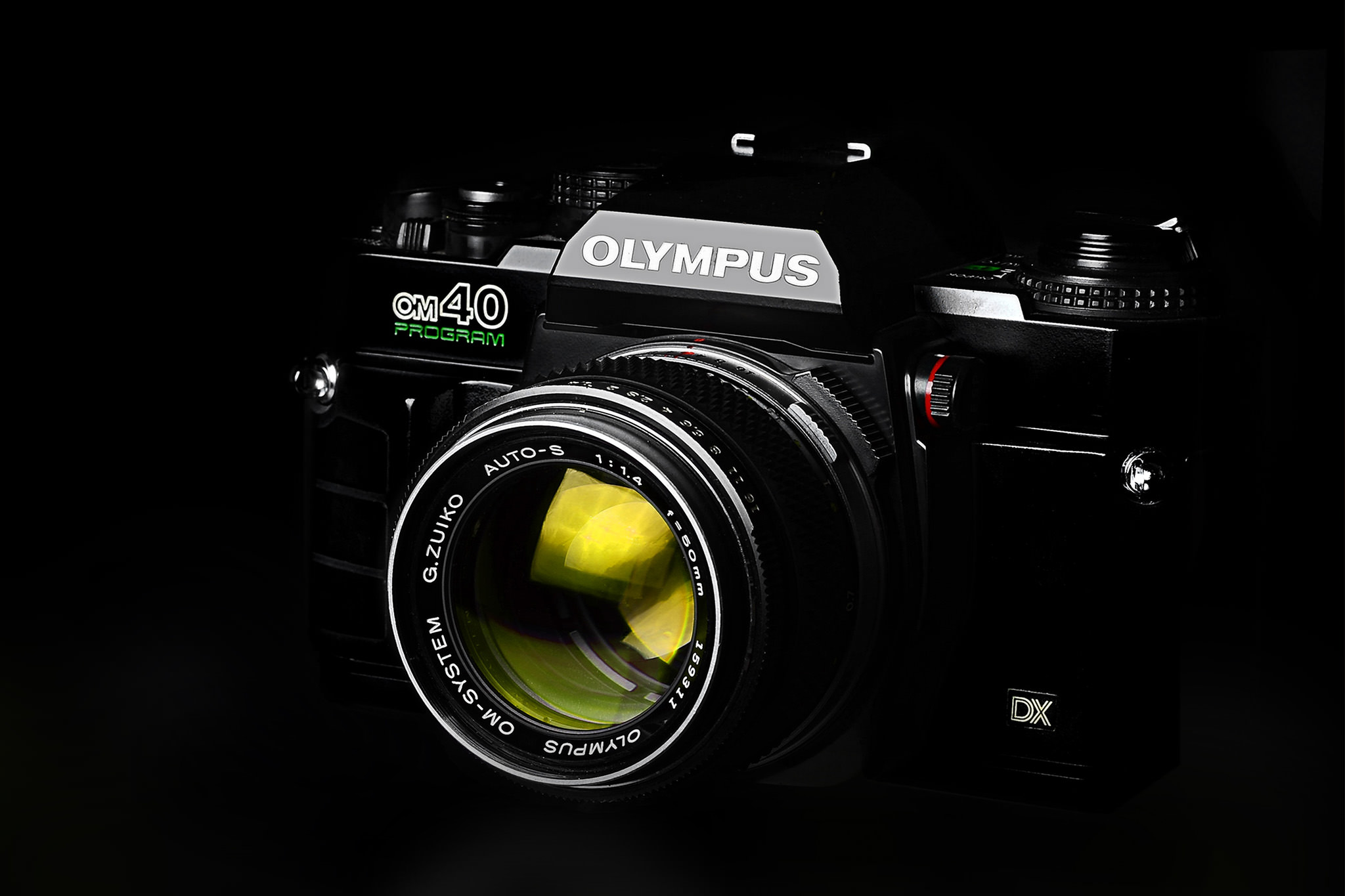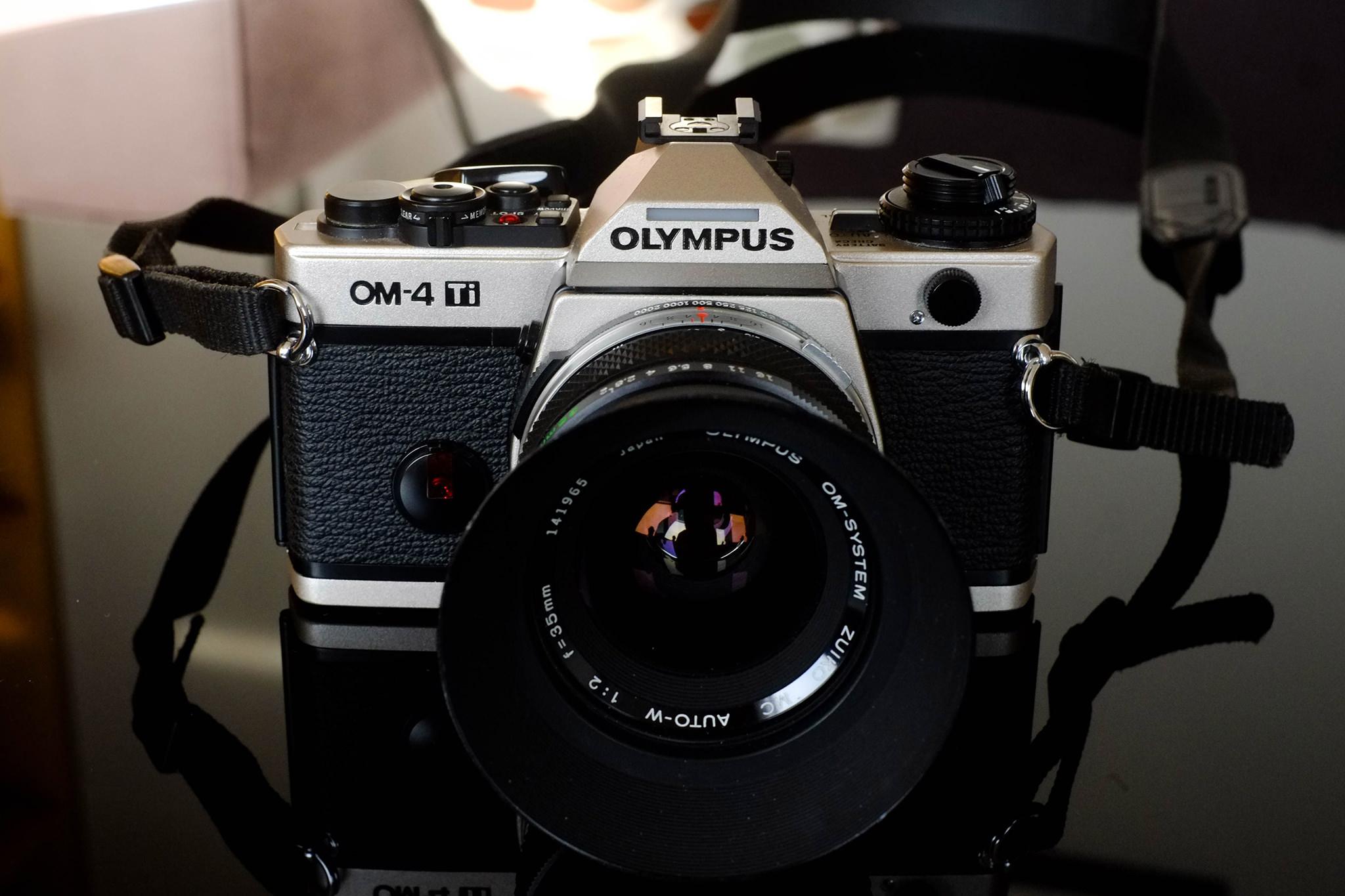
The Olympus OM-4 Ti is a 35mm camera. It is the successor of the Olympus OM-4, introduced in 1987 and sold in the North American market under the name Olympus OM-4 T. The differences to its predecessor are that the upper and lower flaps are made of titanium.
The differences from its predecessor are that the top and bottom covers are made of titanium, the power consumption in sleep mode has been reduced, and a faster flash sync time when using the Olympus F280 flash unit.
The lenses on the Olympus OM-4 Ti are interchangeable. Lenses with an Olympus OM bayonet can be used. The model does not have an autofocus; as with its predecessor, you have to set the focus on the lens.
For measuring the exposure, the Olympus OM-4 Ti has a light meter. It was designed for films with a sensitivity of ISO 6 to ISO 3200. The SLR determines the exposure when metering through the lens (TTL).
In aperture priority mode, the exposure time is set automatically by the camera, and the aperture is selected by the photographer. In manual mode, you select both settings yourself.
If you want to take long exposures, there is the Bulb setting. Hot-shoe flashes can be used with the Olympus OM-4 Ti. There is also a PC flash socket.
The 35mm camera has a thread for a tripod. Additionally, there is a connection for a cable release and a self-timer. The dimensions of the Olympus OM-4 Ti are 13.6 × 8.4 × 5 cm. At the same time, it weighs 510 grams, slightly higher than the previous model due to the use of titanium. The power source of the 35mm camera are two LR44 / SR44 button cells (eBay / Amazon*).
Films for the Olympus OM-4 Ti
In the Olympus OM-4 Ti photo films are exposed, more precisely 35mm films. 35mm films are still offered by various manufacturers. Possible films for this model are the Kodak Portra 400* for color photos and the Ilford Delta 400* for B&W images.
The development process for the color film is the C-41 process. This development process is done by all photo labs that offer development of 35mm film. For example, you can take your film to most drug stores for development.
At least 36 images will fit on a 36-frame 35mm film. For the next picture, the film is wound manually. A motor for film transport is available as an accessory.