Vivitar, originally founded in Hollywood in 1938 by German émigrés Max Ponder and John C. Best as Ponder & Best, began as a distributor of photographic equipment. Initially, the company imported products from Europe, but after World War II, its focus shifted to importing cameras and photographic accessories from Japan. Ponder & Best played a role in introducing brands such as Mamiya and Olympus to the American market.
In the early 1960s, the company introduced its own brand, “Vivitar,” to compete with major lens manufacturers. Its strategy was to have lenses produced to its own specifications by Japanese manufacturers such as Kino Precision (later Kiron) and Tokina. A key step was the introduction of lenses with interchangeable mounts such as the T2 mount, which simplified inventory management for the camera trade. However, with the spread of automatic diaphragm technology, camera-specific mounts became increasingly necessary.
In the 1970s, Vivitar achieved widespread recognition with its “Series 1” lens line. These computer-designed lenses were offered at lower prices than those offered by camera manufacturers. Models such as the 70-210mm zoom lens and the 90mm f/2.5 macro lens became particularly well-known. In addition to lenses, the product portfolio also included flash units; the Vivitar 283 model, introduced around 1972, became a widely used flash unit for professional photographers and amateurs. During this period, Vivitar also launched its own 35mm film cameras, manufactured by manufacturers such as Cosina.
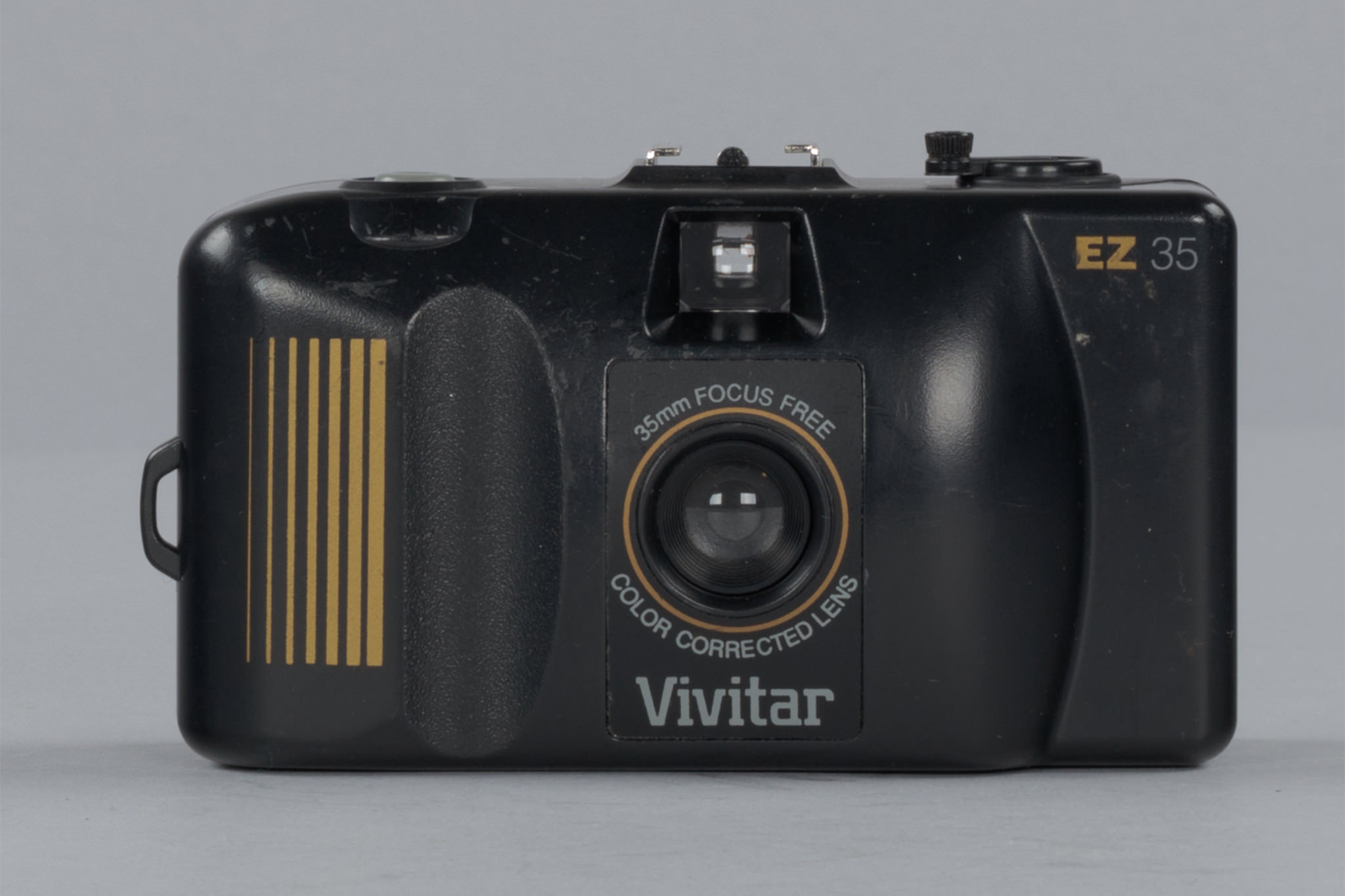
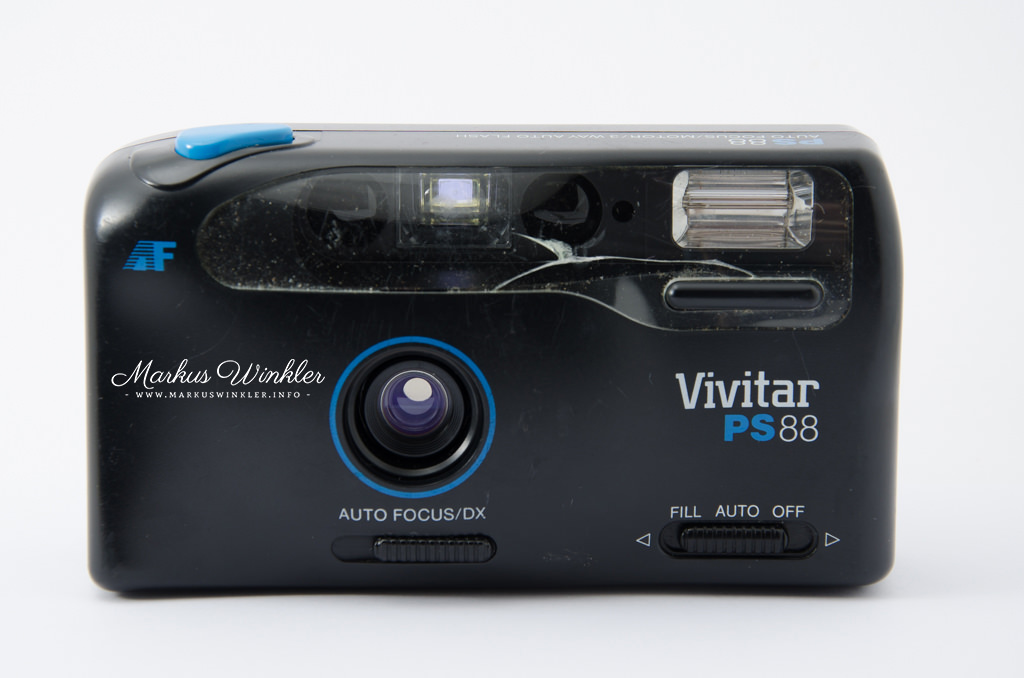
In 1979, the company changed its name to Vivitar Corporation. After the deaths of its founders, the company changed hands several times. In 1985, Vivitar was acquired by Hanimex, followed by a takeover by Gestetner in 1990. Under new management, the focus shifted from high-quality lenses and flash units to mass-market compact cameras, known as point-and-shoot cameras. Models such as the 440 PZ and 470 PZ offered automatic functions such as autofocus, automatic exposure, and a built-in flash.
The transition to digital photography and a series of ownership changes presented the company with significant challenges. Following the bankruptcy of its parent company, Syntax-Brillian, in 2008, the Vivitar brand and intellectual property were sold to Sakar International. The Vivitar company itself was dissolved, but Sakar continues to use the brand for various electronic products, including digital cameras.