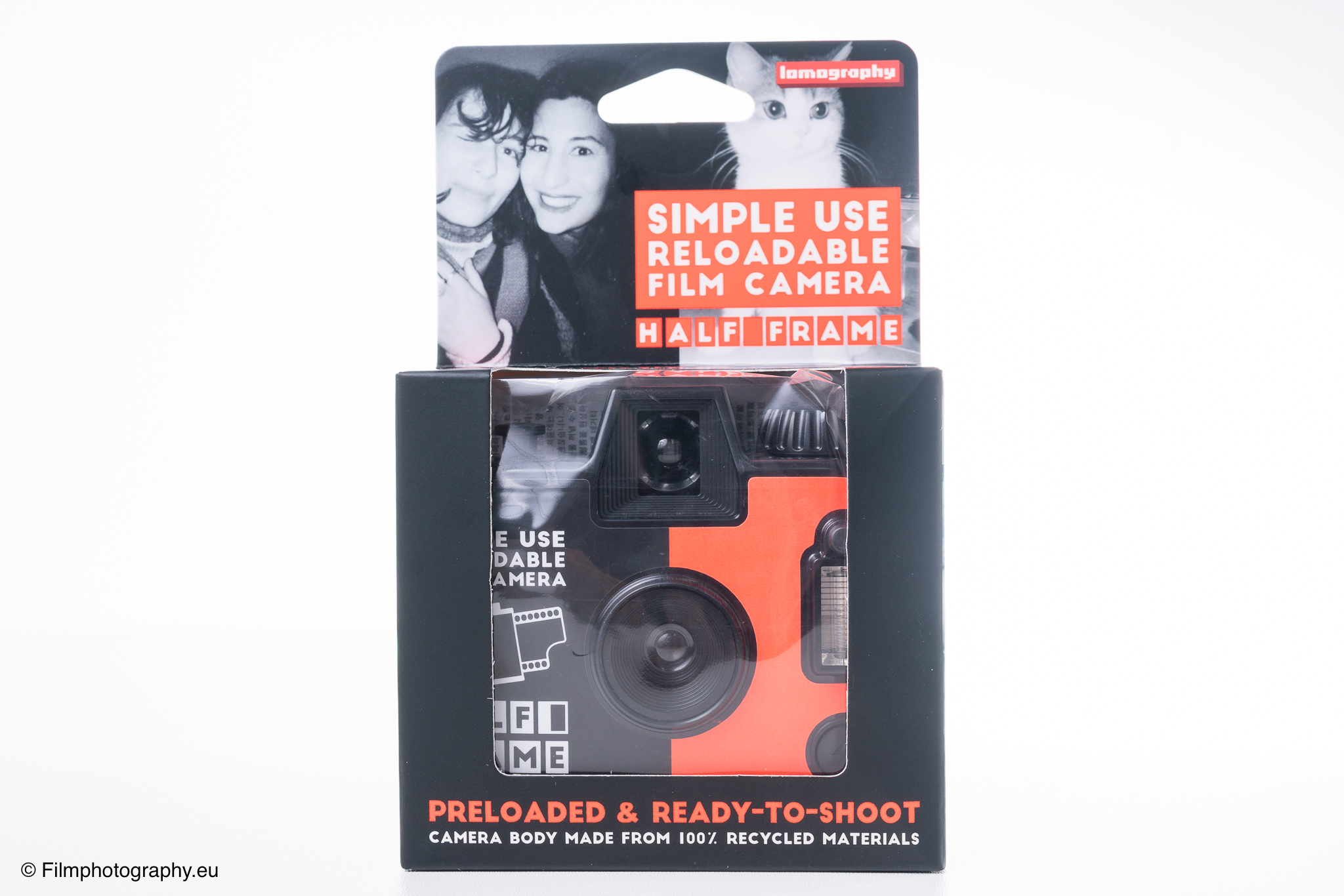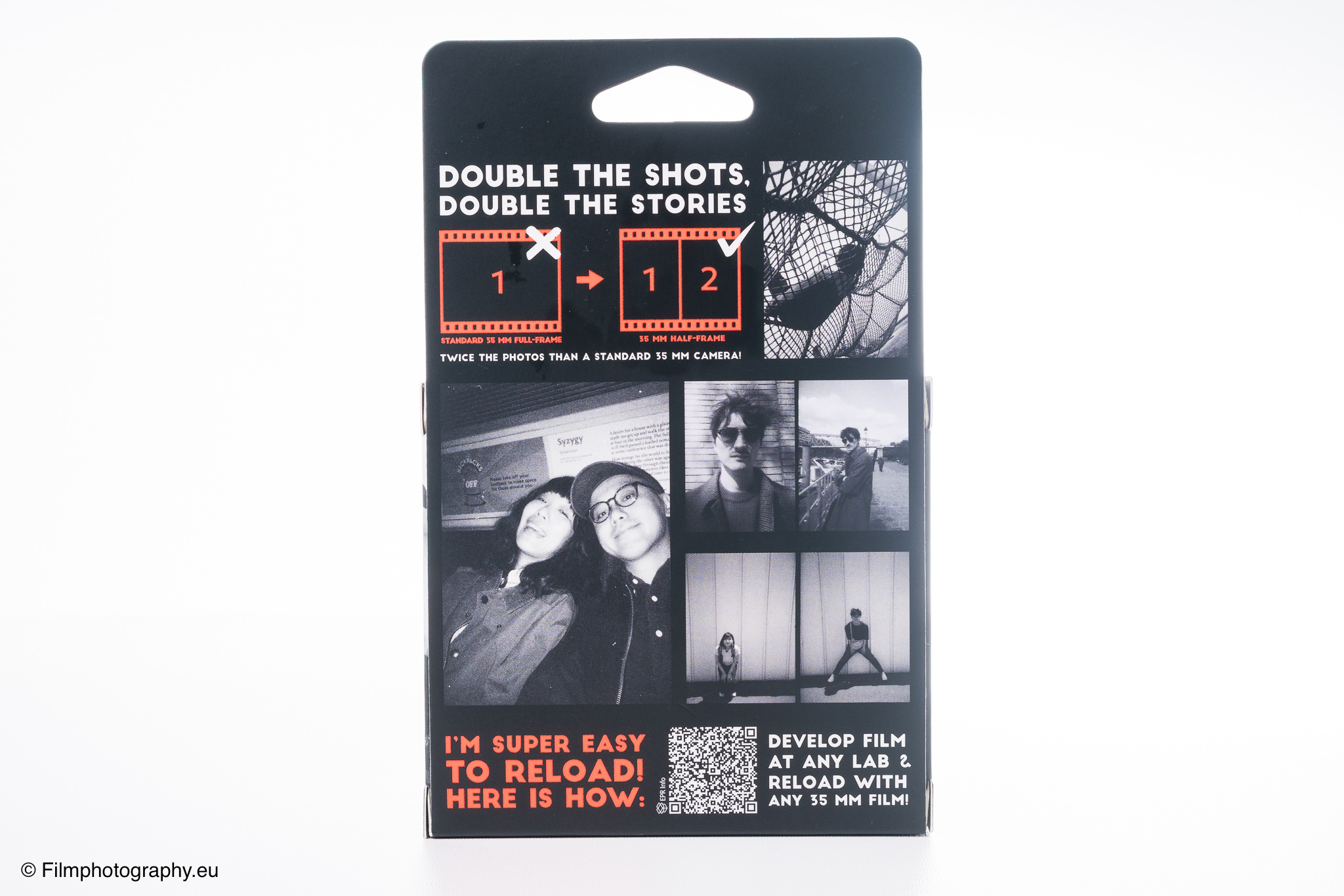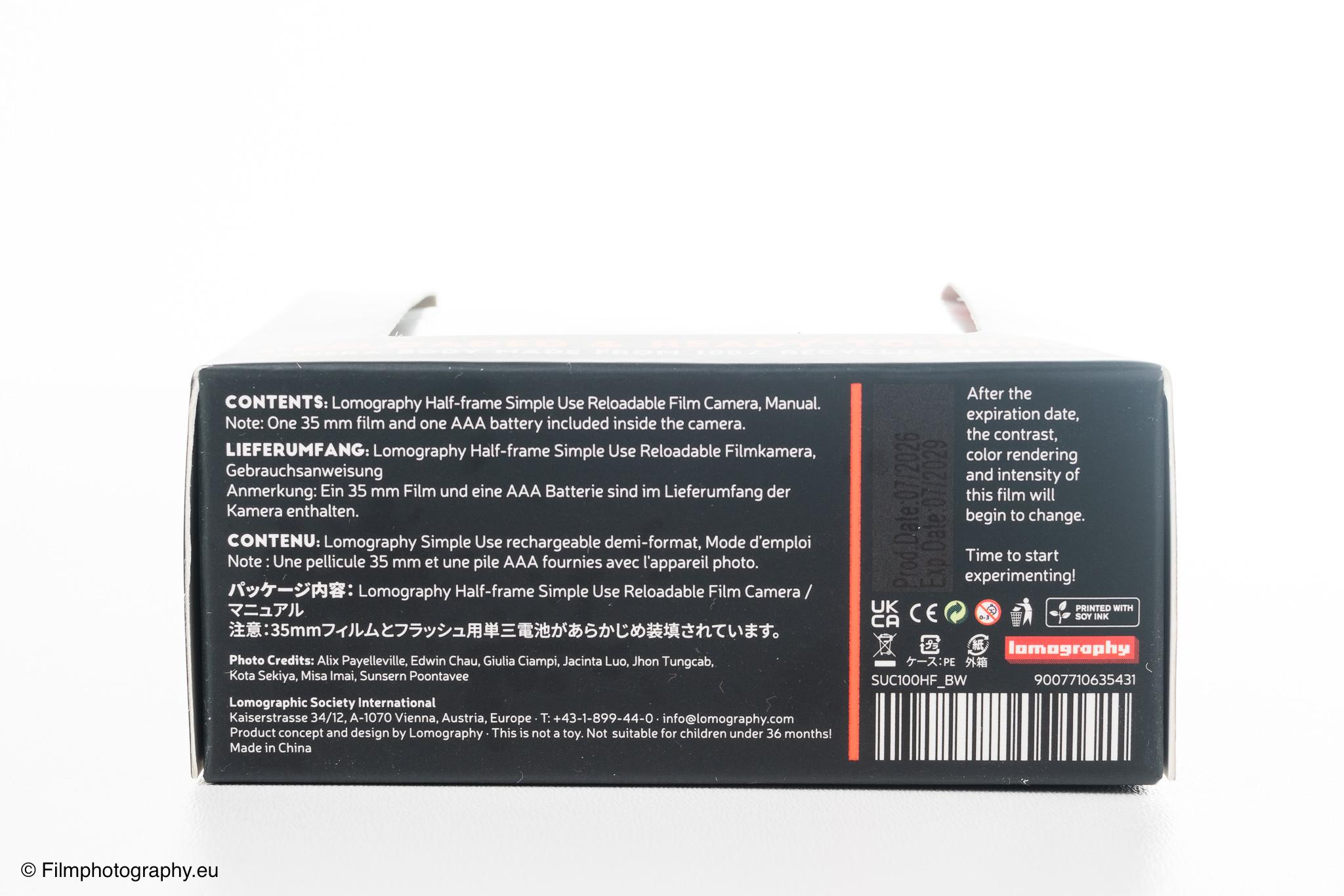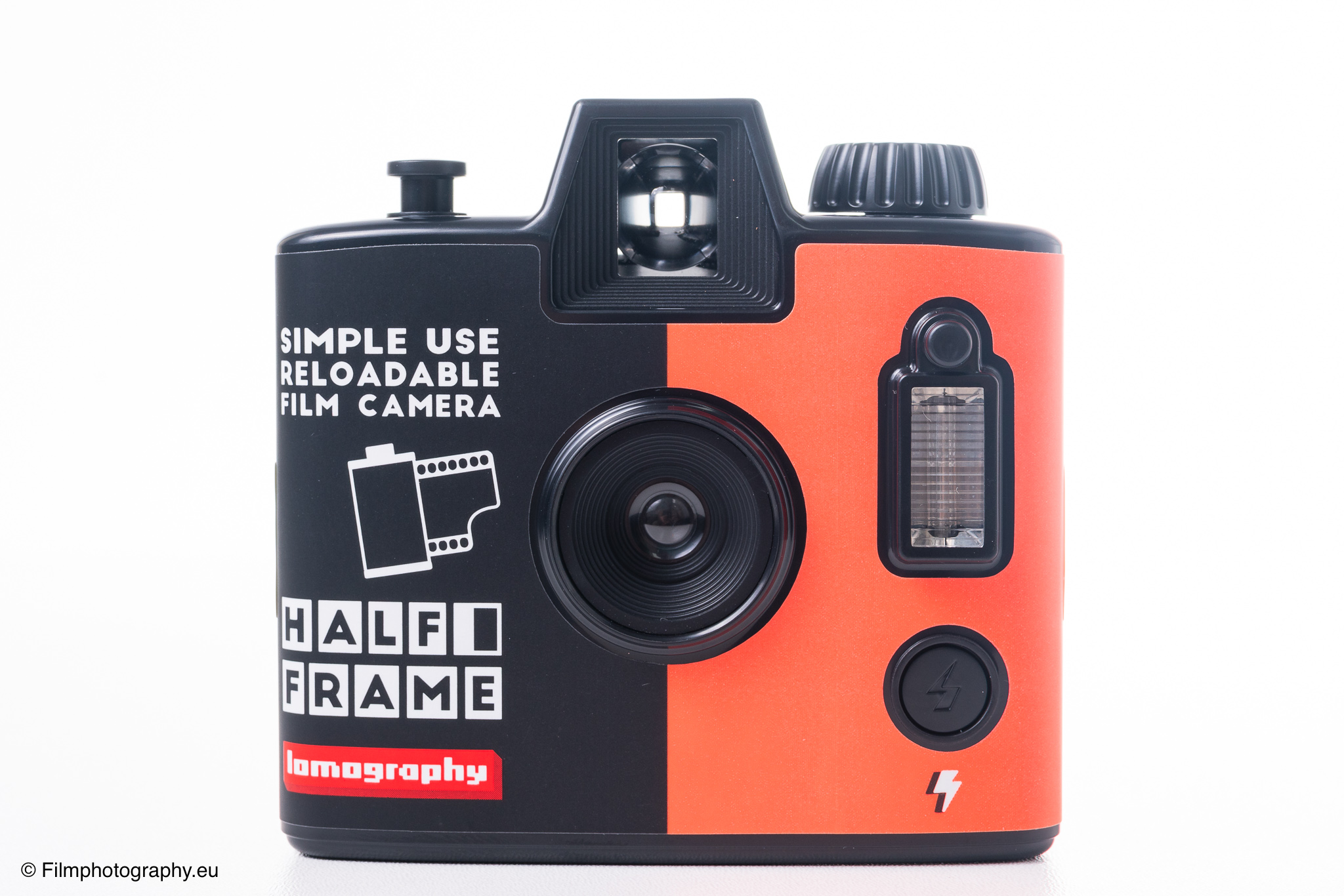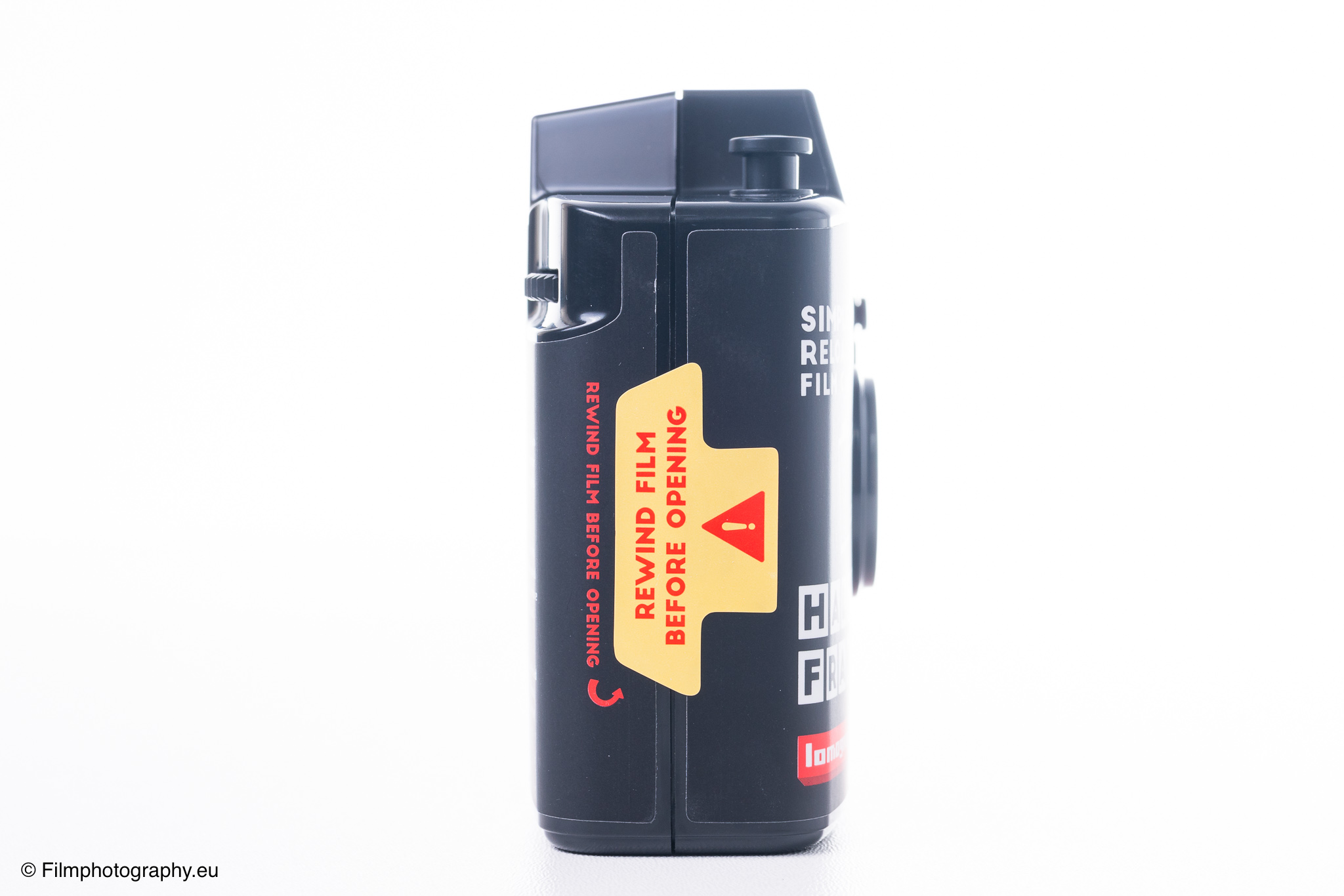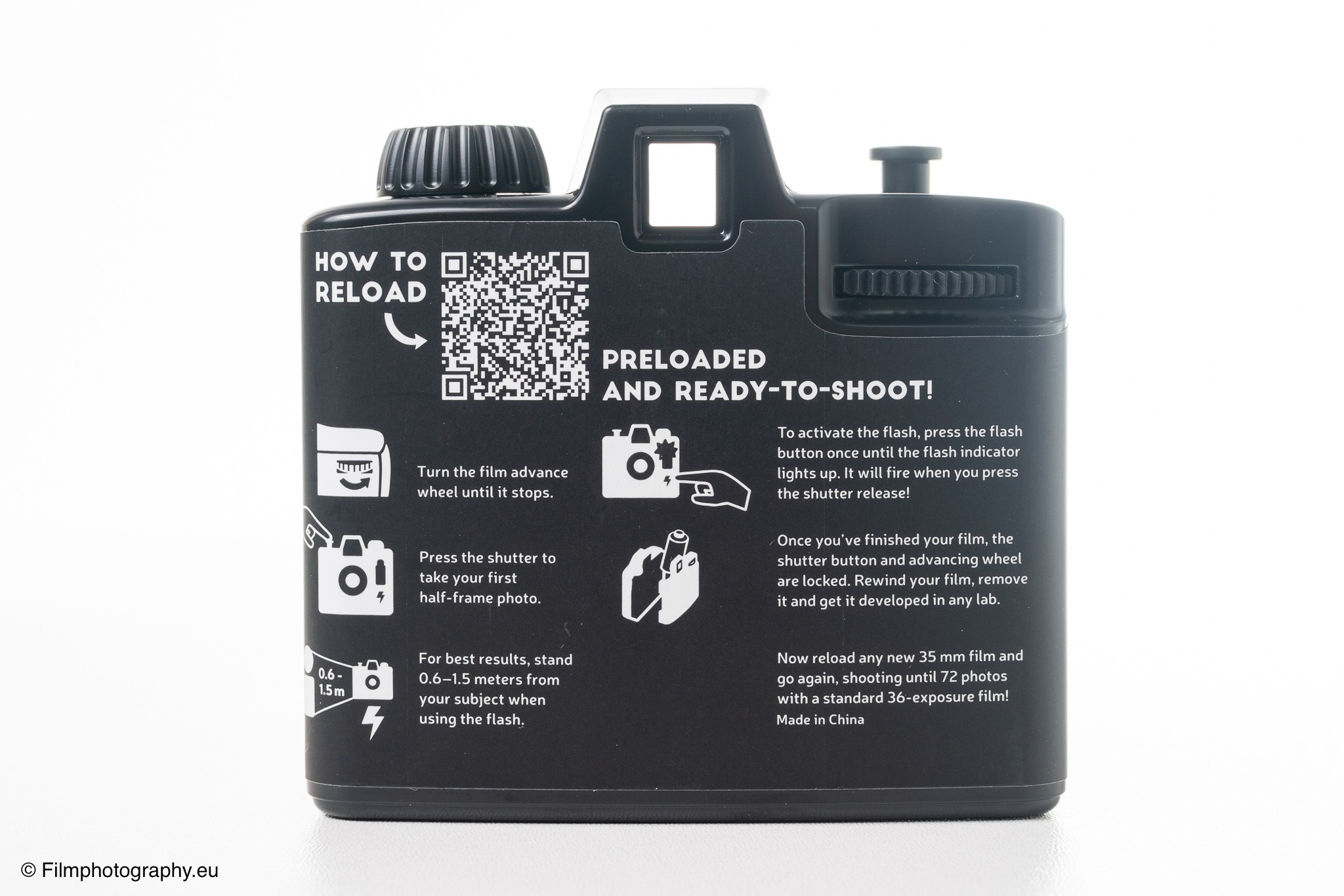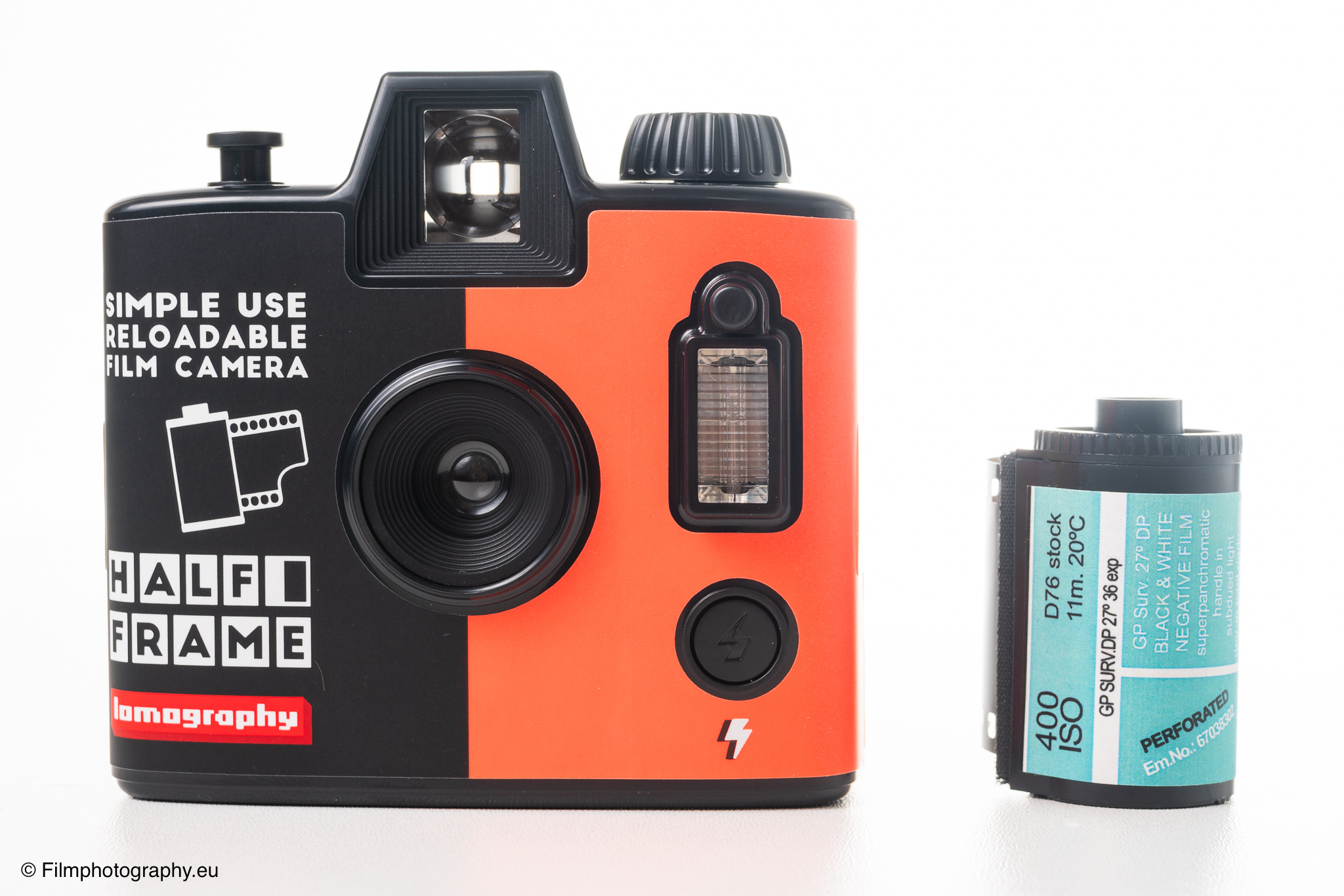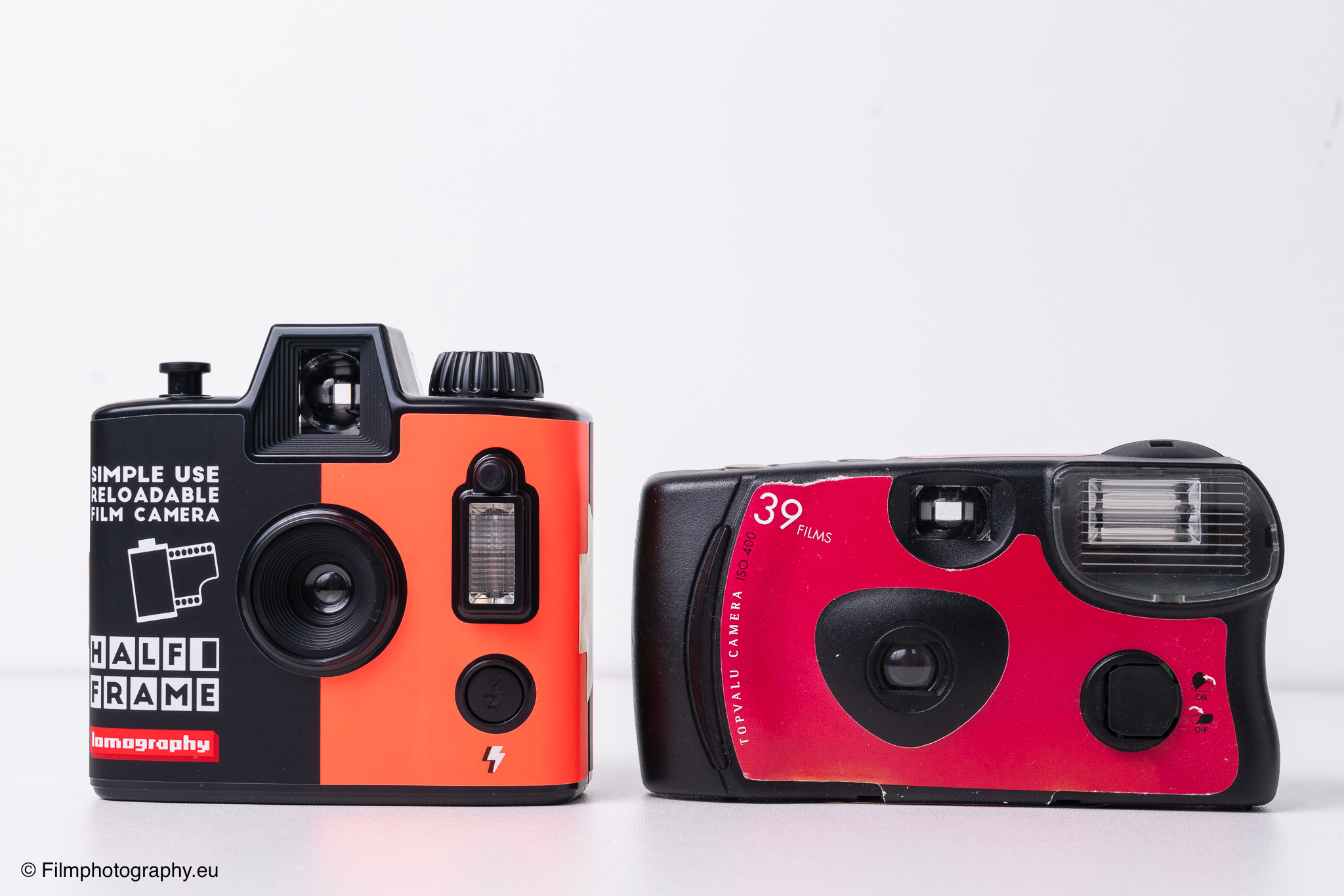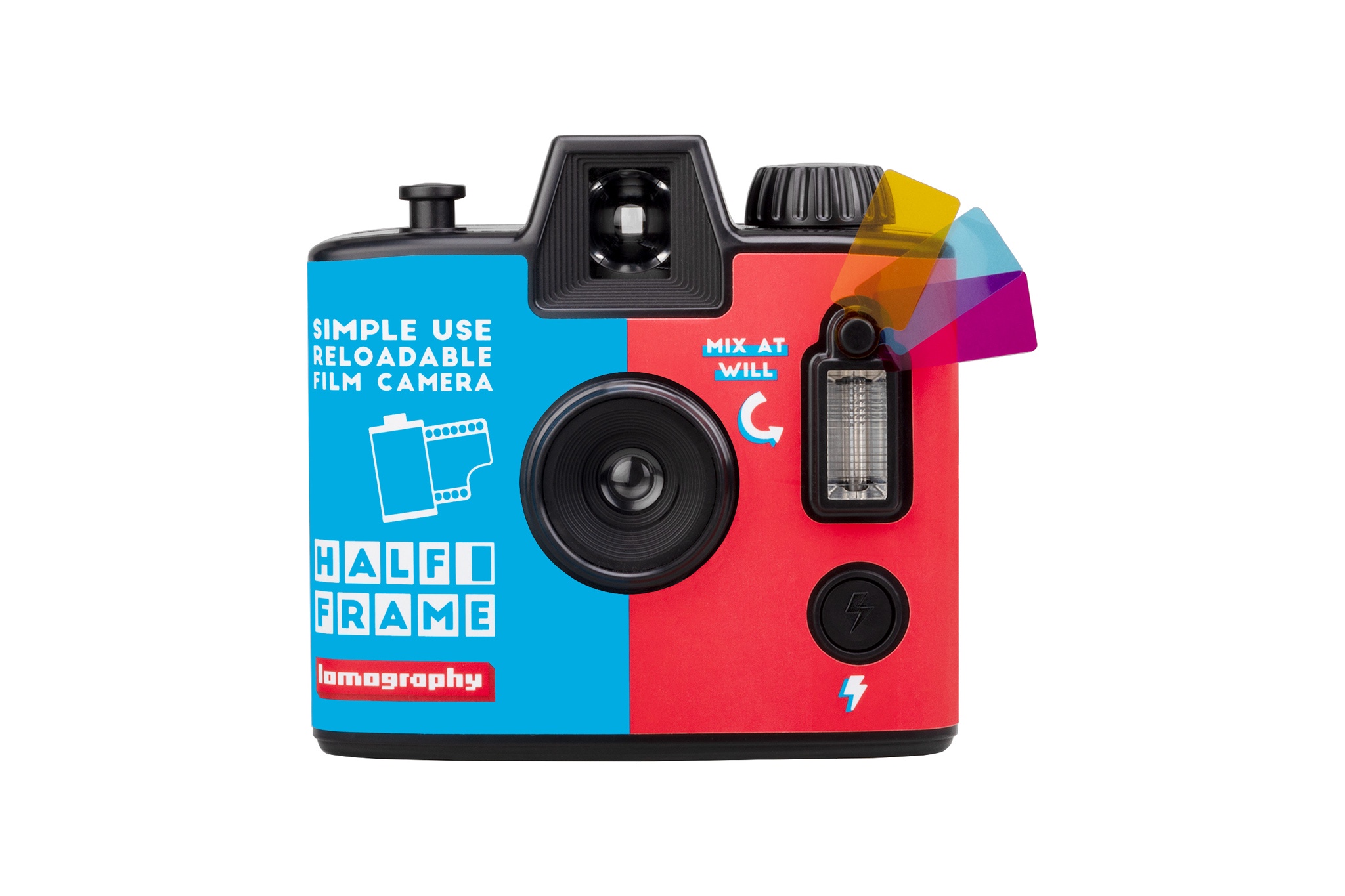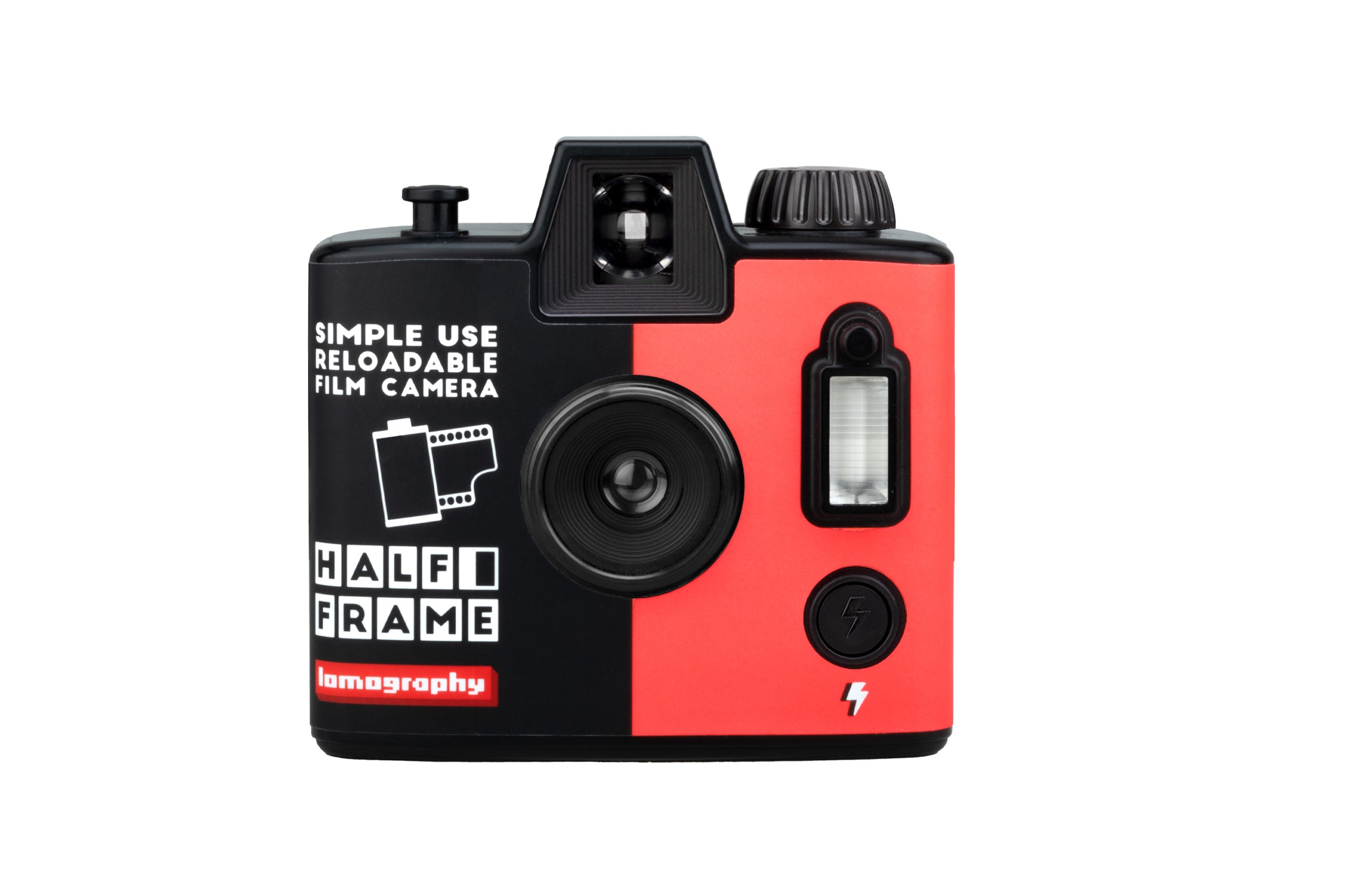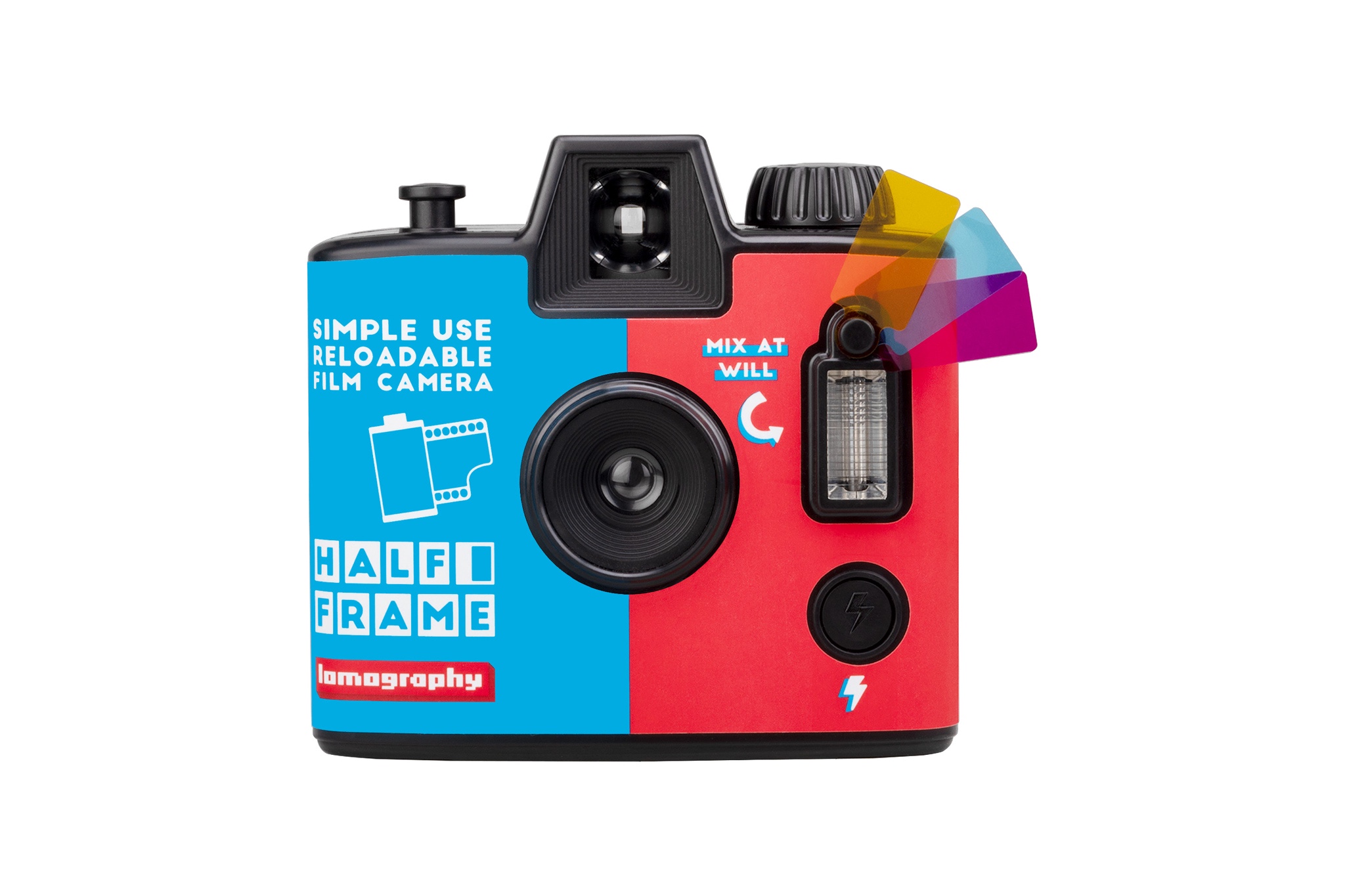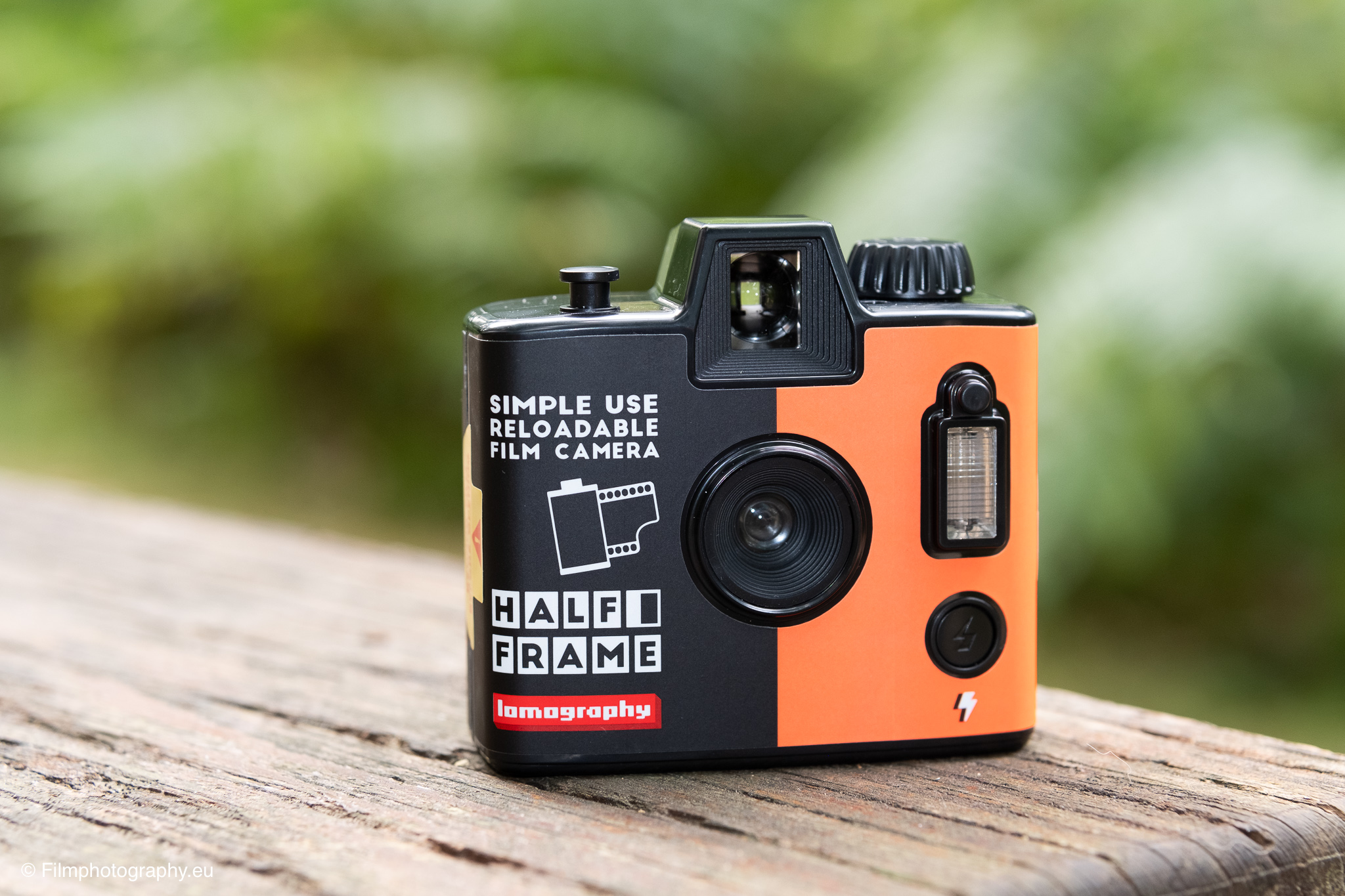
Lomography recently introduced the new Simple Use Half Frame in a black-and-white variant. This analog compact camera exposes film in half-frame format, thus offering twice as many shots per roll. We take a closer look at the camera.
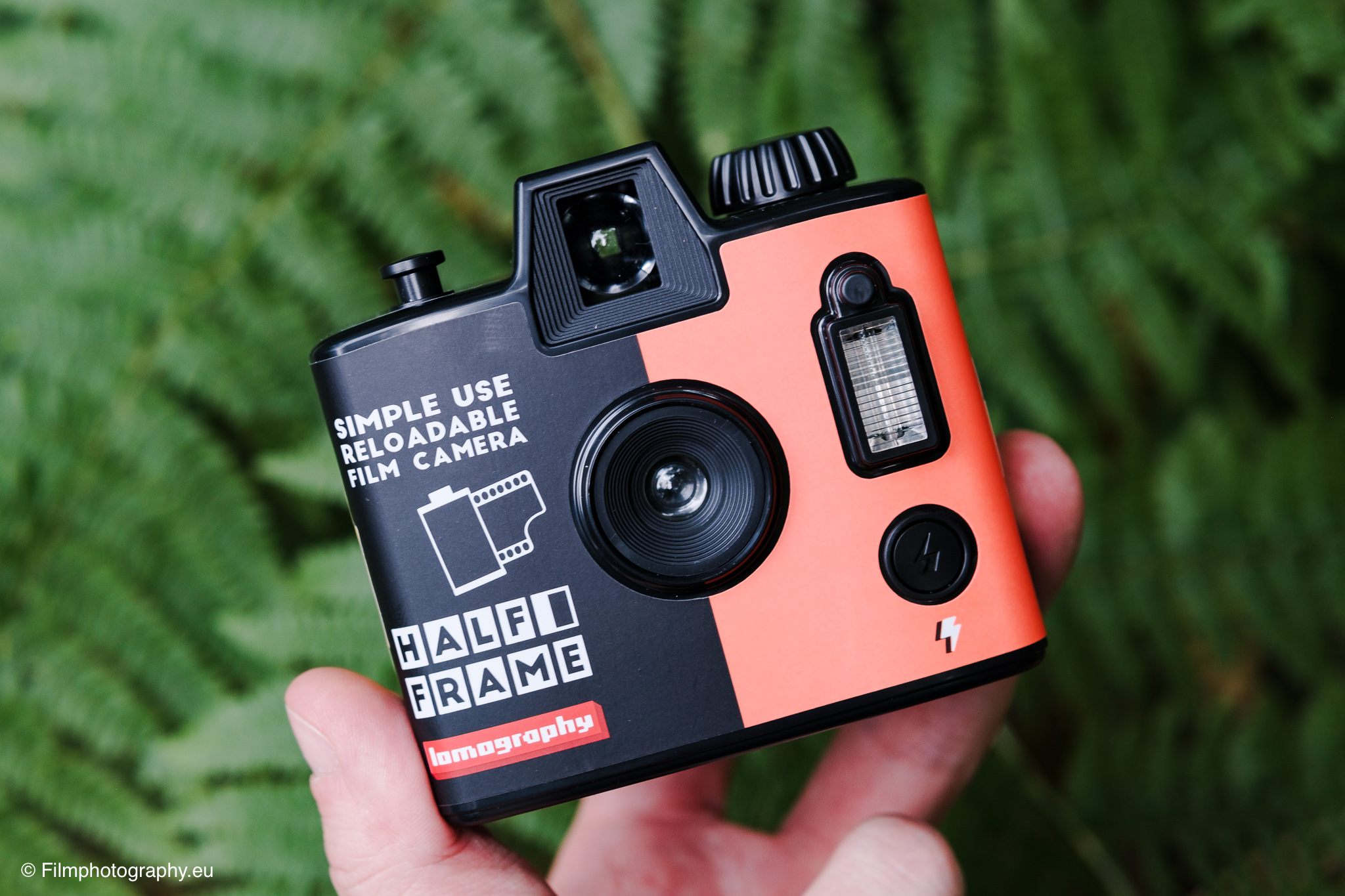
First Impression
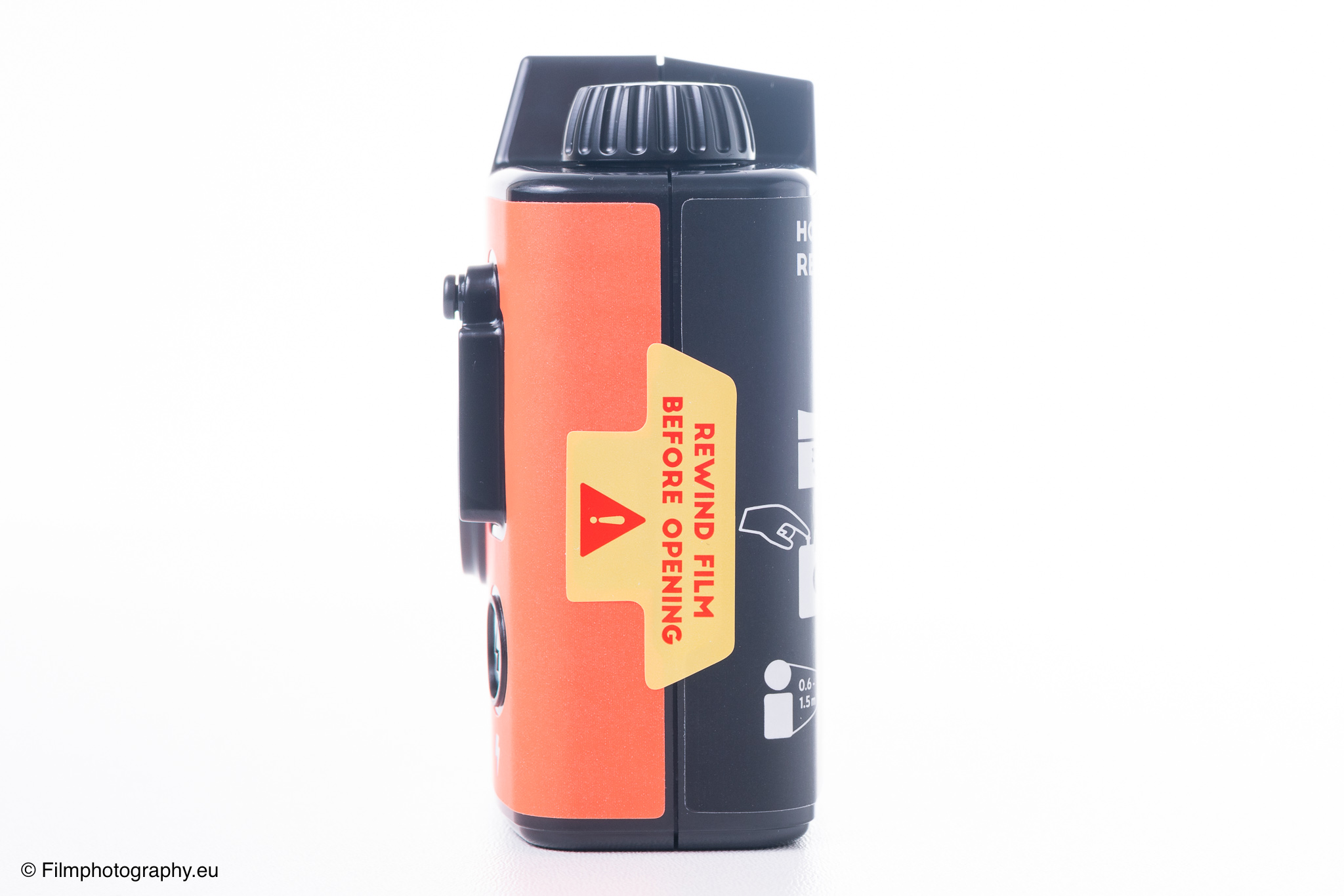
When unpacking, the camera body immediately catches the eye. Although the construction is entirely made of plastic, the body does not seem brittle or unstable.
Calling it a particularly high-quality product would certainly be inappropriate, but the mechanics leave a reliable overall impression. All components are firmly joined, giving the body adequate stability for a reusable snapshot camera.
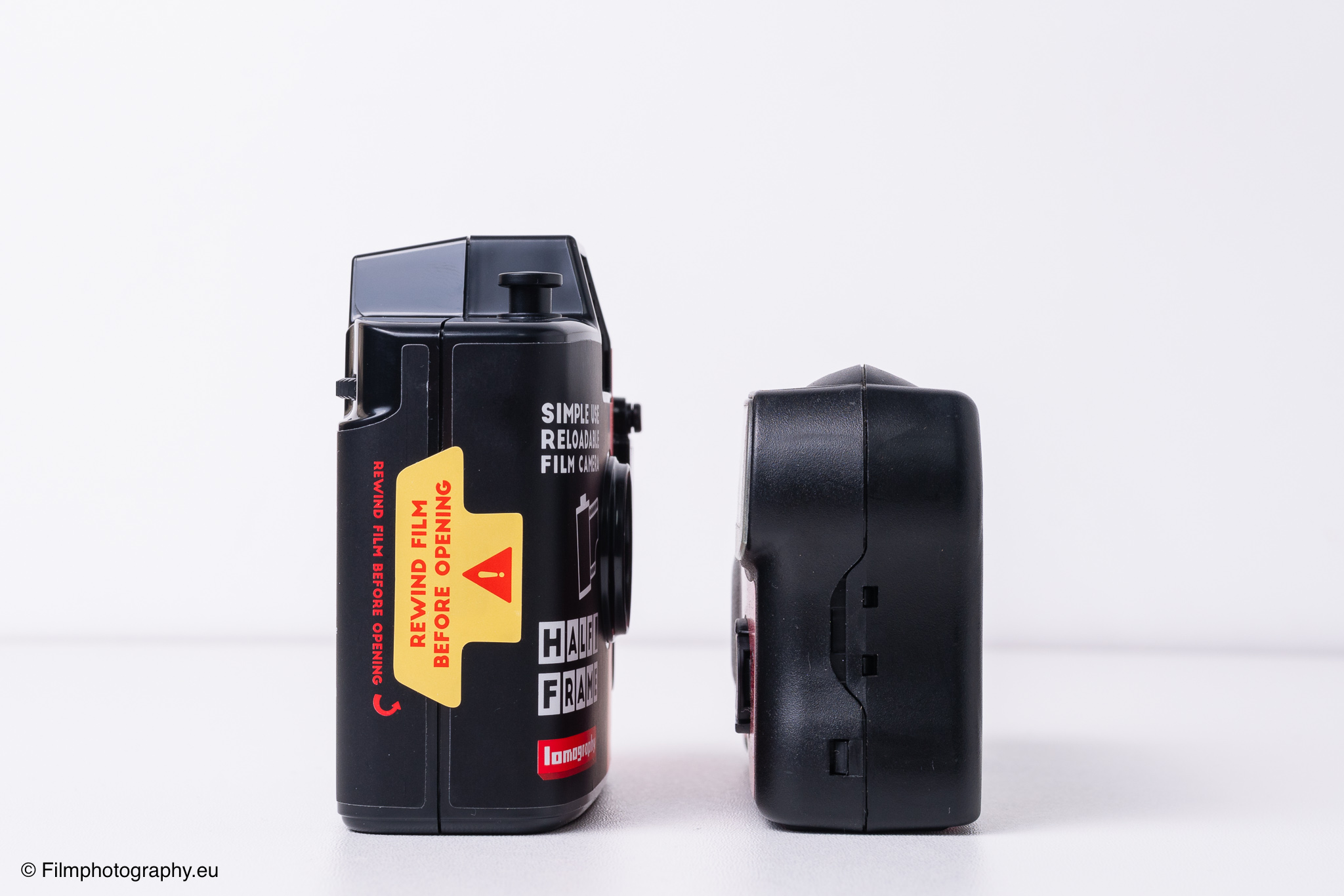
The camera is relatively compact. It fits into a larger pants pocket.
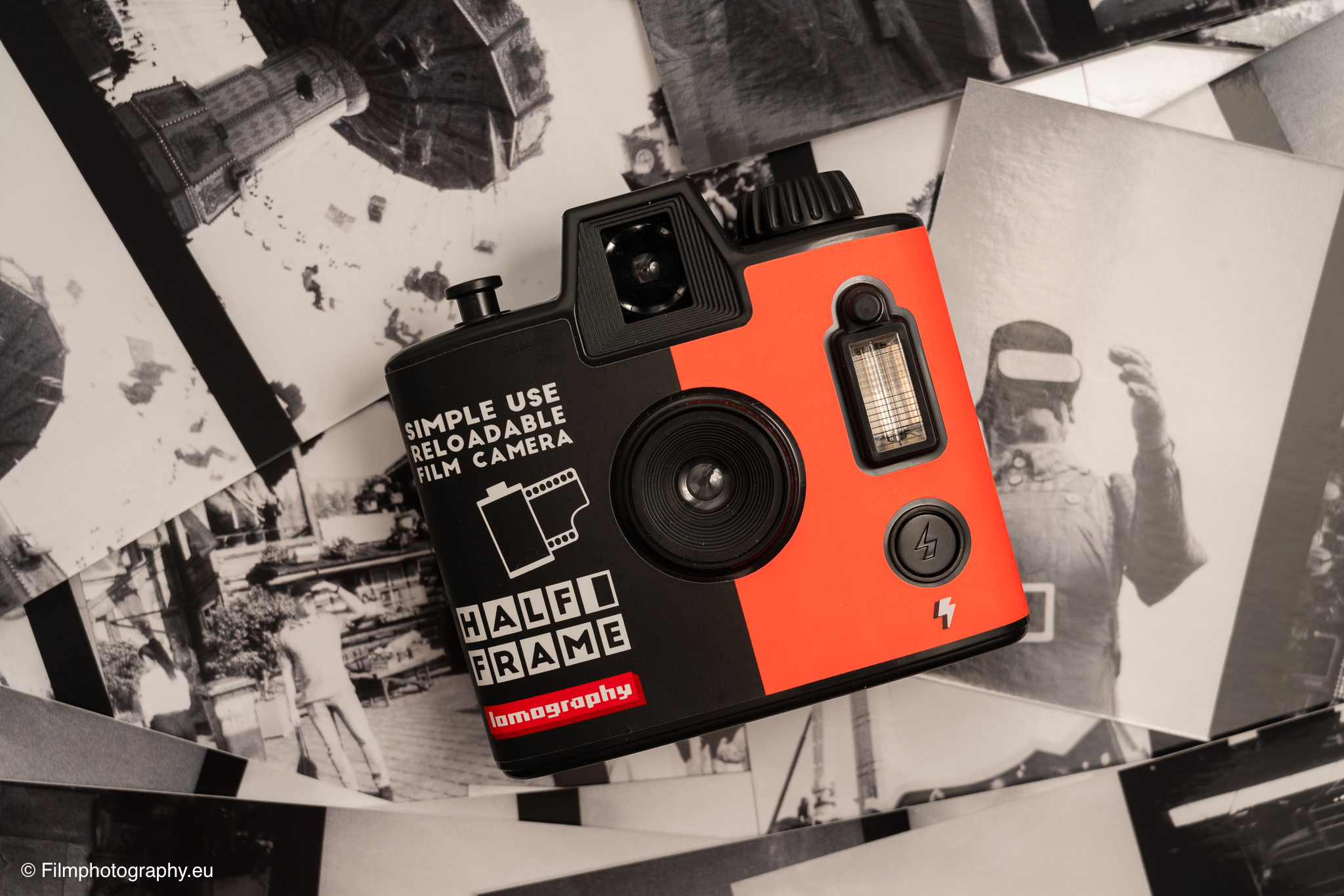
Shooting with the Camera
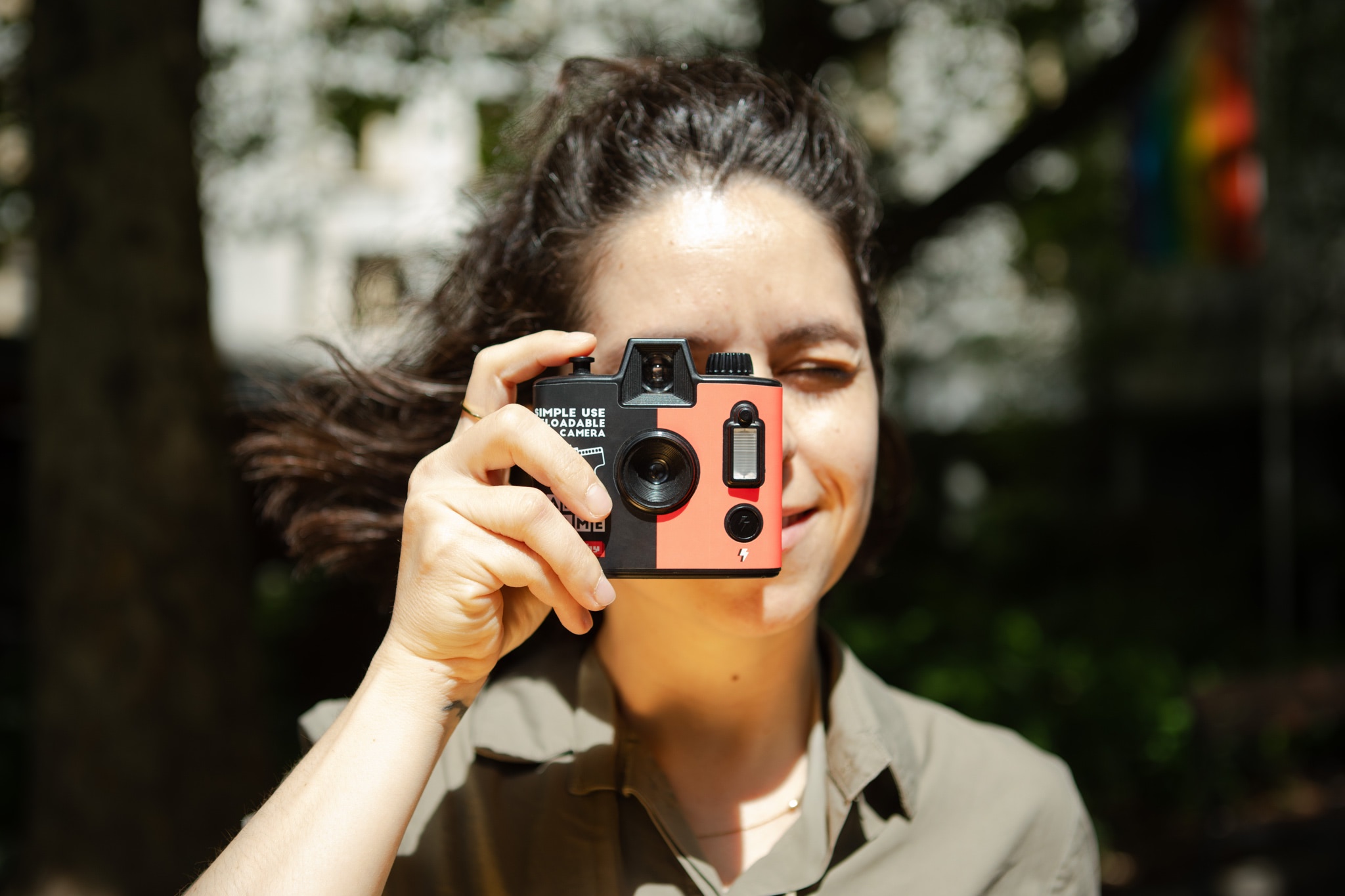
Due to the compact design and square body shape, there is little surface area for a firm grip. Especially people with larger hands find holding it with the right hand on the front rather impractical. There is a risk that a finger unintentionally gets in the area of the lens and covers the shot.
It is advisable to support the camera with the left hand from below and then press the shutter with the index finger of the right hand. This way, the lens remains unobstructed and the body rests stably in the hand.
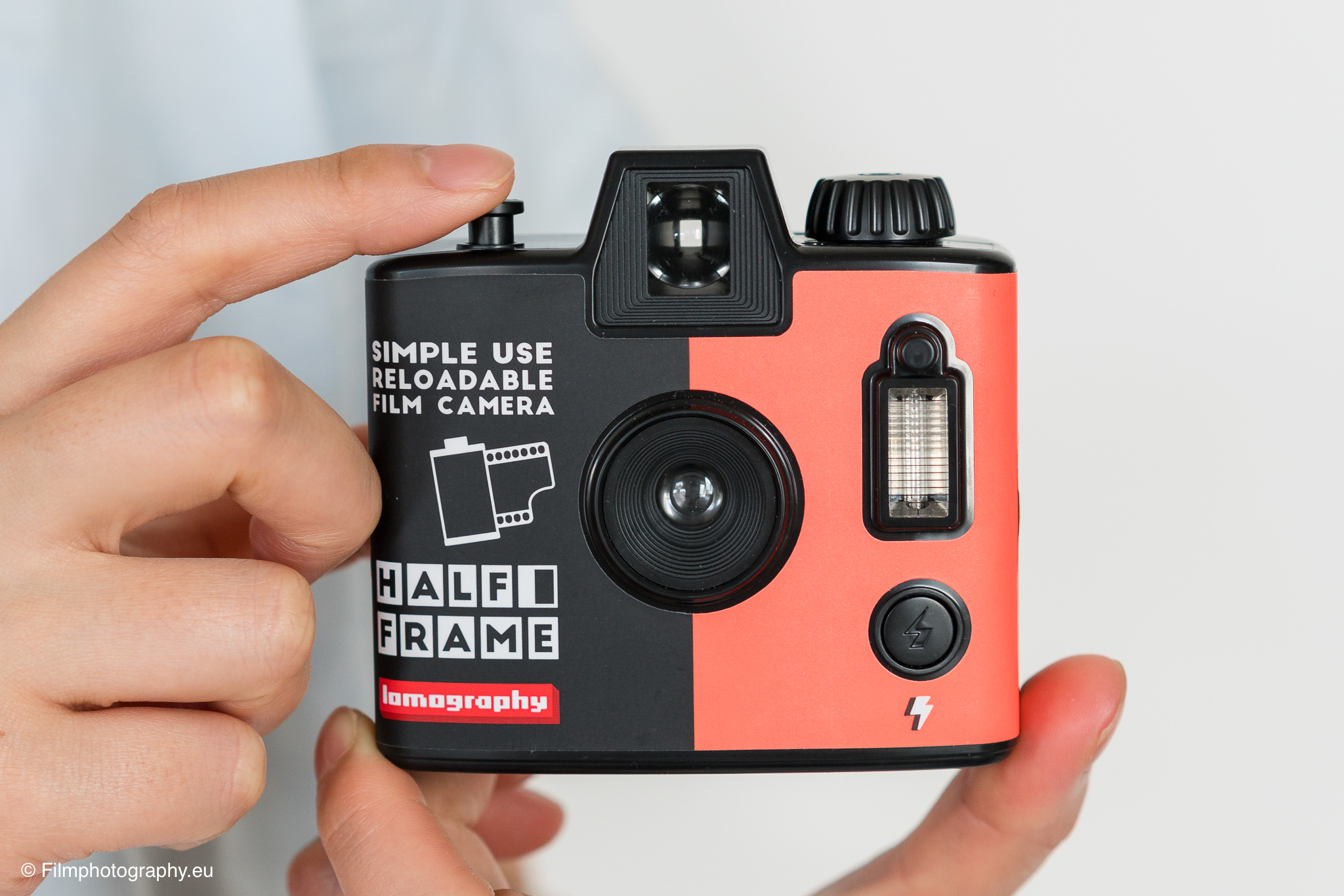
The thumb wheel for advancing the film runs very smoothly and requires little effort to operate. The shutter release also has a pleasant pressure point, which makes taking photos easier.
The built-in flash is activated by simply pressing a button. However, after firing, the flash readiness switches back off. For this reason, some caution is needed when taking multiple shots in quick succession. In such situations, the flash must be manually re-enabled for each individual shot.
A small weakness shows in the frame counter. The window for displaying the number of photos taken is very small and quite dark, making it somewhat difficult to read.
Additionally, a attachment point for a hand strap would have been a sensible addition to secure the camera during outings. Also, a simple option for double exposures would have usefully expanded the functionality.
Despite these small limitations, the camera brings a lot of joy in practice. It is easy to transport in a larger pants pocket and is quickly ready for spontaneous shots.
The view through the viewfinder conveys a classic feeling of analog photography, with the viewfinder image primarily serving as orientation. This creates exactly the free and creative way of photographing that one appreciates in analog cameras.
Development
Once the film is fully exposed, it's time to develop the film material. In this step, the model differs significantly from ordinary disposable cameras.
The camera is not handed in or disposed of after use, but remains in the possession of the photographer and can be reloaded. You simply remove the film cartridge and hand it in for processing.
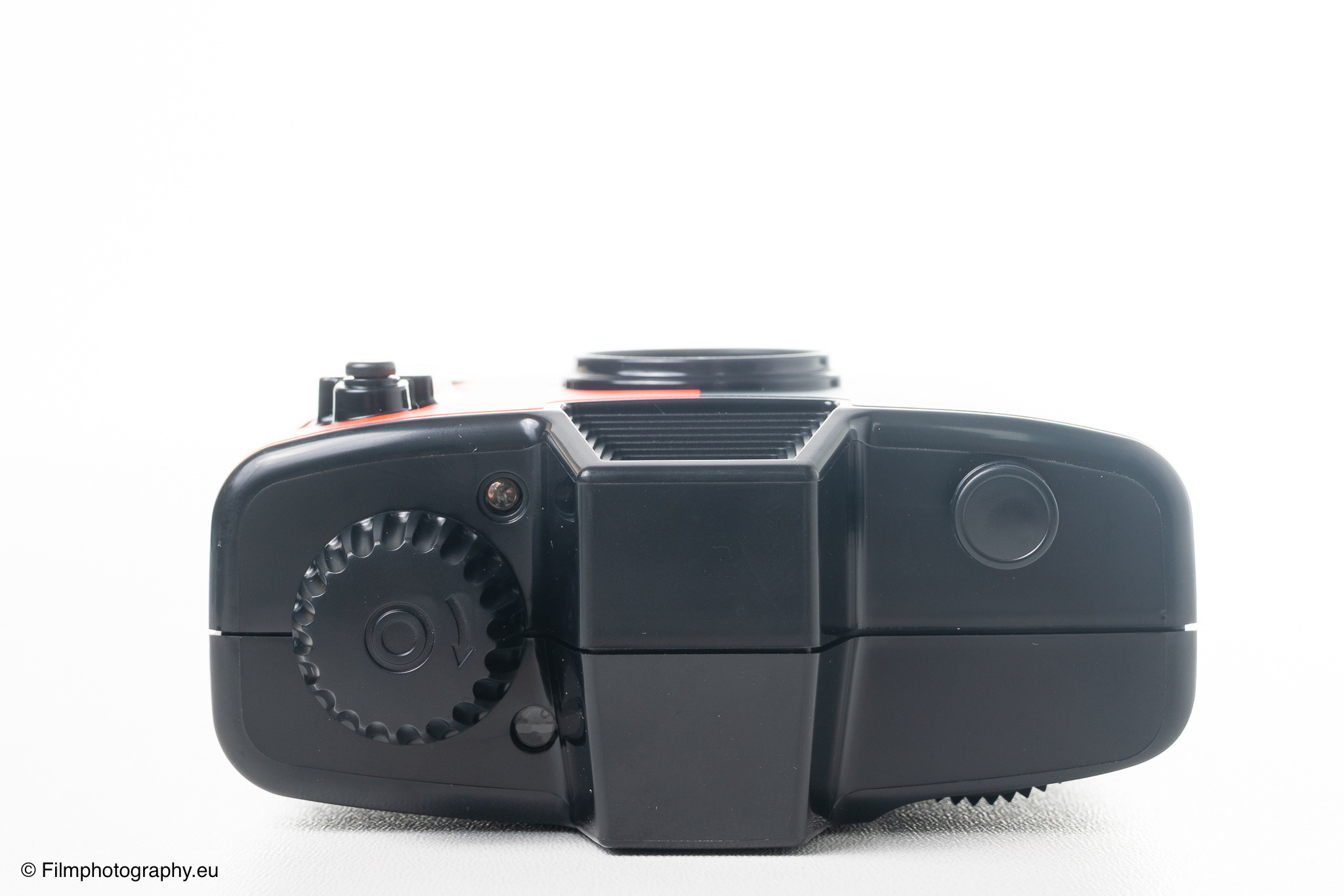
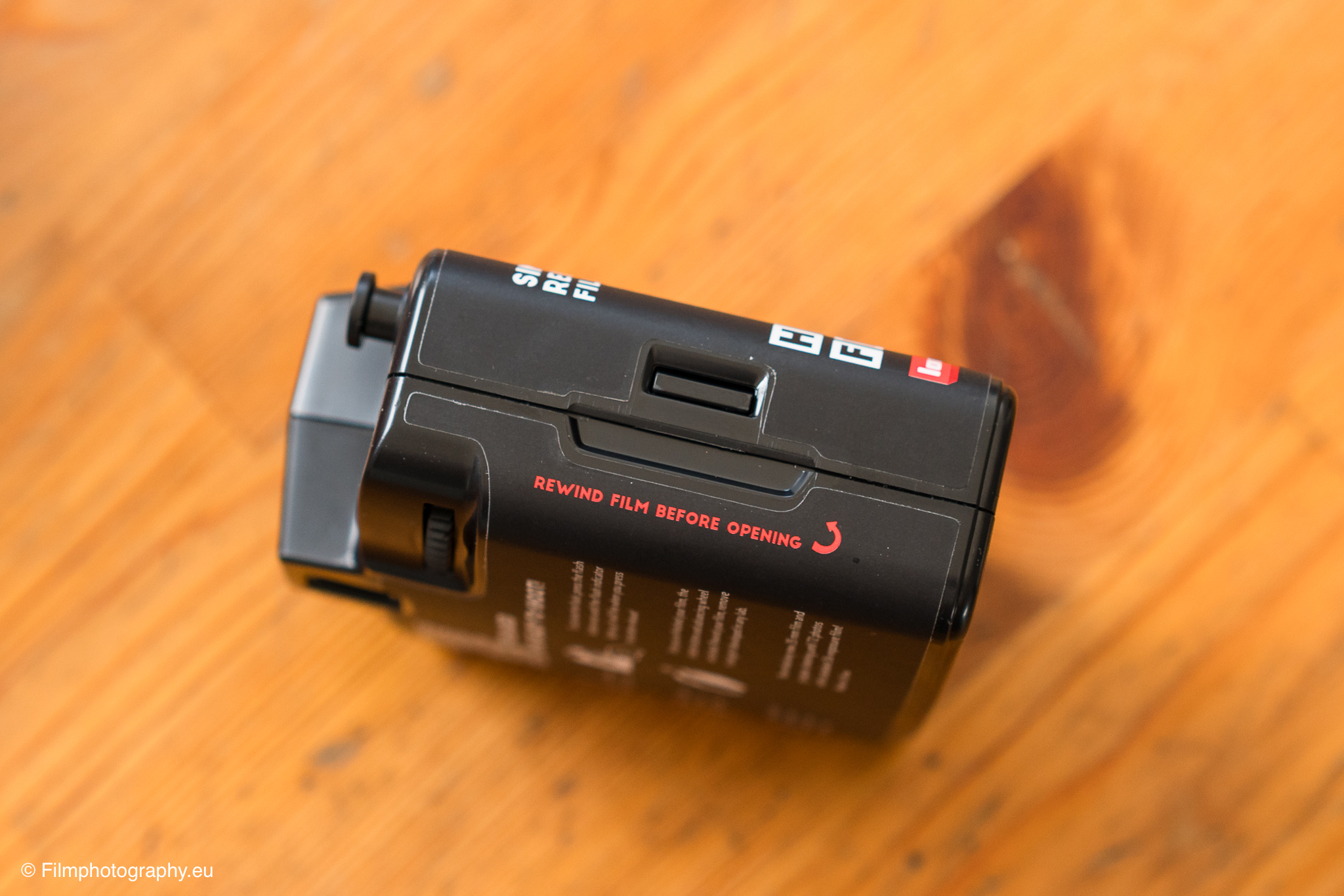
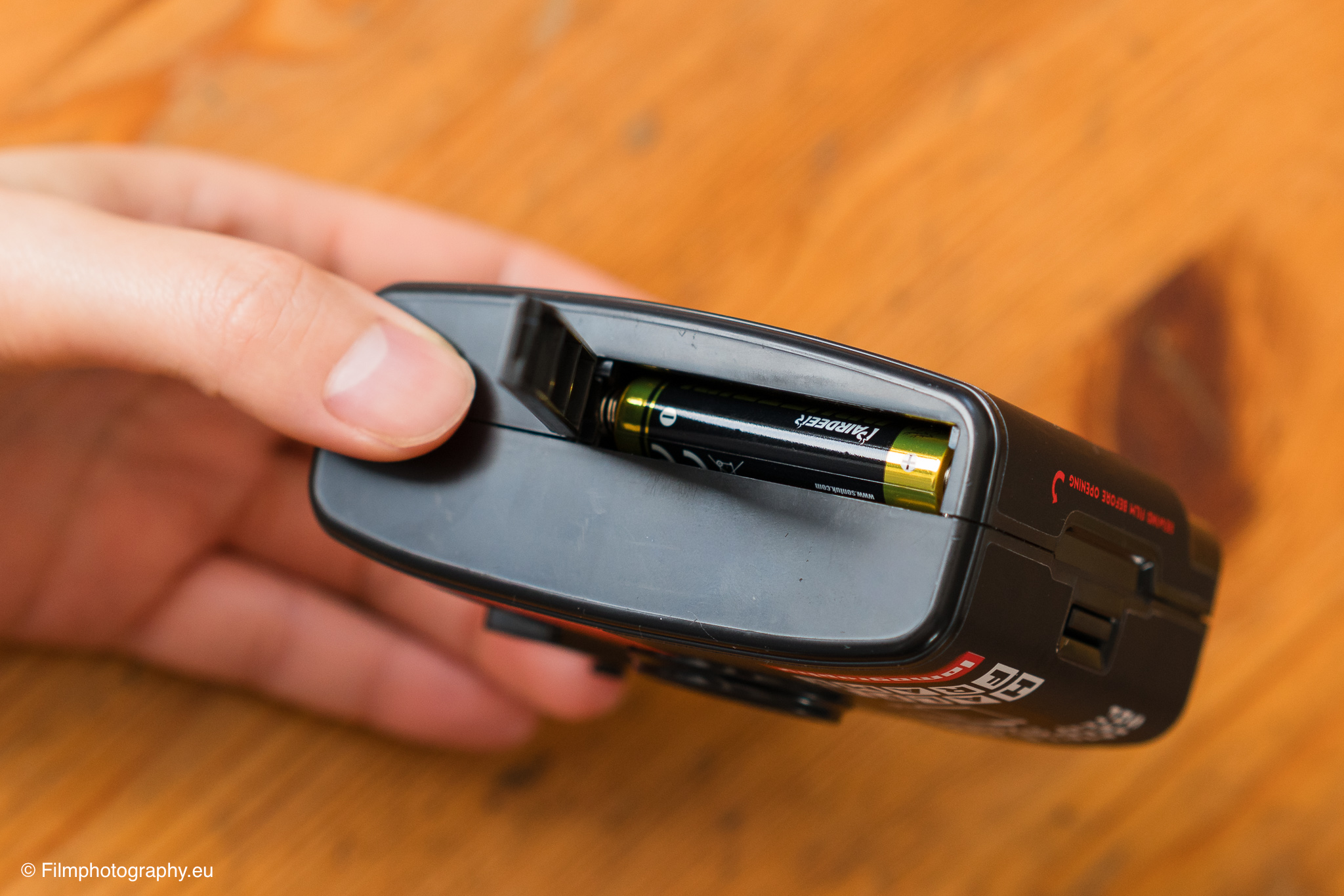
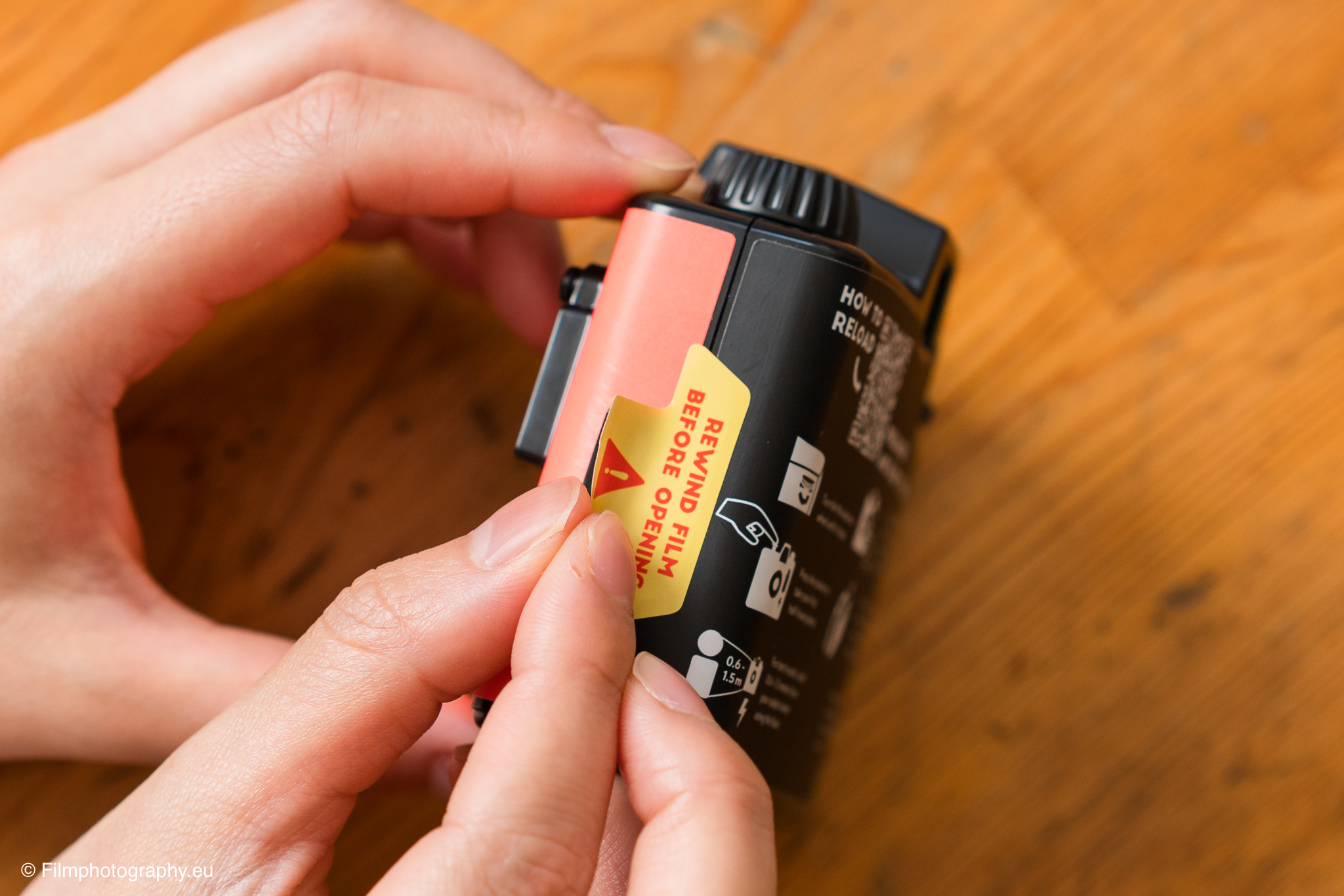
The rewinding process differs slightly from classic 35mm cameras. The film strip is wound step by step from the cartridge onto an internal spool during shooting. After the last shot, all the material is inside the body and must be rewound back into the cartridge. This is done via a knob on the top left of the camera.
Turning it is a bit tedious because the viewfinder gets in the way and makes it difficult to grip the knob. However, the process is easily manageable. After fully rewinding, the camera back can be opened.
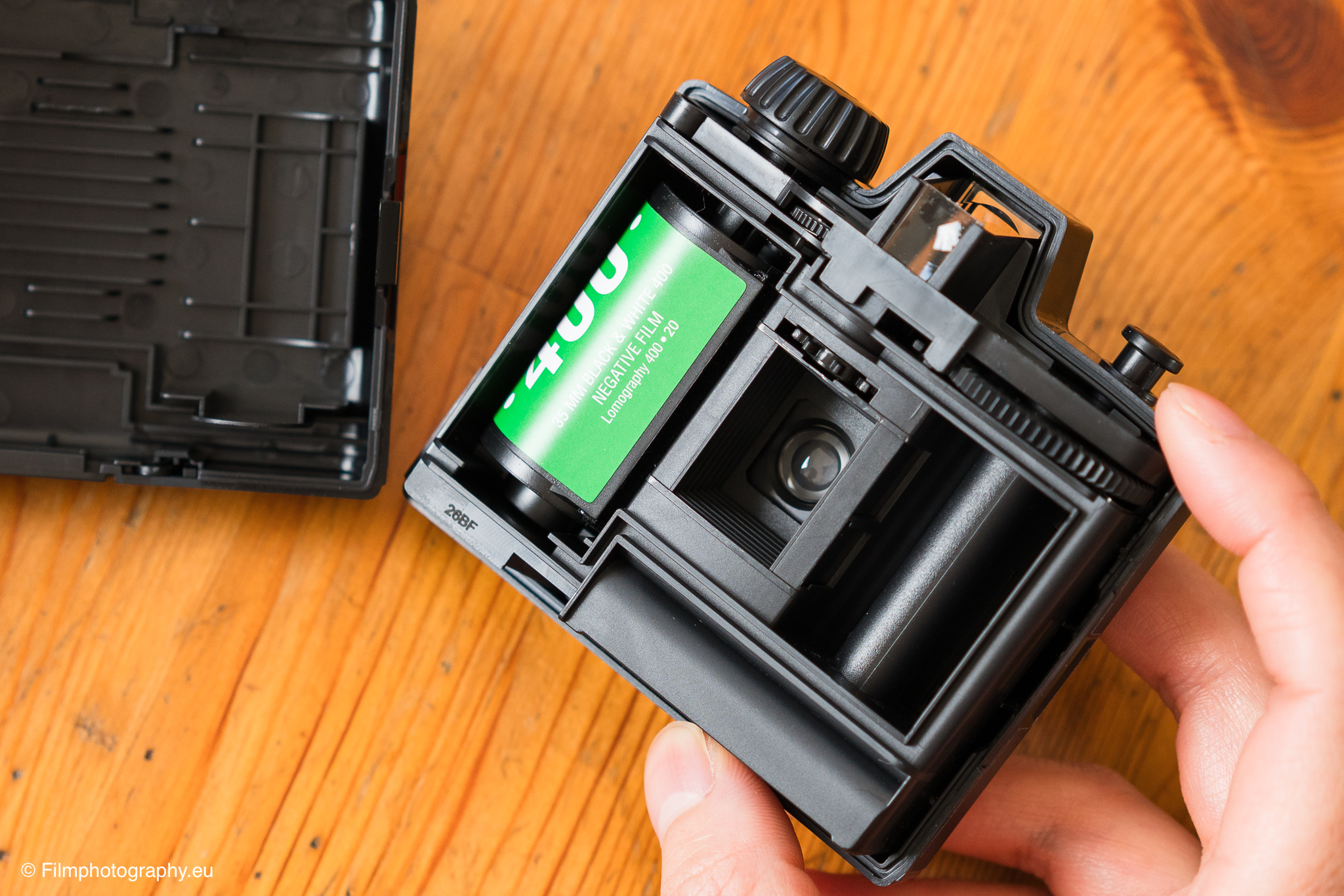
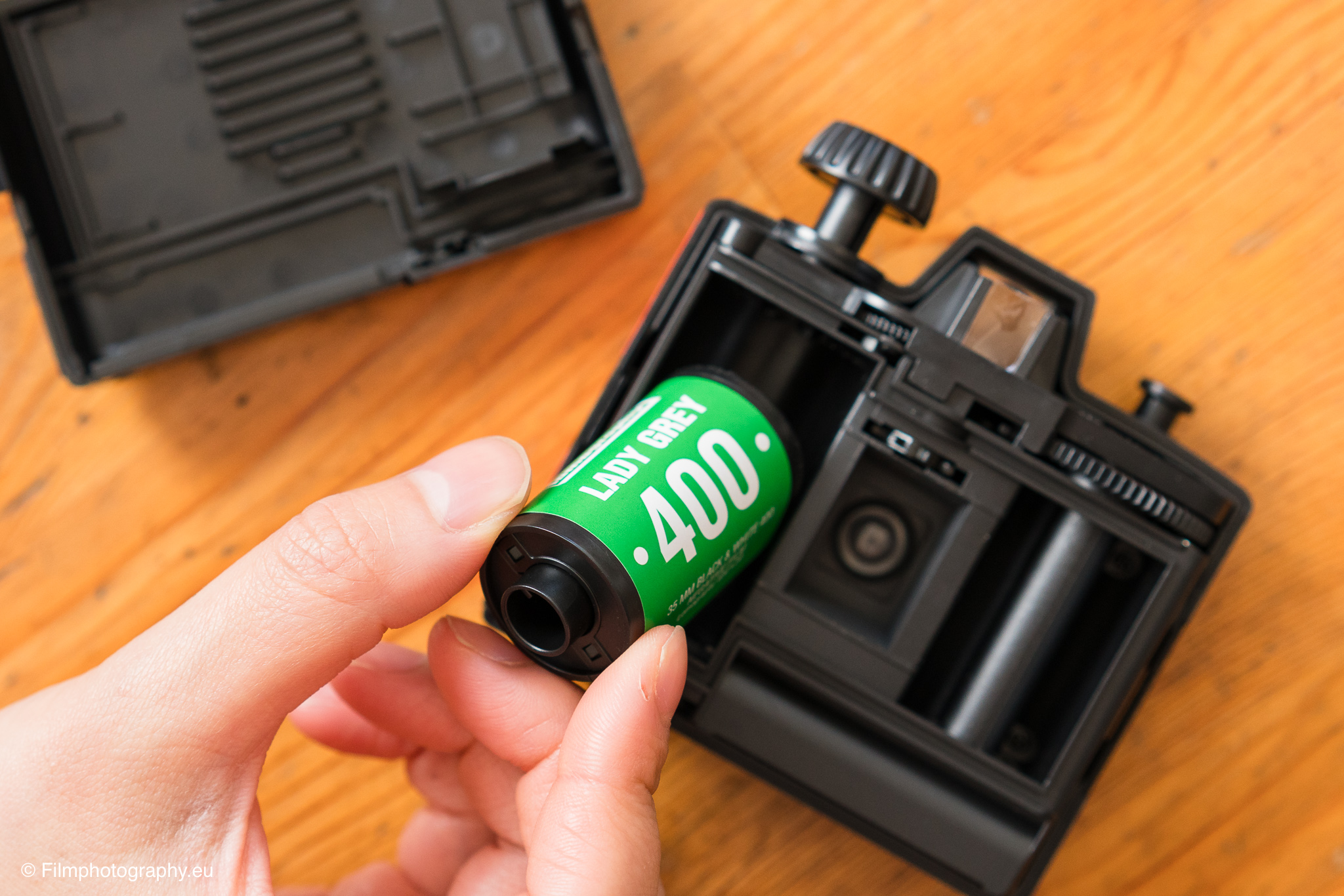
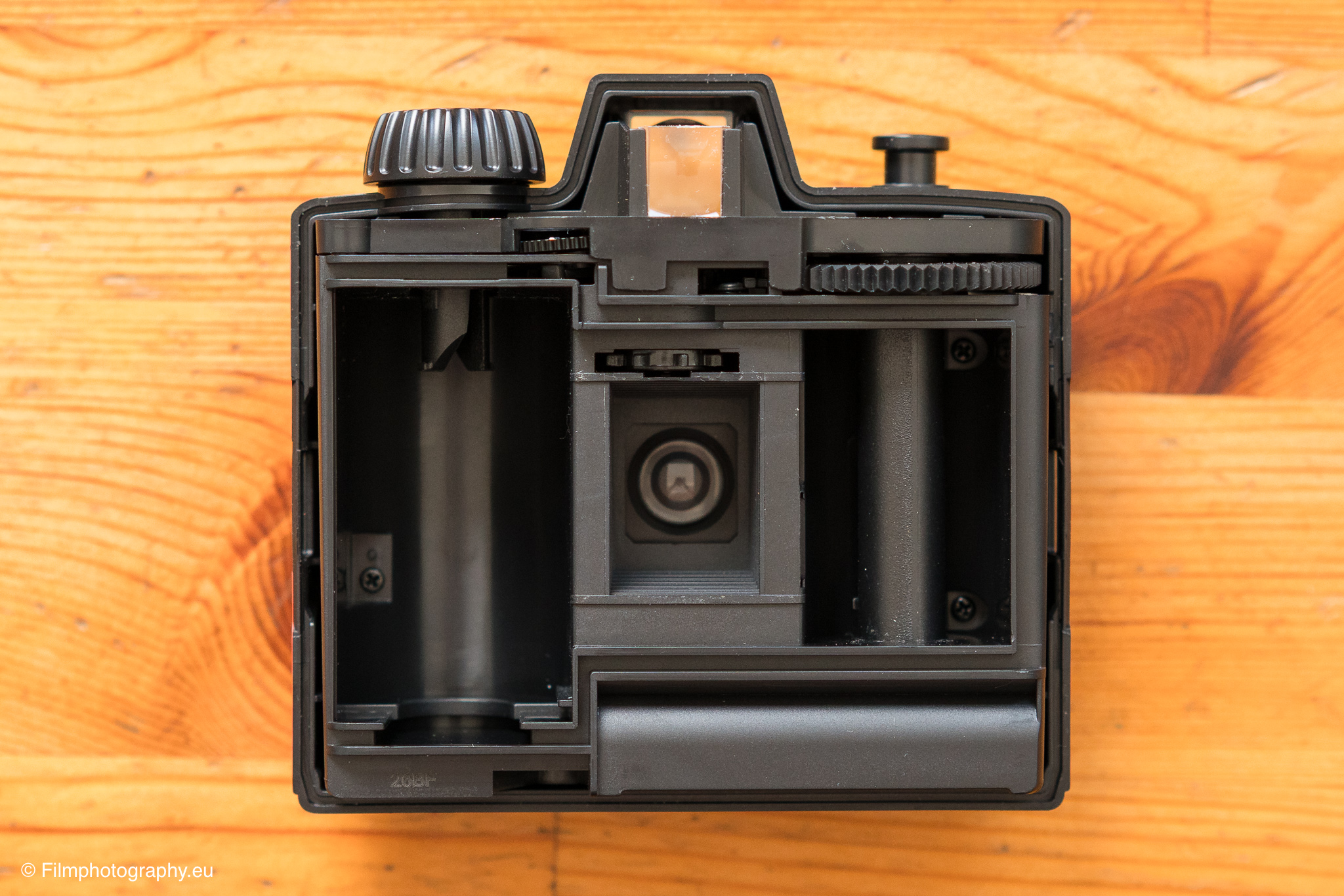
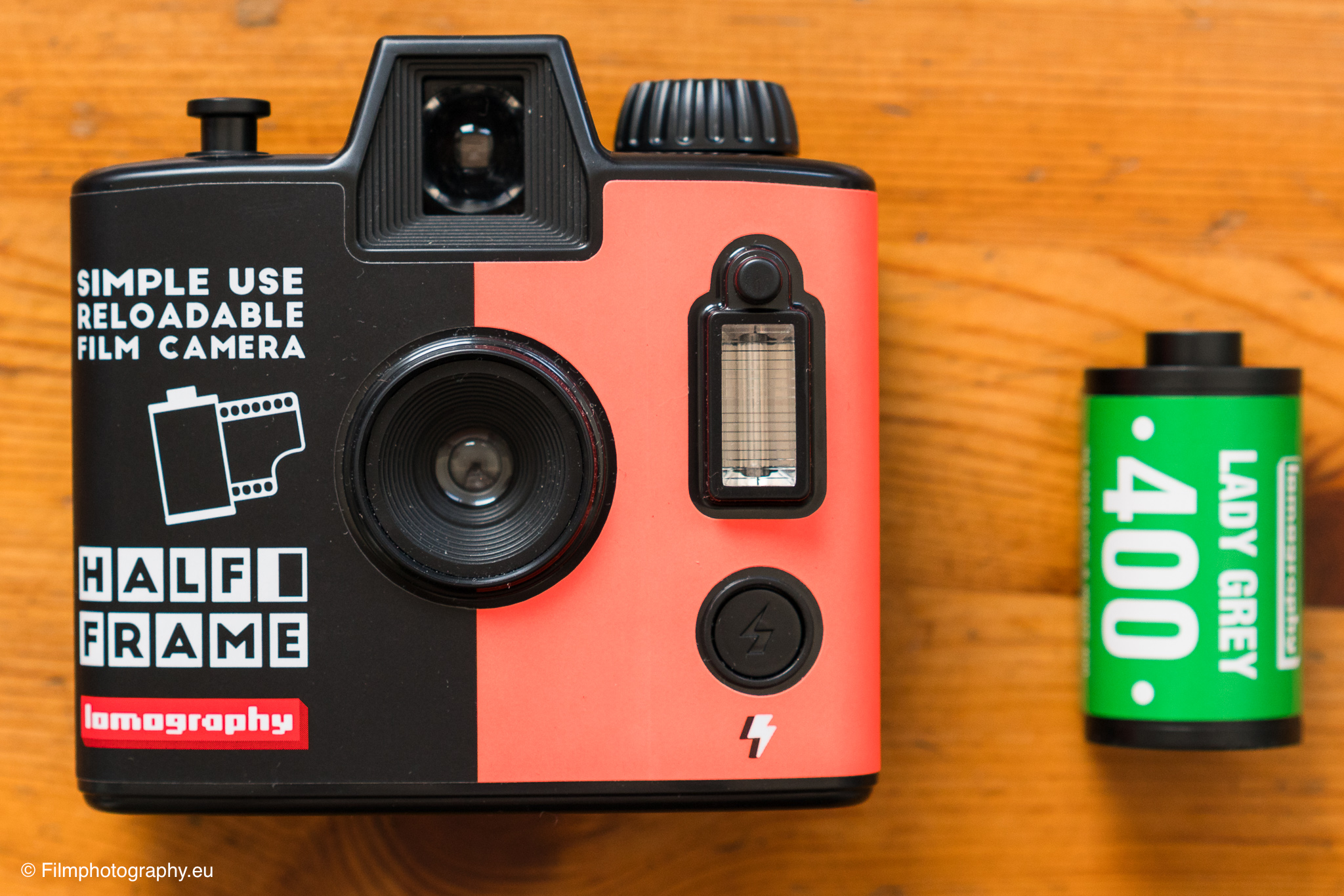
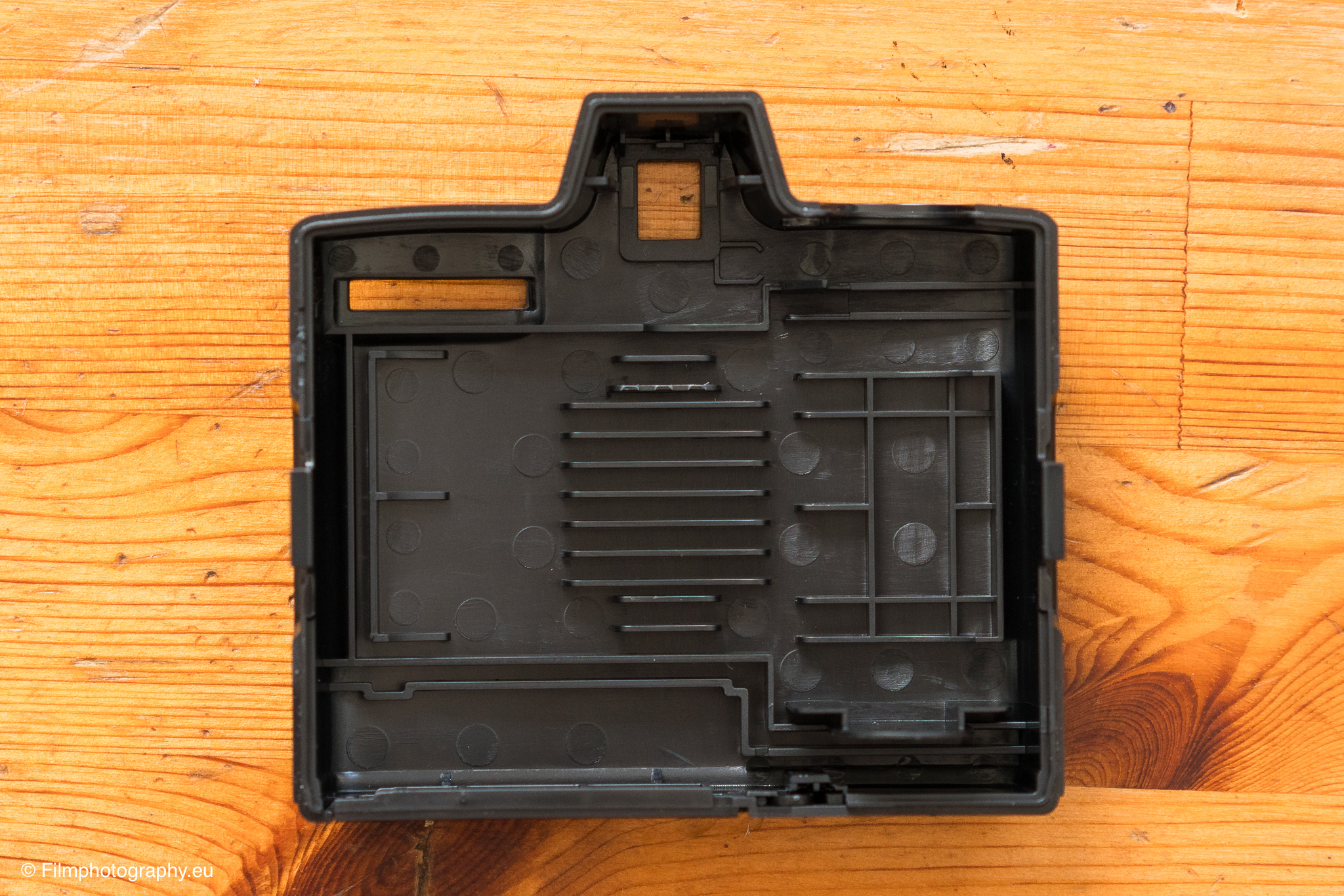
When choosing a development service, various options are available. For the color variant of the camera, the decision is easy since almost all photo labs support the C-41 standard process. For the black-and-white film used here, the choice was made for logistical reasons and personal interest to hand it in at the drugstore chain DM. The drugstore forwards the films to the large lab CEWE in this case.
From a quality perspective, development in a large lab represents a compromise. A tailored black-and-white development actually requires individual adjustment to the specific film, which cannot be implemented in an automated large-scale facility. Both the scans and the paper prints therefore do not achieve the quality of work with specialized lab equipment. However, this route convinces with high convenience in everyday life.
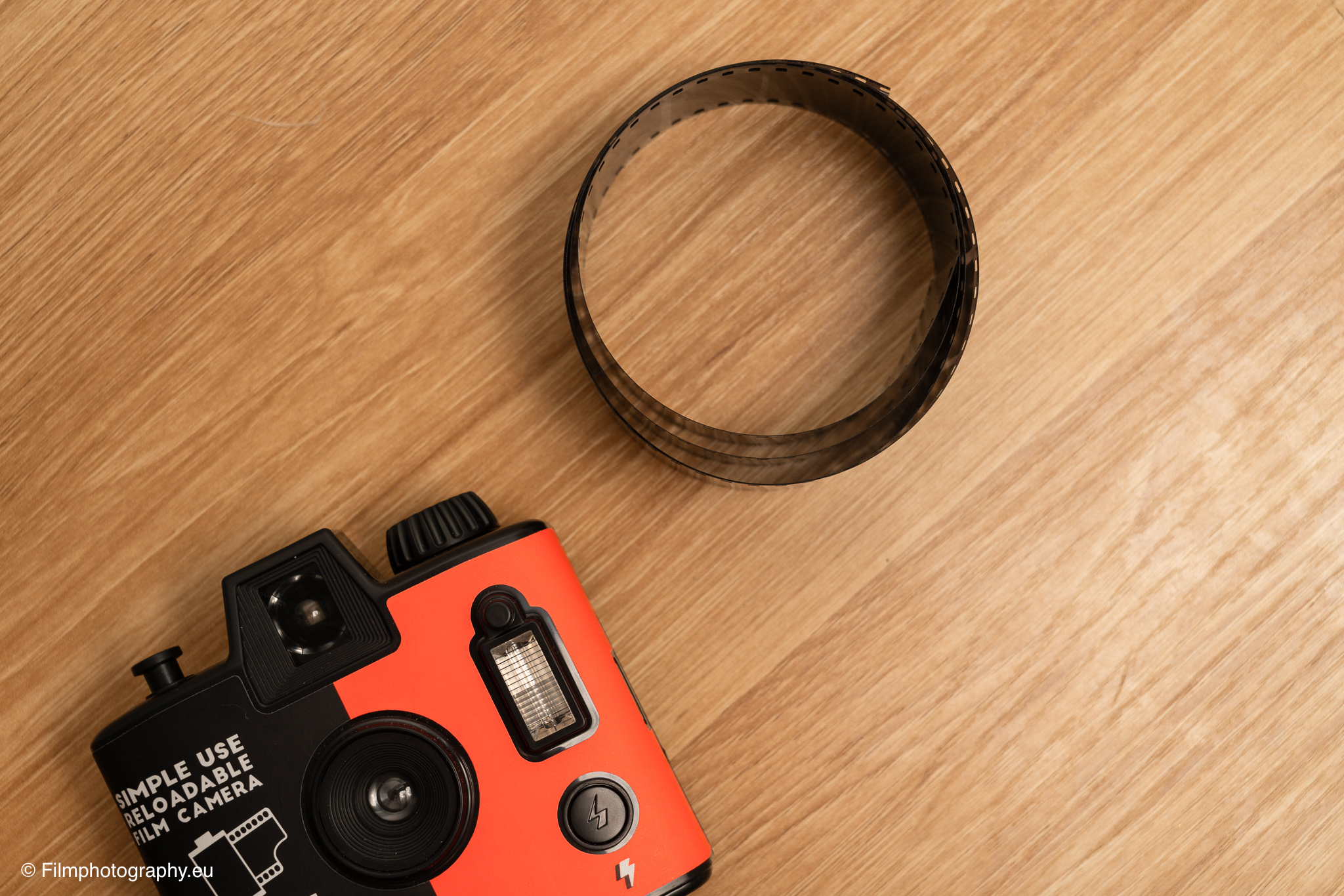
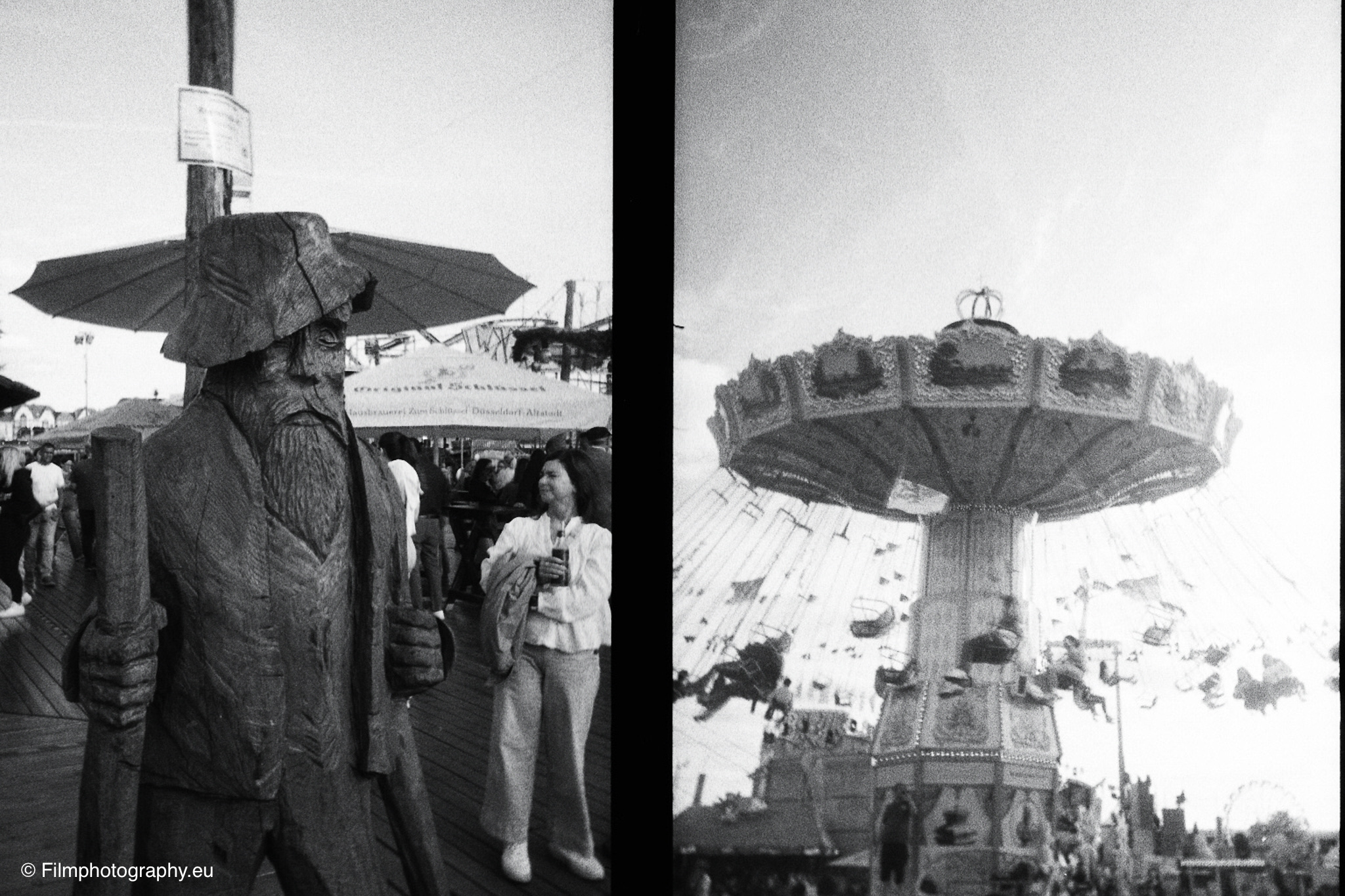
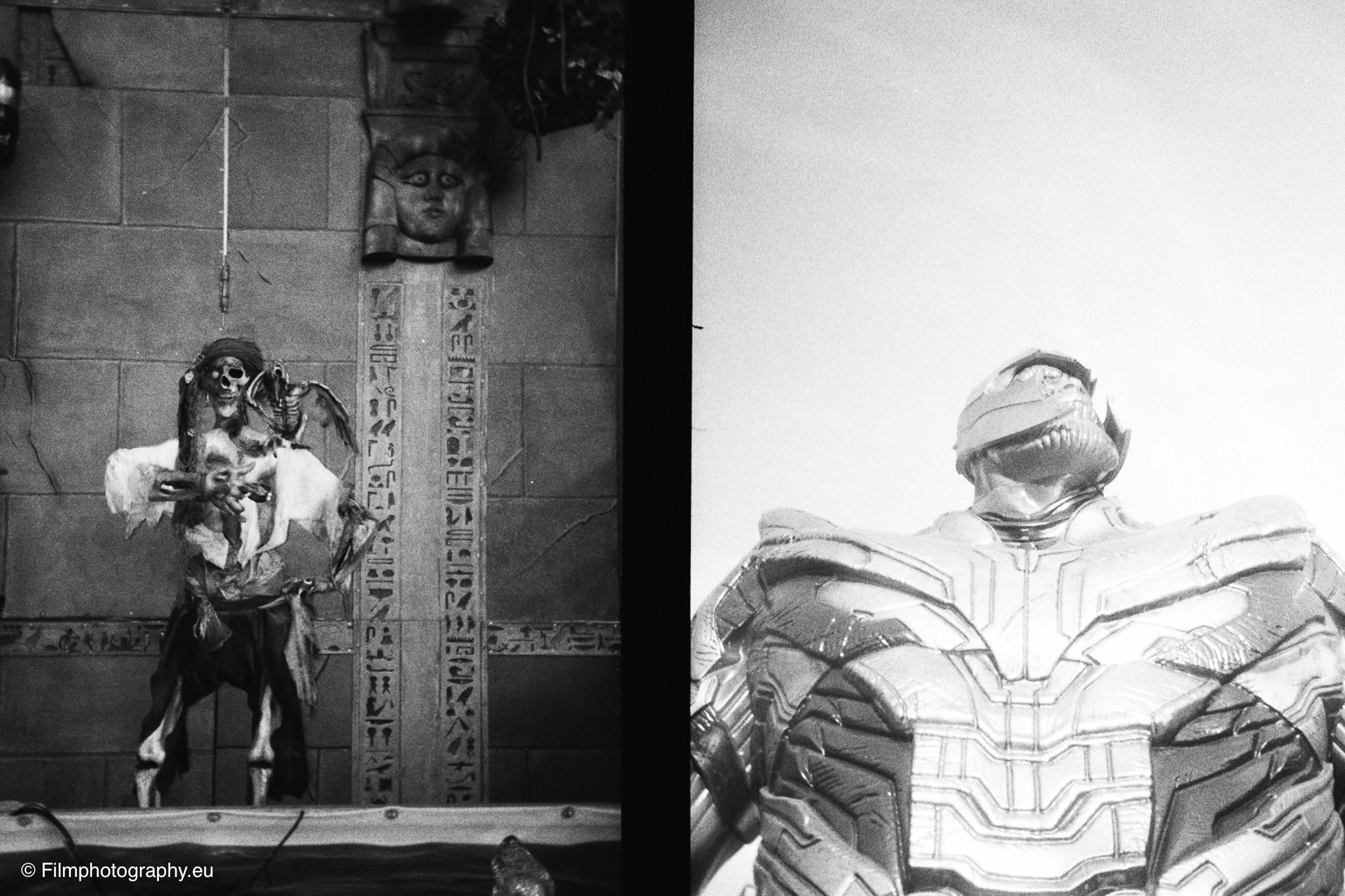
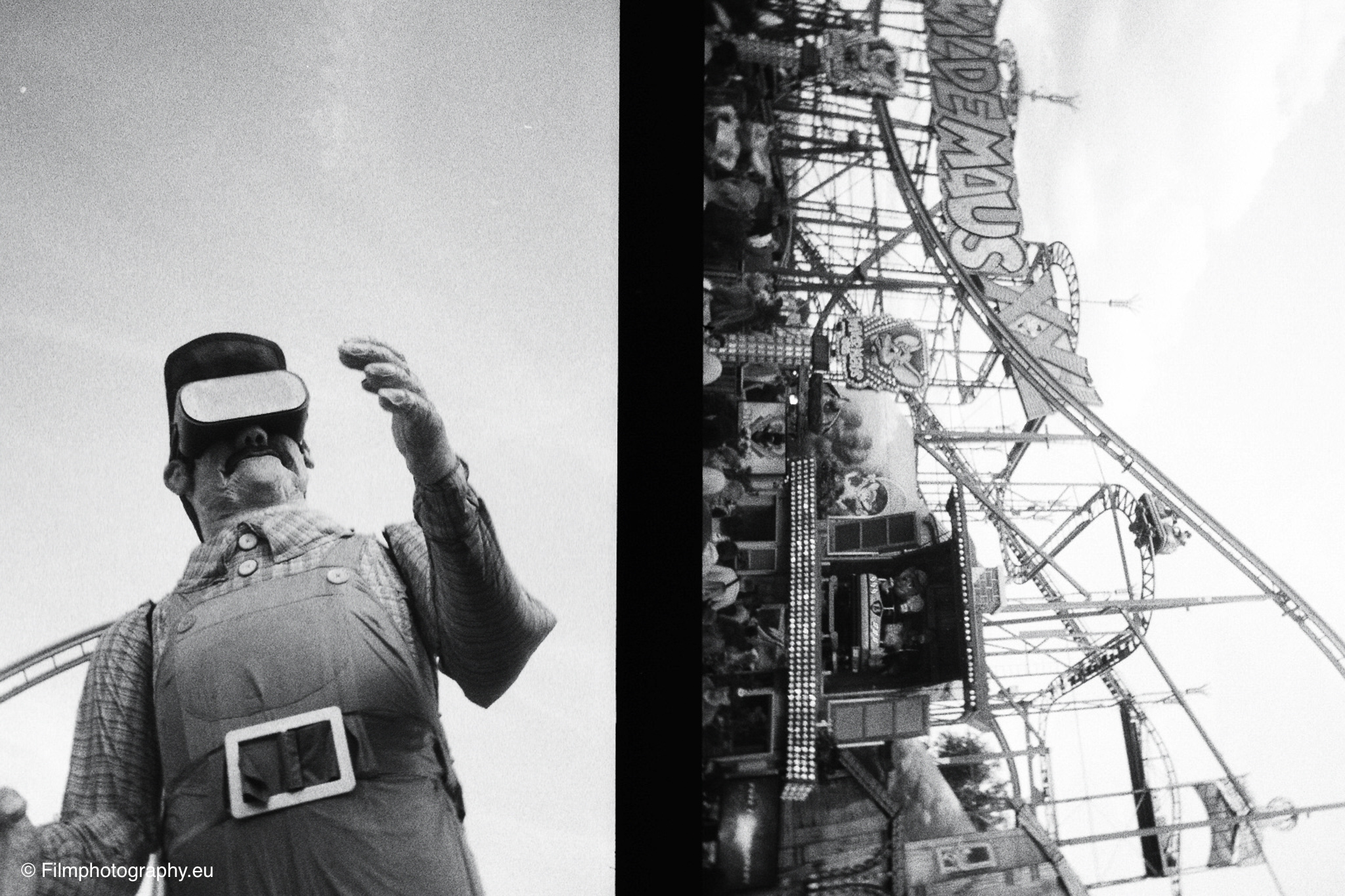
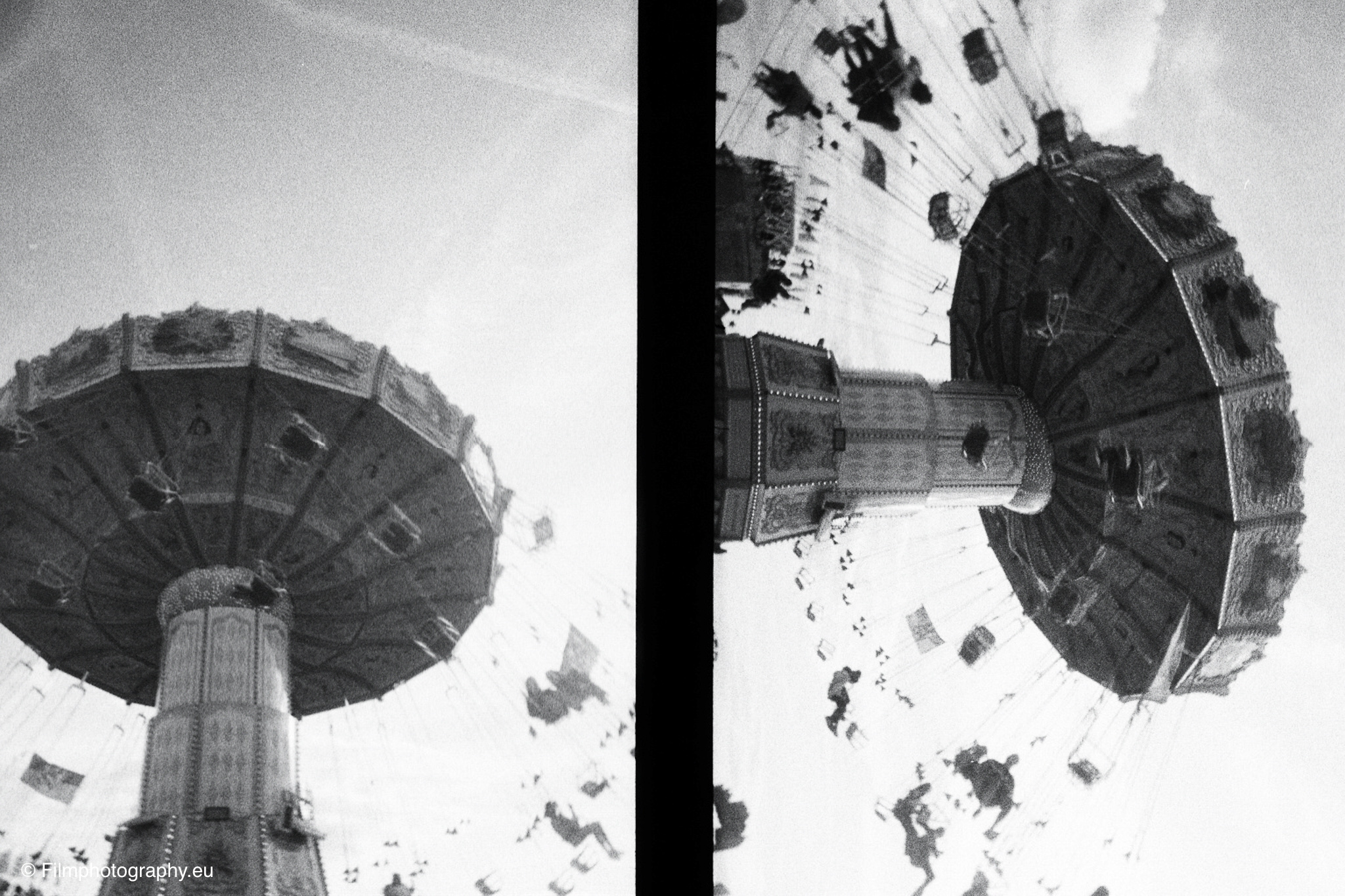
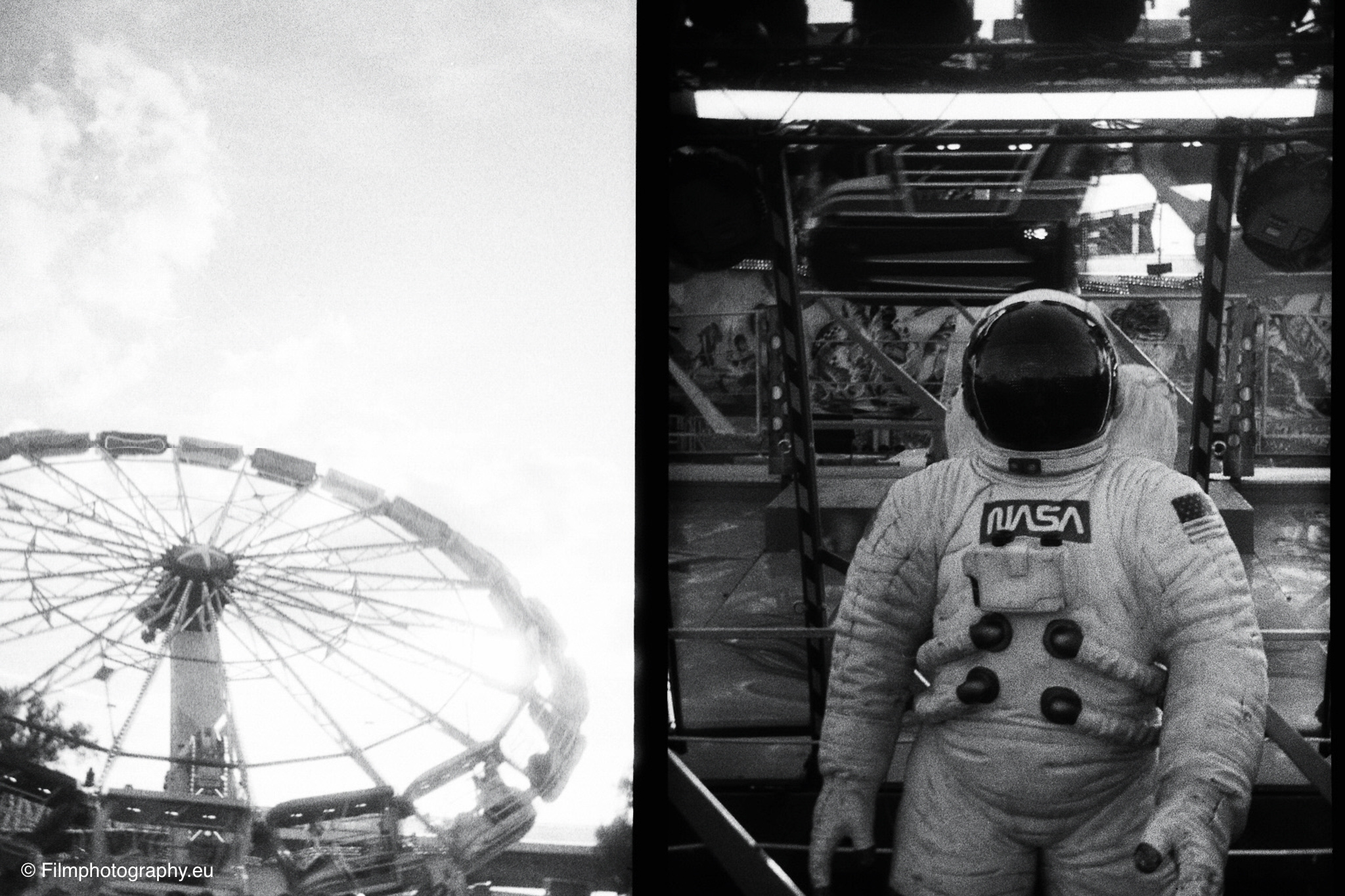
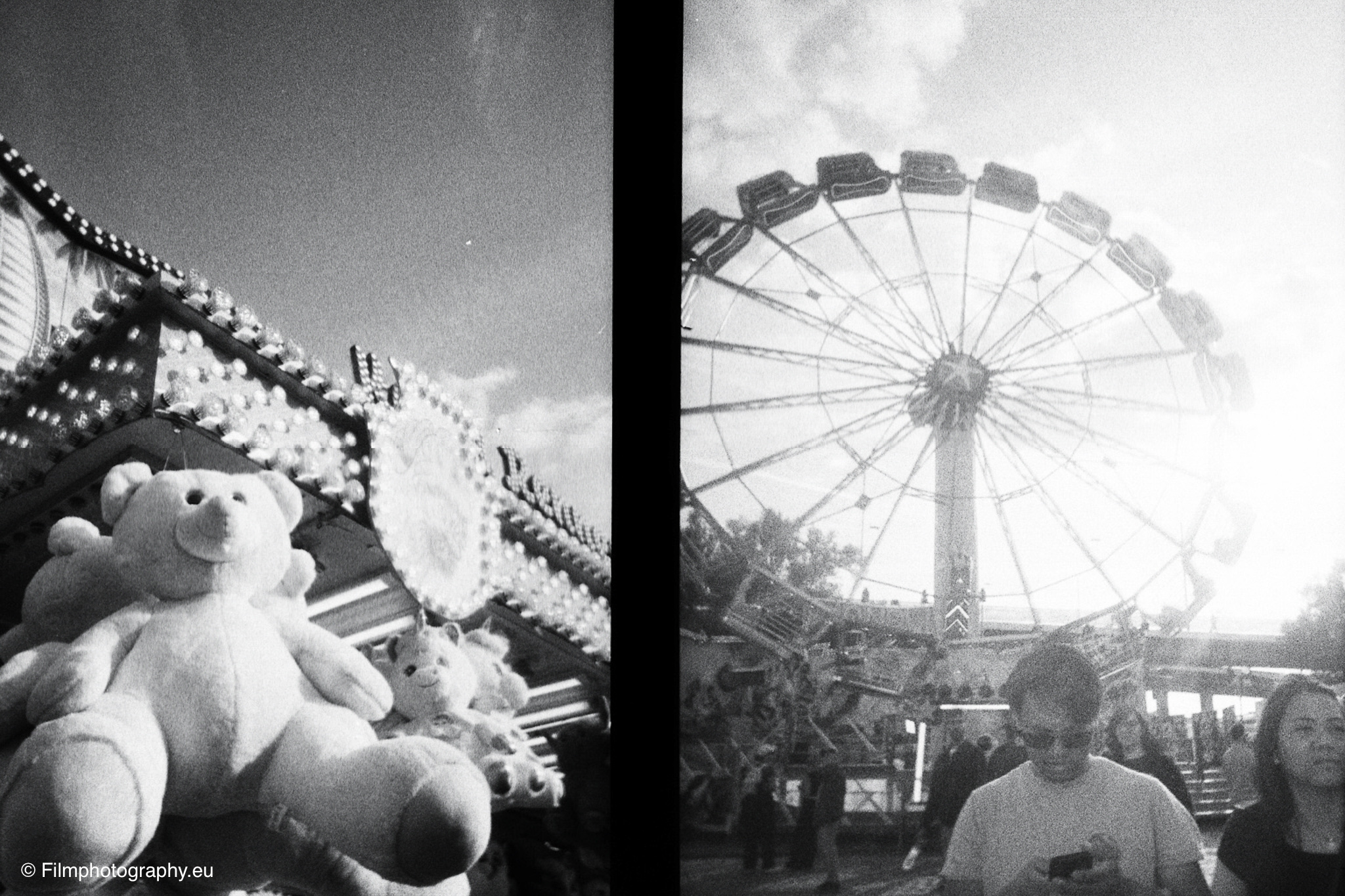
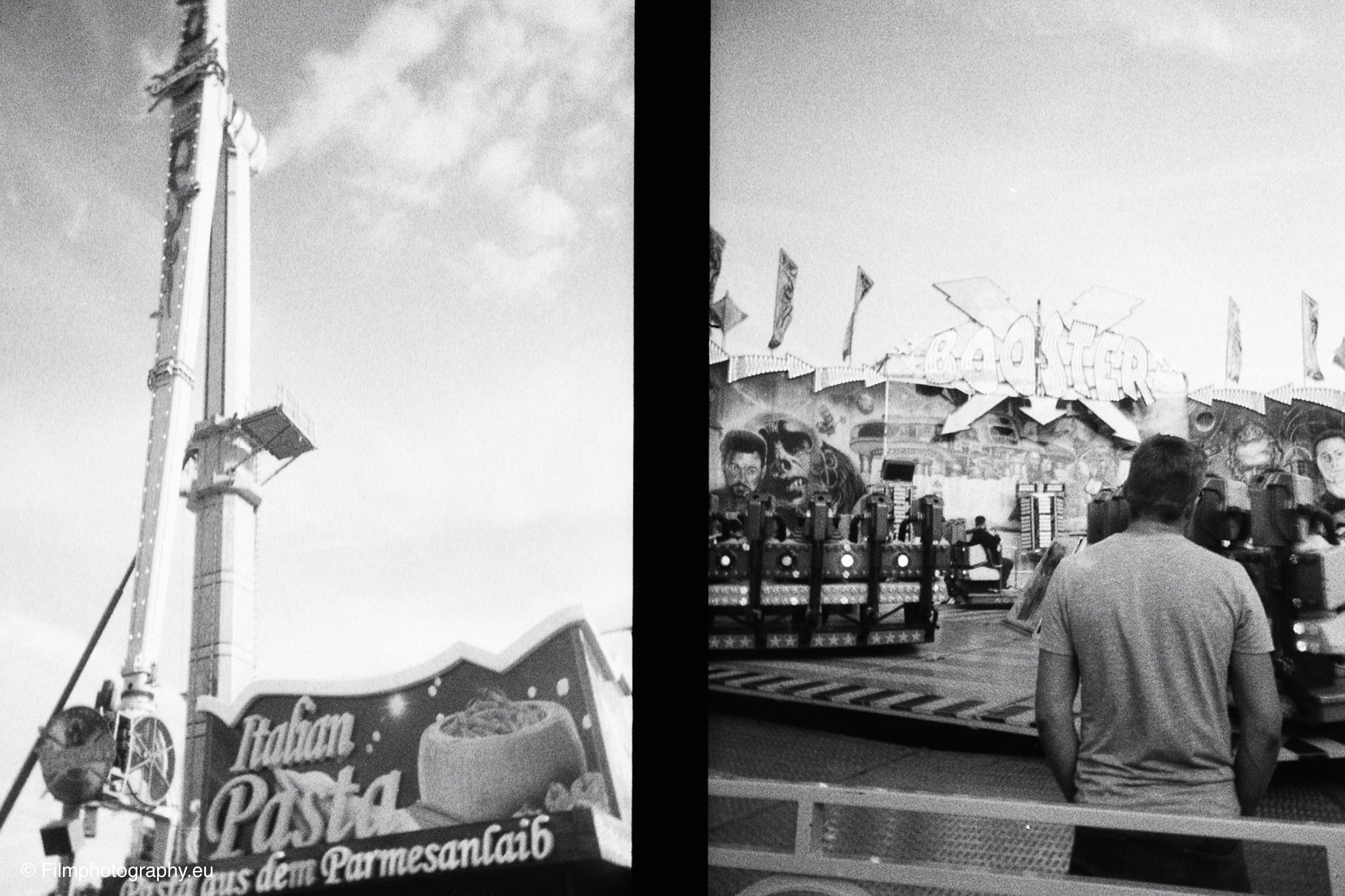
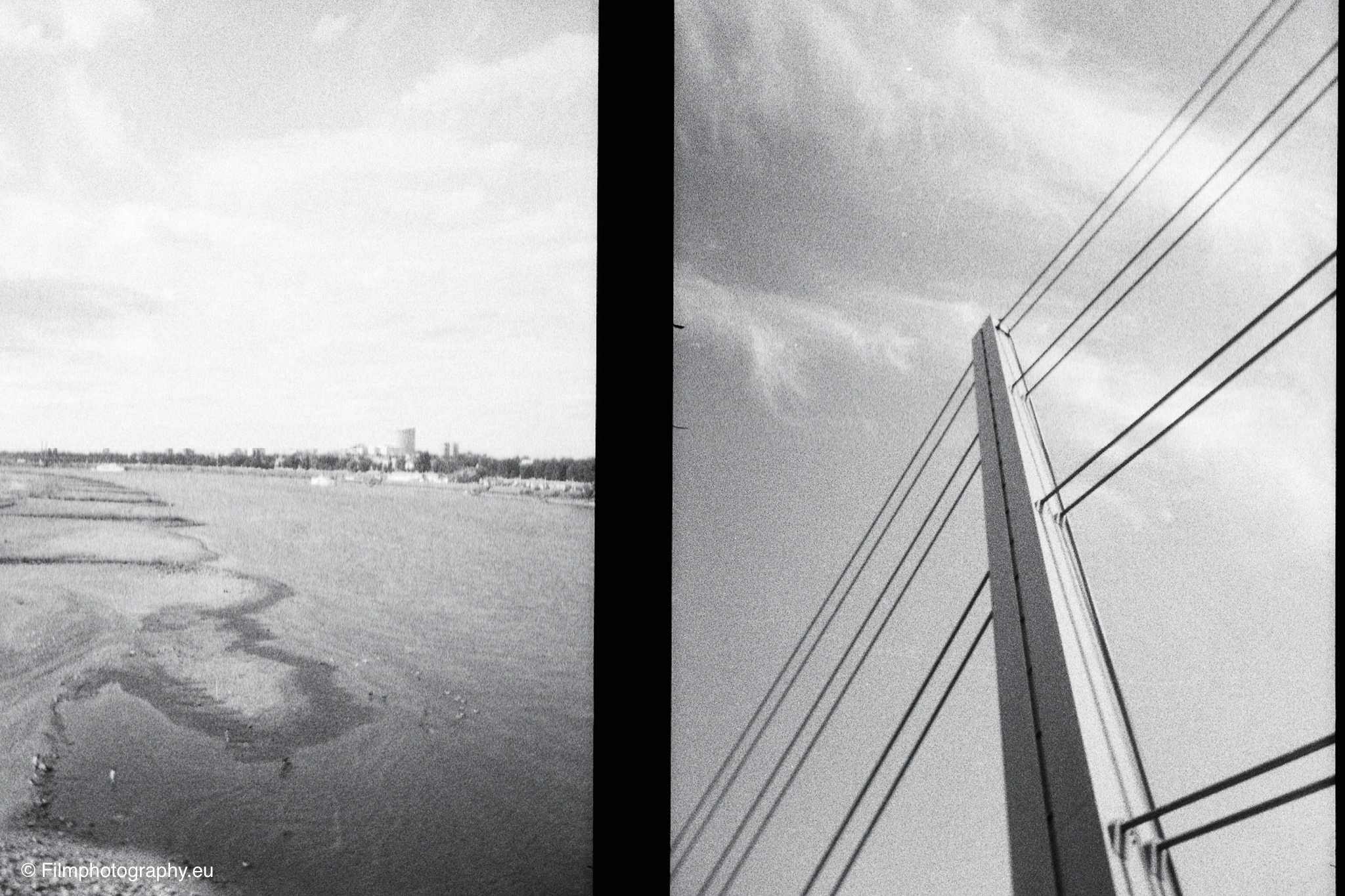
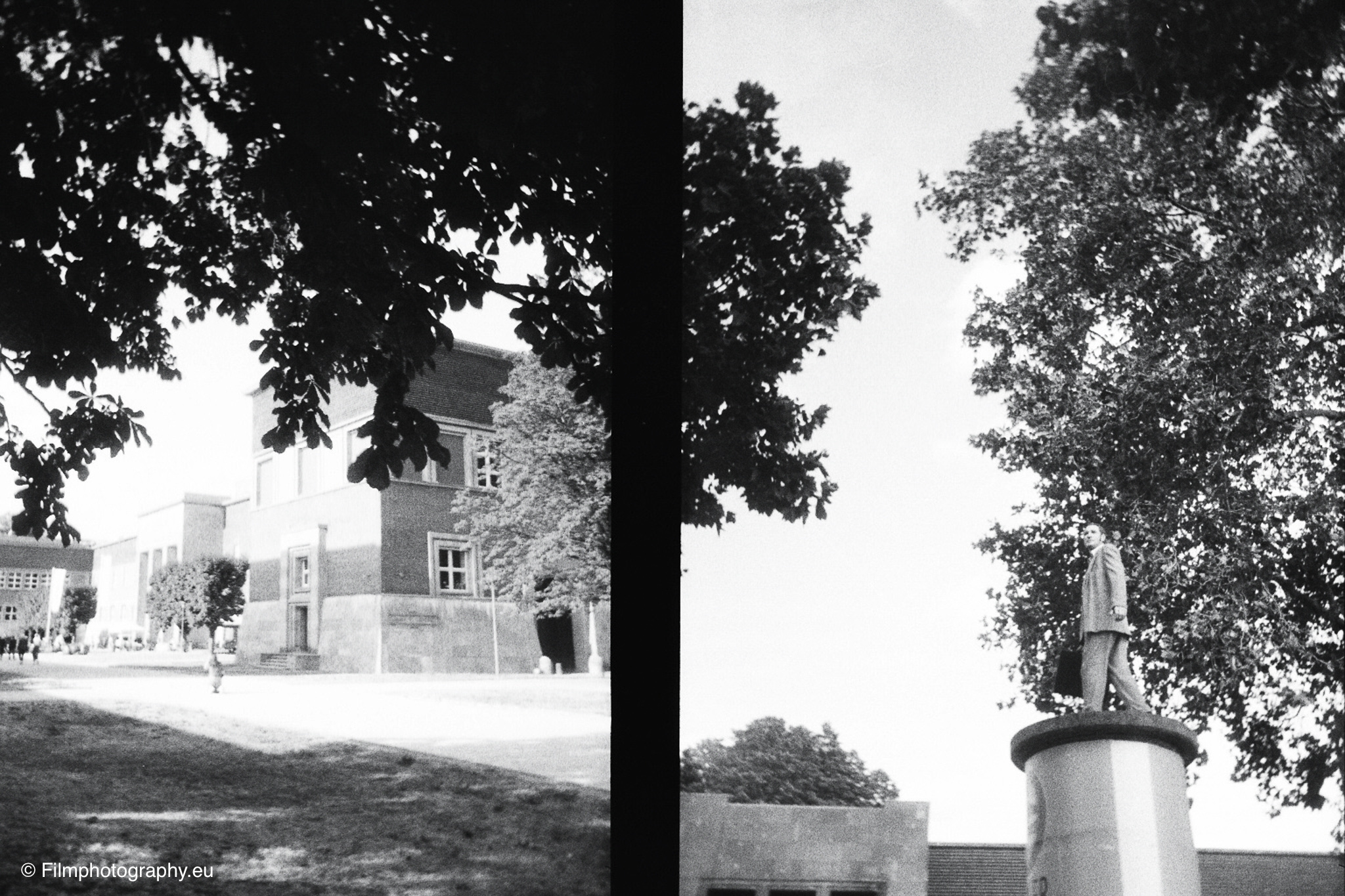
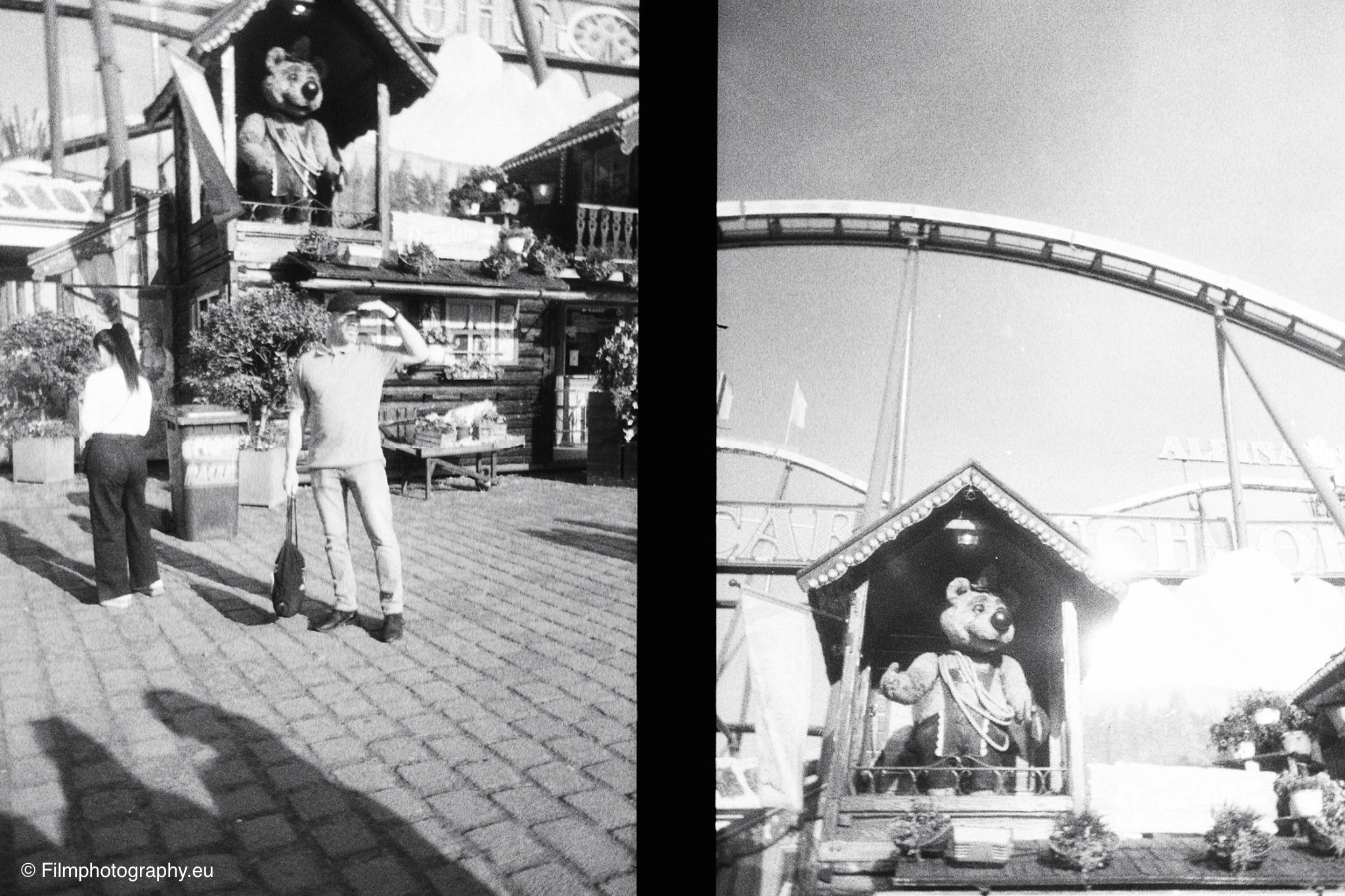
The large lab CEWE printed two half-frame images together on one paper print during processing. The delivered digitalizations correspond exactly to this format. For a total of 22 photo prints including film development, costs were just under seven euros. One special feature concerns the film strips: The negatives are returned as a whole, uncut strip. This allows you to cut the material into desired sections yourself if needed.
Conclusion
The camera is a fun camera for beginners and people who want to get excited about analog photography anew. It is also well suited as a gift for photography-enthusiastic friends.
After purchase, you can start taking photos right away because the operation is easy to understand. Thanks to the usable half-frame format, many shots are available to try out different subjects and lighting situations without hesitation.
When the first roll of film is exposed, this experience serves as a good foundation to venture into other films or more complex camera models afterwards.
You can buy the camera directly from the Lomography Online Shop.
More Product Photos