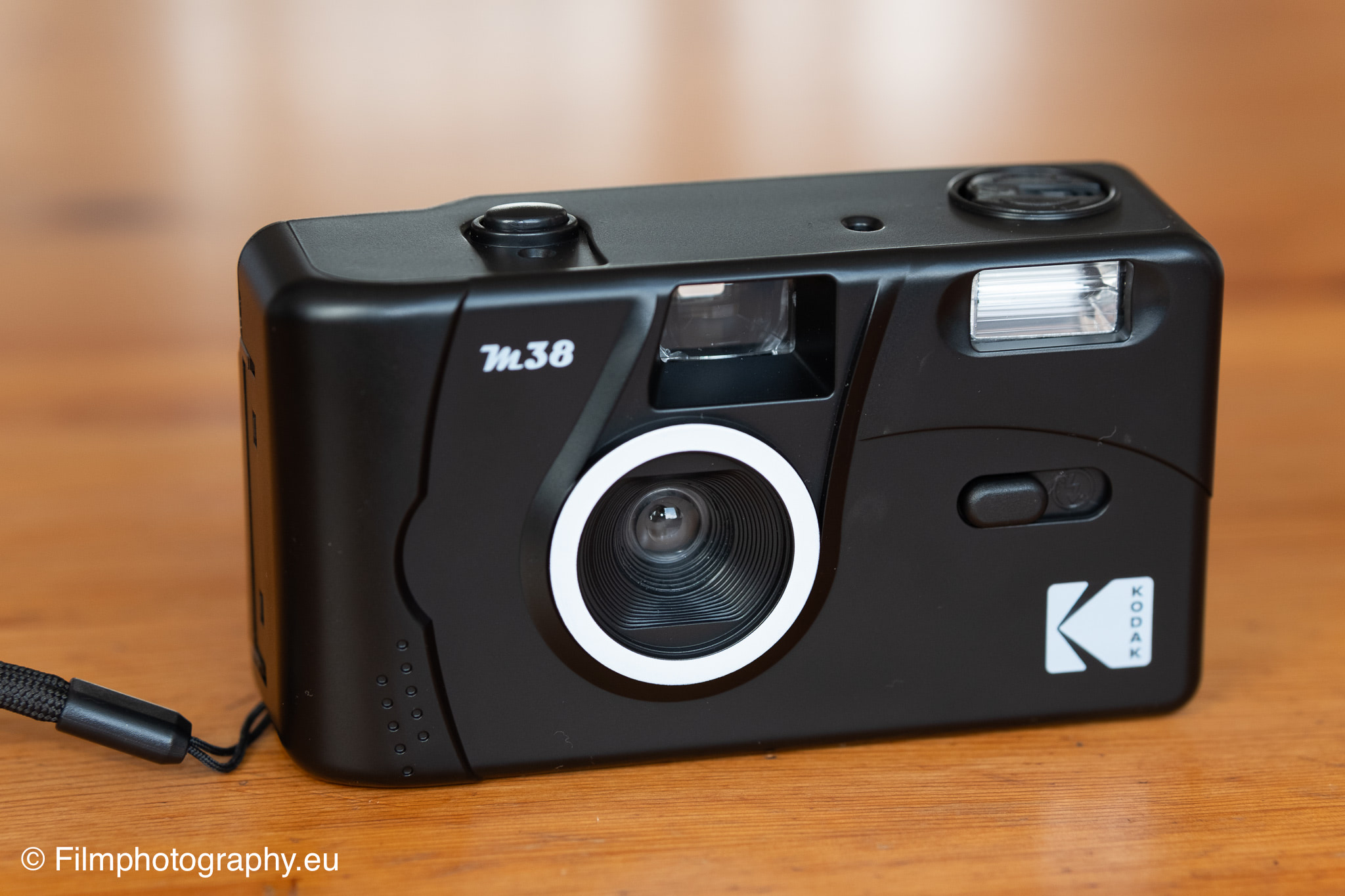
The Kodak M38 is intended to be a simple analog camera for capturing moments. Whether it can deliver on this and if the purchase is worthwhile – in this review of Kodak’s 35mm camera.
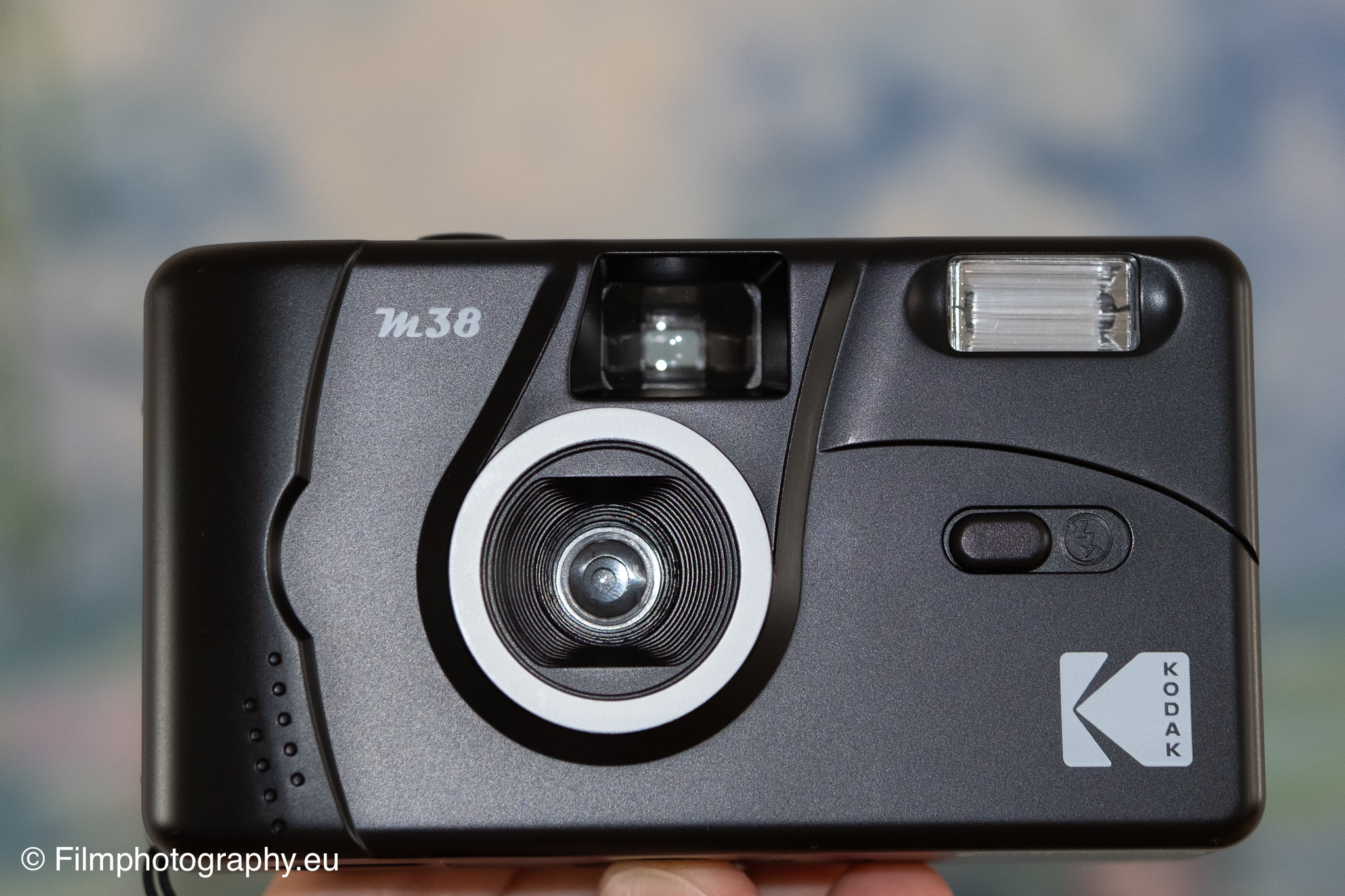
Info on the Kodak M38
The Kodak M38 was introduced in 2021 and is marketed under the Kodak brand name, for which Sino Promise Group Limited has acquired a license. The camera is manufactured in a factory in China.
The M38’s housing is made entirely of plastic, which makes it very light with a weight of only about 116.5 grams (without battery and film). Its compact dimensions are approximately 114 x 63 x 35 millimeters.
The camera is available in a wide range of colors, including classic tones like black and white as well as more eye-catching variants like yellow, red, blue, lavender, and grapefruit.
The scope of delivery usually includes a simple wrist strap and an operating manual, while the film and the AAA battery required for the flash (eBay / Amazon*) must be purchased separately. Unfortunately, the wrist strap cannot be removed.
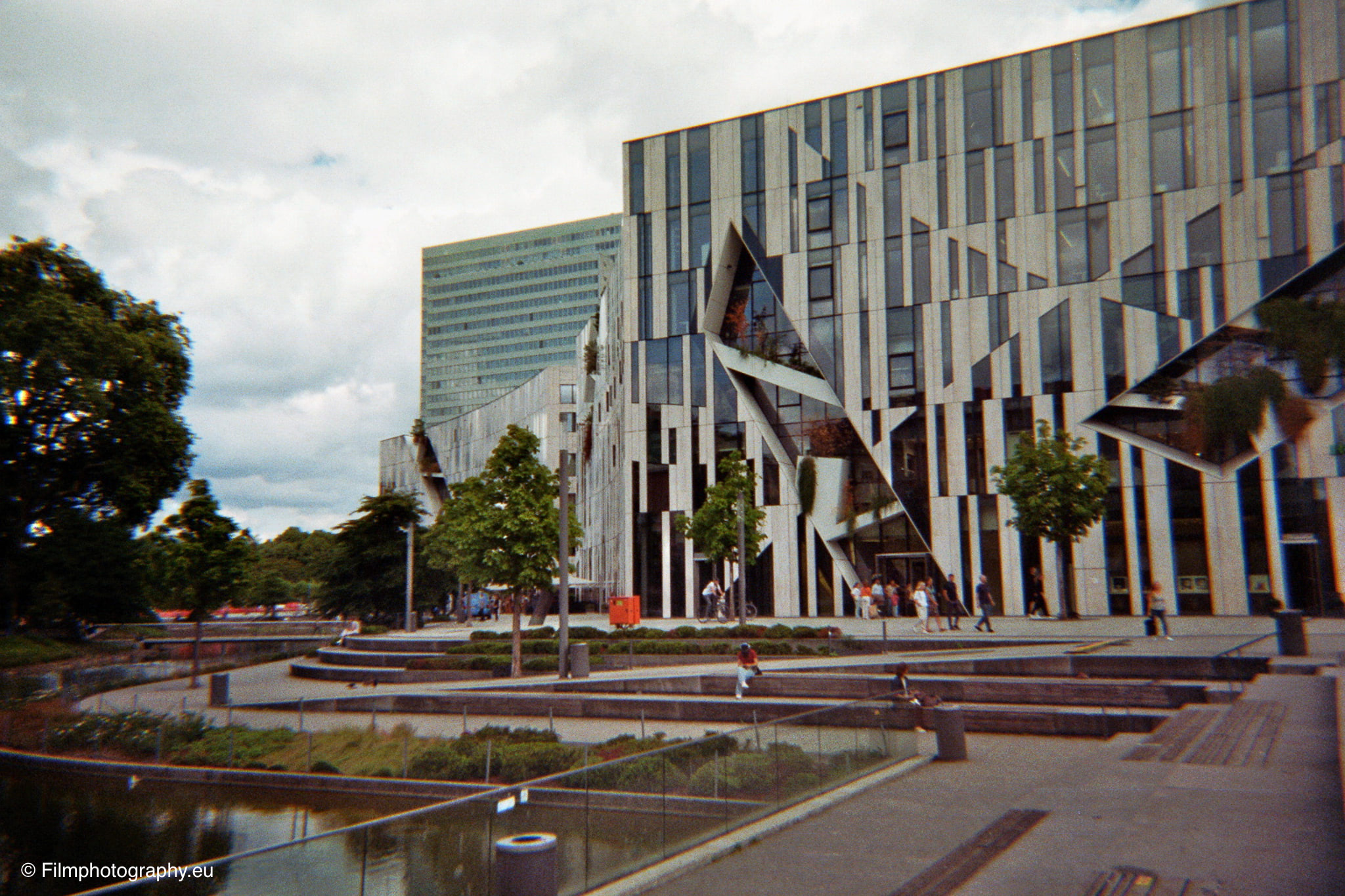
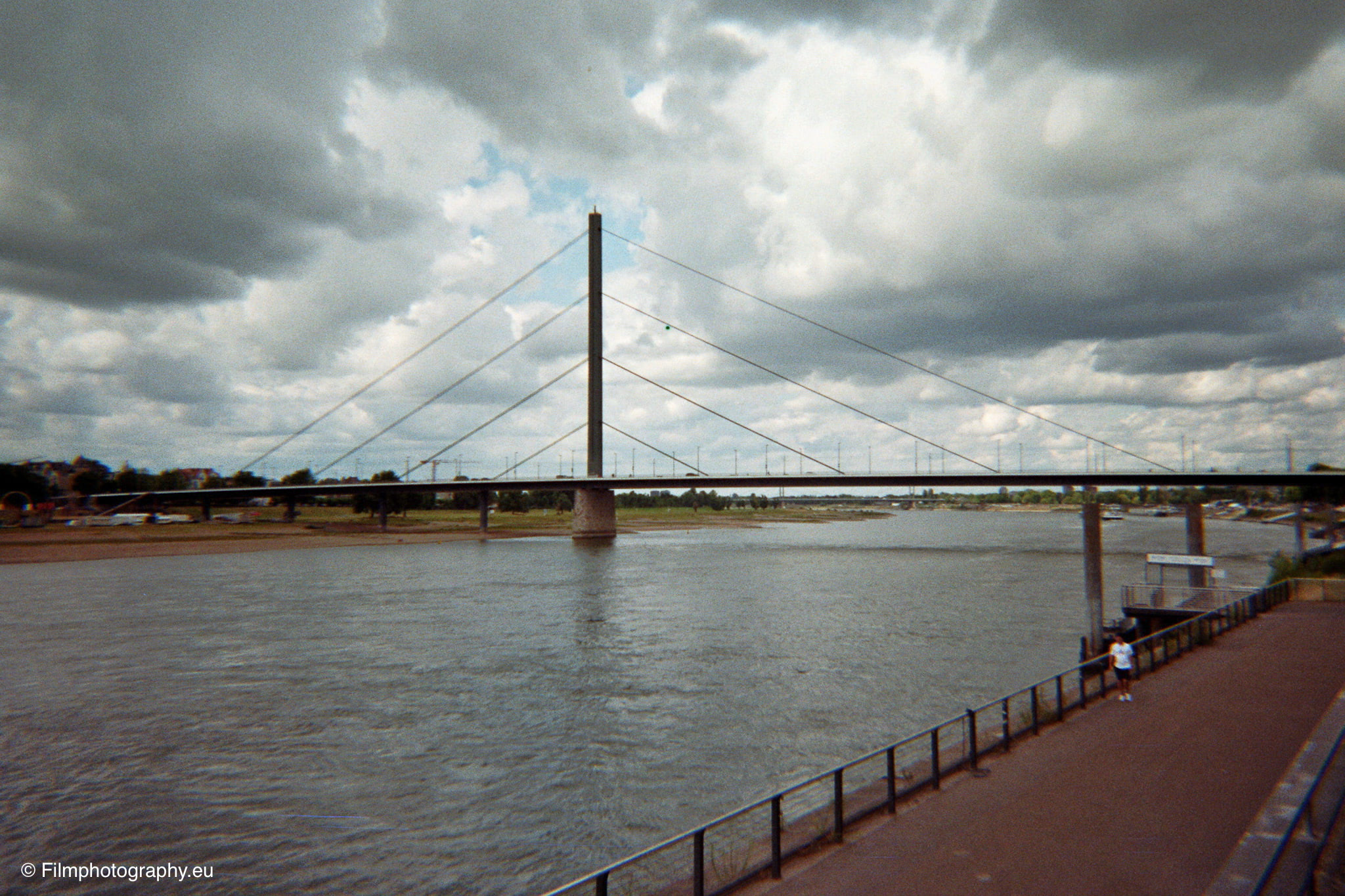
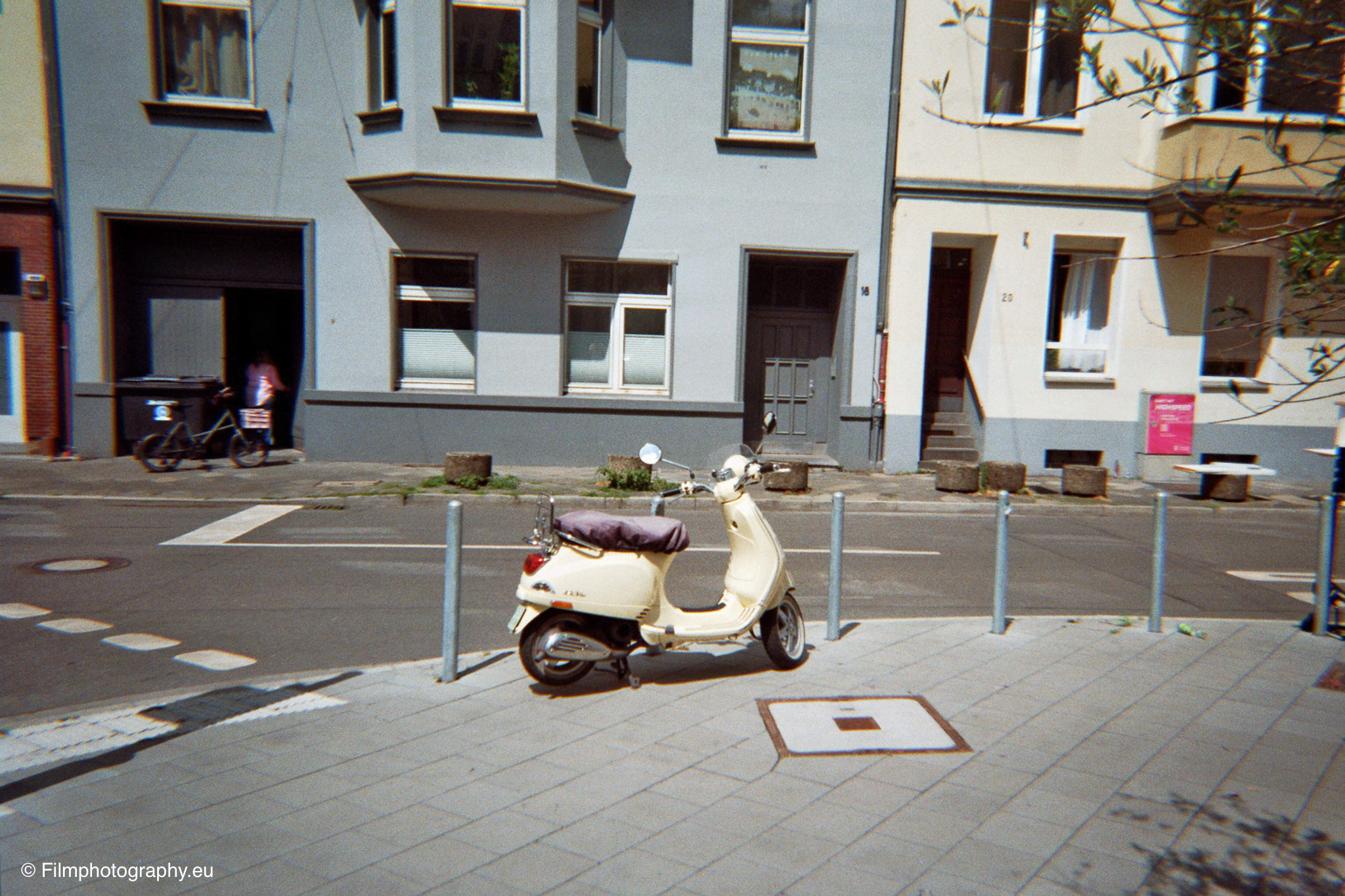
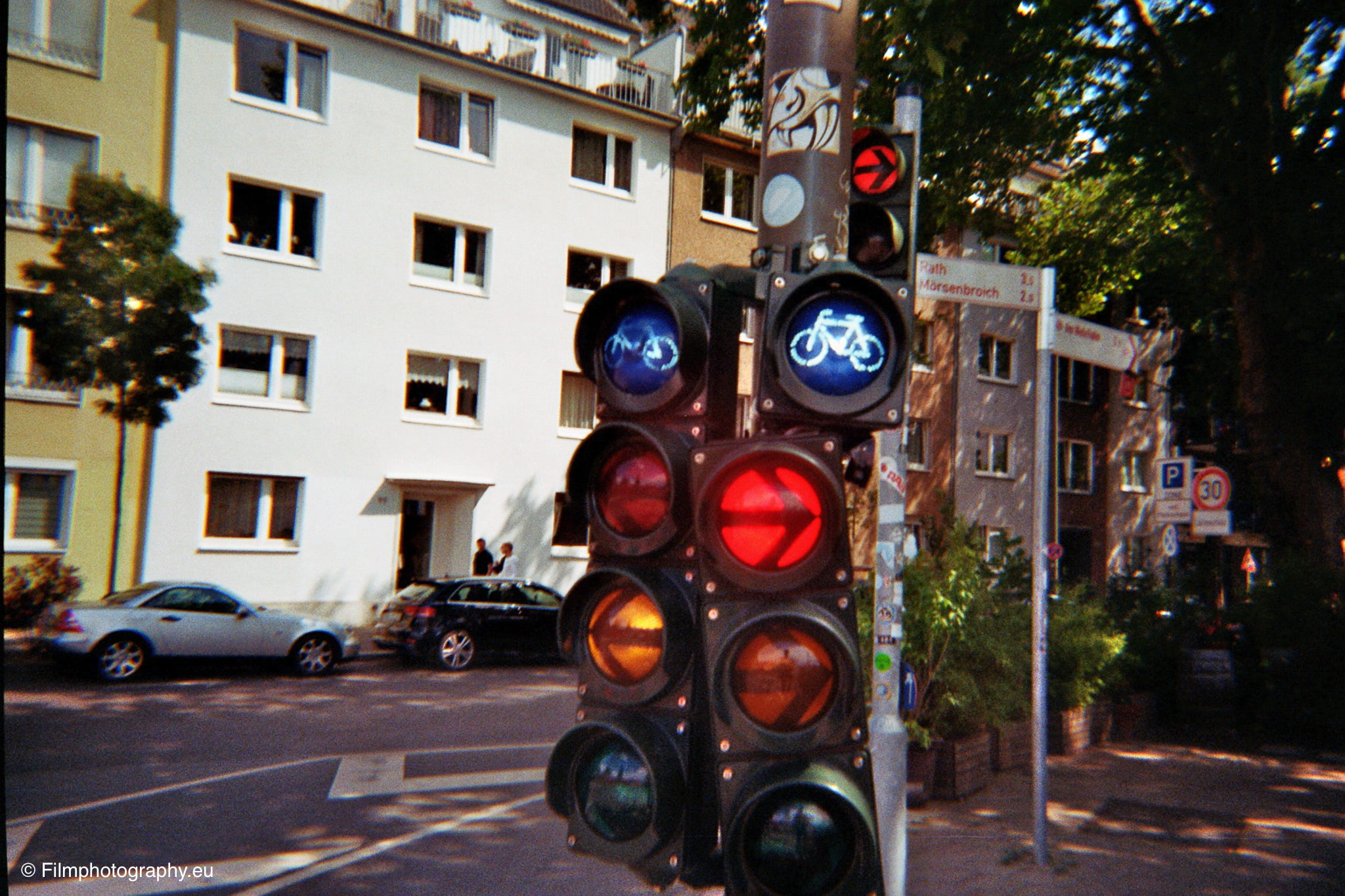
For this test, I used a Kodak Color Plus 200. The film was several years past its expiry date at the time of shooting, which naturally has a slight effect on the images. Of course, you can also use films from other manufacturers with the Kodak M38.
Features and Operation
The operation of the Kodak M38 is deliberately kept simple and is reminiscent of disposable cameras – aim at the subject and shoot.
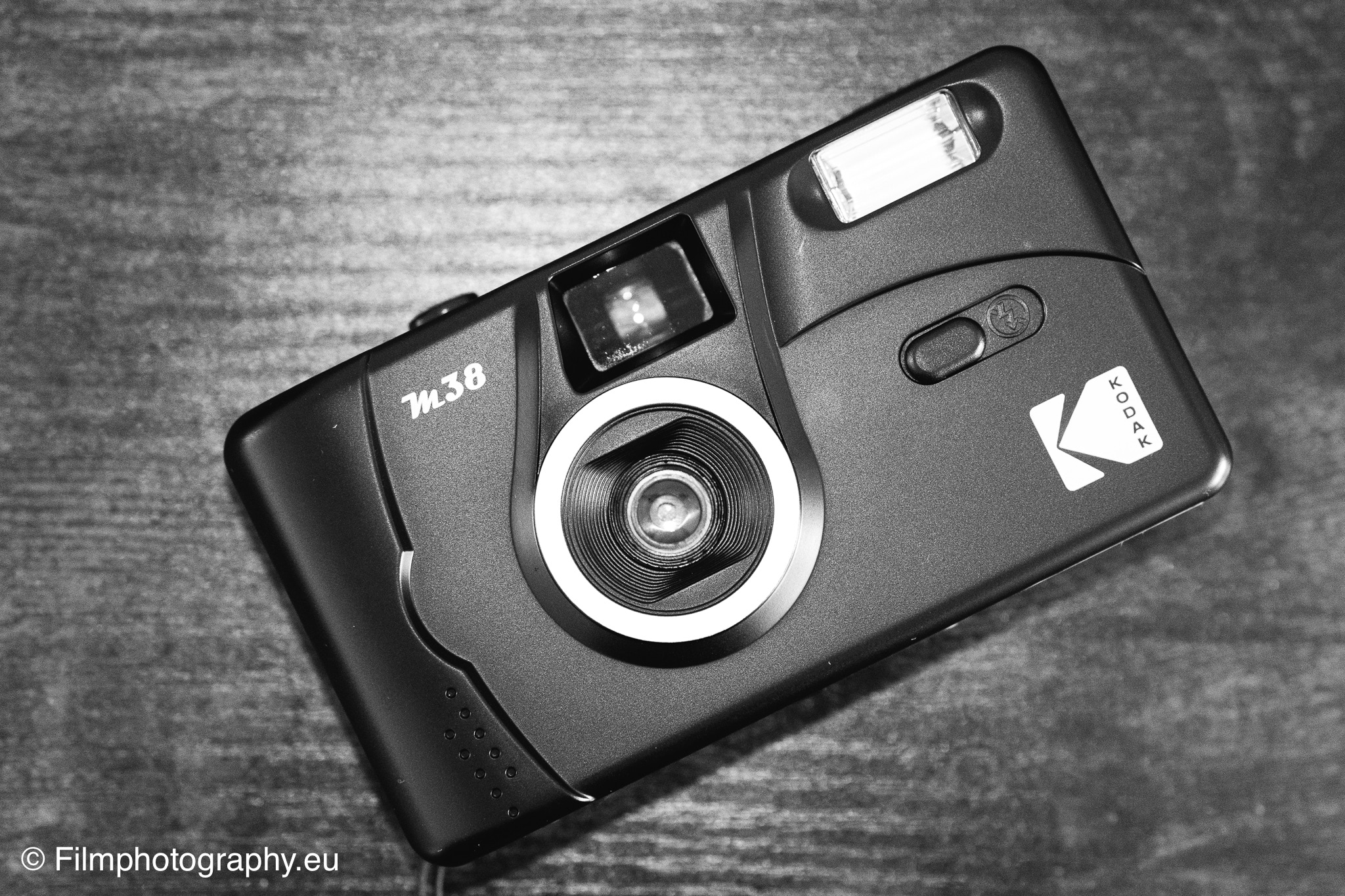
The camera is equipped with a wide-angle lens with a fixed focal length of 31 mm, which is well-suited for everyday snapshots, landscape shots, and group photos. The aperture is fixed at f/10 and the shutter speed at 1/120 second, resulting in a fixed exposure setting.
Manual exposure control is not possible as the camera does not have a built-in exposure meter.

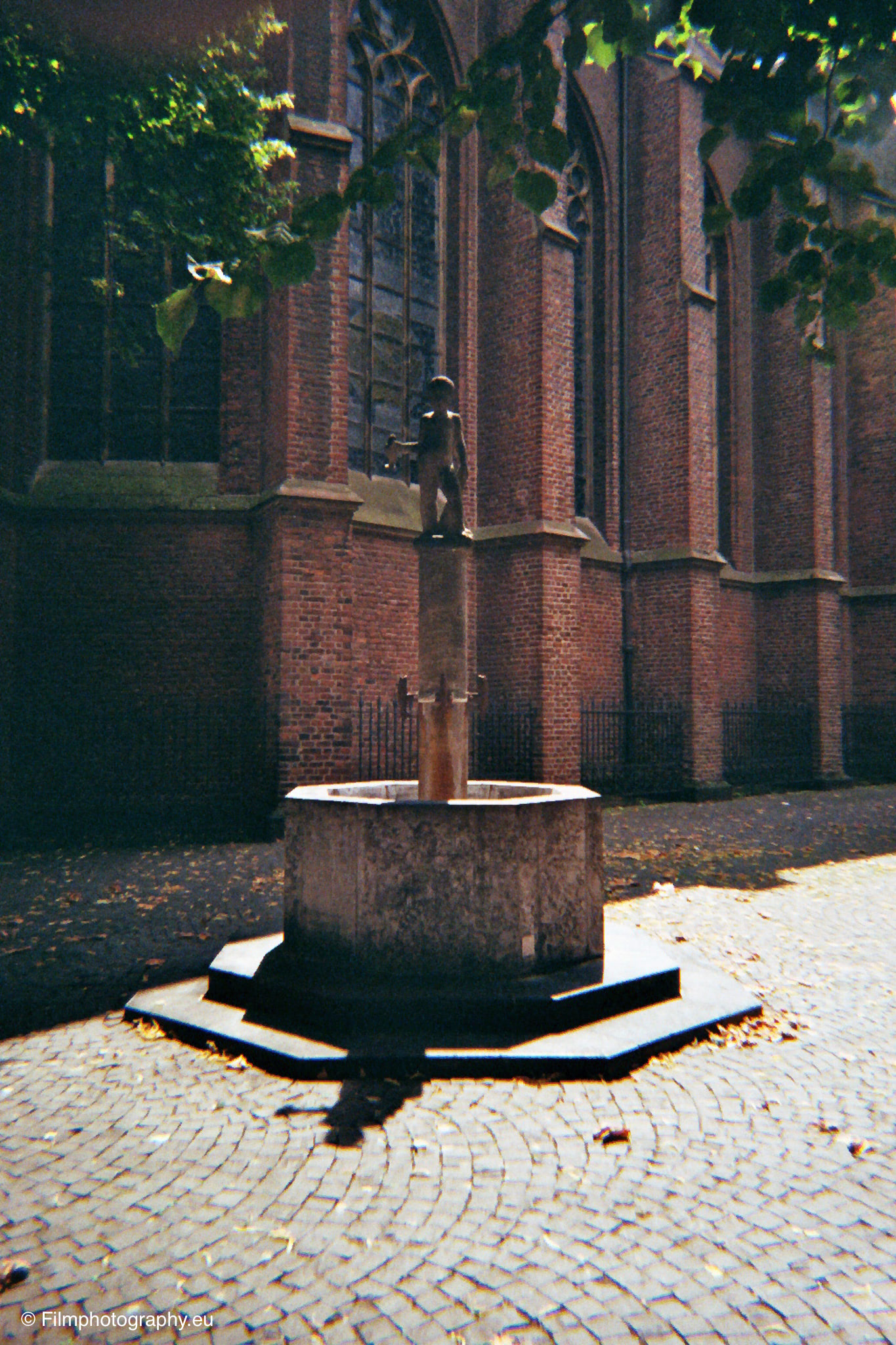

The focus is also fixed (“Fixed-Focus”), which means a large depth of field is covered. For sharp images, a minimum distance of about one meter to the subject is recommended.
The only manual adjustment option is the built-in flash, which is activated via a slider on the front. A red LED on the top indicates flash readiness. The flash is powered by a single AAA battery; without it, the camera remains functional, but without flash.
Since the camera does not have automatic exposure, it can be helpful to use an exposure meter app on your smartphone. This allows you to check if the lighting conditions are sufficient for the camera’s fixed settings and the sensitivity of the loaded film.
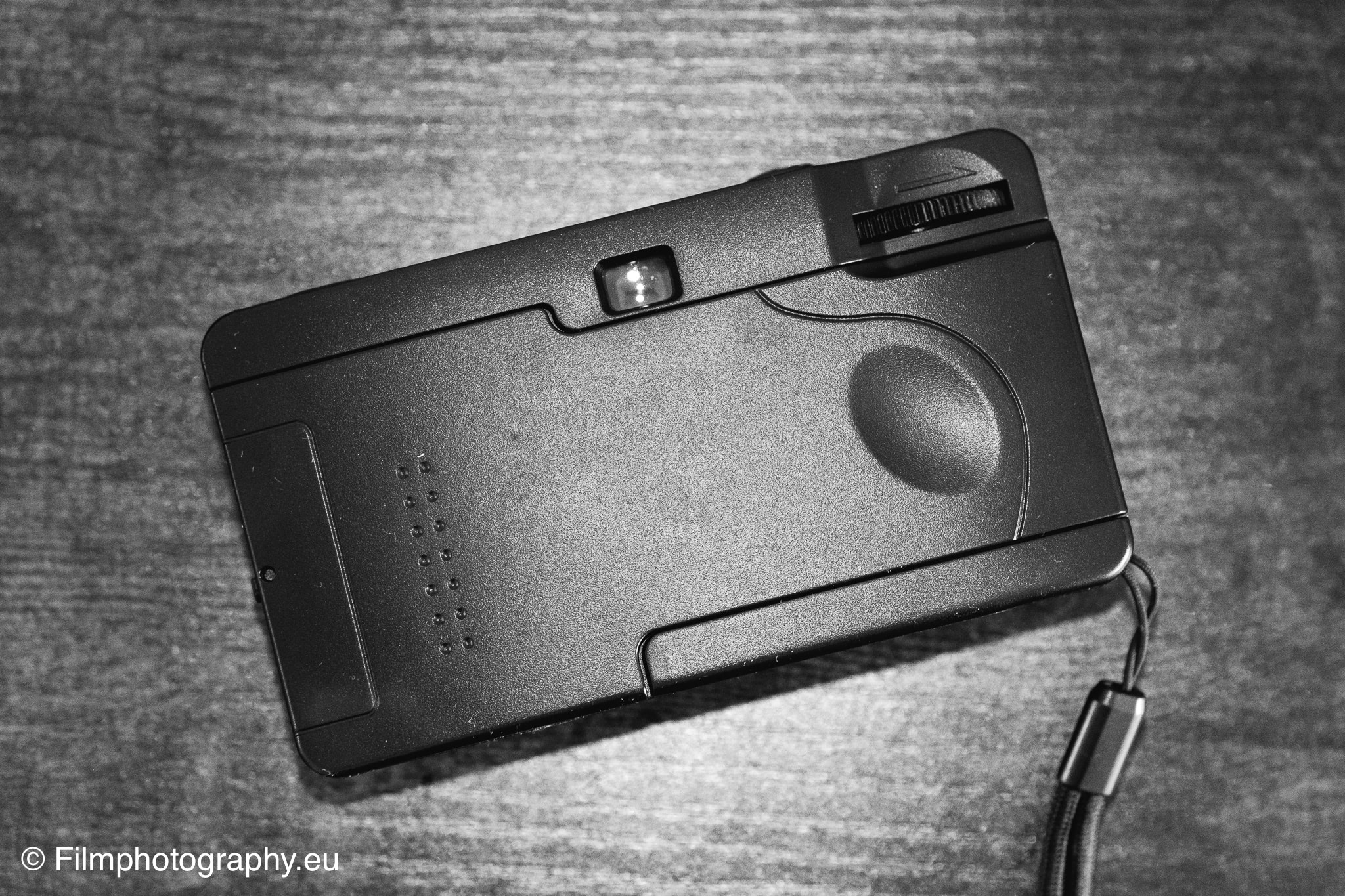
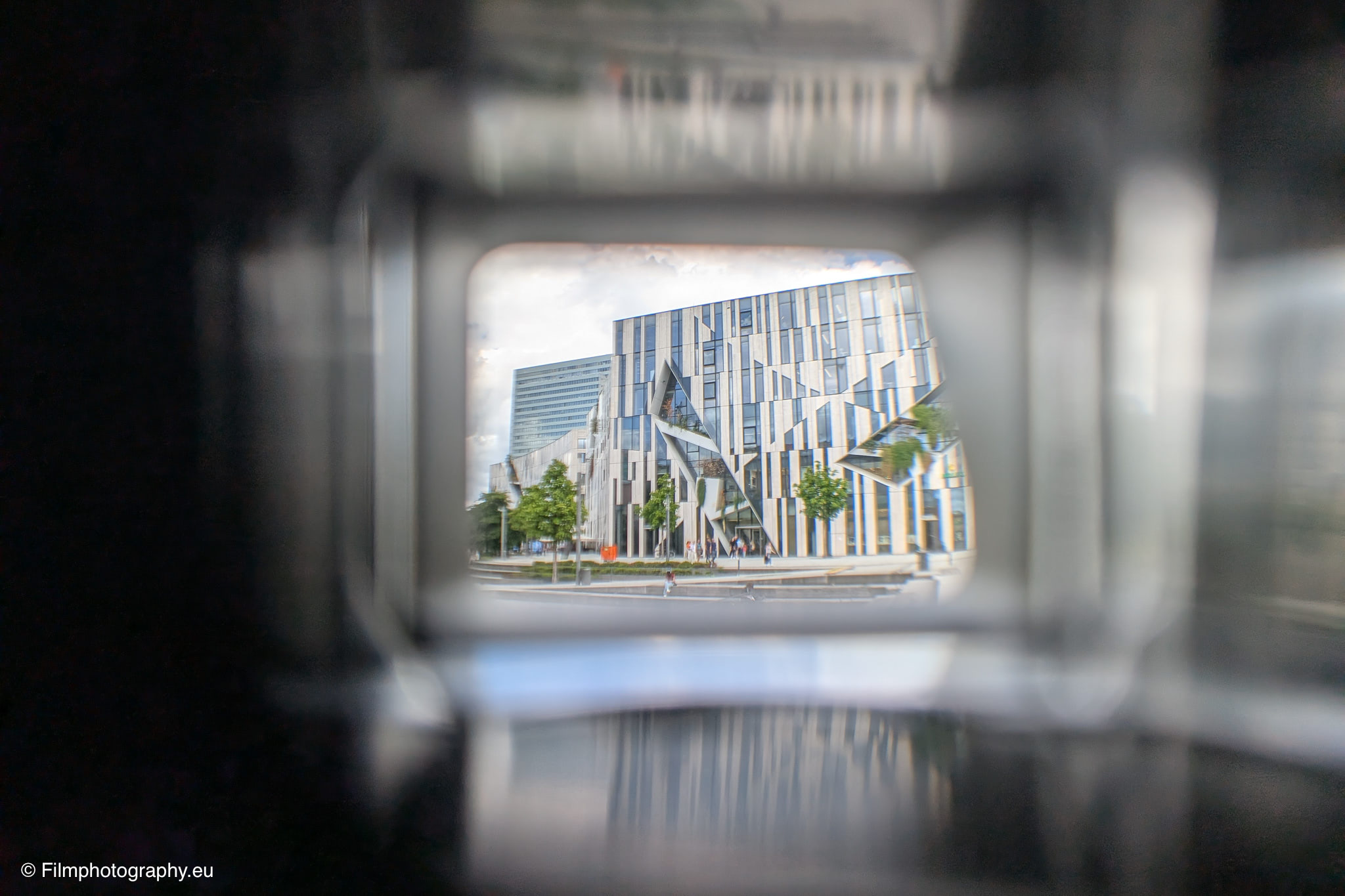
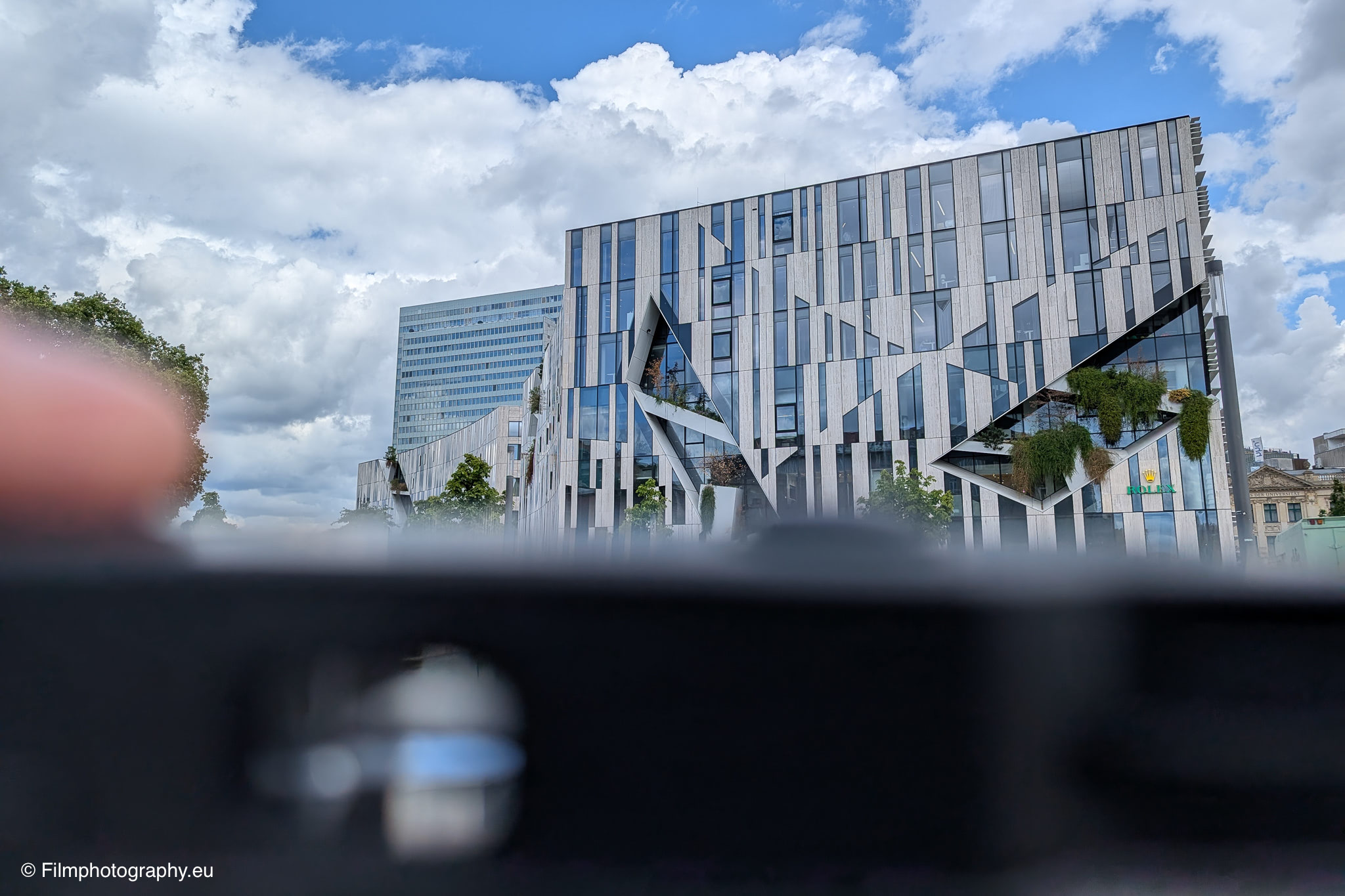
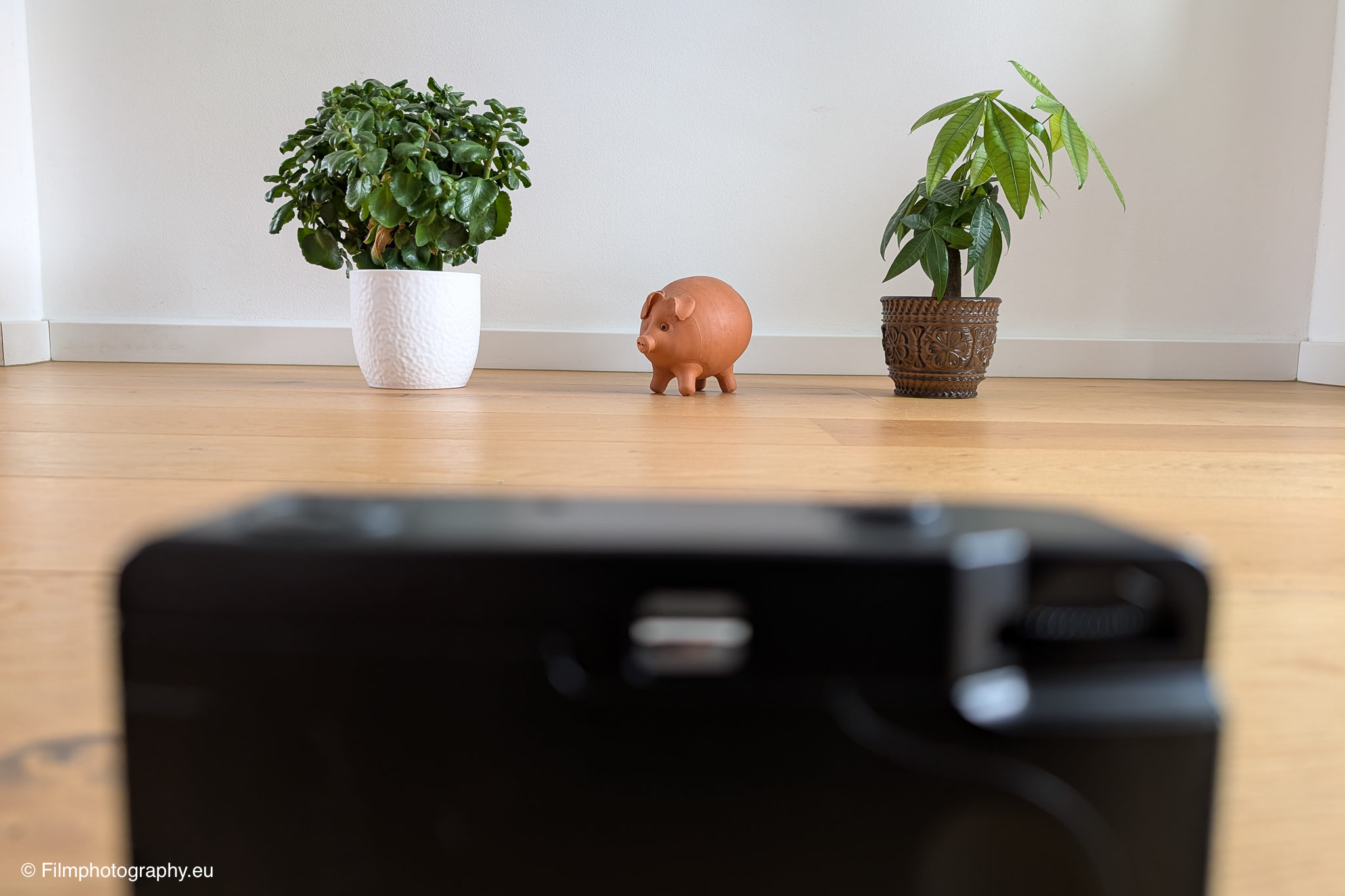
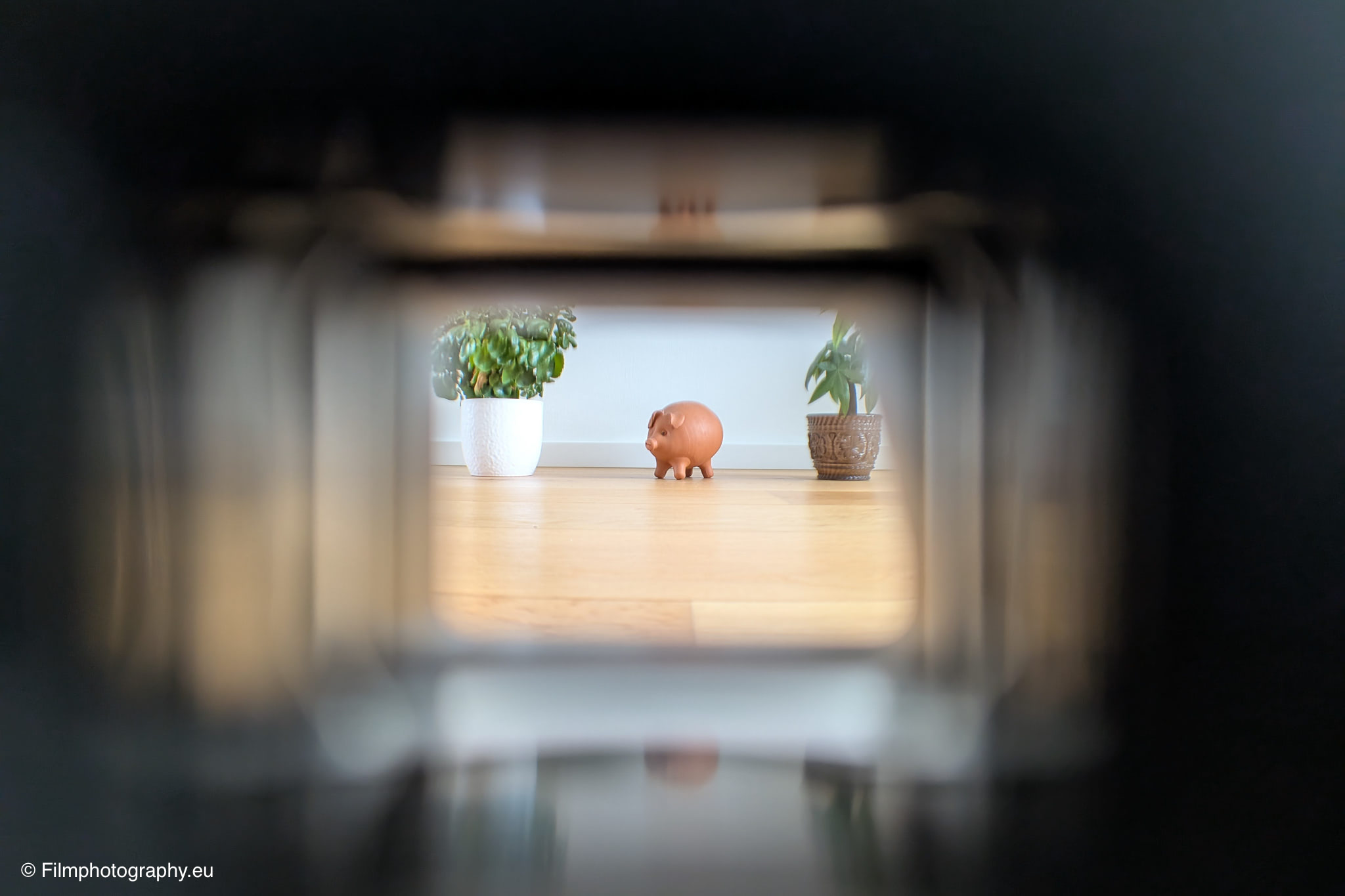
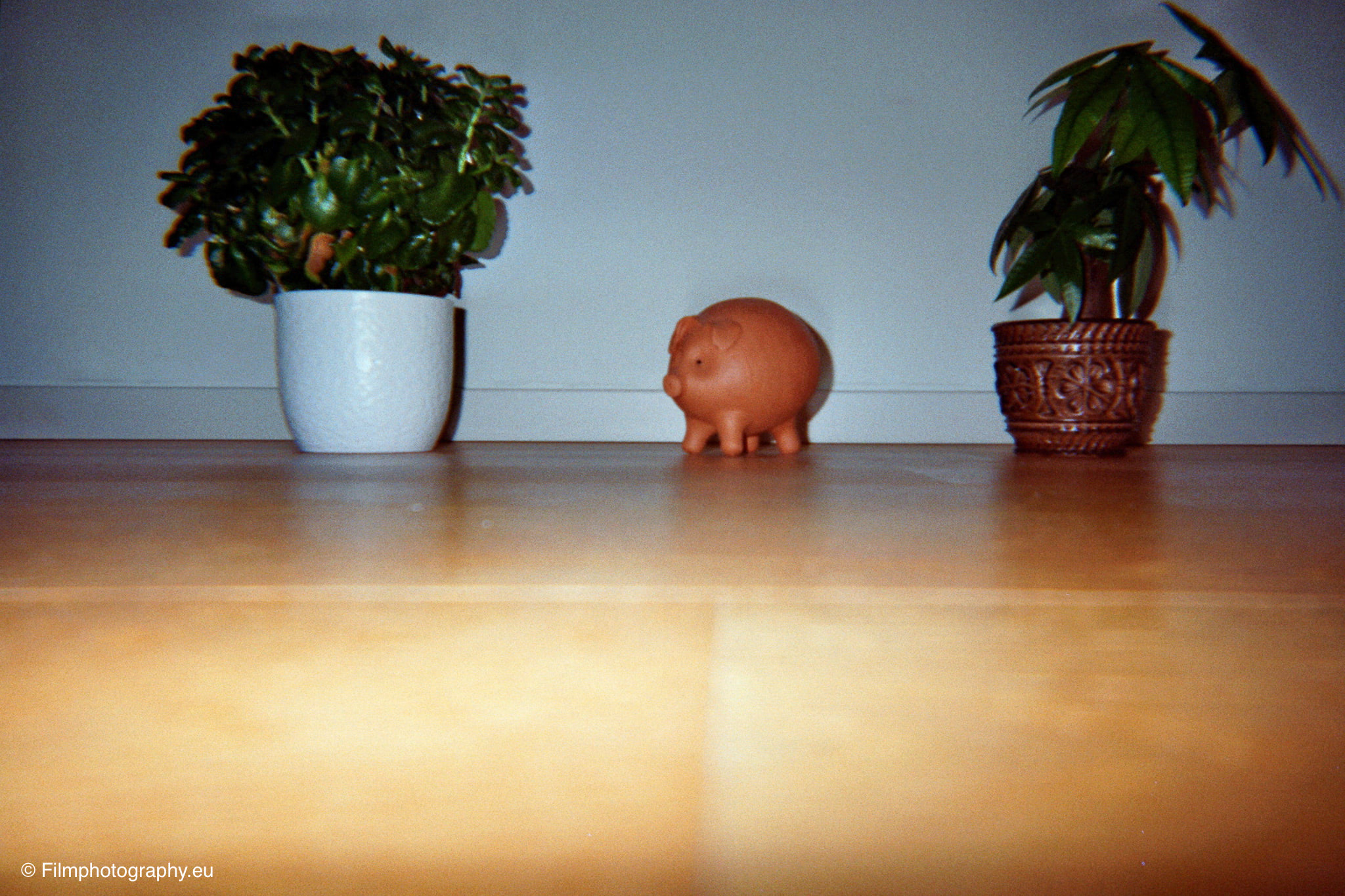
As is common with simple cameras, the viewfinder is not connected to the lens and therefore only shows an approximate framing.
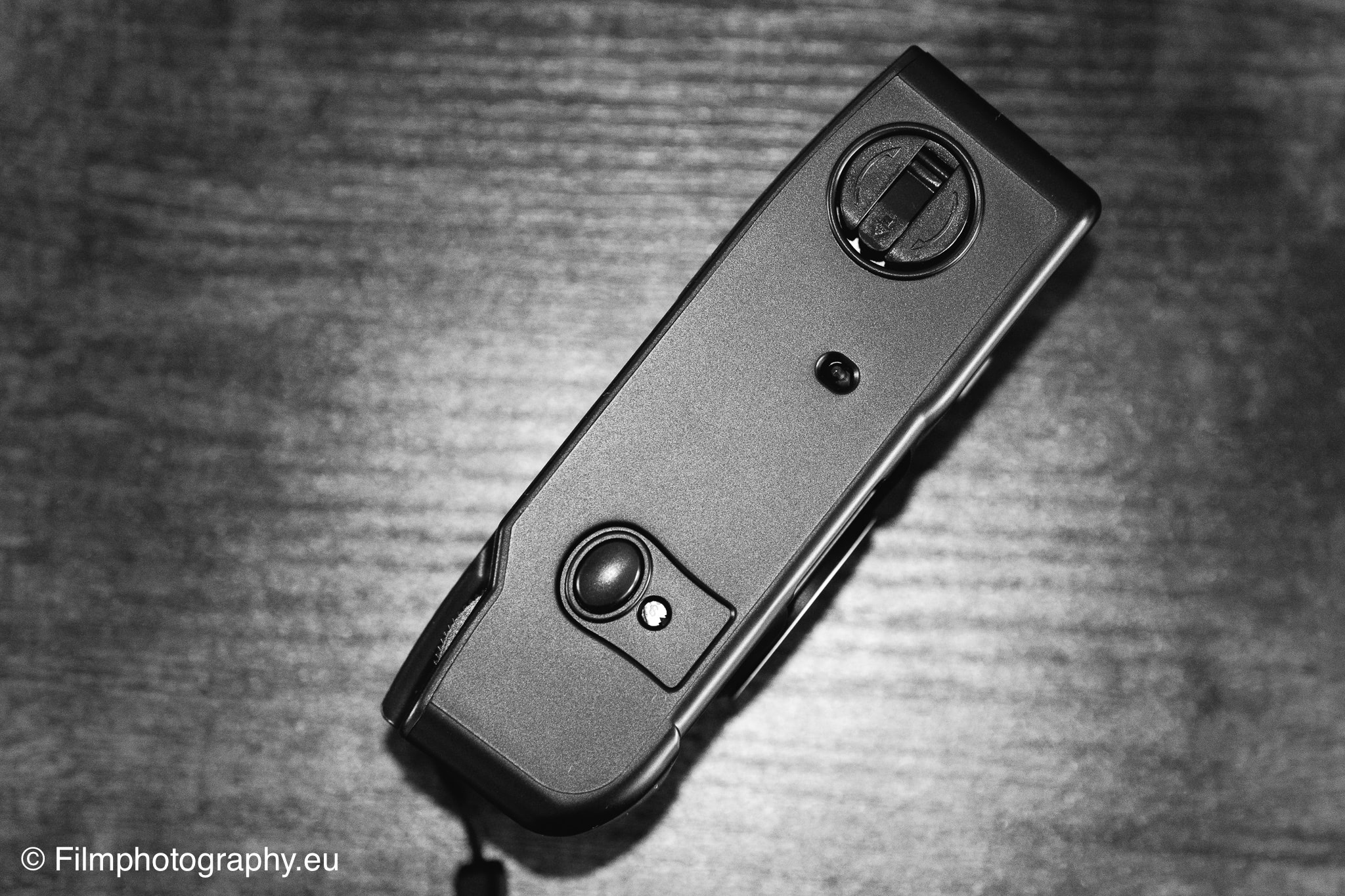
Film transport is entirely manual. After each shot, the film must be wound forward using a thumbwheel, and a counter shows the number of frames already exposed. When the film is full, it is manually rewound into the cartridge using a button on the bottom and a crank on the top.


Conclusion
Whether the Kodak M38 is a good choice largely depends on your personal expectations.
For beginners in analog photography, the camera is a clear recommendation thanks to its straightforward handling. It is easily available online or in specialist shops, and after inserting a suitable film, you can start right away. You don’t have to worry about the functionality of a used camera or the availability of suitable batteries.


Uncomplicated Photography in the Style of Disposable Cameras
The main feature of the M38 is its simplicity, reminiscent of disposable cameras. However, the key advantage lies in its reusability and the free choice of film material. It’s a good companion for holidays, parties, or weddings. Moments you want to capture quickly and where image quality is less important.


Limited Creative Freedom
The M38 is less suitable for photographers seeking creative control. The camera has fixed exposure settings and offers hardly any manual control options. For this reason, it is unlikely to be a permanent addition to the equipment for ambitious photographers.
Alternatives to the Kodak M38
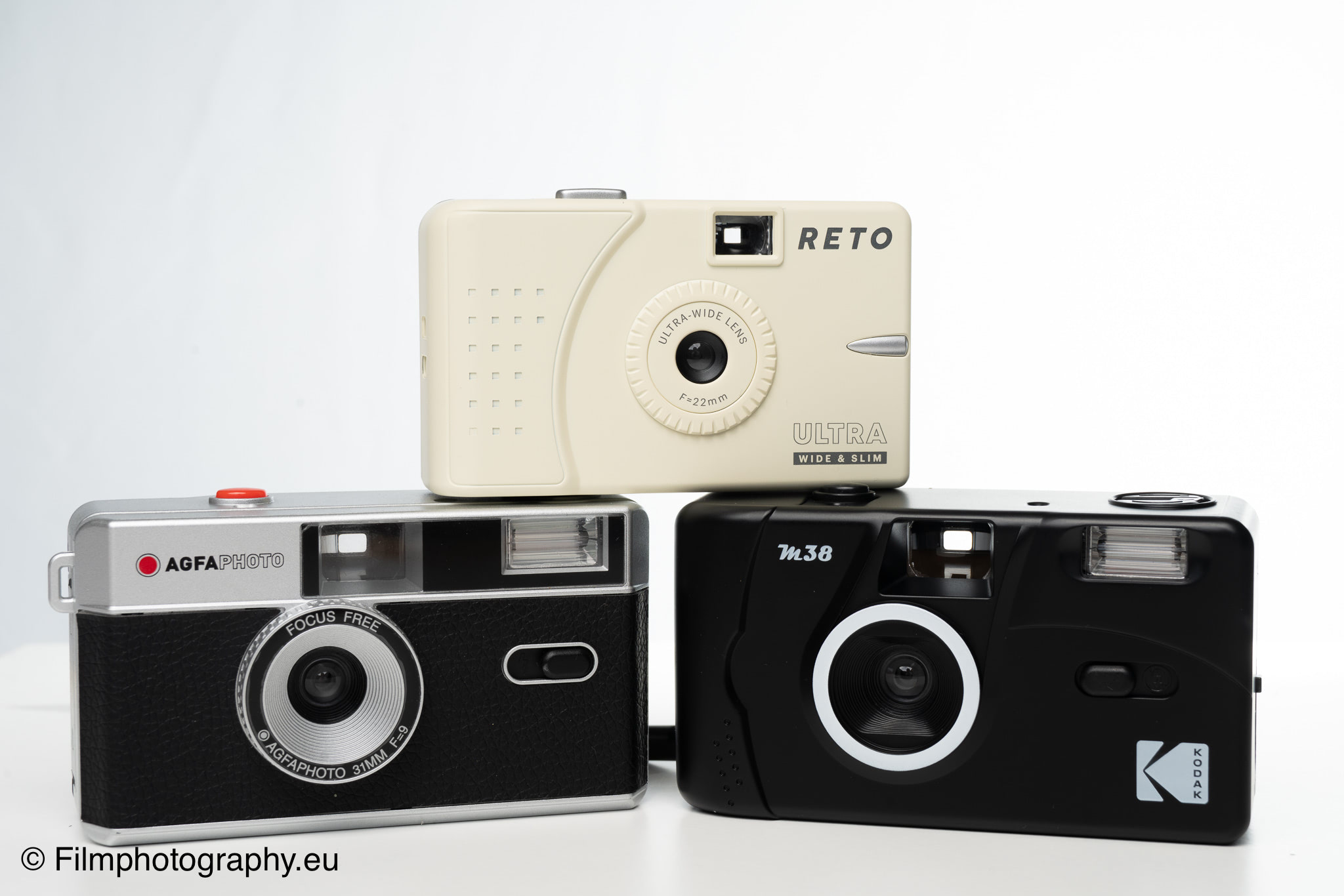
The RETO Ultra Wide and Slim is even more compact and has a wider-angle lens. However, it does not have a flash.
Lomography cameras (e.g., La Sardina, LomoApparat) are a bit more expensive. With a slightly higher budget, these models offer more creative functions such as color filters for the flash, long exposures, or the possibility of double exposures.
In summary, the Kodak M38 is ideal for anyone who wants to dive into the world of analog photography easily and without prior knowledge. However, those looking for more creative scope should take a closer look at the alternatives mentioned.

Film Recommendations for the Kodak M38
In principle, the Kodak M38 is compatible with any 35mm film. However, for beginners in analog photography and first-time owners of the camera, a color negative film is recommended to achieve pleasing results with ease.
Film Sensitivity: ISO 400 as an All-Rounder
When choosing the film sensitivity, which indicates how much light is needed for correct exposure, a film with ISO 400 is a good choice. Analog color negative films are known for their wide exposure latitude. This means they can forgive over- or underexposure and still deliver usable images. This is particularly advantageous for a camera with fixed exposure settings like the M38, as not every photo will inevitably be perfectly exposed.
Color Film Recommendations
A solid and widely available color film is the Kodak Ultramax 400*. It delivers pleasing, colorful photos and can be easily developed at any drugstore or photo lab using the standard C-41 process. This film is suitable for a variety of shooting situations, whether indoors or outdoors.
As an alternative for sunny conditions, the Kodak Gold 200* is a good choice. As the name suggests, this film is characterized by warm color rendition.
For Black and White Photography Enthusiasts
For those who prefer black and white photography, the Ilford XP2 Super* is an excellent choice. This black and white film also has a sensitivity of ISO 400 and has the great advantage of being developed using the same C-41 process as color negative films. Since this process is offered by most photo labs as standard and often at a lower cost than traditional black and white development, development is correspondingly uncomplicated.
Buy the Kodak M38
The Kodak M38 can be easily purchased online. For example, it is often available on Amazon.