First Steps in Creative Photo Journaling with Journalsay
After unpacking and inspecting the Journalsay materials, the inevitable question of application arose. As a photographer, one is accustomed to thinking in single images or series that mostly stand on their own. The frame is often white, black, or wooden.
The page of a photo album, on the other hand, is a white void waiting to be filled, not just with the print itself, but with context. So-called “Creative Journaling” or scrapbooking is new territory for me. My archives to date have been purely functional: sleeves, date, negative number.
However, the products from Journalsay invited breaking down the rigid concept of archiving and giving the images a playful, almost painterly environment.
In this article, I document my first, admittedly still quite clumsy attempts to re-stage photographs using washi tapes, stamps, and papers. It is a field of experimentation, and although I am still an absolute beginner here, the creative potential of this analogue working method can already be glimpsed.
Working with Stamps
In classical photography, stamps are usually purely administrative. Here, however, they serve for aesthetic framing. I was particularly taken with a stamp depicting wave patterns. For a shot of a stone lantern in a Japanese garden, I wanted to emphasize the calm, nature-connected atmosphere.
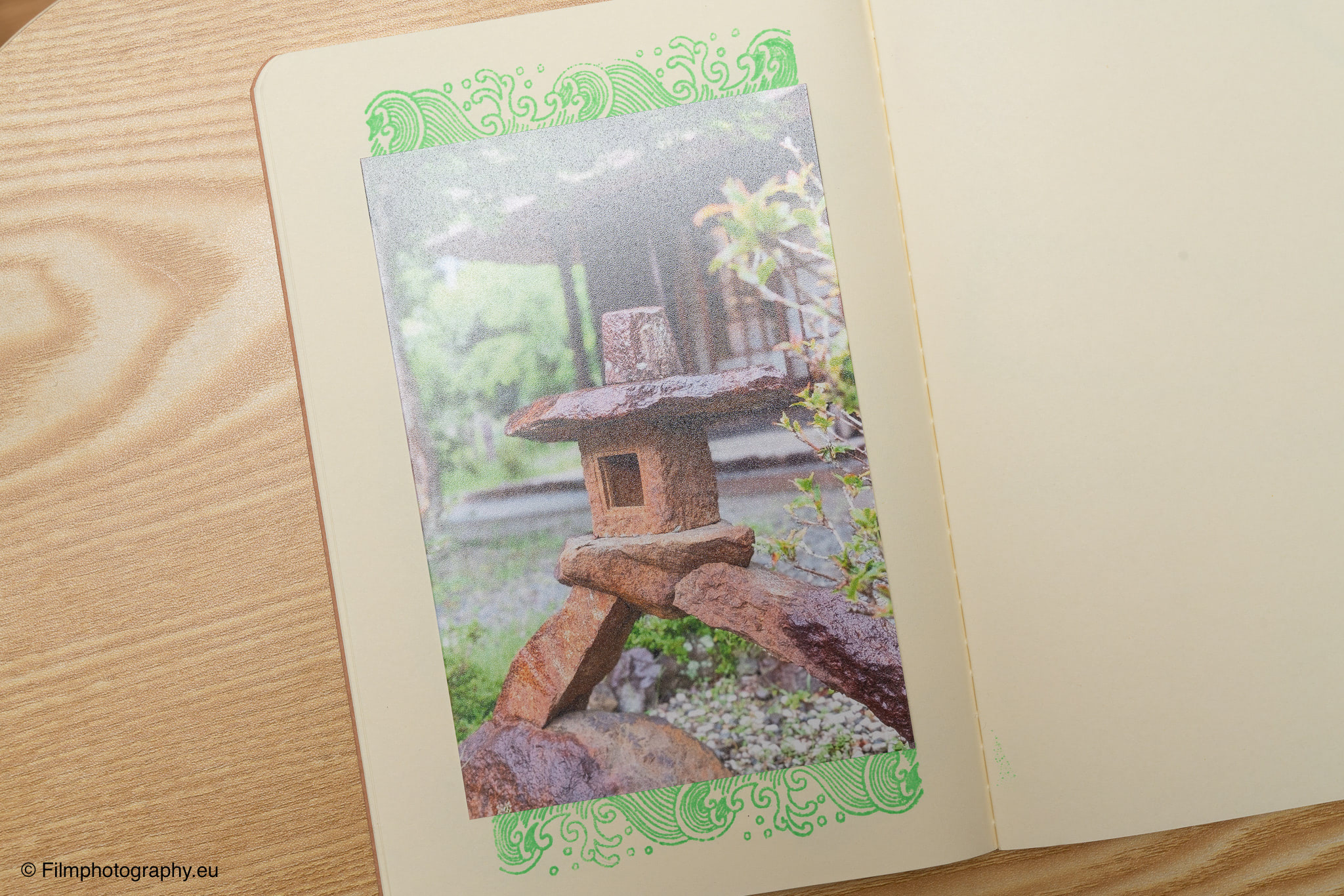
With the Silicone Stamp Vintage Wave Lace Pattern Landscape and green ink, I created a border at the top and bottom of the image. The green corresponds with the moss and leaves in the photo.
It is a very simple technique, but it immediately gives the image a frame that feels softer than a drawn line. Handling the silicone stamps requires a little practice to distribute the pressure evenly, but it is precisely the irregularities in the ink application that give the page its handmade charm.
https://journalsay.com/products/silicone-stamp-vintage-wave-lace-pattern-landscape
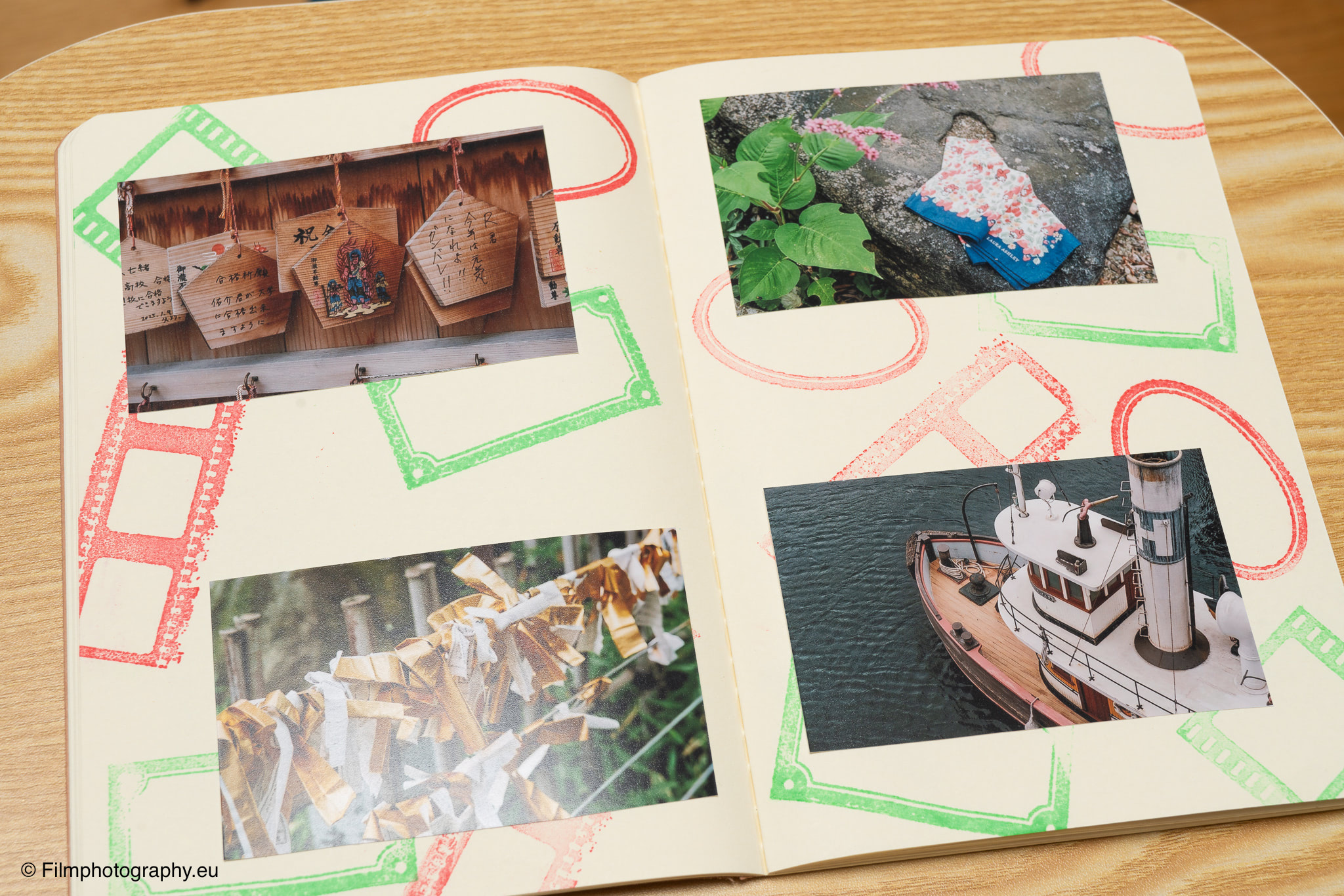
I ventured another experiment with more graphic stamps. For a page with detail shots of Ema wooden tablets and a ship, I chose red and green frame motifs. The Silicone Stamp Vintage Hollow Border Label Transparent and the Silicone Stamp Vintage Film Hollow Border Transparent were used here. The latter is, of course, particularly charming for us photographers, as it imitates the perforation of a 35mm film. The transparency of the silicone stamps is a great help, as you can see exactly where you are placing them.
https://journalsay.com/products/silicone-stamp-vintage-film-hollow-border-transparent
https://journalsay.com/products/silicone-stamp-vintage-hollow-border-label-transparent
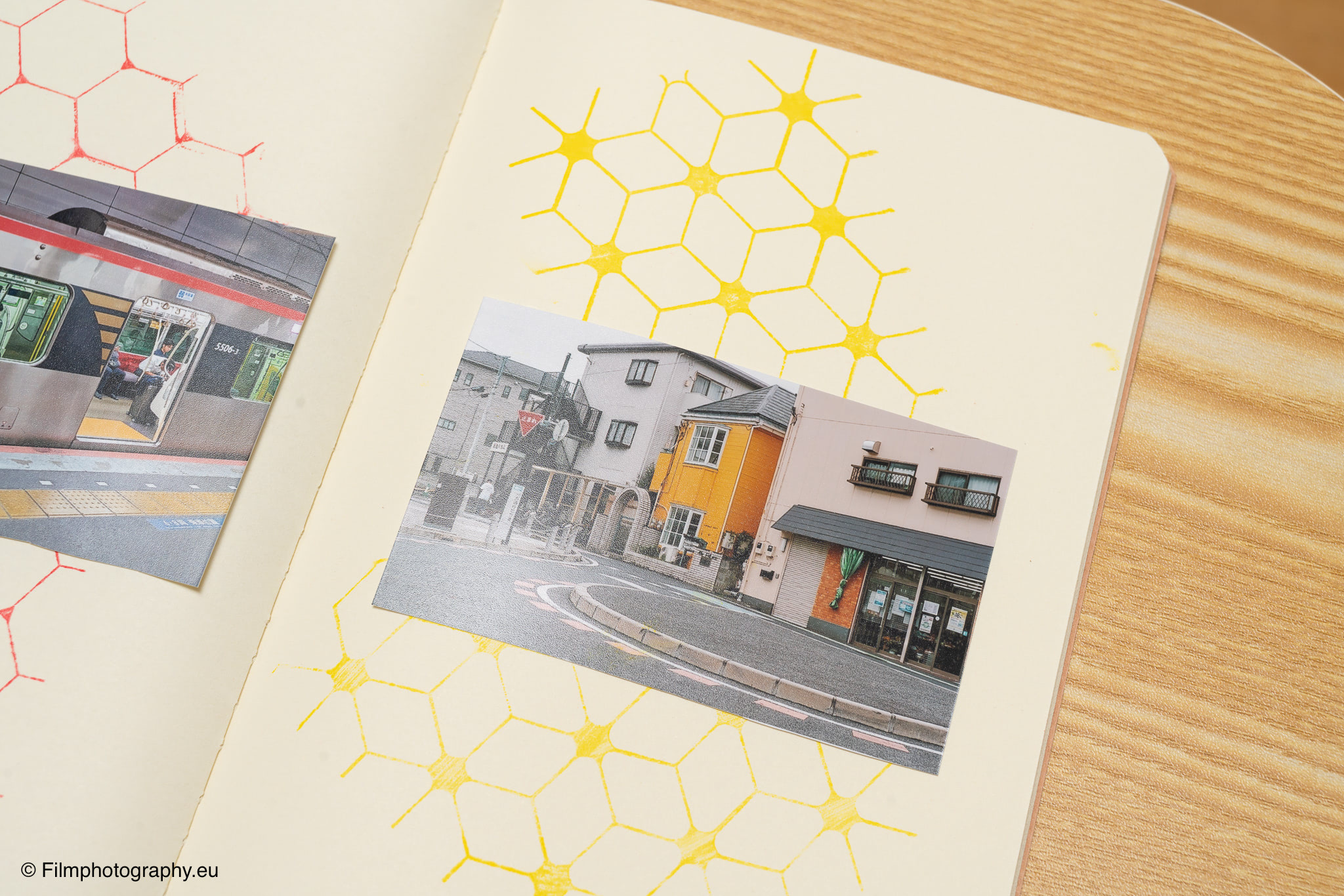
The necessary ink was provided by the Journalsay 1pc 15 Colors Planner Scrapbooking Silicone Oil Big Ink Pad. The selection of colors in a single pad is practical, even if one has to be careful not to mix the colors accidentally.
https://journalsay.com/products/journalsay-1pc-15-colors-planner-scrapbooking-silicone-oil-big-ink-pad
Paper and Tape
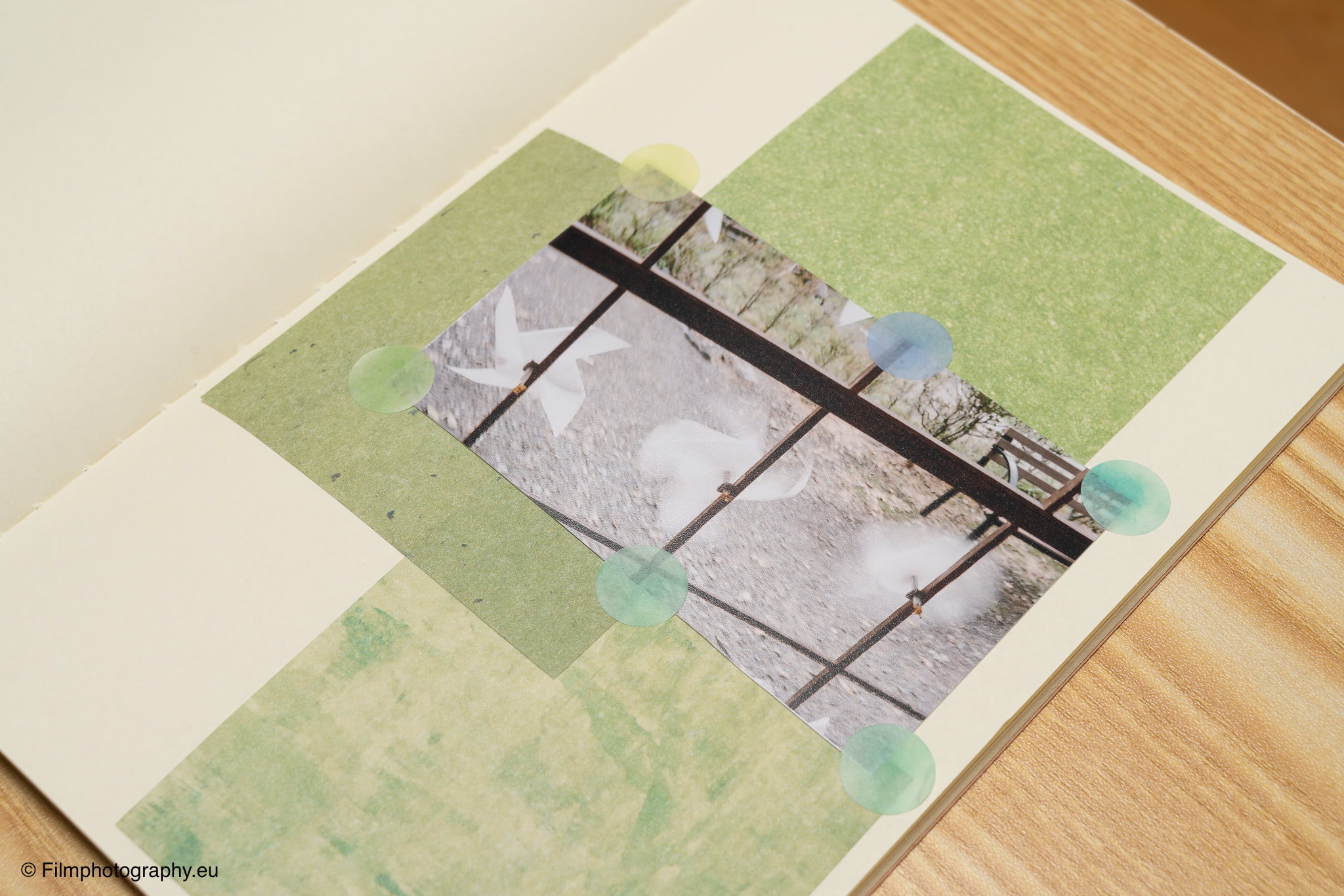
Sometimes a single photo isn’t enough to convey the mood of a place. In such cases, working with different paper layers is a good option. For a shot of windmills, I wanted to create a sense of lightness and transparency. I used the Landscape Material Paper in a shade of green as a background. On top of that, I placed the photo and additionally secured the corners with masking tape. These round, semi-transparent adhesive dots look like bokeh circles in a blurred shot and blend harmoniously into the overall picture.
https://journalsay.com/products/80mm-200cm-blank-set-series-vintage-solid-color-landscape-material-paper
https://journalsay.com/products/100pcsset-special-shaped-monolithic-masking-tape
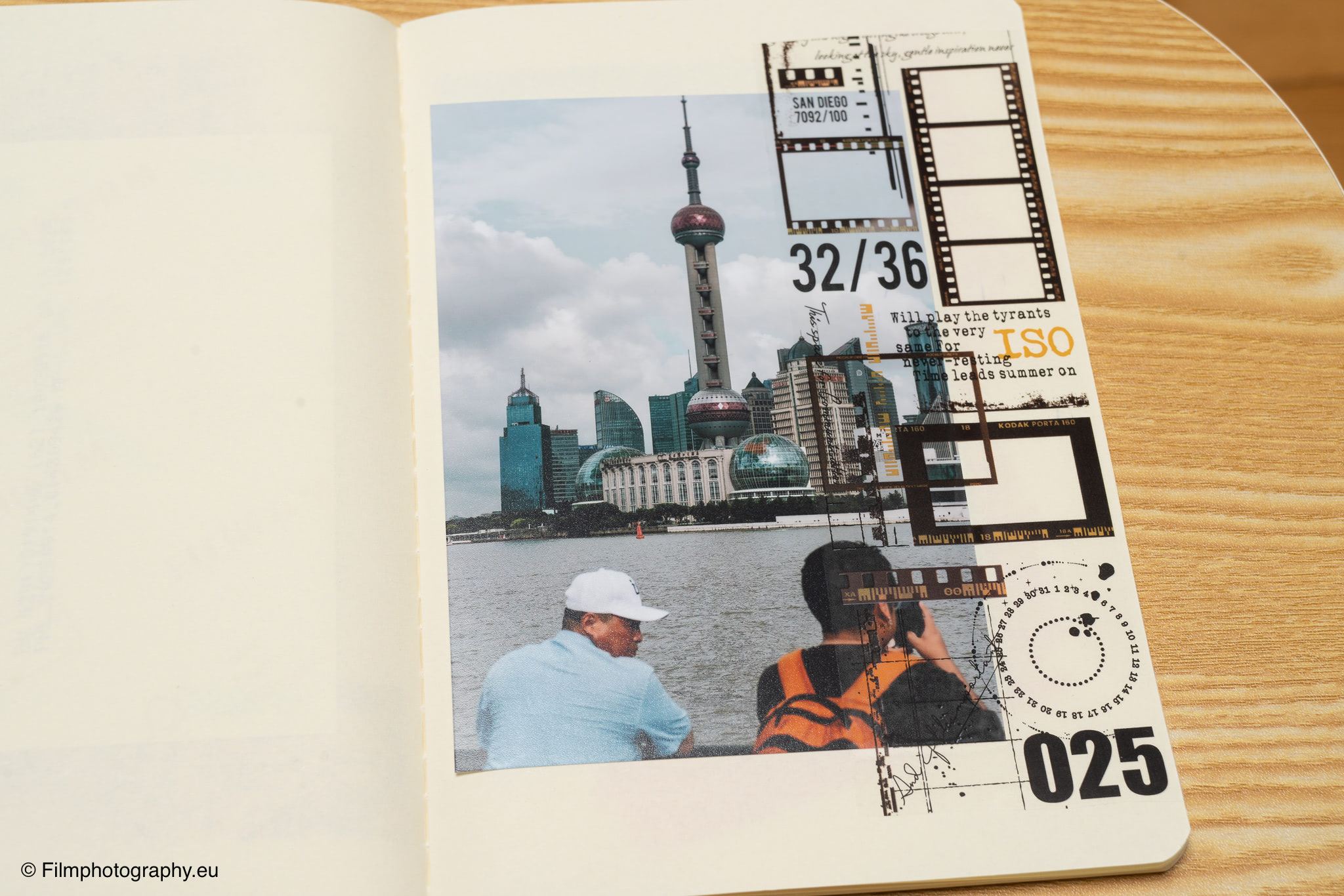
I attempted a somewhat more complex layout with a shot of the Shanghai skyline. Here, I wanted to enhance the impression of a travel diary. The PET Tape “Film Border” proved to be a means of giving the image a documentary character. The stickers look like developed film strips and can be wonderfully attached to the side of the image as if they were test strips or contact sheets.
https://journalsay.com/products/pet-tape-60mm-200cm-collage-diary-series-vintage-film-border
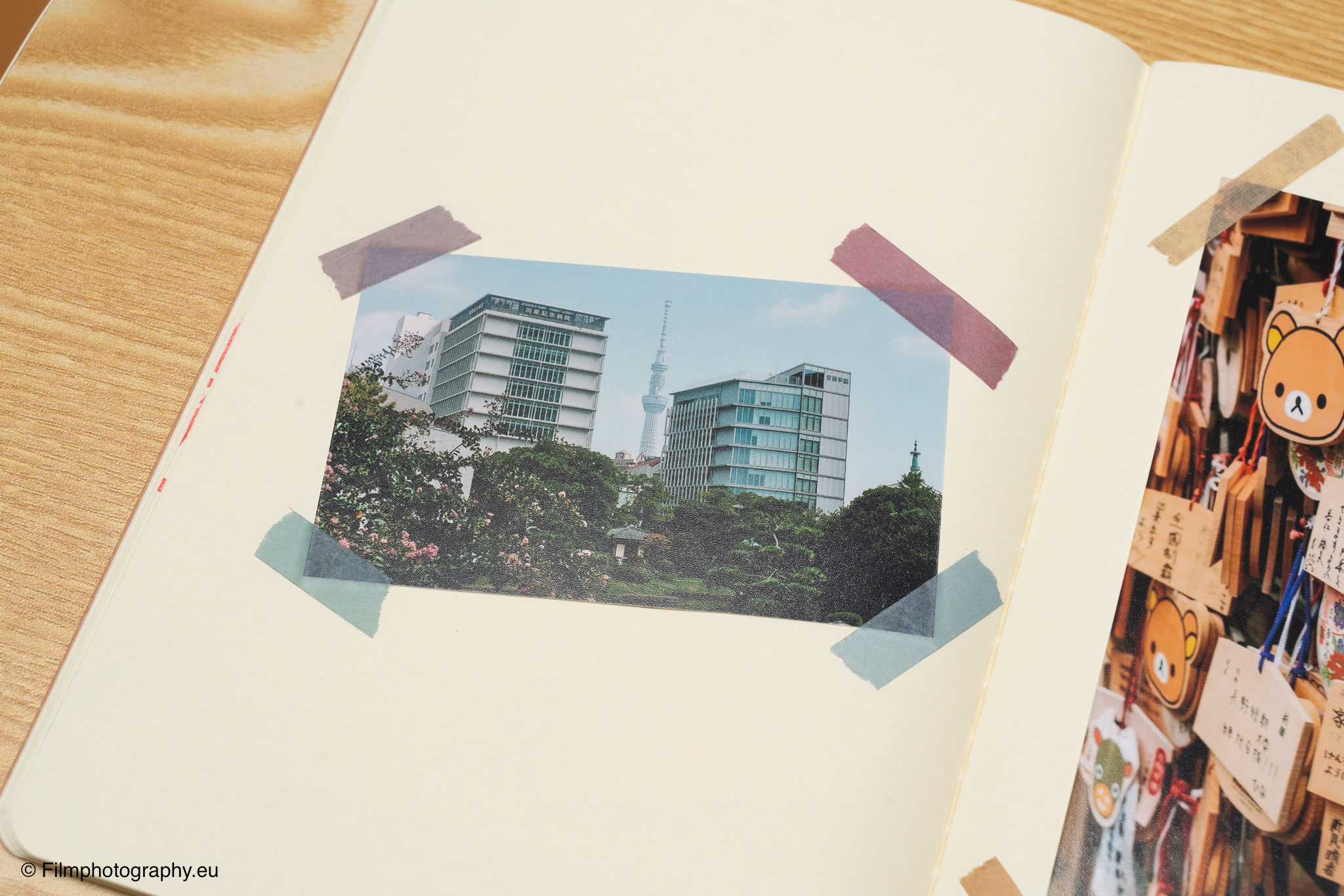
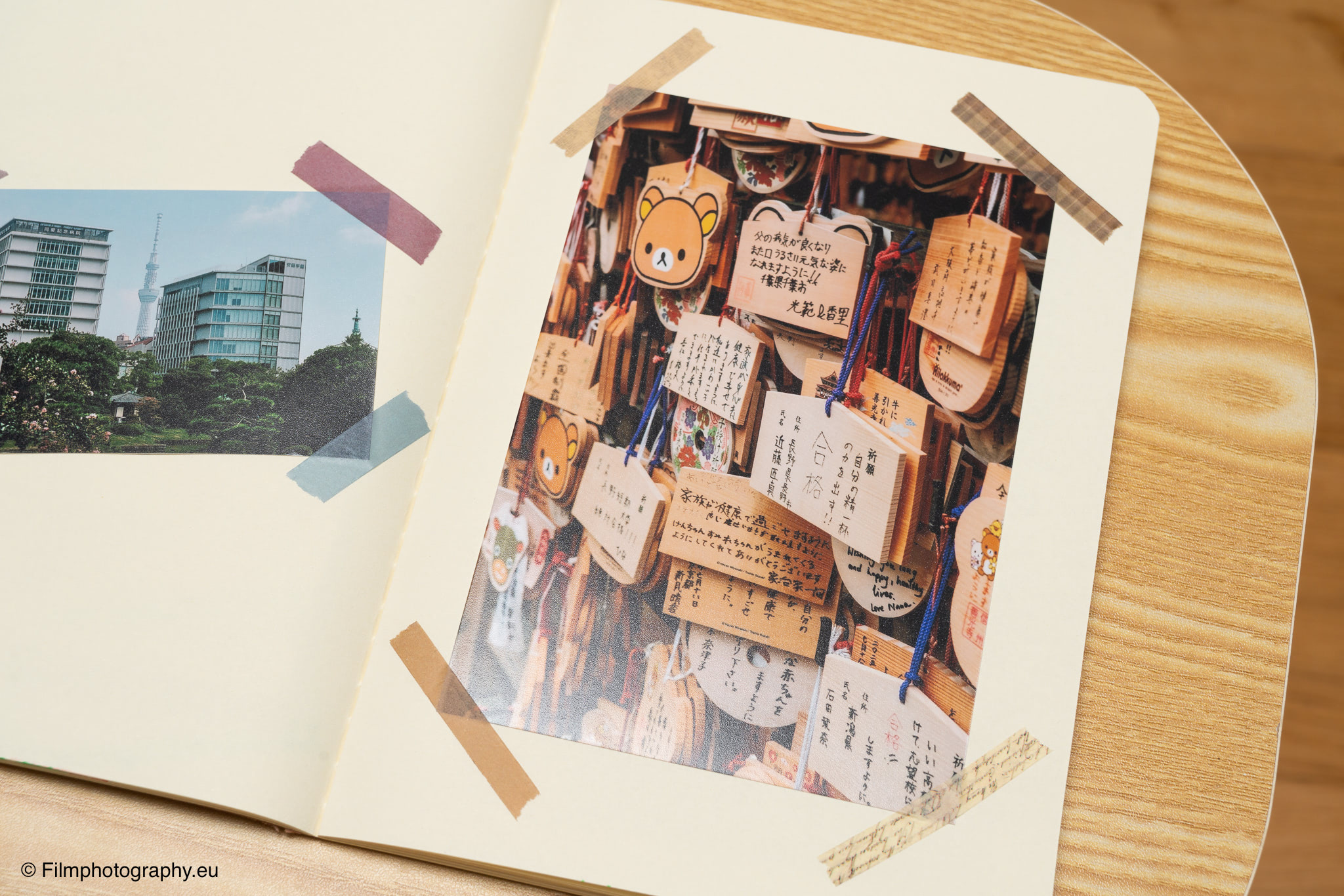
A very classic method of attaching images, which I also tried, is using washi tape over the corners of the photo. Instead of sticking the image down completely, I fixed it with strips of washi tape. This is strongly reminiscent of old family albums where pictures were often just loosely glued in. It gives the viewer the feeling of looking at the original, not a print in a book. The colors are subtle and do not distract from the subject.
https://journalsay.com/products/8pcsset-retro-solid-color-basic-pattern-decoration-washi-tape-set
Dare to Use Color
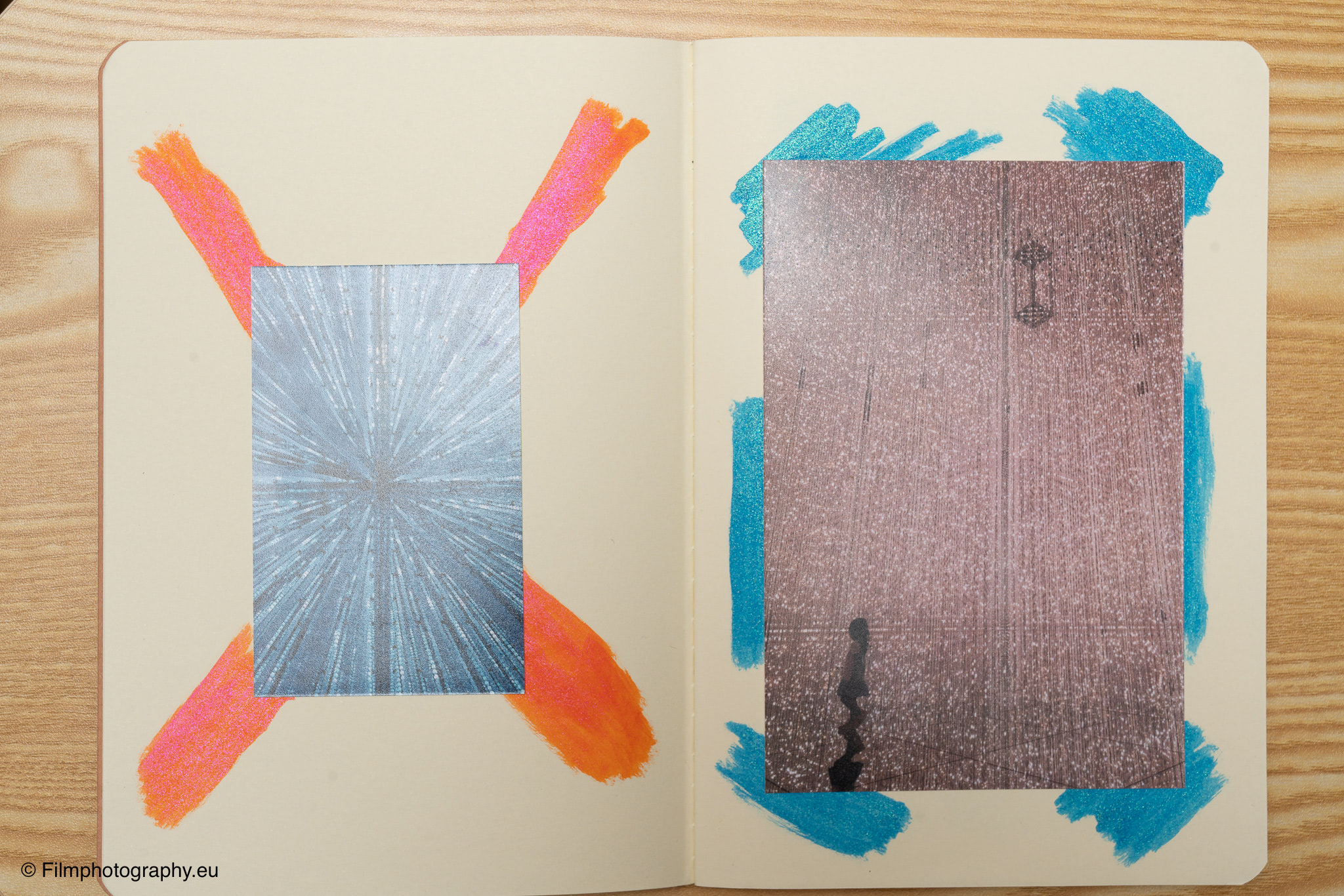
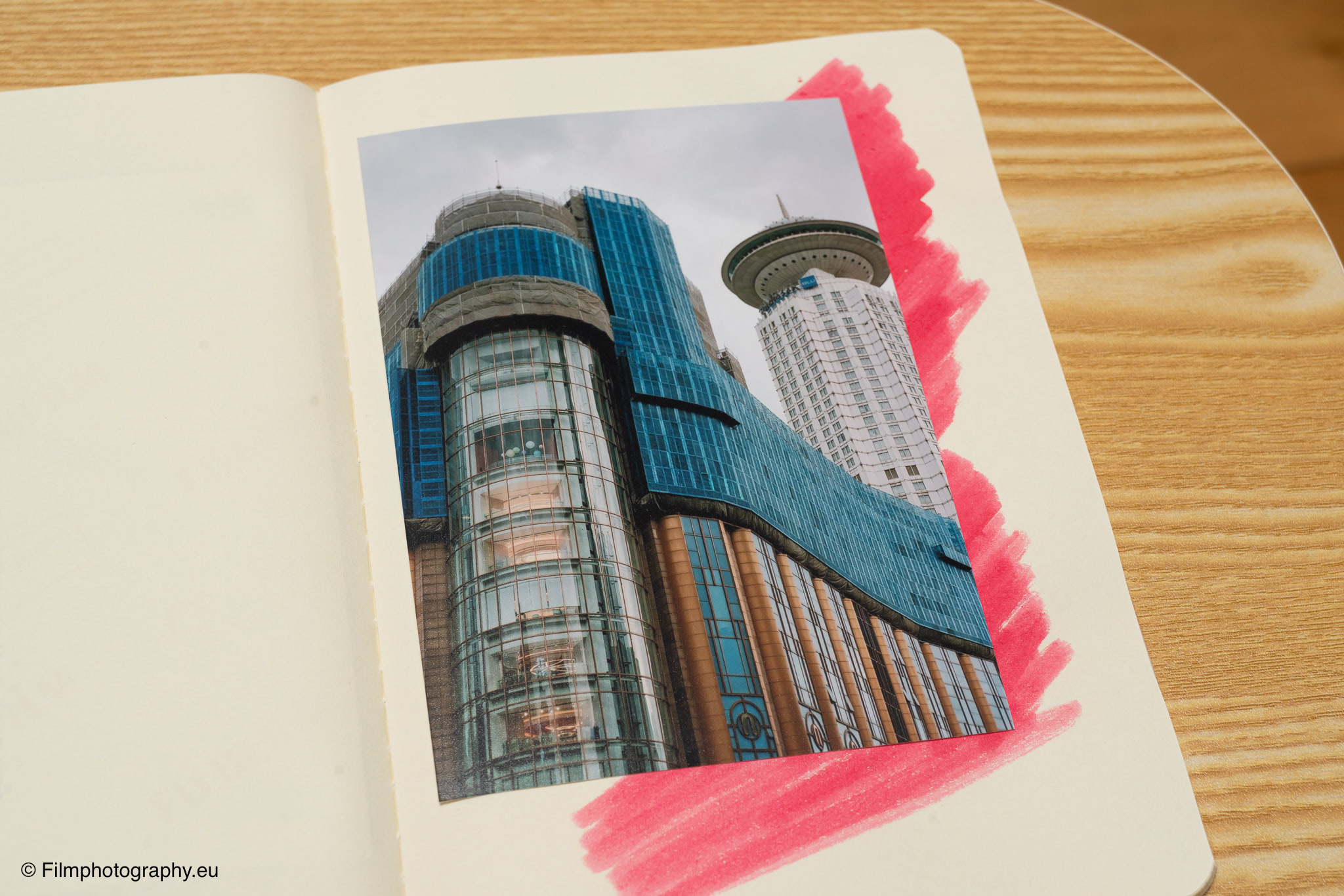
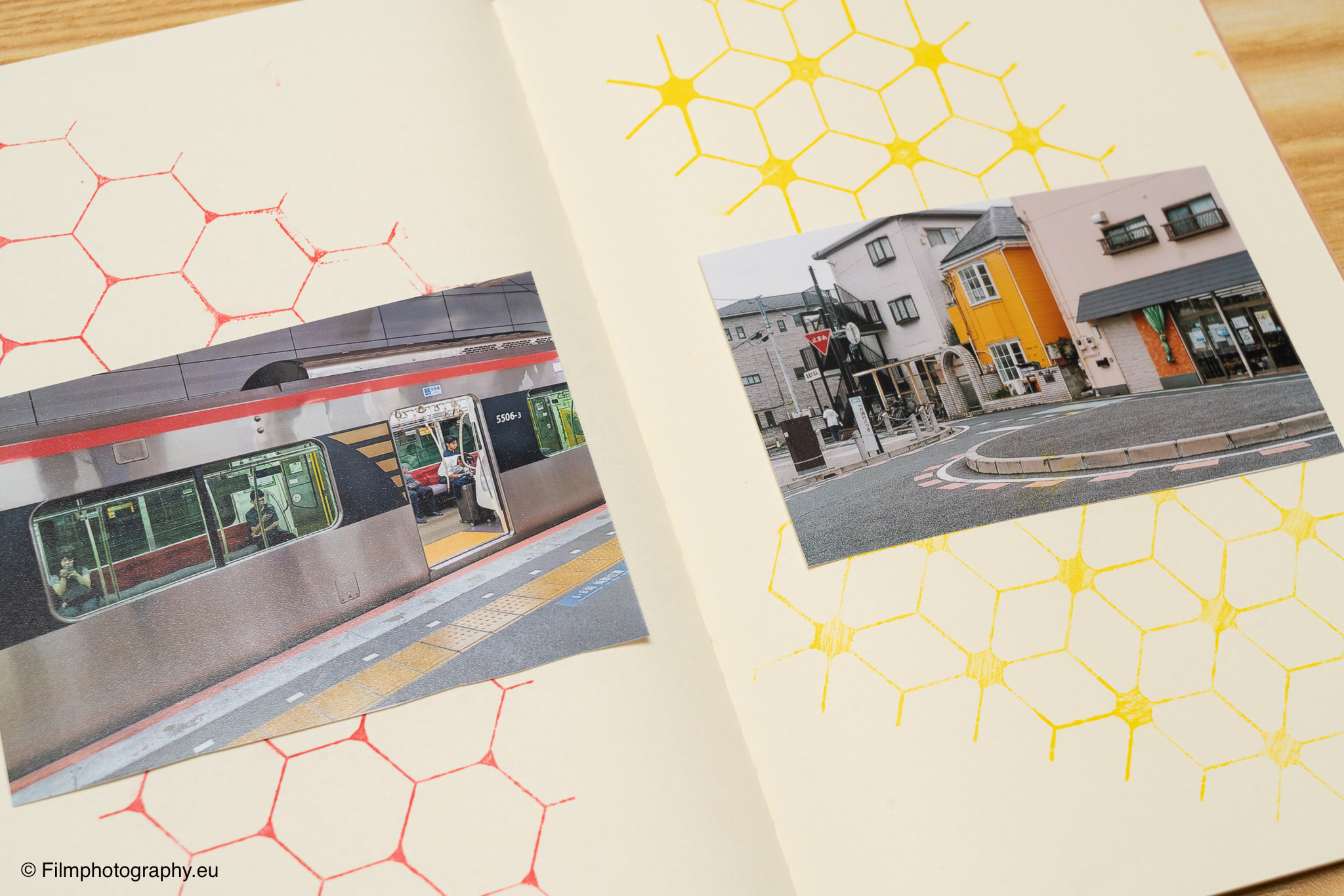
Not every page needs to be strictly structured. For some pictures, I reached for the Journalsay soft brush pens. The metallic colors have a great luminosity on the slightly cream-colored paper of the notebook. I used them to draw rough crosses or hatched backgrounds, on which the photo was then placed. It is a very expressive form of design.
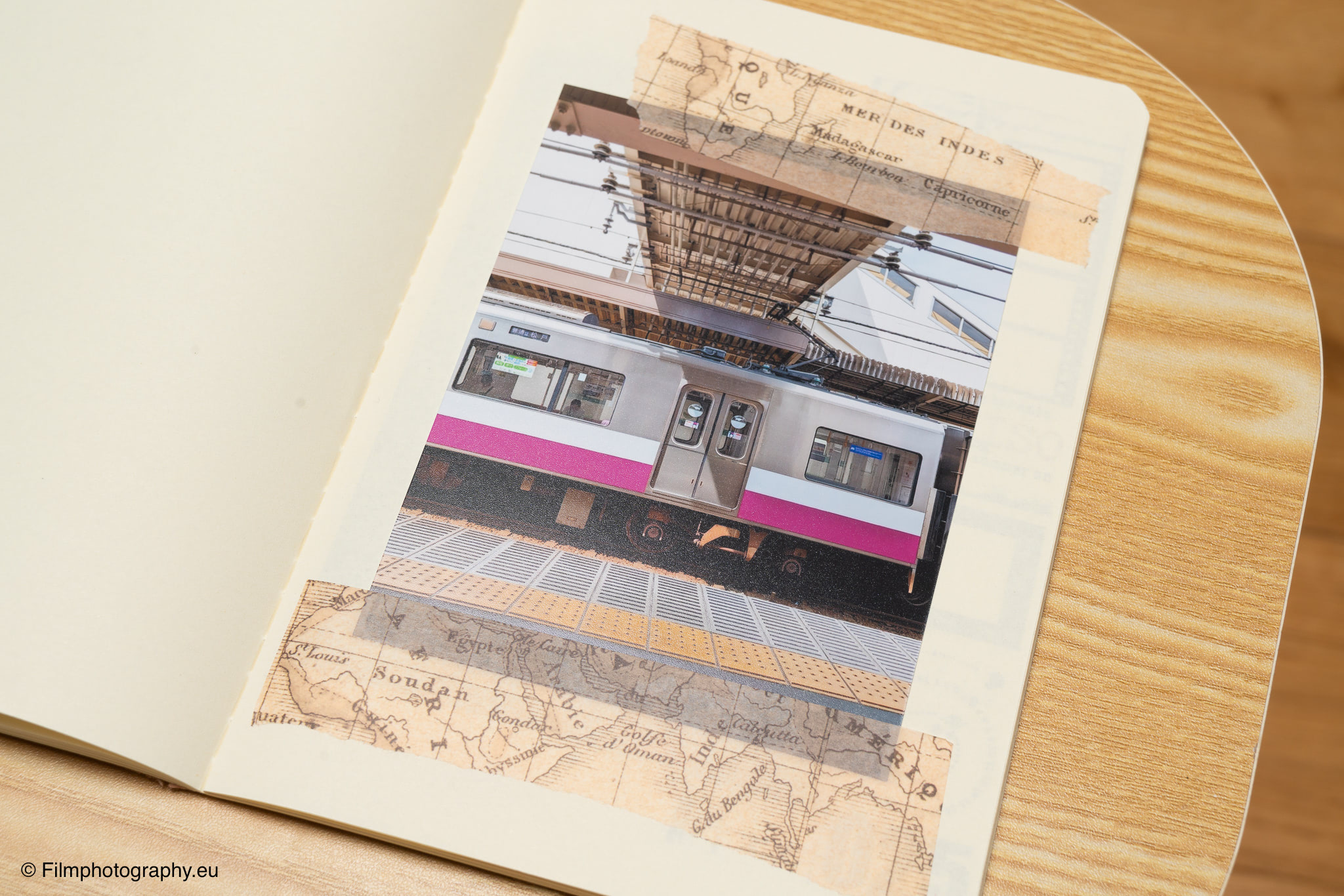
For travel memories, such as a train journey, the wide Journalsay 300cm Vintage Art Multi Size Washi Tape was suitable. One of the patterns shows old maps. I tore the tape by hand to get rough edges and taped it above and below the photo of a train carriage. An association of distance and travel is immediately created without needing much text.
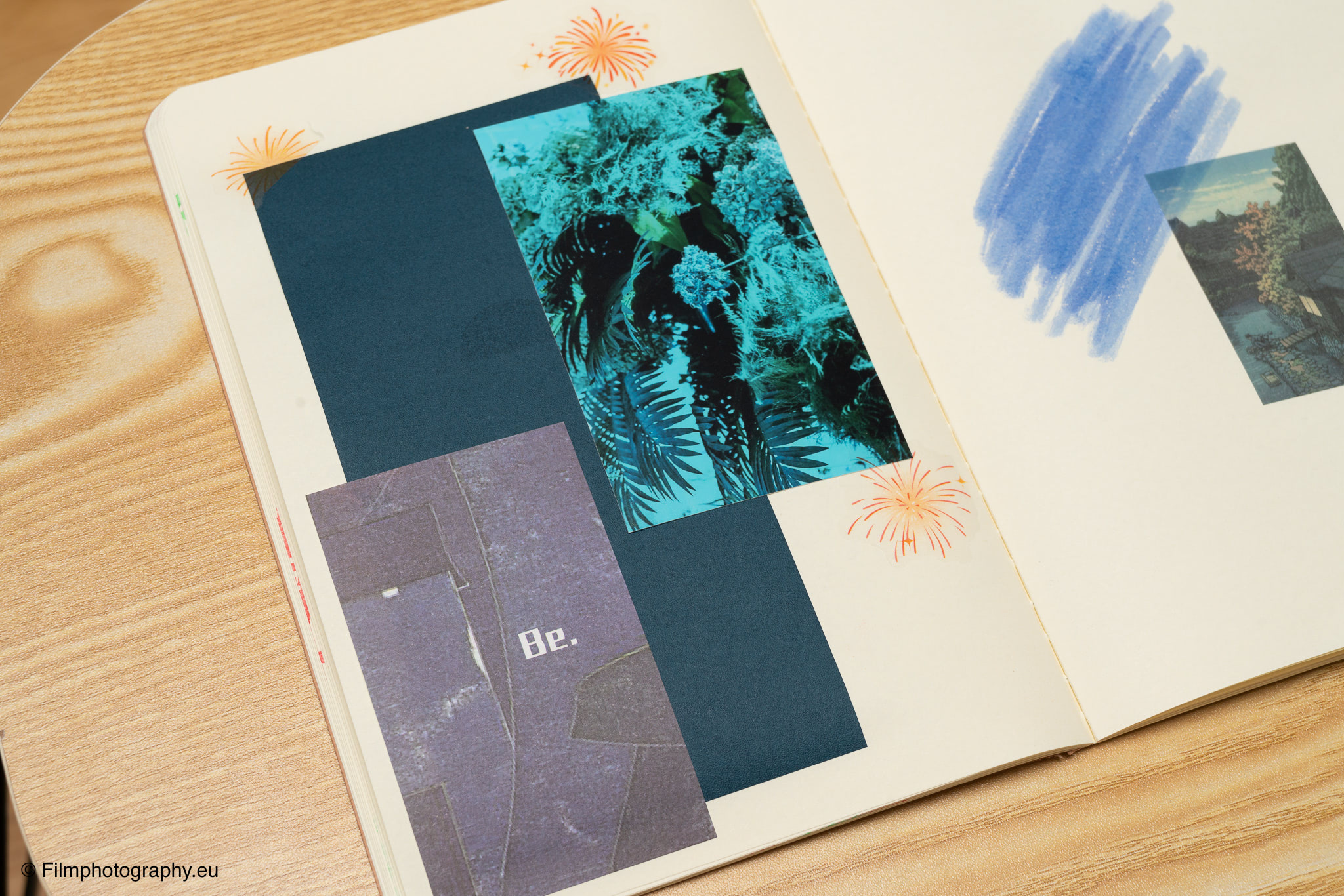
A small detail that brought me great joy is the firework stickers from the Journalsay 35mm 200cm Go Watch The Firework Series Ins Landscaping PET Tape. On darker paper or even on light surfaces, they add small, festive accents. I used them sparingly so as not to overcrowd a page, but they are well-suited to filling white spaces in the layout meaningfully.
https://journalsay.com/products/journalsay-35mm-200cm-go-watch-the-firework-series-ins-landscaping-pet-tape
A Beginner’s Conclusion
Looking at the finished pages, I see many things that could be done better. The composition on paper follows different rules than the composition in the viewfinder of a camera. But that’s precisely where the appeal lies.
The products from Journalsay are tools that allow the photographic result to be expanded haptically. It is a meditative work, trading the speed of the digital world for scissors, glue, and paper.
There is still significantly more potential in these materials than I have been able to exploit so far. Layering transparent papers, more precise stamping, or combining handwriting and tapes are areas that still need to be explored.
For photographers who don’t want their pictures to gather dust on their hard drives but enjoy the physical object, this is a wonderful way to engage intensively with their own shots. It’s not perfect, but it’s personal – and that’s what makes a good album in the end.
The composition in your lantern photo is beautiful, and the green wave stamp really complements the moss tones perfectly. Very nice eye for color!
It’s interesting to see the shift from digital archiving to this. It definitely feels more personal than a folder on a hard drive that no one ever looks at.
Don’t call your attempts clumsy! They look very artistic. The handmade ‘imperfections’ are exactly what make journaling so special and unique compared to a digital layout.
The ‘Film Border’ PET tape looks amazing. It really suits the aesthetic of the Shanghai skyline shots you included.
Creative journaling is honestly such a relaxing hobby. It’s great to see more people picking it up lately, regardless of their skill level.
I love how you’ve turned your professional photos into something so tactile! The film border stamp is a genius touch for a photographer; it really bridges the gap between the two worlds.
I need to try out Journalsay.
If you’re getting into stamps, you should definitely try using an acrylic block and a brayer for more even pressure. It makes a huge difference with those large silicone ones!
I started doing this last year with my family photos. It’s so much more rewarding to flip through a physical book with your kids than to scroll through a phone screen.
Great post! This really inspired me to finally print some of my travel shots and do something creative with them instead of just posting them on IG.