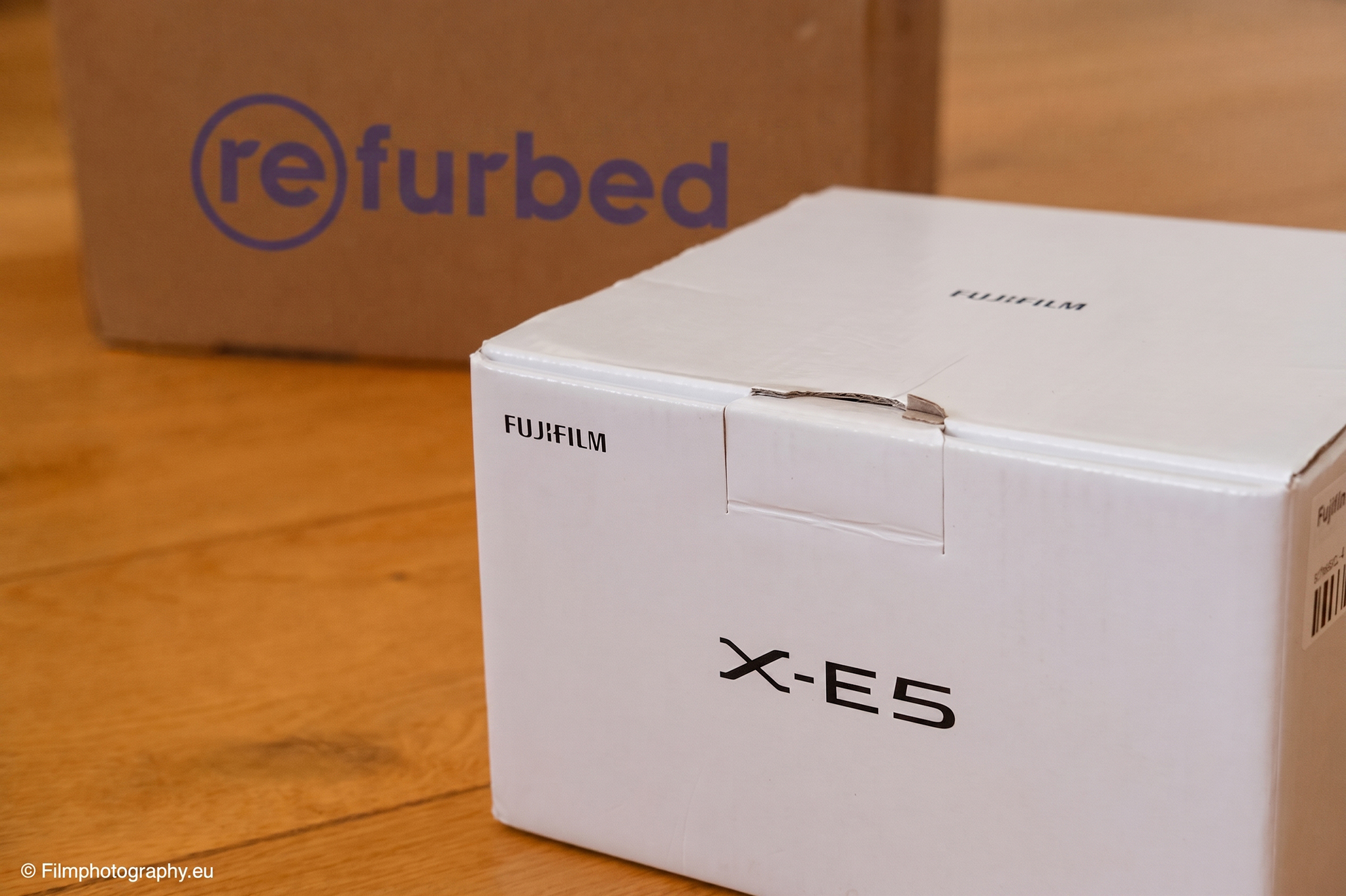
The Fujifilm X-E5 for this article was kindly provided by refurbed.
Cameras are complex tools that can rarely be fully judged after just a few days. For this reason, this text marks the beginning of a detailed series of articles. Over the course of an entire year, I will intensively accompany the Fujifilm X-E5, analyze its functions in detail, test its usefulness in everyday photography, take it to various events, and examine suitable accessories.
Before diving into long-term experiences, this article is deliberately dedicated to first impressions. It's about those things that stand out when unboxing and during the first shutter releases. Naturally, this is very subjective and certainly a bit nitpicky in places. I'll approach it somewhat unstructured and probably forget some things.
Camera History and Technical Specifications
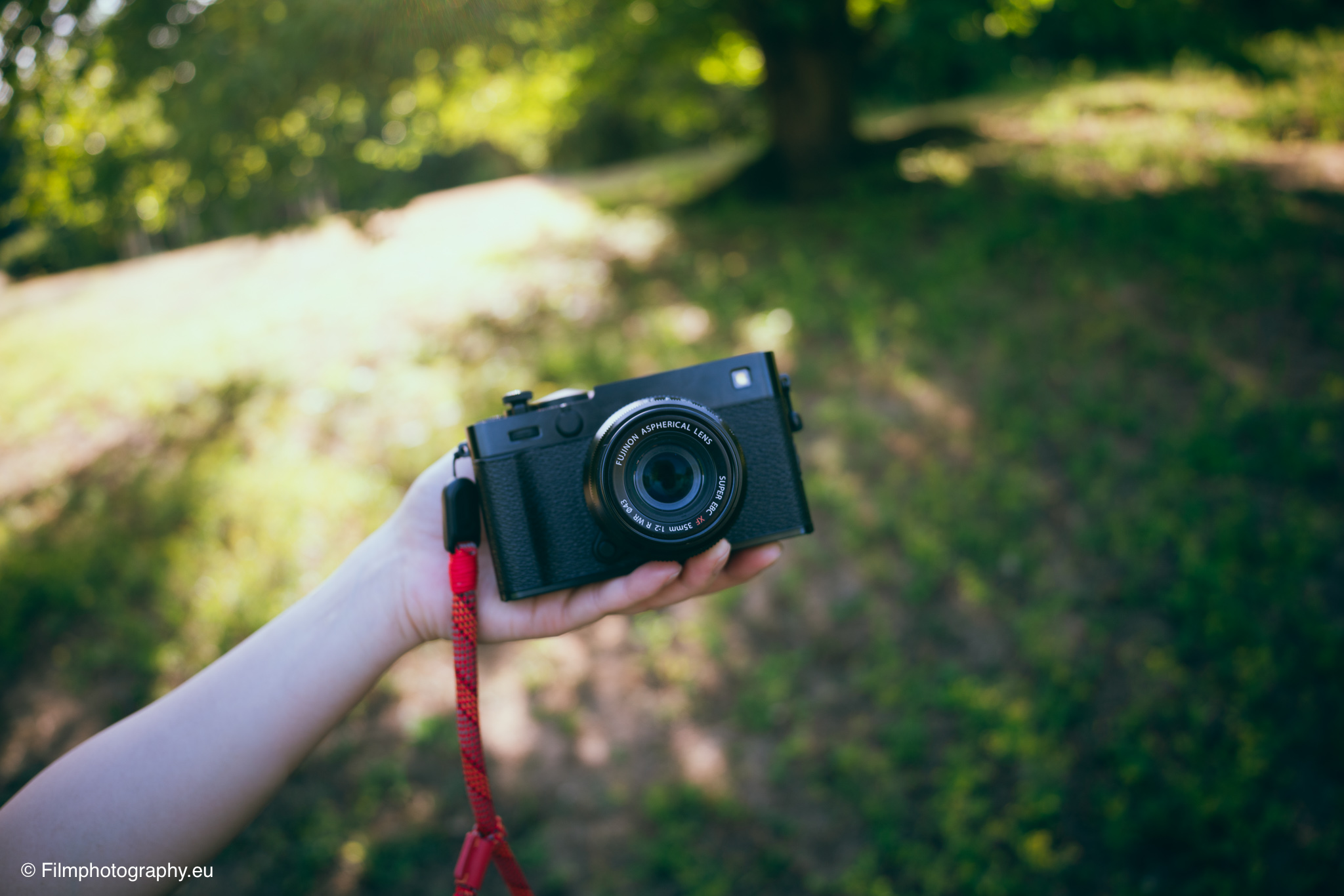
The X-E series from Fujifilm now has a considerable history. As a compact offshoot of the X-Pro series, it offered the classic rangefinder look with an electronic viewfinder on the left edge of the body from the start, but omitted the elaborate hybrid viewfinder.
Over generations, the line evolved from the classic X-E1 through the X-E2, the X-E3, to the minimalist X-E4. With each model, ergonomics and the control concept changed, sometimes drastically. While earlier models still had pronounced grips and a multitude of buttons, the immediate predecessor adopted a very smooth, almost radically reduced design language.
With the Fujifilm X-E5, the manufacturer now returns to a combination of classic handling and modern technology. Inside, the X-Trans CMOS 5 HR sensor, known from the current sister models, works with a resolution of forty megapixels, combined with the X-Processor 5. This sensor delivers high detail and allows flexible cropping, but also places high demands on the optical quality of the attached lenses.
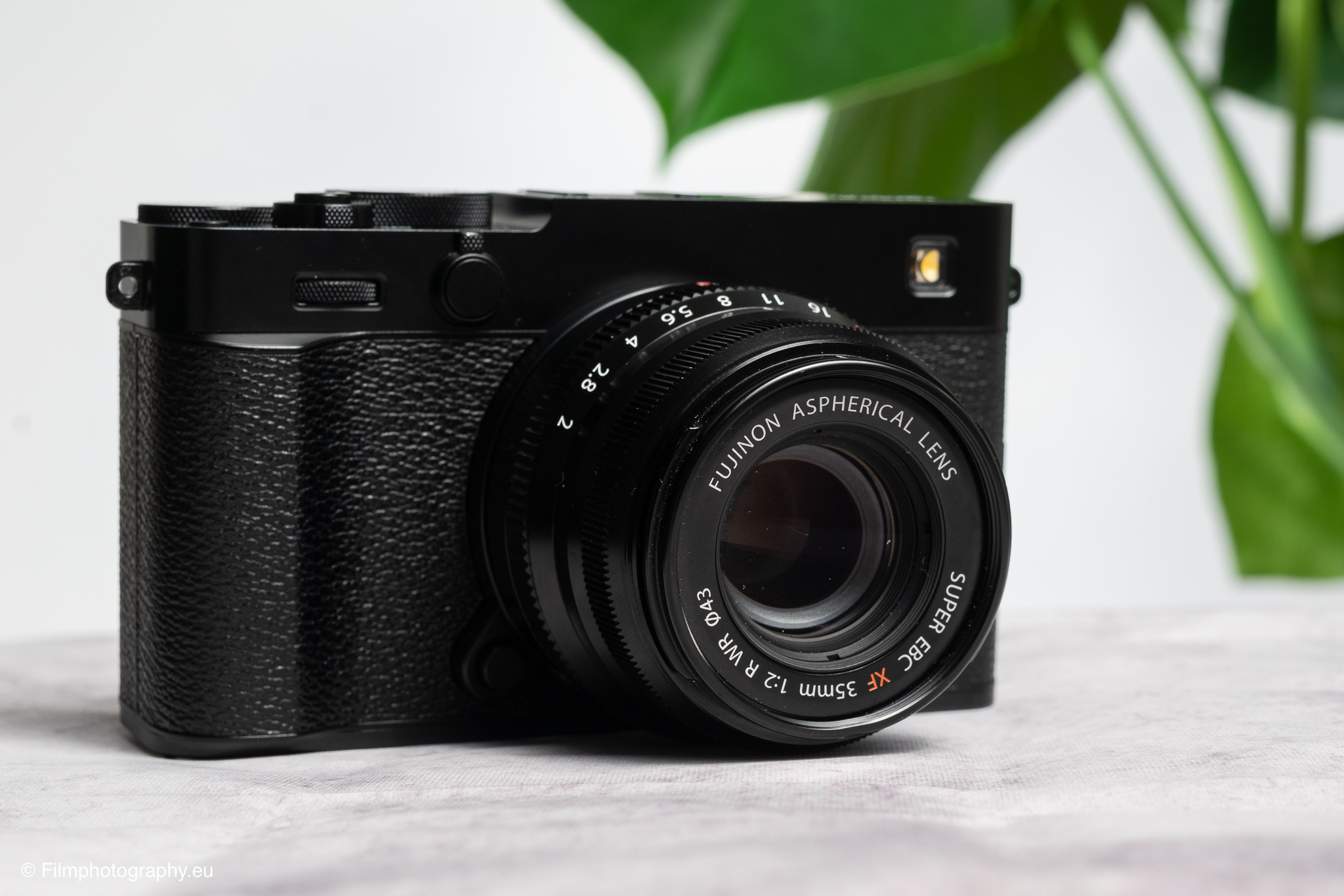
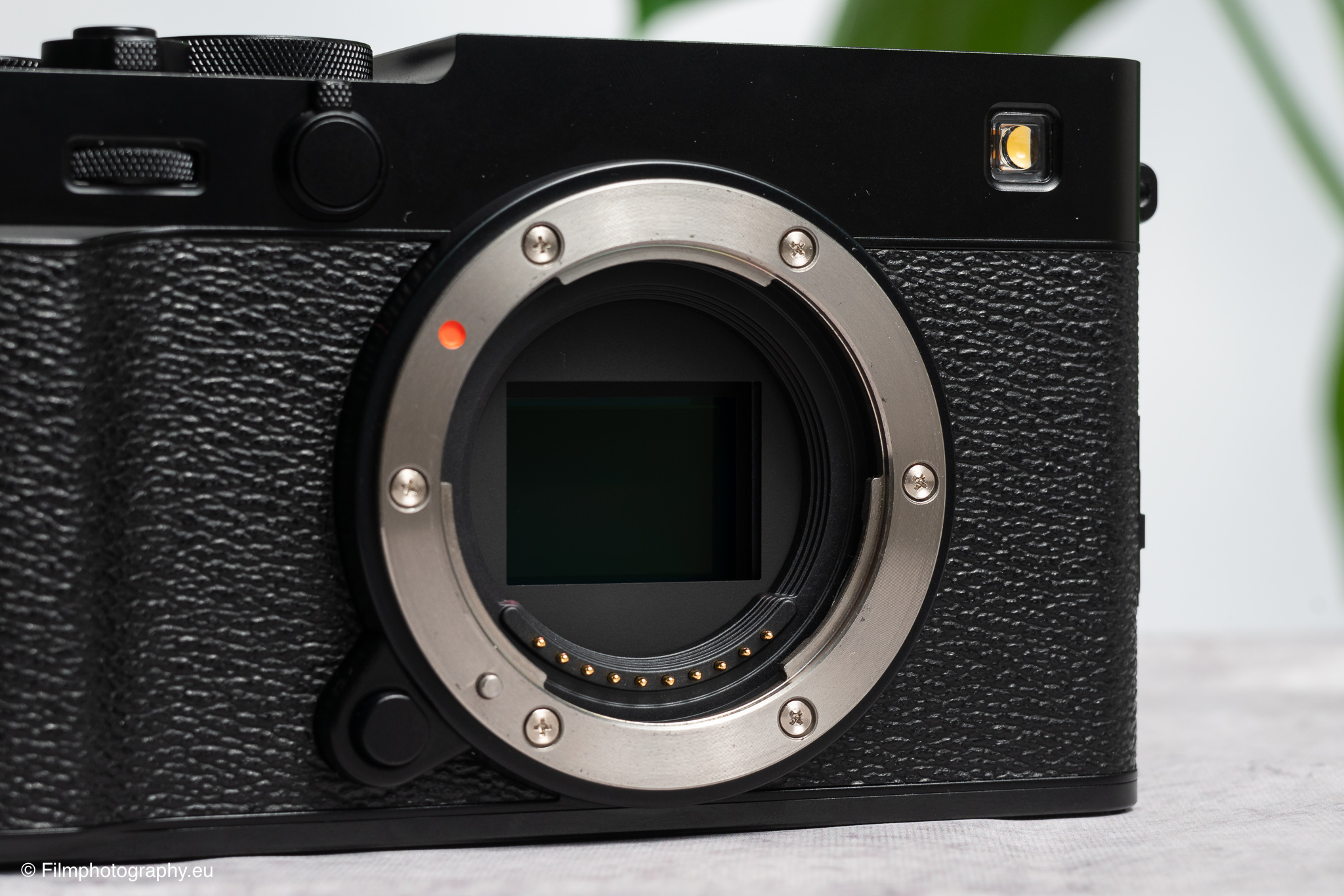
One of the most significant technical innovations within the compact X-E body line is the integration of five-axis in-body image stabilization, which is said to compensate for camera shake by up to seven stops.
The body itself stays true to the series' compact dimensions, measuring only a few centimeters in depth, making the camera ideal for street and travel photography.
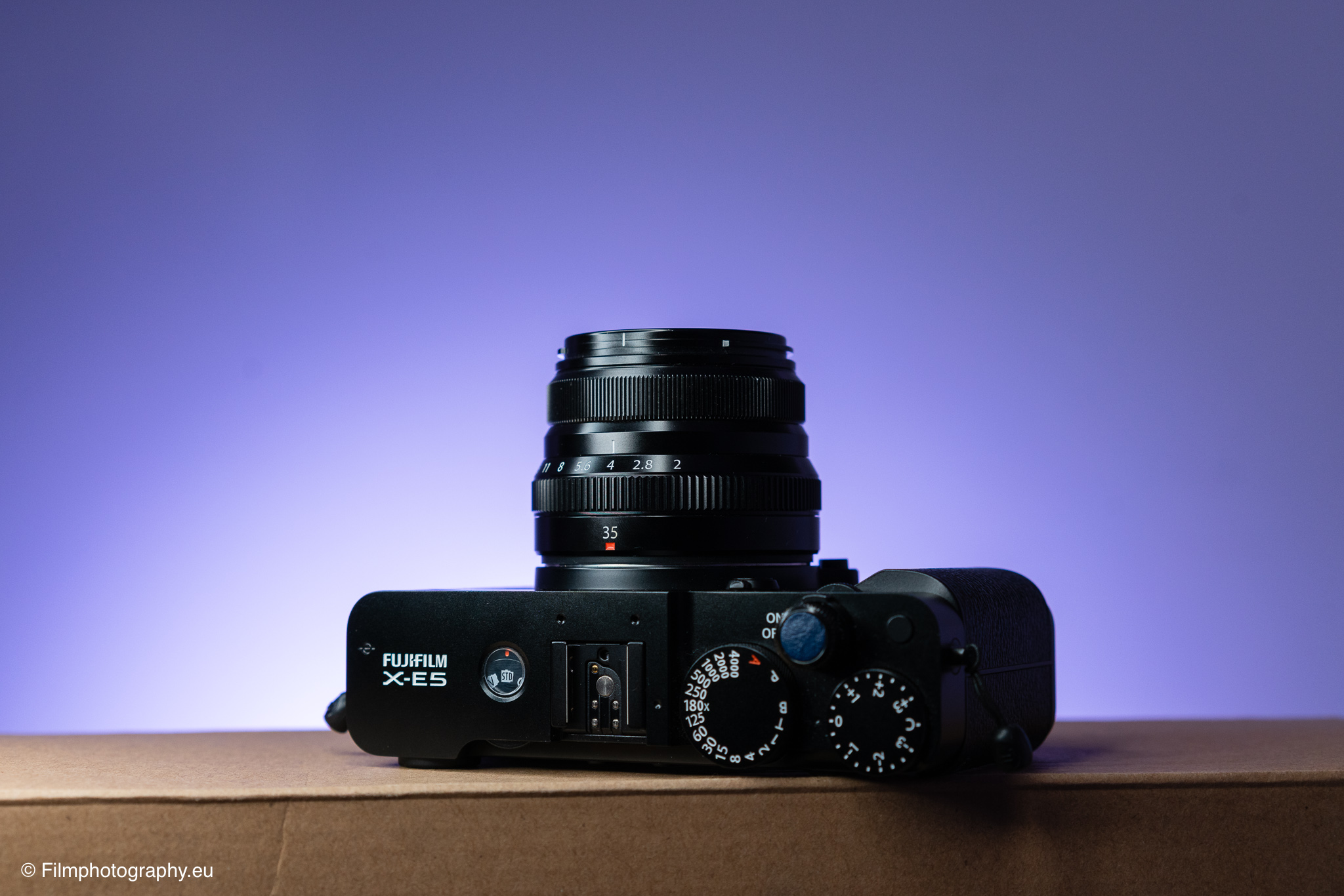
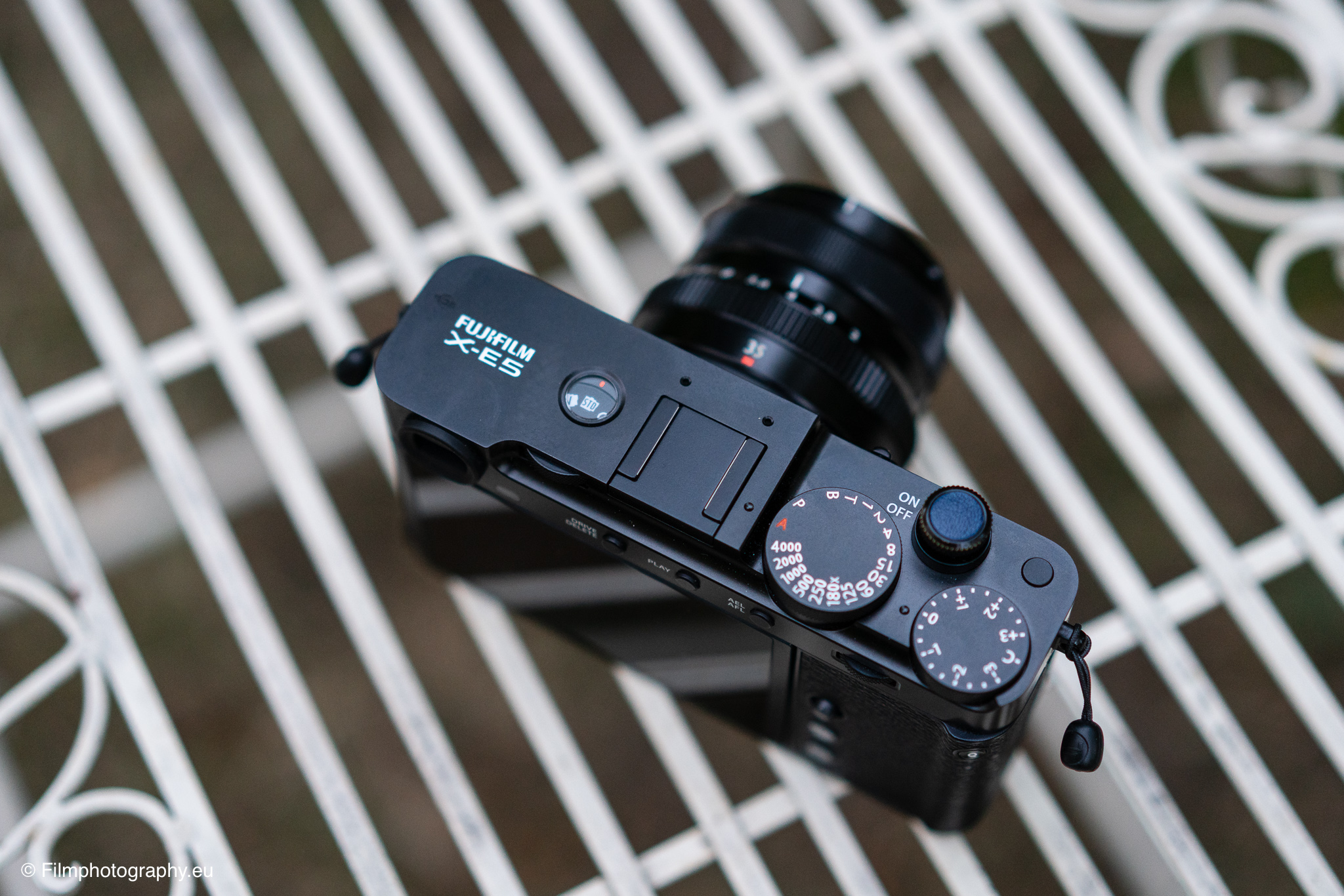
On the top, a milled aluminum plate stands out, giving the body a noticeable sense of quality. The features are complemented by a fixed film simulation dial on the left shoulder, an electronic viewfinder with a high refresh rate, and a tilting touchscreen.
Continuous shooting speeds of up to twenty frames per second with the electronic shutter and video recording up to 6.2K round out the technical profile, although the clear focus of this camera is undoubtedly on photography.
Haptics
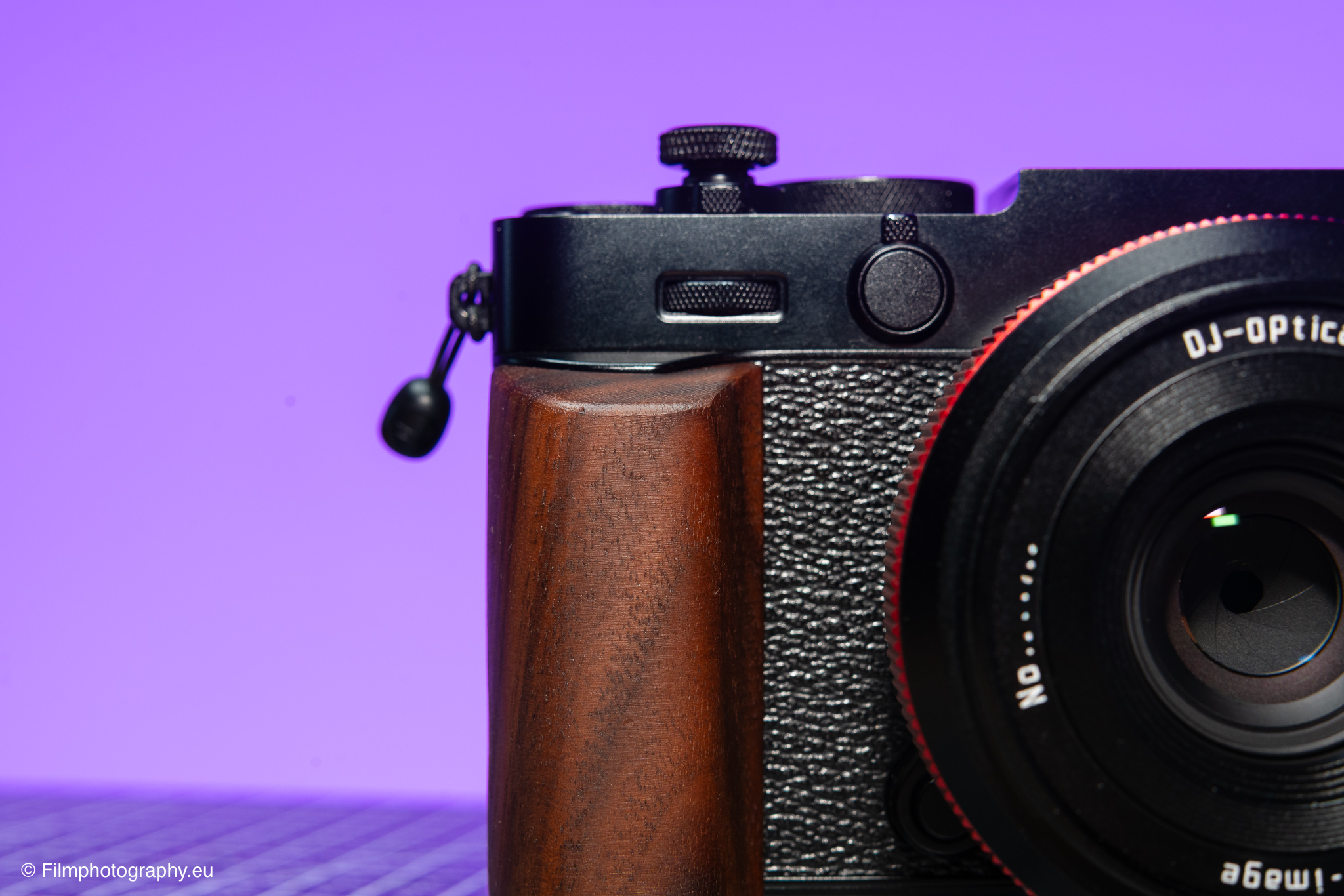
When you pick up the camera for the first time, the build quality immediately stands out. The combination of metal and grippy covering material feels solid.
The body design itself relies on clean, straight edges. Visually, it looks extremely elegant and tidy. The classic lines recall traditional rangefinder cameras and exude a timeless character.
In practice, however, it becomes clear that form and ergonomics do not always harmonize perfectly. If you carry the camera loosely in your hand for a longer period, the hard edges can feel somewhat unusual to slightly uncomfortable depending on your grip.
Controls
The arrangement of controls always deserves a particularly close look on a Fujifilm camera, as the traditional control concept is the main reason many photographers buy one. With the X-E5, some pros and cons become apparent in the first hands-on test.
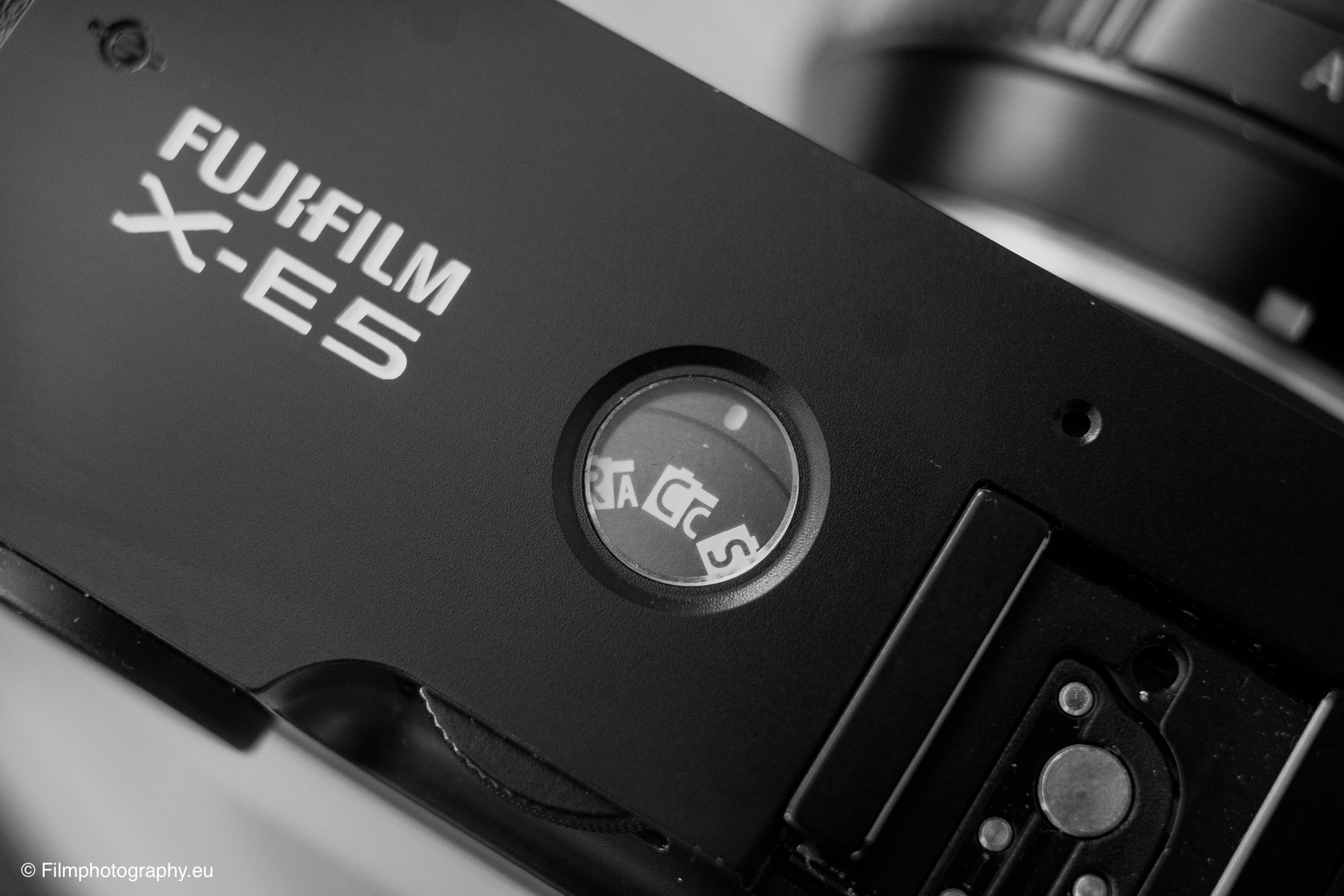
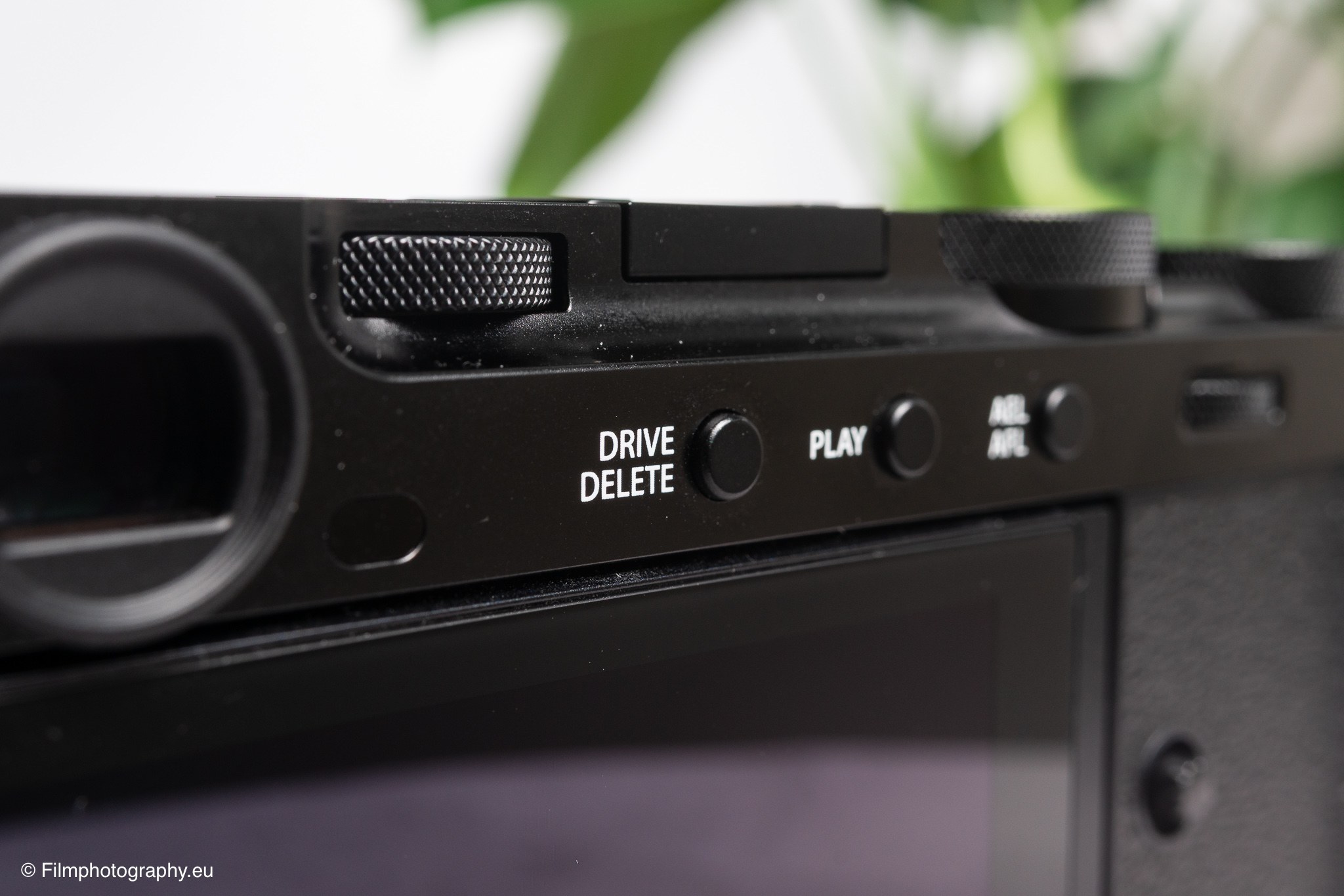
One detail that struck me negatively during the first shots is the placement of the eye sensor. It is located almost directly under the new dial for film simulations and in close proximity to the drive and delete button.
When working via the screen while photographing and wanting to select a different film simulation or delete an image, your finger inevitably moves into the detection range of this sensor. The camera reacts promptly, dims the display, and switches to the electronic viewfinder.
This interrupts the workflow and is annoying in everyday use, especially when you want to quickly check the effect of a film simulation on the monitor. A more generous spatial separation or finer sensitivity adjustment of the sensor would have been desirable here.
A very pleasing feature is the so-called analog view mode, which frees the viewfinder image from distracting symbols and focuses purely on classic exposure data such as aperture, shutter speed, and ISO. This reduced display promotes concentrated work, similar to a traditional film camera.
However, it remains completely incomprehensible to me why this minimalist view is only available for the electronic viewfinder and cannot be activated for the main display. I see no logical reason why you are forced to see more overlays on the monitor than through the viewfinder.
There is also room for improvement in the optical feedback in the viewfinder when you are outside the correct exposure range. If a shot is in danger of being massively overexposed or underexposed because the selected settings exceed the camera's physical limits, a clear visual indicator would be helpful. A subtle blinking of the corresponding exposure value would suffice to warn against incorrect exposure before pressing the shutter.
As for the touchscreen, I personally keep it completely disabled. I see no significant practical benefit in touch operation, neither with Fujifilm nor with other camera systems.
On the contrary, the touch-sensitive screen often seems like an obstacle, as you can easily trigger functions accidentally or shift the focus point unnoticed when carrying the camera or adjusting the tilting display. With physical buttons and the joystick, the camera can be controlled much more precisely.
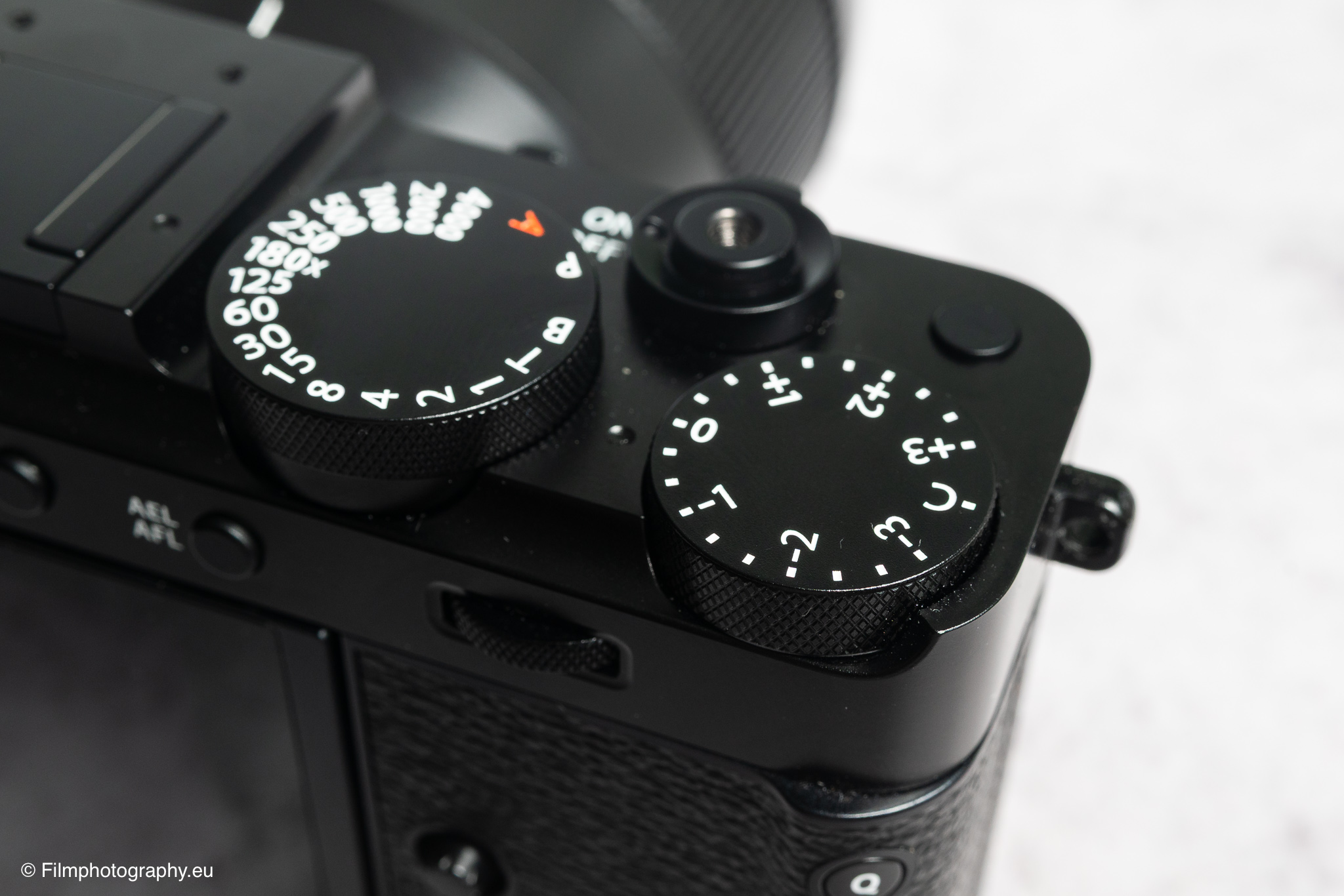
A central design element of the top plate is the dedicated dial for film simulations. The idea of providing quick access to different color characteristics fits the system's philosophy. However, I would have wished that the film simulation dial clicked in as solidly and mechanically with each step as the two setting dials for shutter speed and exposure compensation.
In its current form, the detent feels a bit soft. This makes the dial quite easy to turn, which can lead to accidentally shooting with a different profile than intended if handled carelessly.
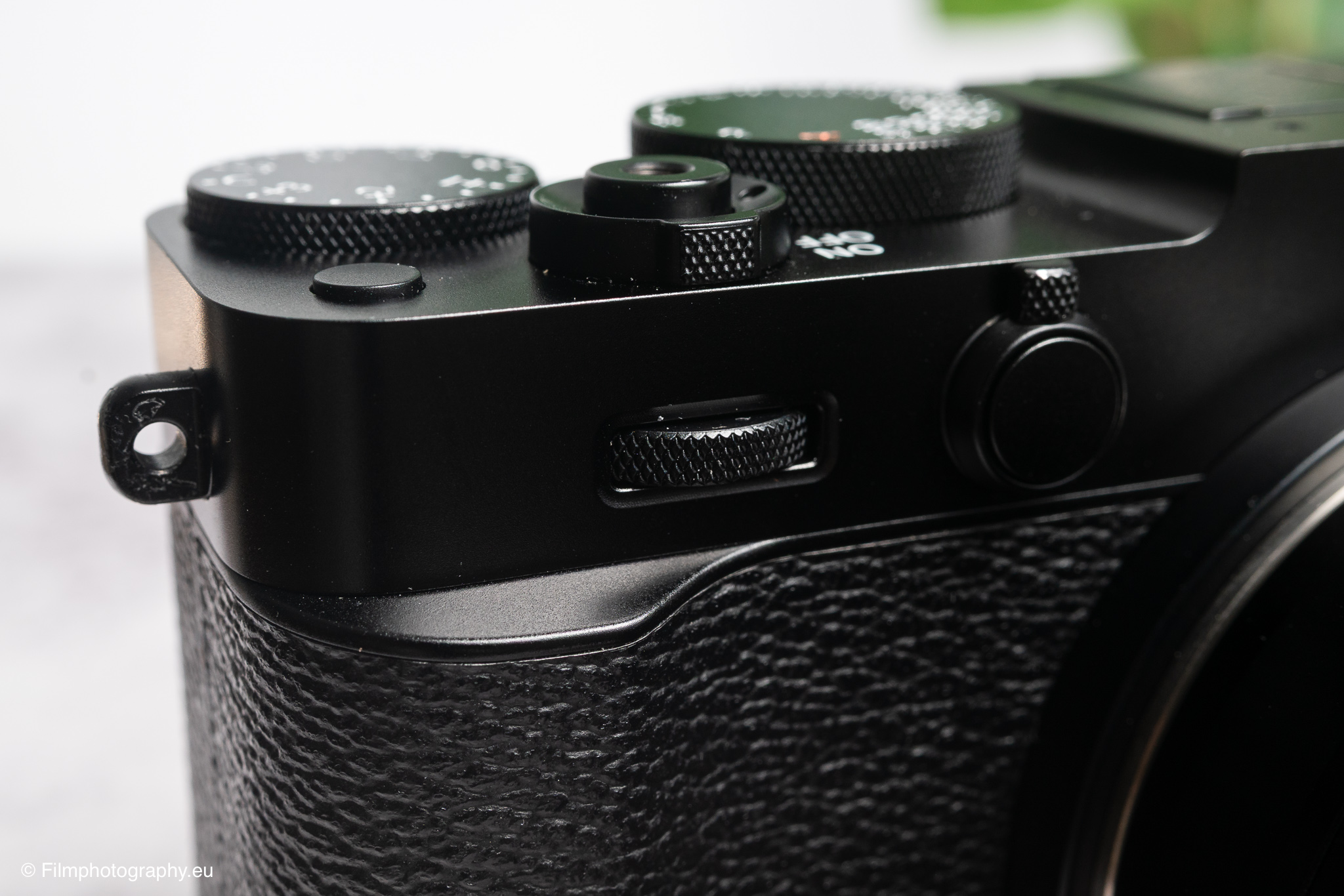
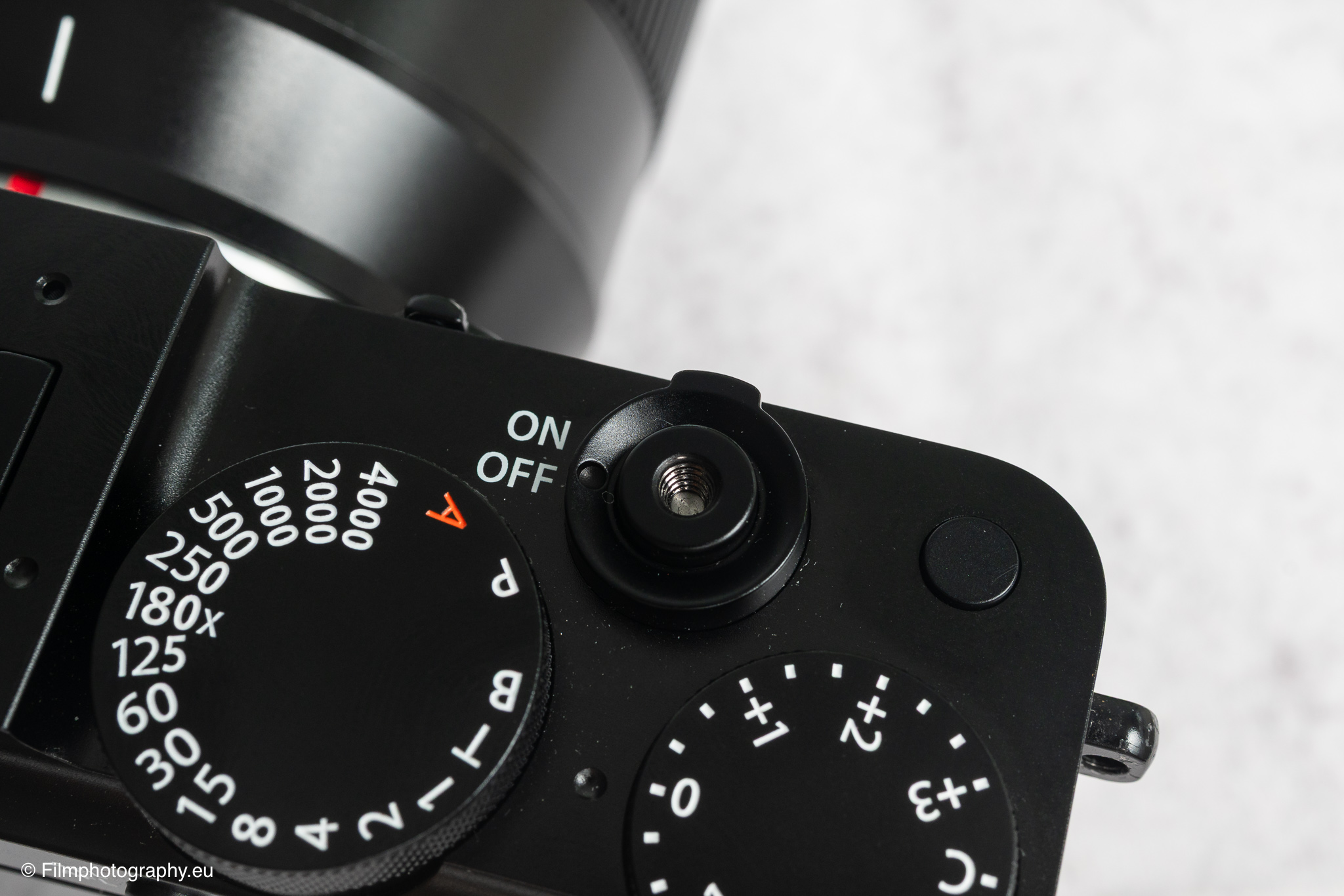
The on/off switch, arranged as a lever around the shutter button, works reliably in principle. Nevertheless, this small lever could be a tiny bit longer. With gloves or damp fingers, turning on the camera requires a bit more fingertip sensitivity than it would with a slightly more pronounced switch.
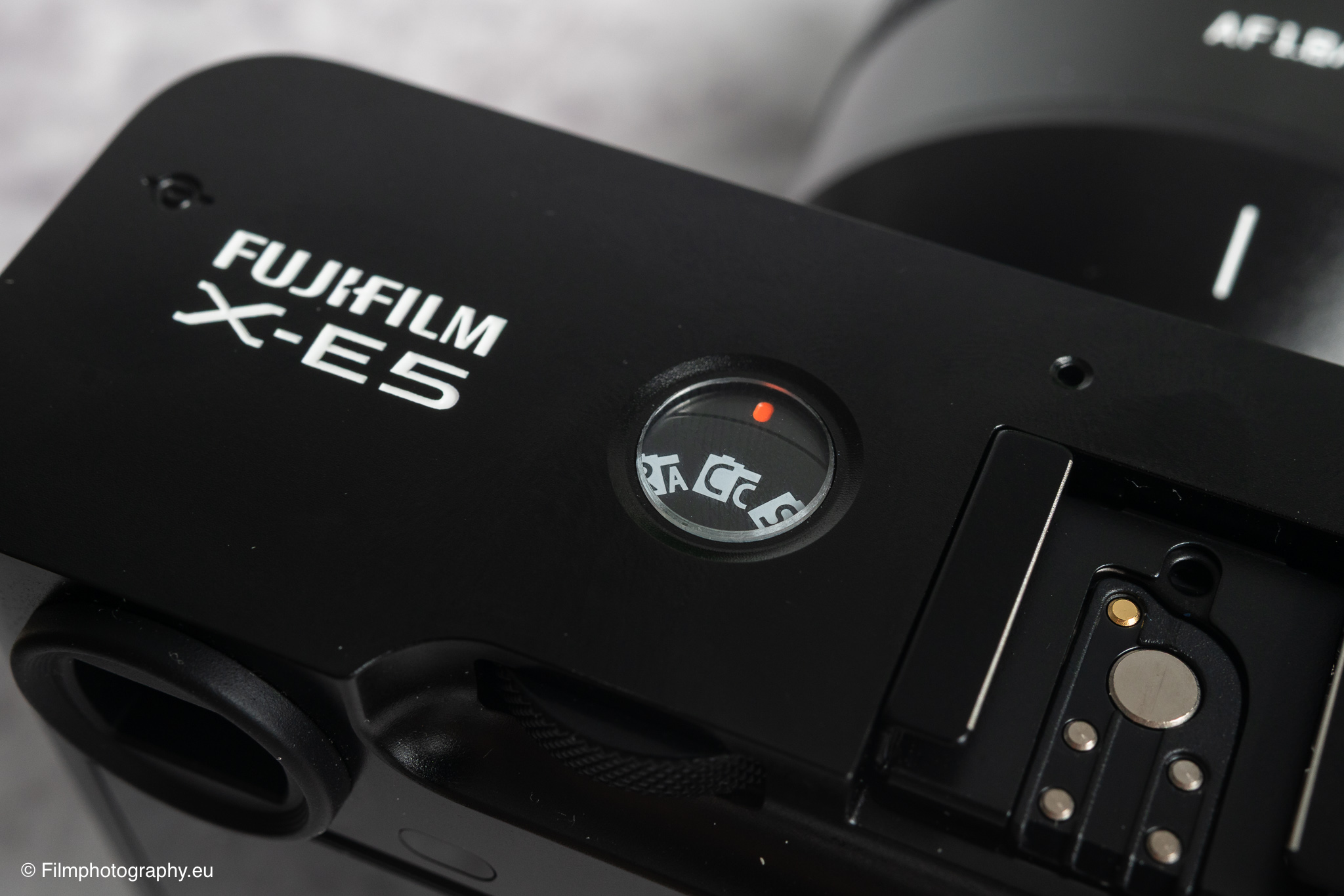
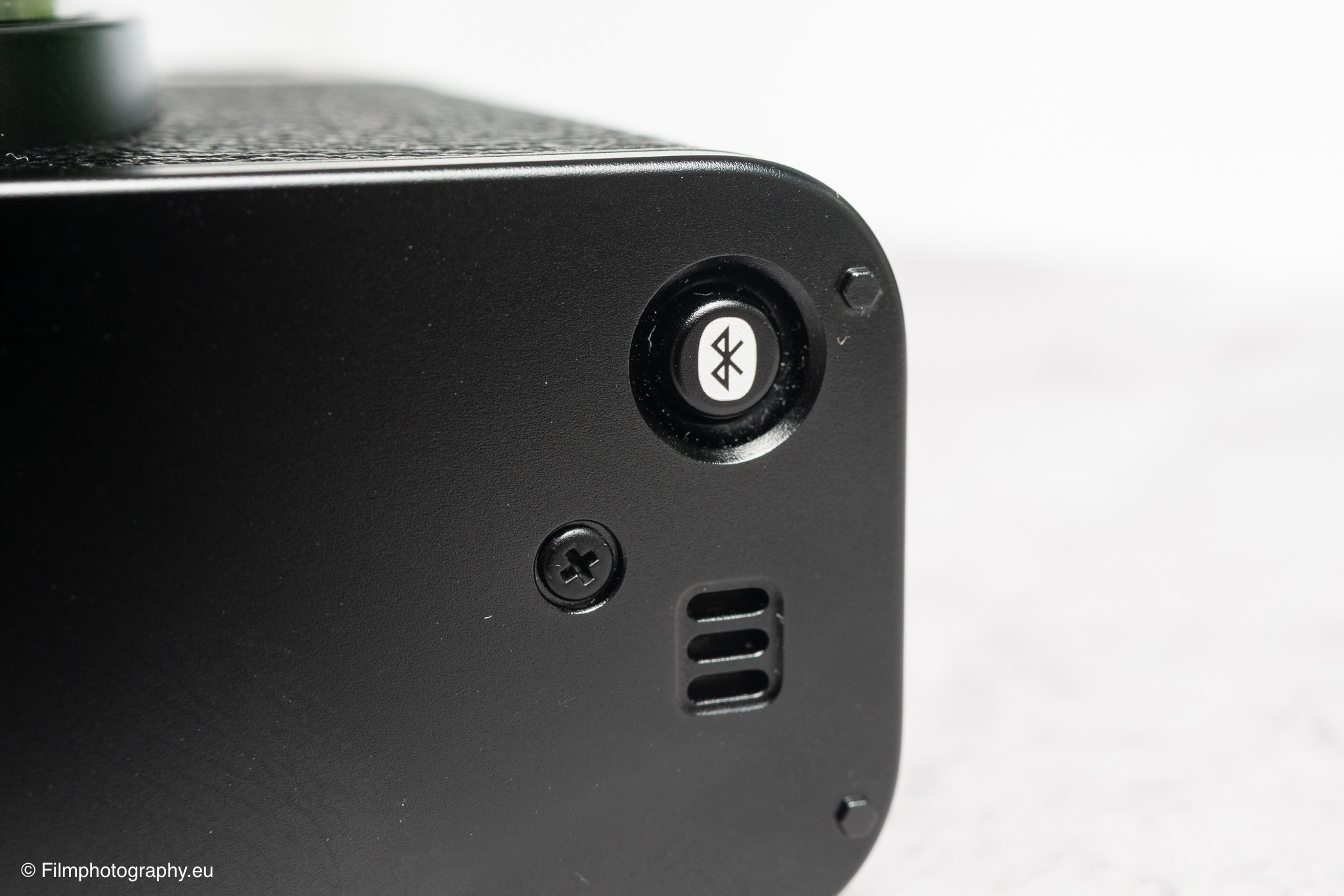
On the bottom of the camera, there is a dedicated button for the Bluetooth connection. The question arises as to why this button is fixed by the manufacturer and cannot be freely programmed as a function button. Those who rarely use wireless pairing have a button here that remains largely useless in everyday photography. A freely assignable button would have added extra utility to the body.
The front control dial proves to be a bit too sensitive in practice. At the beginning of my testing phase, I configured the front dial for direct ISO selection, while the rear dial controlled aperture on lenses without an aperture ring. Theoretically, that's a very logical and ergonomic combination.
In practice, however, it kept happening that I accidentally bumped the front dial while carrying the camera or setting it down on a table. As a result, the ISO sensitivity changed unintentionally, leading to confusing exposure values. A firmer detent or a click lock would have been advisable here.
The situation is quite different with the positioning of the dials for shutter speed and exposure compensation on the right shoulder of the camera. Both dials are excellently placed and allow intuitive, one-handed operation with thumb and index finger.
Especially when you're out and about with auto exposure and taking spontaneous snapshots, you can adjust exposure compensation blindly and quickly without having to take your eye off the subject.
Functions
Regarding system speed, the camera leaves an overall solid, if not entirely flawless, impression. Above all, the startup time could, in my opinion, be a touch shorter. When you turn on the camera, a brief moment passes until the viewfinder reaches full brightness and the system responds to inputs.
The autofocus works quickly and precisely. Face and eye detection works reliably, even when people move quickly in the frame or are partially obscured. The menu navigation also benefits from the computing power of the X-Processor 5 and responds to joystick inputs without noticeable lag.
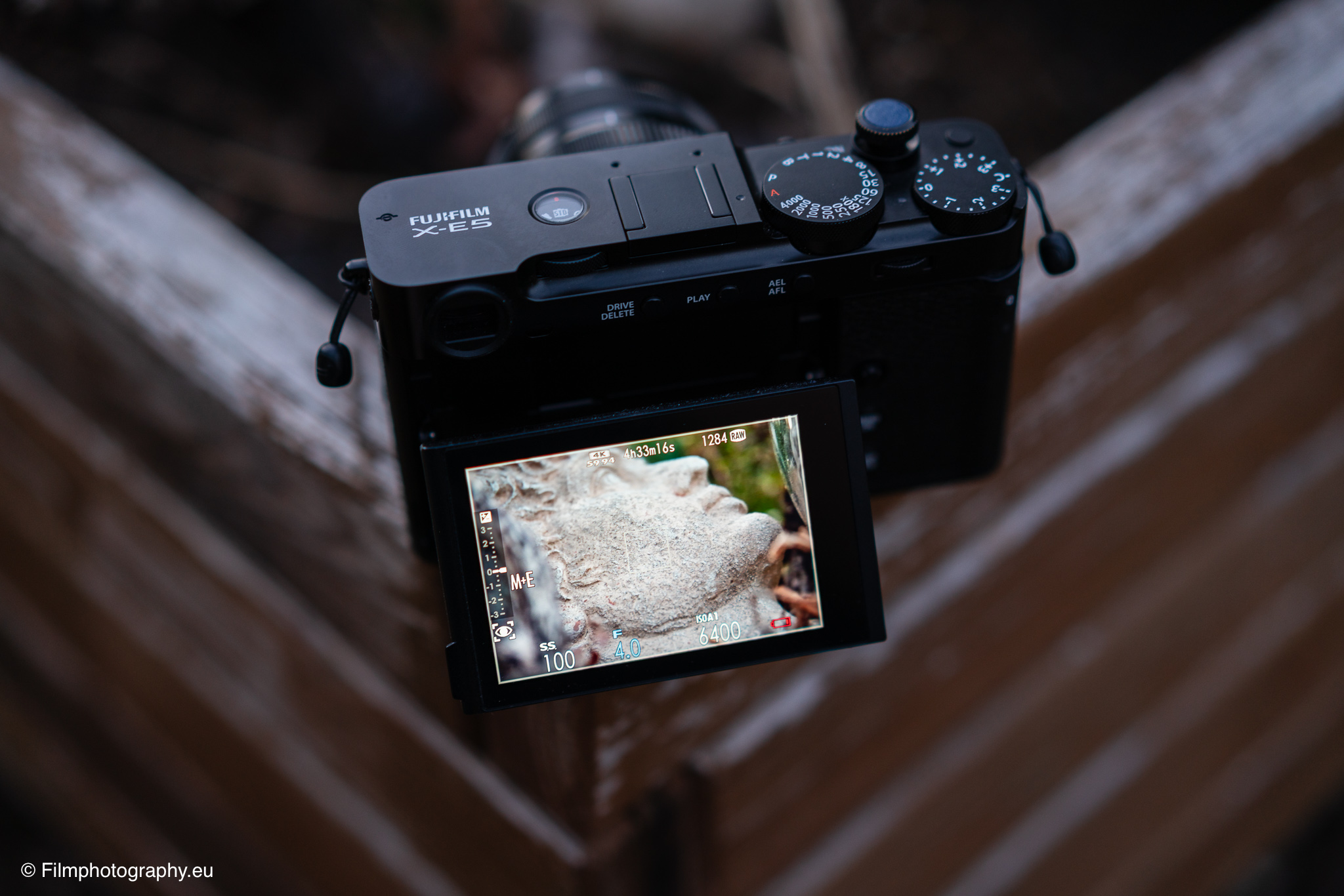
The tilting display is, of course, also practical. Especially in somewhat unusual positions, it helps enormously to control the image. It can also be flipped forward so that the photographer can be in a few pictures too.
Viewfinder
The electronic viewfinder sits classically on the left side of the body, underscoring the rangefinder character of this camera series. For photographers like me, coming from a DSLR-style camera like the X-T20 or Sony Alpha models, this position is initially unfamiliar.
With the central viewfinder arrangement of the X-T series, you look straight through the optical axis of the lens, while your nose often touches the display. With the X-E5, you look through the left viewfinder with your right eye, allowing your left eye to better keep track of what's happening outside the frame. After a short adjustment period, you quickly learn to appreciate this stance, especially when photographing in busy scenes.
The viewfinder image itself is sharp and well color-matched. The refresh rate is sufficient to display dynamic subjects without annoying flicker. However, the viewfinder magnification is compact, which is dictated by the small body dimensions. Eyeglass wearers must bring their eye quite close to the eyecup to fully see the entire image field including the exposure indicators.
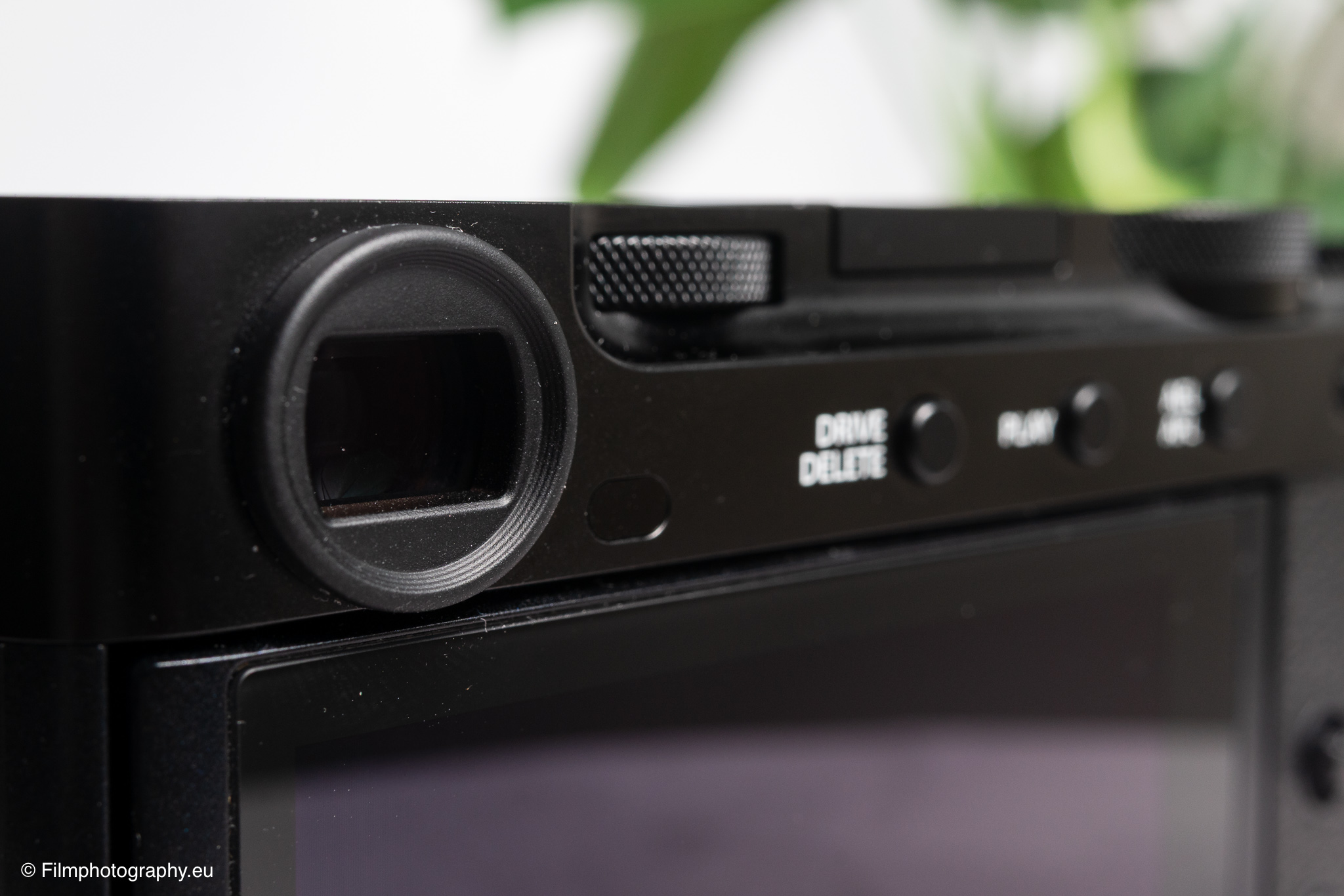
Image Quality
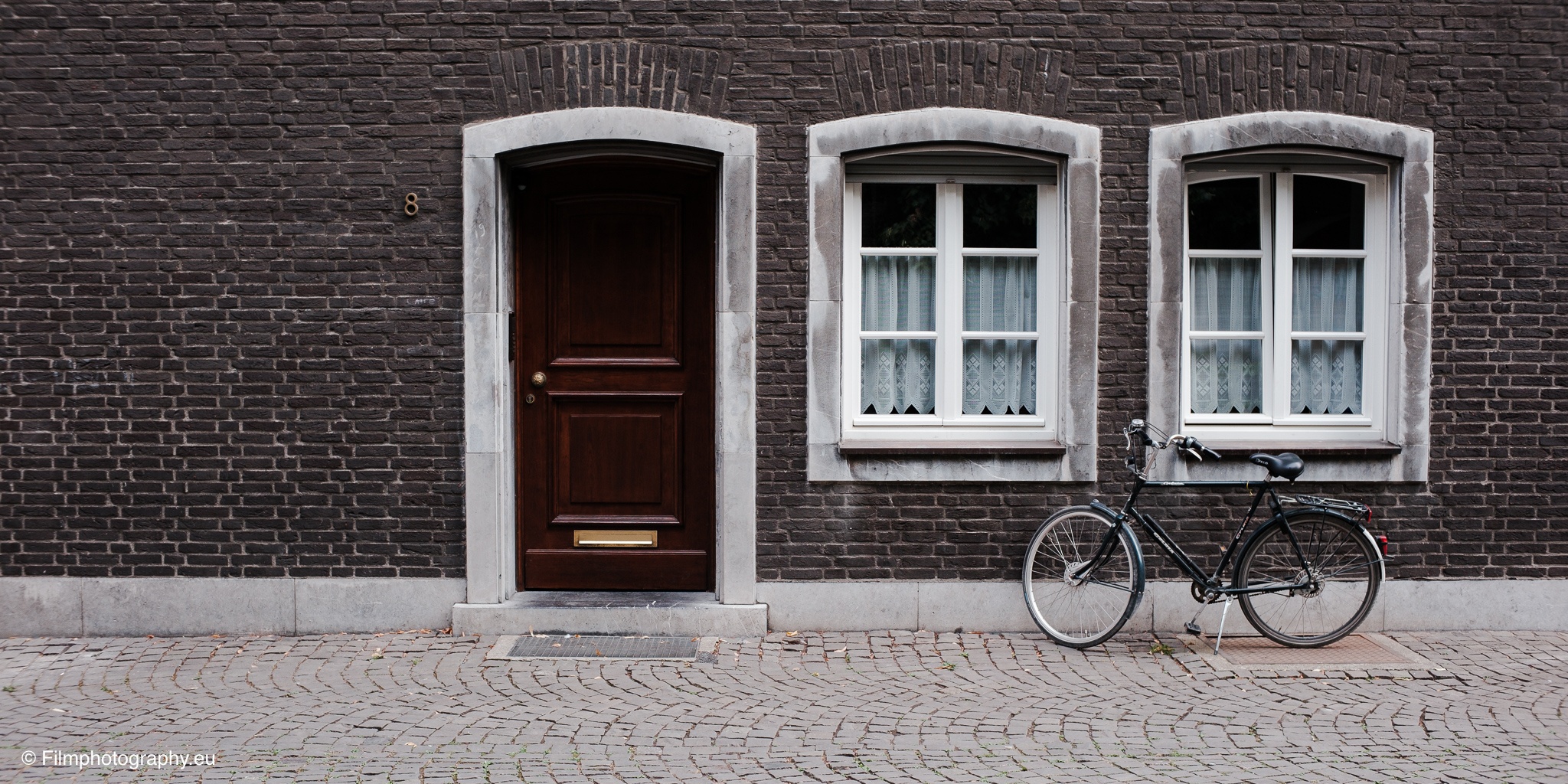
In terms of image quality, the 40-megapixel sensor shows its strengths. The resolution reserves are considerable and allow fine details in textures, landscapes, and architectural shots. The high pixel density also allows subsequent cropping without the file immediately losing visual sharpness.
What has always appealed to me about Fujifilm is the way the signal processing renders colors. The X-E5 is no exception. The color profiles appear harmonious and differentiated without being artificially oversaturated. Skin tones are rendered pleasantly soft, while skies and vegetation retain natural depth.
The various film simulations invite you to shoot directly in JPEG and save time on post-processing at the computer. Whether you prefer classic color profiles or high-contrast monochrome modes, the results look coherent and possess that organic character that is appreciated in this system.







Image Stabilisation
The implementation of sensor-based image stabilization in such a flat body is a remarkable technical advancement. With older bodies without IBIS, you always had to rely on lenses with optical stabilization or very short shutter speeds in low light. With the X-E5, the system does surprisingly good work.
In the first hands-on test, I managed sharp handheld shots at shutter speeds of a quarter second with a standard lens. This considerably expands the camera's range of use at dusk or indoors.
You can keep the ISO value at low levels for much longer and thus obtain clean files without annoying noise. Although it must be said that even at high ISO values, the images remain more than usable, especially if you're not too picky in that regard.


Weather Sealing
One can, of course, debate the extent to which terms like weather sealing are often overused in marketing and whether a well-built camera wouldn't easily survive a few drops of drizzle anyway.
Nevertheless, it remains incomprehensible to me why Fujifilm omitted corresponding seals on this model. Given the price point and the clear positioning as an always-with-you camera for on-the-go, travel, and urban excursions, basic protection against dust and moisture should be standard today. Especially in unsettled weather, there's always a slight caution that you'd rather forget with such a tool.



Conclusion
In summary, many of the criticisms listed here are mere trivialities. They are very detailed, almost pedantic observations that only become apparent upon closer inspection during the workflow. But an honest first impression must also leave room for these details, as they make the difference between mere functionality and true enjoyment of operation in daily use.
Apart from these small quirks, the Fujifilm X-E5 is simply fun. It's handy, unobtrusive, and invites you to just sling it over your shoulder and go.




The image quality is convincing across the board, and the way the sensor renders colors and contrasts regularly ensures successful results straight out of the camera.
The combination of manual control concept, high sensor resolution, and reliable image stabilization makes the body a versatile companion.
I'm curious to see how the camera will perform over the rest of the year, which facets will emerge during longer projects, and what images will be created with it in the coming months.
At this point, I'd also like to give a big thank you to refurbed for providing the camera. This is what makes this series of articles possible in the first place.
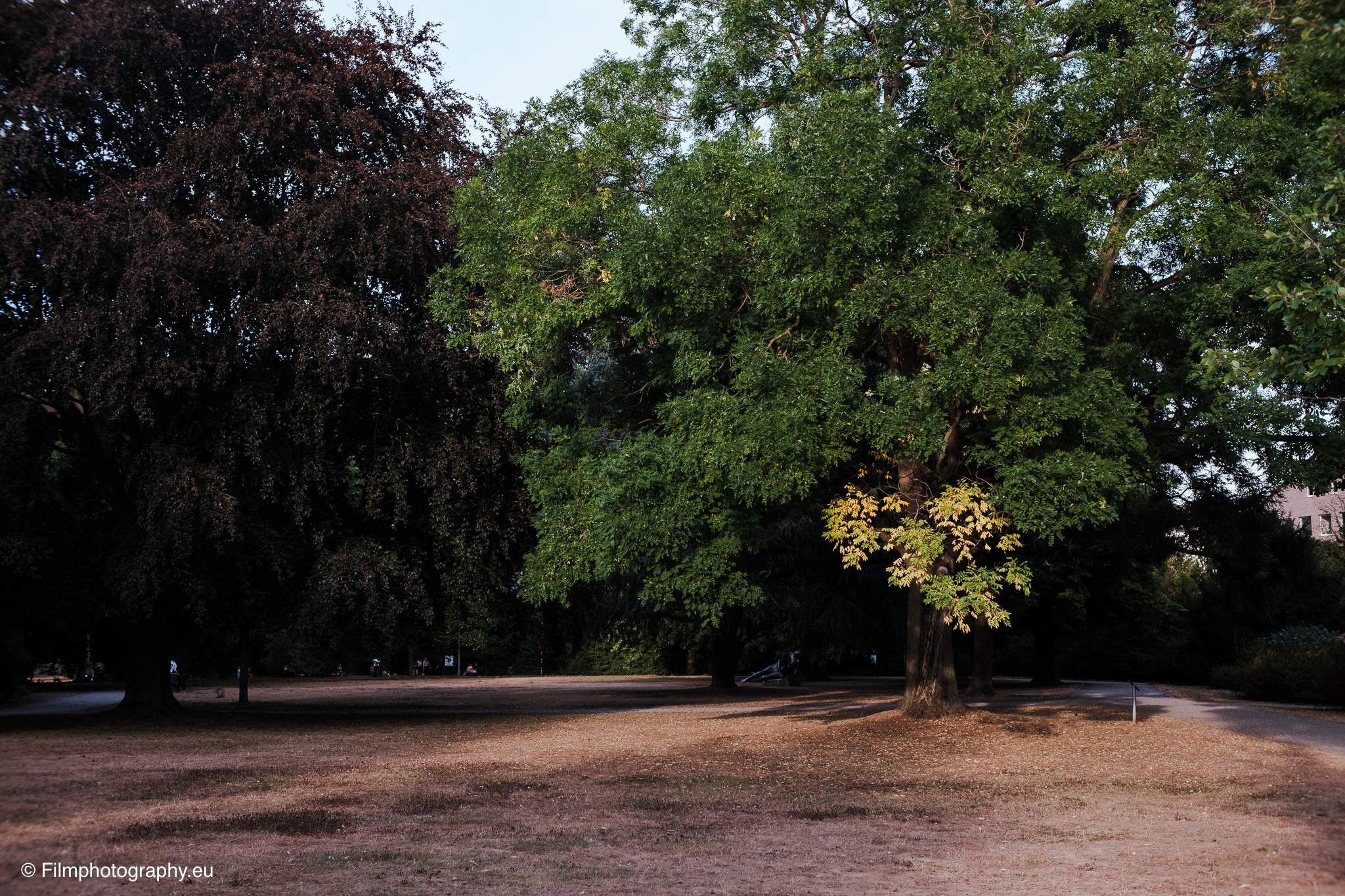
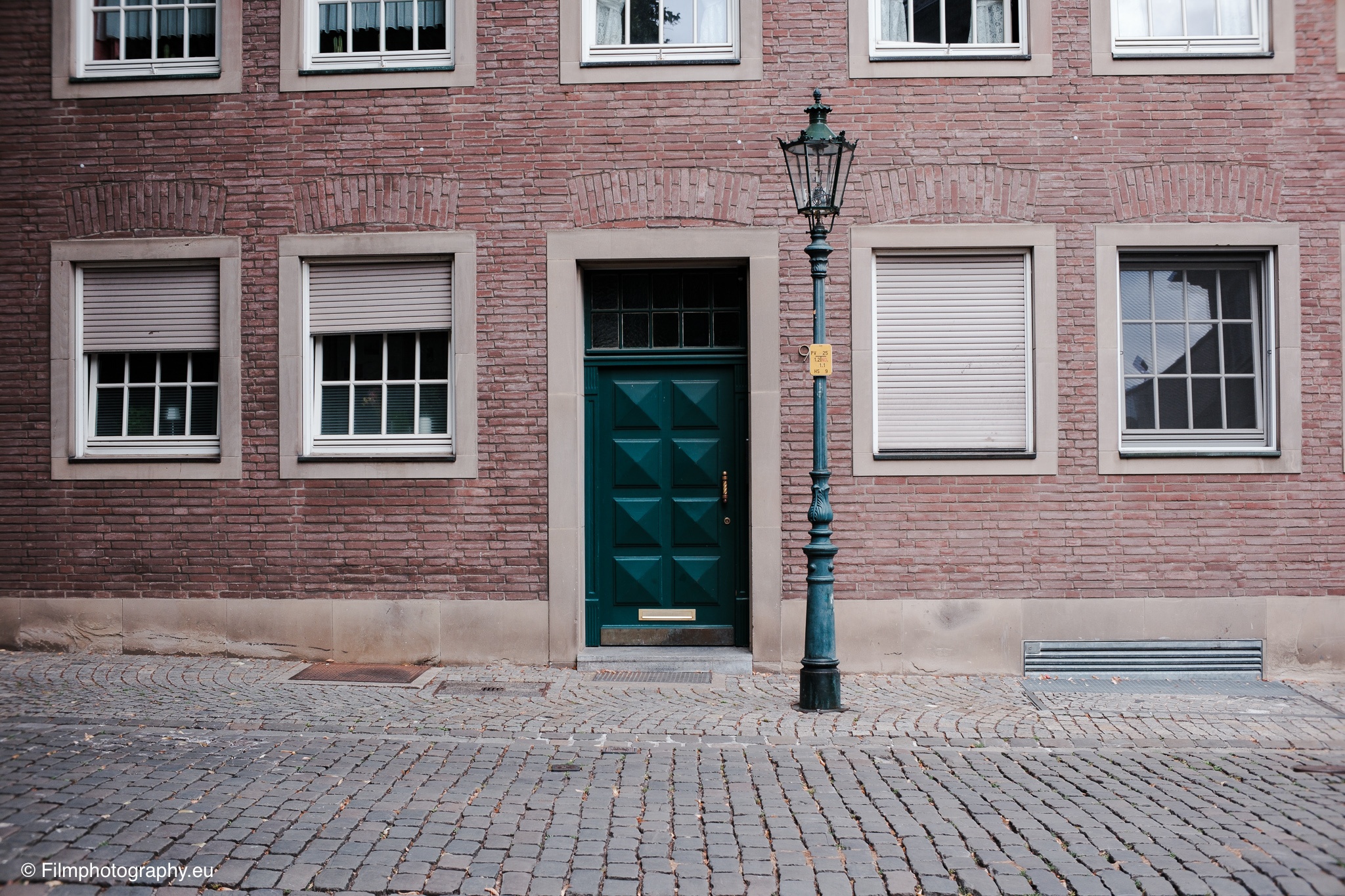
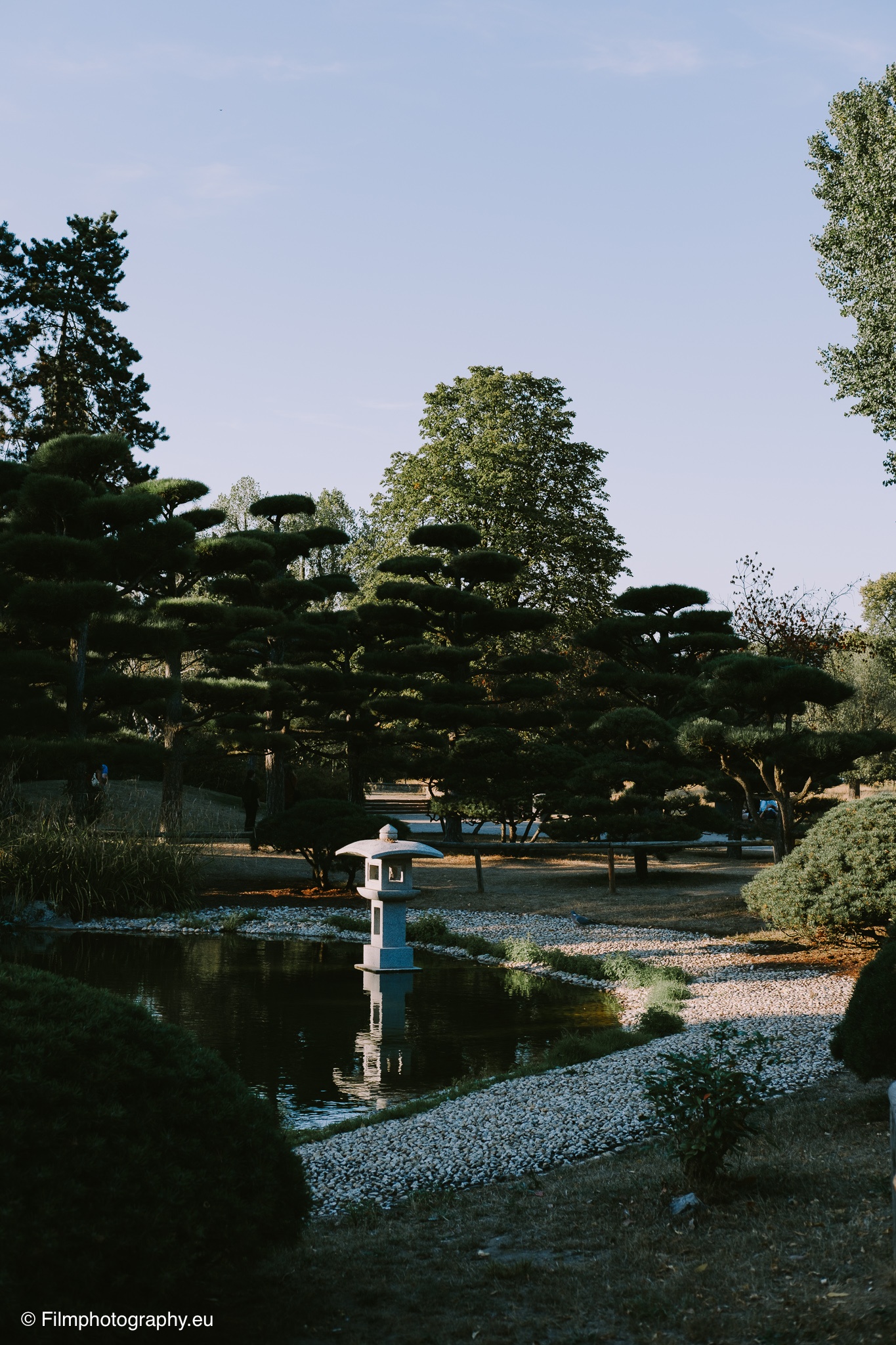
More Fujifilm X-E5 Sample Images
















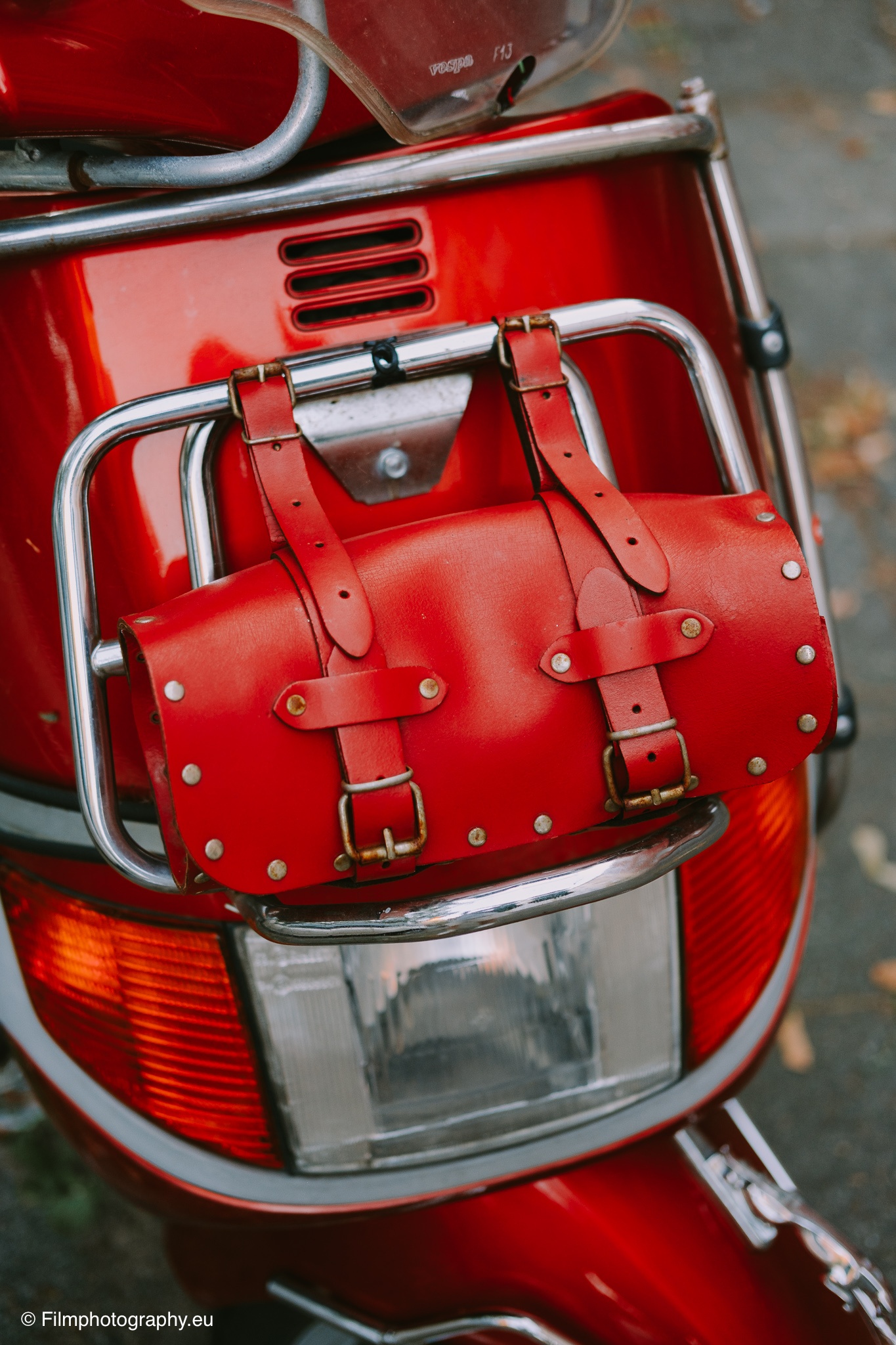
















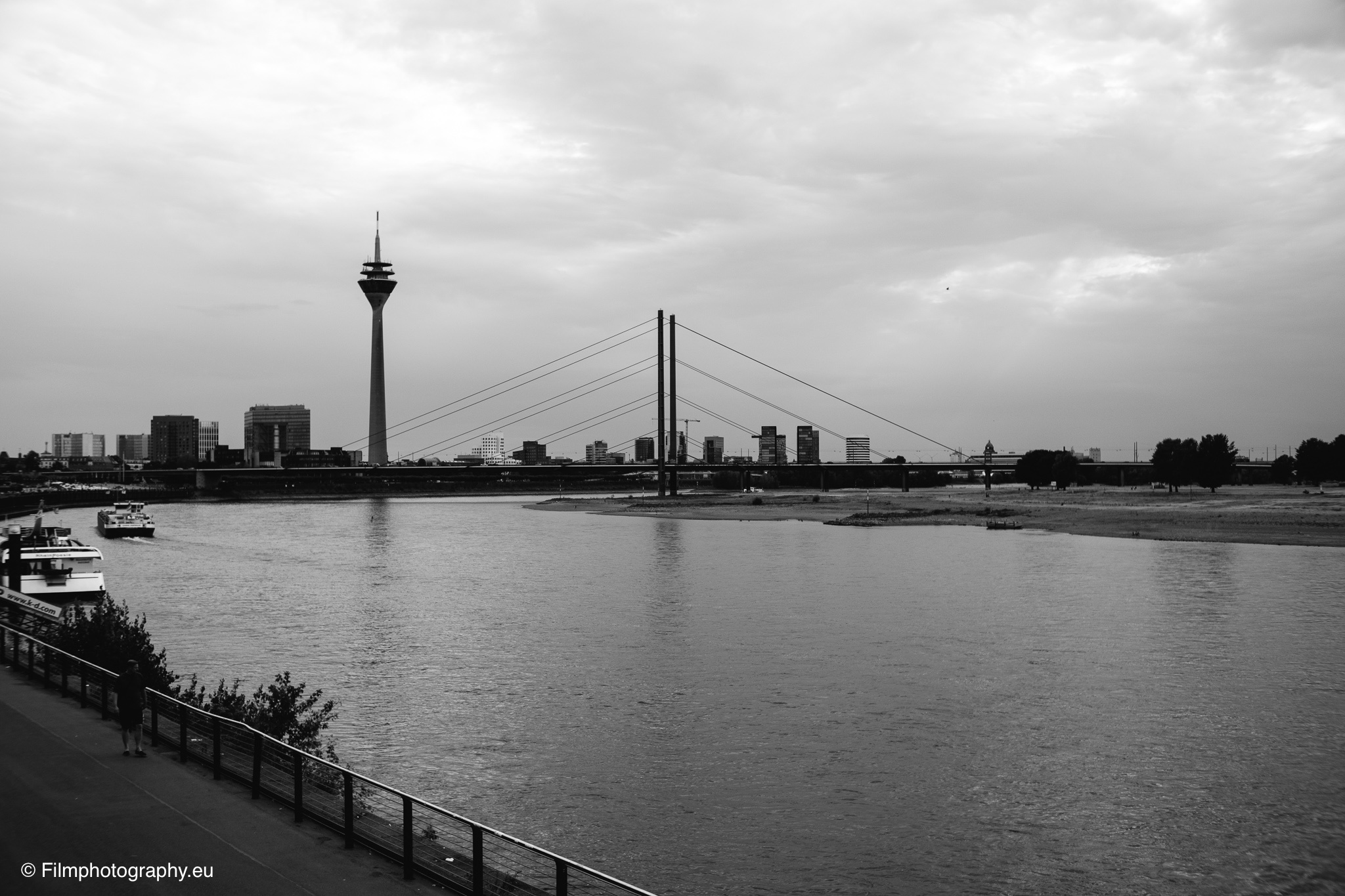

On refurbed you'll find fully refurbished electronics – up to 40% cheaper, 100% more sustainable, and backed by a minimum 12-month warranty. Whether you are interested in the Fujifilm X-E5 or want to explore the broad range of refurbished cameras: all devices are professionally tested and come with a 30-day trial period.