VEB Pentacon is one of the most significant names in the world of optical technologies and lens manufacturing, with roots reaching back to the heart of Germany in the mid-20th century. Its rich history is closely tied to the development of camera and lens technology, producing countless contributions that still have an impact today.
Early Beginnings (1945-1959)
The history of VEB Pentacon began in the rubble of World War II, when Dresden's destroyed camera and optics factories were consolidated in 1945 into a single state-owned conglomerate called VEB (Volkseigener Betrieb) Kamera-Werke Dresden. Initially, the company produced cameras and lenses under various brand names such as Zeiss Ikon, Ica, Contessa-Nettel, Goerz, and Ernemann. Lens manufacturing was carried out under the direction of Zeiss Ikon.
In 1959, this company was restructured and renamed VEB Pentacon, a name that combines the "pentaprism" found in SLR cameras with the "Contax" brand from Zeiss Ikon. That same year, the first camera bearing the Pentacon name, the Pentacon FM, was introduced.
Peak Production Years (1960–1989)
The 1960s through the 1980s were the peak production years for VEB Pentacon. The company launched the Praktica series, a line of SLR cameras that became a lasting success, giving the world its first affordable and reliable SLR camera. During this period, lens production also reached its peak, as the lenses were known for their quality and affordability.
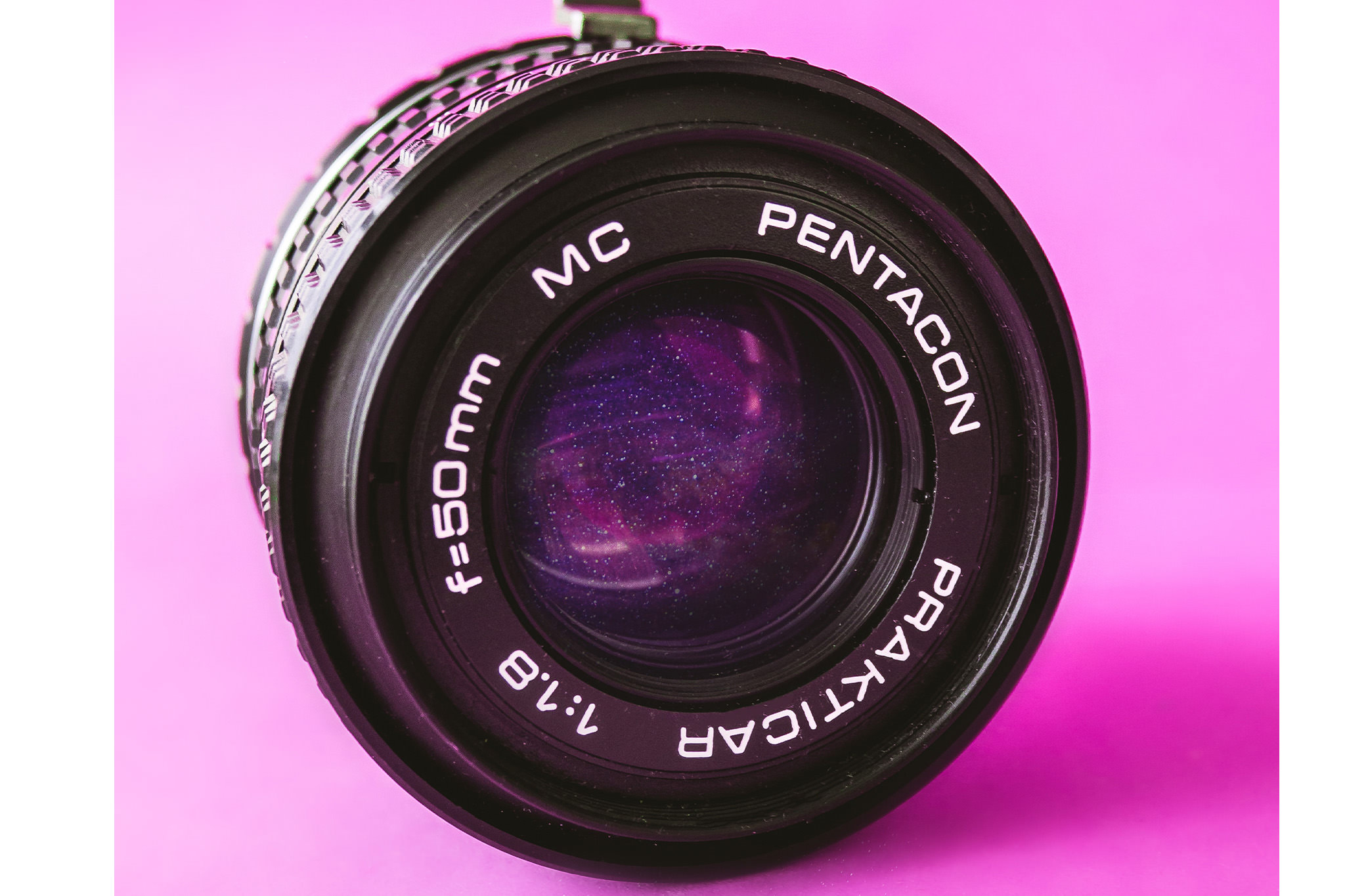
VEB Pentacon produced a wide range of lenses under the names "Meyer Optik Görlitz" and "Pentacon," and also supplied lenses for the Praktica camera line. They were also known for their innovative approach to lens manufacturing. The Pentacon auto 50/1.8 and Pentacon electric 50/1.8 were two of their most popular lenses due to their impressive performance, optical clarity, and affordable price.
Although Carl Zeiss Jena lenses were not manufactured by VEB Pentacon, they are often associated with the company due to their use in Praktica SLR cameras. Lenses such as the Biotar, Flektogon, Sonnar, and Tessar became household names among photographers worldwide.
Struggles After Reunification (1989–2001)
The fall of the Berlin Wall in 1989 and the reunification of Germany in 1990 brought fundamental change for VEB Pentacon. The transition to a free market economy was a shock for many East German companies, and Pentacon was no exception. Foreign competition, particularly from Japanese companies, led to declining sales. The company was privatized and split into several smaller units.
Production of Praktica cameras continued under the company Praktica GmbH. However, lens production under the Pentacon brand name ceased, marking the end of an era. The company faced financial difficulties in the 1990s, and in 2001 Praktica GmbH filed for bankruptcy, seemingly bringing the story of Pentacon and Praktica to an end.