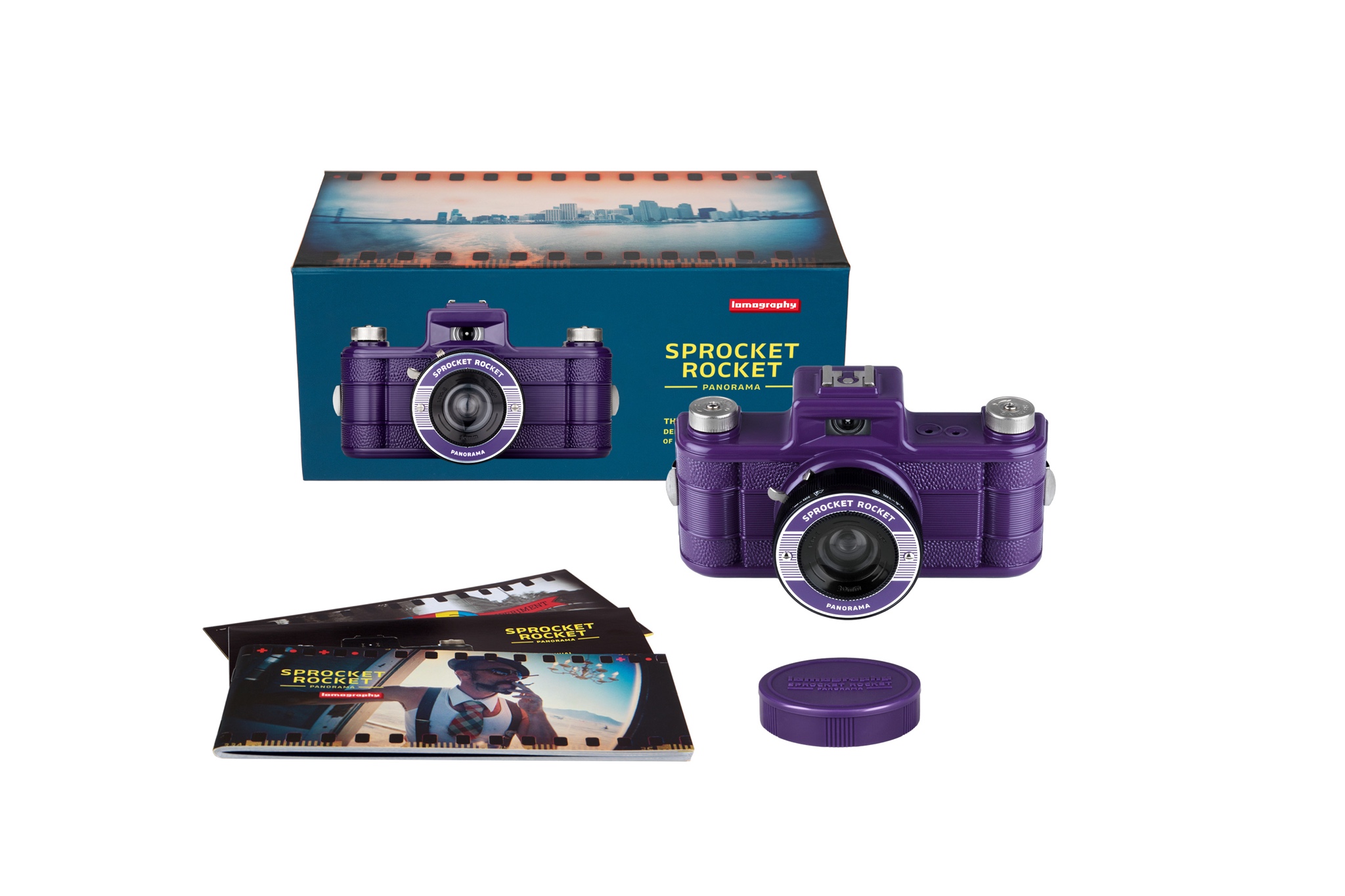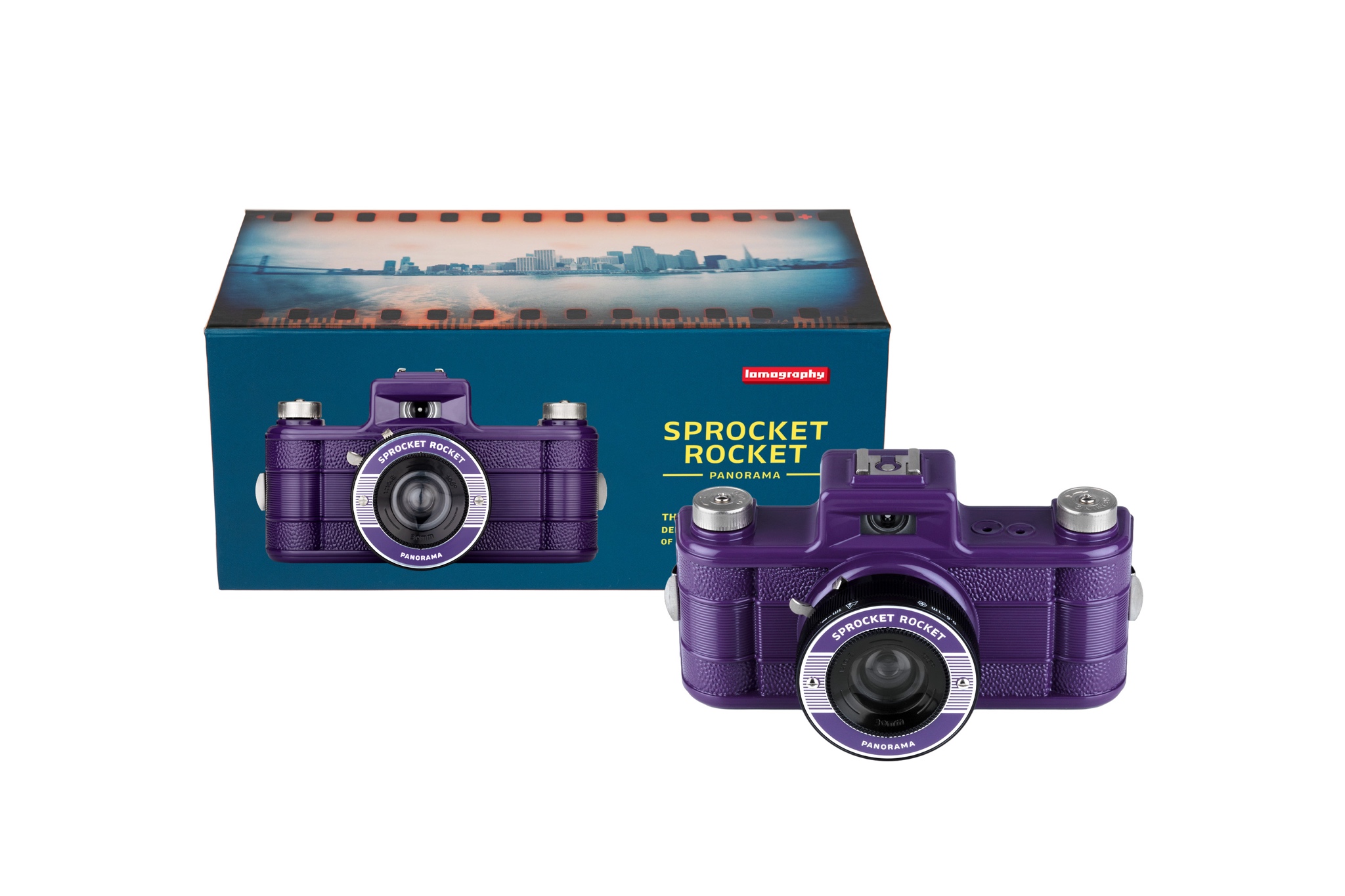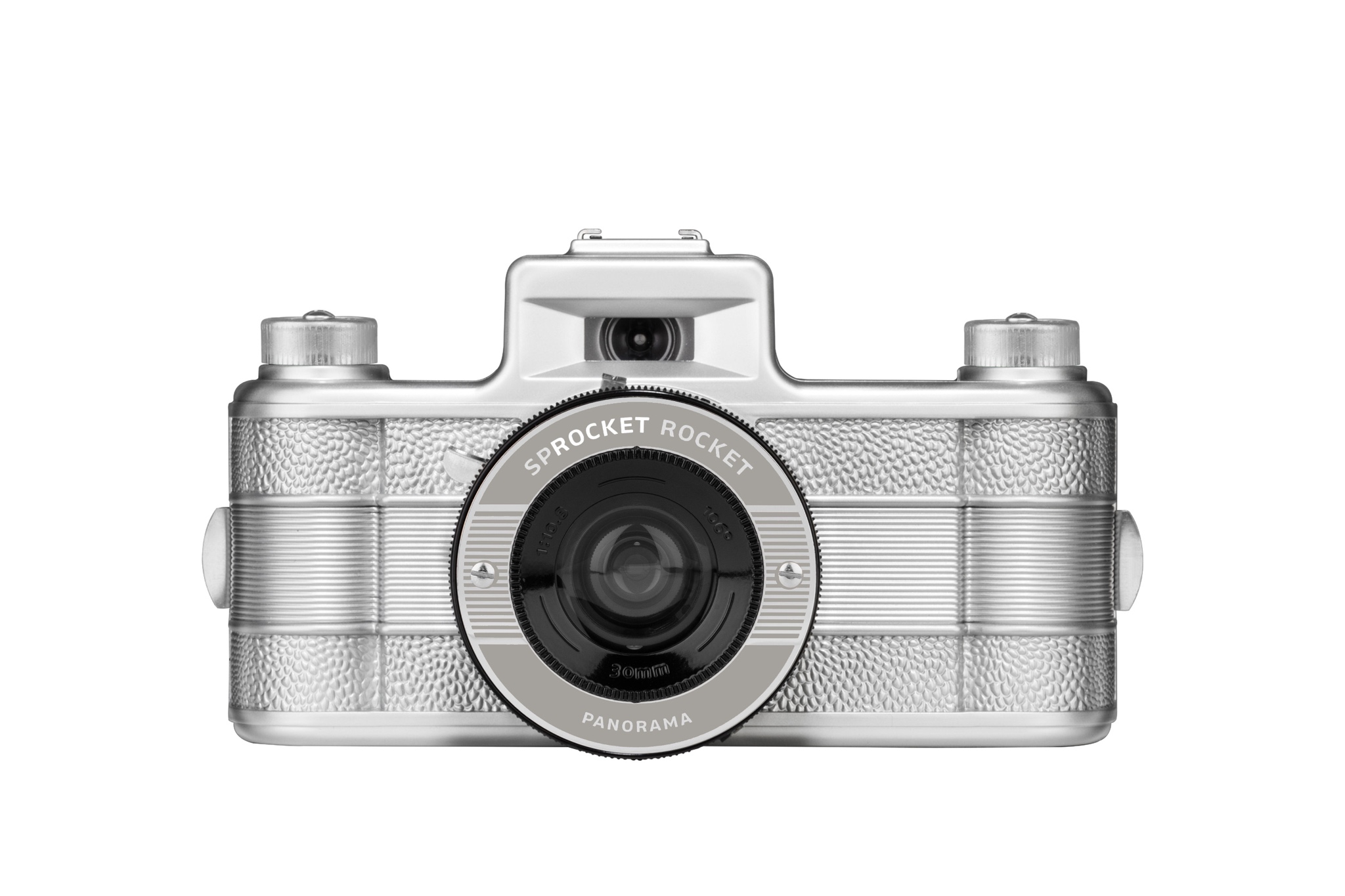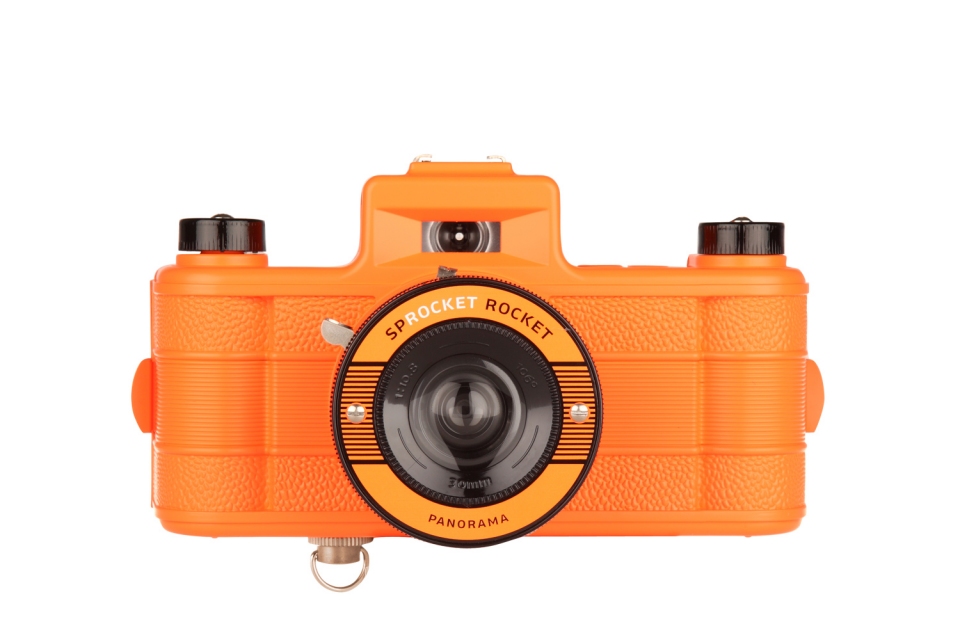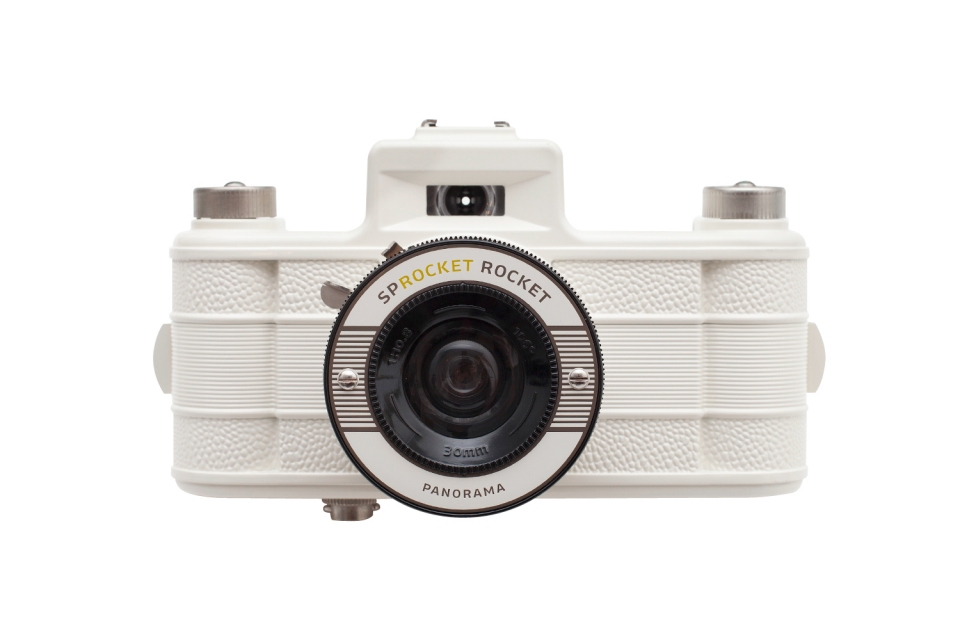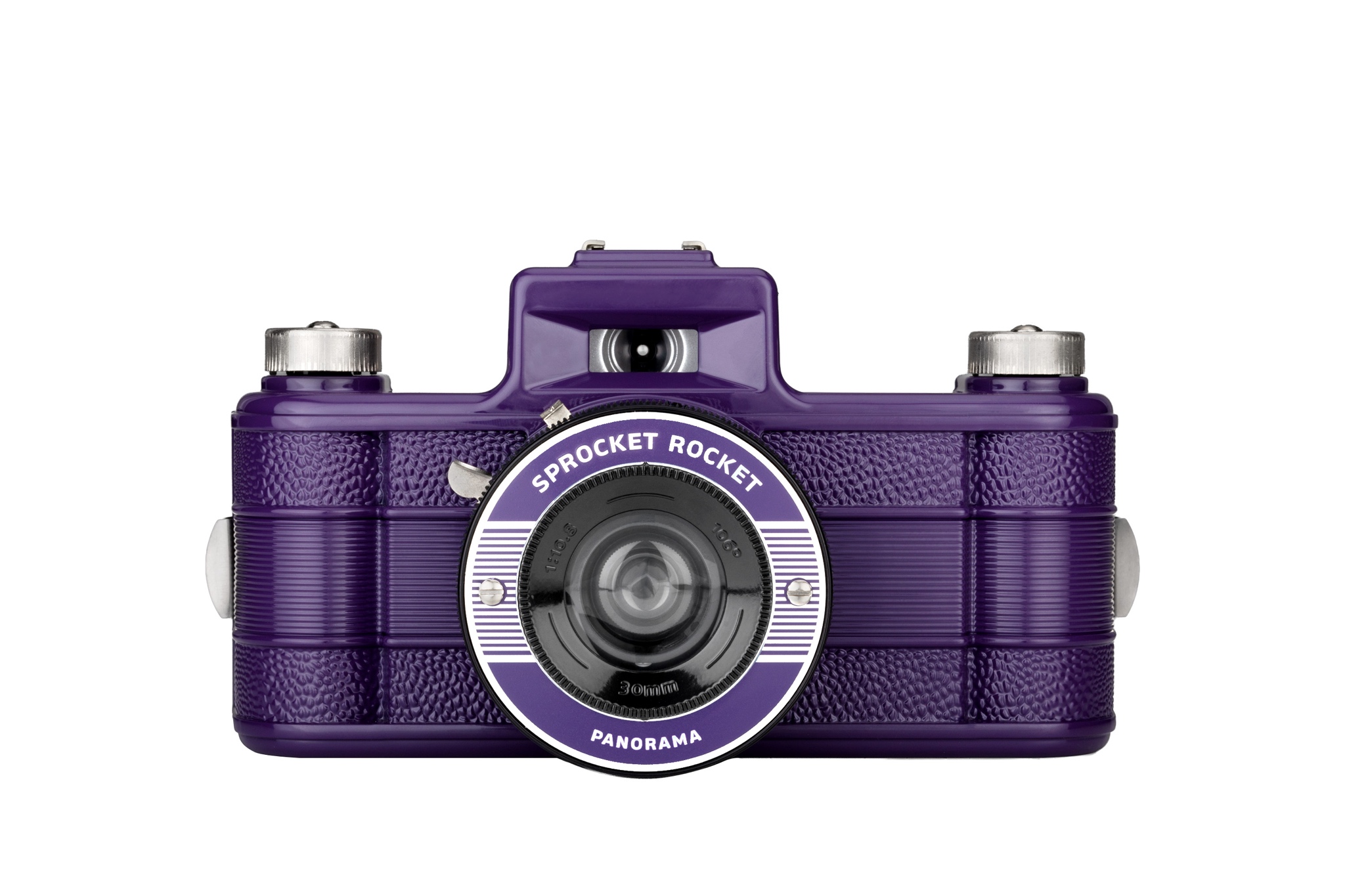
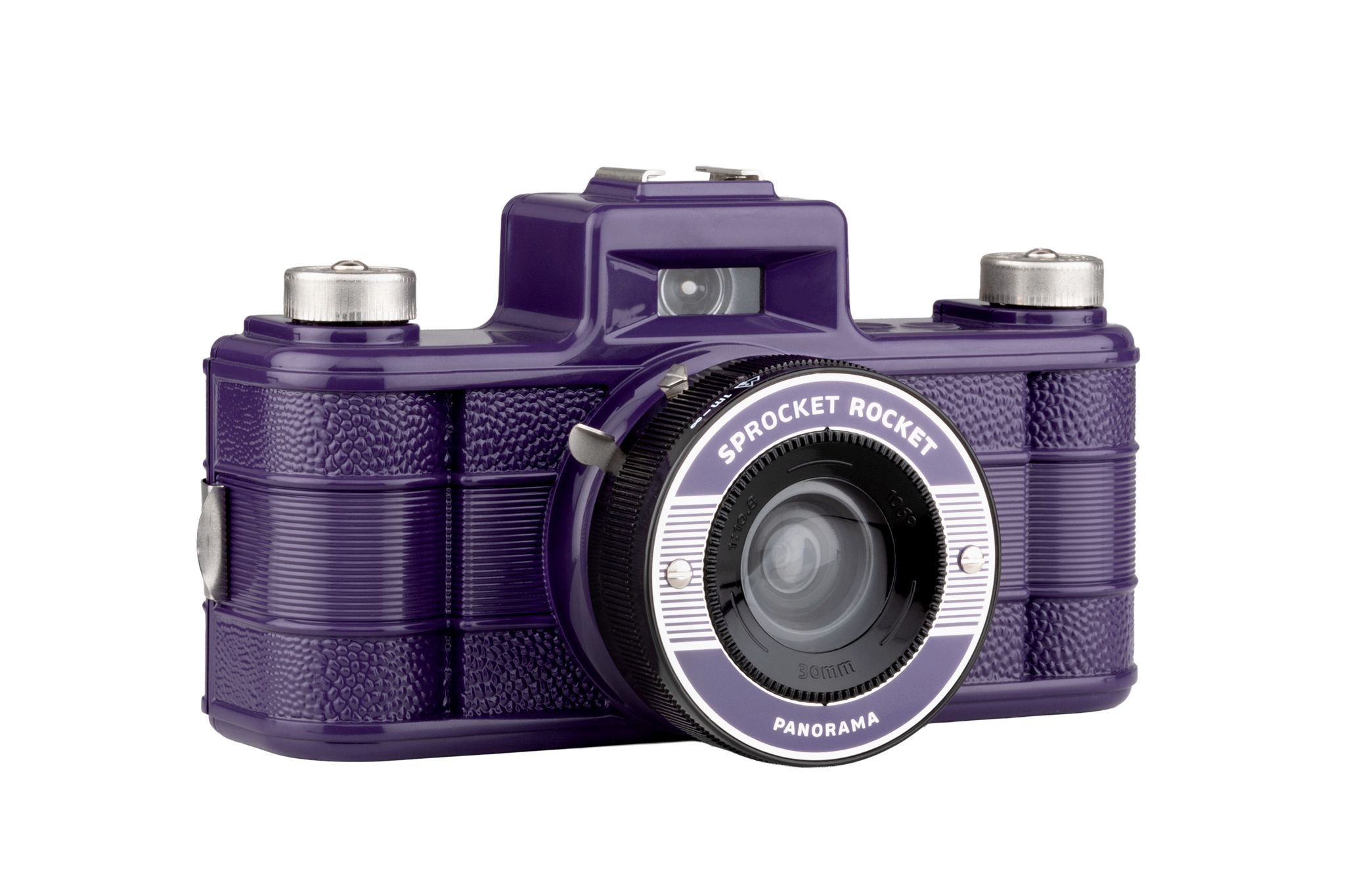
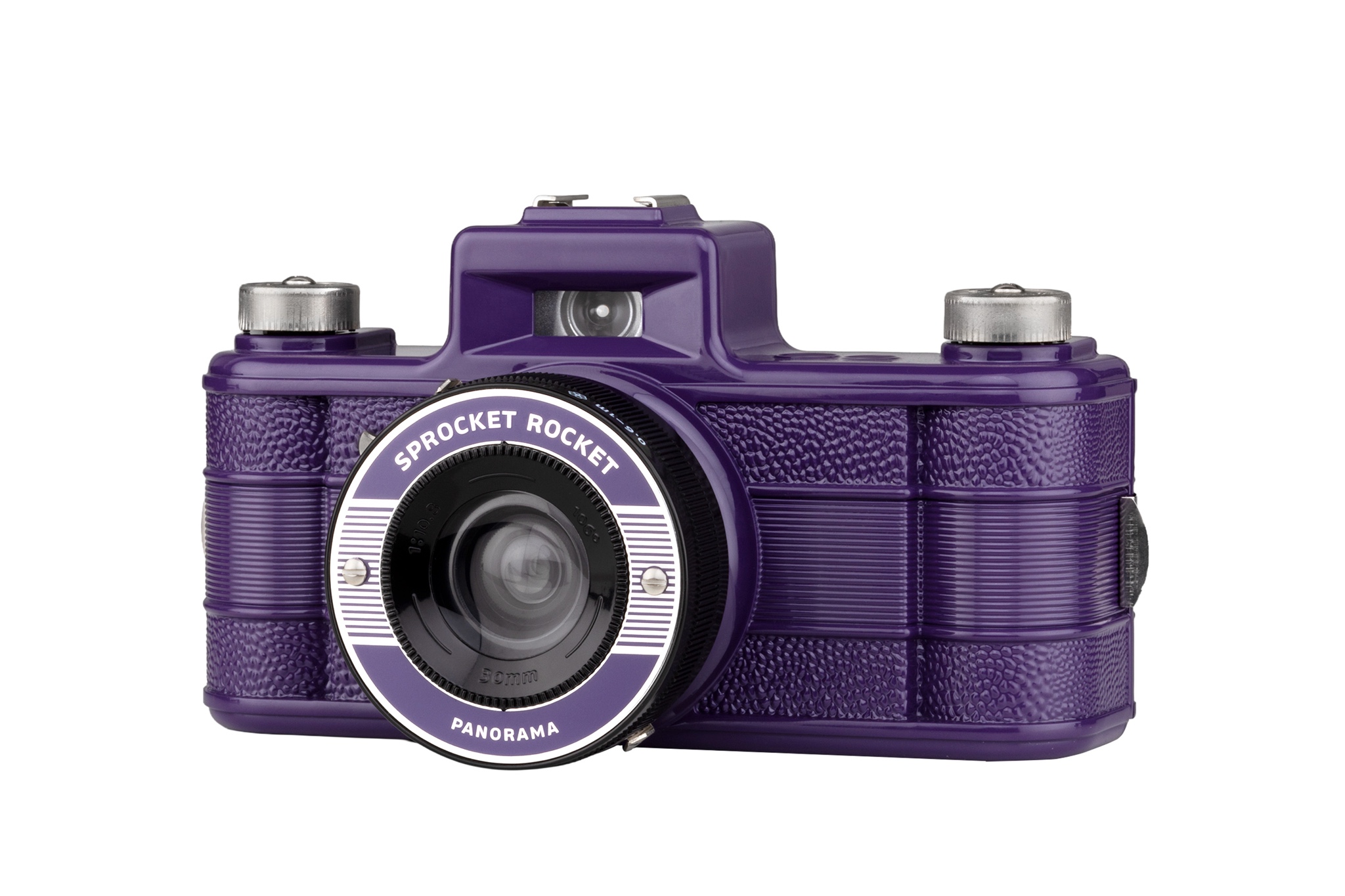
The Sprocket Rocket Ultra Violet from Lomography truly brings color to analog photography. With its striking violet body, this edition sets a clear visual accent, but at its core remains a classic panoramic camera for the 35mm format. The variant was introduced in September 2026 alongside the Sprocket Rocket Starlight.
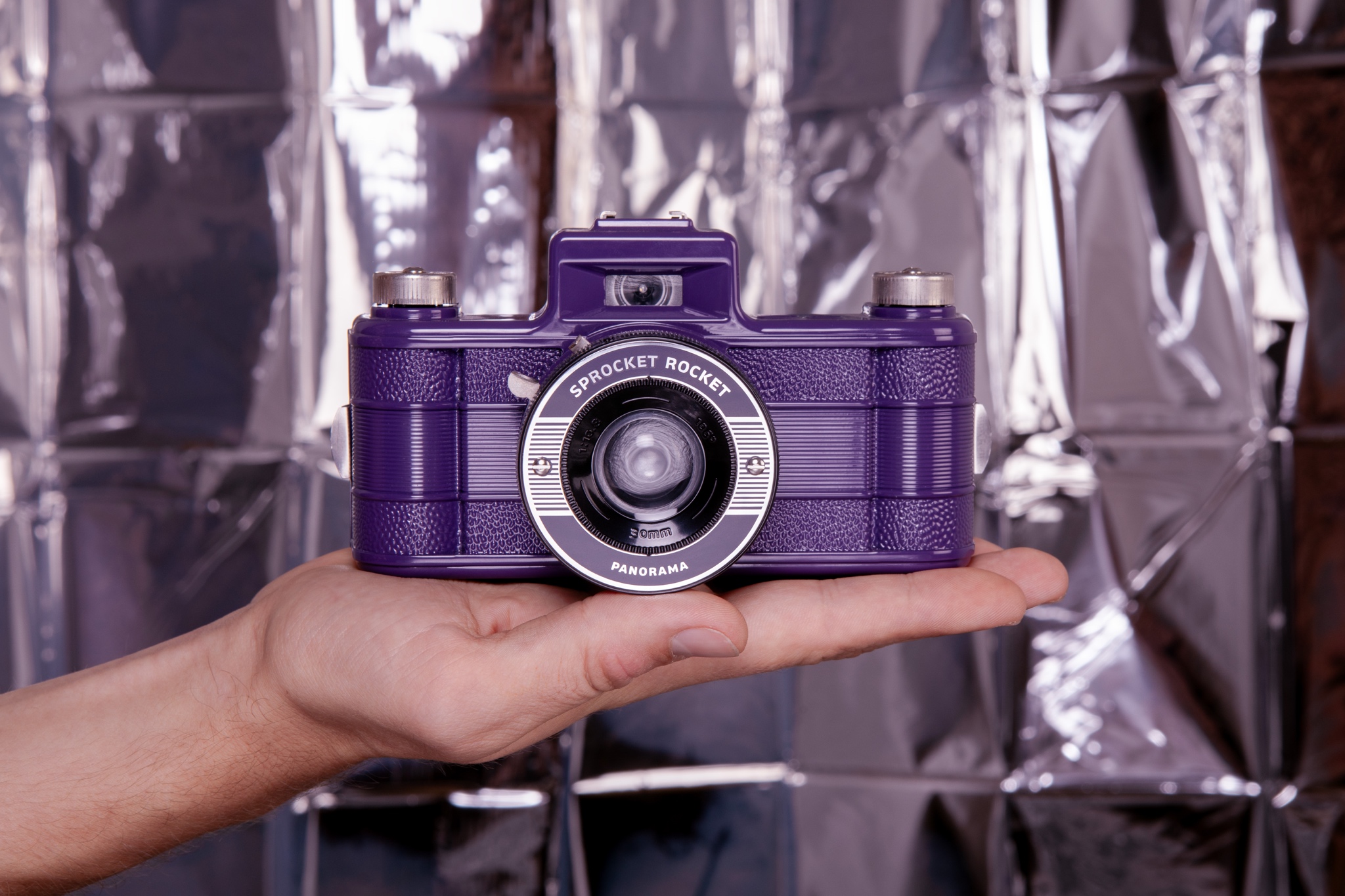
Camera Features
Characteristic of the model series is the exposure of the entire film strip including the perforation. The eponymous sprocket holes are thus deliberately integrated into the image format, giving the wide panoramic shots their unmistakable look.
Inside the camera, a purely mechanical construction works, so photography is completely battery-free. The fixed wide-angle lens has a focal length of 30 mm and captures a wide field of view.
Two aperture settings are available: f/10.8 for overcast skies and f/16 for sunny days. Focusing is achieved via two focus zones, with a minimum distance to the subject of about 60 centimeters. The model deliberately forgoes technical aids such as autofocus or a built-in light meter.
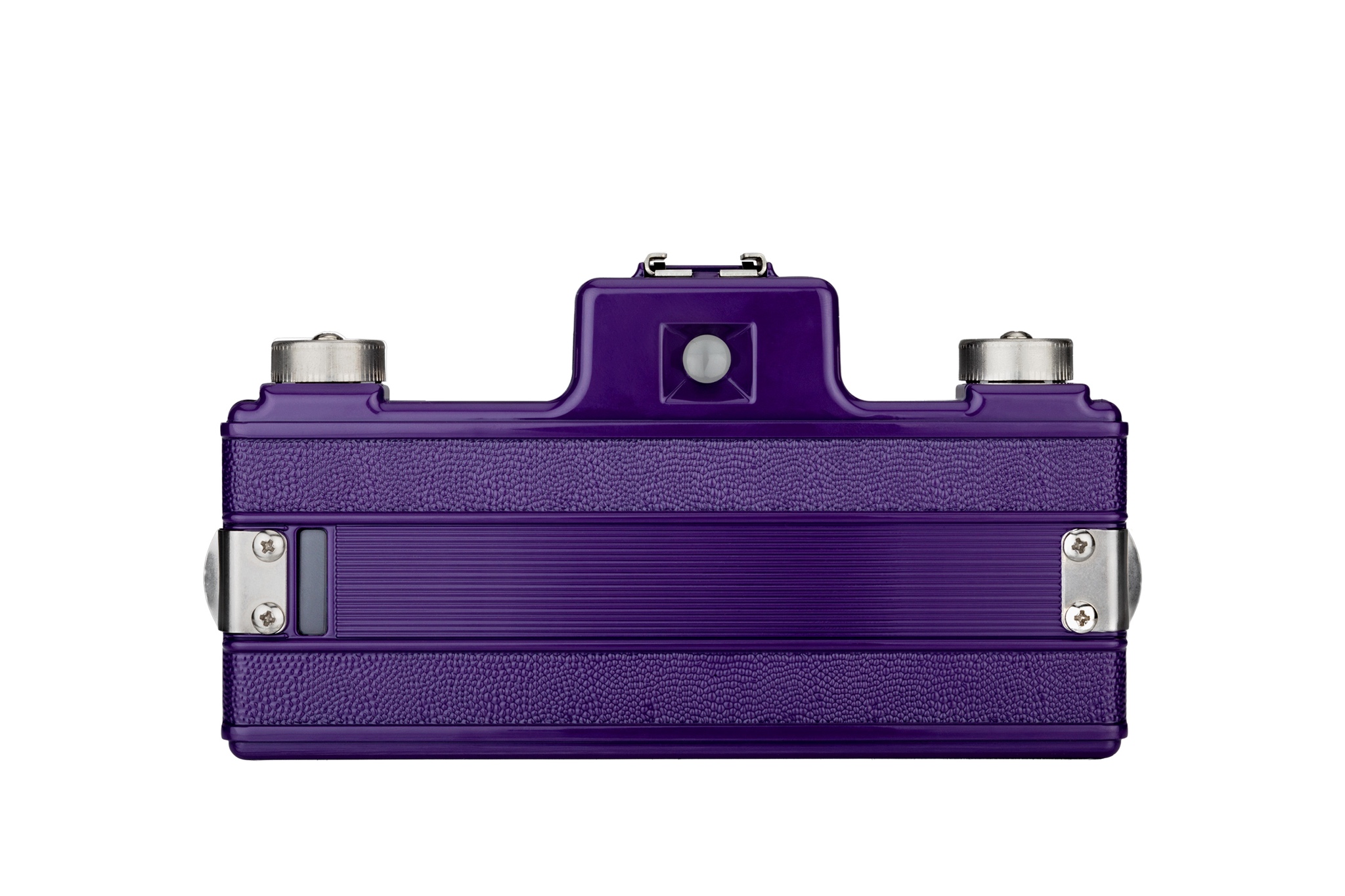
For exposure, a fixed shutter speed of approximately 1/100 second and Bulb mode are available. The latter keeps the shutter open for long exposures as long as the shutter release is pressed. A tripod mount on the bottom of the body provides the necessary stability. For shots in darker environments, an external flash can be attached via the accessory shoe on top.
A special feature of the operation is the two control knobs on the top. They allow the film to be advanced forward or rewound at will. This makes deliberate multiple exposures or the seamless blending of several scenes an uncomplicated pleasure.
Films for the Sprocket Rocket Ultra Violet
The camera uses standard 35mm film, which is still readily available. Since a single panorama takes up almost twice the area of a conventional 35mm negative, a cartridge with 36 exposures yields about 18 shots.
For black-and-white subjects, the Kodak T-Max 400* is a good choice, valued for its fine grain and balanced sharpness. Color photographers often opt for the Fujifilm Superia 400*, whose light sensitivity ideally matches the interplay of aperture values.
Color films are developed using the standardized C-41 process, offered by almost every professional lab and common drugstores. When handing in the film, it is advisable to briefly note that the exposed film should not be cut automatically. Since the images are wider than usual and extend over the perforation, automatic cutting would inevitably split the continuous panoramas.