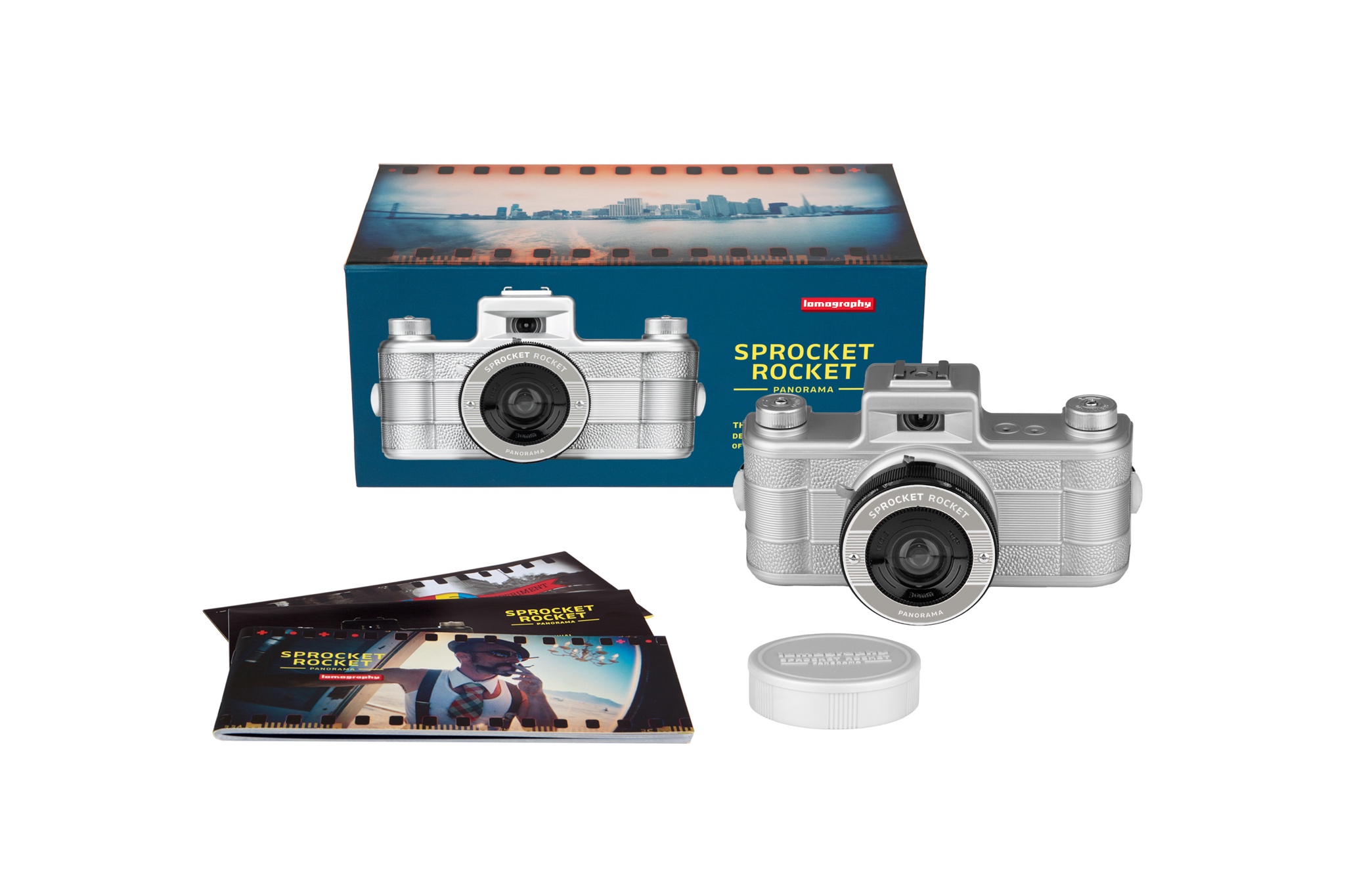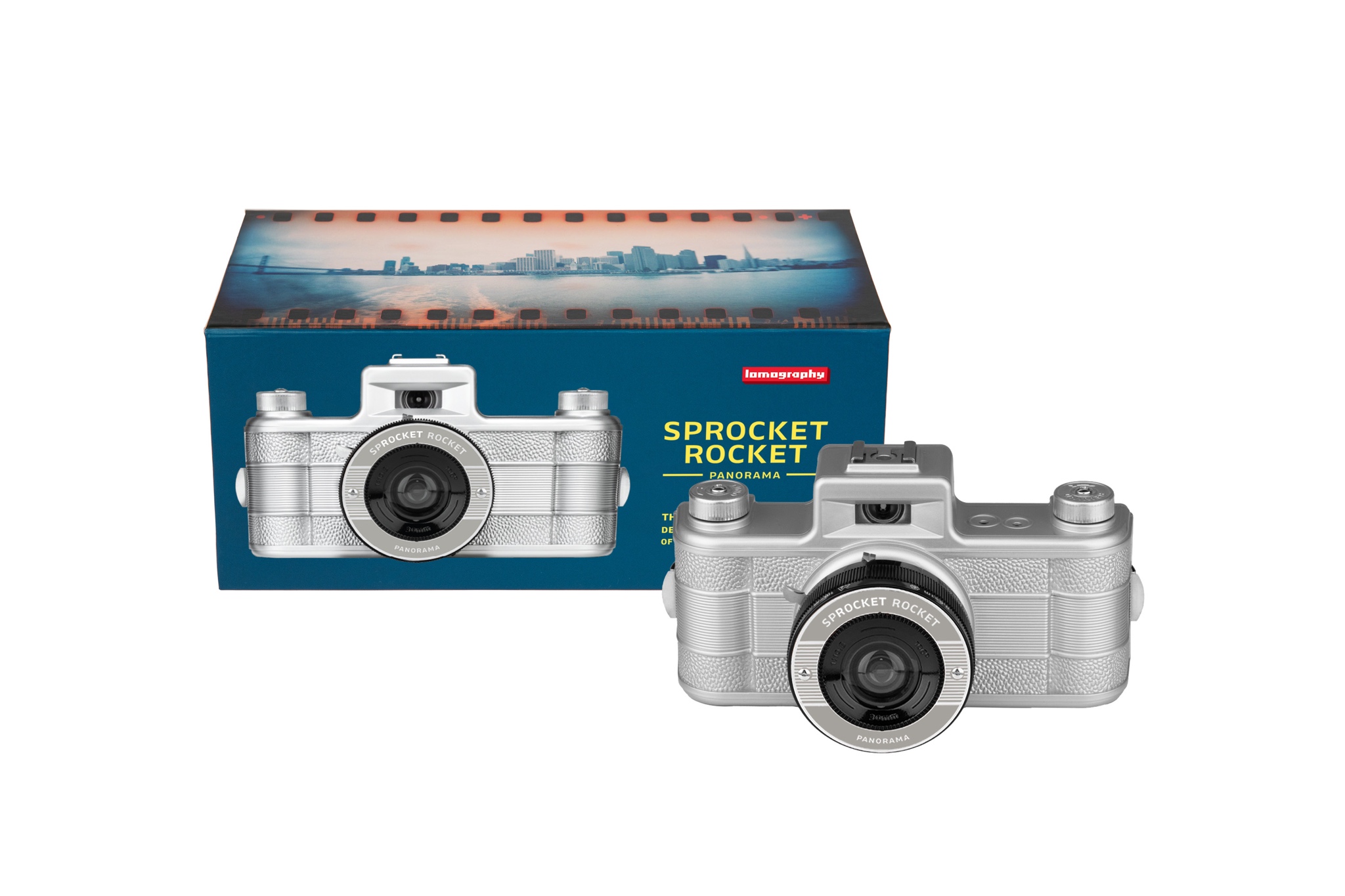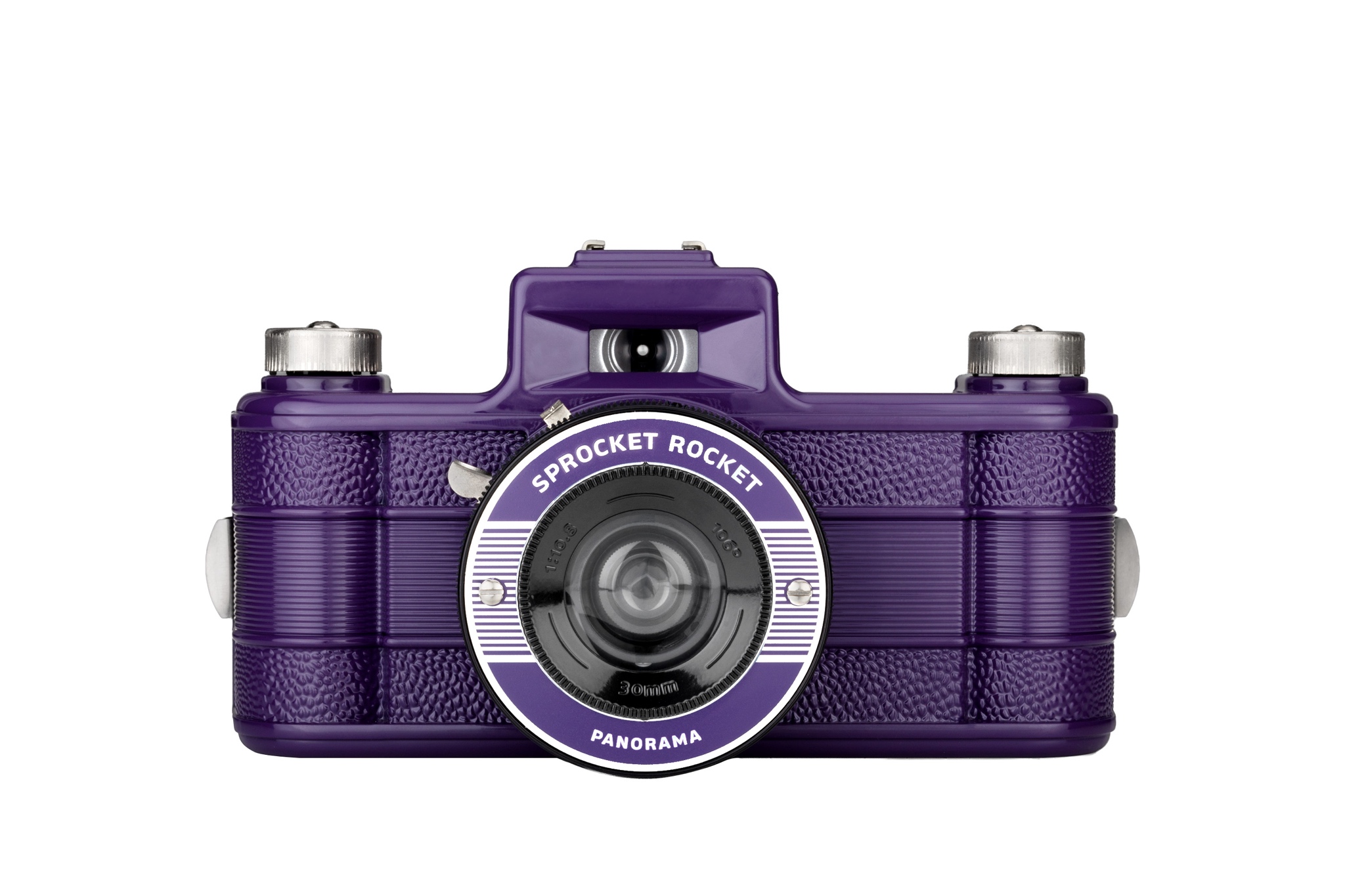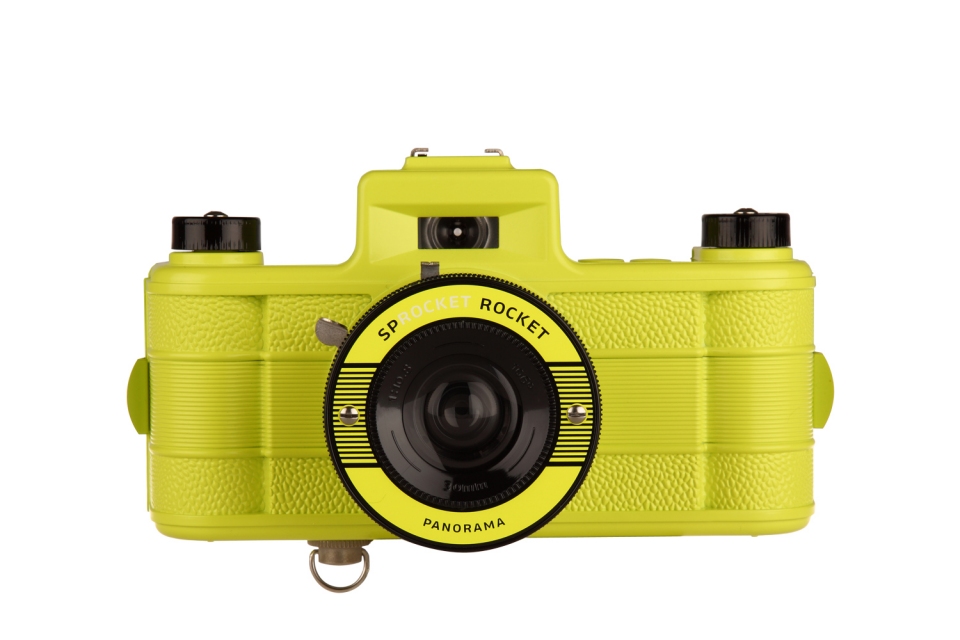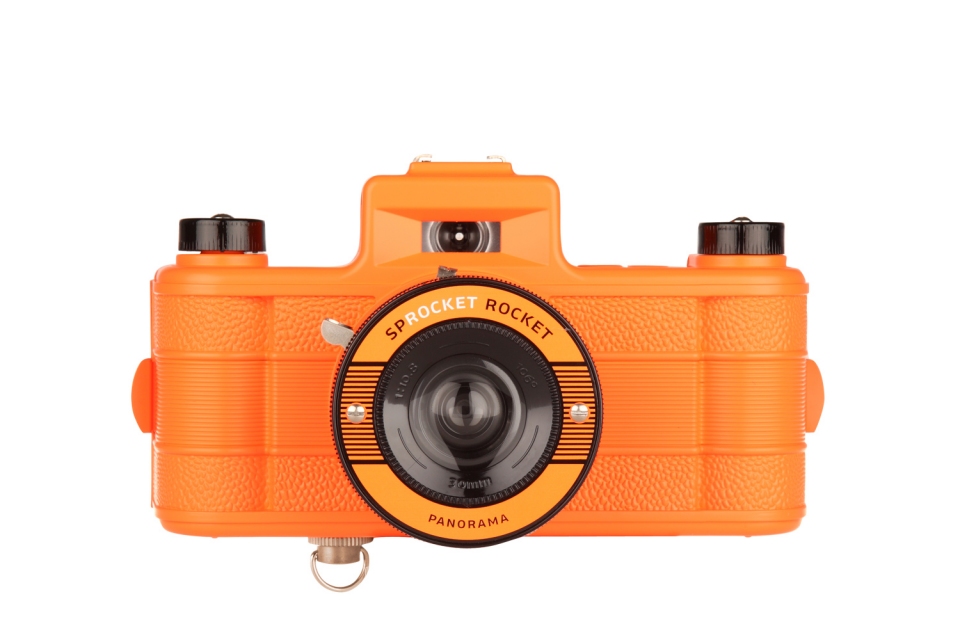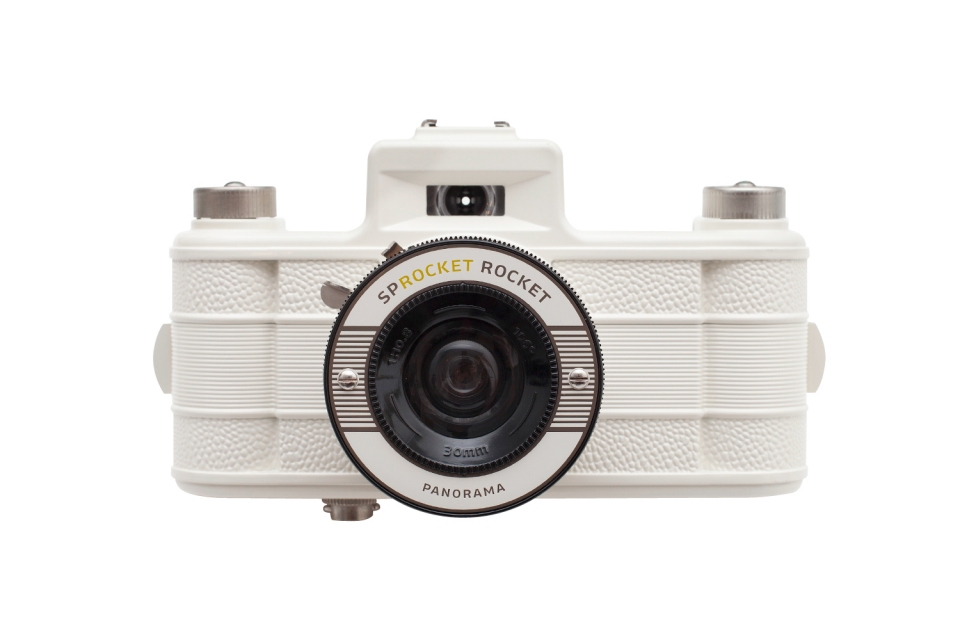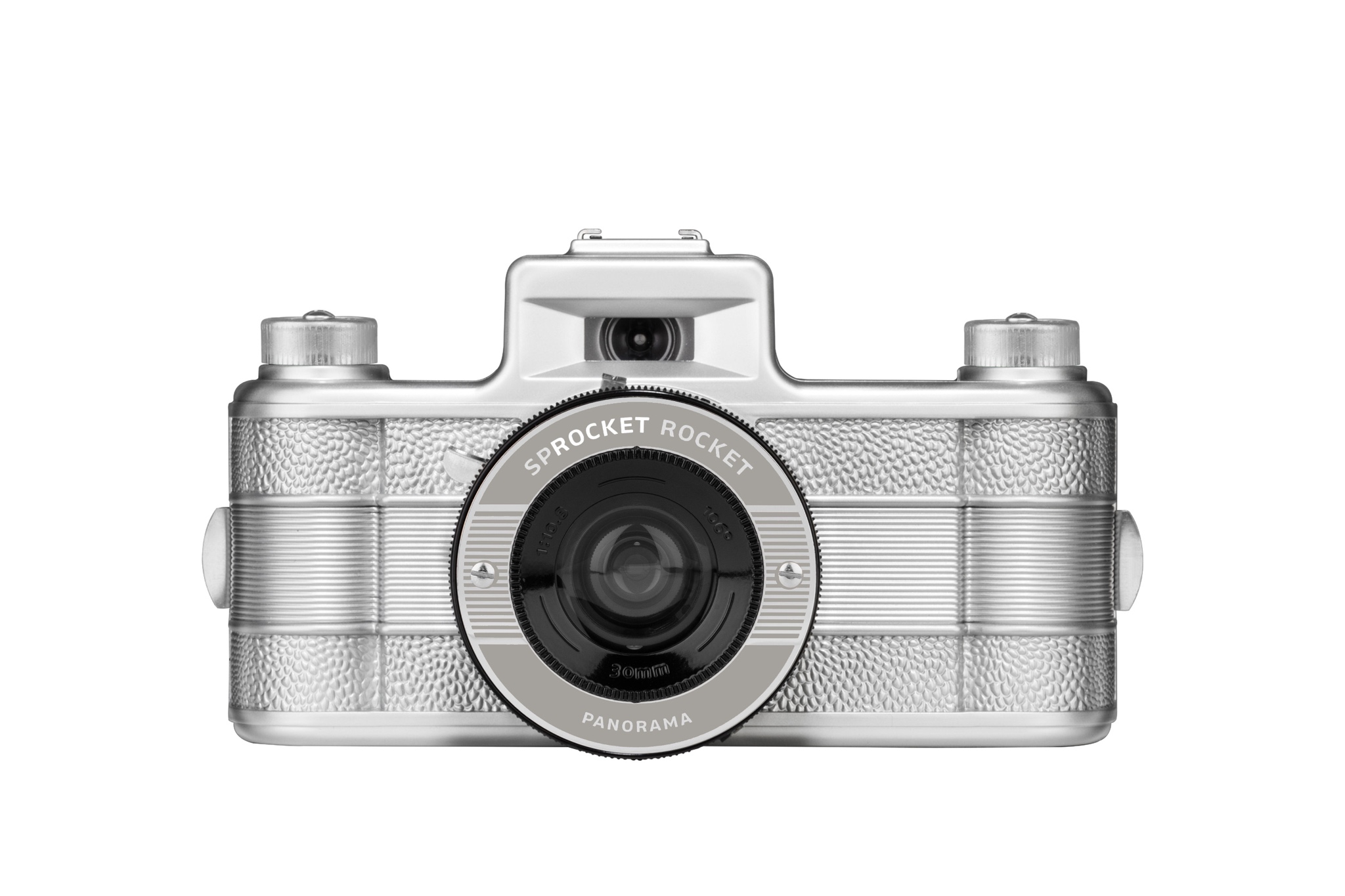
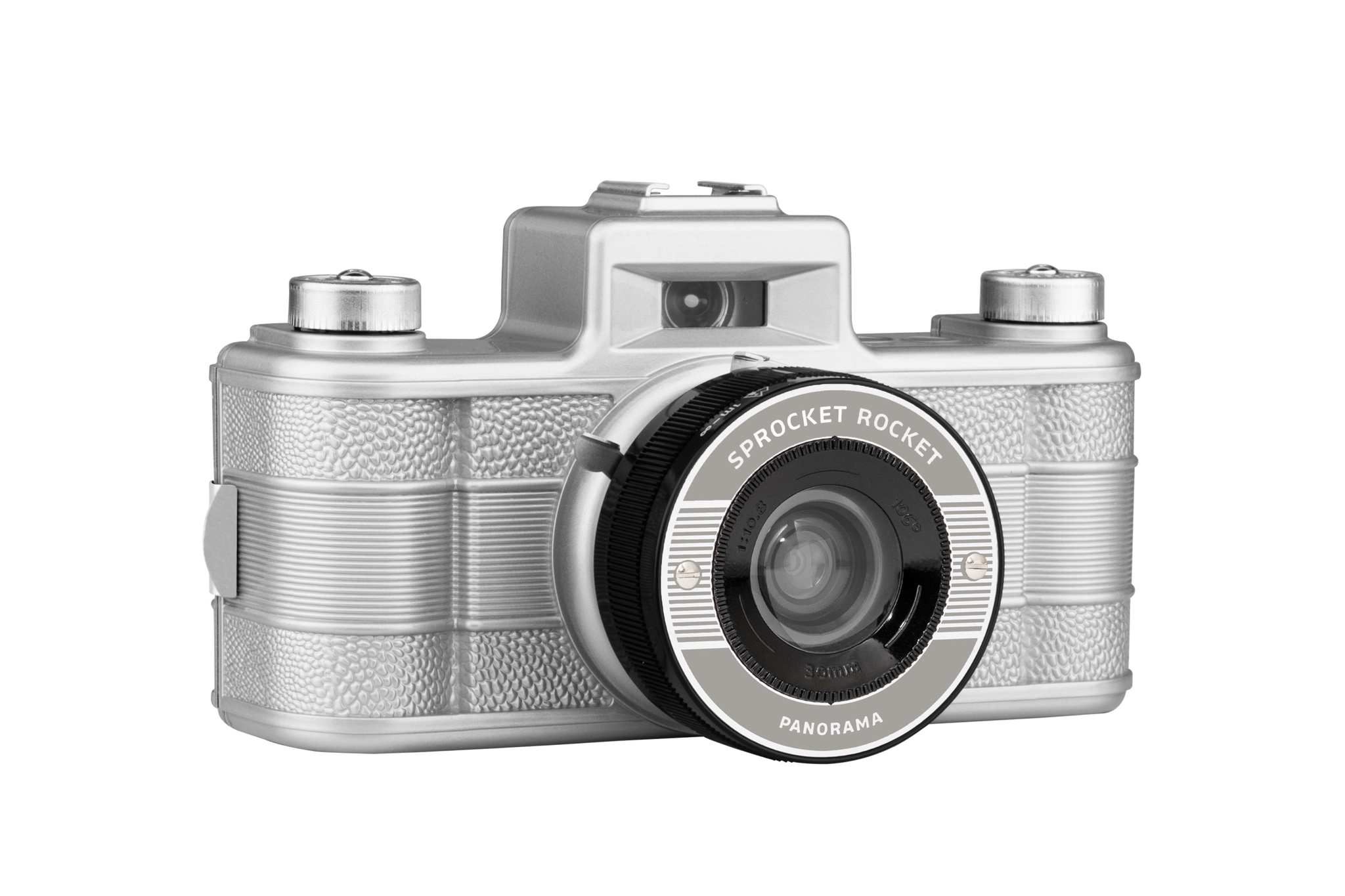
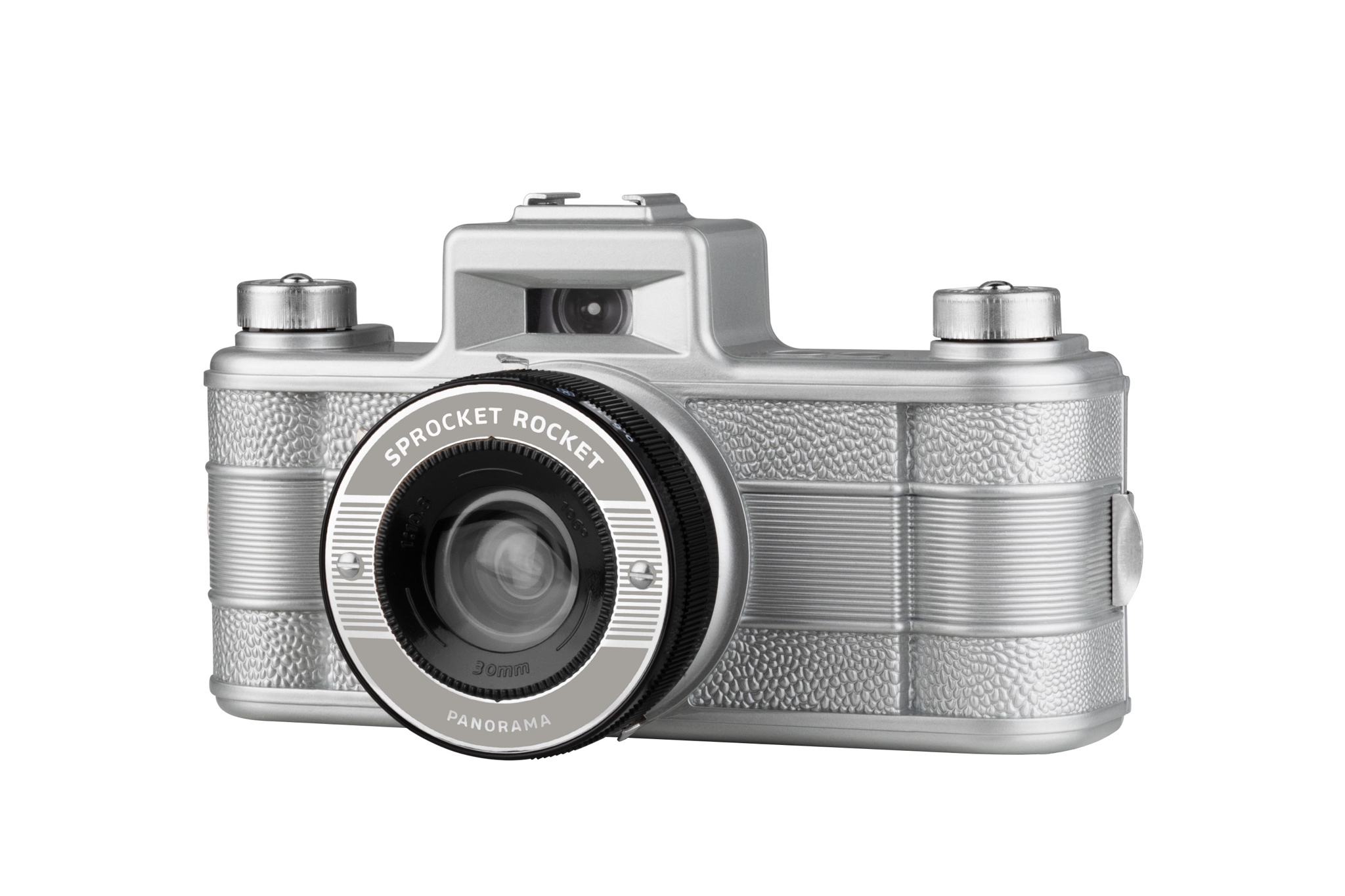
The Sprocket Rocket Starlight from Lomography is a panoramic camera for the classic 35mm format. In the silver Starlight edition, the plastic body stands out visually, but technically remains true to the analog fundamentals of the model series. It was presented together with the Ultra Violet Edition in September 2026.
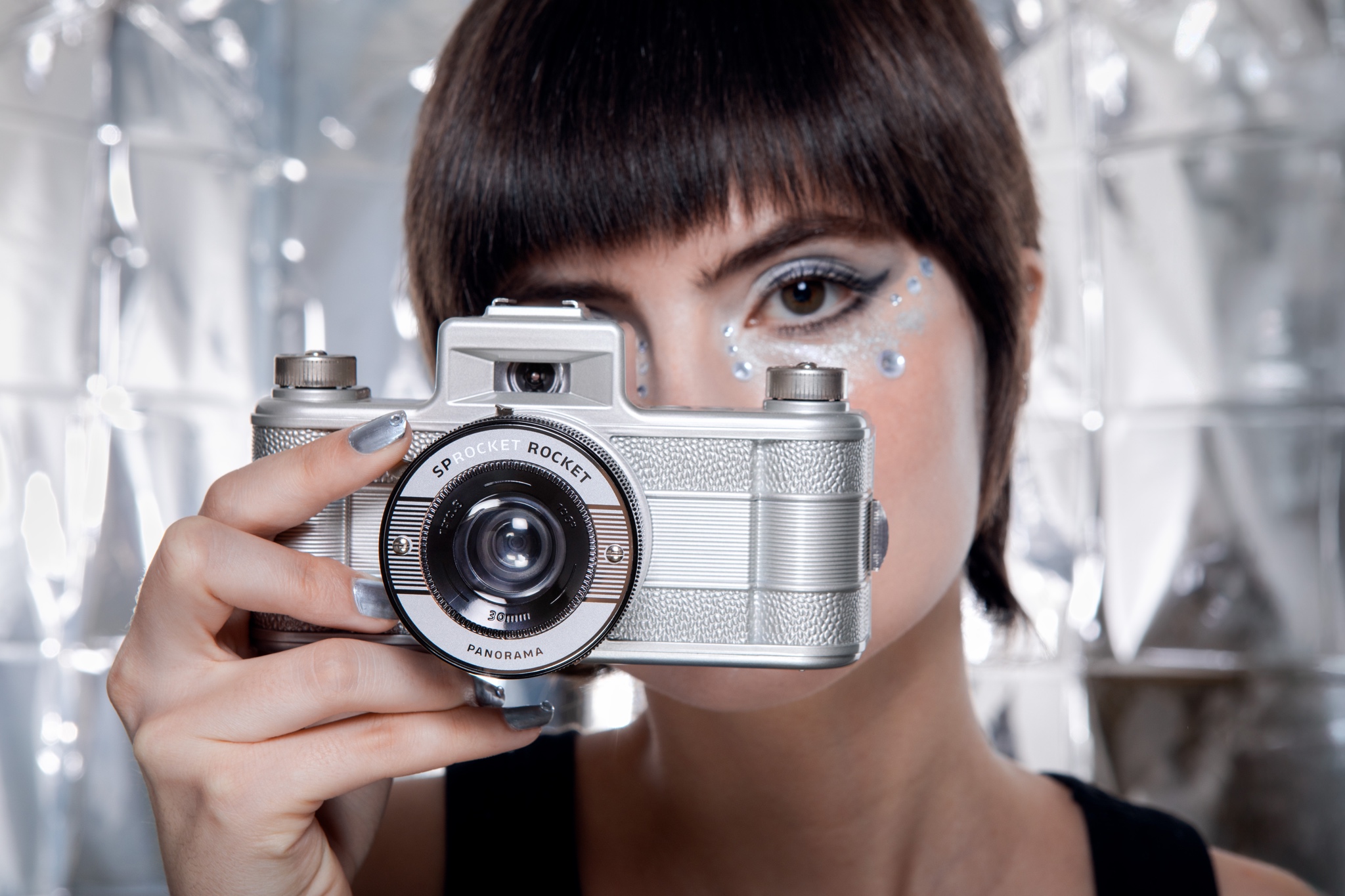
Features of the Panoramic Camera
The defining feature of the camera is its name: it exposes the film strip across its entire width, incorporating the sprocket holes directly into the image. Those who appreciate this creative look will get extra-wide panoramic shots that differ significantly from the usual image format.
The body is equipped with a fixed wide-angle lens with a focal length of 30 mm. The lens has a maximum aperture of f/10.8, and a smaller aperture of f/16 can also be selected for sunny days.
Focusing is done via two zones, allowing subjects to be captured from a distance of 60 centimeters. The model completely foregoes electronic aids such as a light meter or autofocus. For exposure, a fixed shutter speed of about 1/100 second for snapshots and a Bulb mode for long exposures are available.
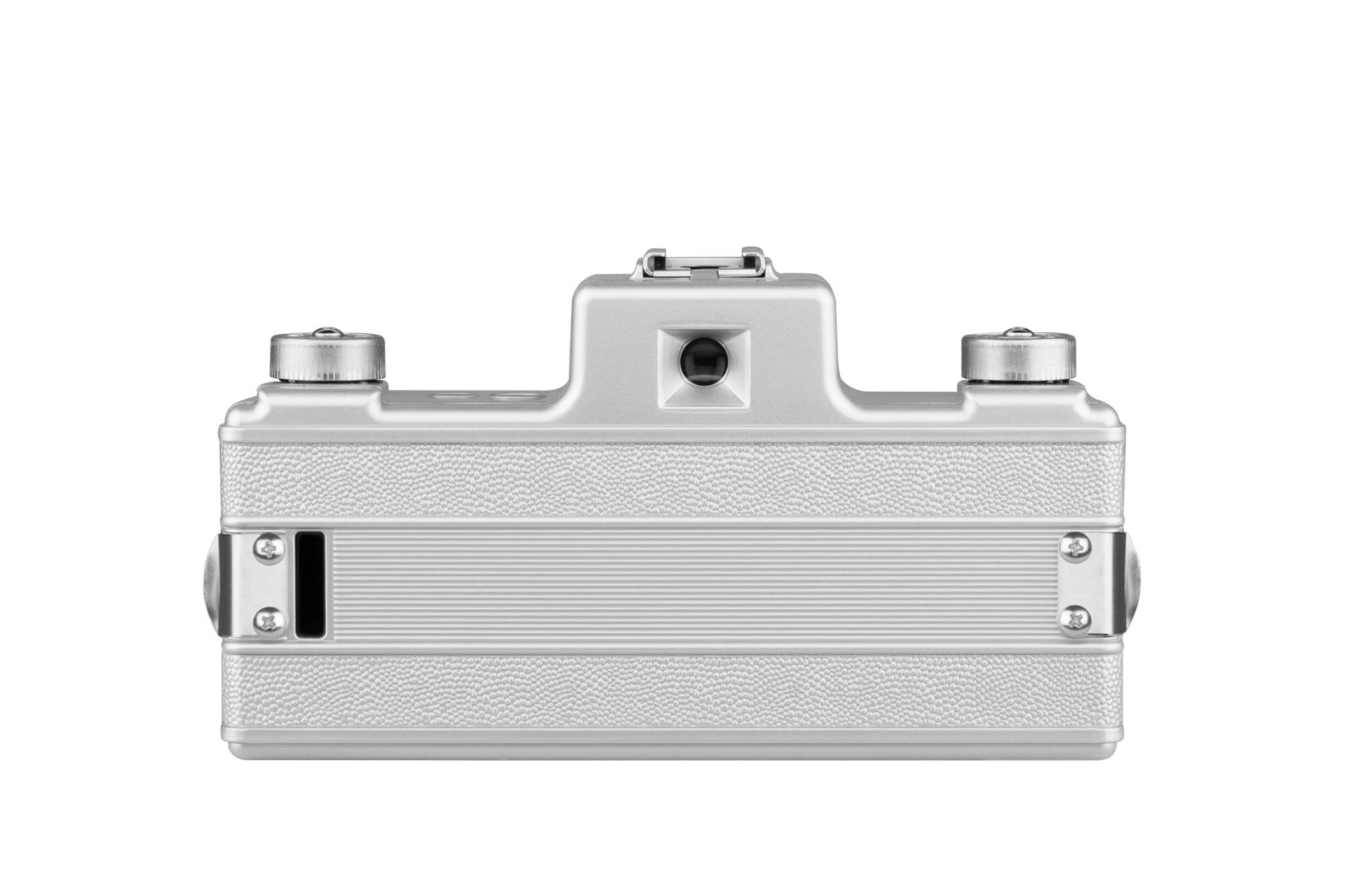
For shots in low light, mounting on a tripod is recommended, for which a suitable thread is integrated on the bottom. Additionally, the accessory shoe on top allows attaching an external flash unit.
A practical advantage of the construction is its independence from batteries, as the mechanism is purely manually driven. Film transport is via two control wheels on the top. This dual spooling mechanism makes it easy to wind the film forward and backward, making multiple exposures and seamless overlaps of several scenes very simple.
Films for the Sprocket Rocket Starlight
The camera is loaded with standard 35mm film, which is still manufactured and can be dropped off at almost any photo store or lab. Due to the wide panoramic format, a standard cartridge with 36 exposures fits about 18 panoramic images. For black and white photography, the Ilford Delta 400* is suitable. Those who prefer vibrant colors can opt for the Kodak Ultramax 400*, which, with its ISO 400 sensitivity, offers enough leeway even in changing daylight.
Color negative films are processed using the standardized C-41 process. When dropping off at a photo lab, it is advisable to briefly note that the films should not be cut automatically, so that the extra-wide panoramic images and the exposed sprocket edges remain intact in one piece.