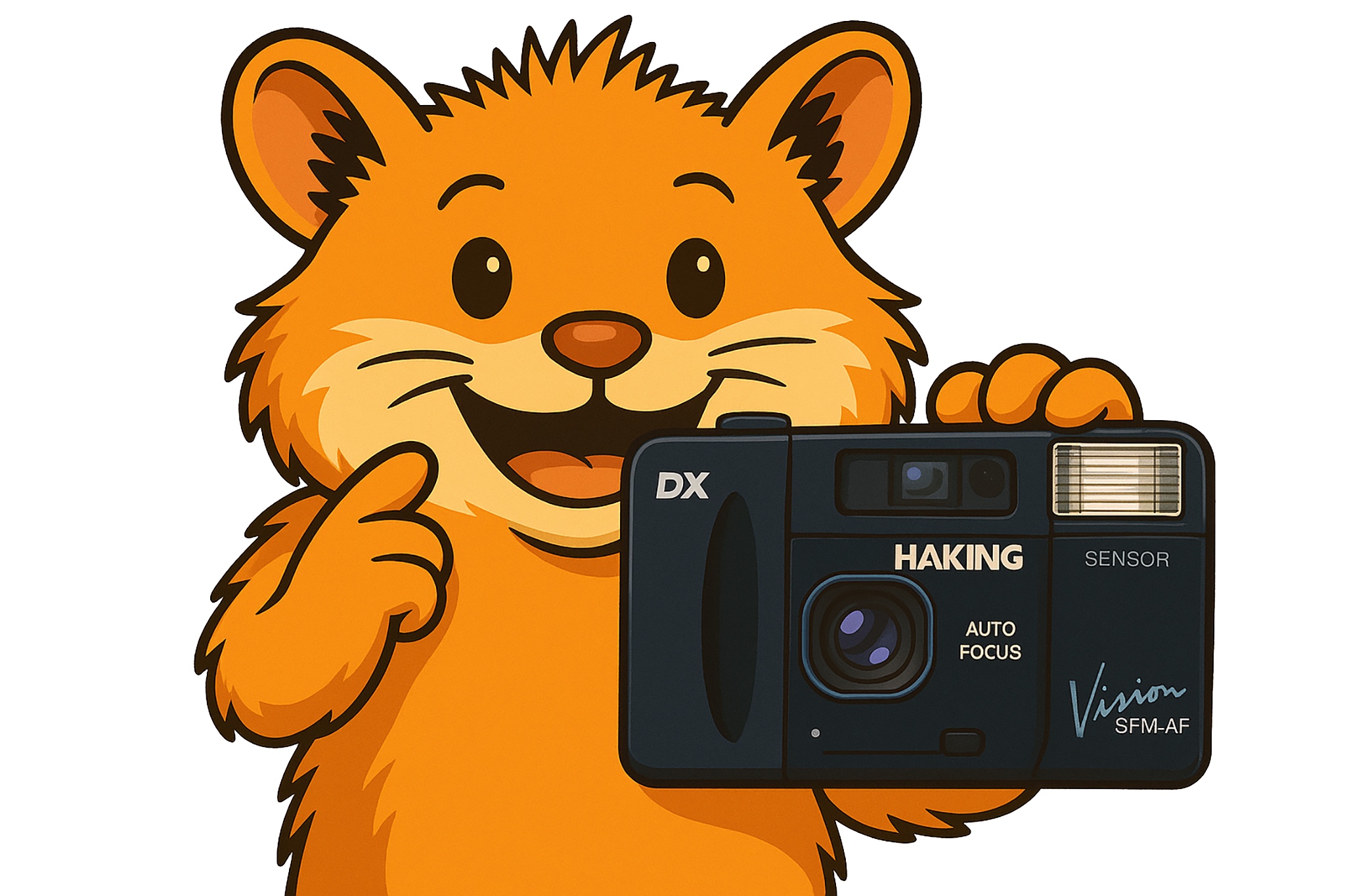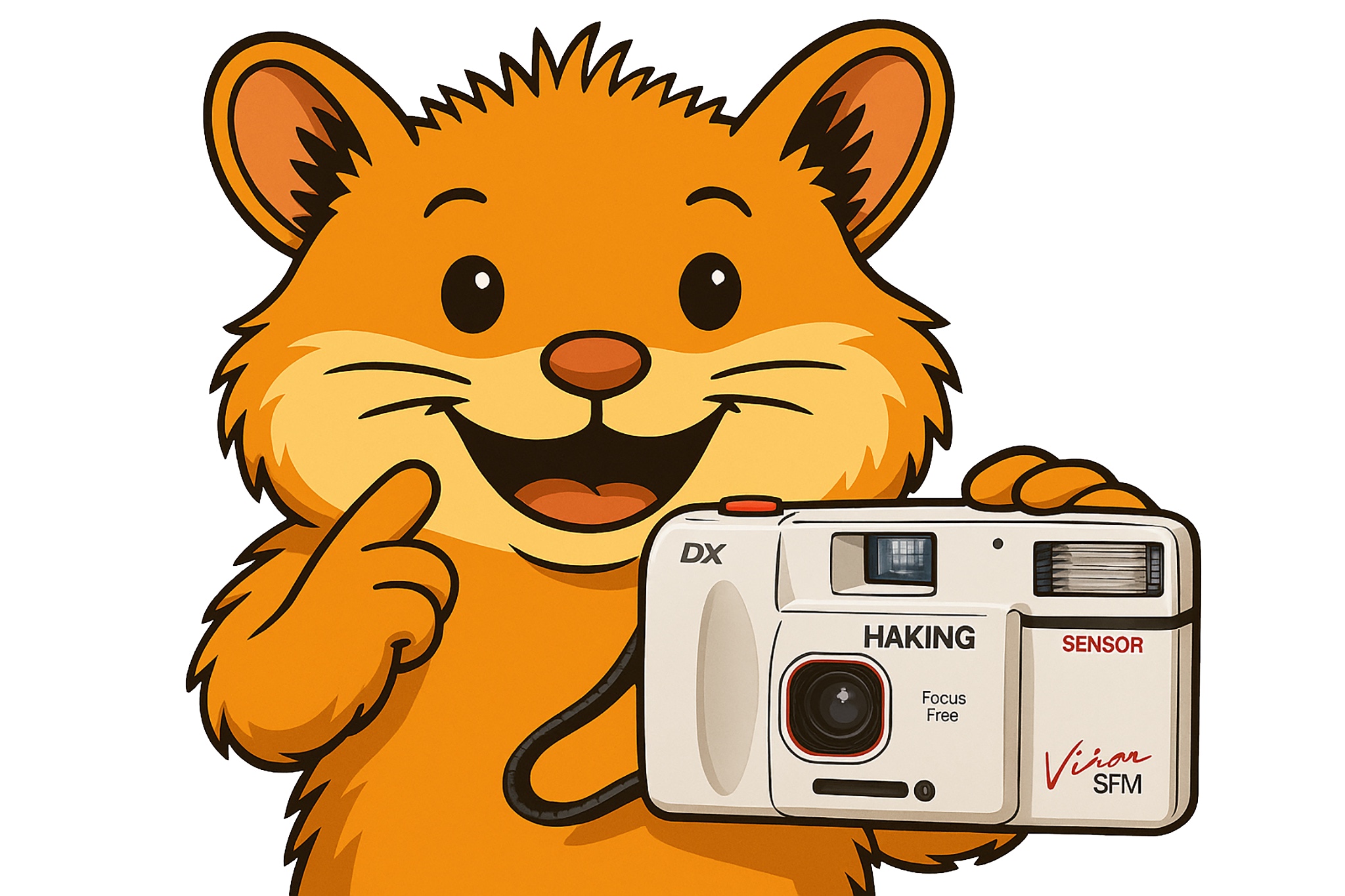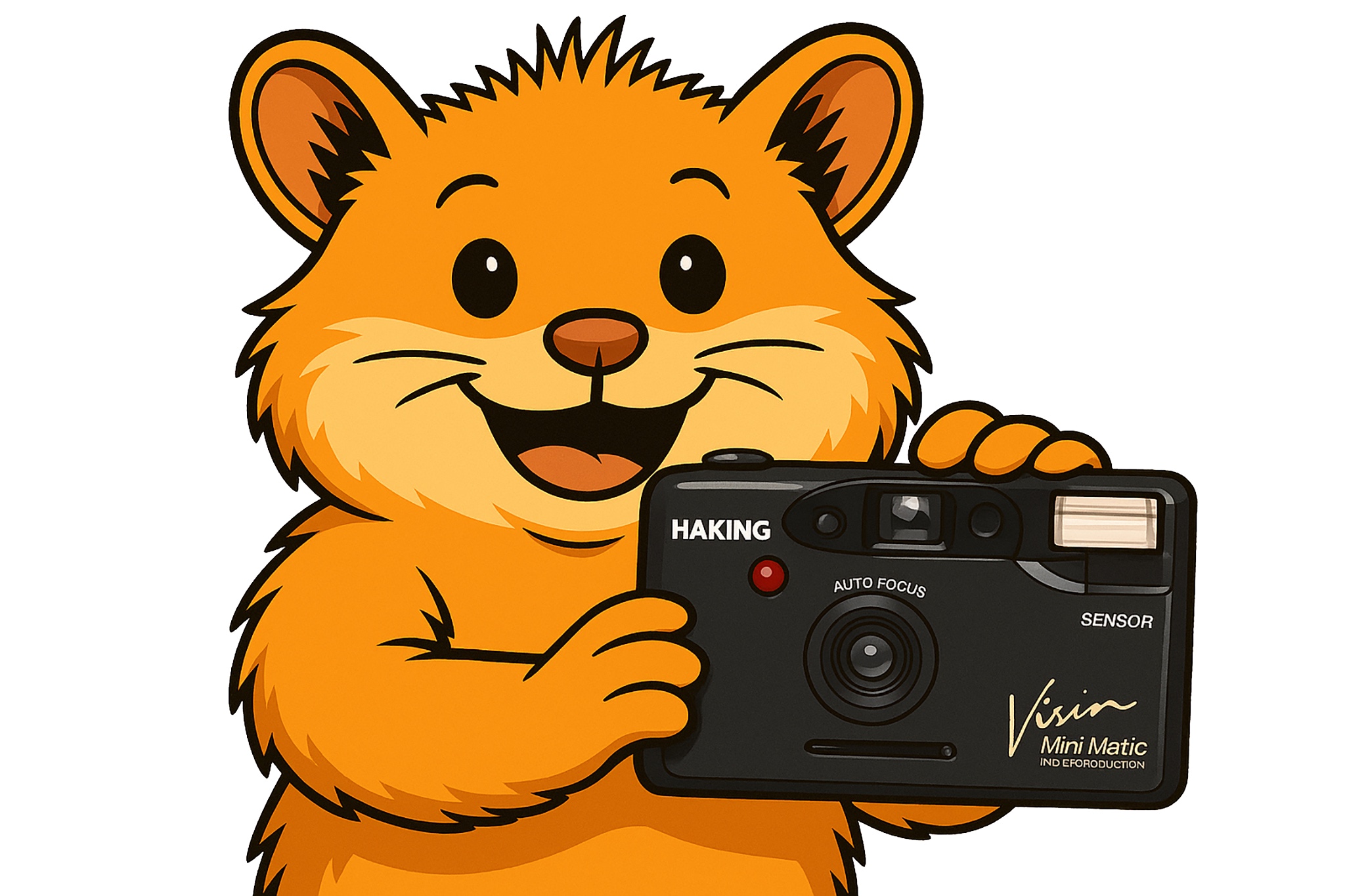
The Haking Vision Twin presents itself as a practical snapshot camera for newcomers to photography. It is an ideal companion for travel and festivities. This model comes from the house of Haking, with origins in Hong Kong, which can be read on the base of the apparatus.
Features of the camera
The camera is equipped with a special lens, which can be adjusted by a lever on the side. It switches between focal lenghts. Unfortunately, manual focusing is not possible with this model.
The Haking Vision Twin is equipped with a built-in light meter, which automatically identifies the light sensitivity of the film. This enables automatic regulation of the aperture as well as the exposure time, making manual adjustments unnecessary.
Of course, this model comes with an integrated flash. A slider below the flash activates it. Although it has no provision for a tripod or self-timer, it does allow a wrist strap to be attached for easier carrying.
For power, the camera requires two AA batteries (eBay / Amazon*), although using rechargeable batteries is a choice worth considering. A battery backup lasts for an extended period of time.
Available films for the Haking Vision Twin
According to the user manual, the Haking Vision Twin accepts 35mm film, which remains available and developable from several manufacturers.
Suitable films for this handy machine include the Kodak Ultramax 400* for colour images and the Ilford Delta 100* for monochrome images. Of course, other well-known brands such as Lomography, Fujifilm, Rollei, Adox and Foma are also represented with compatible films.
The Haking Vision Twin creates negatives in the format 24 mm x 36 mm. There is no motorised system with this model. The film has to be rewound after each exposure with a thumbwheel on the back, while a display on the top shows the number of frames taken so far.
When the film is fully exposed, it must be rewound. There is a crank on the top for this purpose. Before rewinding, a small button on the bottom of the housing must be pressed in.
Only then should the film chamber be opened to remove the film for development. It is strongly advised not to open the camera if the film has not yet been rewound, in order to avoid damage by exposure to light.