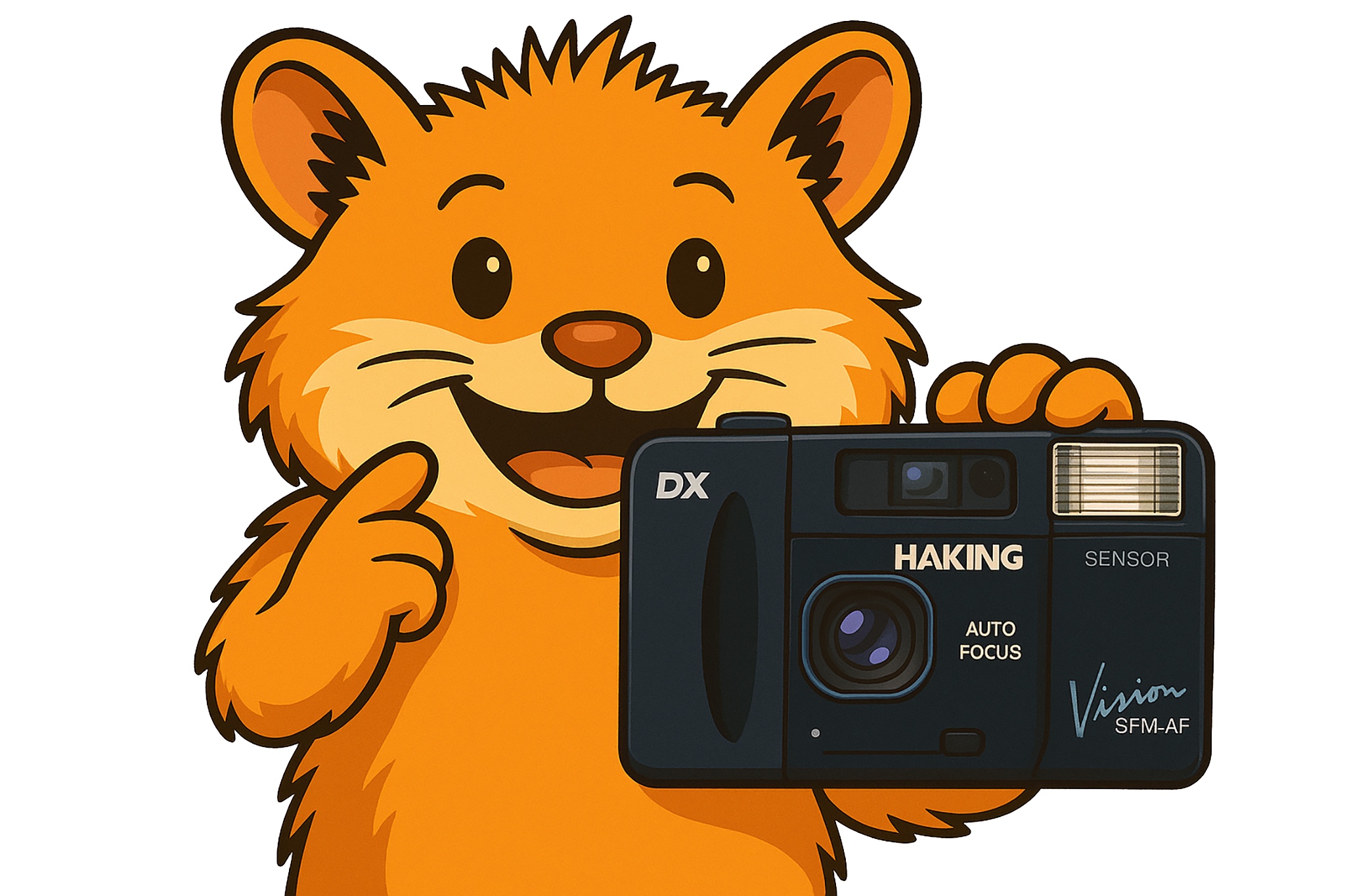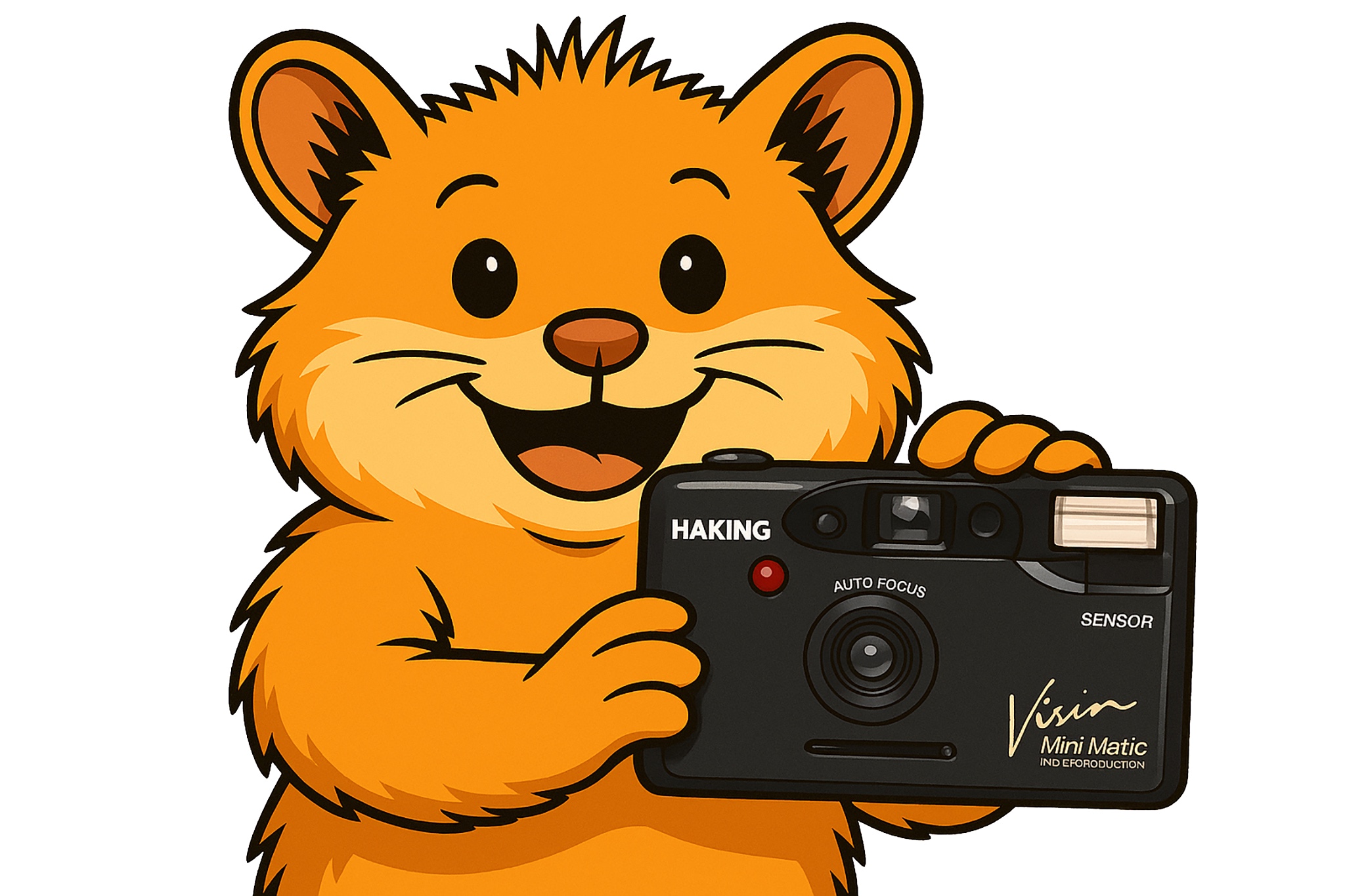
The Haking Vision III presents itself as a compact shooting tool, ideal for newcomers to the field of photography. It probably dates from the 1990s and comes from Haking's production facilities in Hong Kong. With its simple handling, it is the perfect companion for social gatherings or festive occasions such as weddings.
Camera properties
The 35mm lens of this camera is fixed. While the exact focal length is not given, it is estimated to range between 28mm and 35mm. There is no autofocus function, instead a focus-free system is used, in which the focus setting is already fixed. A protective flap protects the lens from potential damage and contamination.
The Haking Vision III has a built-in exposure meter that automatically detects the sensitivity of the film loaded. Both aperture and exposure time are adjusted by the camera itself, manual correction is not required.
The equipment also includes an integrated flash whose readiness is signaled by an LED display on the back. A specific function for reducing the "red-eye effect" is missing on this model, as is a tripod mount and a self-timer function. However, a wrist strap can be attached for easier handling.
The camera is powered by two AA batteries (eBay / Amazon*), although using rechargeable batteries is a convenient option. This battery variant promises a longer service life.
Film options for the Haking Vision III
According to the user manual, the Haking Vision III works with 35mm film, which can still be easily obtained and processed from various suppliers.
Recommended films for this compact camera include Kodak Gold 200* for color photography and Ilford Delta 400* for black and white photography. Photography. Other manufacturers such as Lomography, Fujifilm, Rollei, Adox and Foma also have suitable films on offer.
The negative dimensions of the Haking Vision III are 24mm x 36mm. An automatic system ensures that the film advances after each shot, while a counter on the surface shows the number of shots already taken.
Once the film is fully exposed, it is automatically wound back into the cartridge. Only then should you open the camera to remove the film for development. It is important not to open the camera until the film has been rewound to avoid damage from exposure to light.