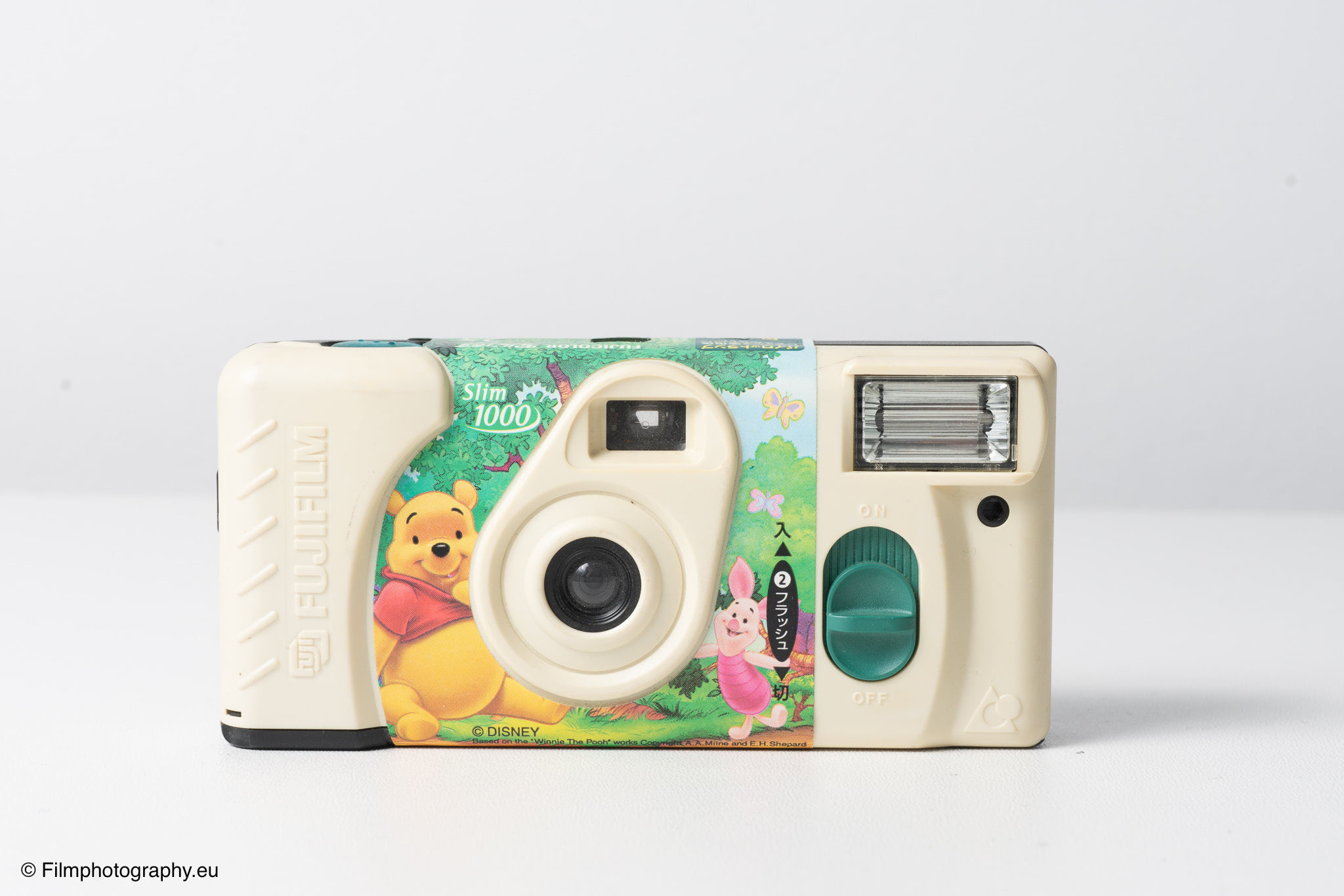
The story of Fuji’s (now Fujifilm) first disposable cameras is a fascinating journey through innovation and market dynamics in the photography industry.
History of disposable cameras from Fuji
Early on, the Japanese company experimented with low-cost camera models and single-use models. None of these experiments reached market maturity.
In the 1980s, as photography became more popular and the cost of conventional cameras in Japan remained high, Fujifilm continued to experiment with disposable cameras. The concept of a simple, affordable camera that delivers high-quality images was further developed.
In 1986, Fujifilm finally launched the “写ルンです” (Utsurundesu, “it really takes photos”), a disposable camera characterised by its ease of use and its ability to produce relatively high-quality photos. This camera combined film with a simple lens for a low price, making it an instant success.
The first models were based on the compact pocket film format. There were three versions at the start, differing only in the design of the packaging. The “Foto Jack” was aimed at men, who were most often the photographer in the family at the time. The “Picco” was intended to appeal to the younger generation. The design of the “Fujicolor Super HR 100” was intended to resemble the design of a film box and was also the most popular model for a long time.
The success of “写ルンです” in Japan soon attracted the attention of Kodak, which also entered the disposable camera market. Fujifilm then expanded its market and launched the “Fujicolor Quicksnap” in the USA in 1987, a 35mm camera for single use.
Kodak also initially favoured the 110 pocket film format with its Fling, but switched to the 35 mm format shortly afterwards.
The 35 mm film format also became established in Japan. Over the years, Fujifilm introduced different models and variations of their disposable cameras, including versions with built-in flash and different film speeds.
In 1991, Fuji Photo sold an impressive 50 million disposable cameras in Japan, capturing 75 per cent of the market. These cameras were available everywhere, from kiosks to special vending machines and souvenir shops. In total, there were 300,000 points of sale where you could buy these handy cameras.
Disposable cameras in the modern age
In the age of smartphones and digital photography, the demand for disposable cameras has of course declined. Nevertheless, disposable cameras are still available today, both from Fujifilm and from suppliers such as Ilford, Kodak and Lomography.
Most models today come with a built-in flash and are a popular choice for weddings, parties or holidays.
Overview
- Single-use camera
- 110
- Single-use camera
- 110
- Single-use camera
- 110
- Single-use camera
- 35mm
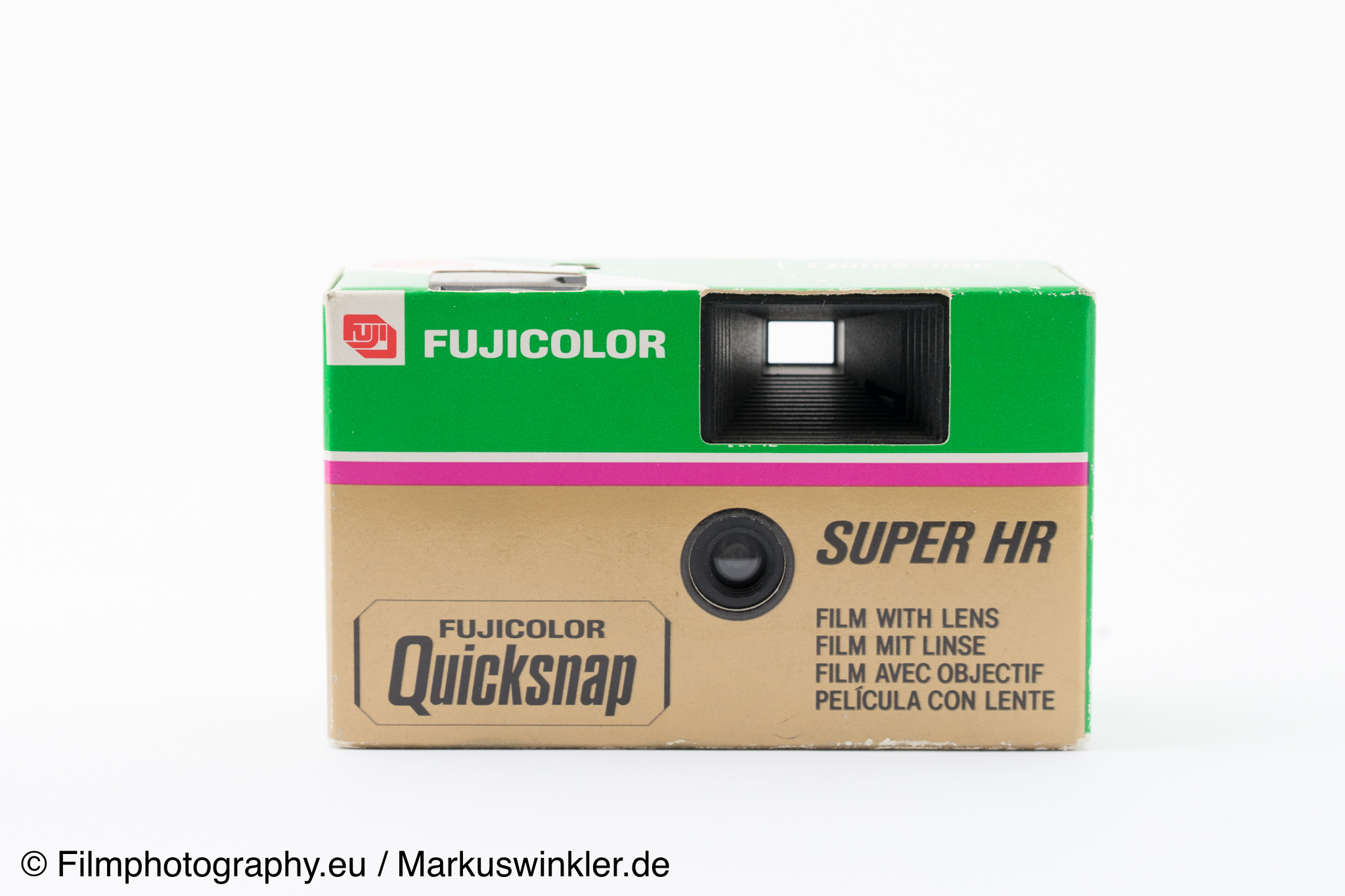

- Single-use camera
- 35mm
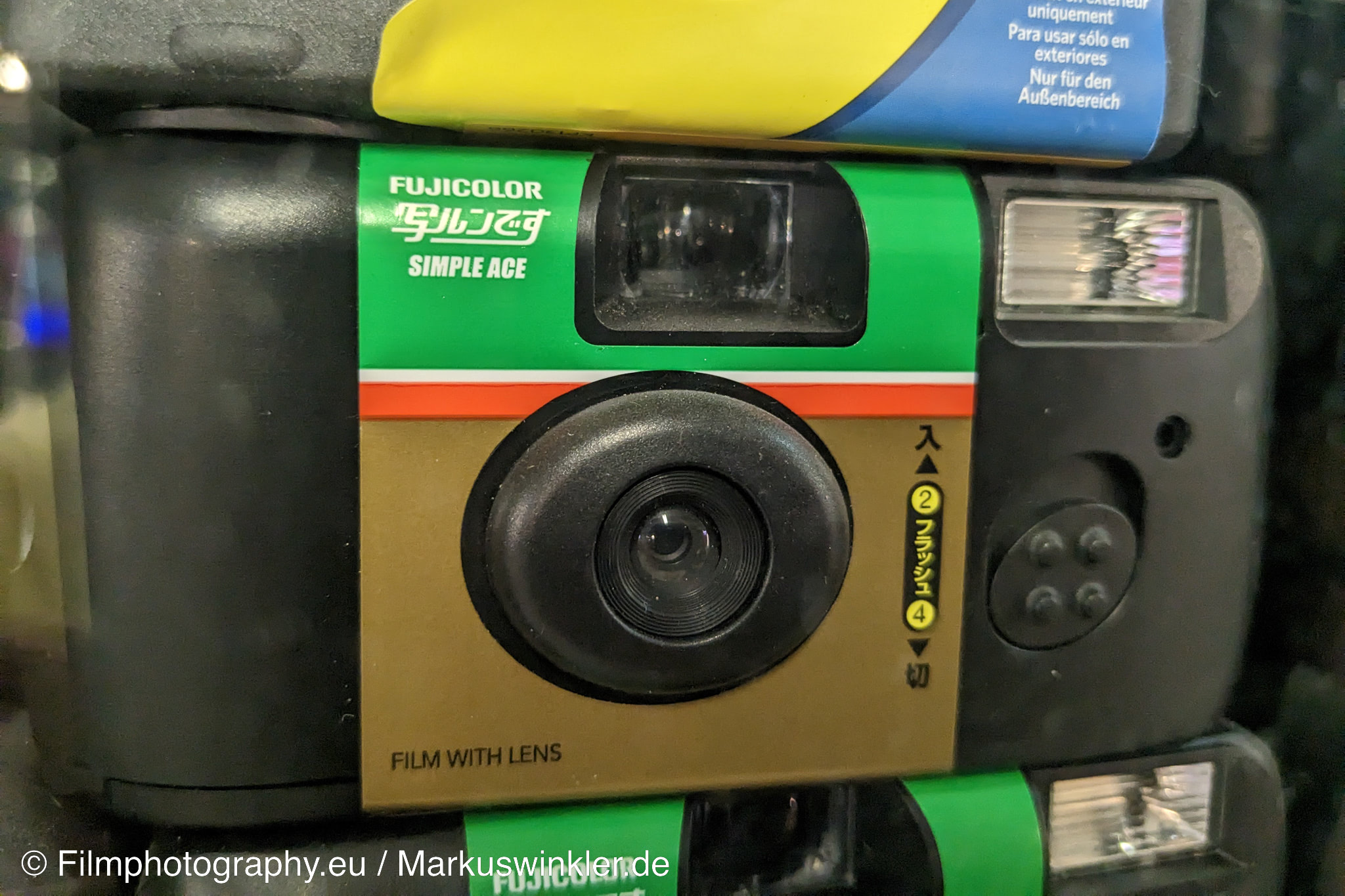
- Single-use camera
- APS