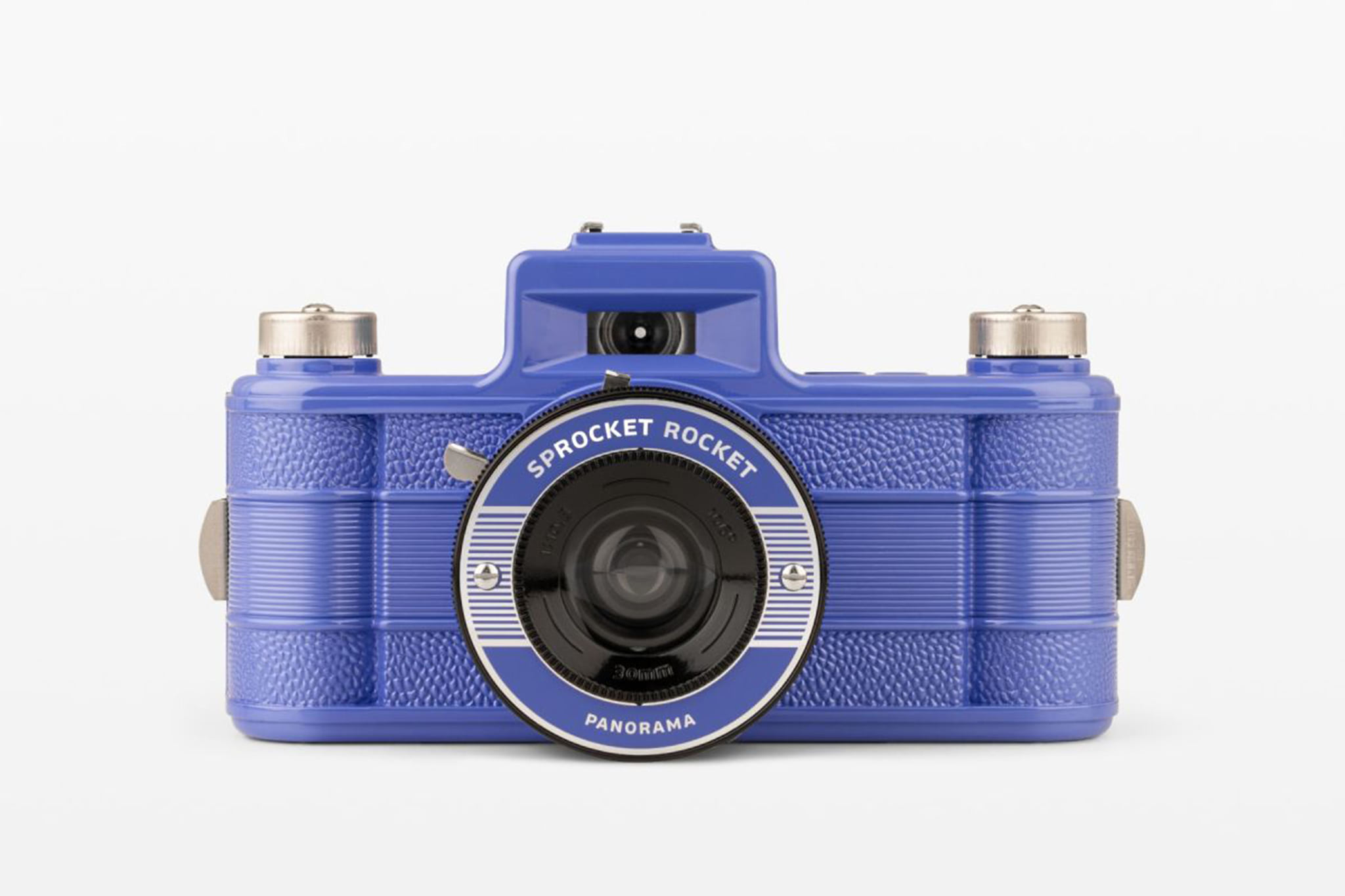
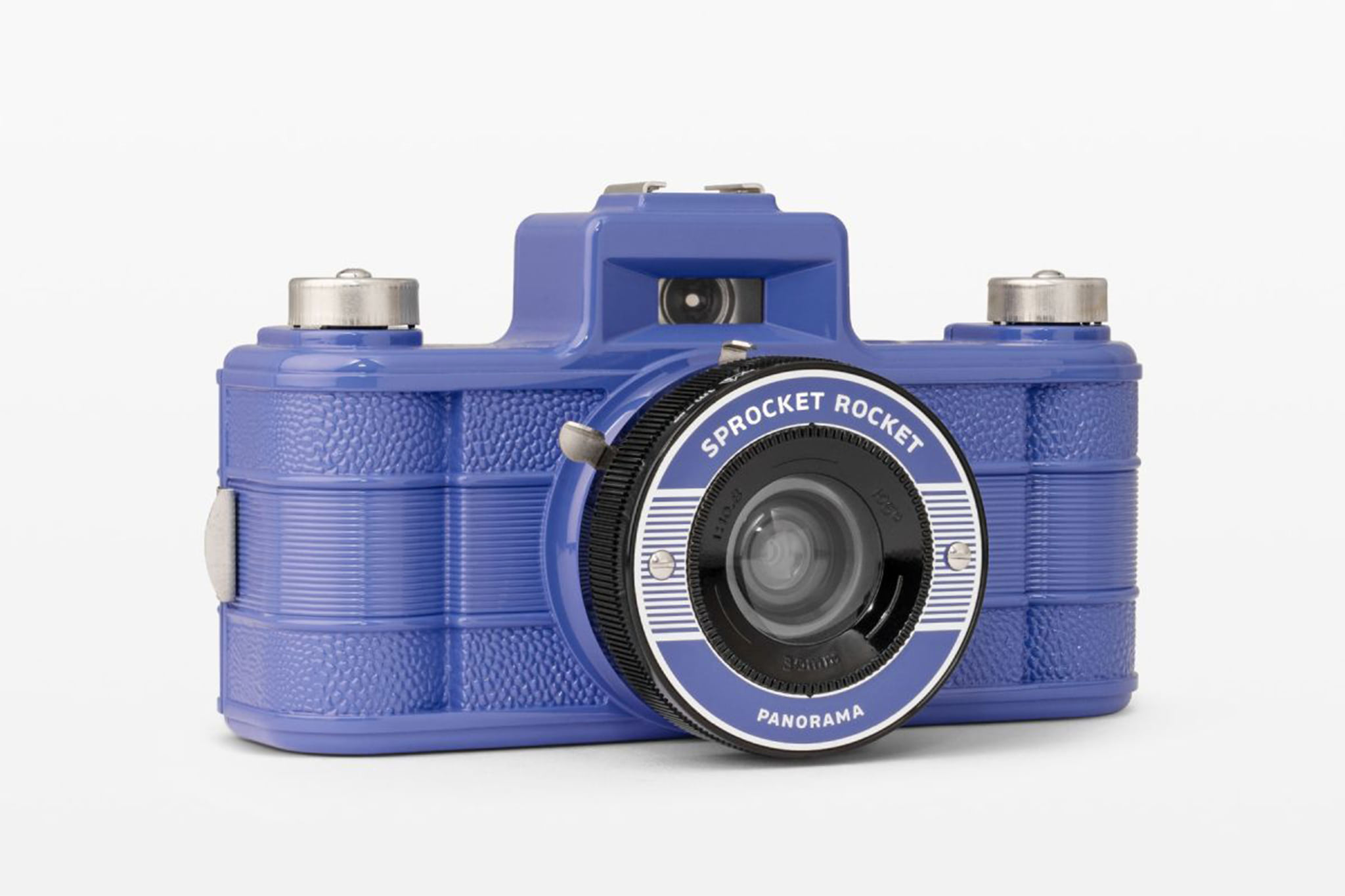
The Sprocket Rocket Baja Blue is a special edition of the popular Lomography panoramic camera released in 2024. Technically, it is the same as the other models in the series, but impresses with its blue housing. In Germany, the camera is available for around 80 euros.
Technical features
The camera has a built-in super wide-angle lens with a focal length of 30 mm and a maximum aperture of f/10.8. Focusing is done manually over two zones: 0.6 m to 1 m for close-ups and 1 m to infinity for all other distances. Shutter speeds are limited to 1/100 second and bulb (long exposure).
The Sprocket Rocket does not offer automatic exposure metering or exposure correction. Instead, the photographer has to determine the exposure himself based on the lighting conditions and film speed (ISO). However, the camera has a hot shoe for connecting an external flash.
Another distinctive feature of the Sprocket Rocket is the ability to rewind and advance the film. This allows creative effects such as multiple exposures and overlays to be achieved.

Film selection and development
The Sprocket Rocket uses commercially available 35mm film (eBay / Amazon*). However, due to the panoramic format and the exposure of the perforation holes, a 36-frame film roll only yields about 18 exposures.
Developing Sprocket Rocket films requires special attention as the perforation holes must not be cut off. This can cause problems when developing in standard labs. An alternative is development in specialized labs or self-development.
Image quality and creative possibilities
The image quality of the Sprocket Rocket cannot be compared to high-quality cameras due to the simple lens design and the lack of automatic exposure. The images are often characterized by strong vignetting (darkening of the image corners), reduced sharpness and pronounced distortion.
However, these “imperfections” are considered by many photographers to be part of the charm of the Sprocket Rocket and can lead to interesting, artistic results. The camera is particularly suitable for experimental photography, street photography and other creative applications.
Technical datasheet
| Attribute | Specification |
|---|---|
| Type of Camera | Panorama camera |
| Film format | 35mm |
| Film transport | Manual |
| Film transport mechanism | Rotary knob |
| Focal length | 30 mm |
| Widest aperture | f/10.8 |
| Minimum focus distance | 60 cm / 1.968 ft |
| Focus | Fixed |
| Exposure times | 1/100 second, Bulb |
| Bulb mode | Yes |
| Auto DX (Film sensitivity) | No |
| Date imprinting | No |
| Double and/or multiple exposure function | Yes |
| Built-in flash | No |
| Flash Connection | Hot Shoe |
| Flash sync speed | 1/100 s |
| Tripod mount | Yes |
| Cable release thread | No |
| Self-timer | No |
| Power supply | Not necessary |
| Country of production | China |
FAQ about the Sprocket Rocket Baja Blue
What type of lens does the Baja Blue Sprocket Rocket feature, and what are its key specifications?
It boasts a fixed super wide-angle lens with a 30mm focal length and a maximum aperture of f/10.8. This allows for capturing expansive scenes, a hallmark of its panoramic capabilities.
How does one control the exposure on this Lomography camera?
The Sprocket Rocket lacks automatic exposure metering. Photographers must manually adjust exposure settings based on lighting conditions and film ISO.
What kind of film does the camera use, and approximately how many shots can you get on a standard roll?
It uses standard 35mm film, but due to the panoramic format and sprocket hole exposure, a 36-exposure roll yields roughly 18 usable photos.
Besides its blue housing, what other unique features distinguish the Baja Blue edition?
The ability to rewind the film is a key feature enabling creative effects such as multiple exposures and overlays, adding a unique dimension to photography.
Can I develop the film at any photo lab, or are there special considerations?
Special care is needed for film development, as the sprocket holes are exposed and shouldn't be cut off. Specialized labs or self-development are recommended.