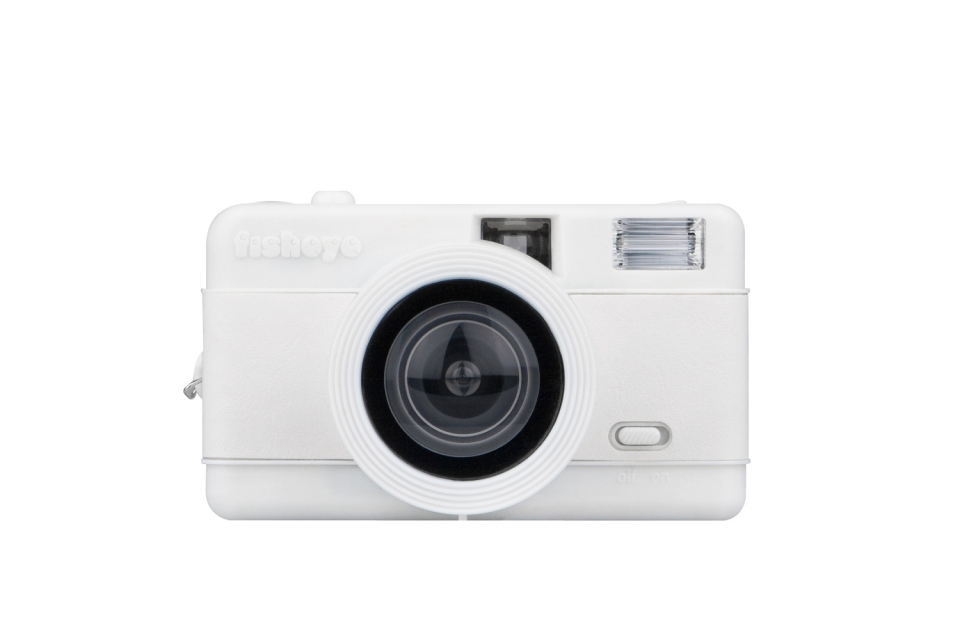
The Fisheye One White is a 35mm camera. This camera is an edition of the Fisheye One from Lomography.
The Fisheye One White is completely white. It is functional identical to the normal edition.
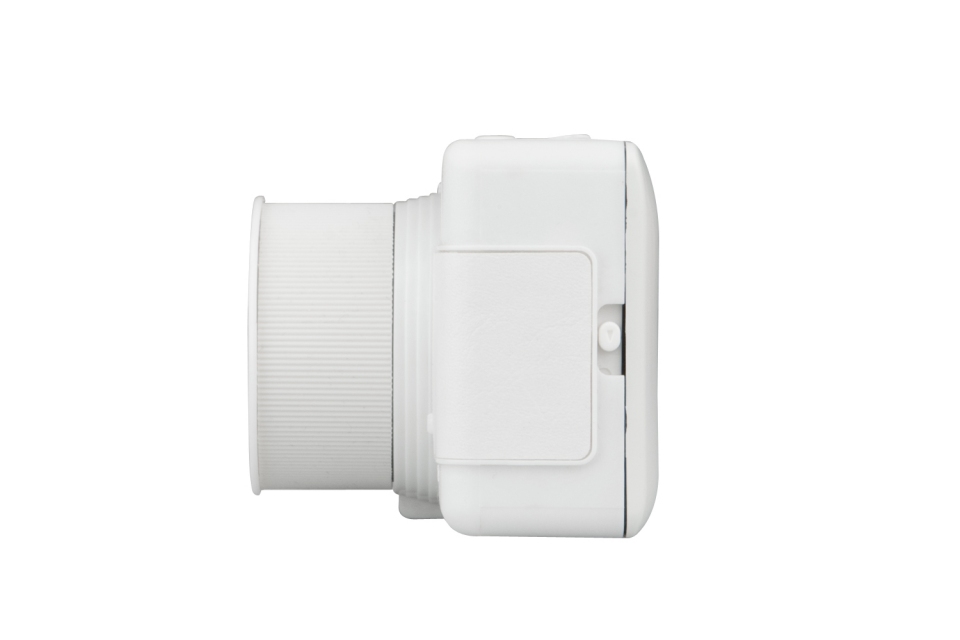
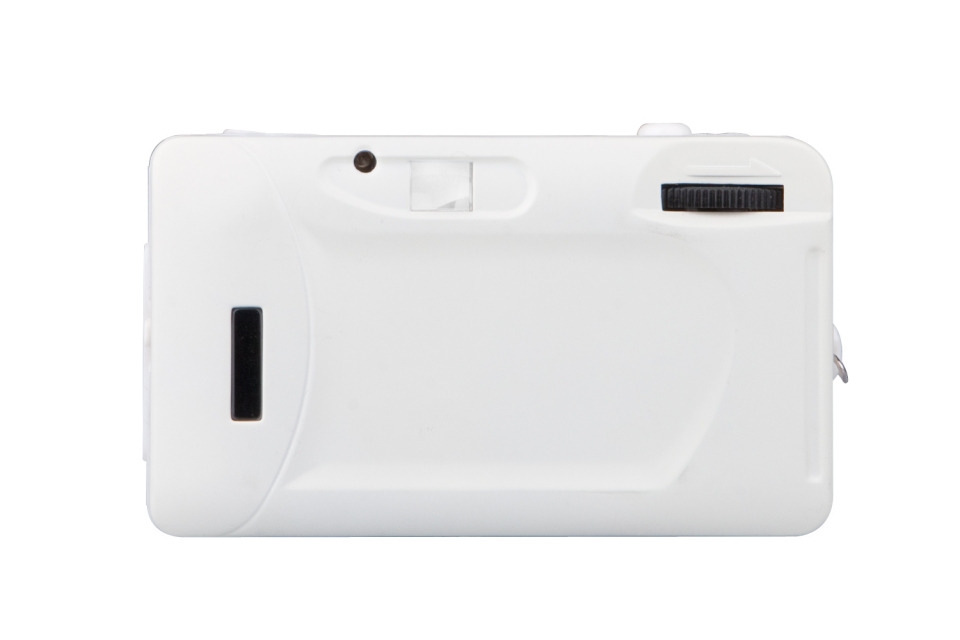
Features
The Fisheye One camera has a fixed focal length of 10 mm and a maximum aperture of f/8. It also has a close focus distance of only 10 cm, which makes it perfect for close-up shots with lots of details. Unfortunately, the camera doesn’t have a light meter, so all exposure settings are fixed.
The focus of the Fisheye One White is fixed, which means that everything in the image will be sharp, regardless of the distance from the lens. The camera also has a shutter speed of 1/100s, which cannot be changed.
The Fisheye One camera’s built-in flash can be turned on if needed. There is an LED light on the back of the camera that indicates flash readiness. The flash sync time is 1/100s, so you need to make sure you’re shooting in a well-lit environment to get the best results.
The Lomo camera does not have a tripod socket or a thread for a cable release. The camera also does not have a self-timer function to easily take selfies or group photos.
Batteries
The Fisheye One camera is easily powered by one AA battery (eBay / Amazon*). The batteries are only needed for the flash function, as all other camera functions are mechanical. The camera is manufactured in China.
If you want to use the Fisheye One camera underwater, an underwater housing is available as an accessory.
Films for the Fisheye One White
The Fisheye One White is designed for the 35mm format and exposes film of that format. Although the 35mm format is not as popular as it once was, there is still a demand for it that has led some suppliers to produce films for this format.
A 35mm color film for photography is the Kodak Ultramax 400*. A possible black and white film is the Ilford XP2 Super*. Many other manufacturers also produce films for this format.
Both color films and Ilford XP2 Super are developed using the C-41 process. C-41 films can be developed by most photo labs. In addition, most labs make prints of the images immediately and also offer digitization. However, due to the fisheye lens, part of the image is only black.
Technical datasheet
| Attribute | Specification |
|---|---|
| Type of Camera | Fisheye camera |
| Film format | 35mm |
| Film transport | Manual |
| Film transport mechanism | Thumbwheel |
| Focal length | 10 mm |
| Widest aperture | f/8 |
| Minimum focus distance | 10 cm / 0.328 ft |
| Focus | Fixed |
| Exposure times | 1/100 second |
| Auto DX (Film sensitivity) | No |
| Date imprinting | No |
| Flash | Integrated flash |
| Flash sync speed | 1/100 s |
| Tripod mount | No |
| Cable release thread | No |
| Self-timer | No |
| Connection for camera strap | Yes |
| Power supply | 1x AA battery |
| Country of production | China |
FAQ about the Fisheye One White
Is the Fisheye One White a good camera for beginners?
The Fisheye One White is a simple point-and-shoot camera, making it easy to use even for beginners. Its fixed settings mean you don't have to worry about complex adjustments. However, the lack of a light meter might require some learning.
What kind of film does this Lomography camera use?
The Fisheye One White uses standard 35mm film. You can find various color and black and white films in this format readily available from many suppliers. Remember that the camera doesn't automatically adjust exposure.
Does the white camera have any advanced features like a self-timer?
No, this particular model doesn't have a self-timer or options for adjusting shutter speed. It has a fixed focus and shutter speed. The simplicity is a key design choice of this camera.
How does the flash work on the little camera?
The Fisheye One White has a built-in flash with a sync speed of 1/100s. It requires an AA battery for operation and has an LED indicator to show when it's ready. Remember to shoot in well-lit conditions for best results.
Can I use this camera underwater?
While the camera itself isn't waterproof, Lomography offers an underwater housing as an accessory, allowing you to take photos underwater. This makes the device more versatile for aquatic photography.