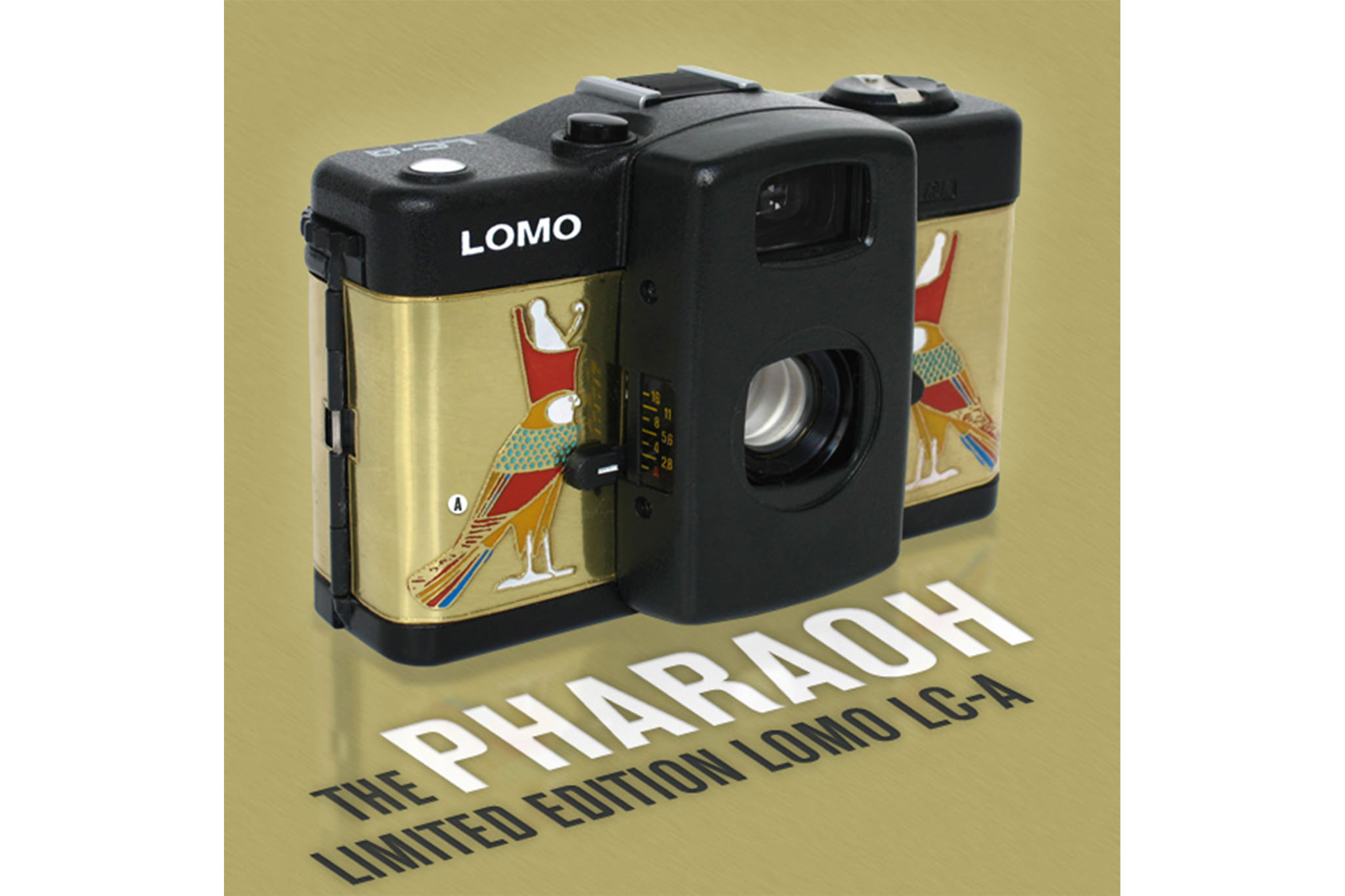
The Lomo LC-A Pharaoh is a special edition of the Lomo LC-A. It was introduced by Lomography in 2006. At that time it was produced in limited numbers.
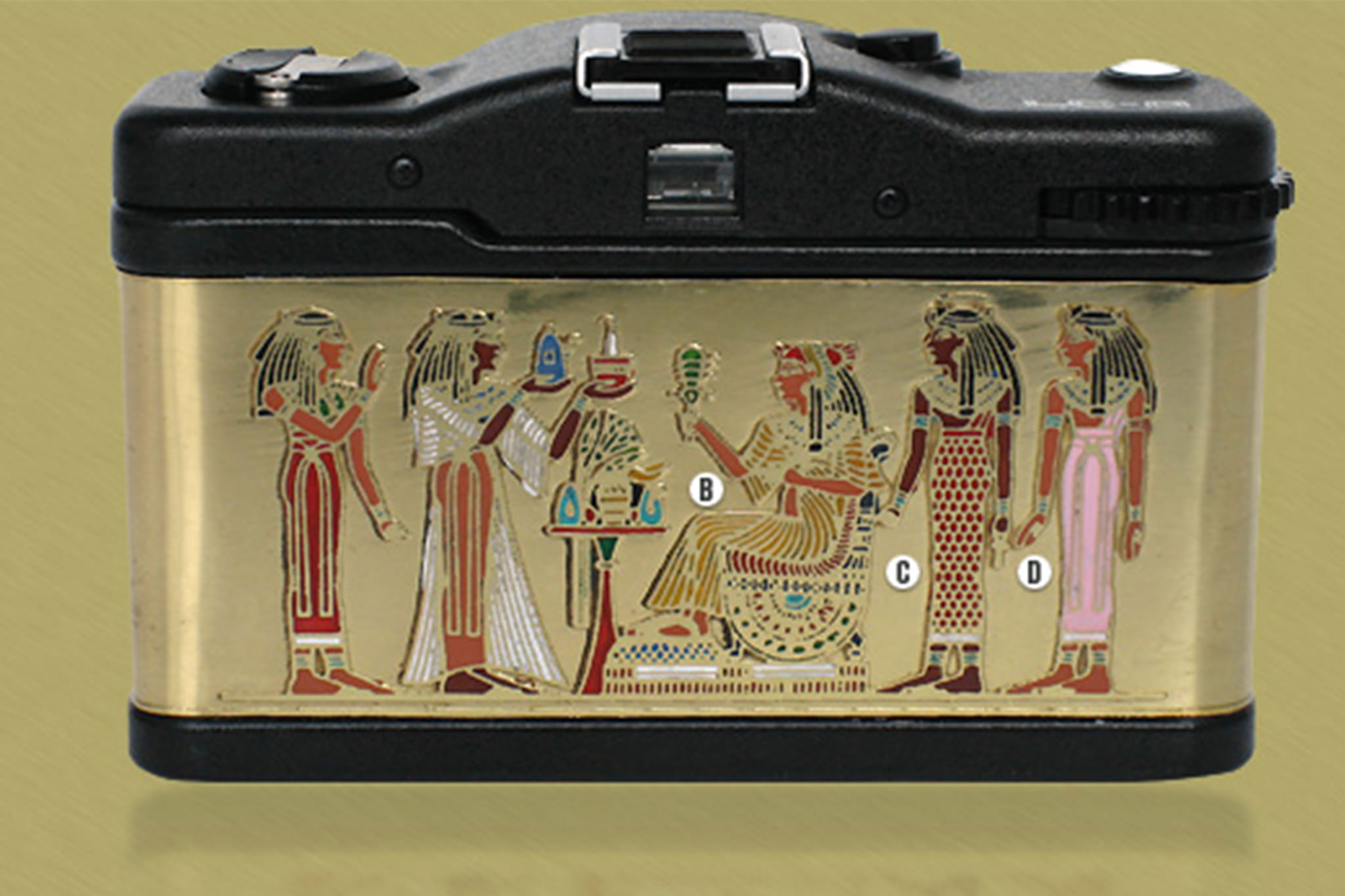
Only 50 pieces of the camera were produced. Each one is covered with a copper coating, which was refined with lacquer paint. It is decorated with figures from the time of the pharaohs.
The front of the camera shows Horus, the eternal god of heaven, who is usually depicted in the form of a falcon. The back of the camera shows a meeting between Hathor, Nebthet and Nefertari. As goddess of music, art and beauty Hathor was worshipped by her dedicated followers with song and dance montages. Nebthet, as goddess of magic, mystery and the underworld, was highly respected and feared for her power. And Nefertari - the favourite wife of Pharaoh Ramses II - was considered the "power behind the throne" and one of the most influential women of antiquity. This is how Lomography describes the camera and the story behind the portraits.
Films for the camera
Of course, you can also take photos with the camera, although many owners are more likely to keep them in the display case.
The Lomo LC-A+ is a camera specially designed for use with 35mm film. Fortunately, these types of film are still produced and processed by most photo labs without difficulty. When it comes to color photography, the Kodak Ultramax 400* is an excellent choice, while the Kodak T-Max 100* is an excellent black and white film , which can be used.
However, there are many other films that are compatible with the Lomo LC-A+, including films from Fujifilm, Ilford, Rollei and Lomography.
Color film is usually developed using the C-41 process, while black and white film must be processed in a black and white developer. Both types of development are offered by professional photo laboratories and can also be carried out at home. The necessary processing chemicals and laboratory equipment can be easily purchased online.
While processing color film is usually a little more complex, processing black and white film is a little more straightforward and requires fewer steps. Depending on the photo lab, it may even be cheaper in the long run to develop the film yourself at home.