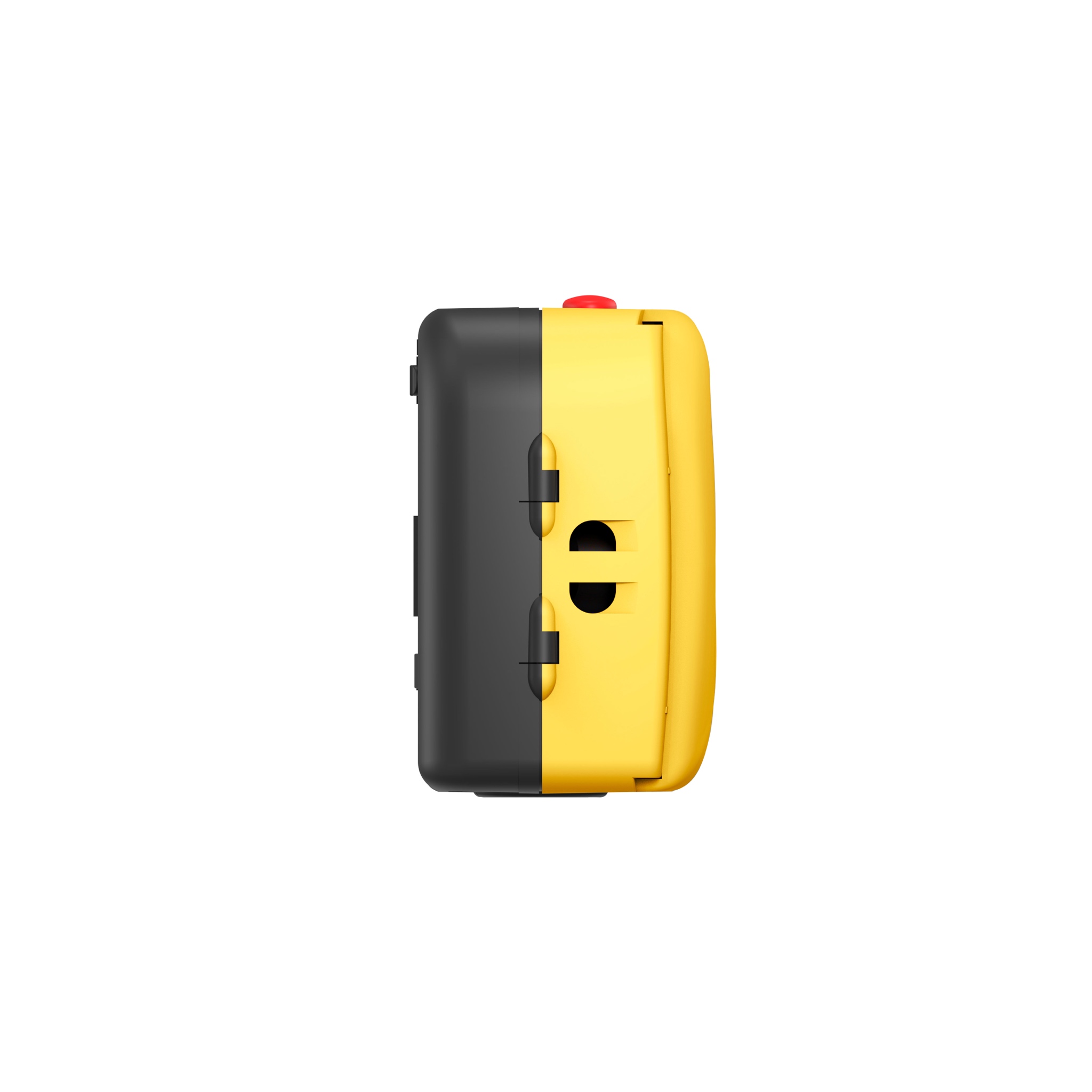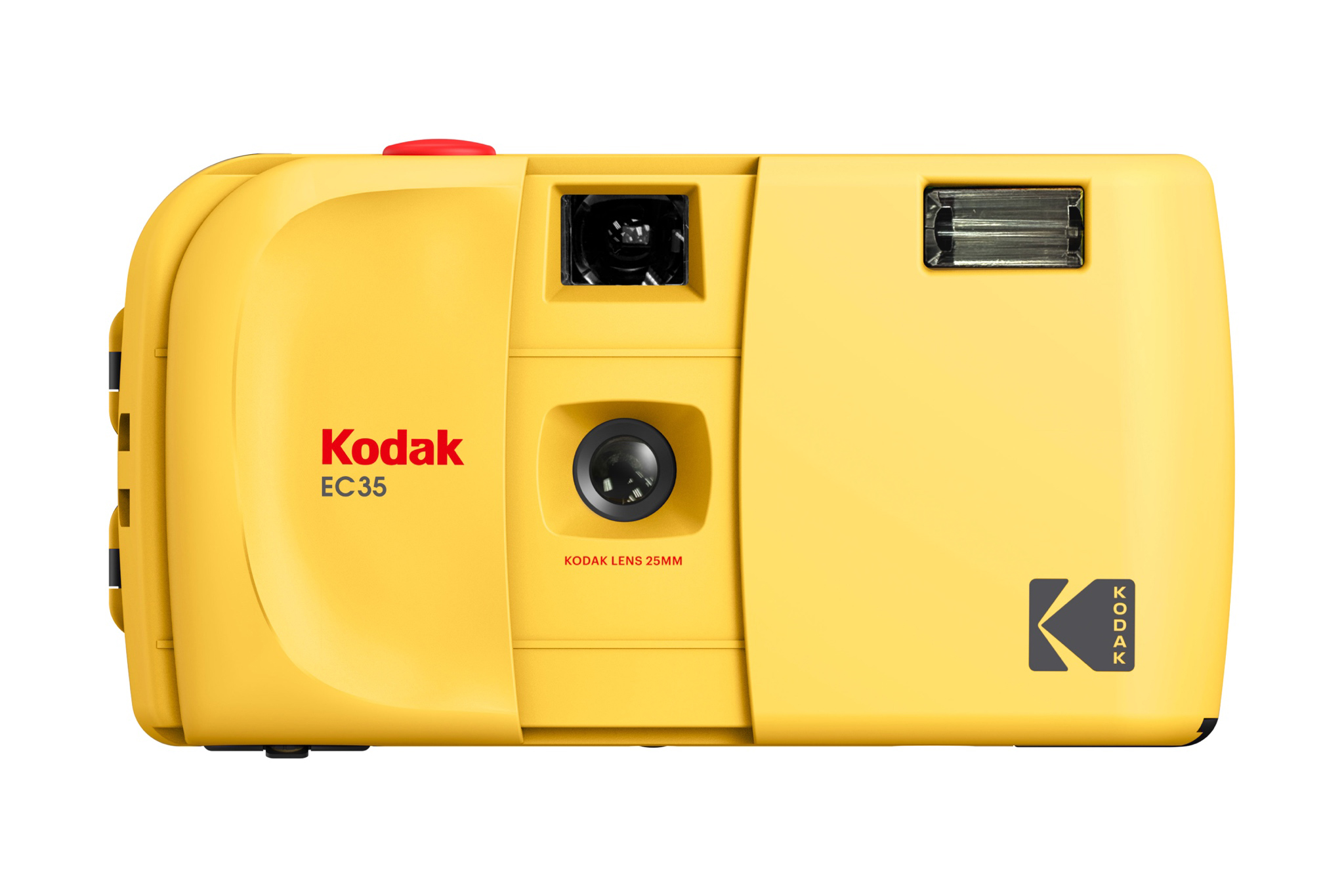

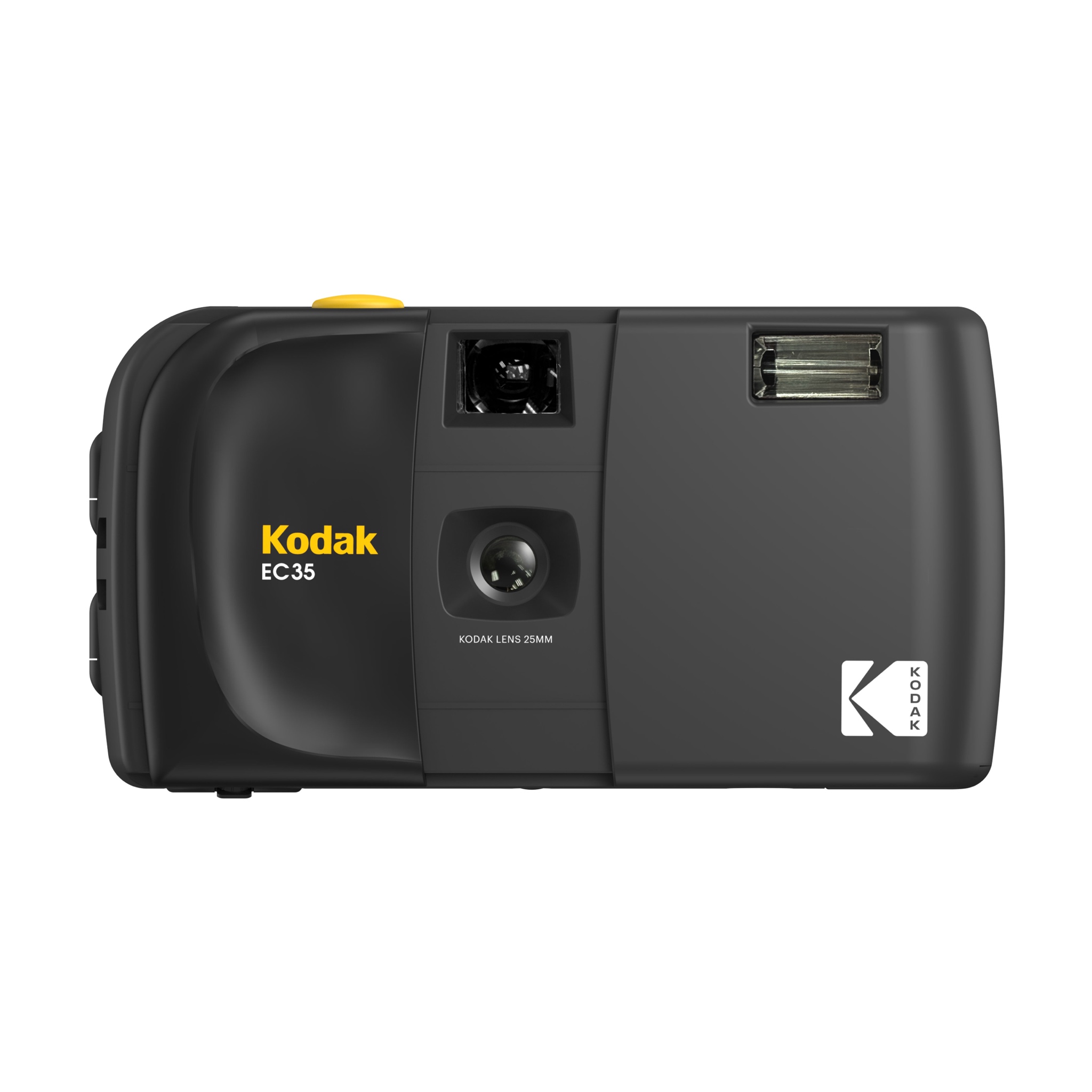
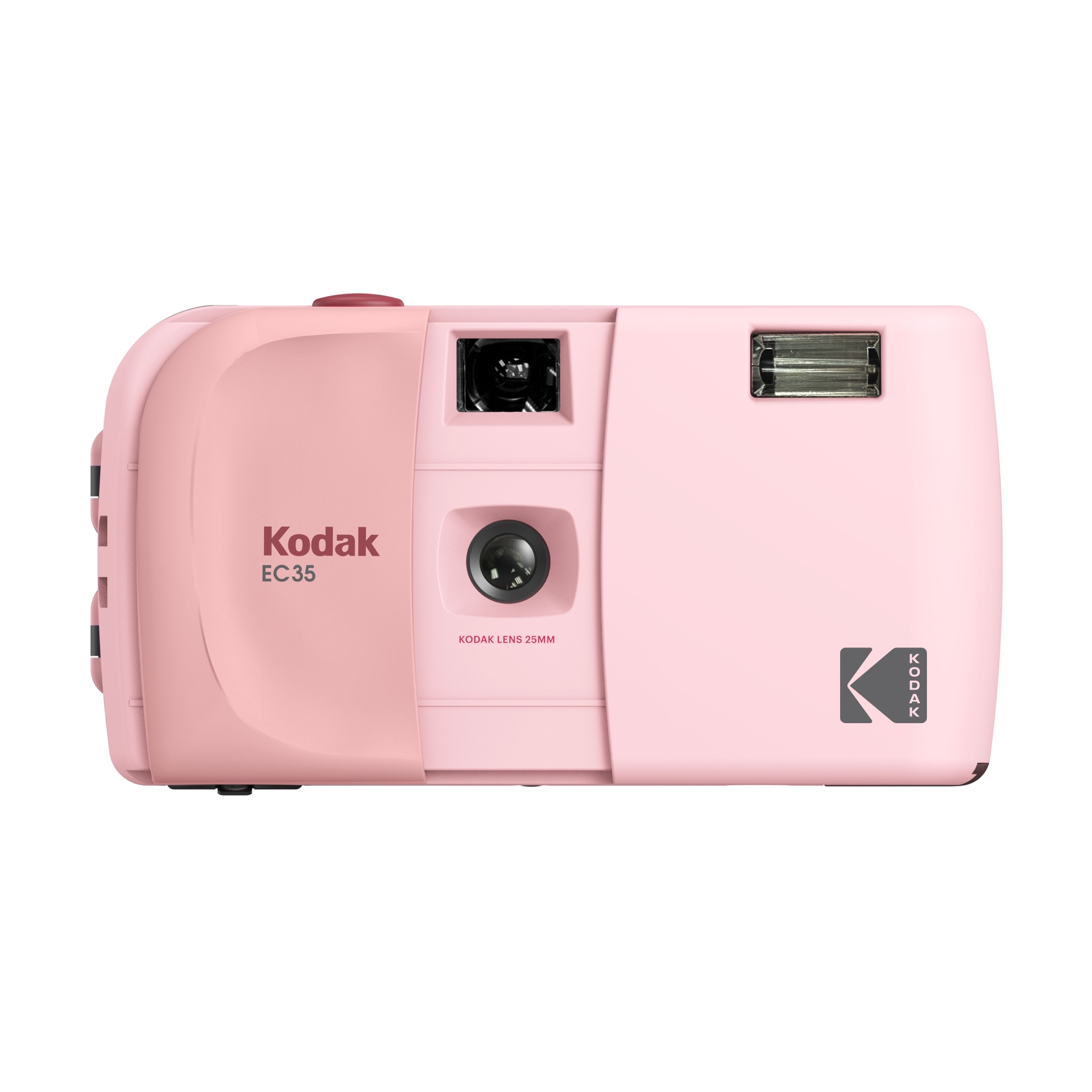
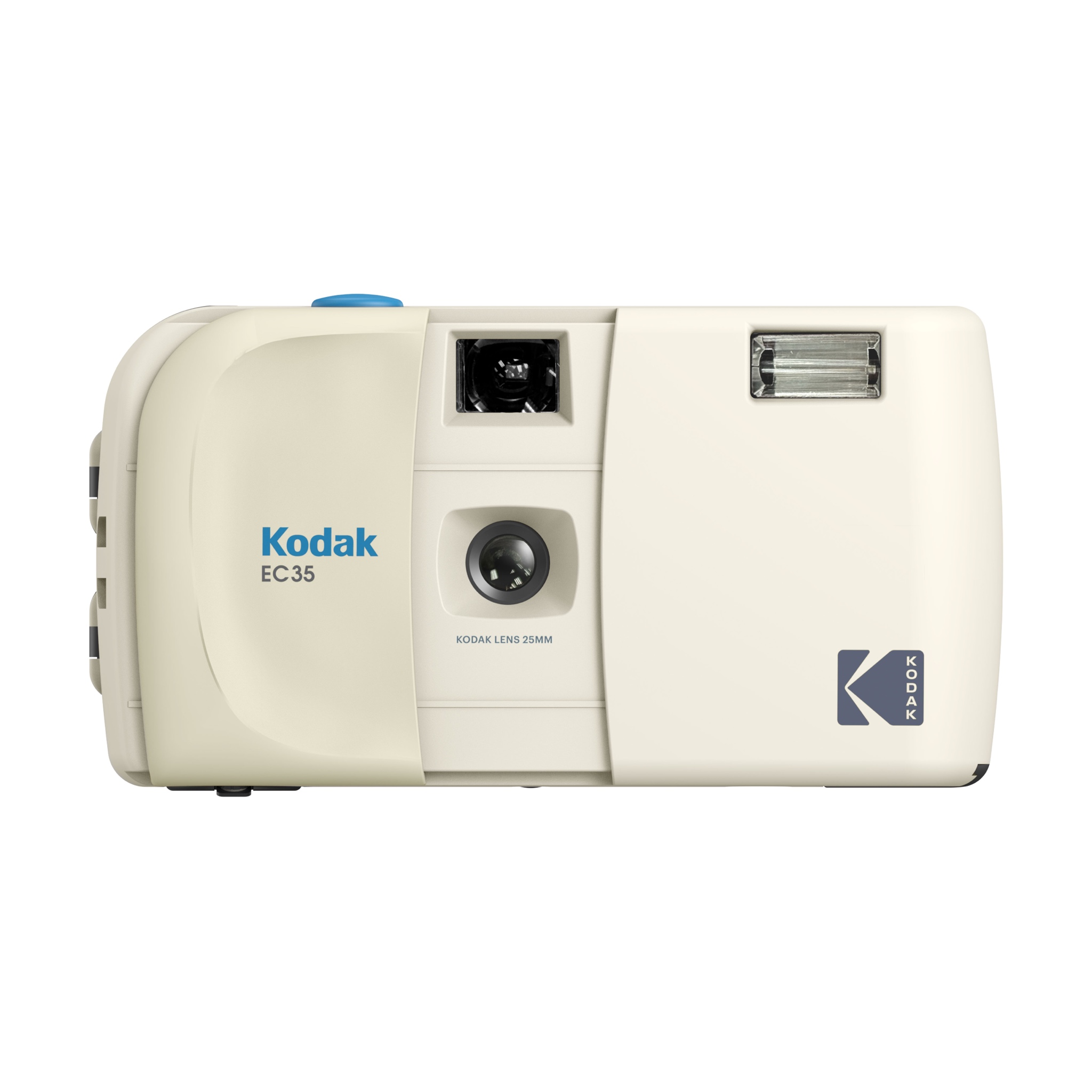
The Kodak EC35 (model number FMC-E2501) is an analog 35mm film camera manufactured and distributed by Reto Project under license from the Eastman Kodak Company. It is a reusable viewfinder camera of the 'point-and-shoot' type, designed as an entry-level model and a reusable alternative to classic disposable cameras.
The camera features a simple technical setup designed for straightforward operation without manual exposure settings. It is sold both as a standalone device and in a bundle with compatible film. It was introduced in July 2026.
Camera Features
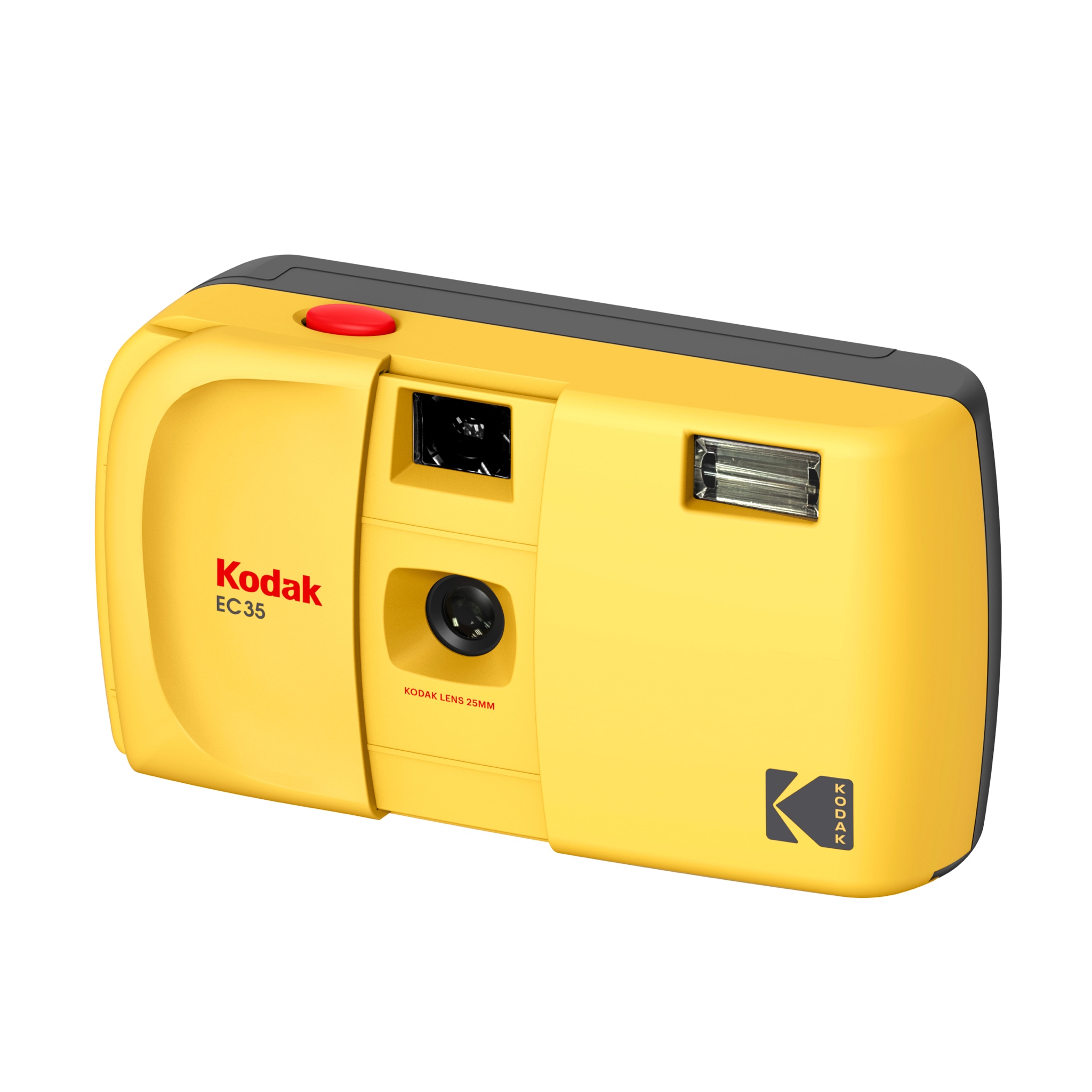
The technical construction of the Kodak EC35 is based on an ABS body measuring 119 mm in width, 65 mm in height, and 41.5 mm in depth. The camera weighs 102 grams without battery and film.
The optical unit consists of a wide-angle fixed-focus lens with a fixed focal length of 25 mm and a constant aperture of f/10. The lens is constructed as a two-element system made of optical acrylic glass. The camera's shutter speed is mechanically fixed at 1/100 second.
A central mechanical element of the body is the sliding lens cover on the front. When closed, this cover protects the lens from external influences and simultaneously blocks the shutter release mechanism to prevent accidental exposures during transport.
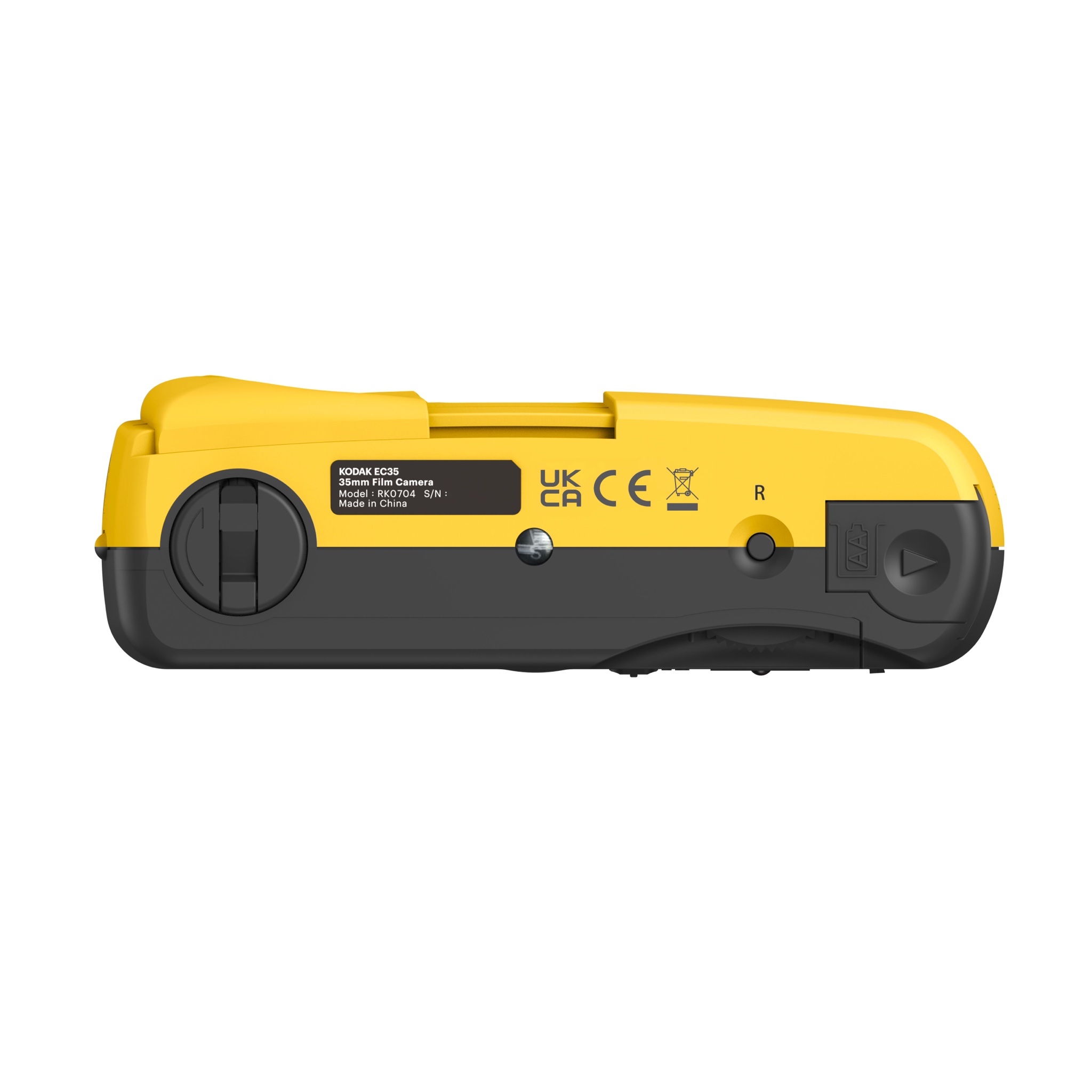
For shots in low-light conditions, the camera has a built-in electronic flash. The flash unit is powered by a single AA (Mignon) alkaline-manganese battery (eBay / Amazon*).
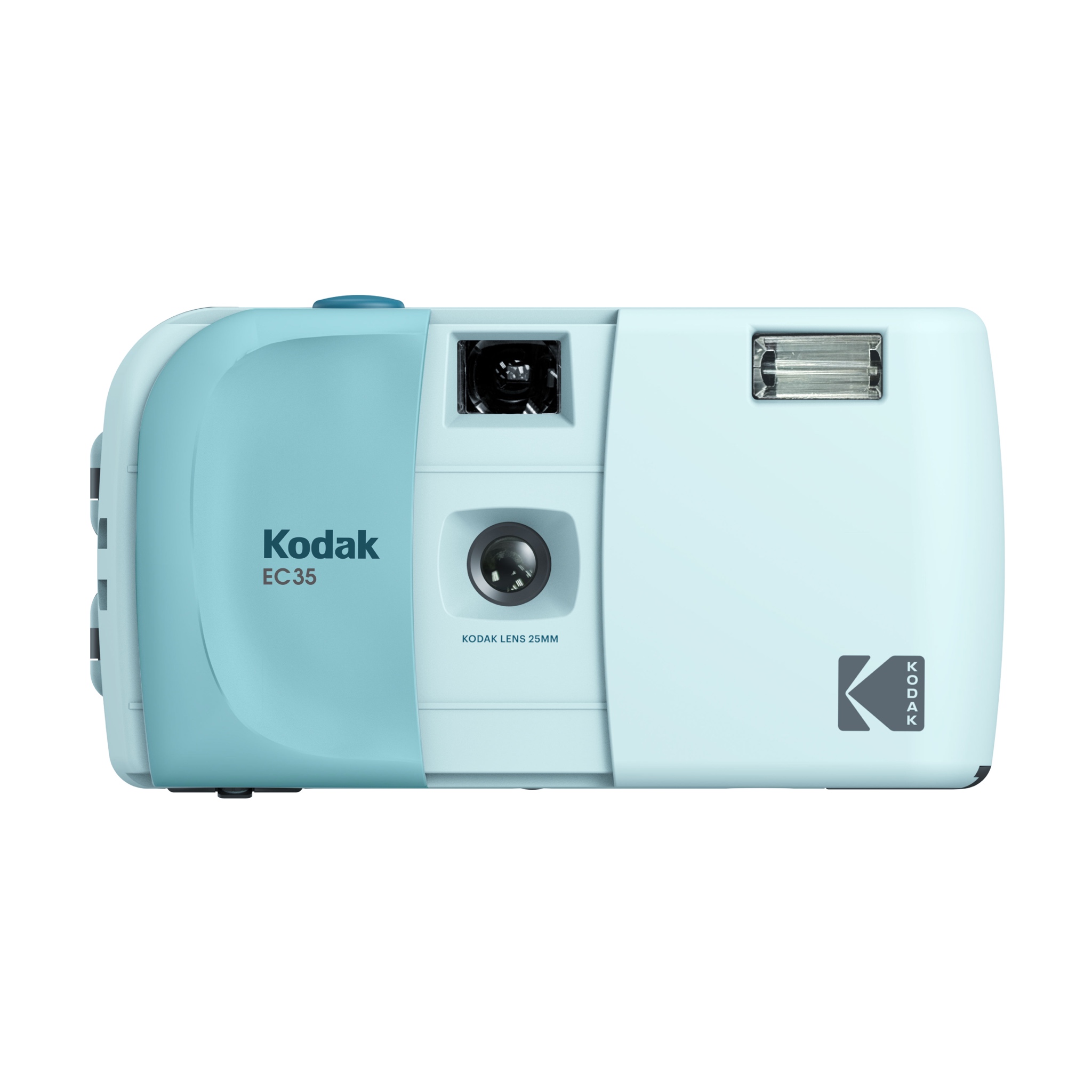
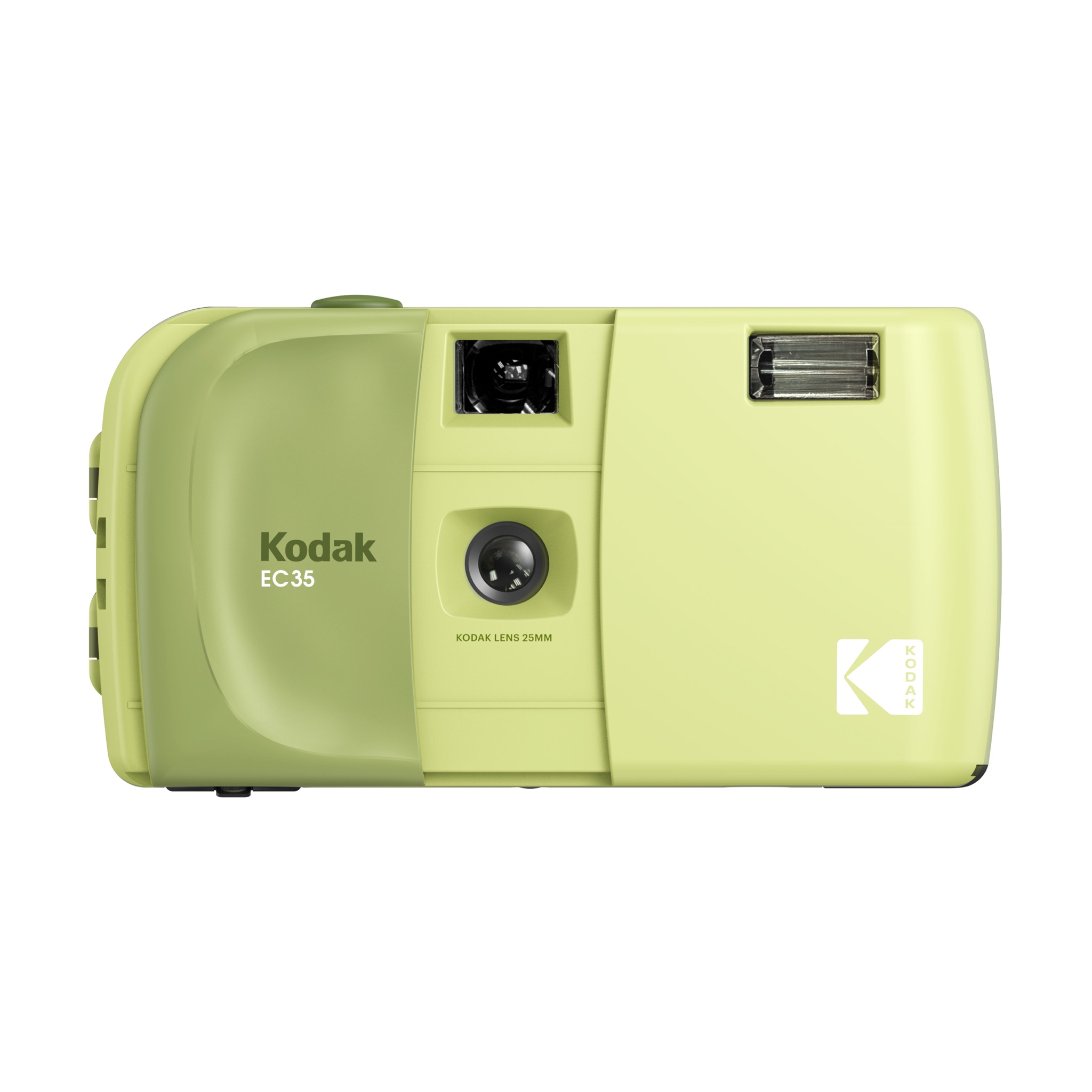
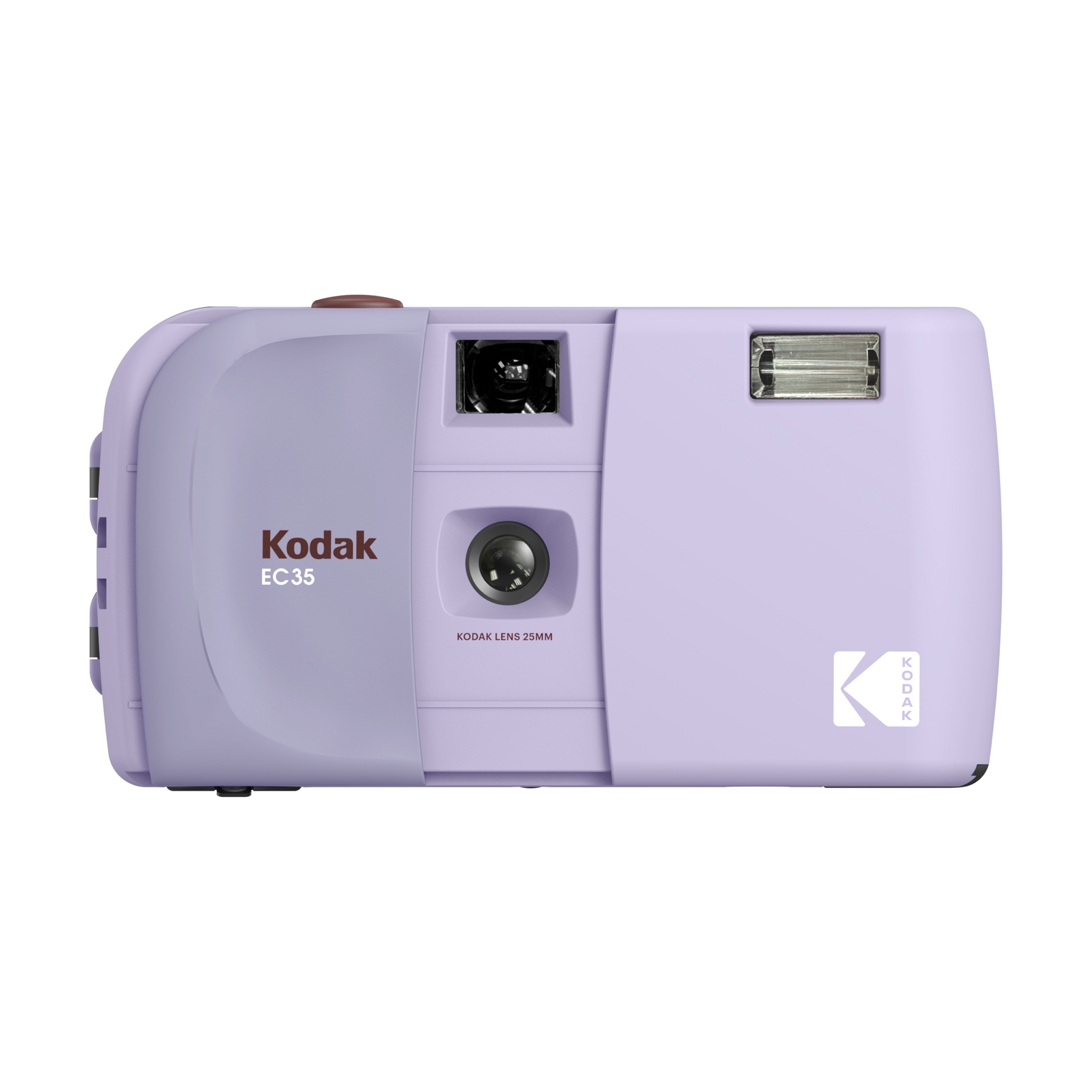
The model is produced in seven different color variants: Midnight Black, Vanilla White, Butter Yellow, Lavender, Powder Blue, Blush Pink, and Avocado Green.
Films for the Kodak EC35
The Kodak EC35 uses standardized 35 mm film (format 135). Since the exposure parameters are fixed by the f/10 aperture and the rigid 1/100 second shutter speed, proper exposure largely depends on the choice of film speed and the prevailing lighting conditions.
For outdoor shots in direct sunlight, low-speed films with an ISO of 100 or 200 are suitable. In changing weather conditions, overcast skies, or for universal use, films with an ISO of 400 are recommended, as they offer greater exposure latitude.
An example is the Kodak Ultramax 400 color negative film offered by the manufacturer in the bundle. For indoor shots or situations at dusk, the built-in flash must be used in combination with an ISO 400 film to avoid underexposing the film.
The camera is compatible with both color negative films and black-and-white films in the 35mm format. A good black-and-white film is, for example, the Kodak T-Max 400*.
Film advance and subsequent rewinding of the exposed film must be done manually via a knurled wheel and a fold-out rewind crank, respectively.