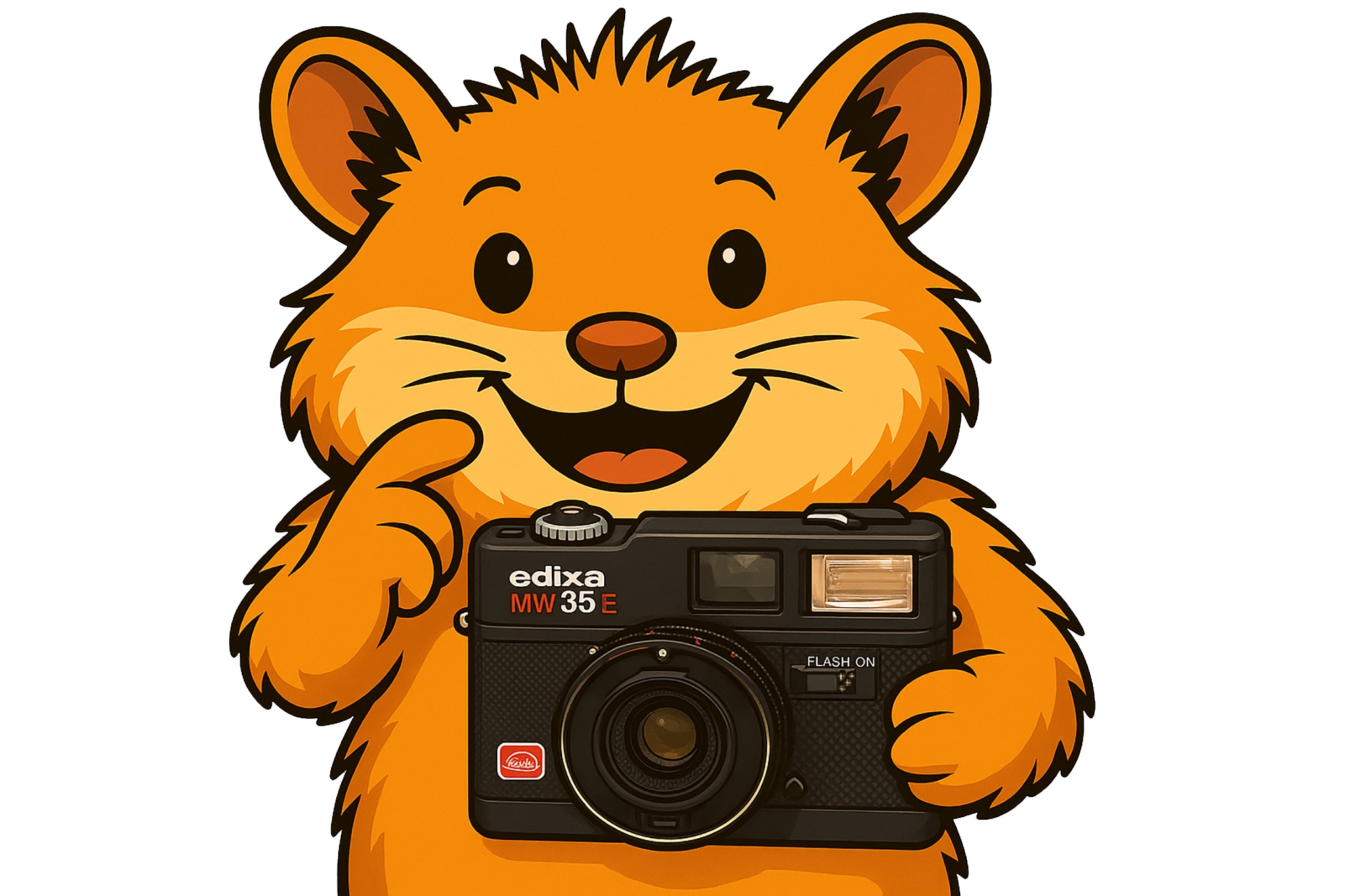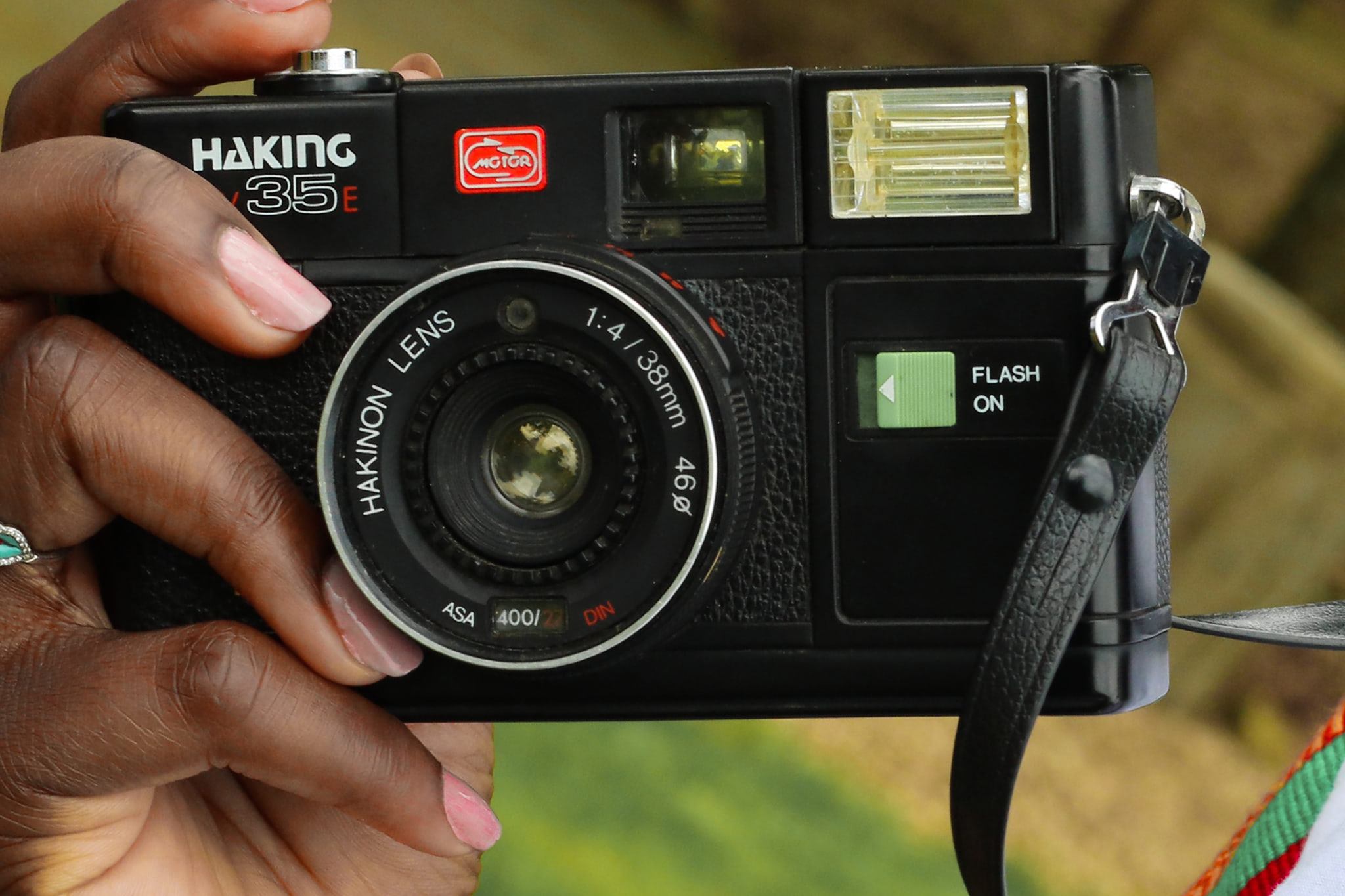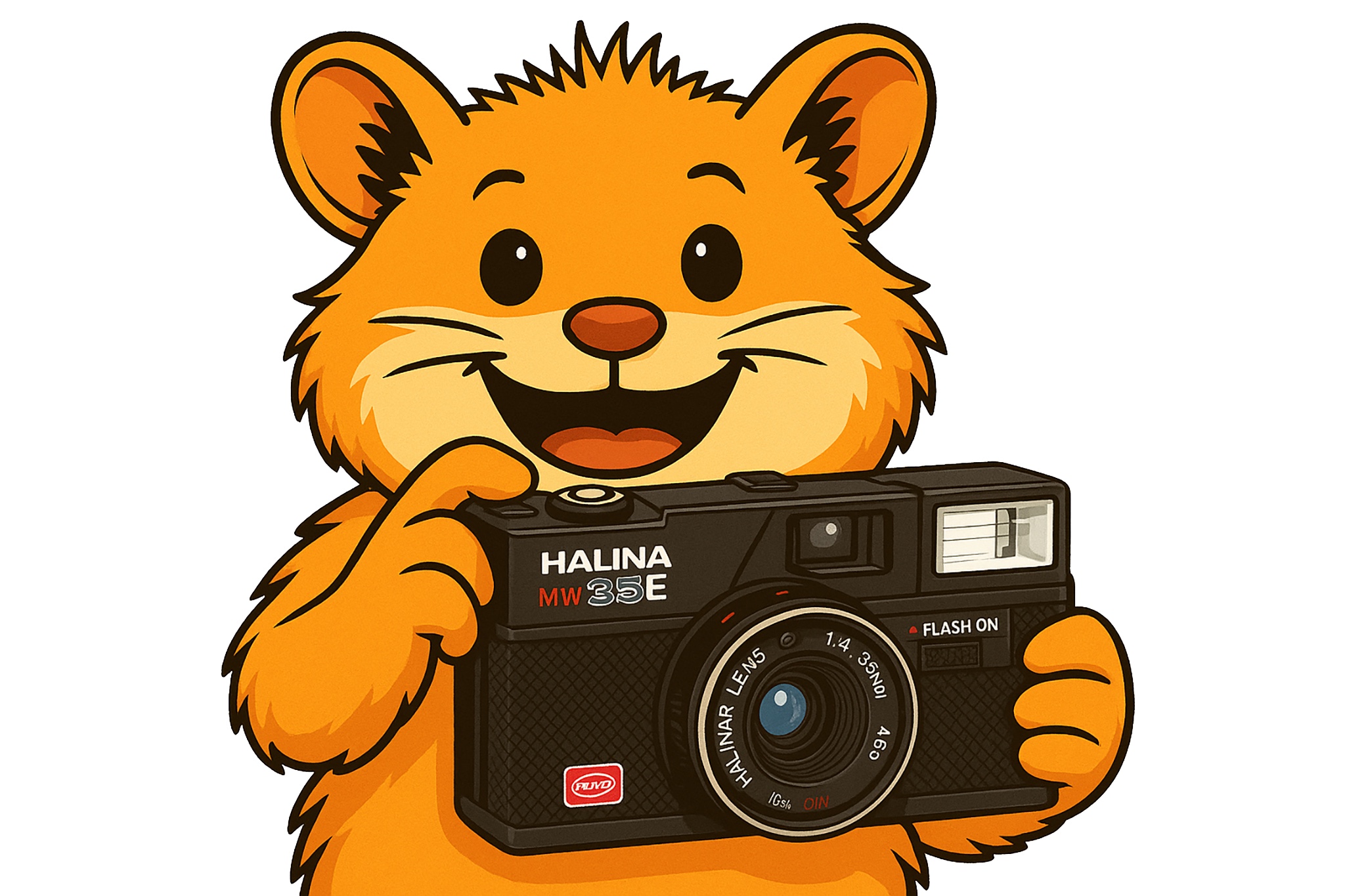
The Halina MW 35E is a handy viewfinder camera, suitable for use with 35mm film. It originated in Hong Kong and was primarily designed for beginners and occasional photographers. A functionally identical model was offered by the Haking company as the Haking MW 35E.
There is no provision for changing the lens on this camera. The lens used is called "Halinar Lens". With a focal length of 38 mm and a maximum aperture of f/4, it is fixed.
Focusing on the Halina MW 35E requires manual handling, as it has no autofocus. The minimum distance to the selected object should be 100 cm. A zone autofocus with graduations of 1 metre, 1.5 metres, 3 metres and infinity is integrated.
An integrated metering cell system ensures correct exposure metering. It recognises ISO values between 64 and 400. The automatic exposure setting adjusts the exposure time and aperture for the user. Only the aperture changes, while the shutter speed remains constant.
An internal flash facilitates photography in suboptimal lighting conditions. It is activated by a button on the front.
Additional features include a cable release connection, a tripod thread on the bottom and the possibility of attaching a camera strap. Two AA batteries (eBay / Amazon*) are required for operation, providing a long-lasting power source for all camera functions.
Film selection for the Halina MW 35E
Without the right film, the Halina MW 35E remains mute. According to the manual, it requires 35mm film. These films are still available and are developed without complications in most specialist laboratories.
Recommended 35mm films for colour and black and white photography are the Kodak Portra 400* and the Ilford Delta 400*. Both films are convincing in tests and are versatile. There are other alternatives from brands such as Lomography, Rollei, Fujifilm and Adox.
The exposure area is 24 mm x 36 mm, so that 36 exposures usually fit on one standard film (135-36). An automated film transport system ensures that the film is advanced after each exposure. Rewinding is also automatic.
A display instrument on the top indicates whether the film is being transported properly and also shows the number of shots already taken.