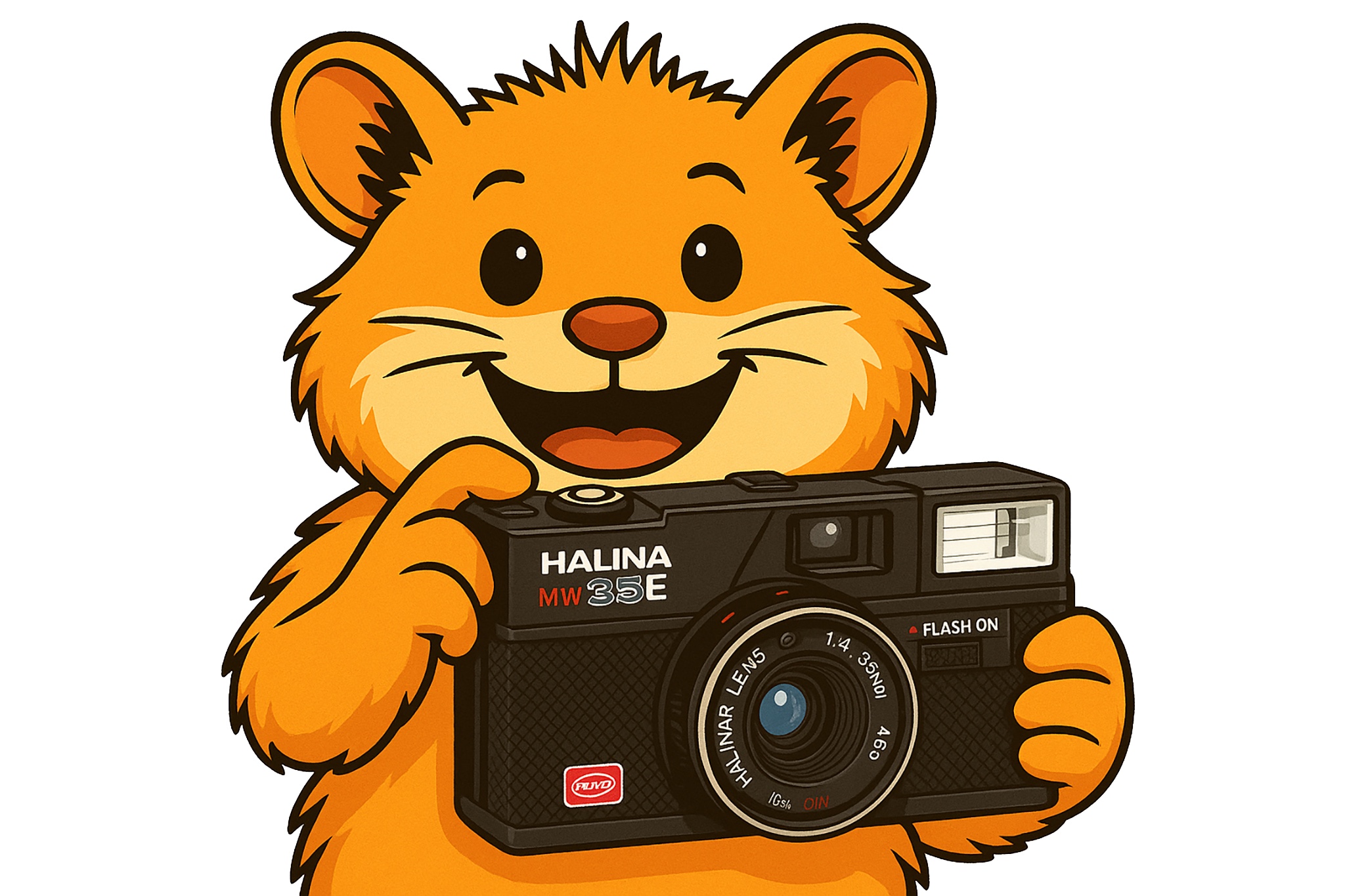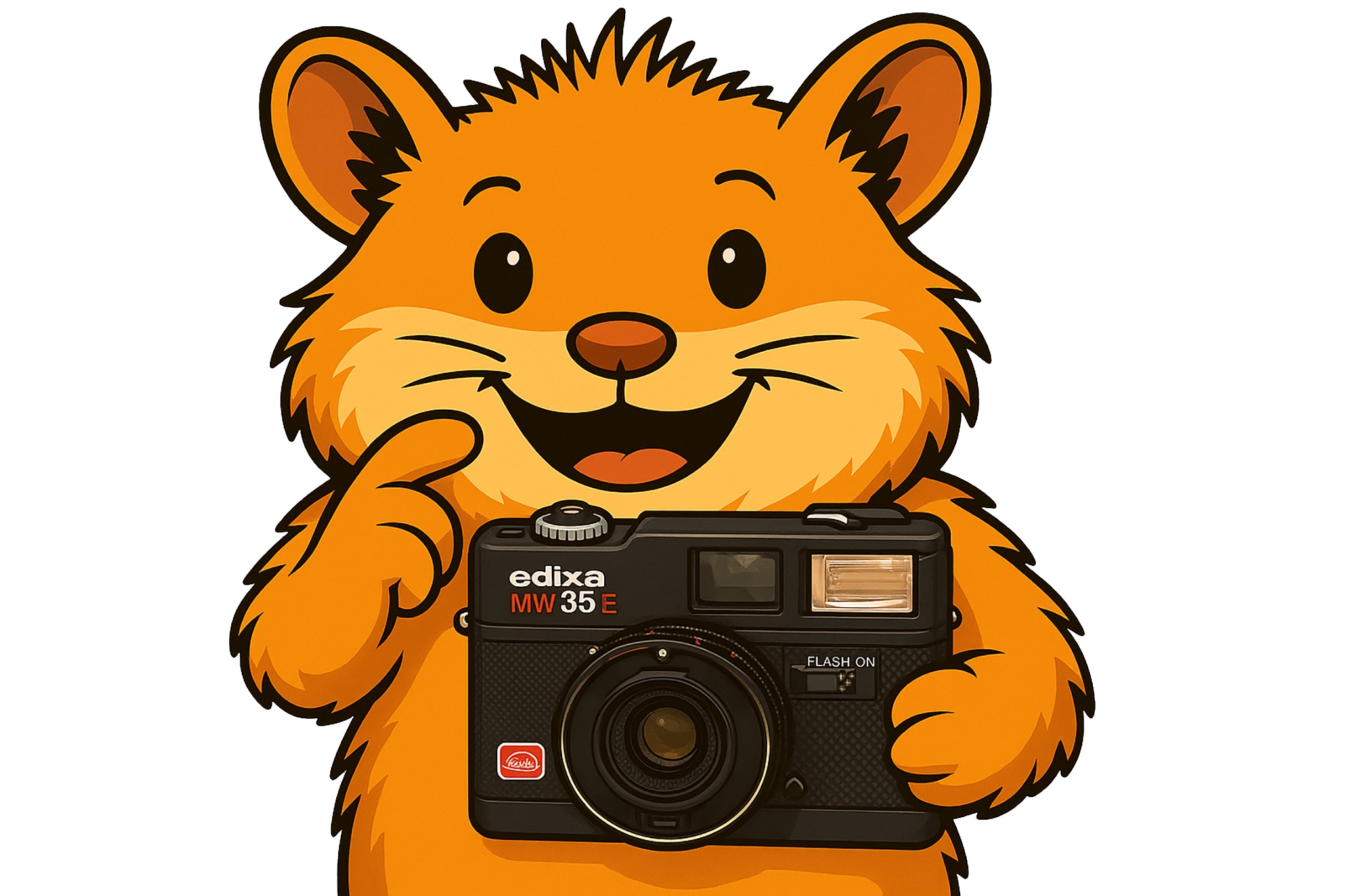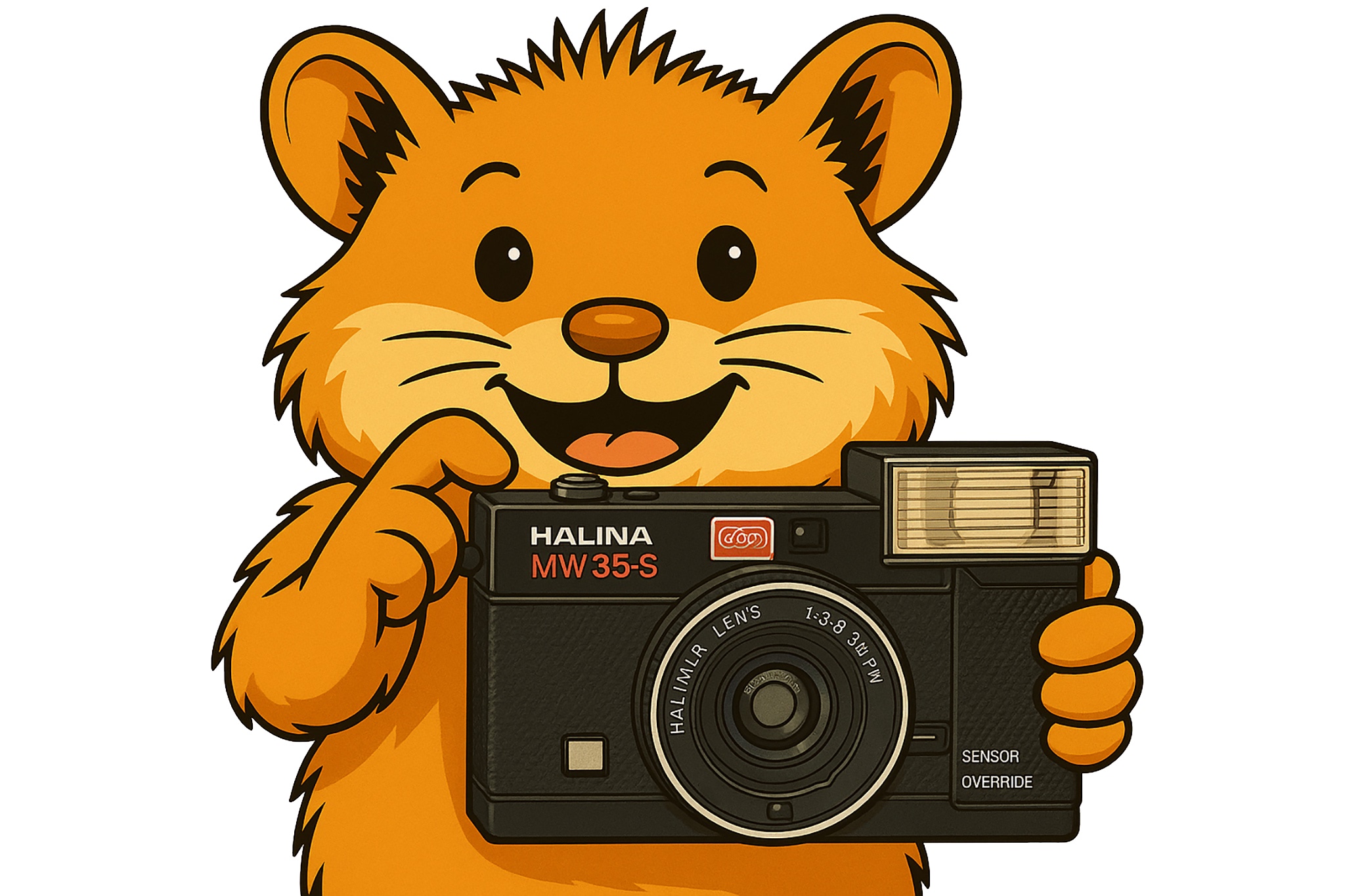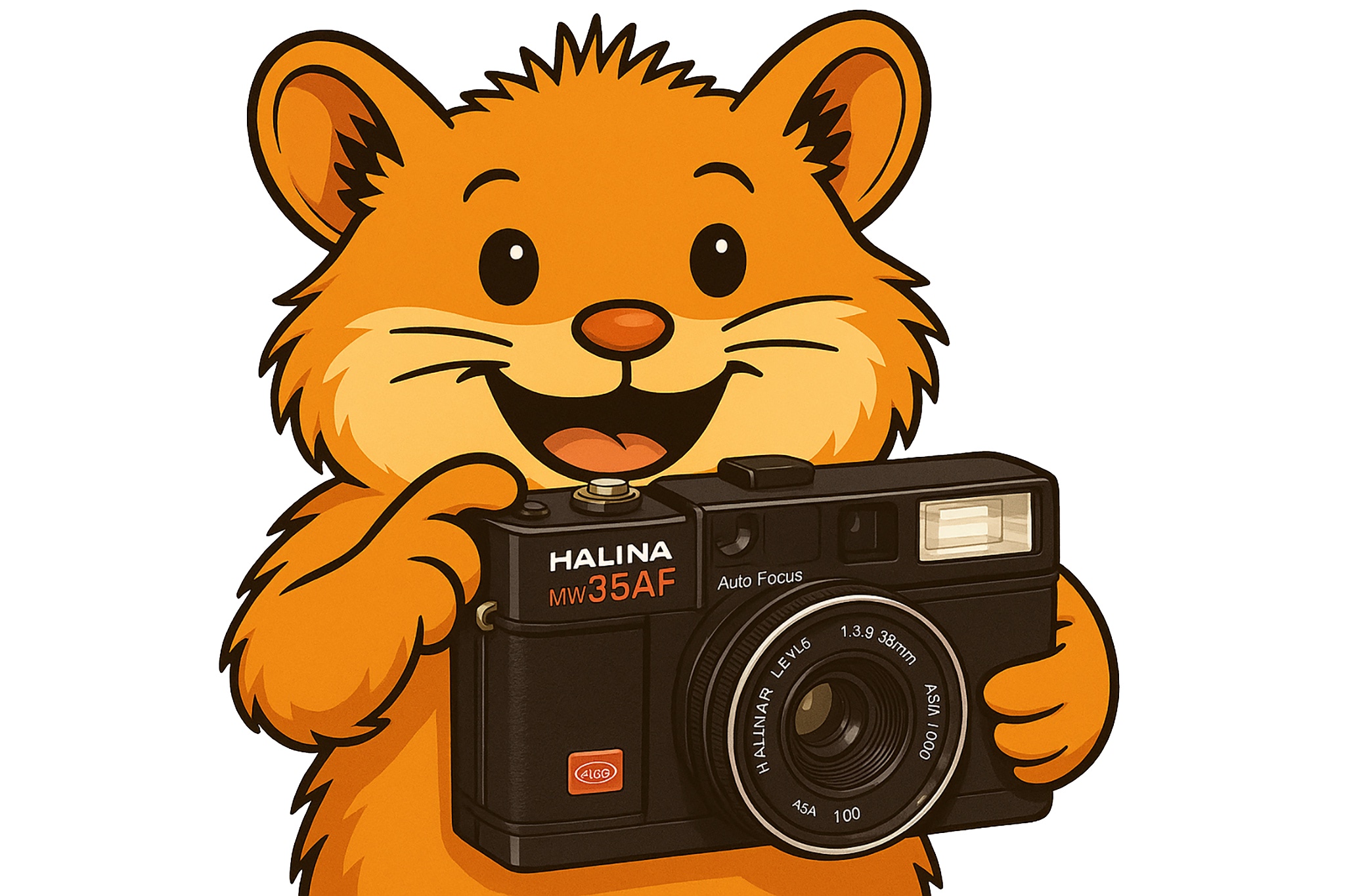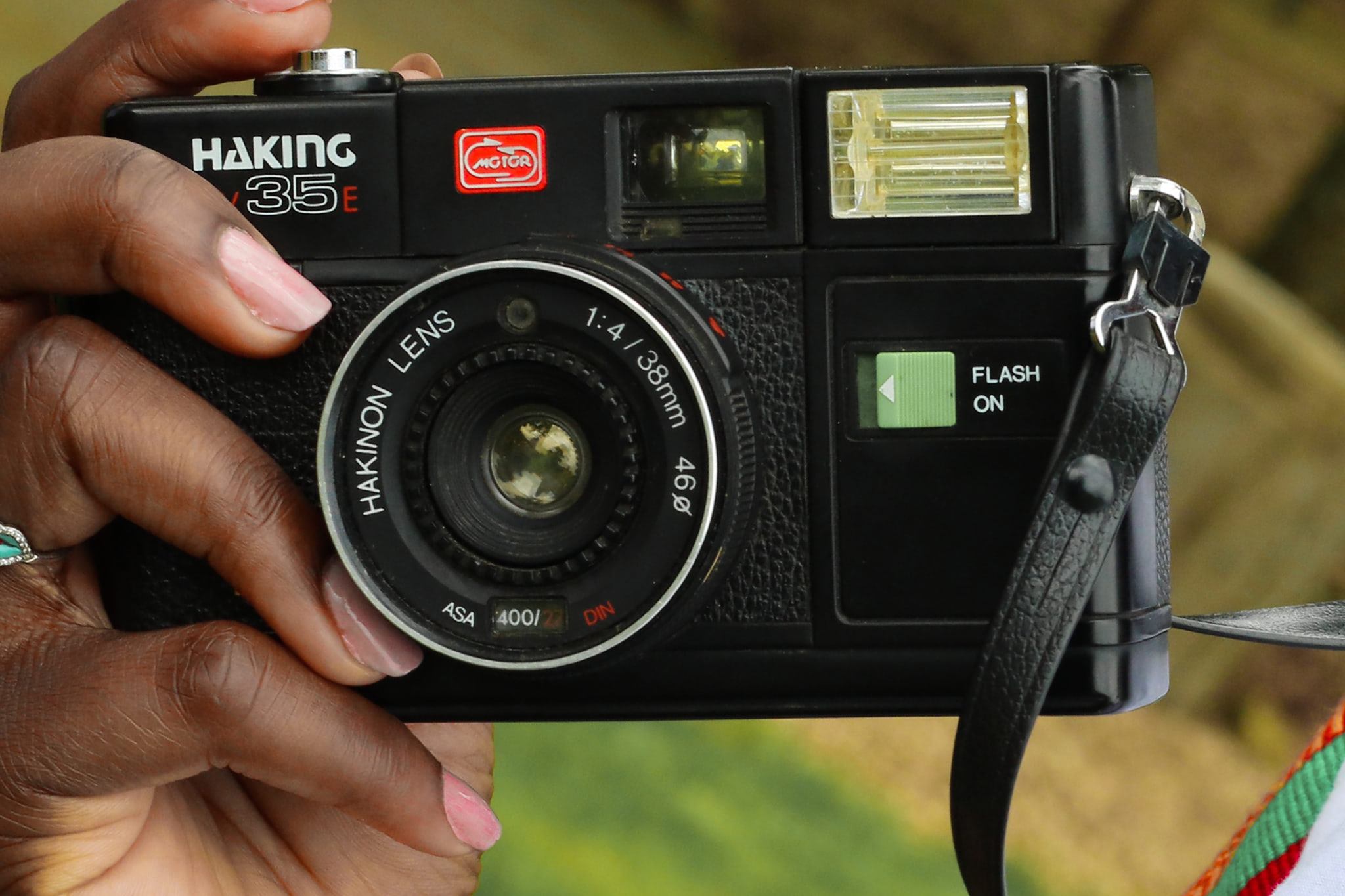
The Haking MW 35E is a compact viewfinder camera designed for 35mm film. Originating from Hong Kong, it was primarily intended for beginners and sporadic photographers. Interestingly, this Haking model was offered under various brand names with the same functions.
One feature of this camera is the fixed lens; there is no provision for changing lenses. The lens used is called "Hakinon Lens" with a focal length of 38 mm and a maximum aperture of f/4.
The focus setting on the MW 35S has to be done manually, as there is no autofocus function. The minimum distance to the subject should be 100 cm. However, a zone focus with four stages - 1 metre, 1.5 metres, 3 metres and infinity - is available.
An integrated light meter in the MW 35S facilitates light metering. It supports ISO values from 64 to 400. The camera regulates aperture and exposure time automatically, so there is no need for manual intervention. The shutter speed remains constant, only the aperture varies.
A built-in flash, which can be activated with a front button, helps to get clear pictures in low light.
The Haking MW 35E has a socket for a cable release. A tripod thread on the bottom and a device for a camera strap increase flexibility when taking pictures. Two AA batteries (eBay / Amazon*) are required for operation, which cover the camera's entire energy needs. Both conventional and rechargeable models are available. A set of batteries lasts quite a long time.
Film material for the Haking MW 35E
The Haking MW 35E works exclusively with 35mm film. These films are still on the market and can easily be developed in professional photo labs.
Some recommended 35mm films are the Kodak Gold 200* and the Ilford Delta 400*, both of which have impressed in reviews. There are also other brands such as Lomography, Rollei, Fujifilm and Adox that provide suitable film stock.
The image area of the camera is 24 mm x 36 mm. A standard film (135-36) typically holds 36 exposures. The film mechanism of the MW 35S is motorised and transports the film after each exposure. Rewinding is also automatic.
An indicator on the top shows whether the film is being transported correctly; next to it is a shot counter.