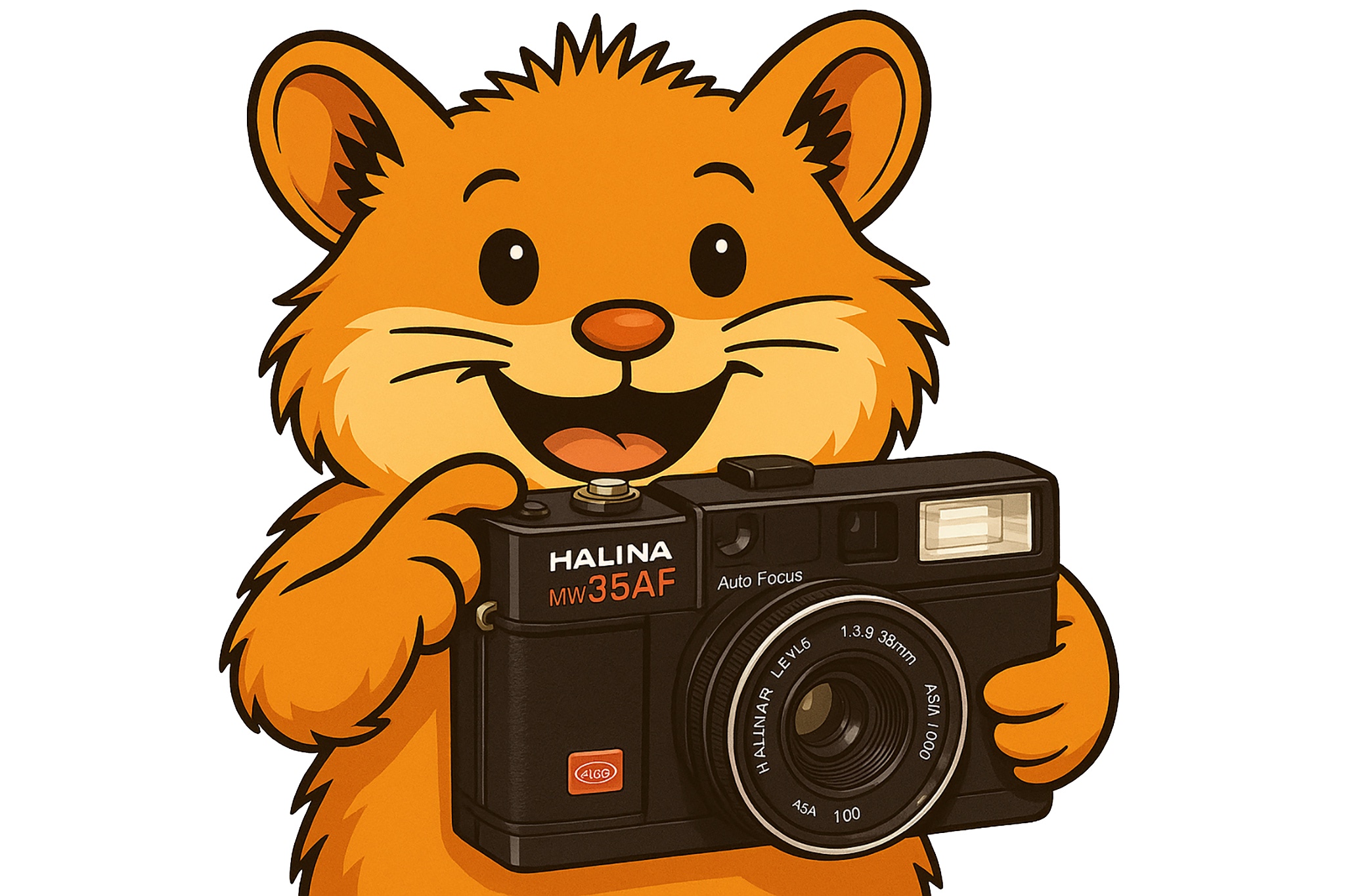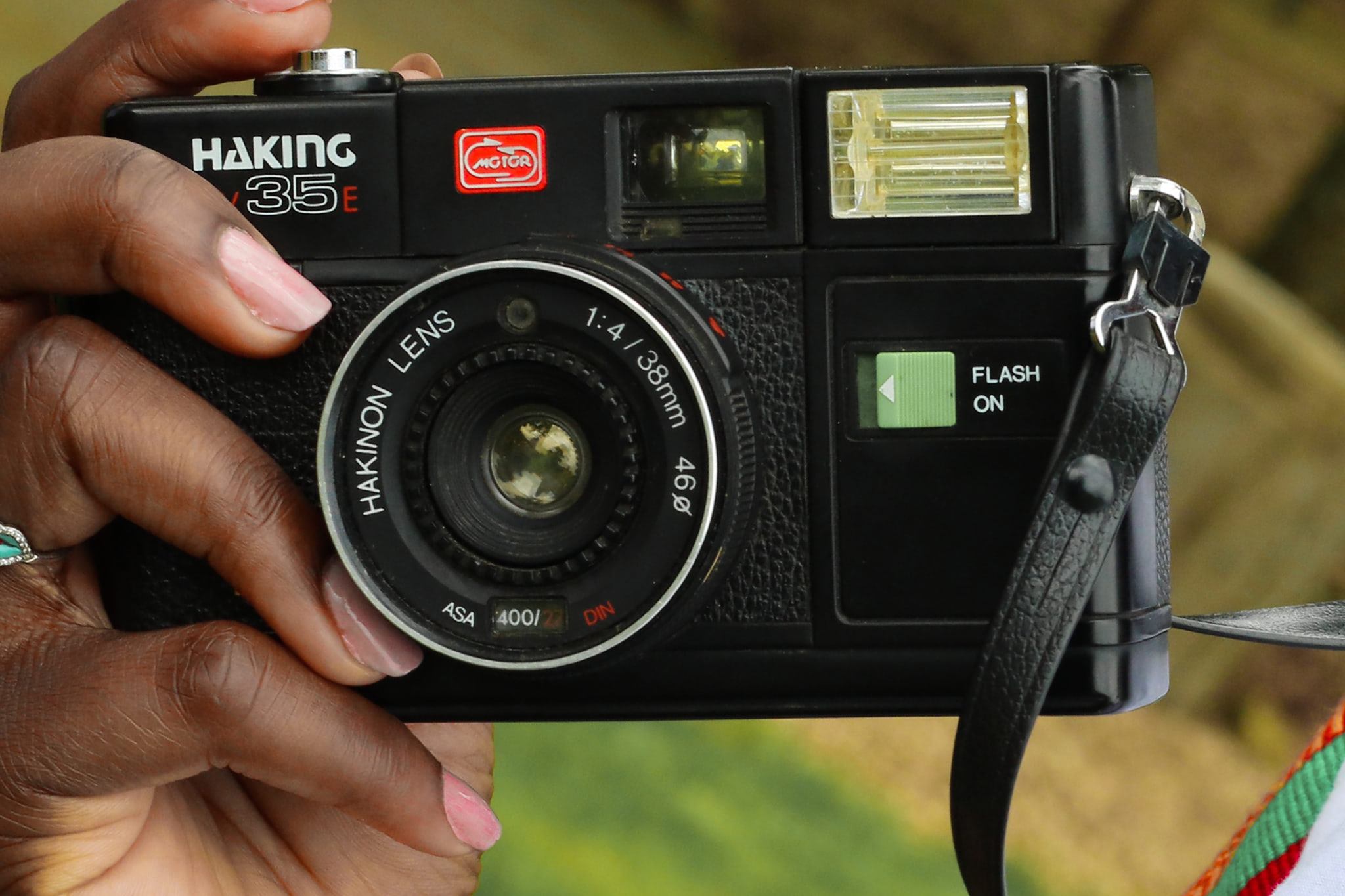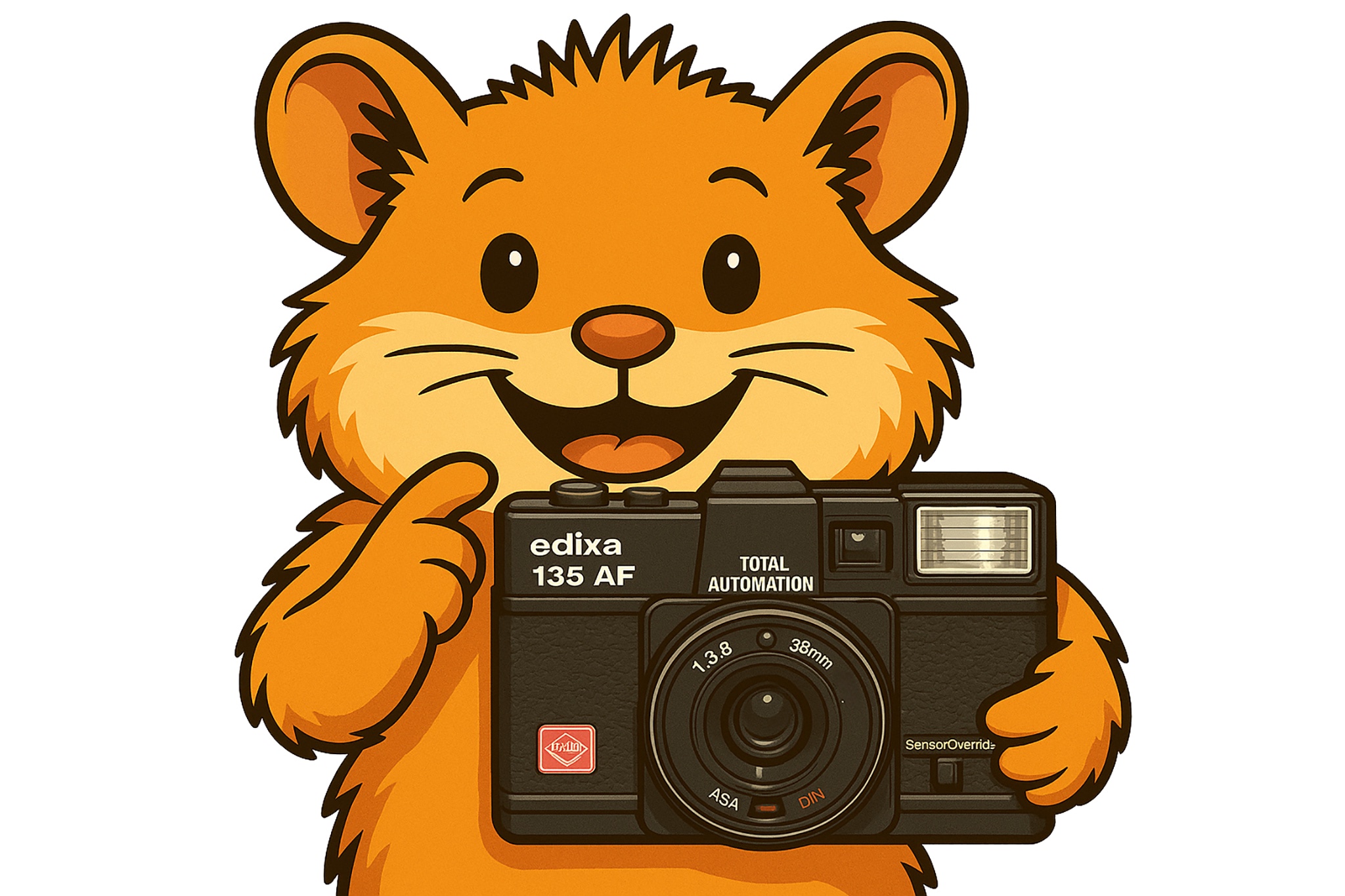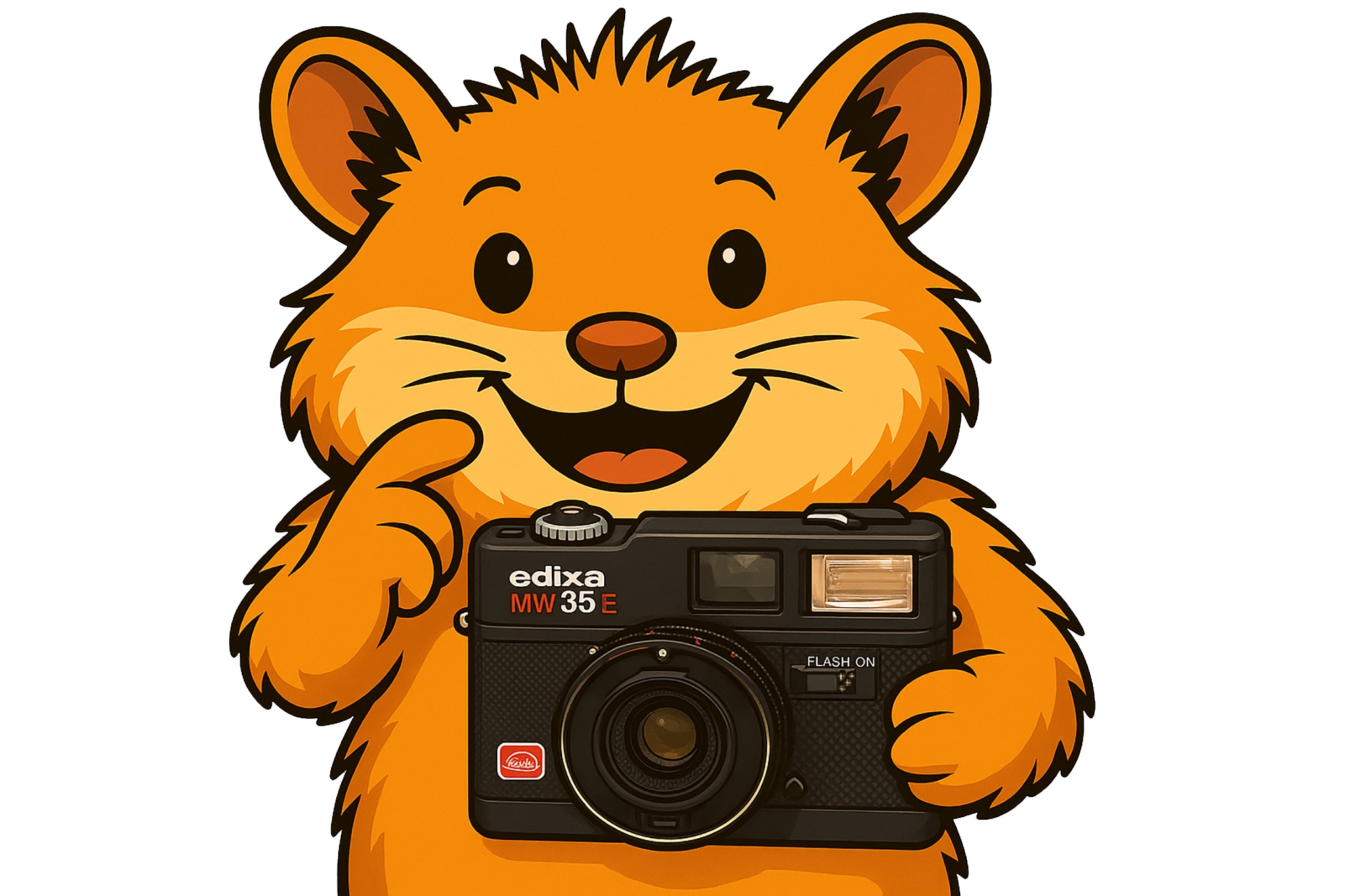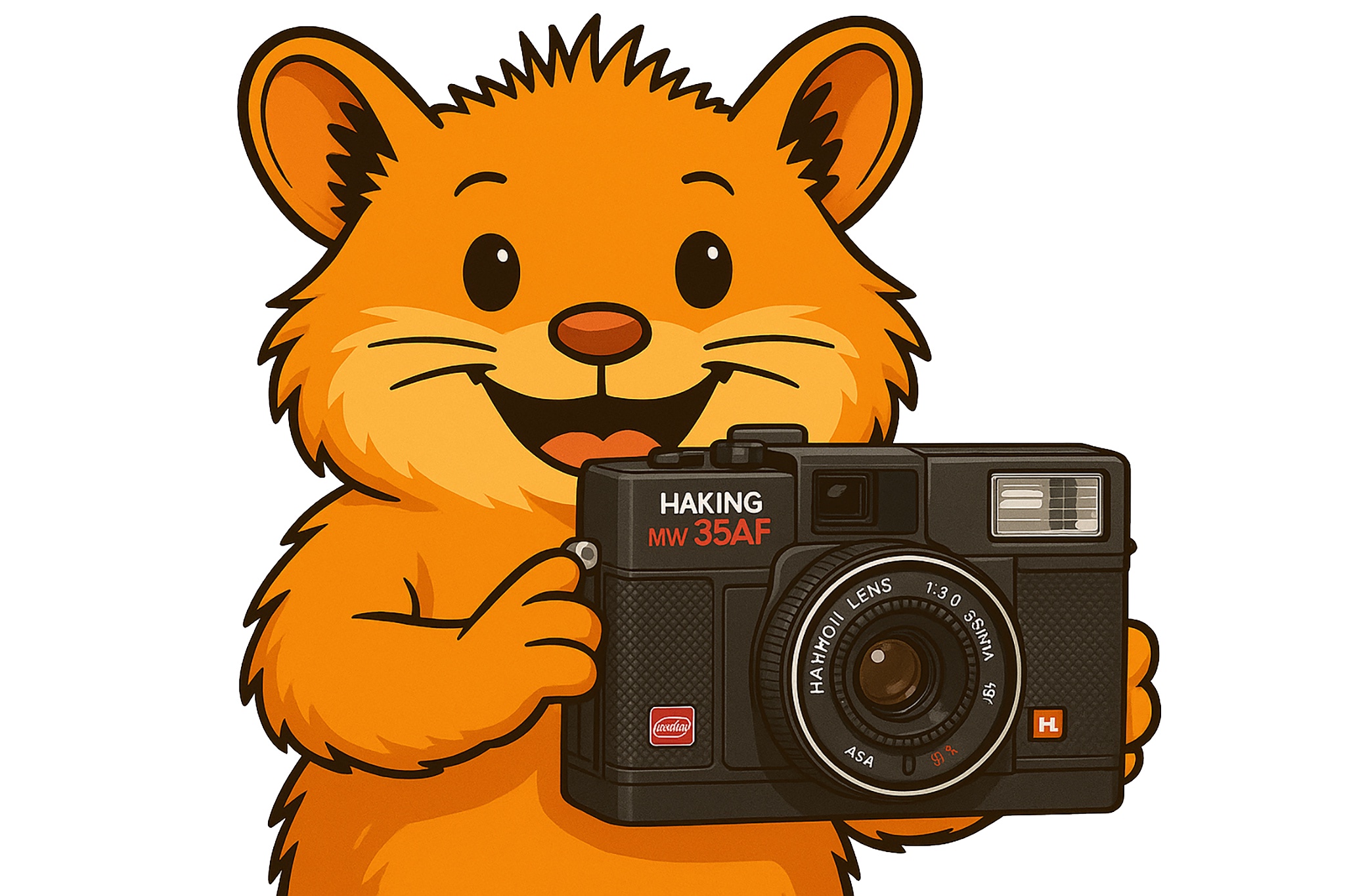
The Haking MW 35AF is a compact photo camera from Haking. It was produced in Hong Kong and was also available as Halina MW 35AF and Edixa 135 AF.
Other similar models include the Edixa 135 AF Total Automation, Ansco 1090 AFS and Carena AF 35 ML. They are the same in terms of technical features, but the case is slightly different. The switch for the flash is a little further down.
It is not possible to change lenses with this device. The built-in lens is called "Hakinon Lens" and has a focal length of 38 mm with a maximum aperture of f/3.8.
The focus is set automatically by a sensor and the camera technology. The recommended minimum distance of at least 100 cm to the subject is recommended. There is no manual focus adjustment option.
A built-in exposure meter of the Haking MW 35AF ensures correct light metering. The camera recognizes ISO values from 64 to 400. With this 35mm model, the automatic exposure controls both the exposure time and the aperture independently, with only the aperture opening being variable.
An internal flash makes it easy to take pictures in low light. This is activated via a button on the front.
In addition, the Haking MW 35AF offers a connection for a cable release and a tripod thread. A shoulder strap can also be easily attached.
The camera requires two AA batteries (eBay / Amazon*) for power supply. These are easy to find, although rechargeable variants can also be used. A set of batteries lasts a considerable amount of time.
Films for the Haking MW 35AF
The Haking MW 35AF is useless without 35mm film. According to the manufacturer, 35mm films are required, which can be developed in specialist laboratories without any problems.
Recommended 35mm films are Kodak Ultramax 400* and Ilford Delta 400*. They reliably deliver good results for various scenarios. Other brands such as Lomography, Rollei, Fujifilm or Adox also offer suitable films.
The exposure format of the camera measures 24mm x 36mm. A standard film (135-36) usually holds 36 frames. Thanks to a motor drive, the film is automatically transported after each exposure and when rewinding.
Display instruments on the top of the camera body provide information on whether the film is working properly and how many shots have already been taken.