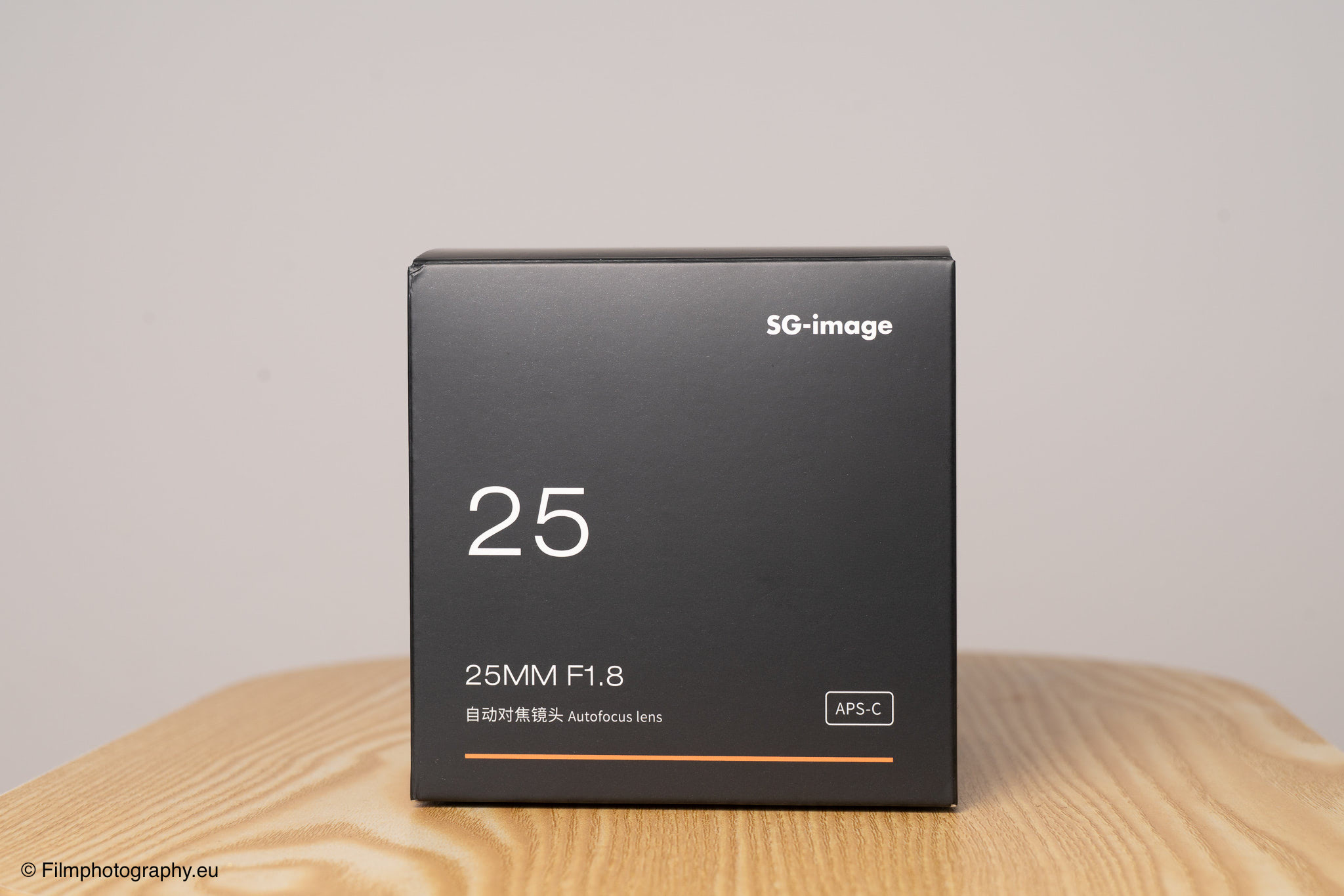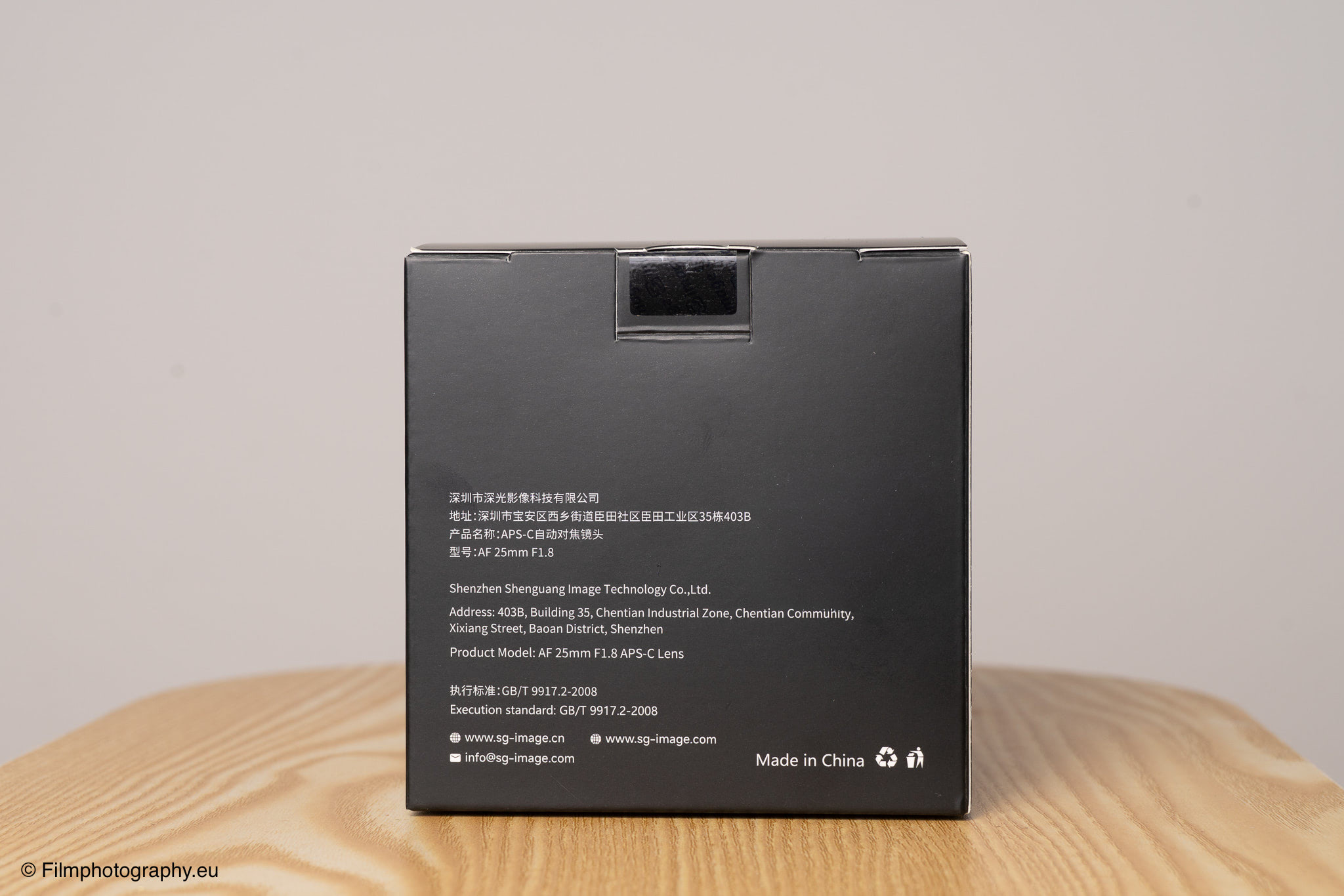
The photography landscape is increasingly being enriched by new manufacturers entering the market with interesting offerings. Among these newer players is the brand SG Image, which is introducing its second autofocus lens for mirrorless cameras with APS-C sensors: the AF 25mm F1.8. In this review, we take a closer look at this compact lens on the Fujifilm X mount.
Specifications
Technical Basis
First, let’s take a detailed look at the technical specifications of this lens, which, despite its compact dimensions, comes with impressive features. The SG Image AF 25mm F1.8 is designed for the Fujifilm X mount and fully covers the APS-C image circle. With a focal length of 25 millimeters, it offers an angle of view on Fujifilm cameras equivalent to a 37.5mm lens in 35mm format. This focal length sits in the classic range between a wide-angle and a normal focal length, which proves to be highly versatile in practice.
Optical Design
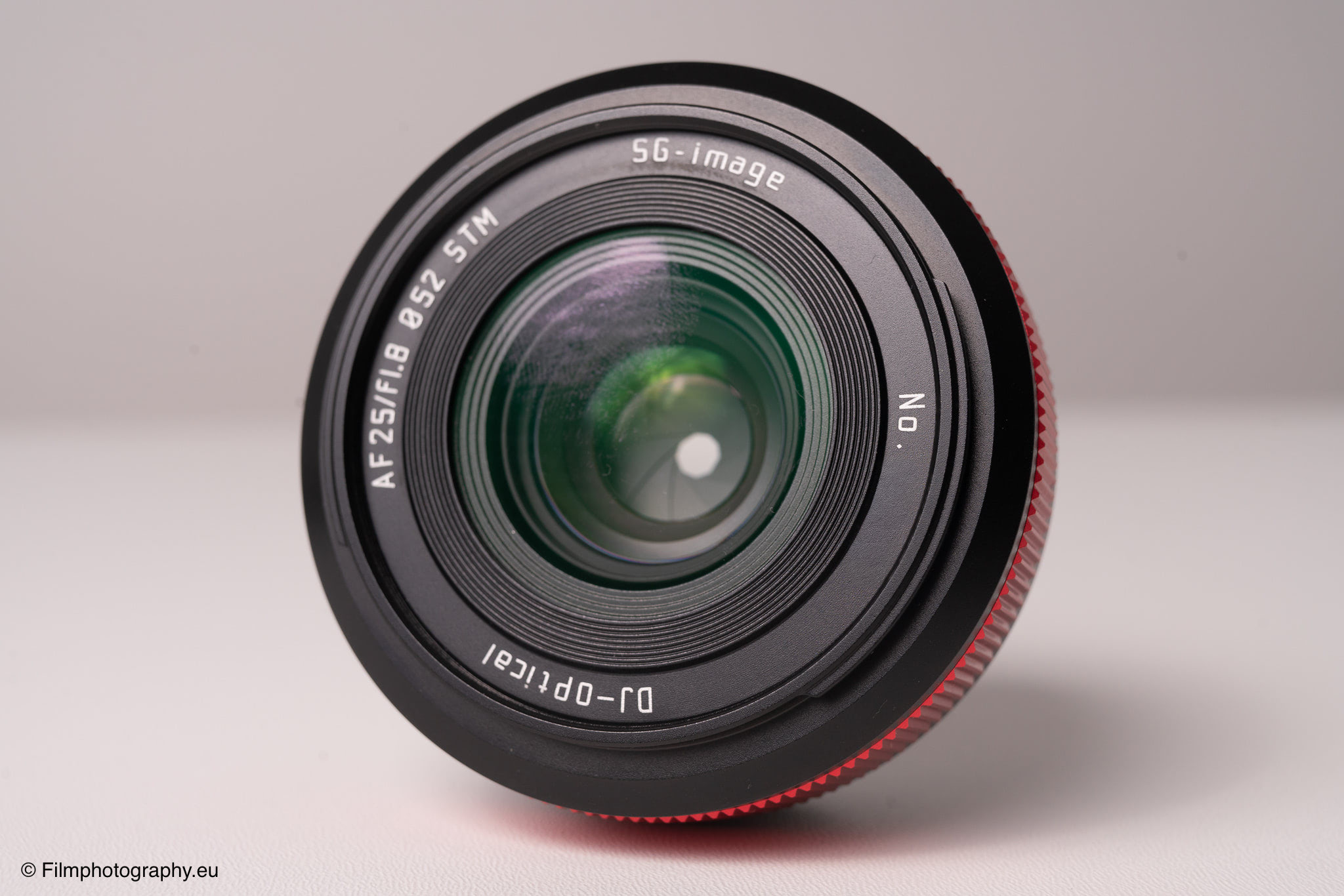
The optical construction consists of seven elements arranged in five groups. These include three high-refractive-index elements designed to help minimize aberrations and distortion.
Focusing is handled by a modern stepping motor, enabling quiet and fast autofocus. A useful design feature is the internal focusing system; since no external parts of the lens move during focusing, it helps prevent dust penetration and makes handling more comfortable.
Aperture Design
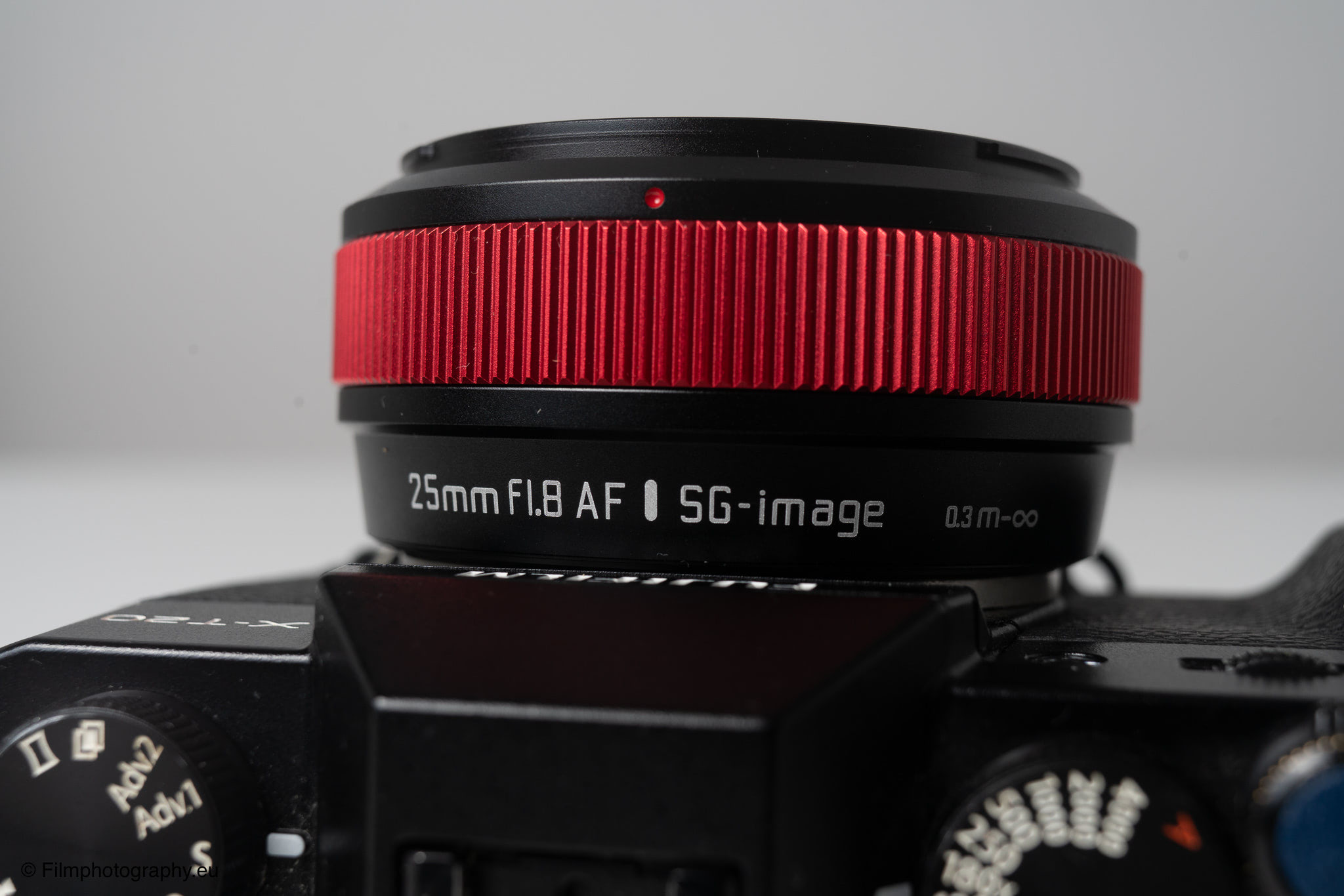
The aperture construction features nine rounded blades. This promises a nearly circular opening even when stopped down, which has a positive effect on the background blur. The minimum focusing distance is 30 centimeters, which is perfectly adequate for everyday close-up shots. With a filter diameter of 52 millimeters, standard filters can be easily attached, which is an advantage compared to some very flat pancake lenses that use unusually small filters.
Lens Body
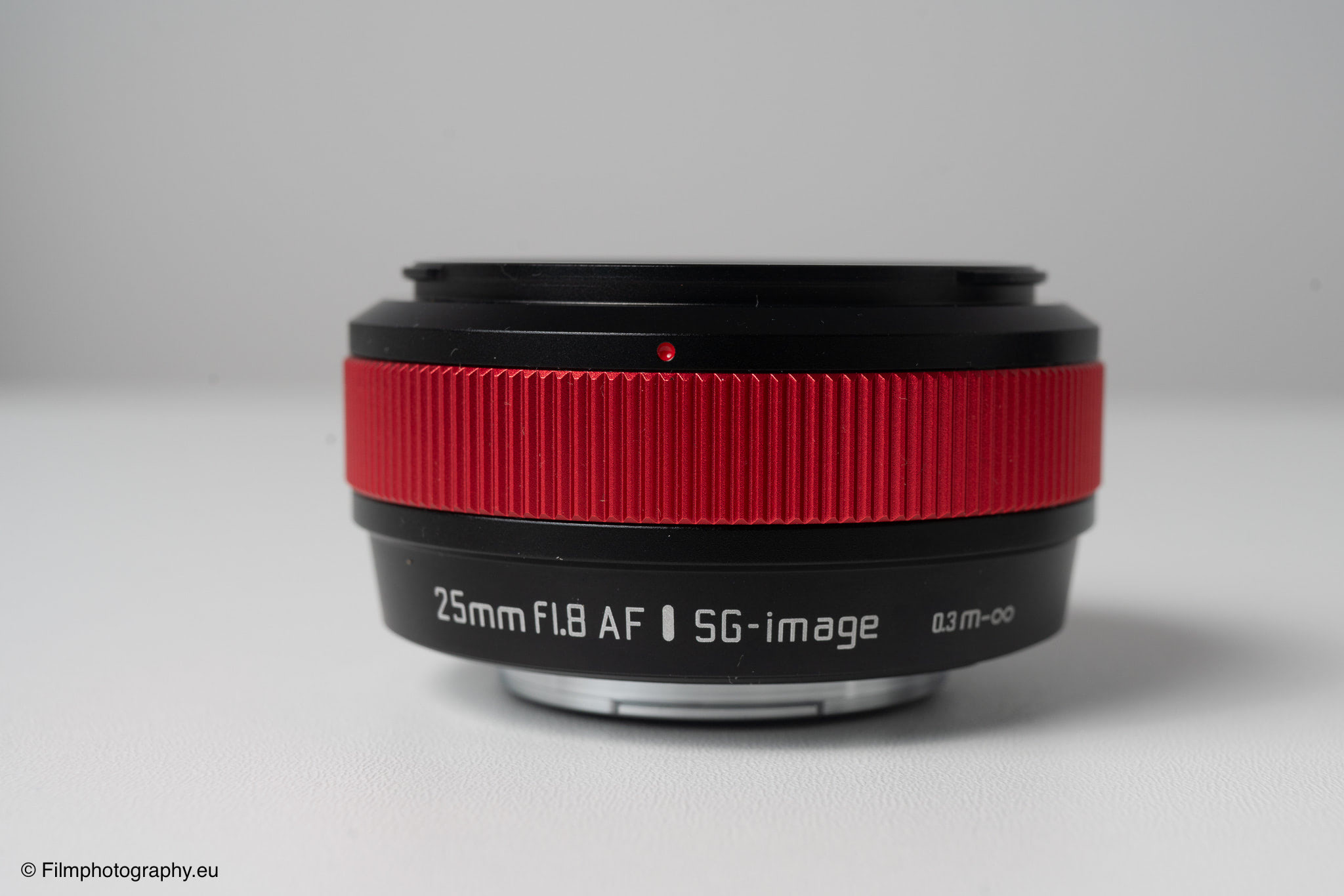
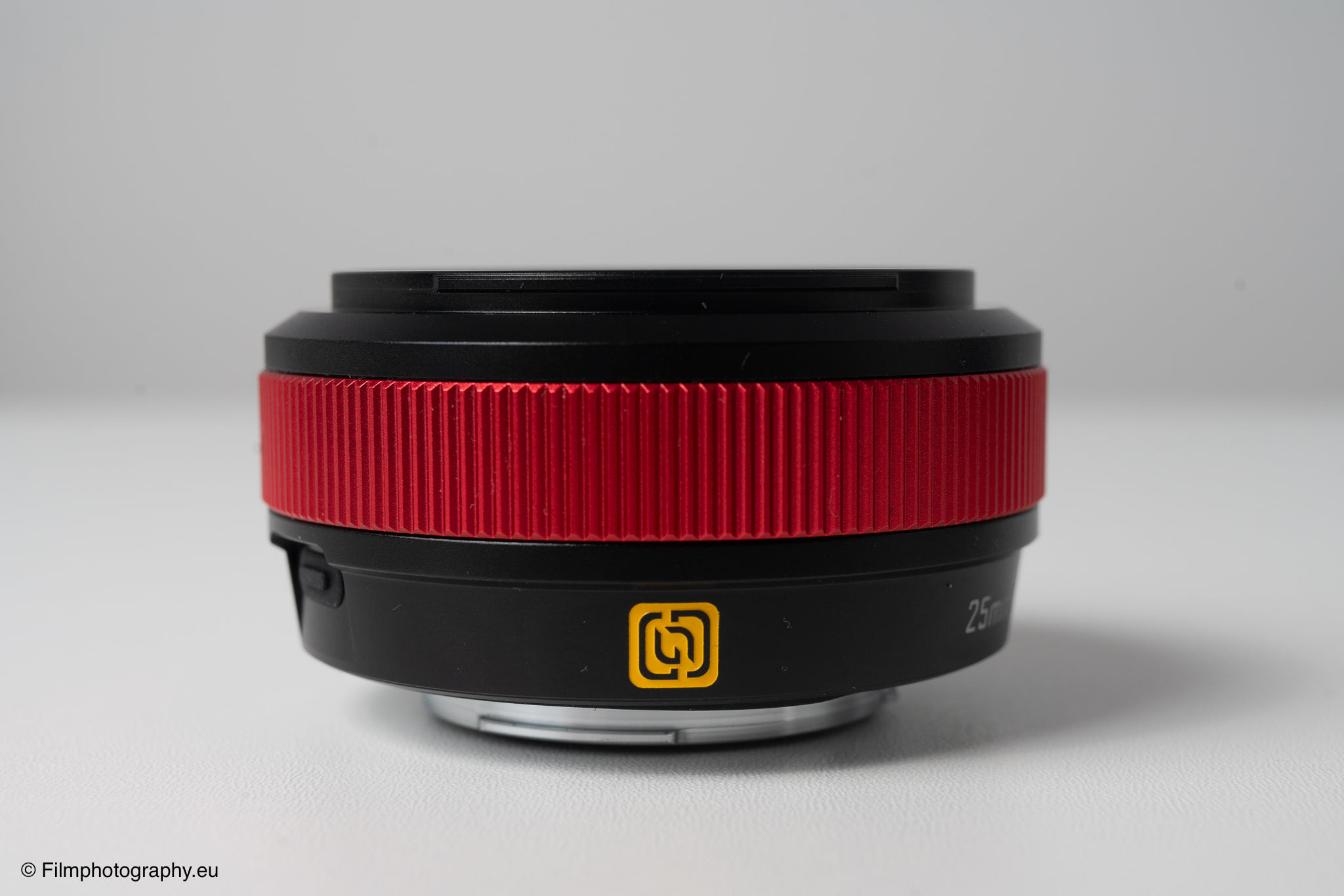
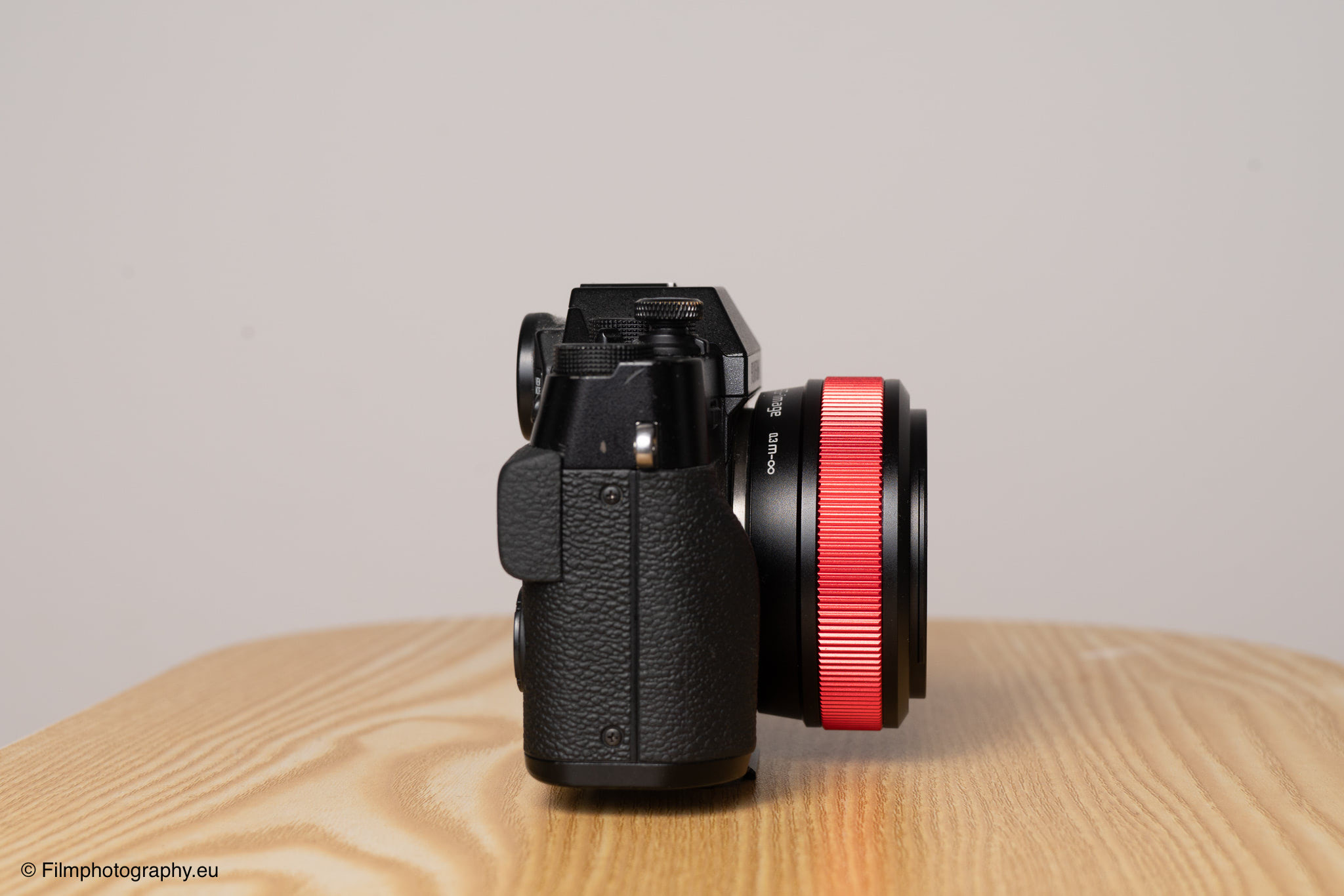
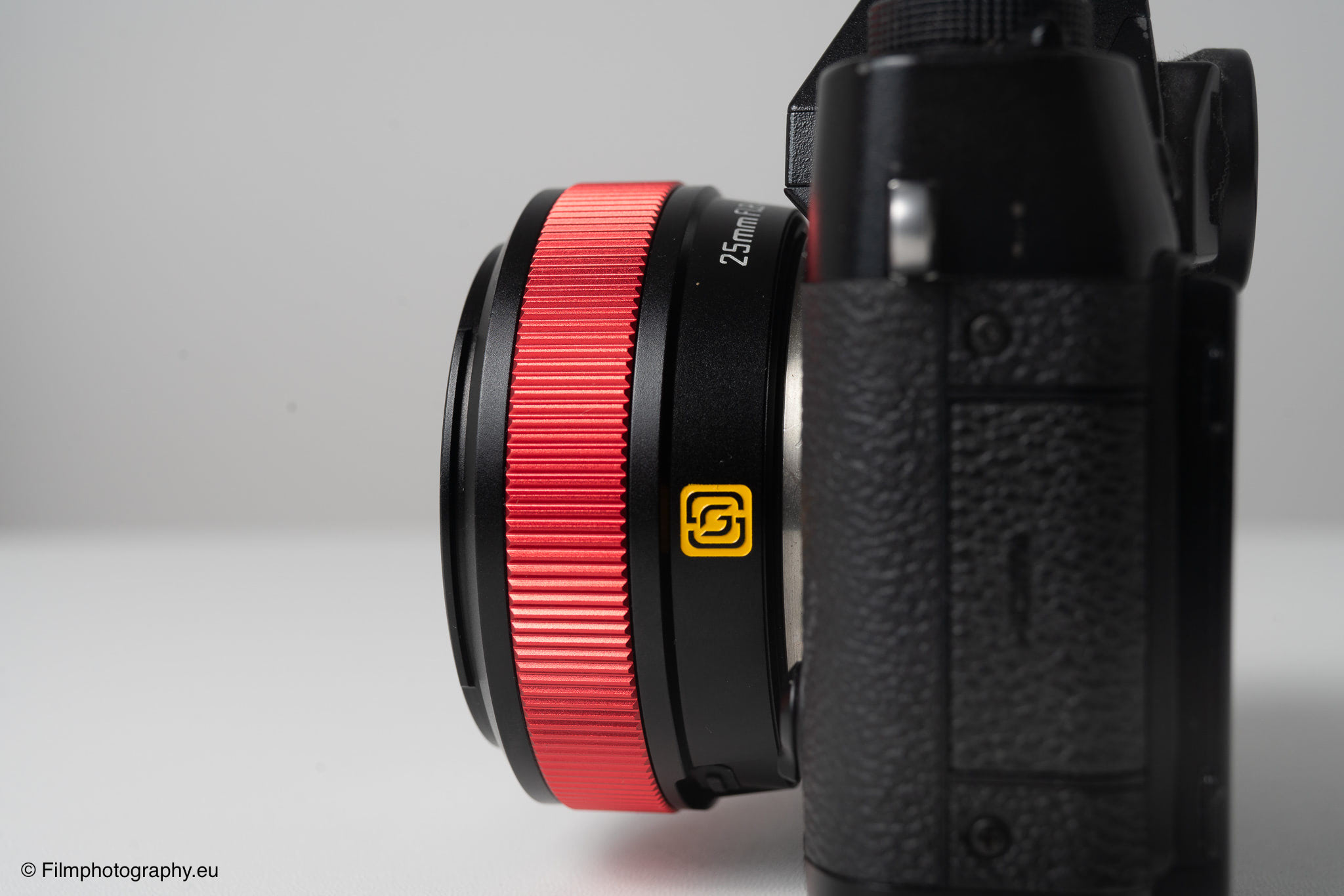
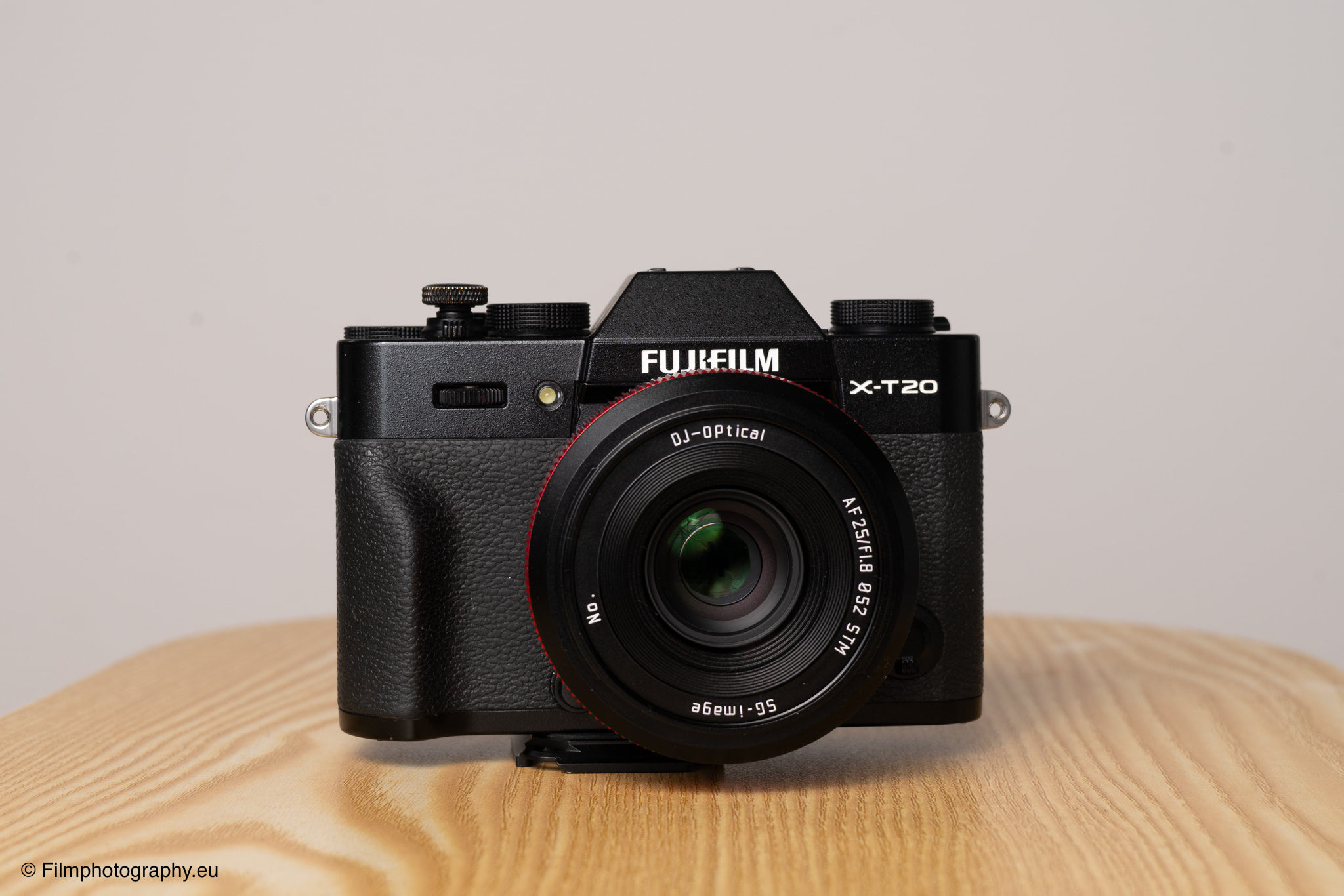
The lens body is well-built, made entirely of metal, and leaves a solid impression. It weighs around 145 grams with a body length of 32 millimeters, making it compact enough to pass as a pancake lens.
SG Image offers the lens in various color options; in addition to the classic black and silver versions, there are also versions with red or orange accents on the focus ring. A physical aperture ring on the lens body has been omitted, meaning that the aperture must be controlled exclusively via the camera’s dials.
In Practice

Handling
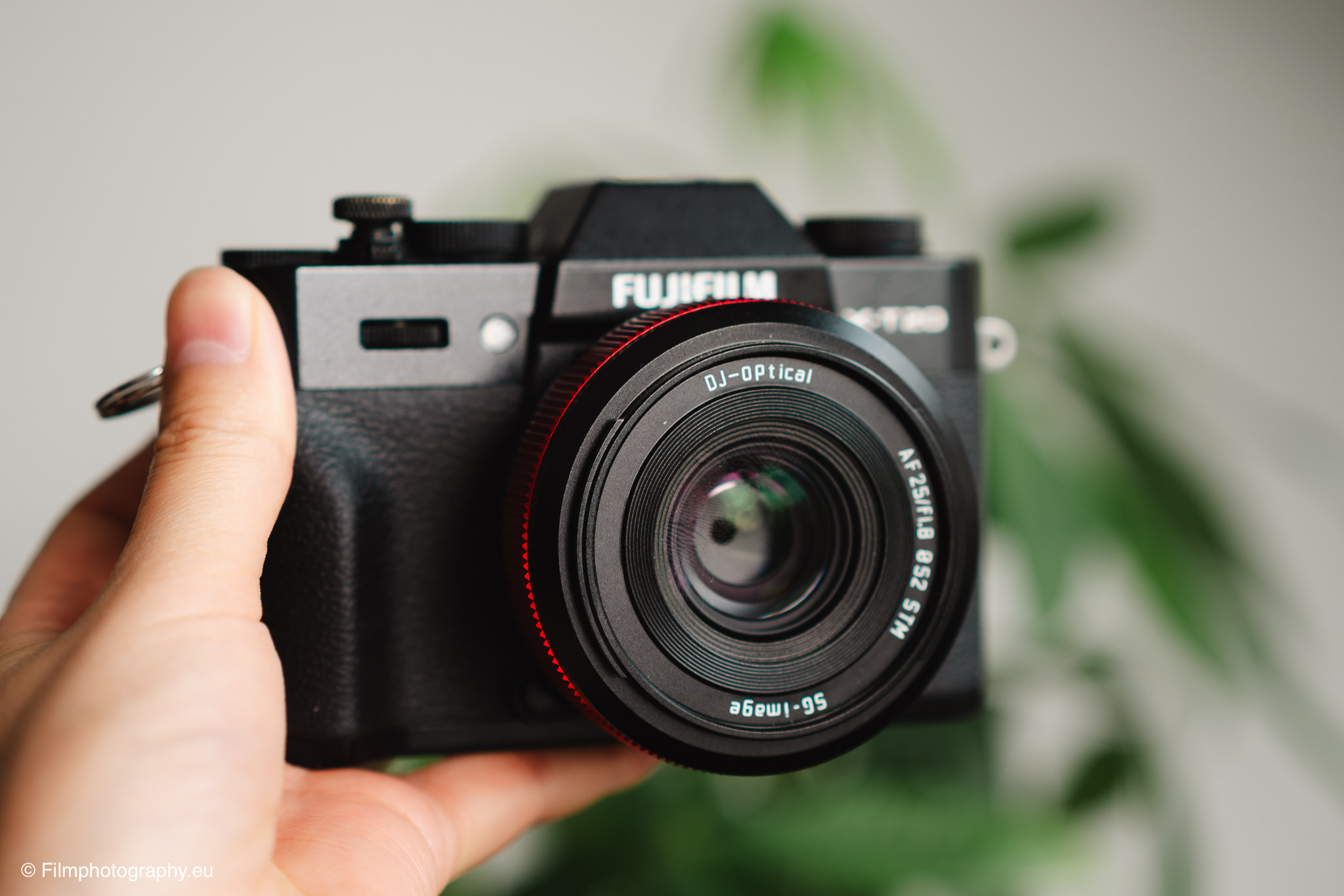
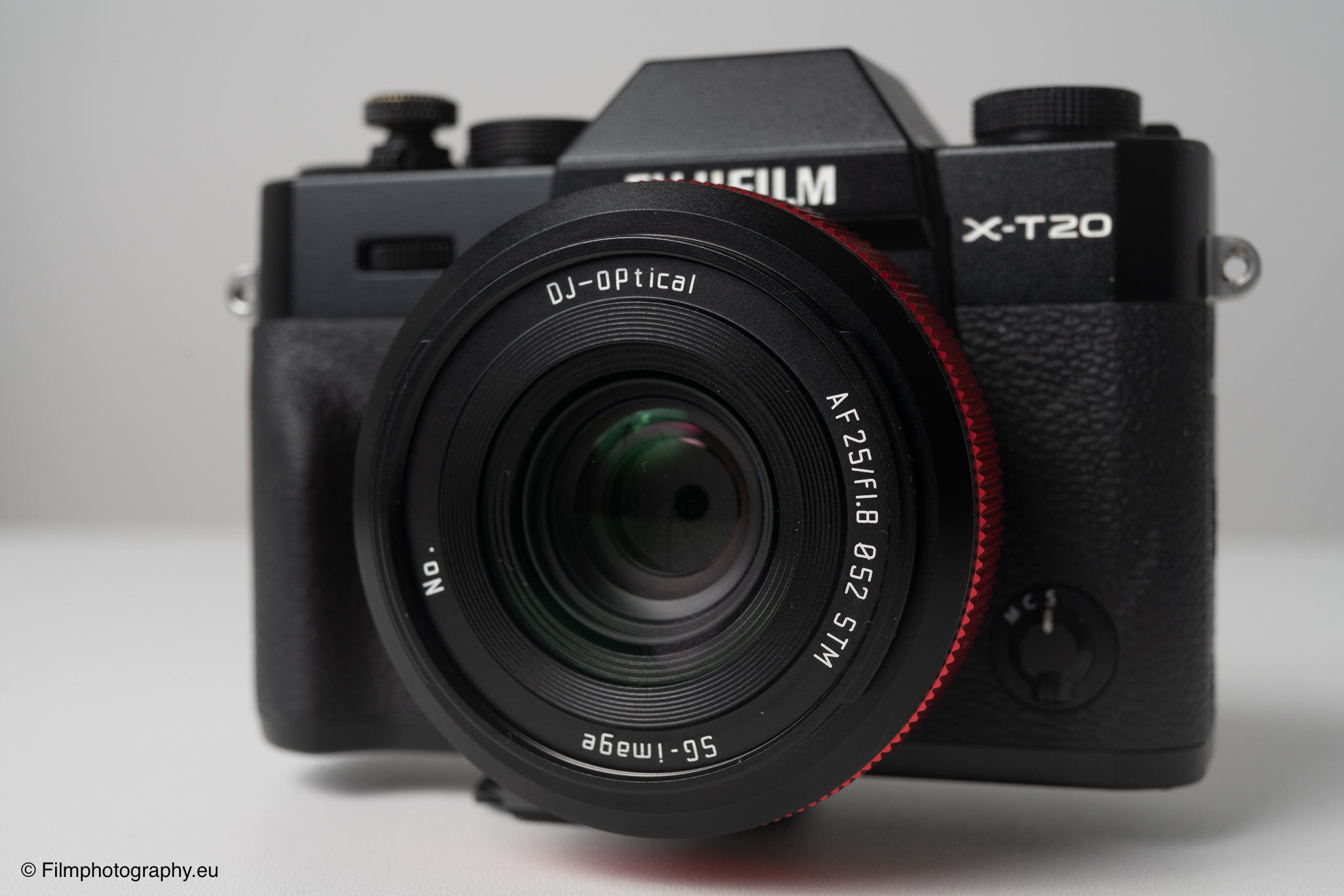
In daily photography, it quickly becomes apparent how well a lens performs and where its limits lie. As soon as you mount the SG Image AF 25mm F1.8 on a Fujifilm camera, you notice its excellent balance. The combination remains small and light, making it very comfortable to shoot with for hours. The build quality of the body is solid and leaves no room for criticism. The metal barrel feels high-quality, and the focus ring turns smoothly should you ever need to override focus manually.
For many photographers who value the Fujifilm system, the aperture ring is an important tool for quick exposure control. Unfortunately, the SG Image AF 25mm F1.8 lacks this physical aperture ring. In practice, however, this is manageable since the aperture values can easily be adjusted using the front or rear command dial of the camera body. You get used to this workflow quite quickly, even if the tactile feedback of a physical ring is missing.
Autofocus
Thanks to the stepping motor, the autofocus works pleasantly quiet and quick. In everyday situations, such as street photography or spontaneous snapshots, the lens finds focus reliably.
Although the focus might hunt briefly or miss slightly in difficult lighting conditions, overall, the hit rate is high and perfectly adequate for most applications.
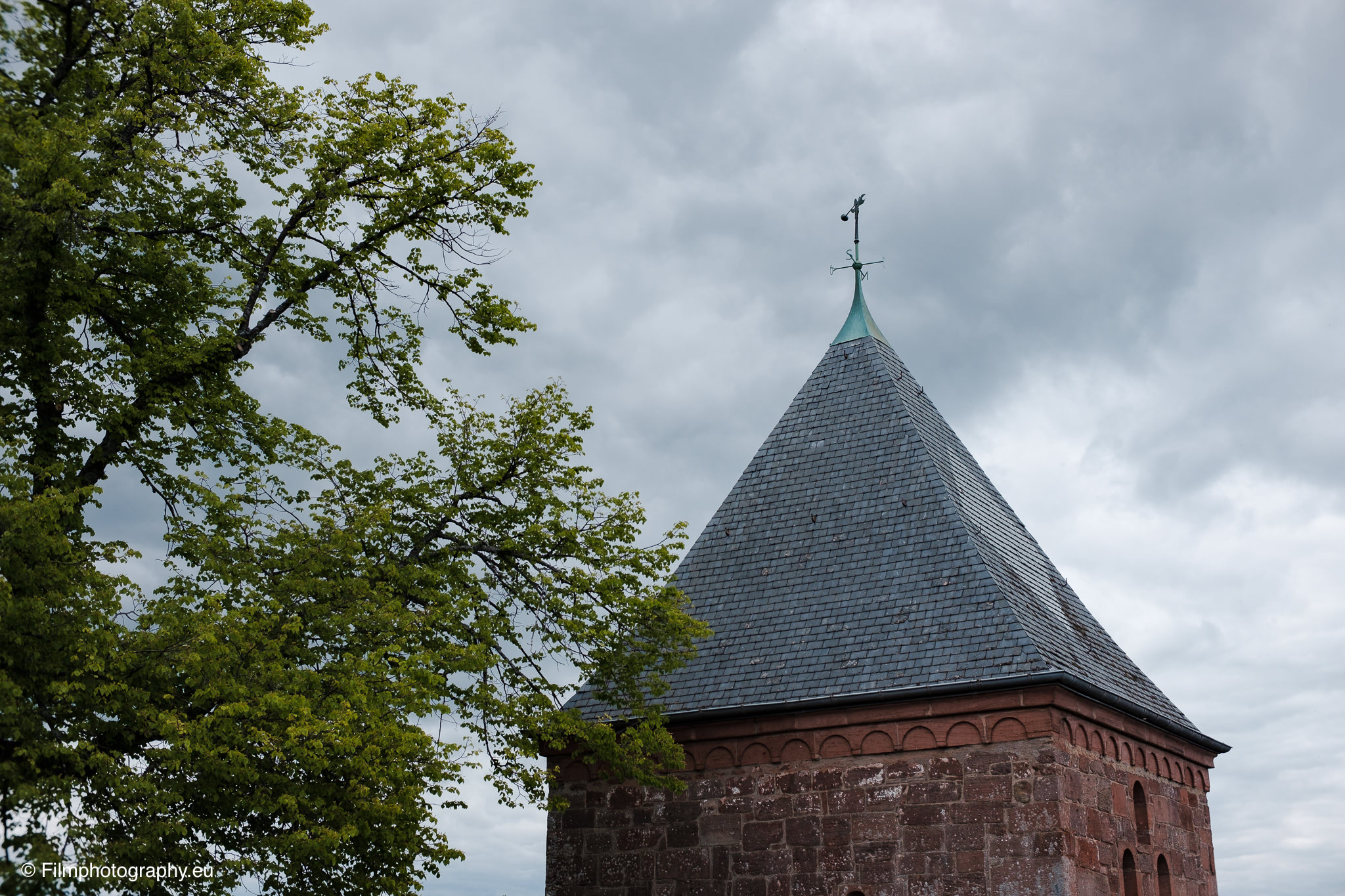
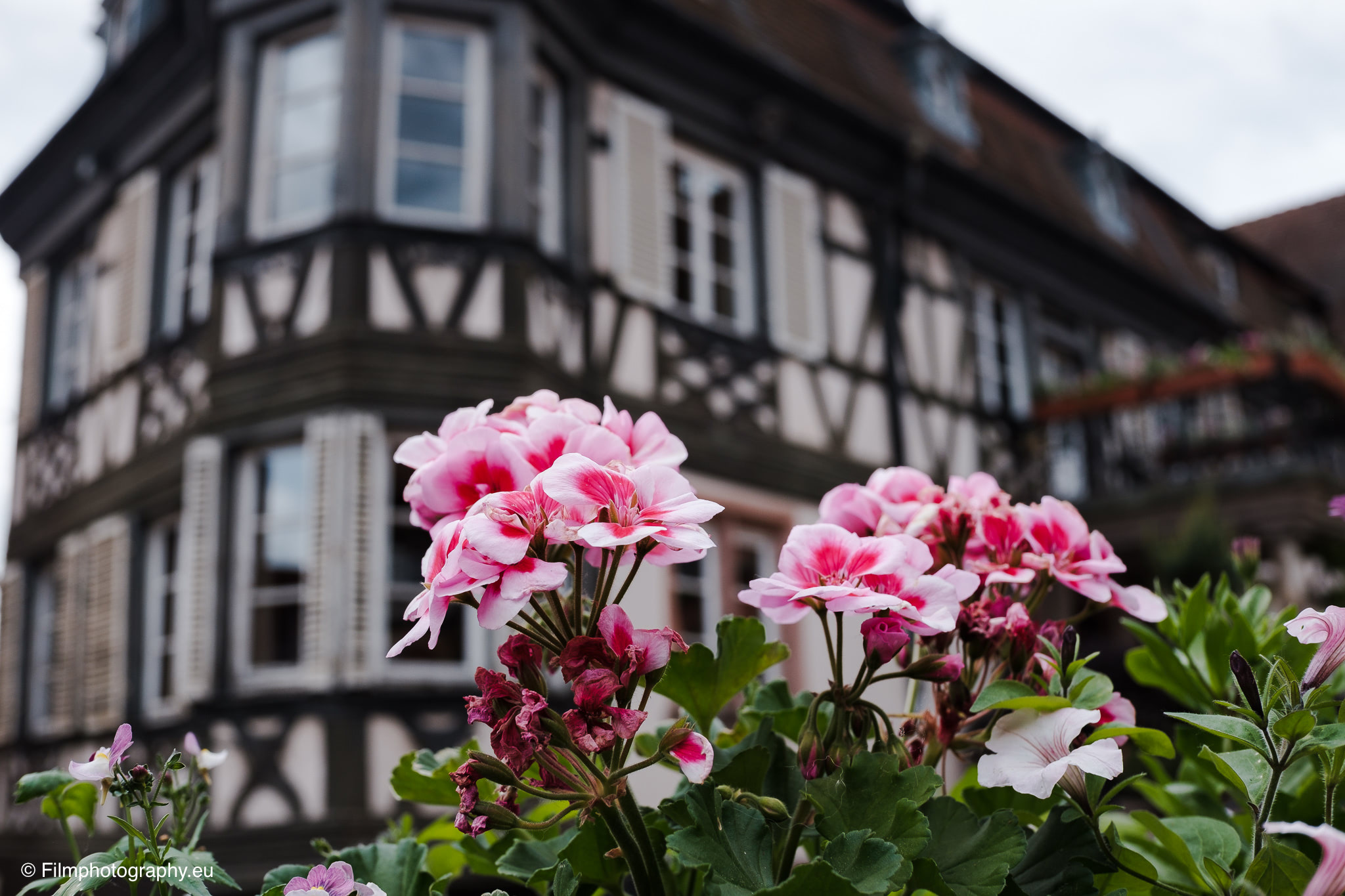
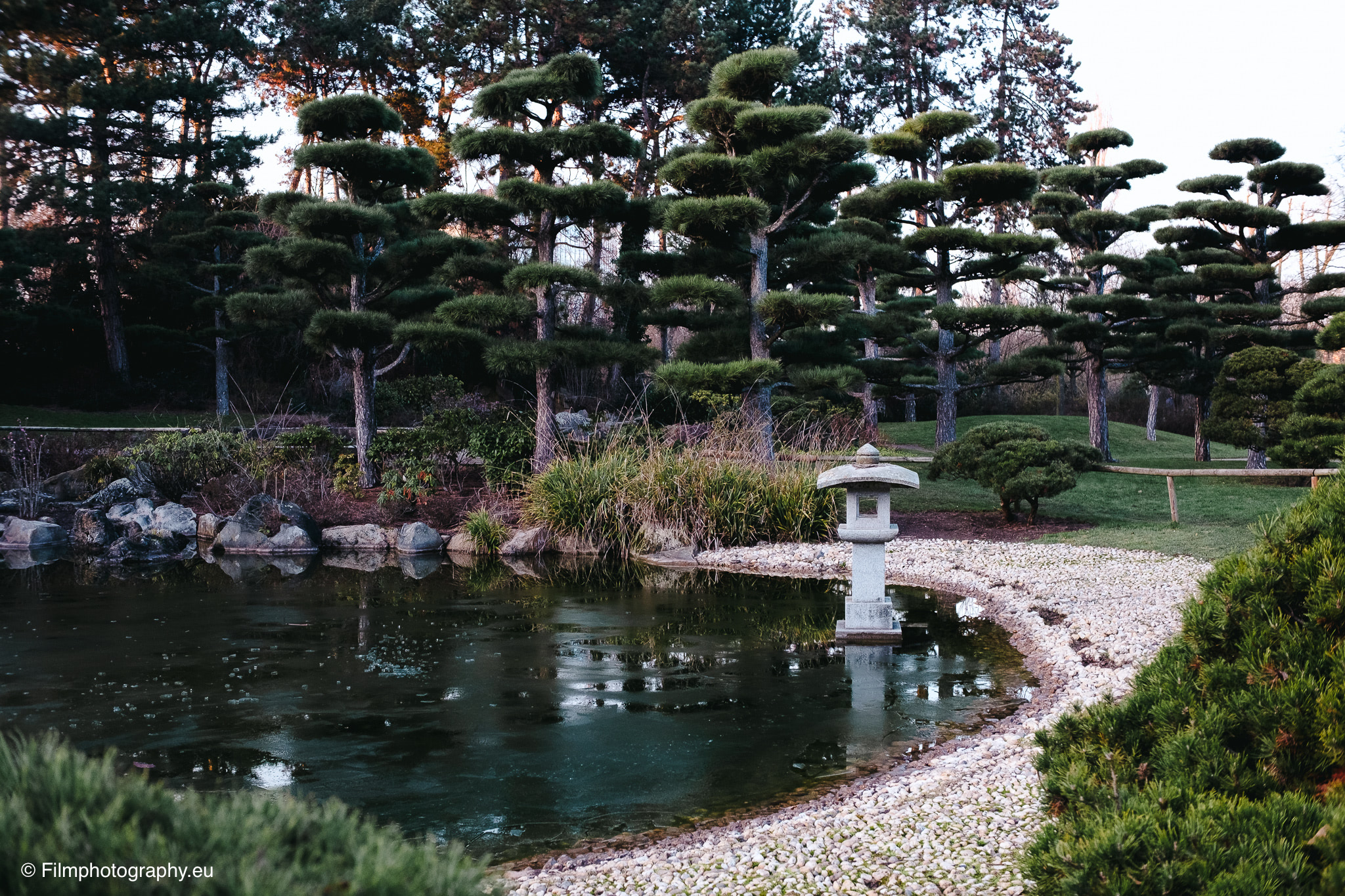
Sharpness Performance
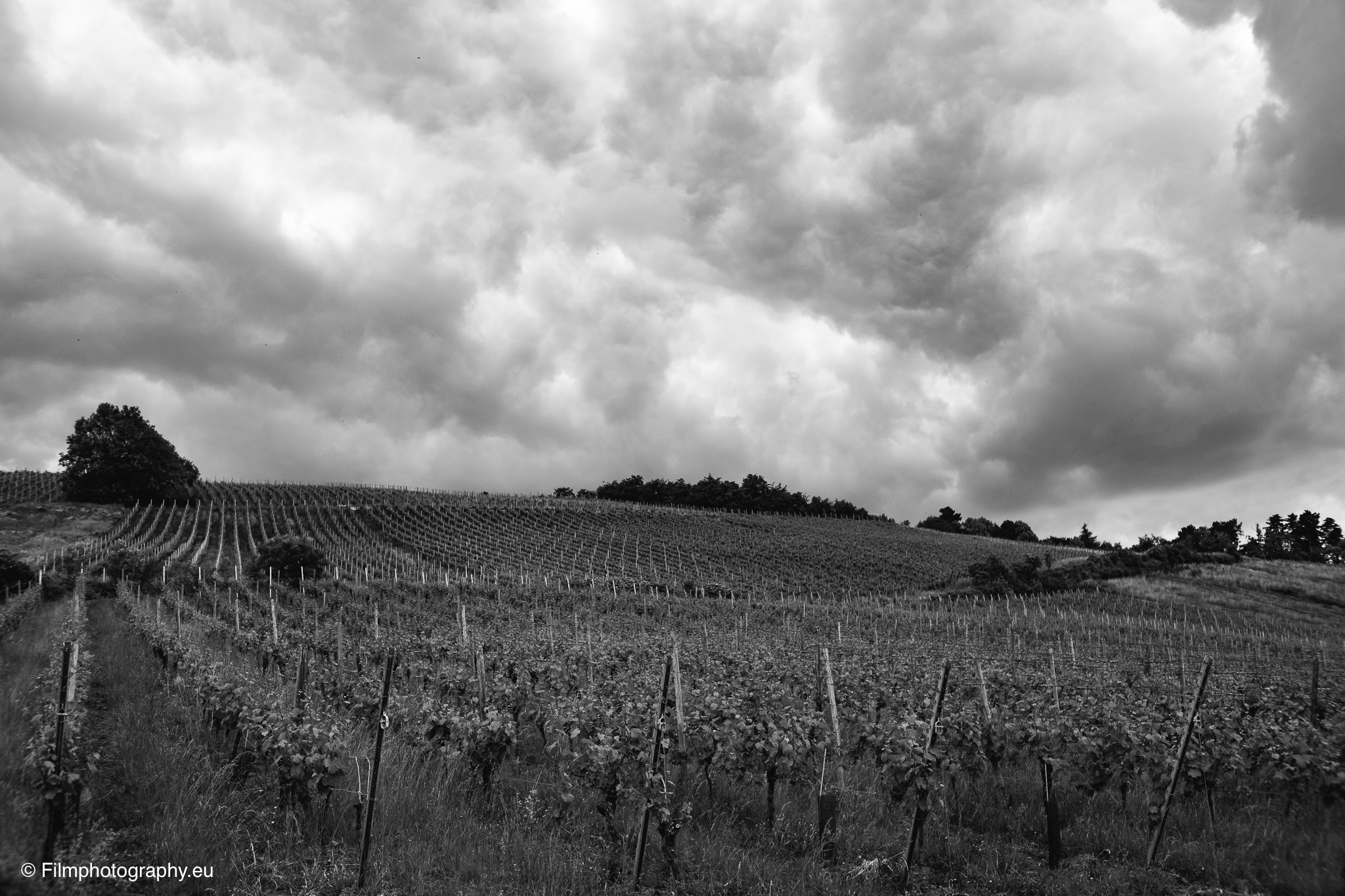
Regarding image quality, the lens shows a mixed performance. At the maximum aperture of f/1.8, the center sharpness is already at a good level. Subjects in the middle are captured with clear detail, which is great for portraits or close-up shots.
However, the sharpness drops off noticeably in the corners. This effect is especially visible at a wide aperture like f/1.8. Therefore, anyone who requires edge-to-edge sharpness across the entire frame will need to stop down the lens to f/4 or f/5.6, where the corners improve significantly and yield a more balanced result.
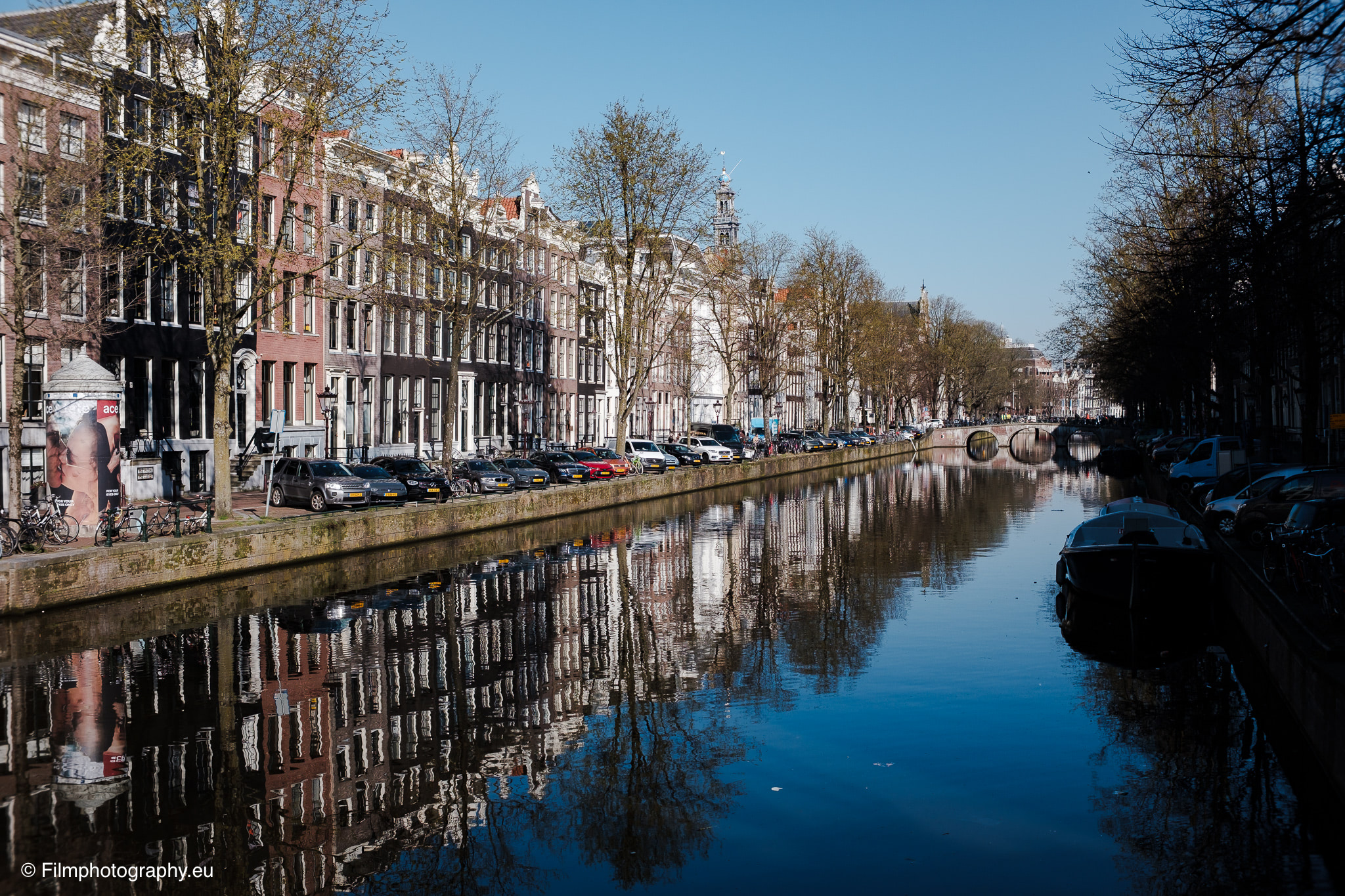
Optical Aberrations
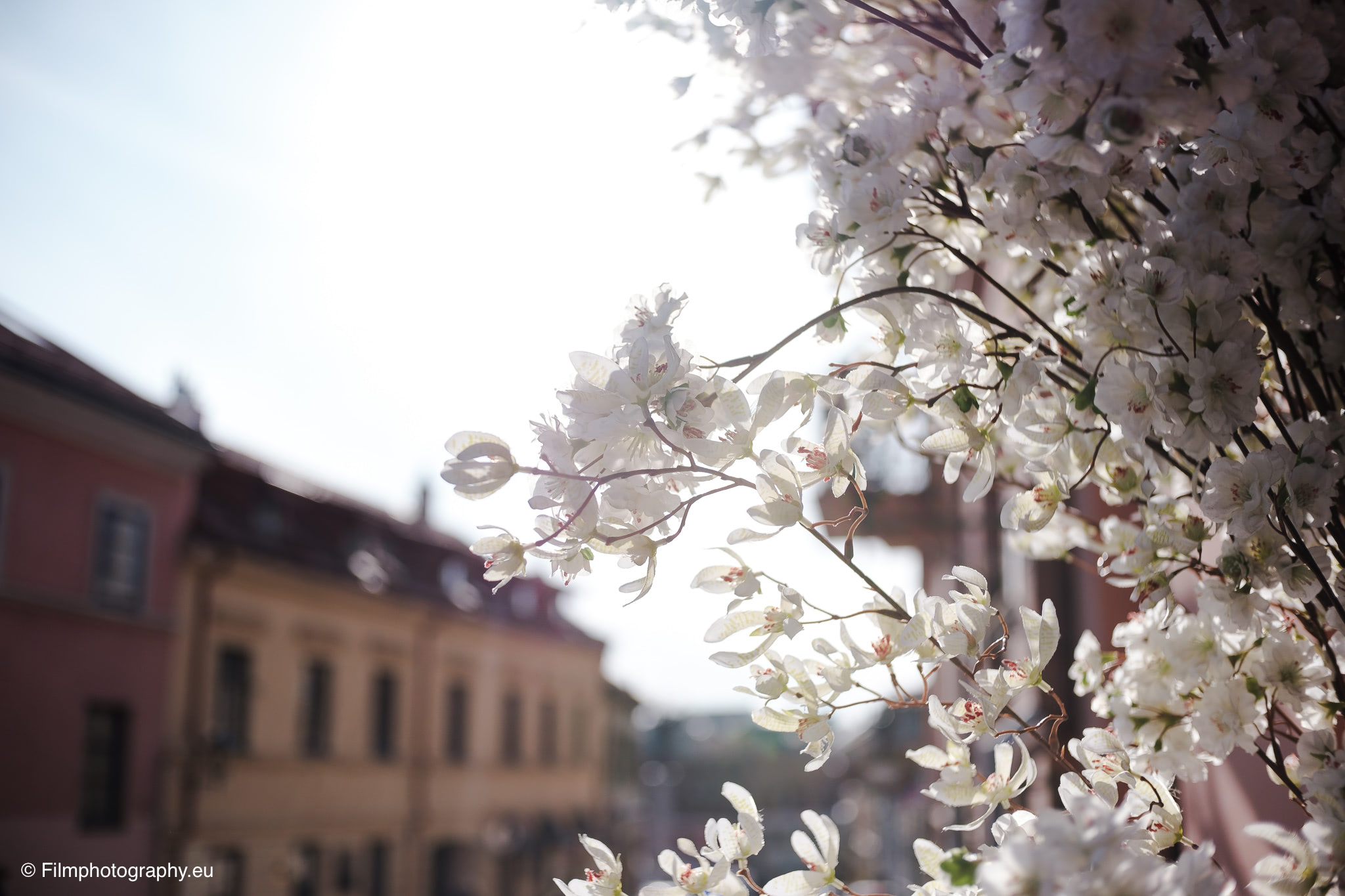
This corner softness when shooting wide open is a typical compromise you have to make with very compact designs in this price range. The bokeh—the rendering of out-of-focus areas—is pleasantly soft and smooth. The nine aperture blades ensure harmonious light circles in the background without making the image look busy.
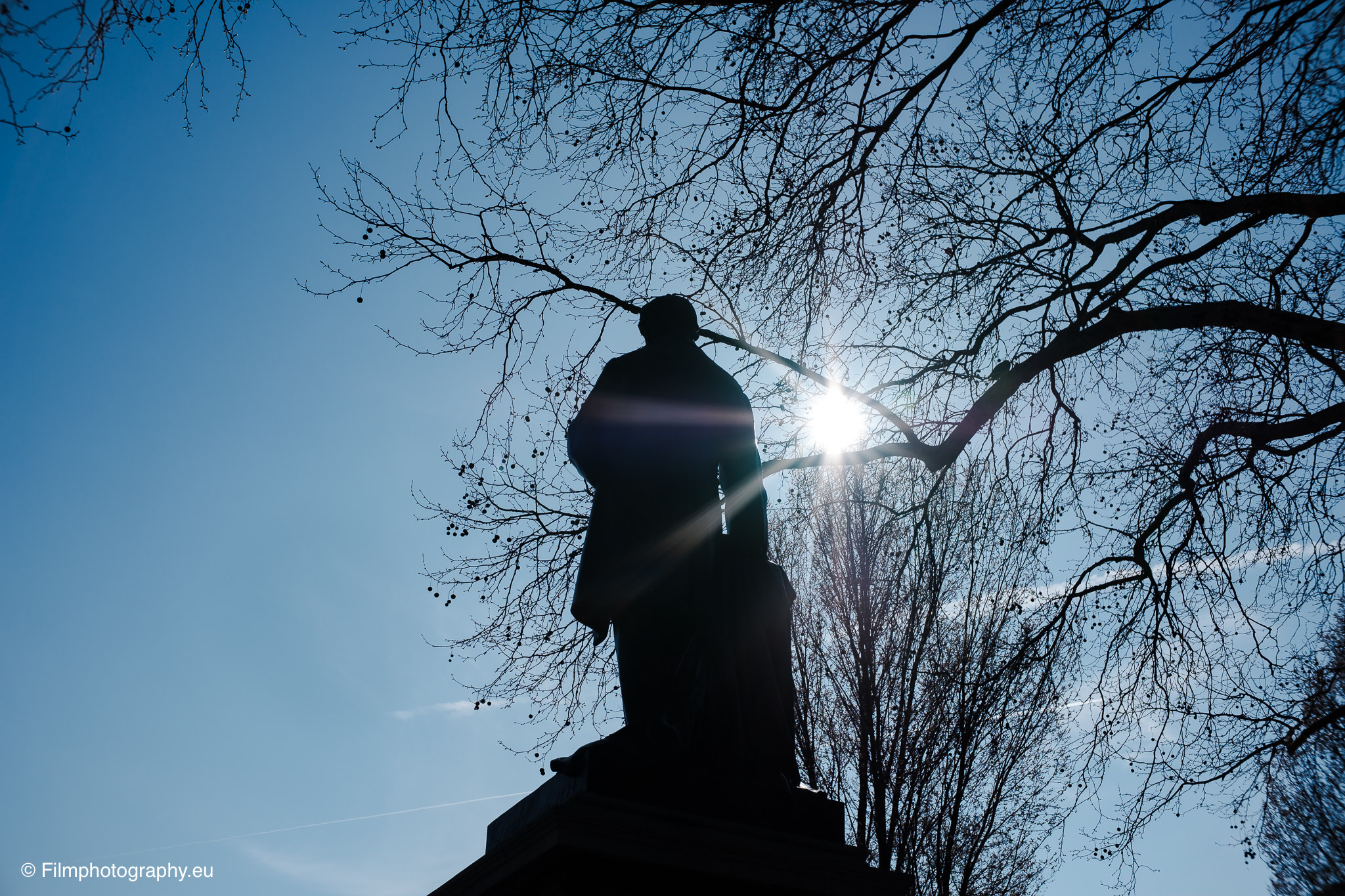
Under strong backlight, the lens occasionally tends to flare and produce ghosting, as the lens coating reaches its limits under challenging conditions. Using a matching lens hood is therefore advisable to avoid a loss of contrast.
Everyday Usability
Another aspect of daily use concerns resistance to environmental factors. There is no official rating for dust and splash protection. Photographers should therefore exercise some caution in poor weather and protect the lens from heavy rain.
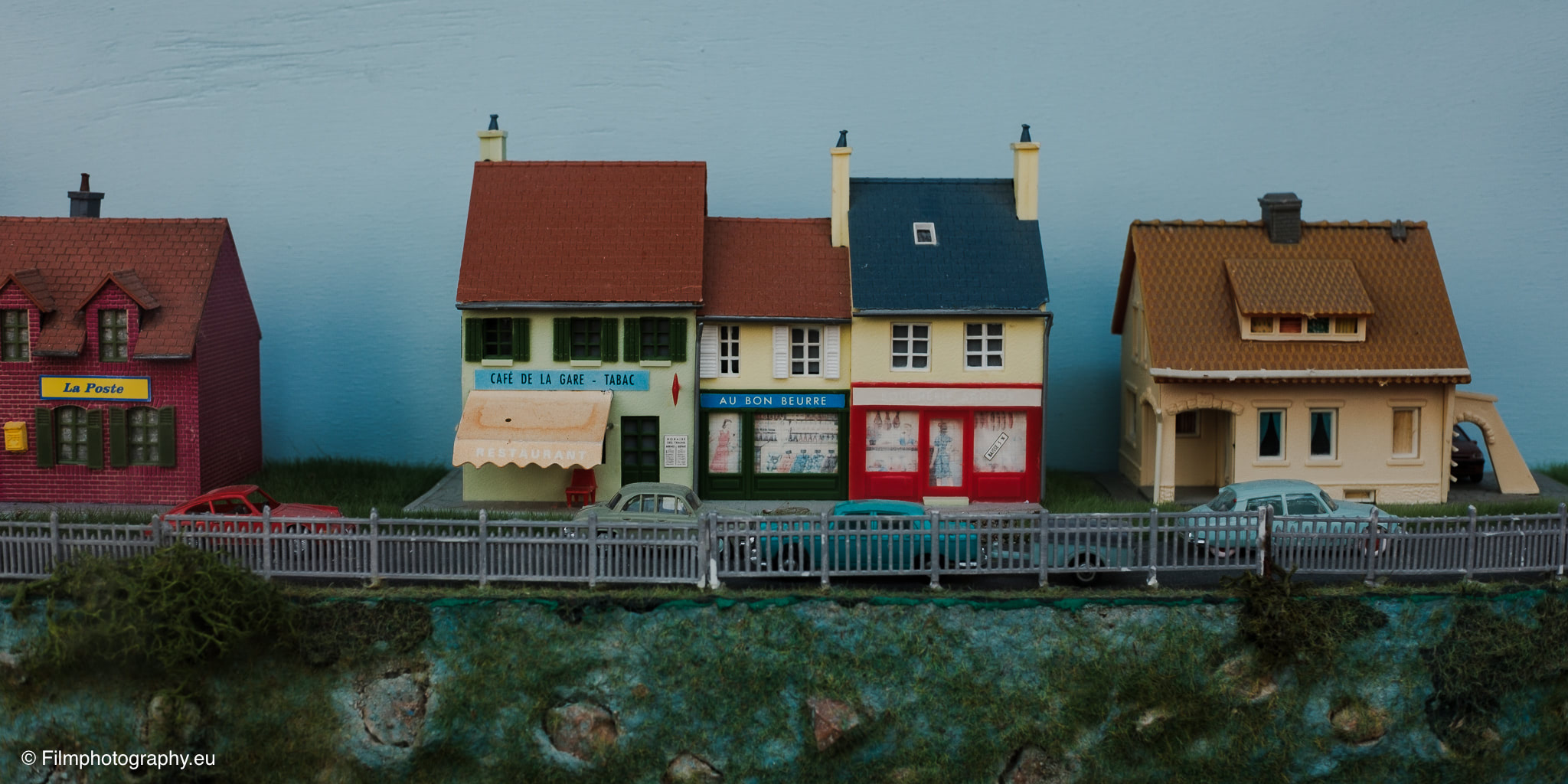
The major advantage of this lens is its compactness. Especially for an everyday camera setup, the SG Image offers high flexibility, making you want to take your camera along with you.
Comparison with the TTArtisan 27mm f2.8 AF
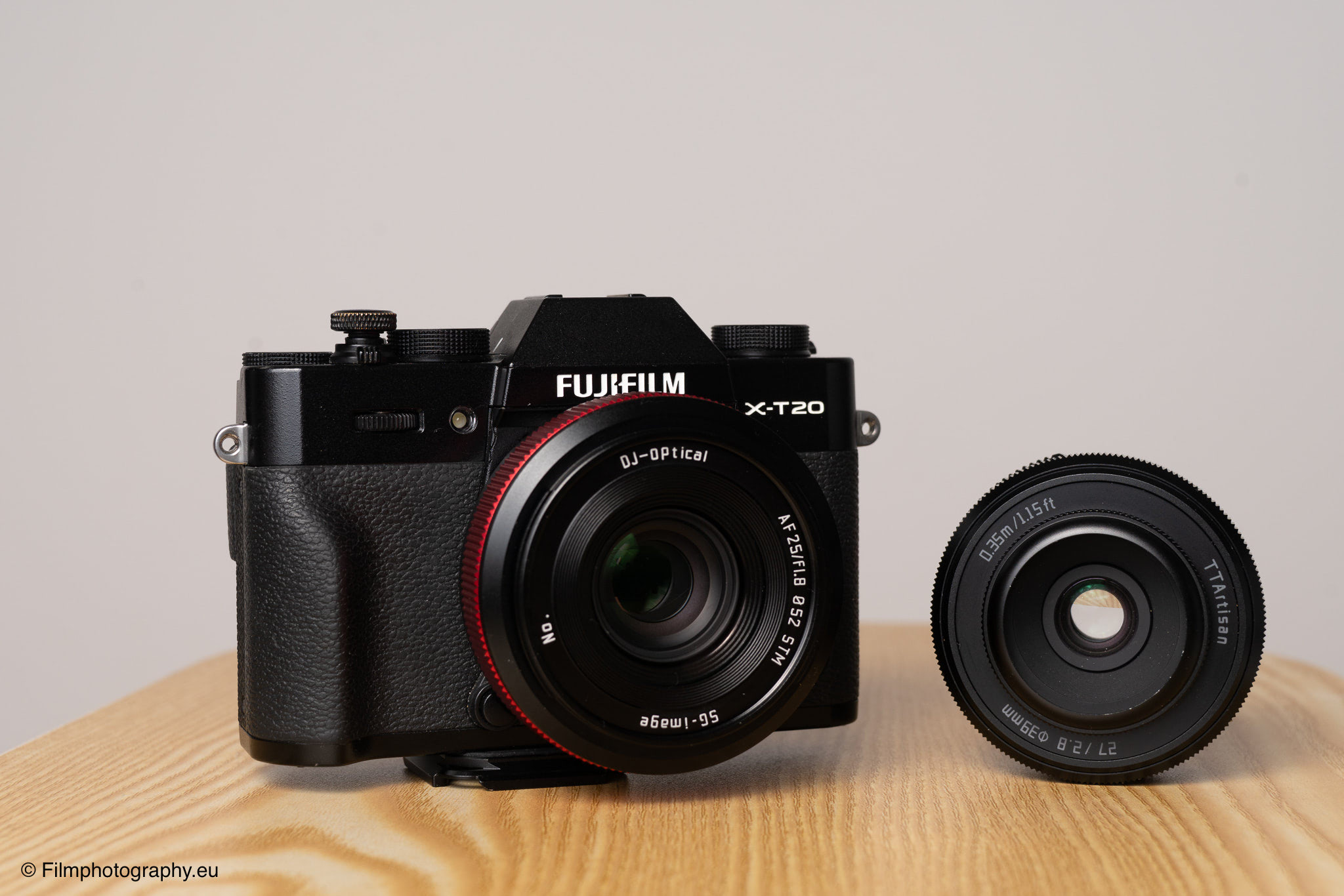
An obvious comparison arises with the established TTArtisan 27mm f2.8 AF, which is also positioned in the segment of budget-friendly, compact autofocus prime lenses. Both lenses target photographers looking for a prime lens that is as inconspicuous and lightweight as possible. In practice, however, it becomes clear that the differences lie in the details and can significantly influence your decision.
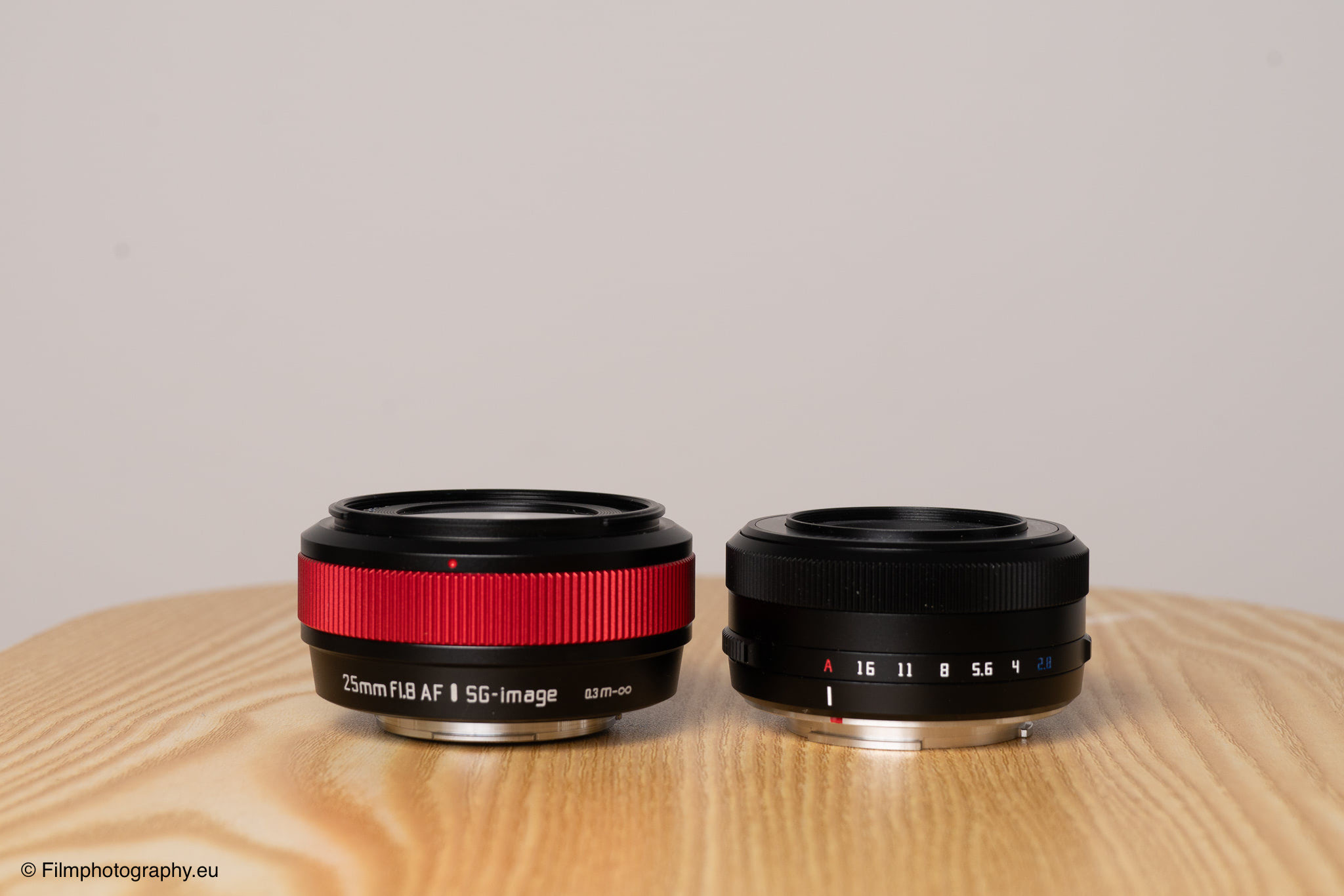
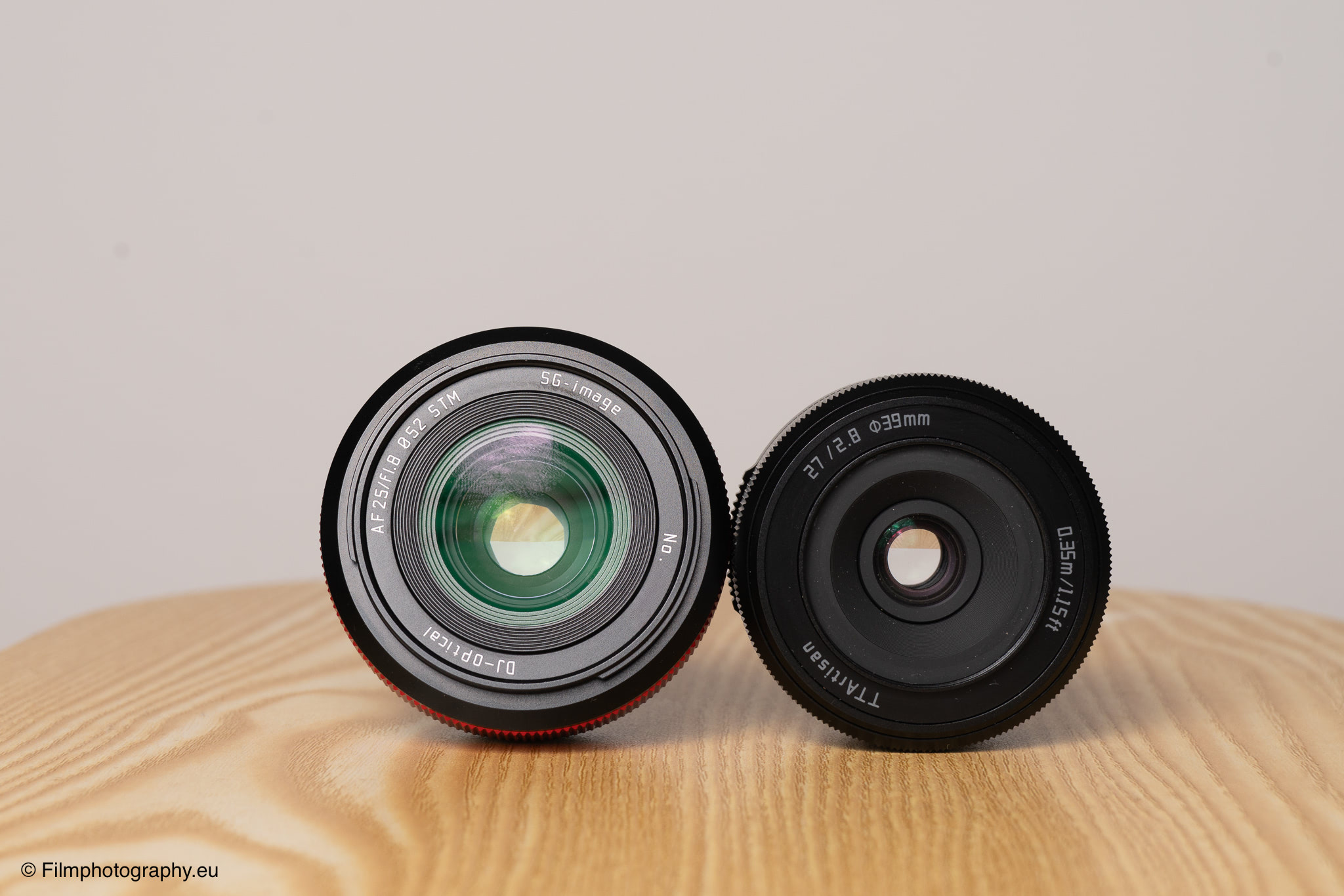
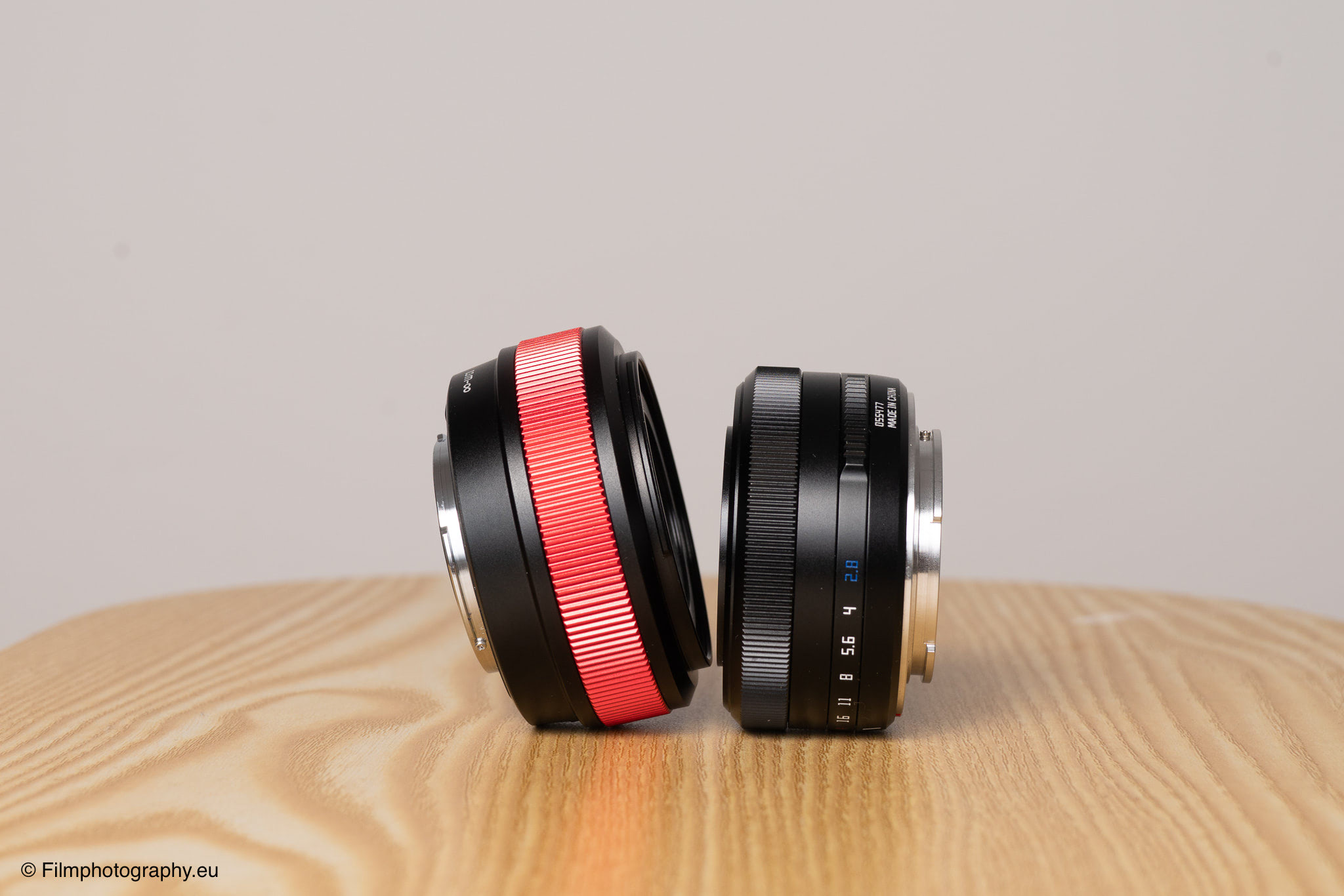
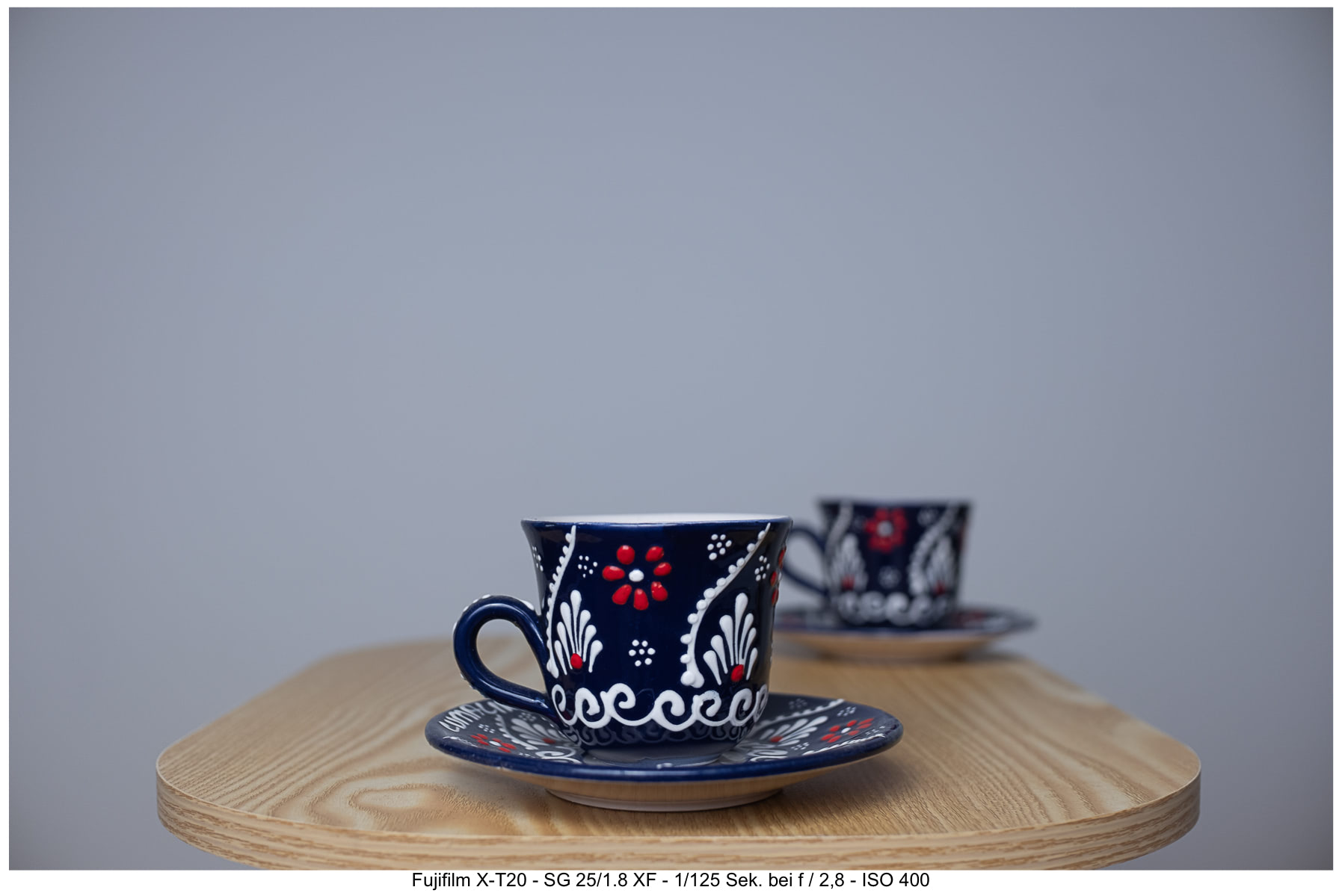
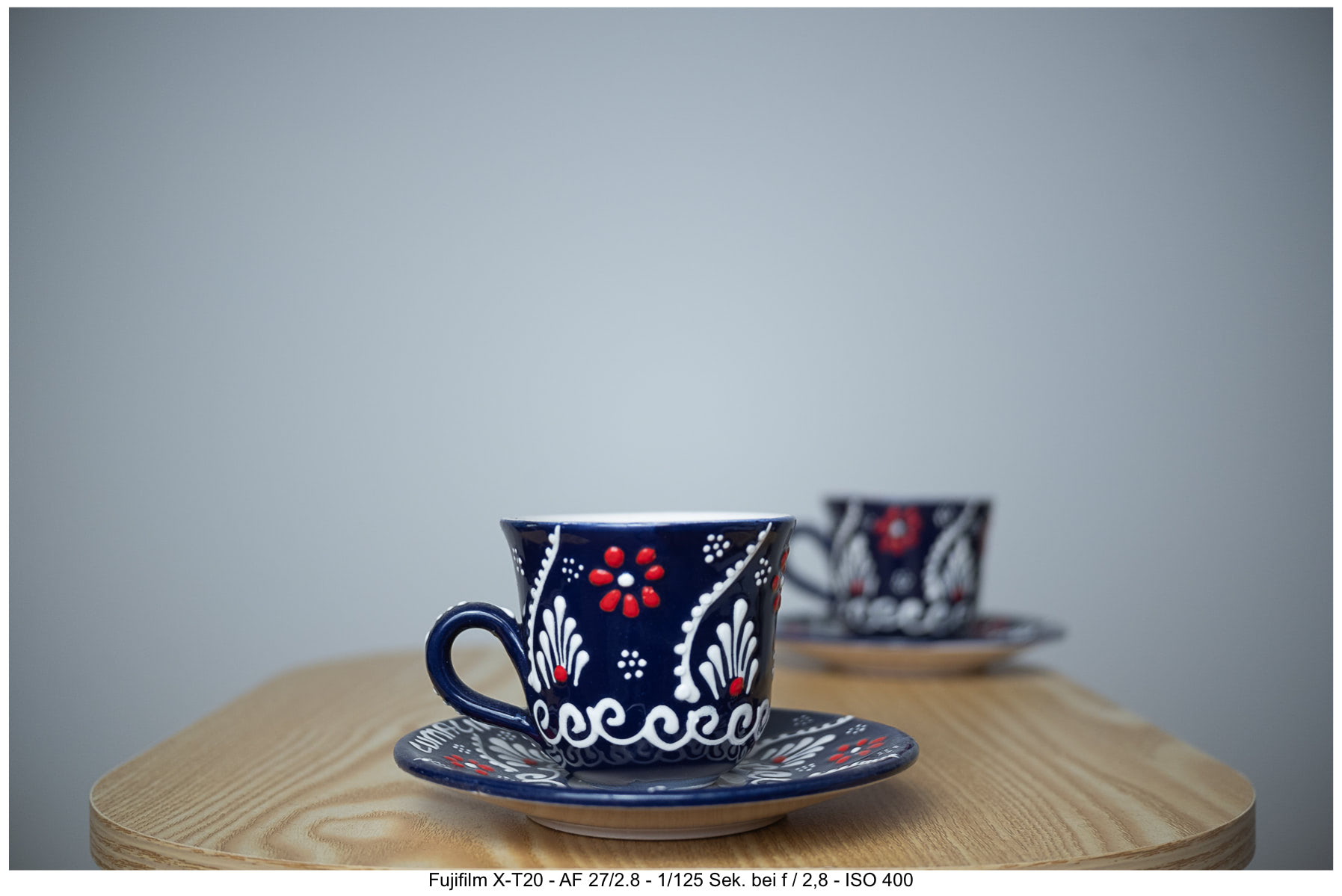
The most notable difference is the maximum aperture. The SG Image offers a maximum aperture of f/1.8, whereas the TTArtisan caps out at f/2.8. The difference between f/1.8 and f/2.8 is significant, especially indoors and for shooting at night or during the evening hours.
With the SG Image, the camera’s ISO sensitivity can be kept mileage-low, resulting in cleaner images. Additionally, the wider aperture allows for better isolation of the main subject from the background, which is advantageous for creative portraits.
In terms of physical dimensions, both lenses are roughly the same size. Compared to the TTArtisan, the SG Image is only slightly larger and protrudes a bit further from the camera body, but it still maintains its character as a compact prime lens.
In some versions, the TTArtisan offers a physical aperture ring, which can be a plus for fans of classic tactile controls. However, those who prefer the extra speed and low-light capability of the SG Image will gladly accept the missing ring on the body.
There are also nuances in optical performance. While the TTArtisan can render corners slightly sharper wide open at f/2.8, the SG Image compensates for this with its greater flexibility in low light.
If you stop the SG Image down to f/2.8, its sharpness performance matches that of its competitor. Ultimately, you are trading a slightly better corner sharpness on the TTArtisan for the wider aperture and softer bokeh of the SG Image.
Additionally, the angle of view differs slightly. The 25mm of the SG Image is a bit wider than the 27mm of the TTArtisan. In narrow streets or for indoor shots, this wider field of view often provides the necessary wiggle room to capture the entire scene. For classic street photography, many users also find the wider angle very appealing, as it conveys more of the surrounding context.
Conclusion
In summary, this compact lens is a great addition to the Fujifilm system. I particularly like the size of the lens, which, combined with a compact camera body, creates a well-balanced setup. If you use a compact camera body, this lens turns it into an excellent everyday carry camera that delivers solid results.
Especially with the f/1.8 aperture, you are well-equipped for many situations. The focal length is also highly versatile across various subjects. Whether it’s street photography, reportage, landscapes, or spontaneous portraits at a family gathering, the angle of view always looks natural and offers plenty of creative versatility.
This lens also makes for an interesting combination when paired with a compact zoom lens, for instance while traveling. This allows you to cover most situations without having to carry much weight. During the day, the zoom lens provides the necessary versatility. In the evening hours, you can switch to the SG Image when the zoom lens reaches its limits. In those moments, the fast aperture saves your shots without requiring a tripod or extremely high ISO values.
Certainly, there are optically superior lenses that offer high resolution all the way into the corners of the frame, but these are usually much larger, heavier, and cost several times as much. Especially when considering the price, you can hardly go wrong with this lens. It is an honest tool for photographers looking for the joy of carefree shooting and who appreciate a lightweight gear setup.
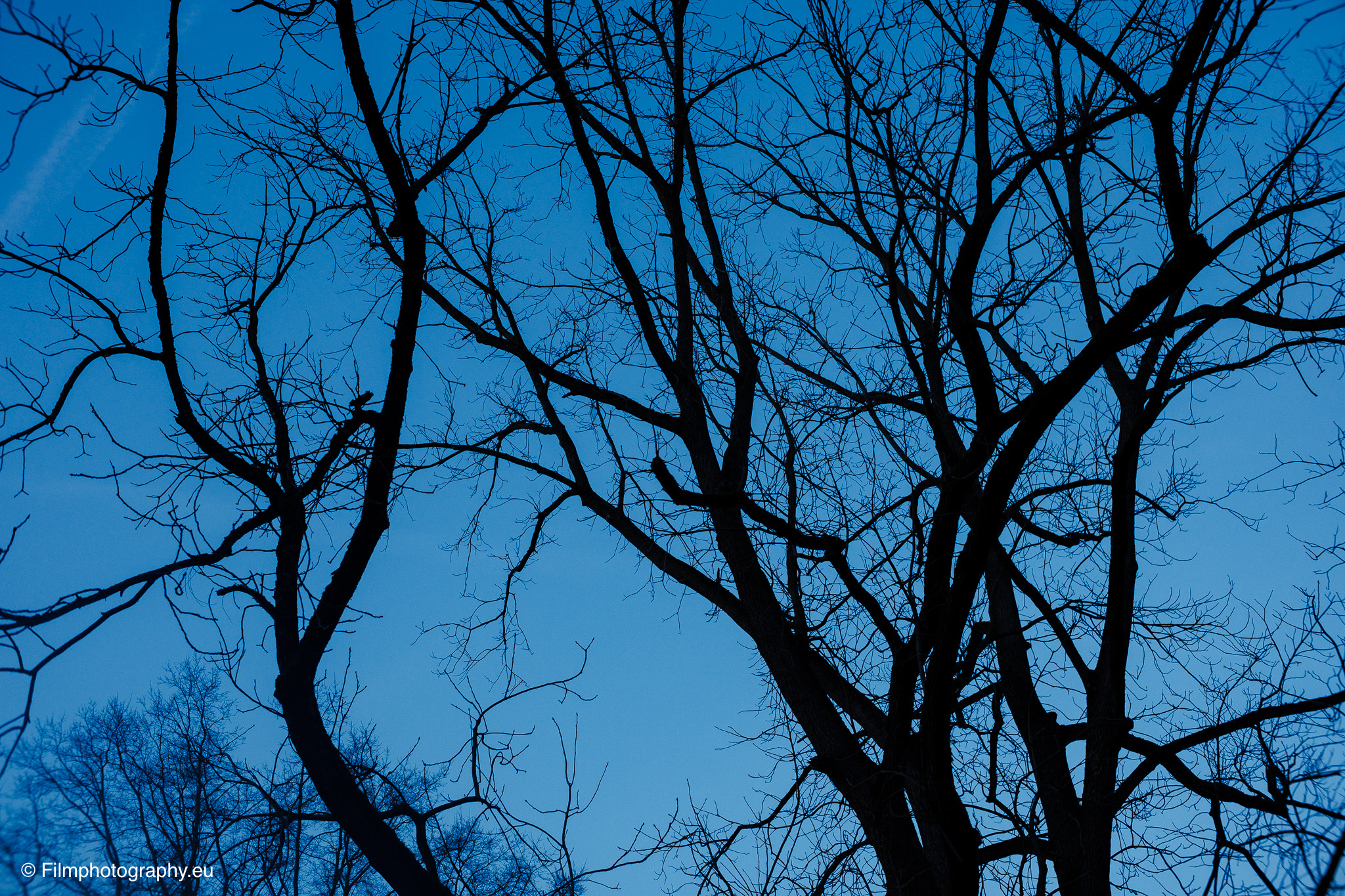
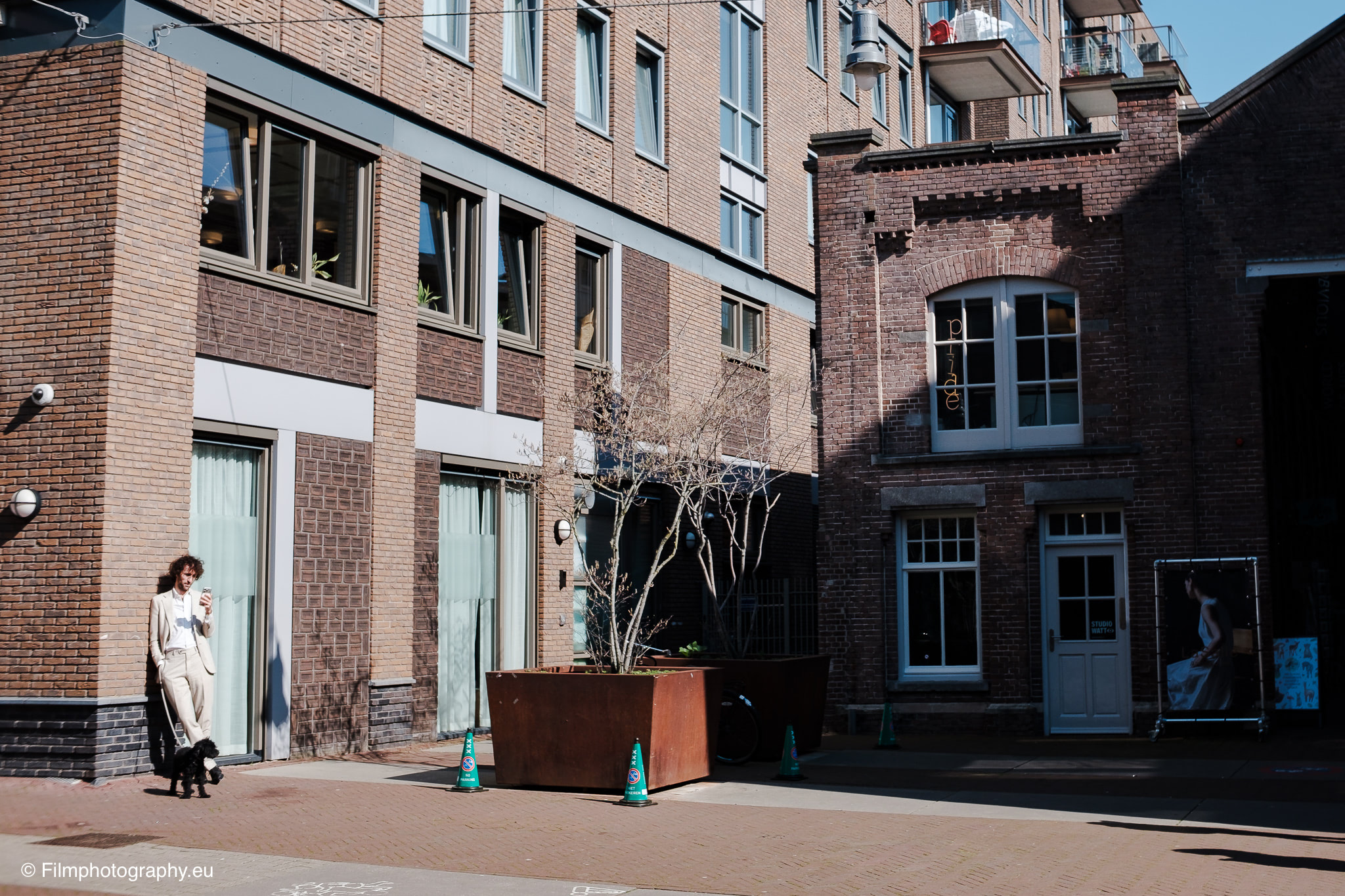
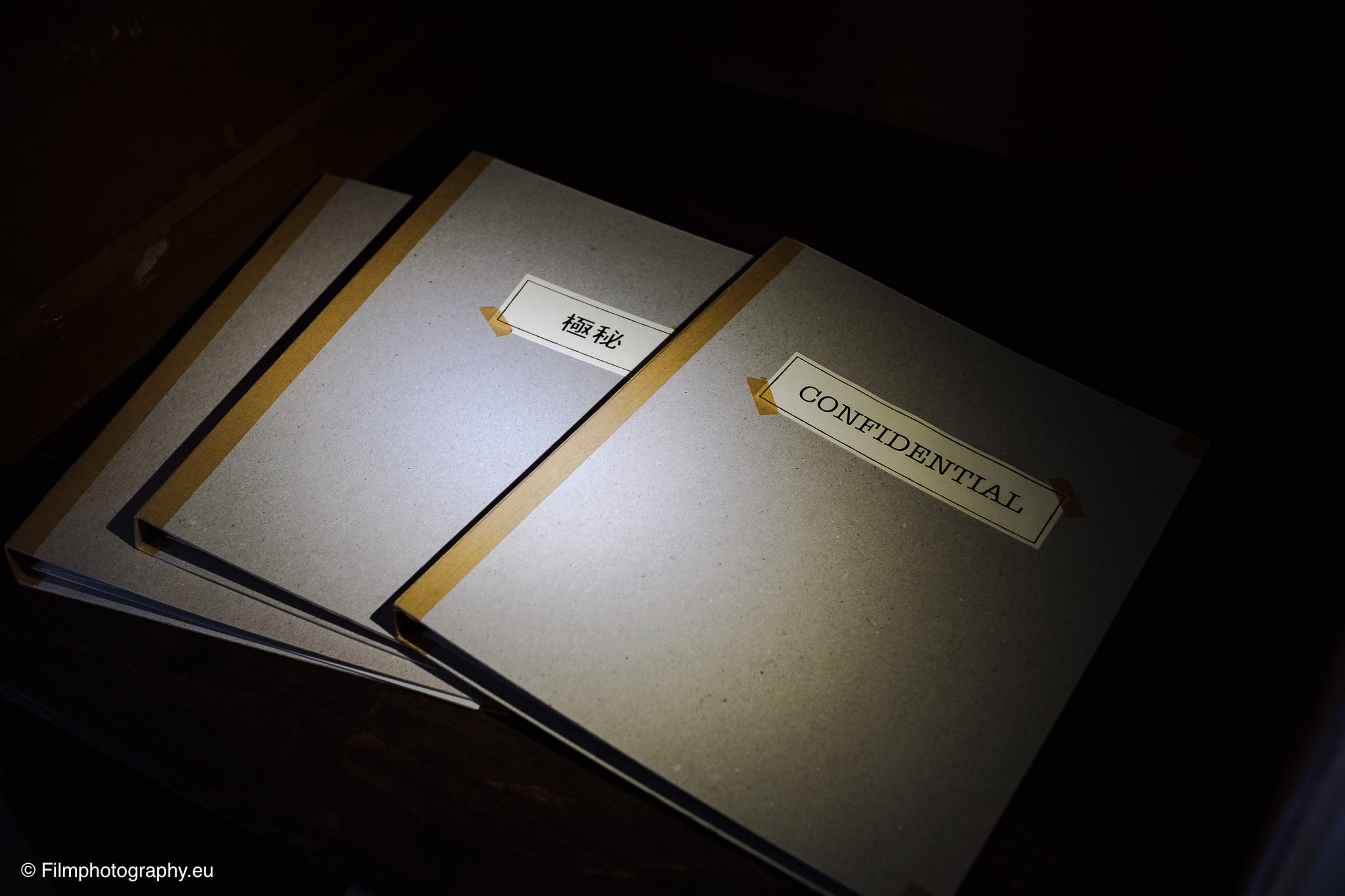
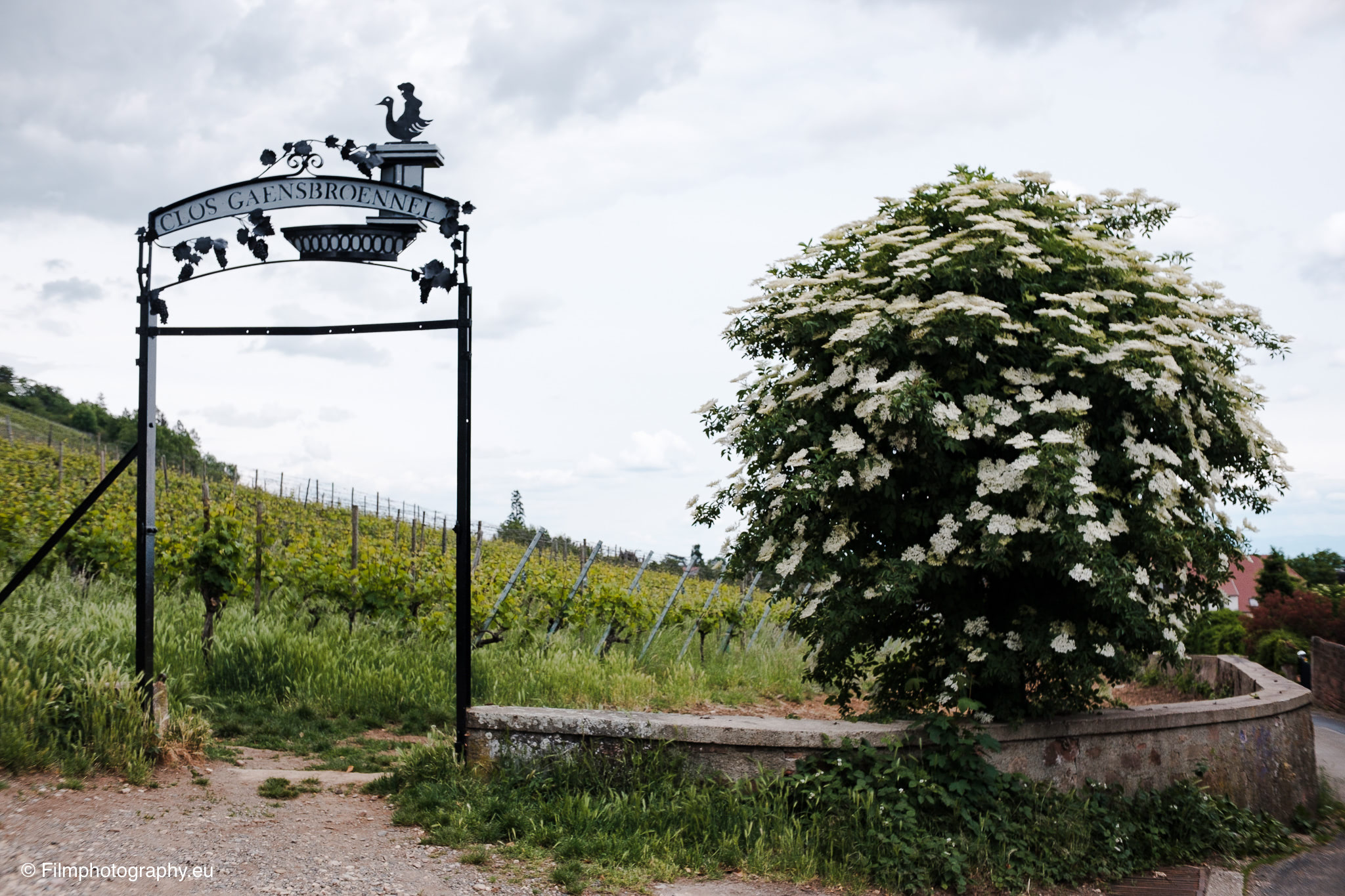
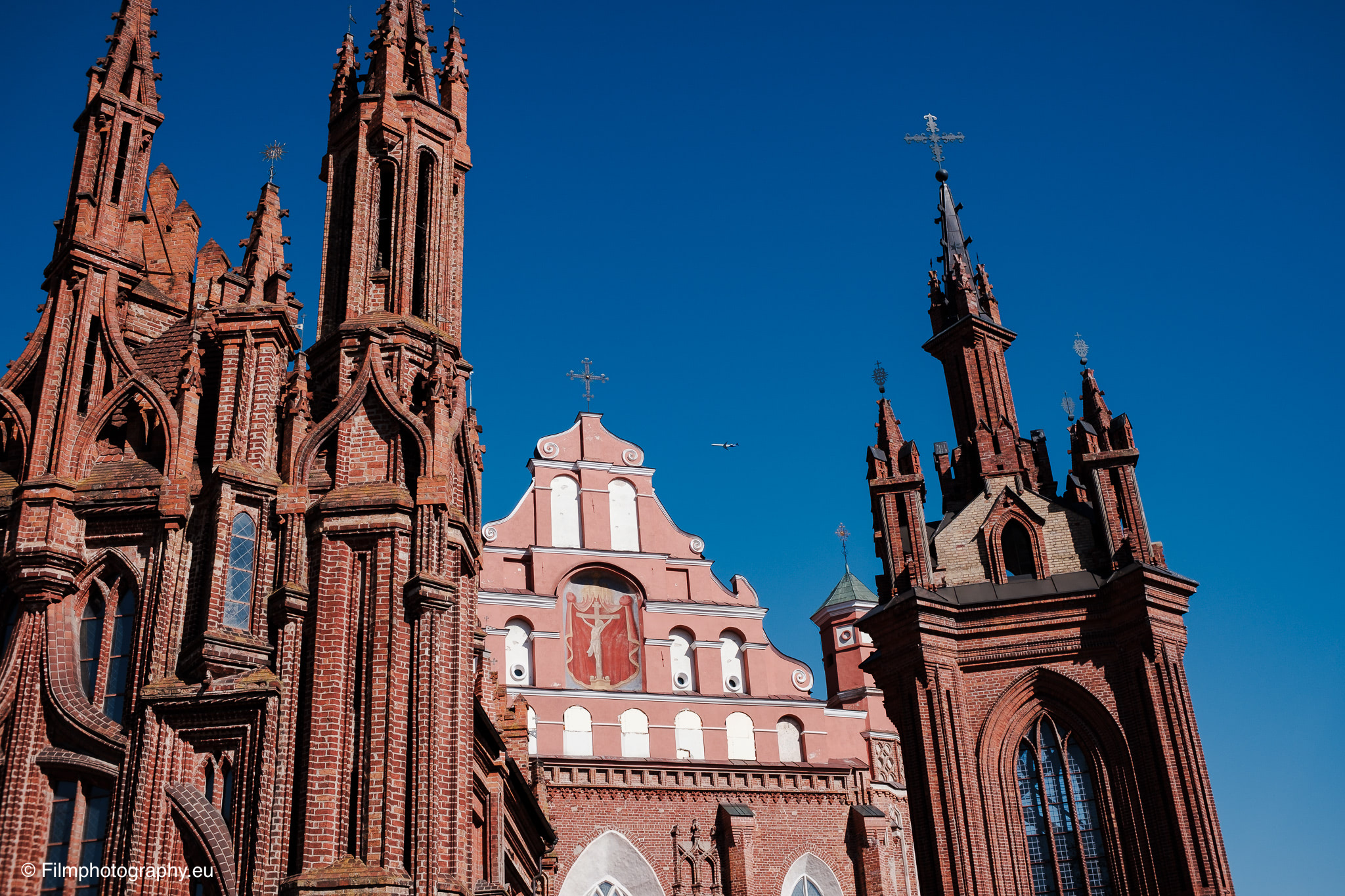
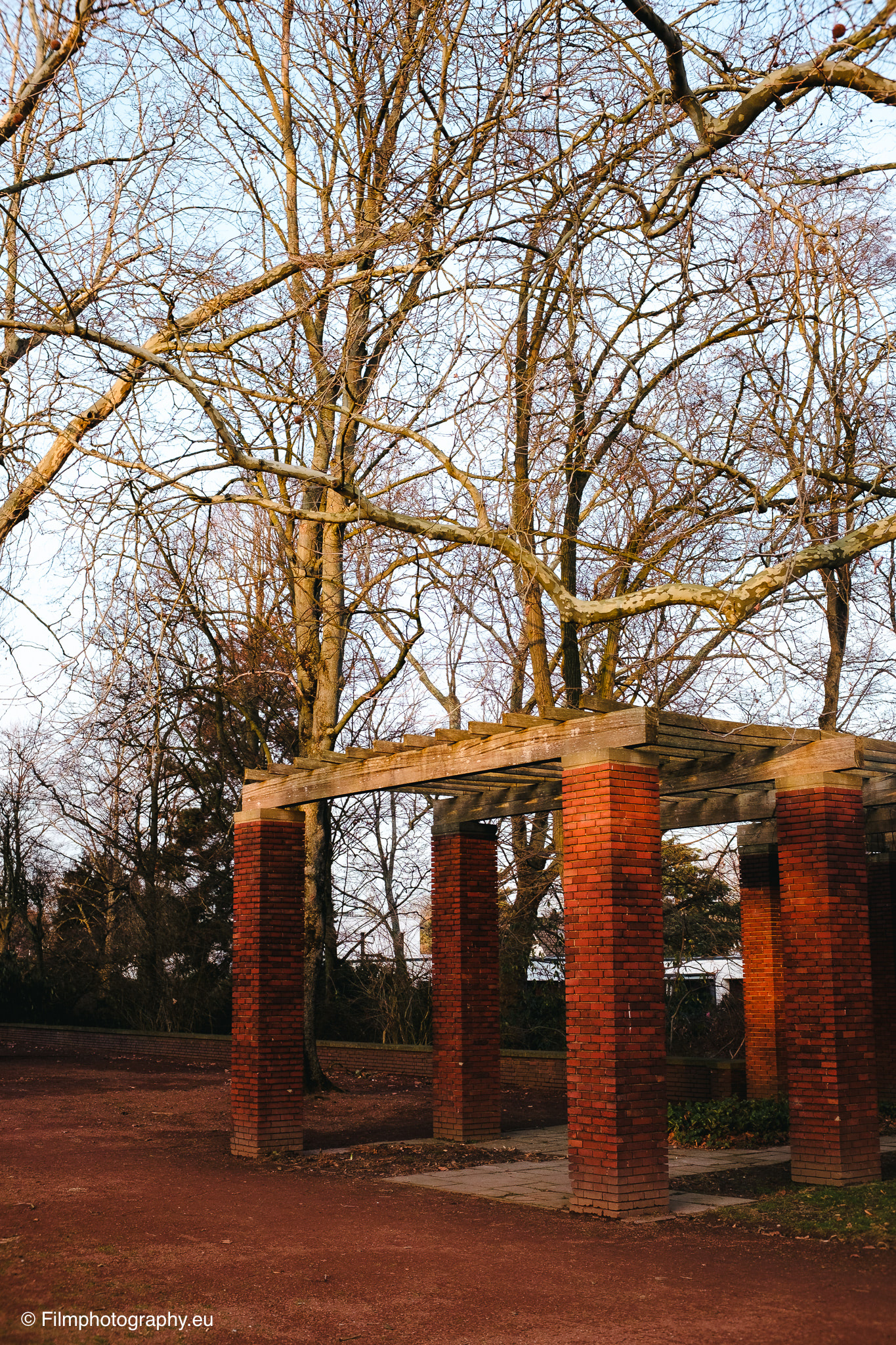
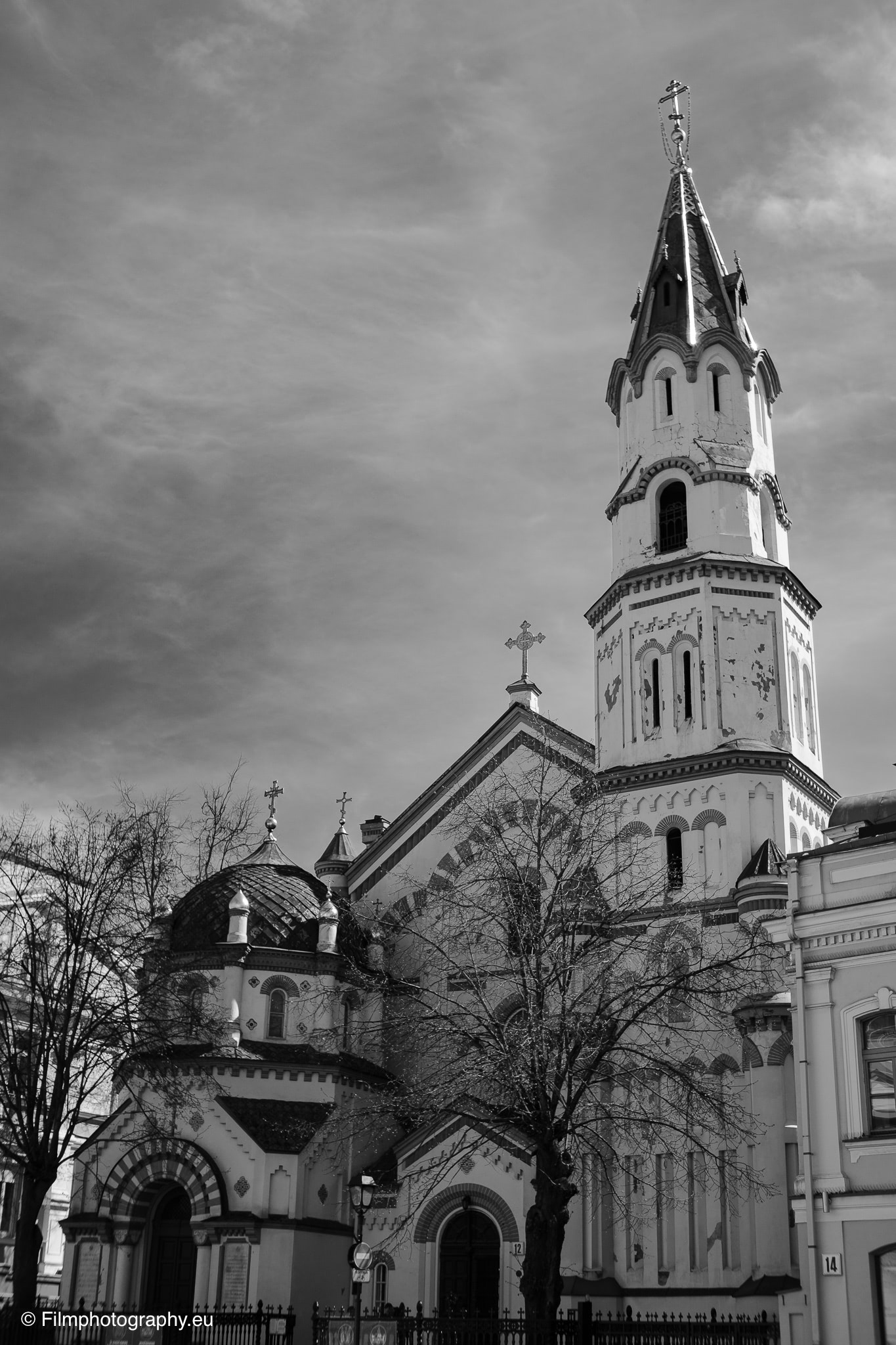
The images in this article were taken with the Fujifilm XT-20. Adobe Lightroom was used for image editing.
Where to Buy
Interested photographers can purchase the lens directly from the manufacturer’s official website. There, you can also find more information on the different color options and availability for other lens mounts.