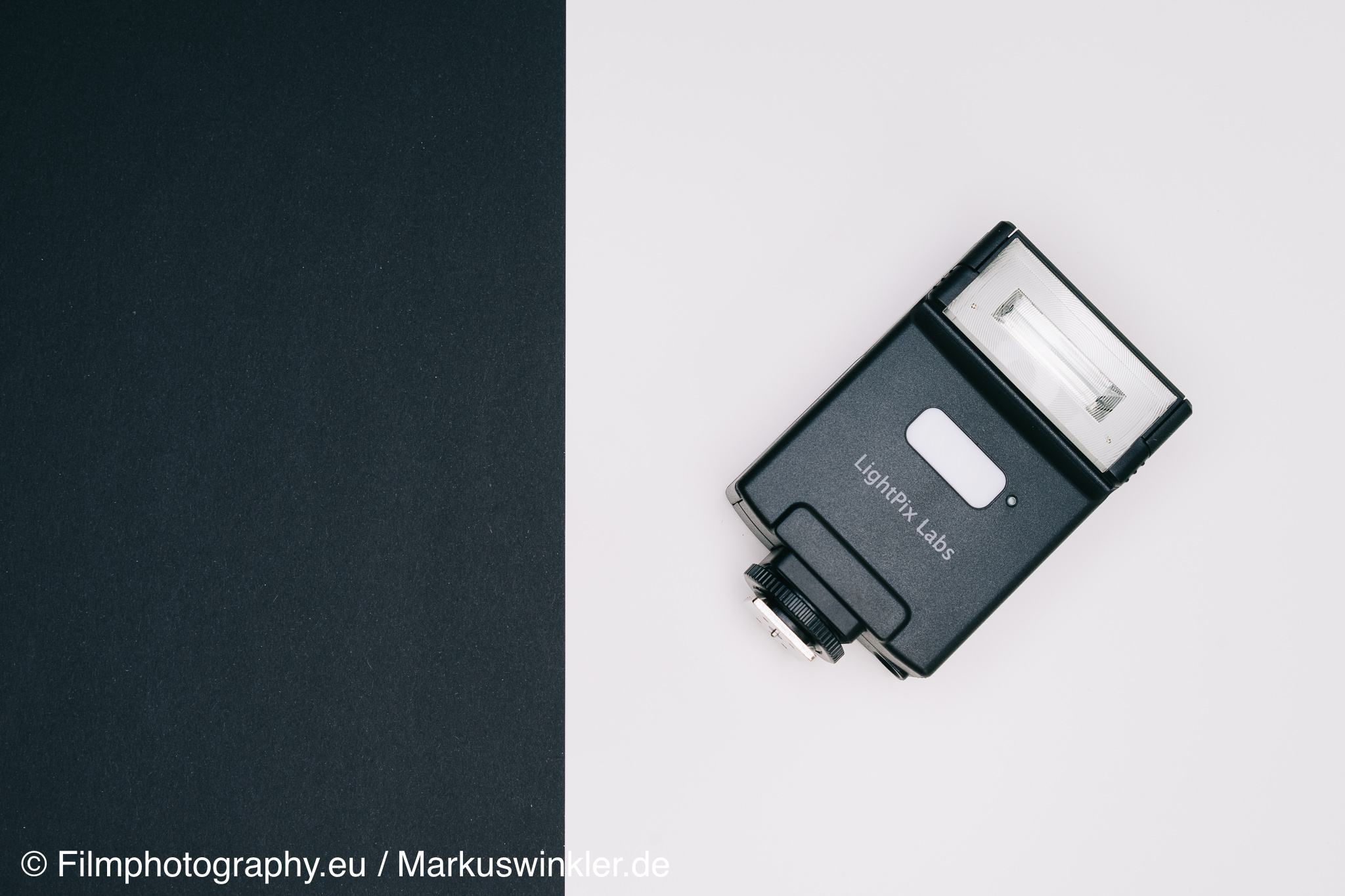
Light decisively influences the mood in an image. If the natural light does not match the desired result, most photographers use artificial light in the form of a flash. Flashes come in various designs with different functions and sizes. In this review, we take a look at the FlashQ Q20 from the still relatively unknown manufacturer "LightPix Labs".
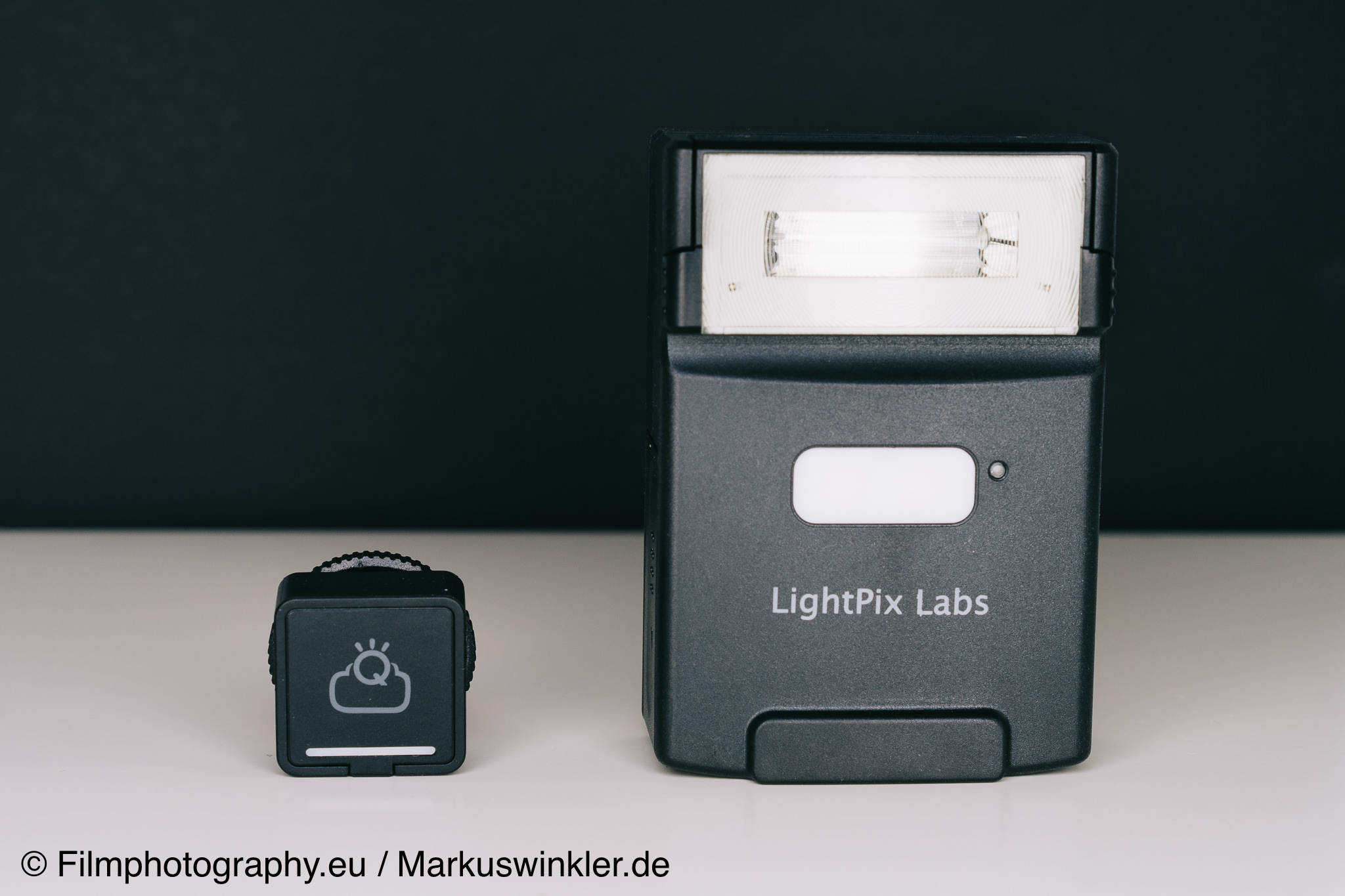
LightPix Labs was founded by a team of photographers, designers, and engineers in Hong Kong. In 2014, the brand "FlashQ" introduced a compact radio trigger for system flashes. The project was successfully funded via the crowdfunding platform Indiegogo. The project goal of $25,000 was reached and the product went into production. 1,511 people supported Lightpix Labs with $68,222.
In 2015, the Hong Kong company launched another Indiegogo project, the FlashQ Q20. However, only 25% of the required $60,000 was raised. Nevertheless, the project was pushed forward and now the FlashQ Q20 is finally available, which we have taken a closer look at for you.
What is the FlashQ Q20?
The Q20 is a hotshoe flash for analog and digital cameras, so far unspectacular. What makes it interesting for me is, among other things, its compact size, the built-in LED light, and the integrated radio trigger.
Technical Specifications
Guide Number: 20 (at ISO 100)
Focal Length: 32mm (on 35mm format)
Manual flash power ratio control (7 steps adjustable, 1/64 to 1/1)
LED video light (7 steps adjustable, max. 60 Lux output at 1m)
2.4 GHz low-power digital radio (FlashQ receiver) inside the Q20
10 meters wireless range
Tiltable flash head, up to 90° with click stops at 0°, 45°, 60°, 75°, 90°
Other features: S1/S2 optical slave, modeling light (LED)
Power source: Two AA size alkaline / Ni-MH batteries
Recycling time (1/1 full power): 7 sec. with alkaline batteries / 6 sec. with Ni-MH batteries
Number of flashes: 100 - 2000 with fresh alkaline batteries
LED lighting time: approx. 1 hour (at full LED output and with Ni-MH batteries)
Flash color temperature: 5600K ± 200K (like daylight)
LED color temperature: 5500K ± 300K
Dimensions: 59 (W) x 99 (H) x 29 (D) mm (with FlashQ transmitter attached)
Weight: 115g (without battery)
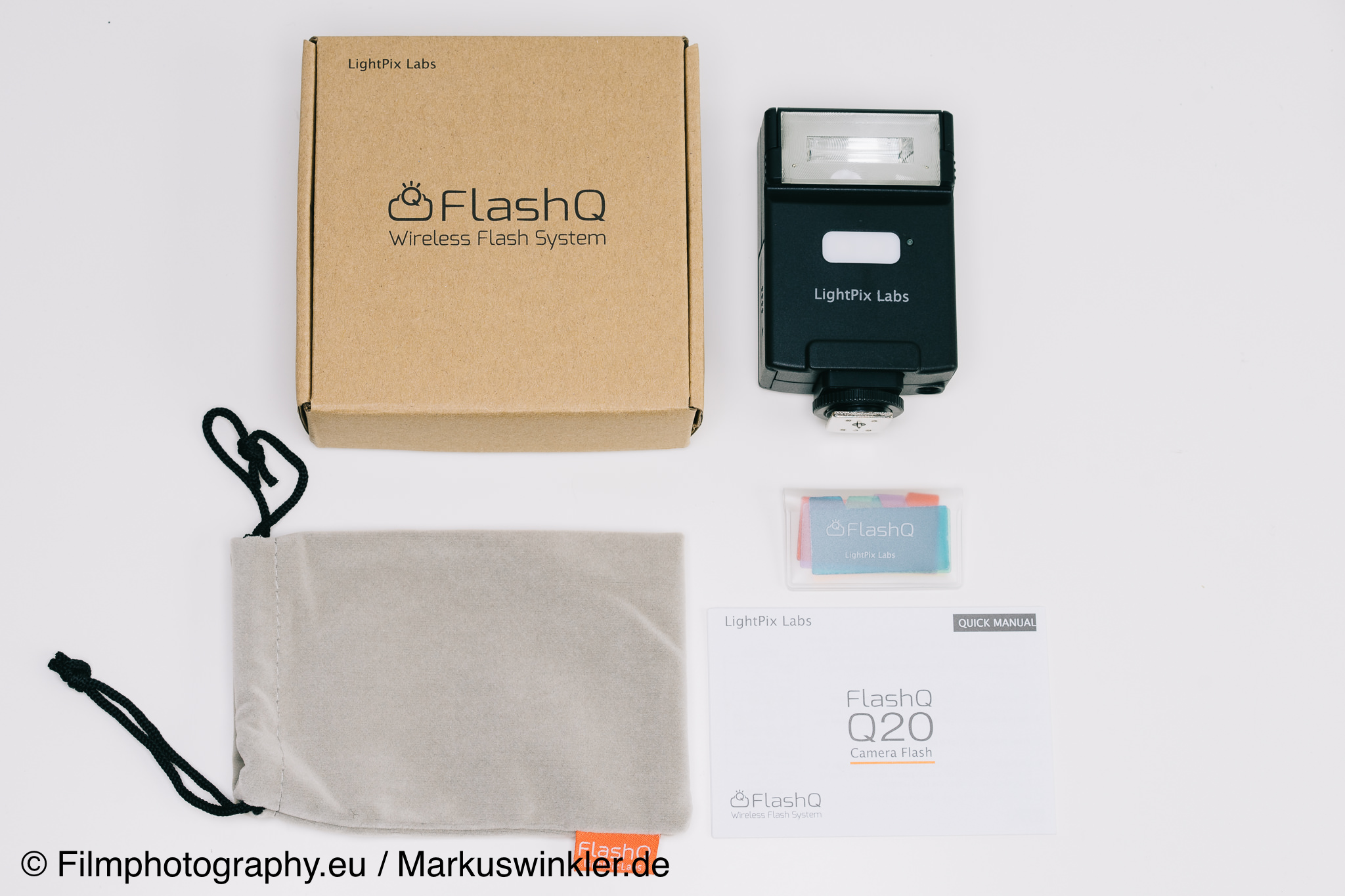
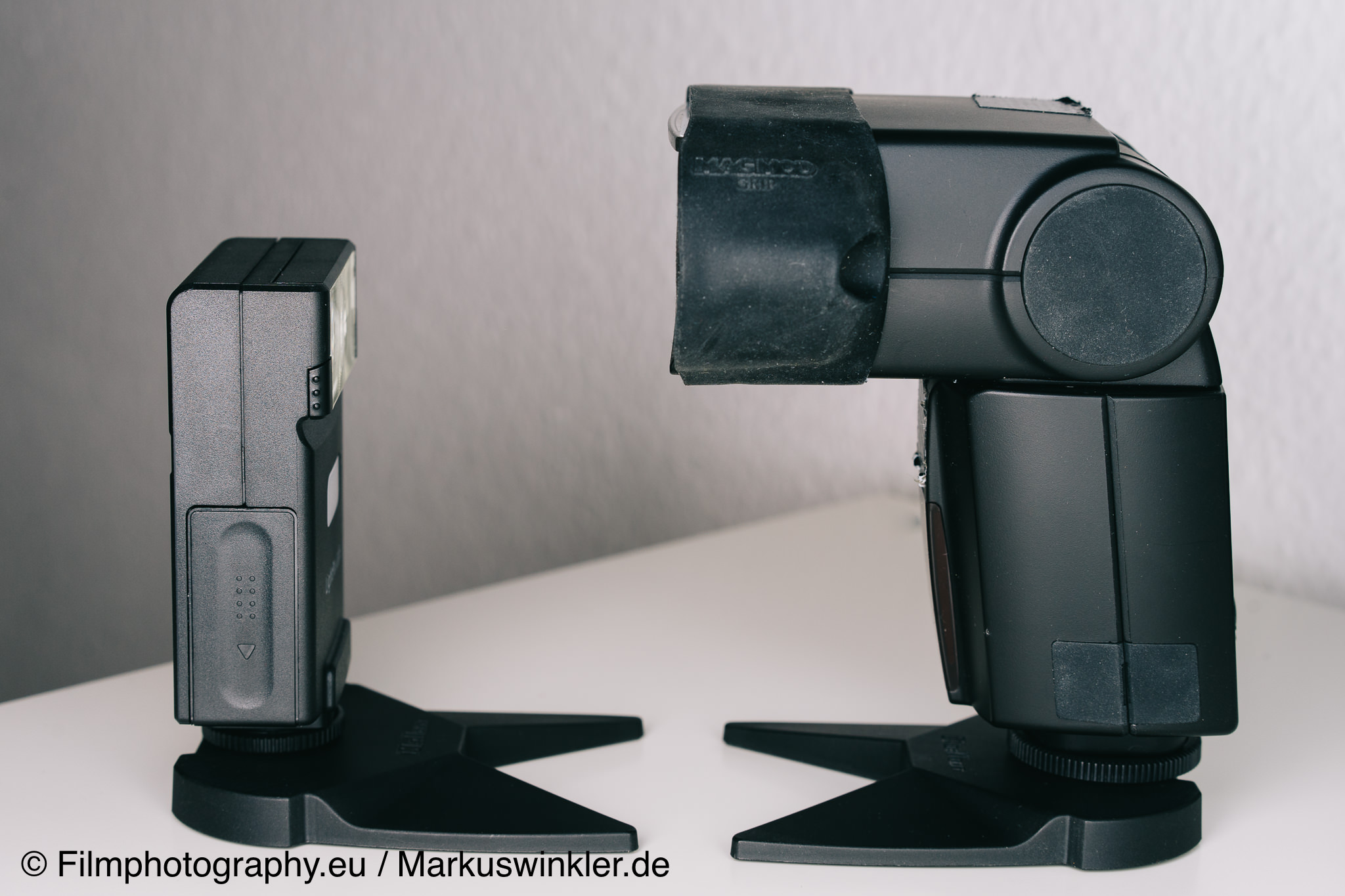
The flash comes in a simple brown cardboard box. Inside are the flash, color filters, manual, and a matching fabric pouch. The flash itself is well-built and makes a good impression.
Power is supplied by two AA batteries. This is probably also the reason why the flash is somewhat weak in performance.
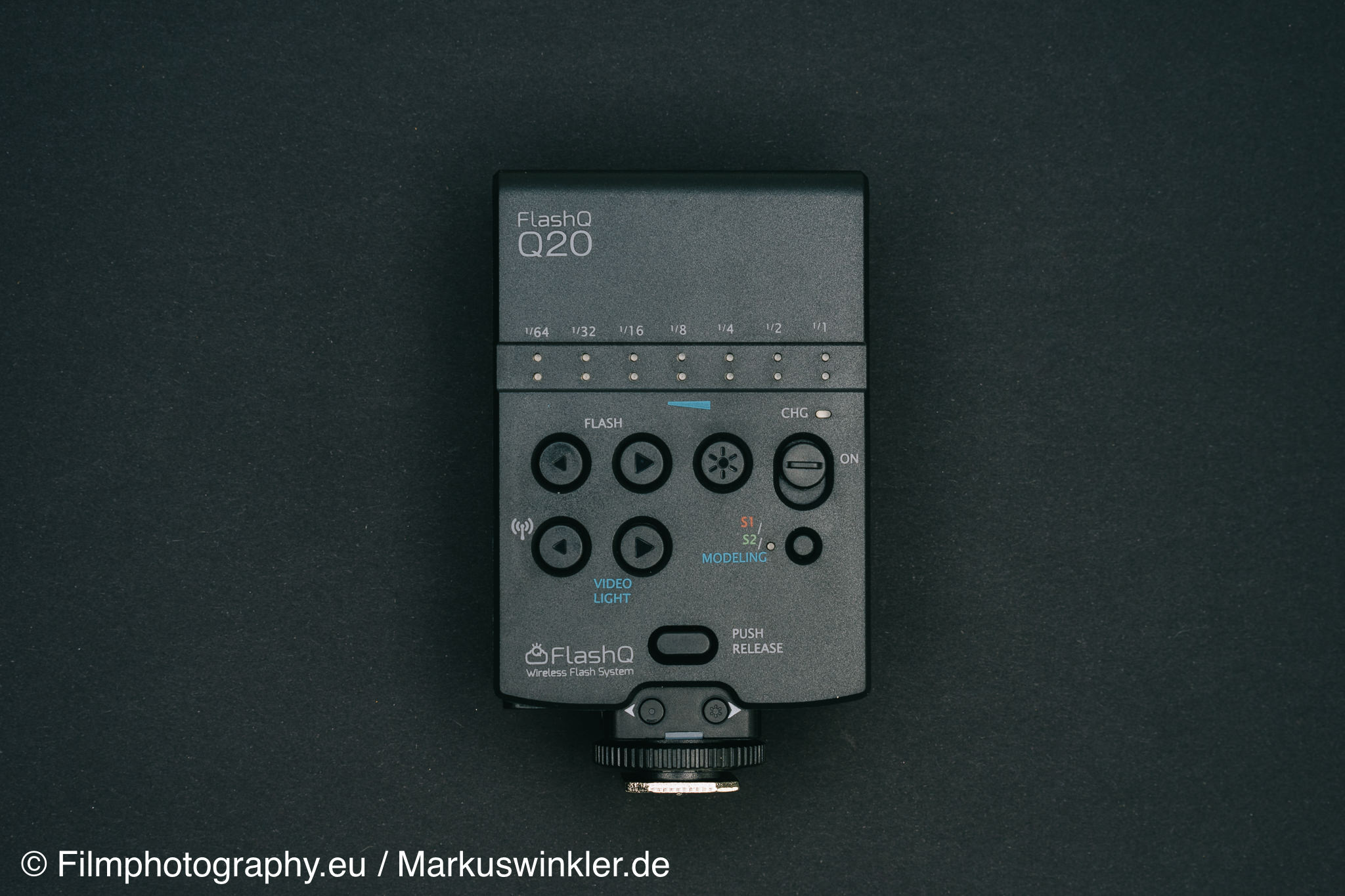
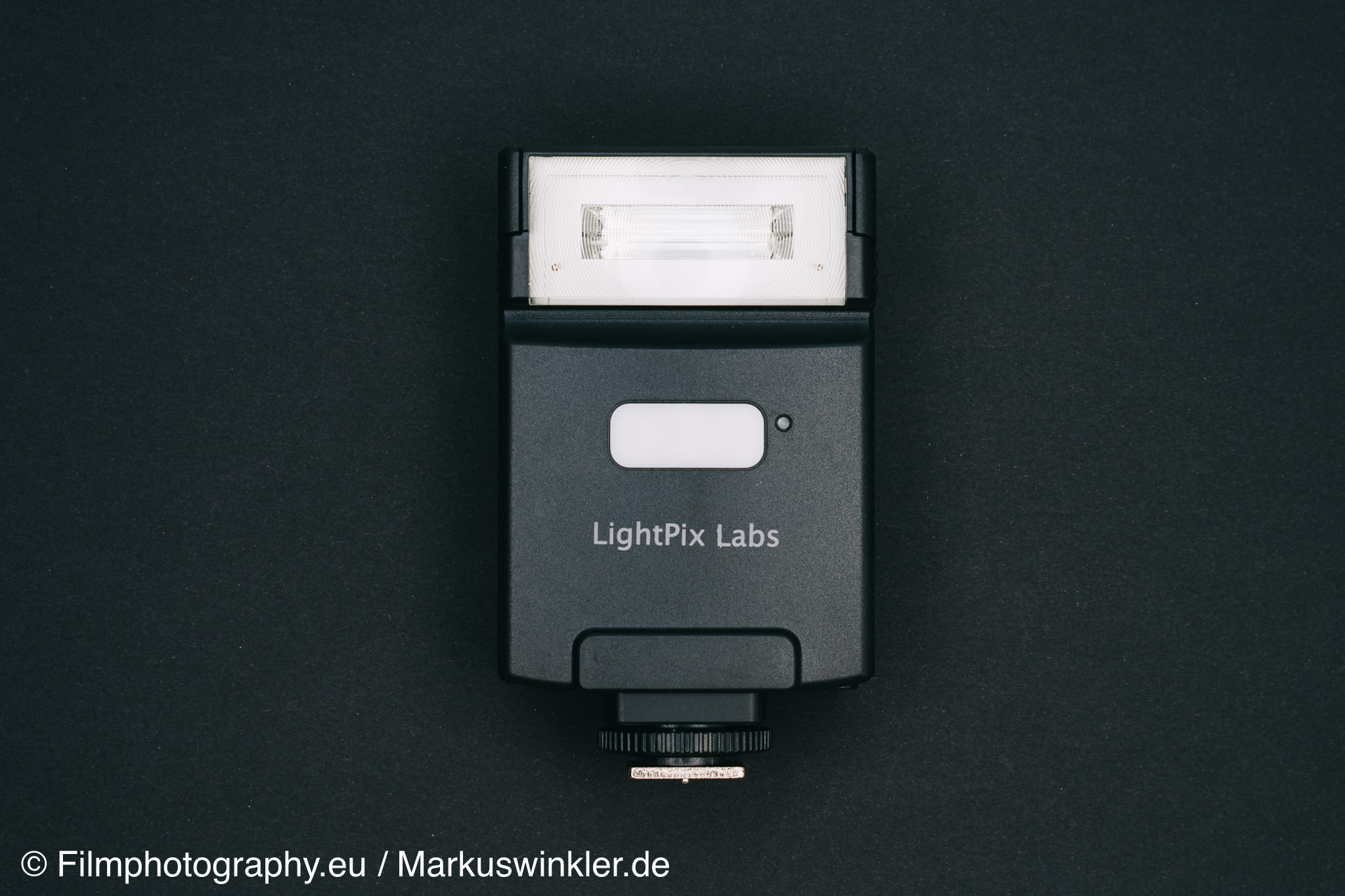
The design is simple and functional. On the front is the flash head, which can be tilted up 90 degrees, an LED light, and the sensor for triggering as a slave. Unfortunately, the flash head cannot be rotated to the side or backward. There is also no zoom capability. On the back are the buttons for settings. A mechanical power switch turns the flash on. Then you can adjust the flash power (1/64 to 1/1) or the video light.

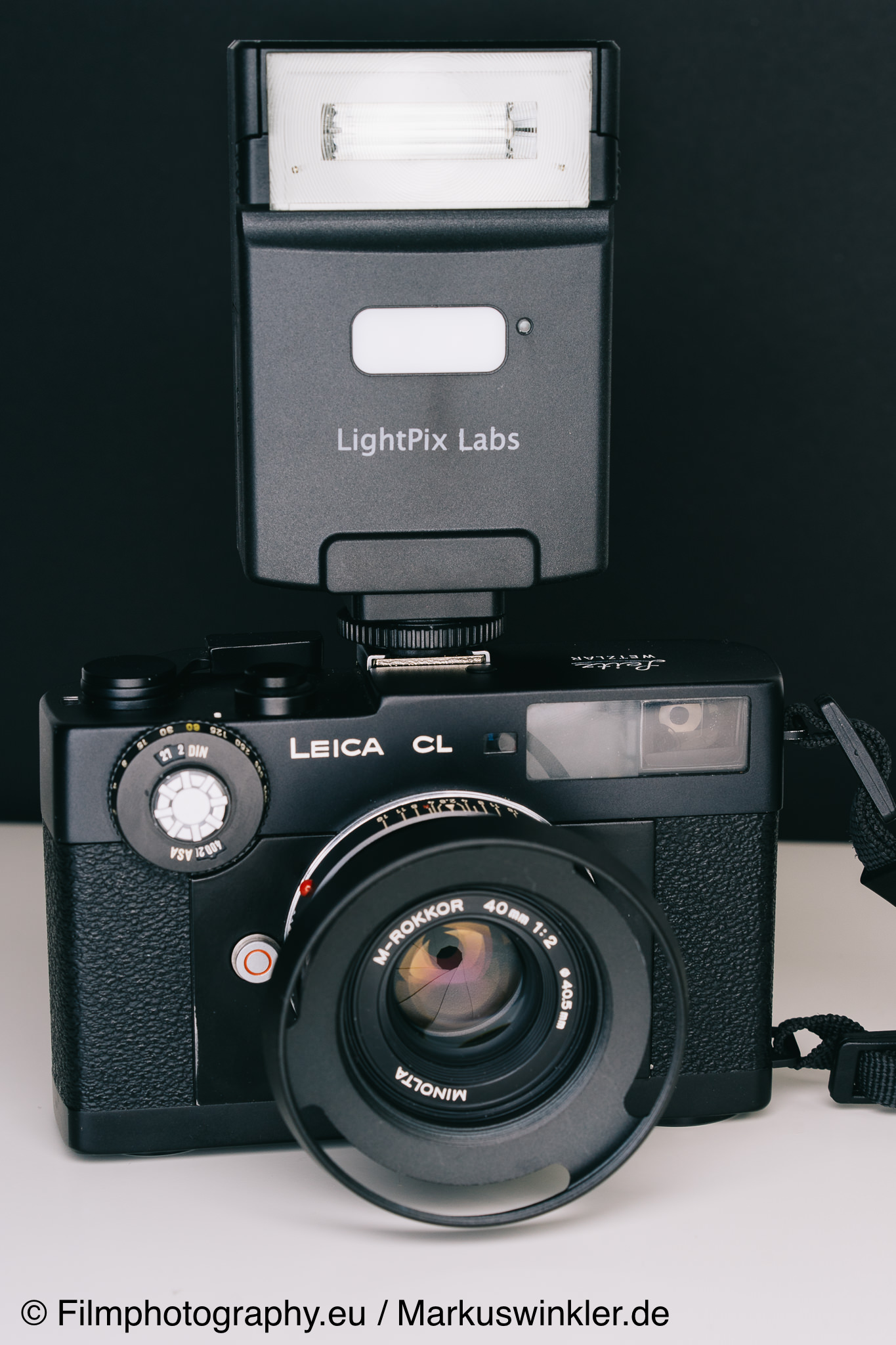
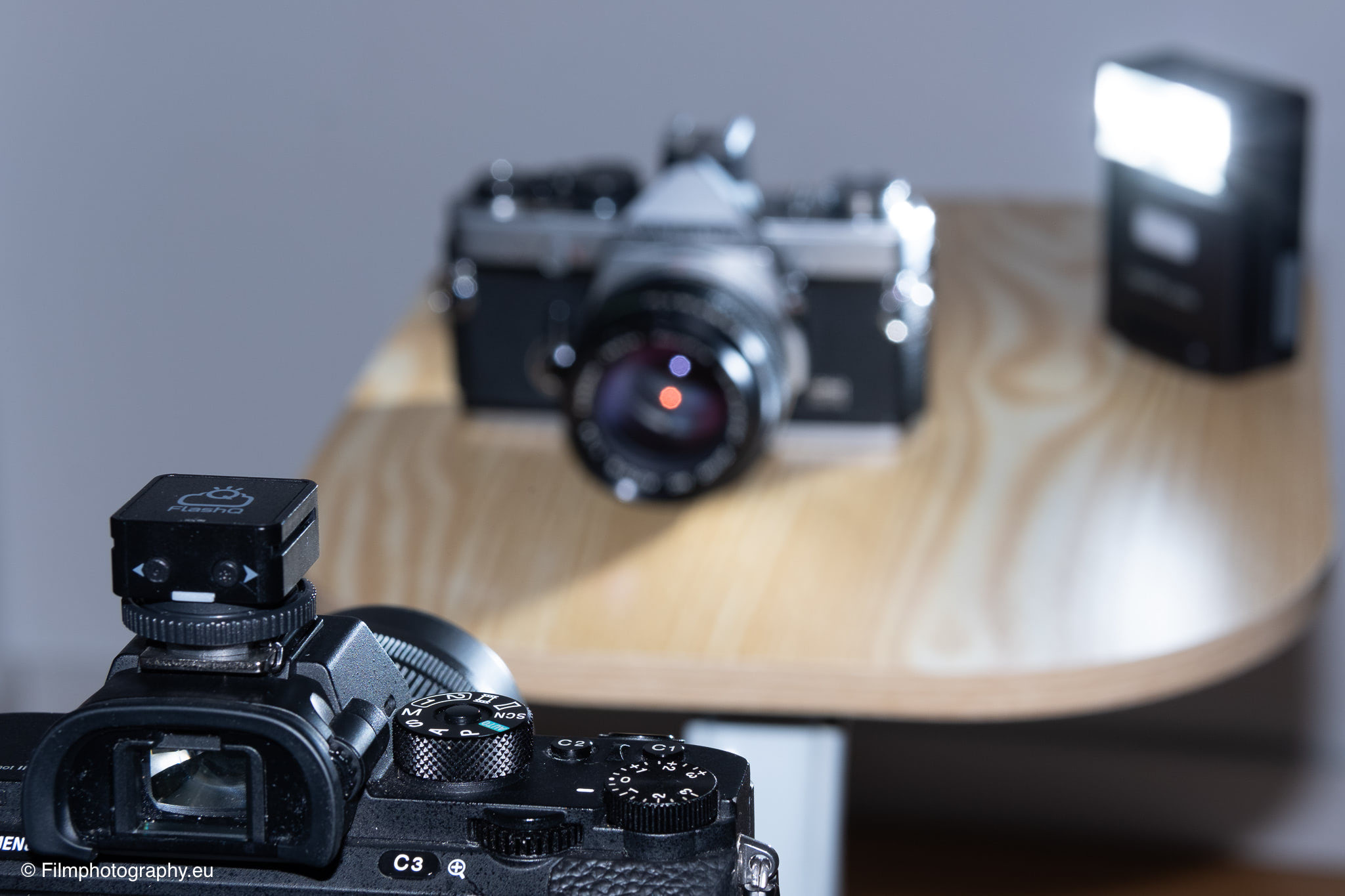
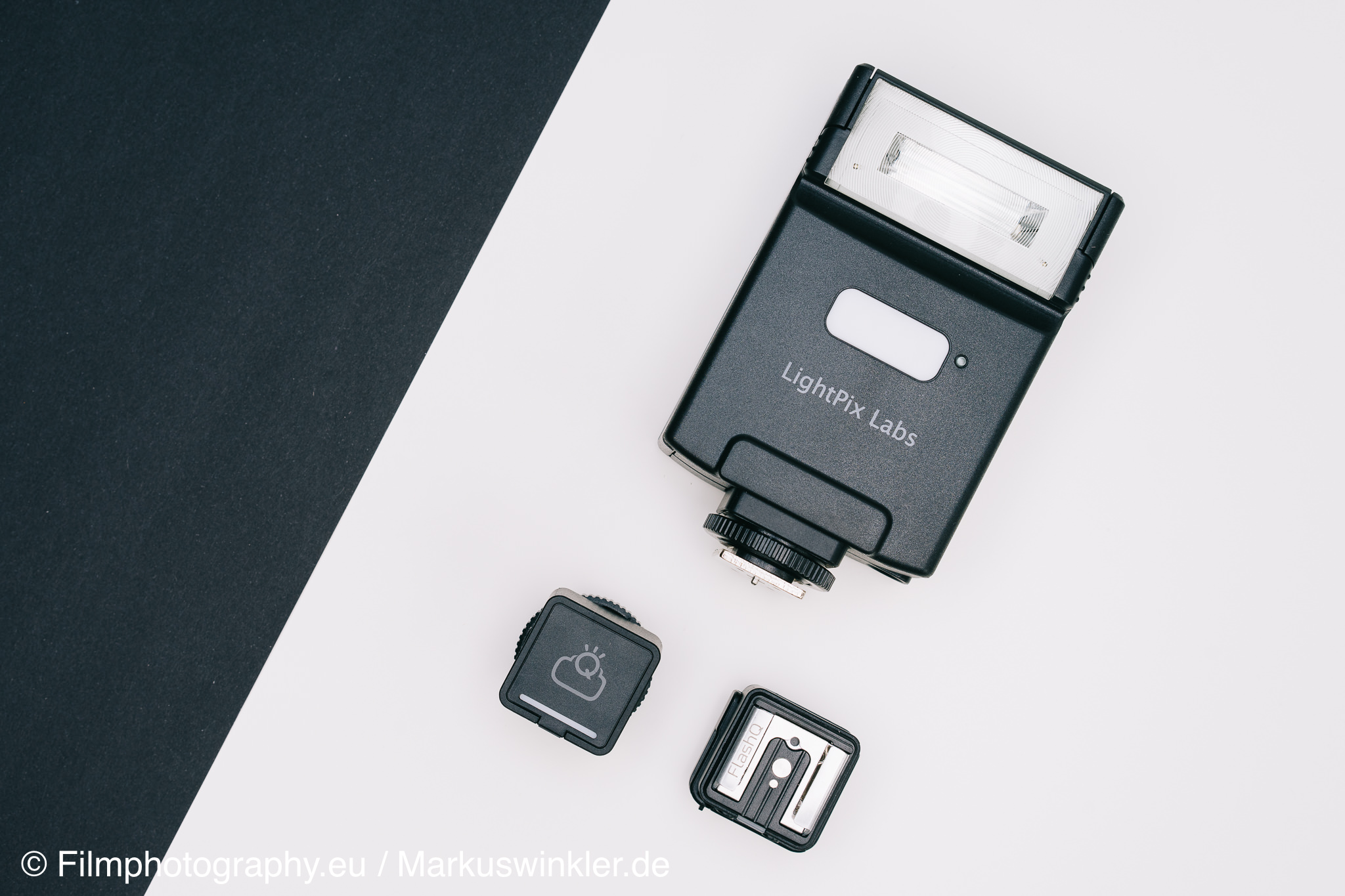
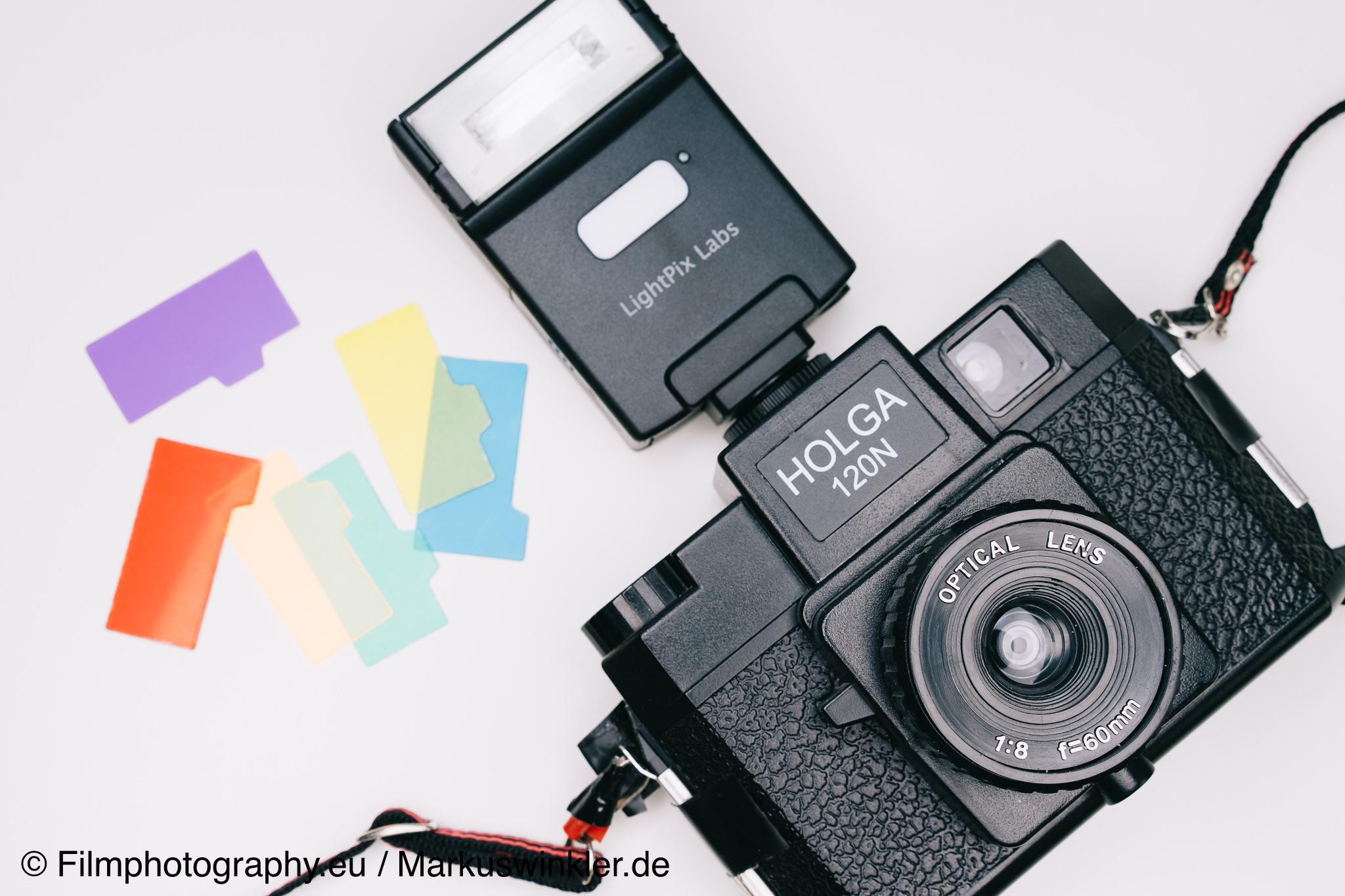
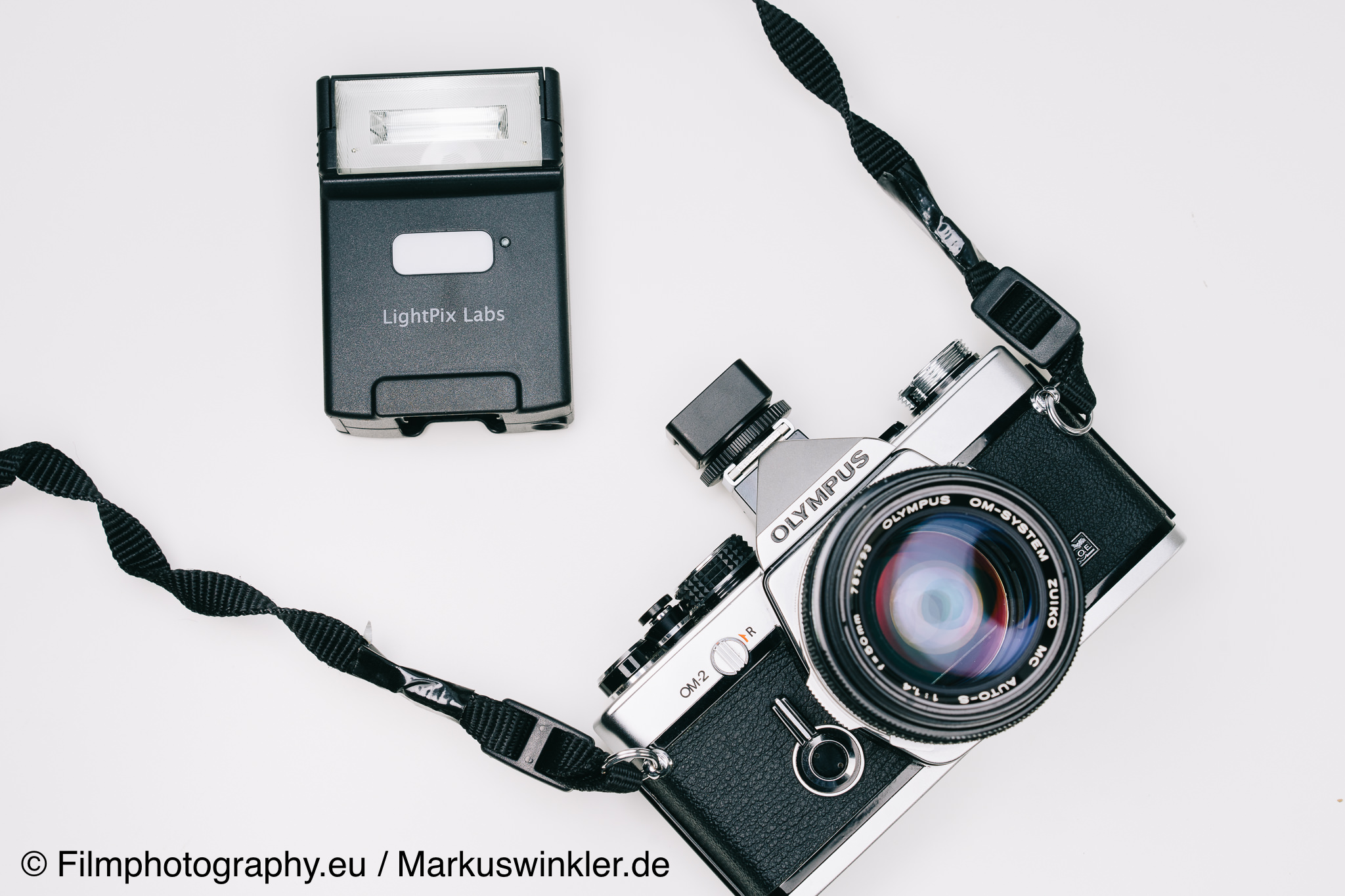
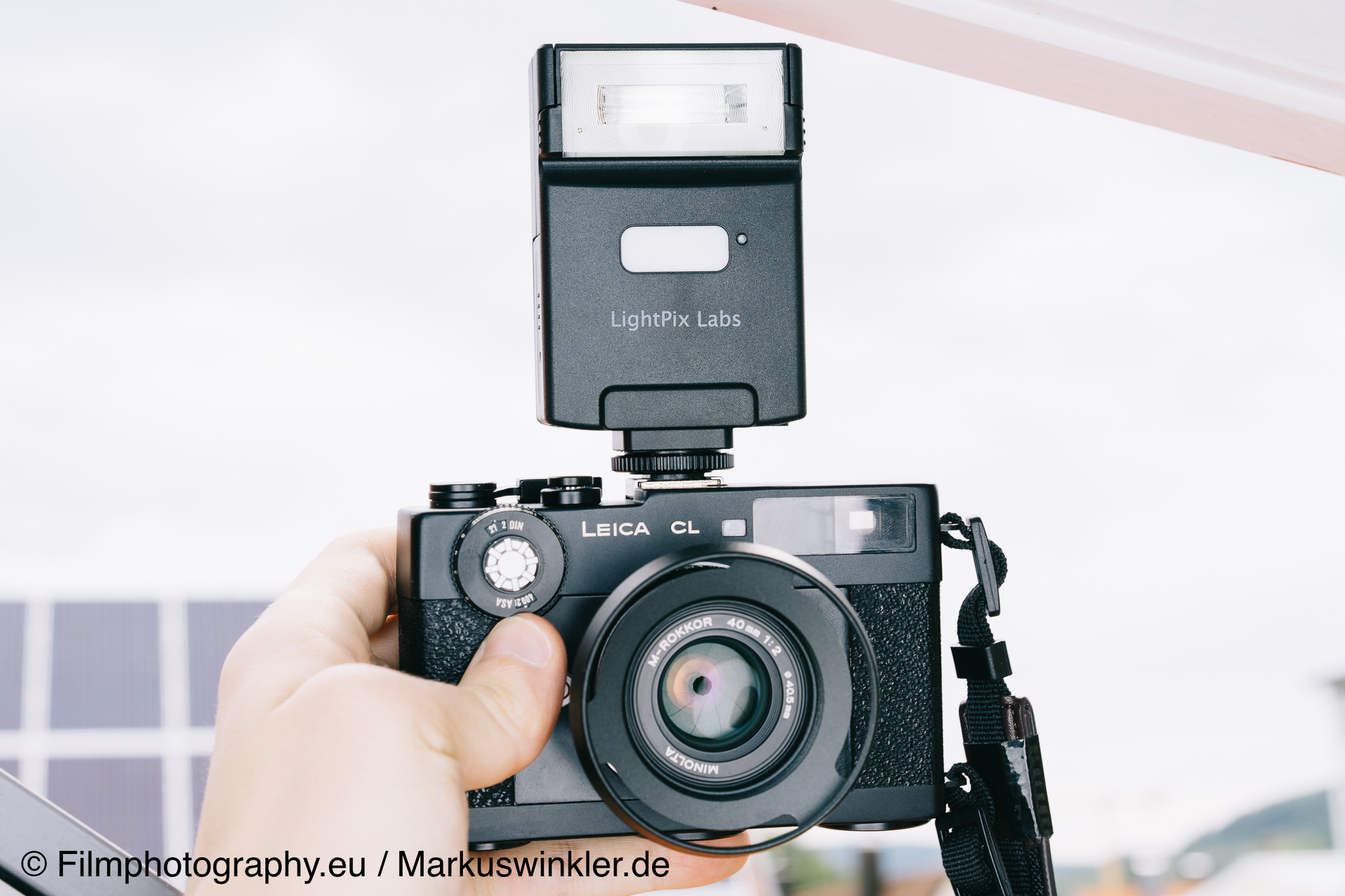
The flash is attached to the camera via the hot shoe. However, it becomes really exciting when you detach the flash from the camera. The Q20 has a built-in radio receiver. The transmitter consists of the hot shoe, contains a coin cell battery, and is slightly larger than a cube. With the press of a button, the hotshoe flash can be detached from the camera and triggered wirelessly. The square design is also convenient because it can simply be placed anywhere. Additionally, there is a thread for a tripod.
With the radio trigger, the flash power can also be changed from the camera. The sync speed is a maximum of 1/250 second.
There is no TTL metering option, which is not possible with most analog cameras anyway. However, a built-in and reliably functioning auto mode would be nice, as you cannot always check exposure directly with an analog camera.
The Q20 trigger is also compatible with other radio triggers from Lightpix Labs, so you can trigger other flashes if you wish.
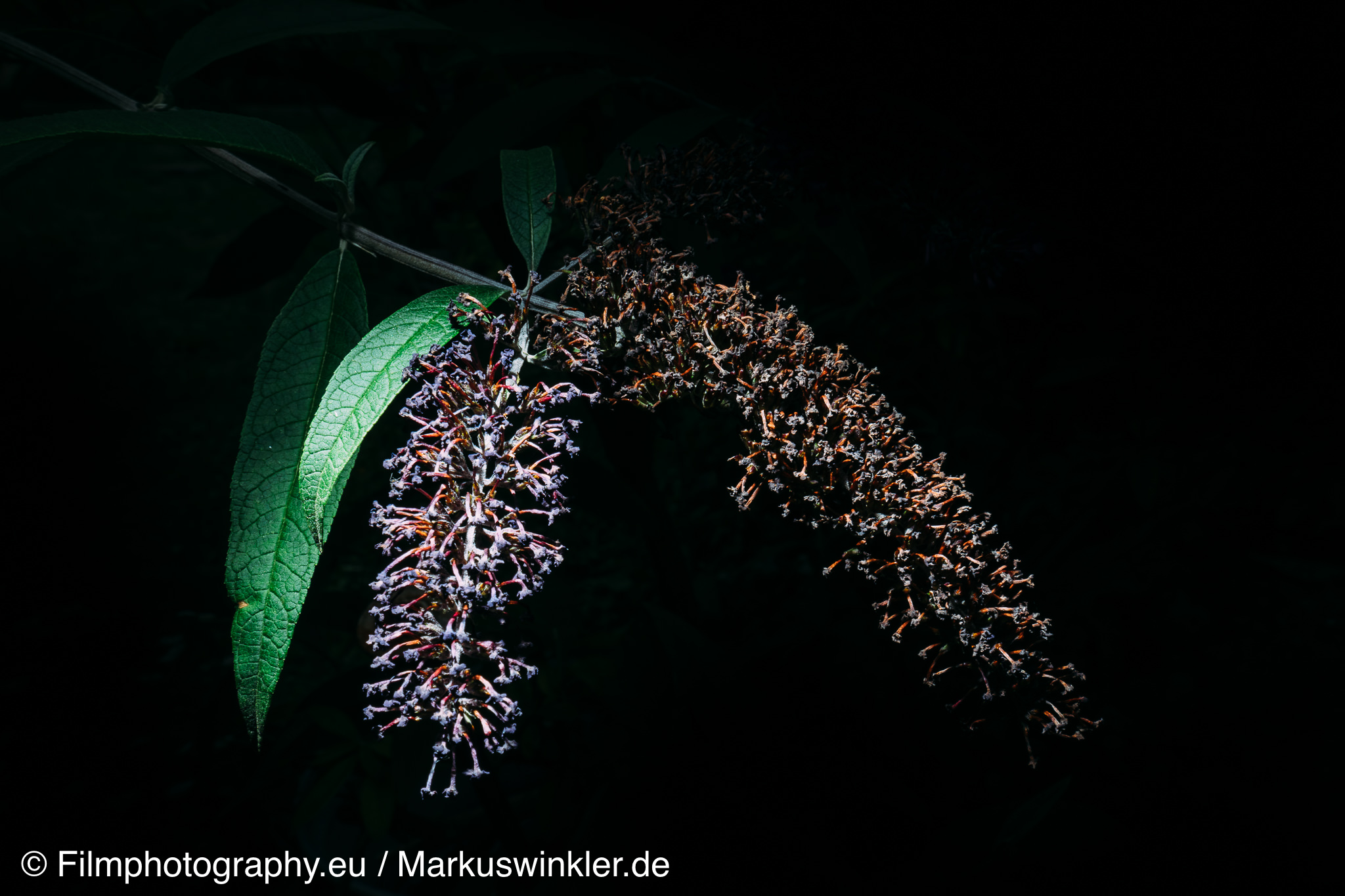
The radio triggers have a range of 10 meters. If desired, the FlashQ Q20 can also be triggered by another flash. However, this only works reliably if the flash light hits the sensor of the Q20 from the front.
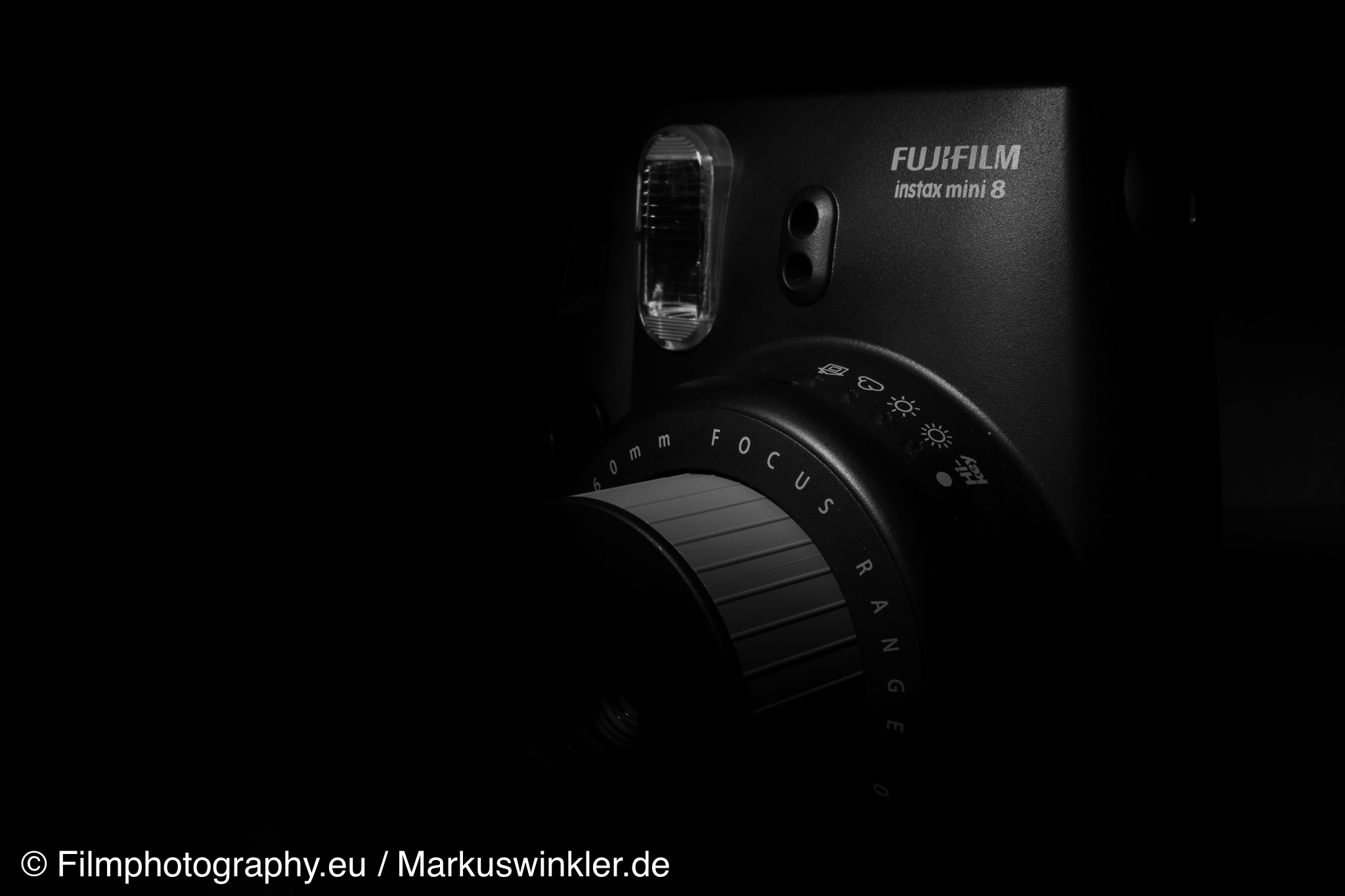
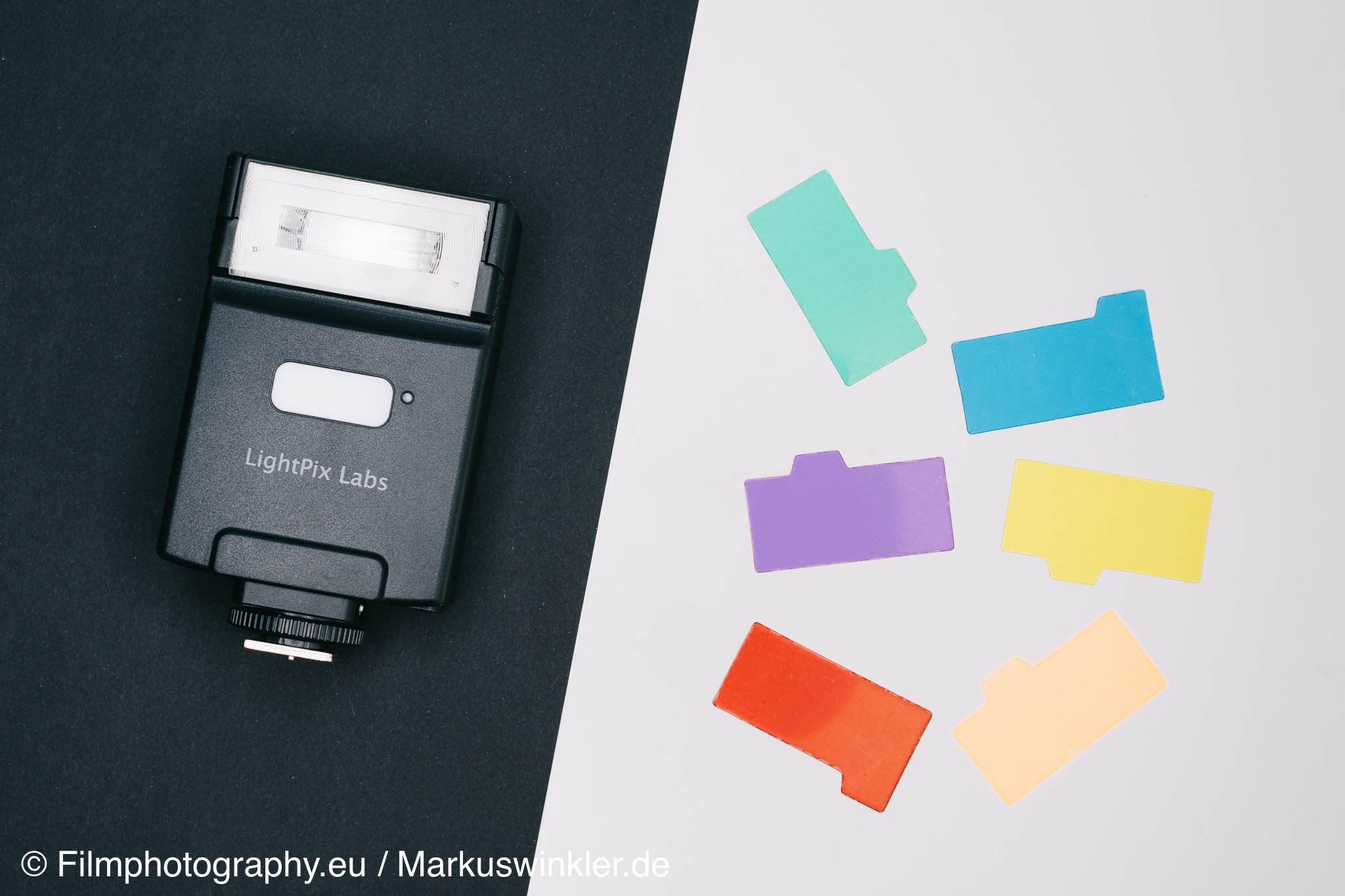
The built-in LED can also be used as a modeling light, meaning it turns off when the flash fires. This is not only practical for previewing the light fall but also helps immensely with focusing in the dark.

Conclusion
The FlashQ Q20 clearly cannot keep up with the top models from Nikon, Canon, and co. in terms of performance. Also, using light modifiers like softboxes makes little sense. However, it impresses with its size. It fits in any camera bag and, if necessary, in a pants pocket. Added to this is the really uncomplicated ability to take the flash off the camera and trigger it wirelessly.
A well-rounded product with which you can take great creative pictures within its performance range. For a heavy flash user, it is probably not the right model.
The FlashQ Q20 is available in black and white. Directly at Lightpix Labs, the price for one unit is $89 USD.