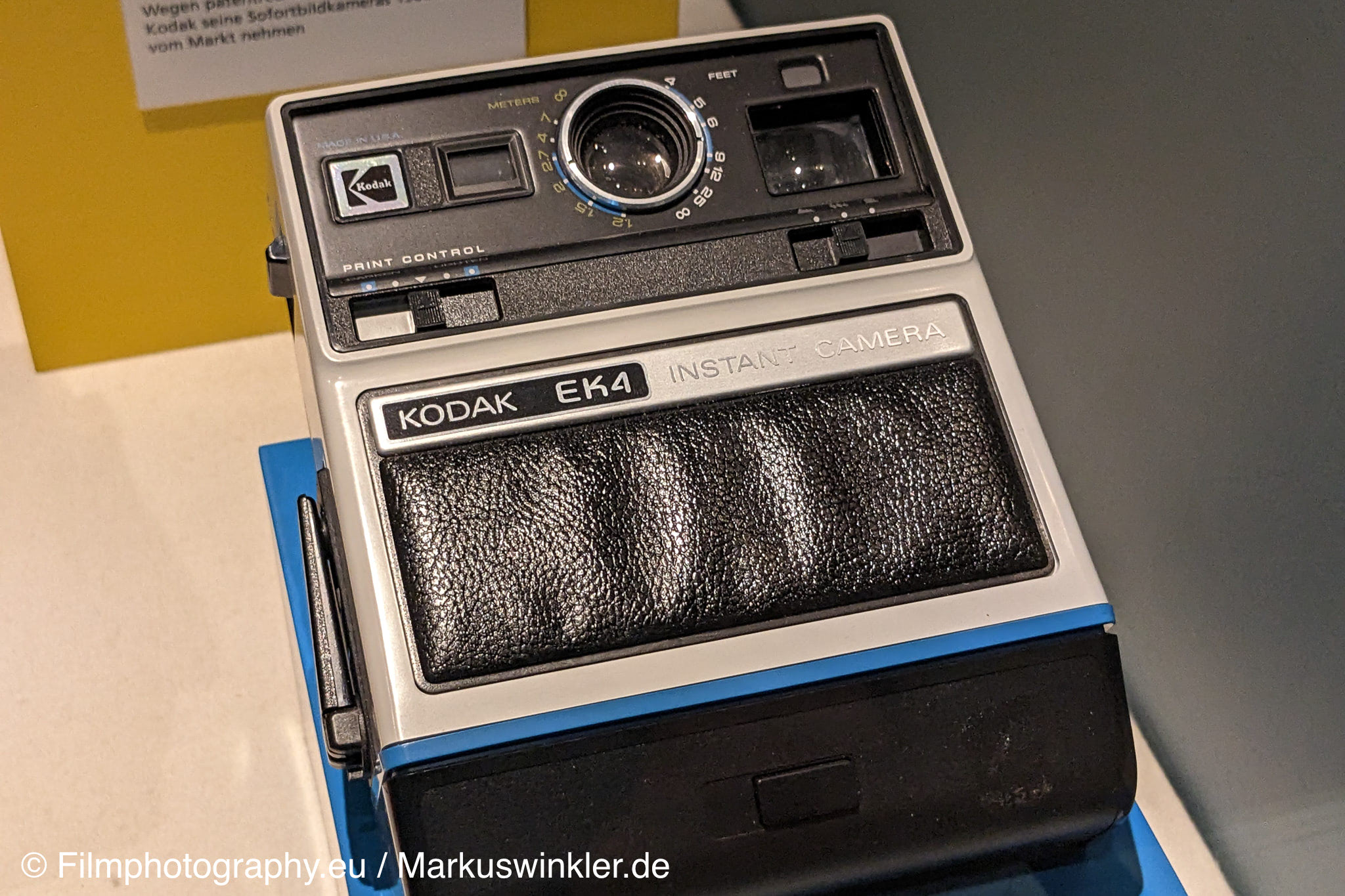
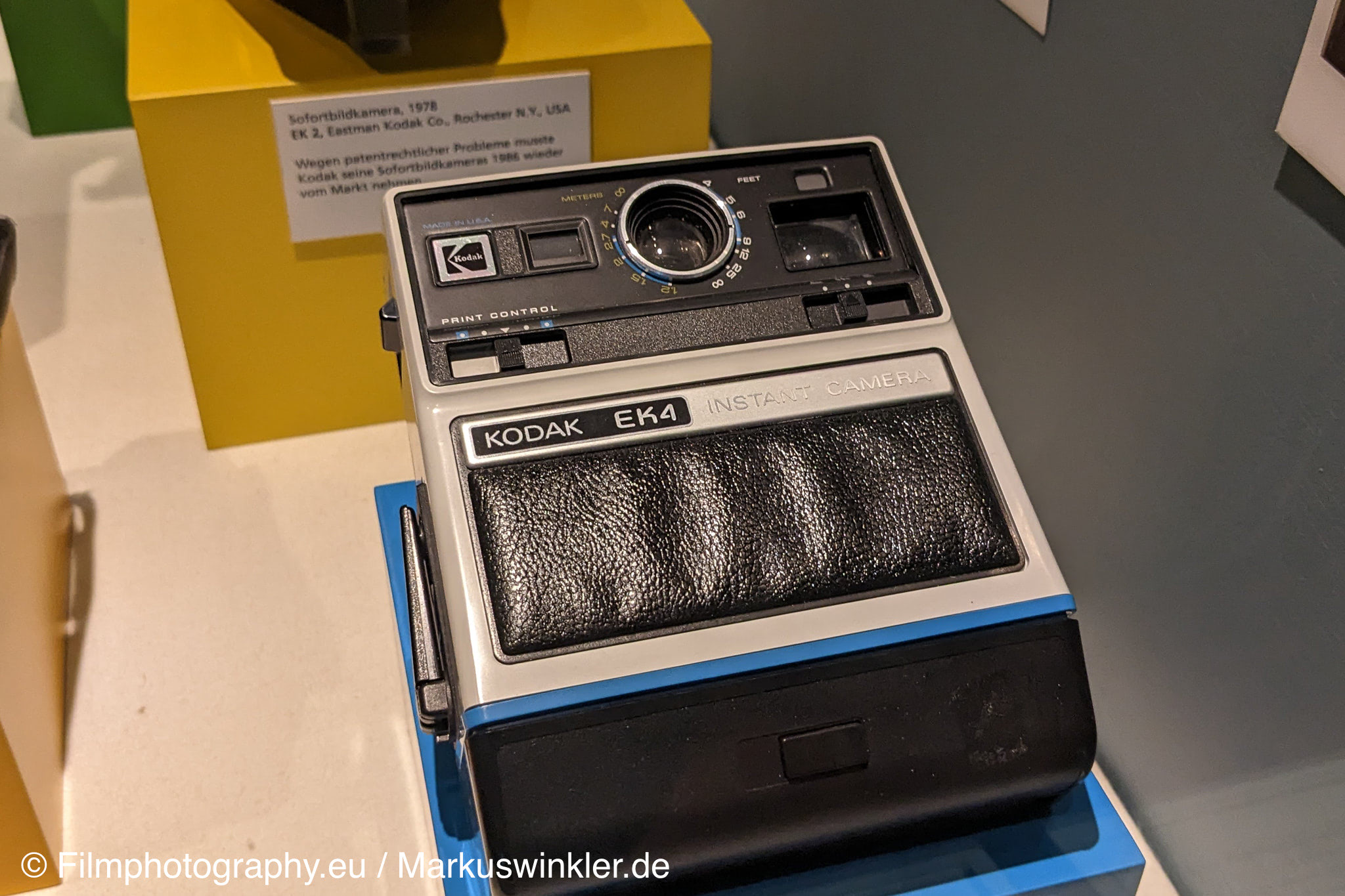
The Kodak EK4 instant camera, released in 1976, marked a crucial step in the development of photography technology. It represents an era in which instant photography flourished, allowing people to capture moments instantly and enjoy them in physical form. Here we take a detailed look at the functions and features of the Kodak EK4.
Design and ergonomics
Featuring a very simple design, the EK4 offered users the basics of photography without the bells and whistles of modern cameras. The clear and concise design made handling intuitive, even for someone who had no experience with cameras.
Lens and focusing
The camera’s lens has markings in meters and feet, giving users flexible focus adjustment. Sliders on the front of the camera allowed users to adjust exposure and focus. By moving the focus control, the lens indicator rotated to the corresponding distance symbols, allowing precise focusing.
Power supply
The camera was powered by a 6V flat J-size battery, which was a fairly standard power source for the time.
Manual film ejection
One of the characteristic features of the EK4 was the manual film ejection, which was carried out using a hand crank. This was in contrast to the almost identical EK6 model, which had a motorized ejection mechanism. This manual functionality gave users a level of physical interaction with the photography process that is often lost in this day and age of digital photography.
Flip flash connector
Another noticeable feature was the flip flash socket located on top of the camera. This made it possible to connect external flash units to achieve better lighting in darker environments.
Film format
The camera used PR10 (also known as PR144) film, a popular instant film format at the time that produced high quality prints. Unfortunately the films are no longer being produced. For this reason you can no longer use the camera.
Technical datasheet
| Attribute | Specification |
|---|---|
| Type of Camera | Instant camera |
| Film format | PR-10 |
| Film transport | Manual |
| Focal length | - |
| Widest aperture | - |
| Minimum focus distance | 120 cm / 3.936 ft |
| Focus | Manual |
| Light meter | Yes |
| Manual exposure settings | No |
| Built-in flash | No |
| Flash Connection | Flashbar connector |
| Tripod mount | Yes |
| Cable release thread | No |
| Self-timer | No |
| Power supply | 1x J 6V Alkaline Battery |
| Company name of the brand | Eastman Kodak Company |
| Country of production | USA |
FAQ about the Kodak EK4
How is the focus adjusted on the Kodak EK4 instant camera?
The EK4 uses sliding controls on the front to adjust both exposure and focus. Moving the focus control rotates the lens indicator to the corresponding distance markings.
What type of battery powers this vintage instant camera model?
The Kodak EK4 is powered by a 6V flat J-size battery, a common power source for cameras of that era.
What makes the film ejection process of the EK4 unique compared to similar models?
Unlike the similar EK6 model, the EK4 features a manual film ejection system using a hand crank, providing a more tactile experience.
Can you describe the design philosophy behind the Kodak EK4's user interface?
The EK4 prioritizes simplicity. Its clear and straightforward design makes it intuitive to use, even for beginners, avoiding unnecessary complexities.
What kind of flash capabilities does the device offer?
The Kodak EK4 features a flip-flash socket on top, allowing the connection of external flash units for improved lighting in low-light situations.