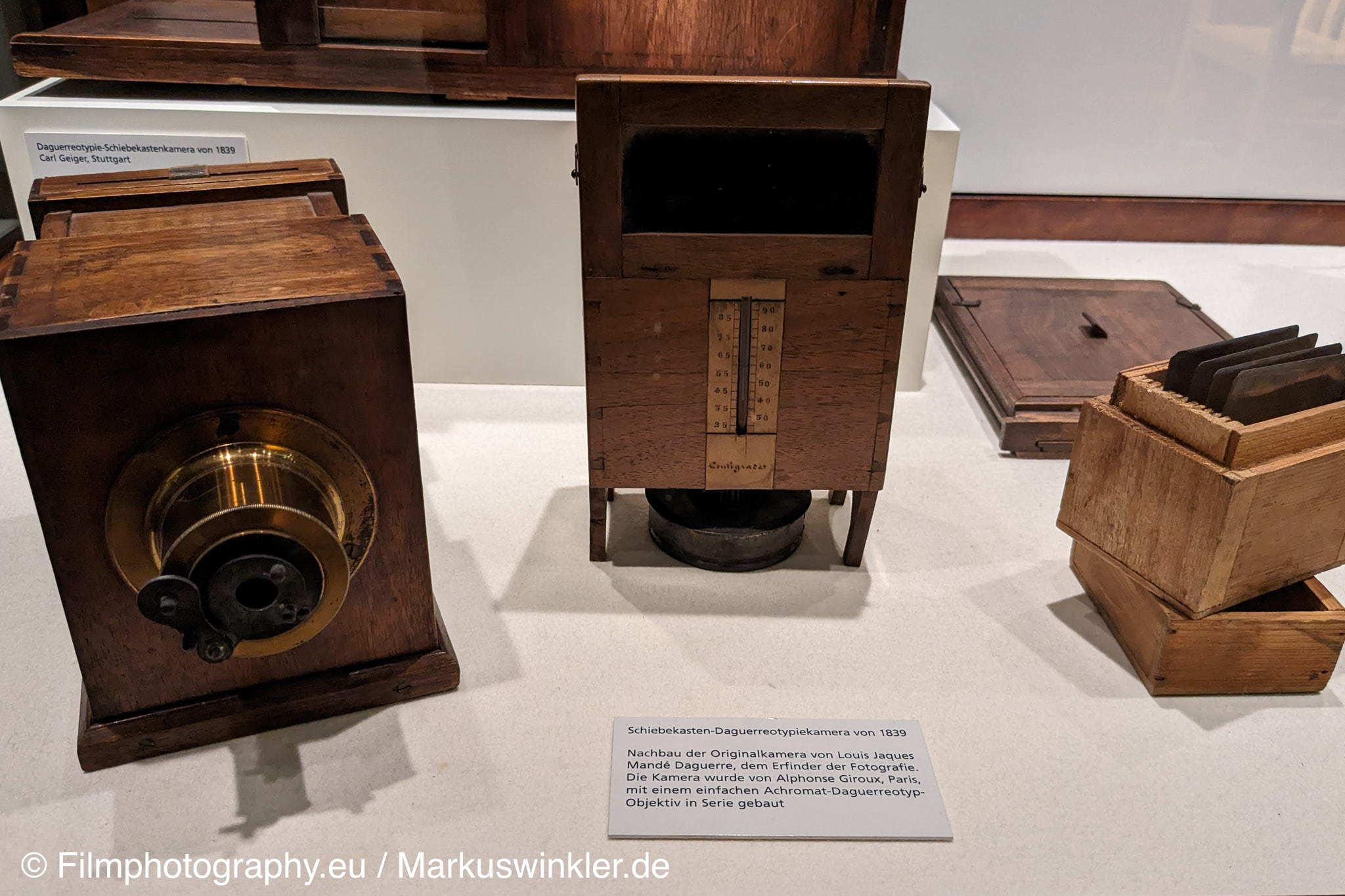
The invention of the daguerreotype
In 1839, the world of art and science was turned upside down. A French artist and physicist named Louis Daguerre presented a groundbreaking invention to the public: the daguerreotype. This first commercially successful camera marked the beginning of photography as we know it today. The daguerreotype made it possible to capture detailed and permanent images for the first time and ushered in a new era of visual communication.
Louis Daguerre: The pioneer behind the first camera
Louis Daguerre, a versatile artist and inventor, dedicated his life to finding a way to permanently capture images. His experiments with light-sensitive materials eventually led him to develop the daguerreotype. Daguerre was not only a brilliant inventor, but also a skilled businessman. He recognized the enormous potential of his invention and ensured that it spread quickly. His name is inextricably linked to the birth of photography.
How does a daguerreotype camera work?
Step-by-step explanation
The daguerreotype camera, a marvel of the 19th century, worked according to a fascinating process. First, a silver-plated copper plate was polished and sensitized by exposing it to iodine vapor. This plate, now sensitive to light, was inserted into the camera. After opening the lens, light fell through a lens onto the plate and recorded the subject on it.
The exposure time varied depending on the lighting conditions, but could last up to 20 minutes. The plate was then developed with mercury vapor, which made the latent image visible. Finally, the plate was fixed in a solution of gold chloride to make the image permanent and give it a warm tone.
The chemistry behind the daguerreotype: light, silver and mercury
The daguerreotype is based on a fascinating interaction of light, silver and mercury. The silver plate treated with iodine formed a layer of silver iodide that was sensitive to light. When the plate was exposed, the light reacted with the silver iodide and created a latent image that was invisible to the human eye. The mercury vapors amalgamated the silver in the latent image, making it visible. Fixing with gold chloride stopped further reactions and made the image permanent.
The sensitive soul of the camera: the light-sensitive plate
The light-sensitive plate was the heart of the daguerreotype camera. It consisted of a wafer-thin layer of silver on a copper plate and was extremely sensitive to light and touch. Each plate was unique and had to be handled with the utmost care. The quality of the plate and its preparation had a decisive influence on the quality of the final image.
The Daguerreotype as an art form
Unique one-of-a-kind pieces: Why every daguerreotype is a masterpiece
Every daguerreotype is a unique work of art because it is a direct positive that is created without a negative. There are no copies, only the original. Every scratch, every stain and every imperfection on the plate tells a story and makes every daguerreotype a distinctive one-of-a-kind piece.
More than just a picture: The aesthetics of the daguerreotype
The daguerreotype impresses with its unique aesthetics. The detailed reproduction, the reflective effect and the warm tone give the images a special depth and liveliness. The daguerreotype is more than just a depiction of reality, it is a work of art that transports the viewer to another time.
Famous Daguerreotypes and Their Stories
Throughout history, countless daguerreotypes have been made, some of which have become iconic images. These include portraits of famous people, landscape shots, and historical events. Each of these daguerreotypes tells a story and gives us a glimpse into the past.