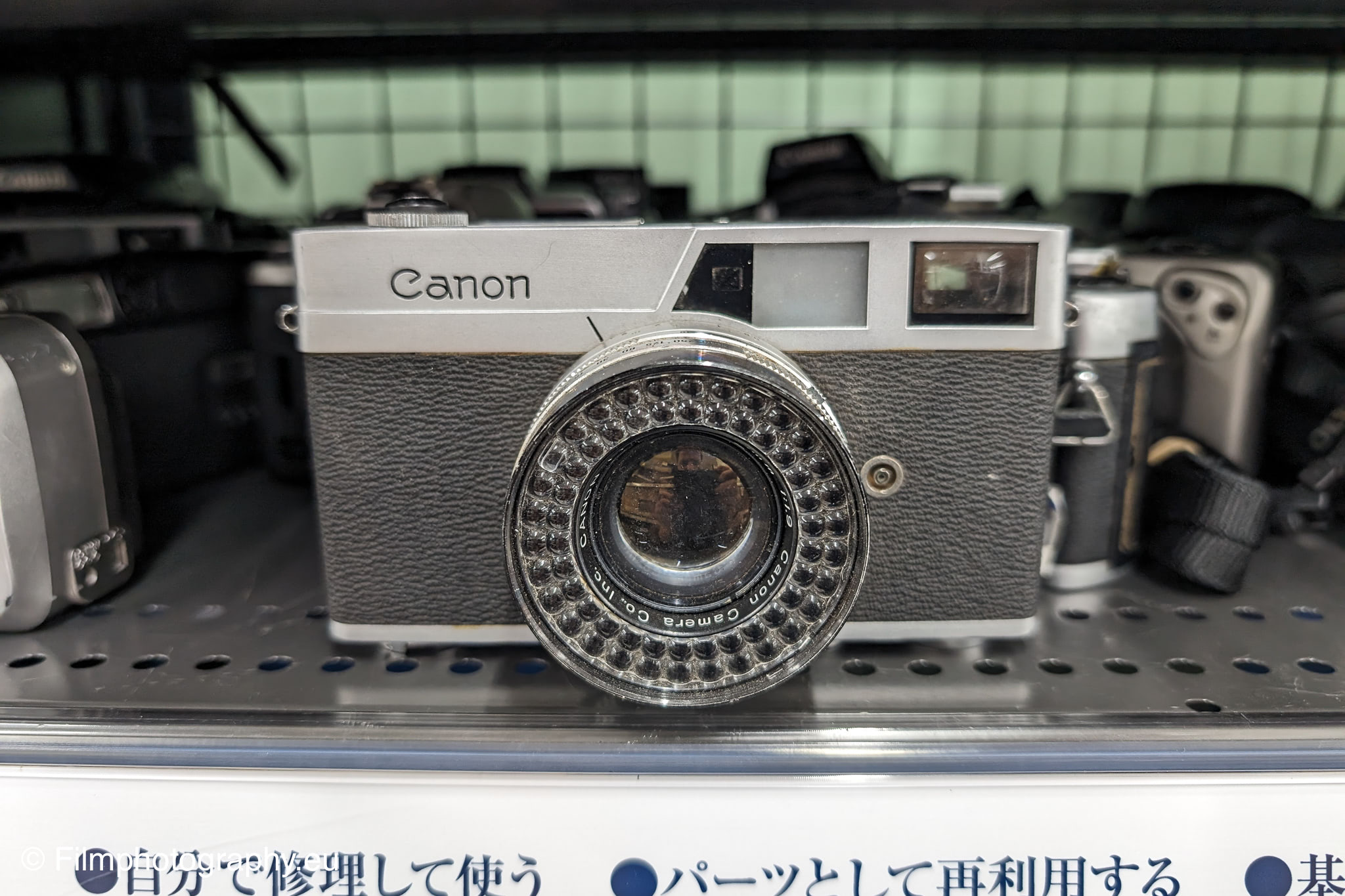
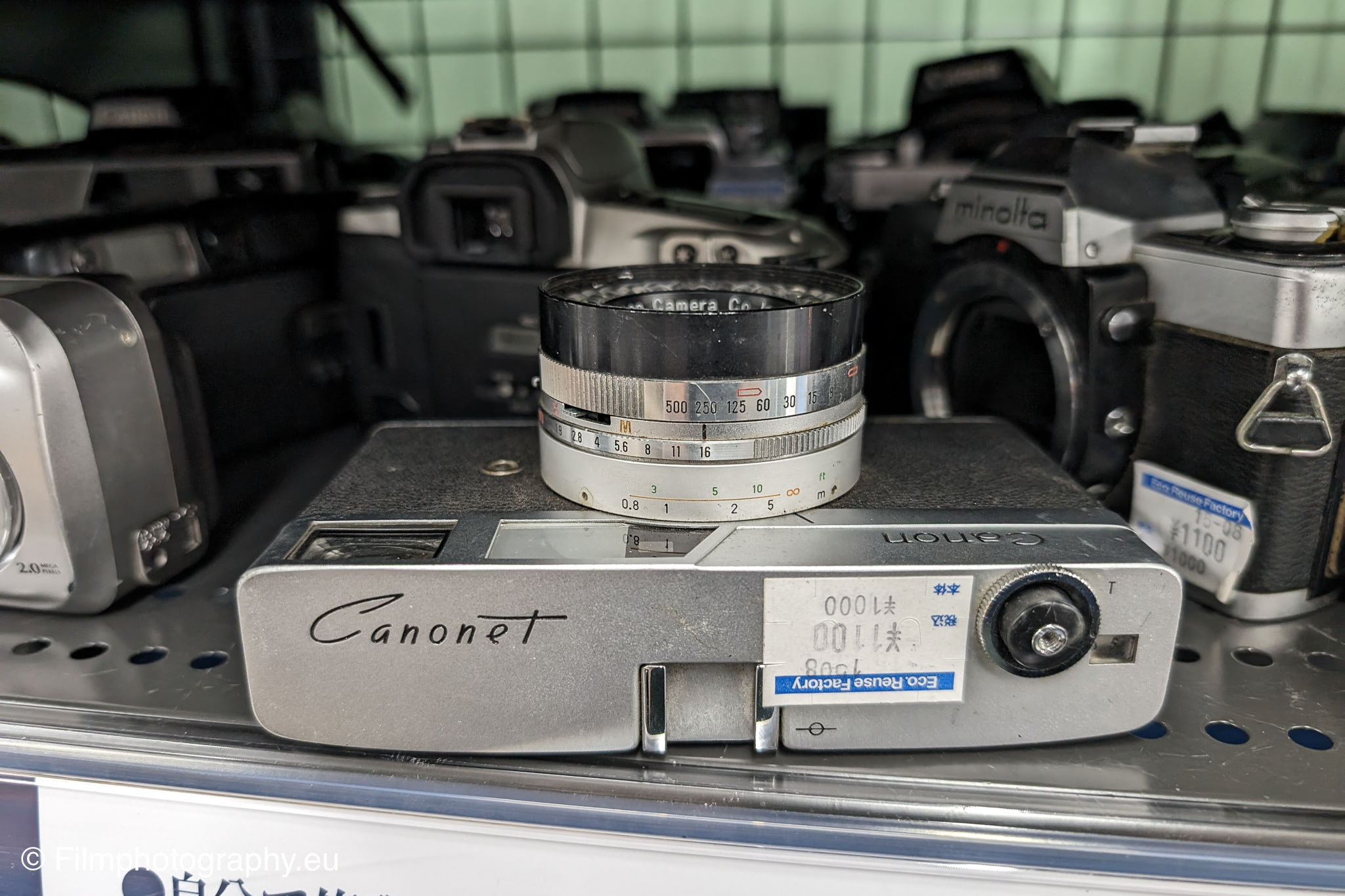
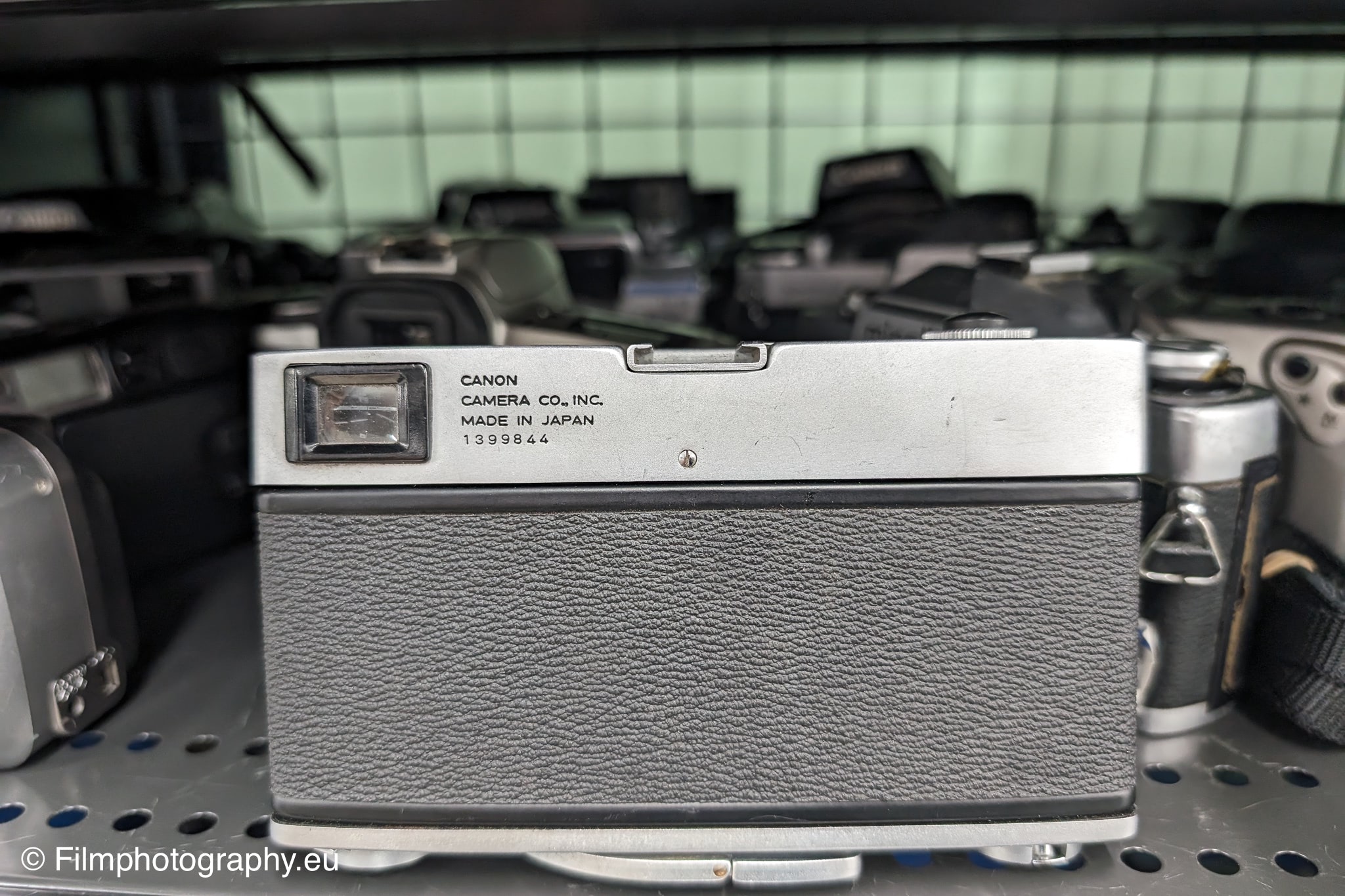
In 1961, Canon ushered in a new era with the introduction of the Canonet. This camera was not only Canon’s first step into the field of mid-range rangefinder cameras, but also a revolutionary product that turned the photographic industry of the time on its head.
The Canonet was characterised by its innovative features and affordable price. With its fast f/1.9 lens and ground-breaking automatic exposure with shutter priority, it was a dream come true for many amateurs. The camera caused a sensation because it offered professional features at a fraction of the price of comparable models from other manufacturers.
The centrepiece of the Canonet was the newly developed “Electric Eye” (EE) automatic exposure system. This fully automatic shutter priority system allowed the photographer to simply press the shutter release and the camera did the rest. The exposure was metered by a selenium photocell, which automatically controlled the shutter according to the lighting conditions.
In addition to the ground-breaking automatic mode, the Canonet offered other impressive features:
High-quality lens: the SE45mm f/1.9 lens delivered sharp and detailed images.
Rangefinder: The integrated rangefinder enabled precise focussing.
Versatile shutter: The Copal SLV shutter offered exposure times from 1 second to 1/500 second and had a self-timer.
Compact design: With its dimensions of 140 x 78 x 64 mm and a weight of 700 g, the Canonet was a compact and easy-to-carry camera.
The success of the Canonet was overwhelming. Within two hours, the entire weekly stock of cameras was sold out and sales reached the one million mark within two and a half years. Further models of the Canonet series followed until 1972.
Films for the Canonet
If you can still find a working Canonet today, you can still use it. Batteries are not needed. However, 35mm film is required for the Canonet. Many materials for colour and black and white images are still available for this film format.
Possible films for the Canonet are the Kodak Ultramax 400* for colour images and the Ilford FP4 Plus* for black and white images.
Both films deliver reliable results and are also convincing in professional test reports. Foma, Adox and Rollei are other suppliers of 35mm films.
Technical datasheet
| Attribute | Specification |
|---|---|
| Type of Camera | Rangefinder camera |
| Film format | 35mm |
| Film transport | Manual |
| Film transport mechanism | Quick release lever |
| Picture format | 24 mm x 36 mm |
| Focal length | 45 mm |
| Widest aperture | f/1.9 |
| Minimum focus distance | 80 cm / 2.624 ft |
| Focus | Manual |
| Rangefinder | Yes |
| Lens design | 5 elements in 4 groups |
| Exposure times | 1/500 second to 1 second, Bulb |
| Bulb mode | Yes |
| Light meter | Selenium light meter |
| Supported film speeds | ISO 10 to 200 |
| Exposure modes | Shutter priority, Manual mode |
| Auto DX (Film sensitivity) | No |
| Date imprinting | No |
| Built-in flash | No |
| Flash Connection | PC-Flash |
| Tripod mount | Yes |
| Cable release thread | Yes |
| Self-timer | No |
| Connection for camera strap | Yes |
| Power supply | Not necessary |
| Size | 14 x 7,8 x 6,4 cm |
| Dimensions in inches | 5.51 x 3.07 x 2.52 inches |
| Weight | 700 Grams |
| Country of production | Japan |
| Estimated value / Used price | 133,91 Euro Estimate based on used prices of 98 offers (possibly with different scope of delivery and/or condition). As of June 15, 2026 |
| Average used price in the year 2024 | 158,47 Euro (171.02 US-Dollar) |
| Average used price in the year 2025 | 143,06 Euro (154.78 US-Dollar) |
FAQ about the Canonet
What type of focusing mechanism does the Canonet rangefinder camera employ?
The Canonet utilizes an integrated rangefinder for precise focusing, allowing photographers to accurately determine the subject's distance before shooting.
How did the Canonet's affordability impact its popularity?
Its low price point for a camera with professional features made it incredibly popular among amateur photographers who previously couldn't afford similar quality.
Describe the automatic exposure system of the Canonet.
The Canonet featured an innovative 'Electric Eye' (EE) system, a fully automatic shutter-priority mode using a selenium cell to determine exposure based on light conditions.
What kind of film is compatible with the Canonet?
The Canonet uses standard 35mm film; both color and black-and-white films are readily available for use with this classic camera.
What was the significance of the Canonet's lens?
Its high-quality 45mm f/1.9 lens was crucial to its success, producing sharp and detailed images which contributed significantly to the camera's popularity.