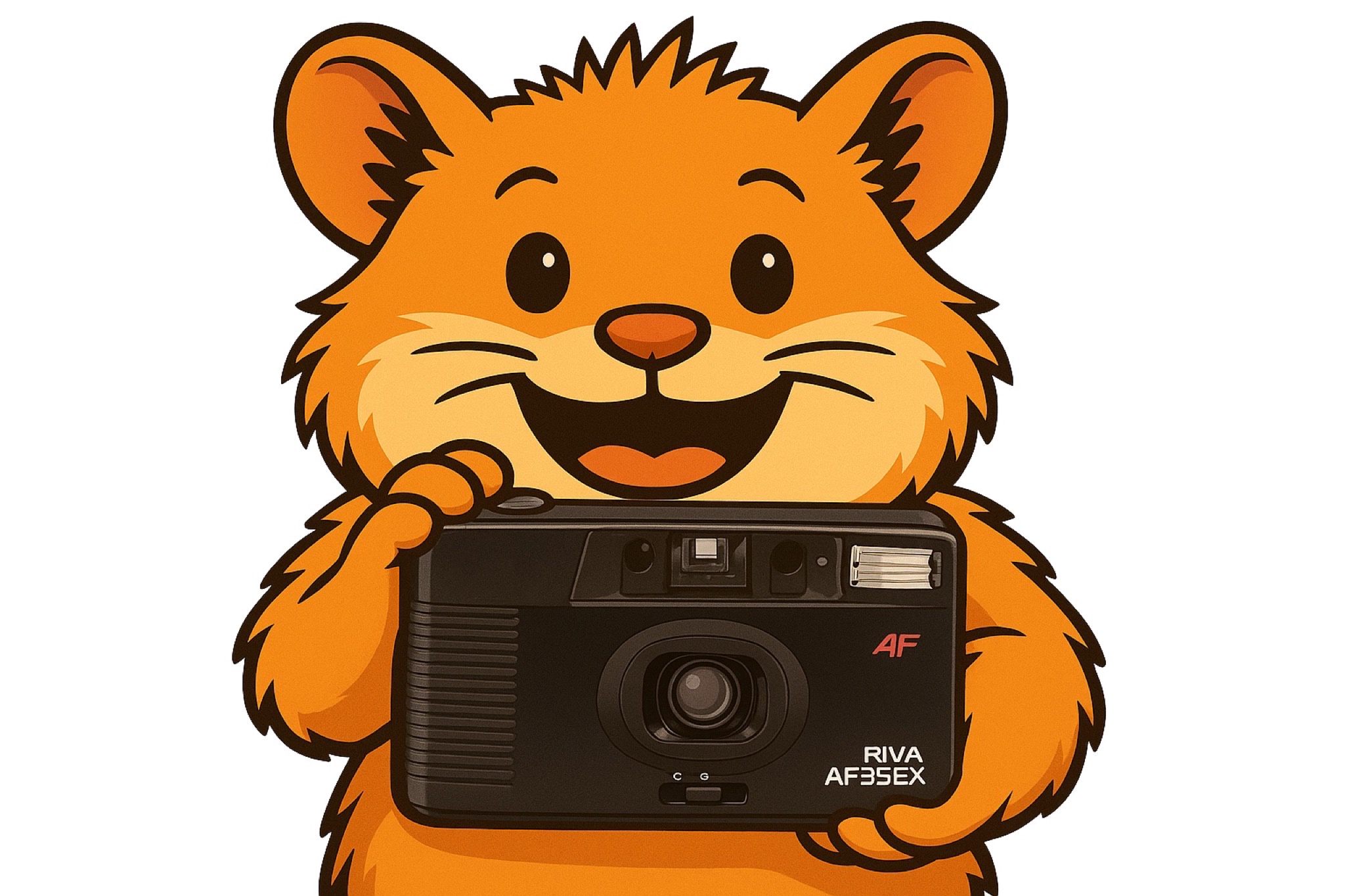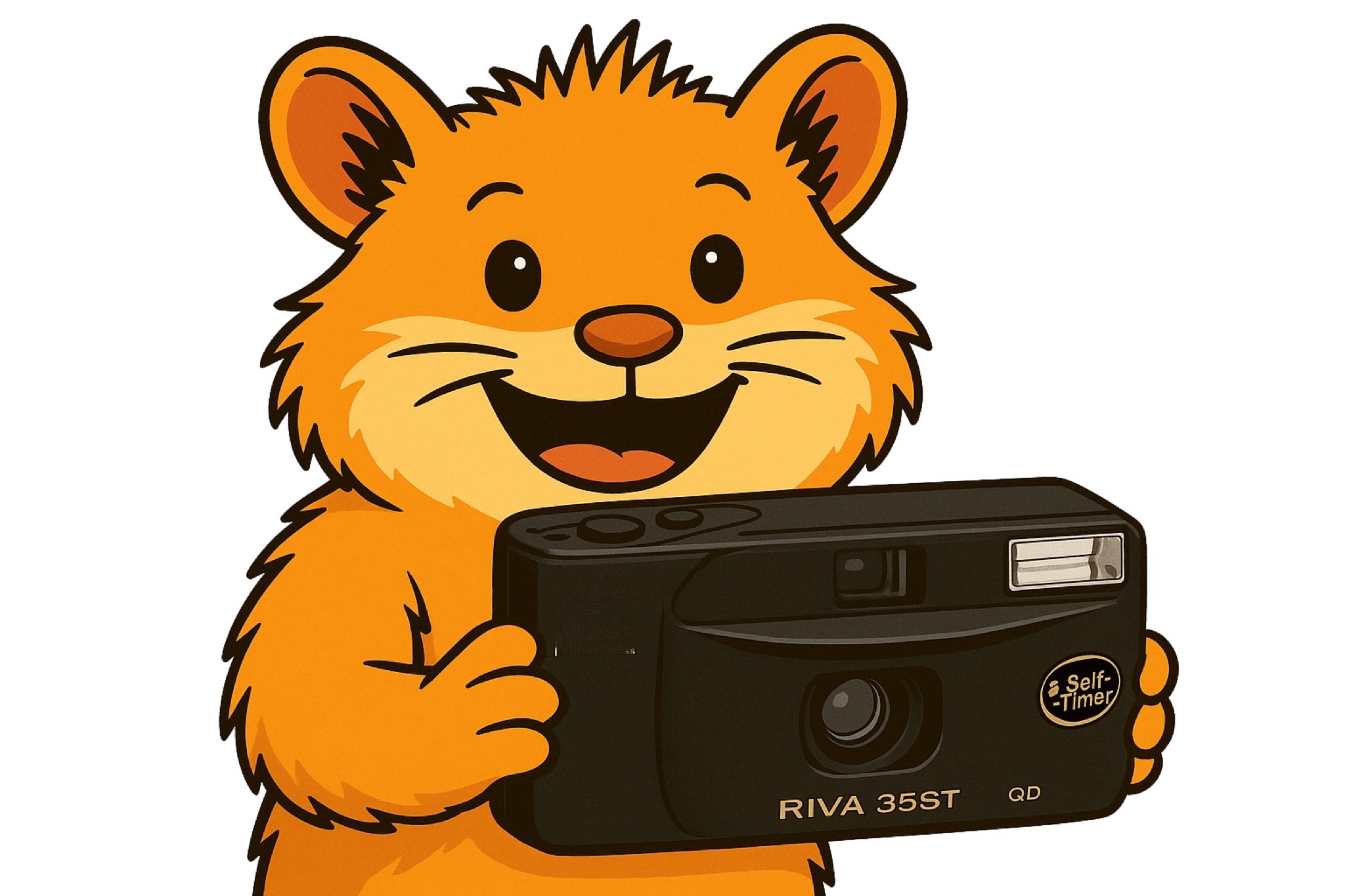
The Minolta Riva 35 ST is a compact camera. It was introduced by Minolta in the early 90s and is the successor of the Minolta Riva 35. The model was also available on the market under the name "Minolta Freedom Holiday". The camera's target audience was more casual users and price-conscious buyers.
The lens of the 35mm photo camera cannot be exchanged. 35 mm is the focal length of the lens. The maximum aperture is f/4.5. The 35mm camera does not have an autofocus. The distance is fixed. The closest focusing distance of this lens is 150 cm.
The Minolta Riva 35 ST has a light meter. It is designed for an ISO range of 100 to 400. The camera determines the correct film speed via the DX code. If this code is not present on the cartridge, the camera selects ISO 100. The shutter speed and aperture are set automatically by the electronics. It selects an aperture between f/4.5 and f/11.1 and a shutter speed between 1/100 second and 1/35 second. The variable shutter speed is one of the model's innovations compared to its predecessor.
Another innovation is the self-timer. Of course, there is also a built-in flash with the camera. The power reaches up to 2.8 meters at ISO 100. There are no different flash modes.
The camera weighs 175 grams with its plastic housing and measures 12.1 x 6.8 x 4.9 cm. The 35mm camera is powered by two AA batteries (eBay / Amazon*). This type of battery is still easy to get today.
Films for the Minolta Riva 35 ST
The Minolta Riva 35 ST is loaded with 35mm film. 35mm films are still made today and are quite easy to get. Possible films for the black compact camera are the Fujifilm Superia 400* for color photos and the Ilford Delta 400* for B&W photos. Thus, around 36 images fit on a normal film (135-36). The film is transported automatically.
The color film is a color negative film and is developed in the C-41 process. This process is offered by almost every photo lab. The black and white film cannot be developed in the C-41 process, but needs a different developer.