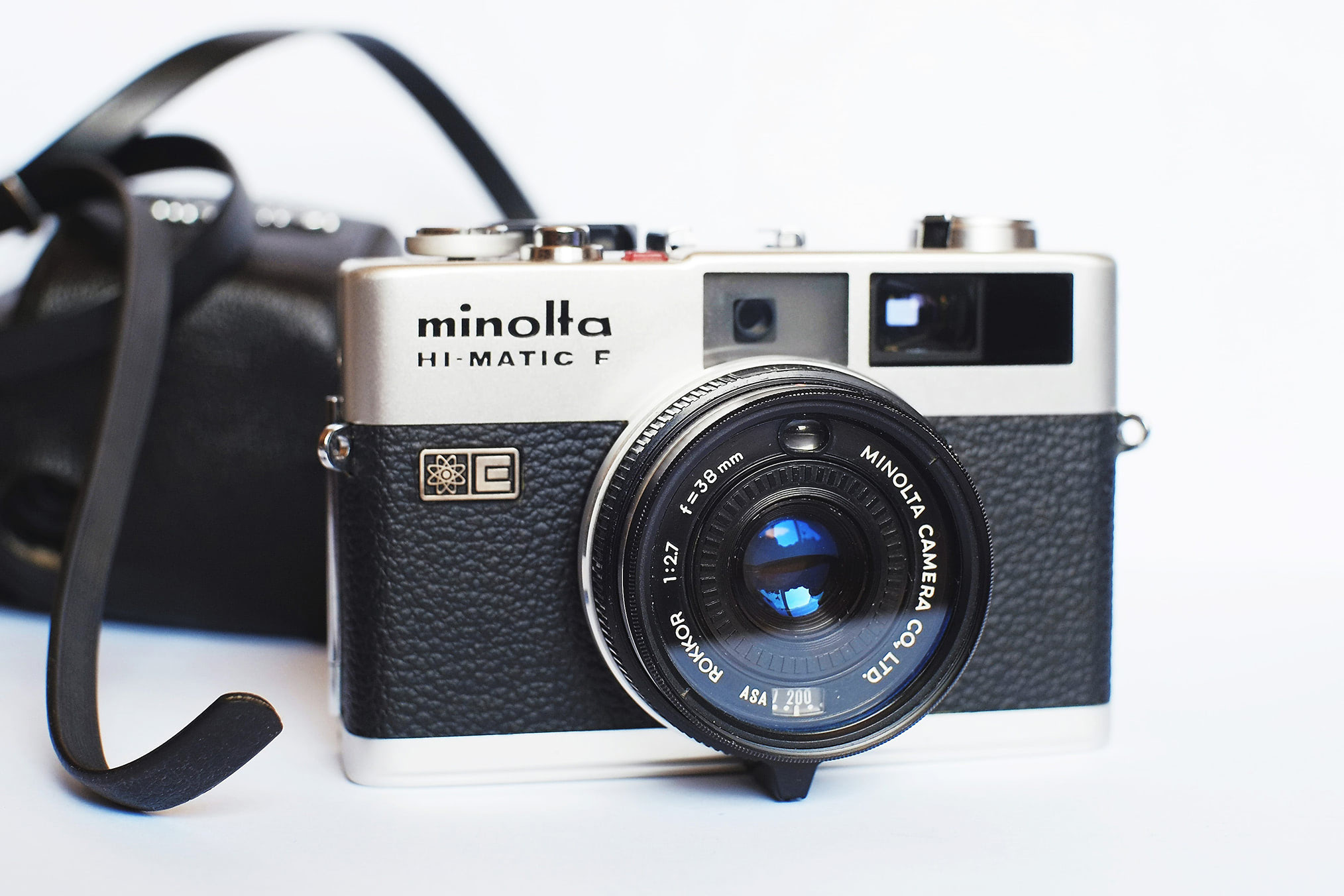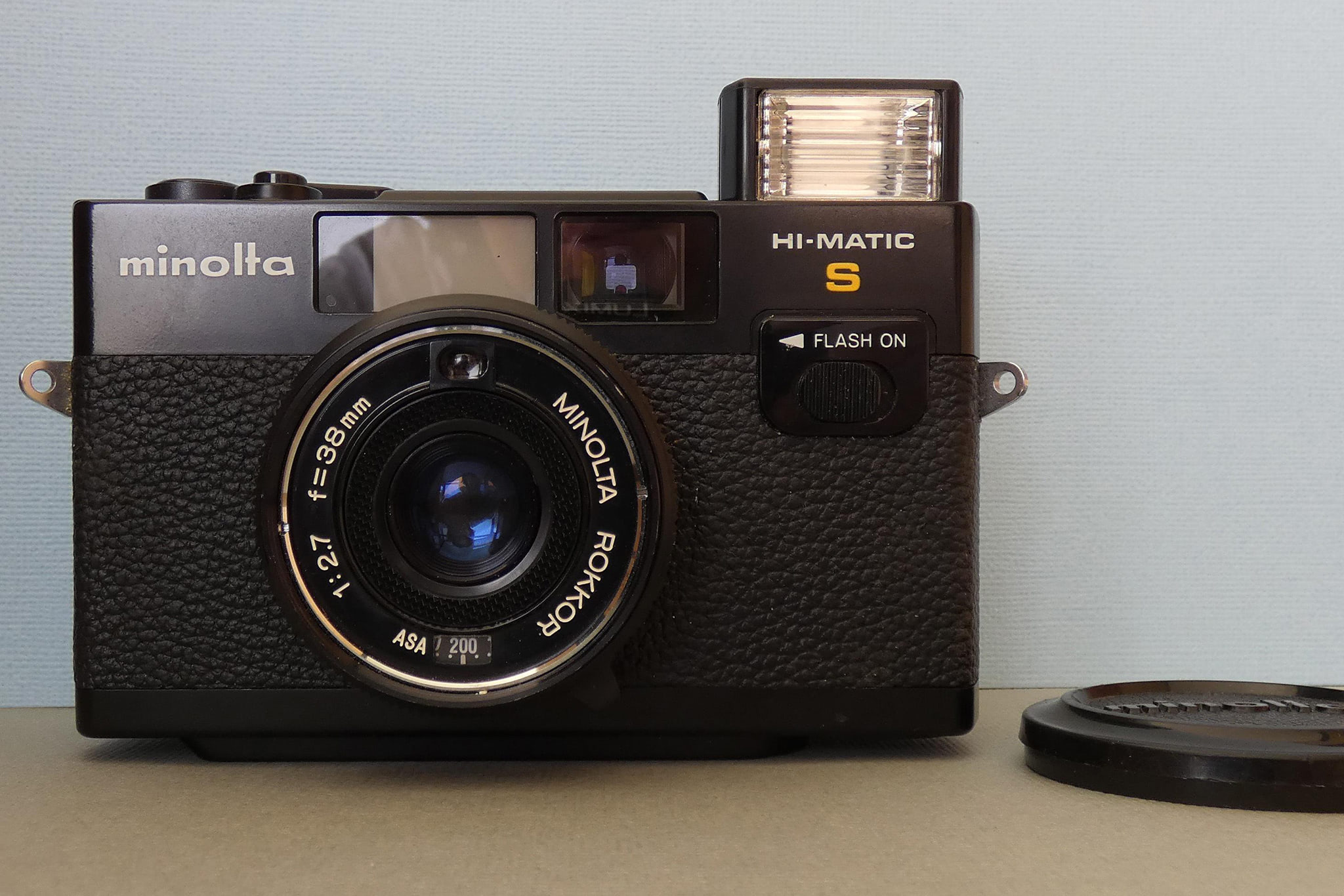
The Minolta Hi-Matic AF is a viewfinder camera. It is the predecessor of the Minolta Hi-Matic AF2. It was introduced in the late 1970s. This member of the Hi-Matic family was produced in a factory in Japan.
It is the first model in the series with autofocus function. The autofocus system works with infrared. The set distance is displayed to the photographer in the viewfinder. The Minolta is equipped with a 38 mm Rokkor lens. The lens has a maximum aperture of f/2.8, and it can be closed down to f/17.
The camera comes with a light meter. The aperture and shutter speed are set automatically by the technology. The exposure meter is designed for 35mm film in the range of ISO 25 to ISO 400.
The camera comes with a built-in flash, this can be added if desired. The 35mm photo camera comes with a thread for a tripod. A self-timer is also built in. Power is supplied to the camera by two AA batteries (eBay / Amazon*).
Films for the Minolta Hi-Matic AF
The Minolta Hi-Matic AF is a film camera and is loaded with 35mm film. The film must be advanced manually with a lever, unlike later autofocus cameras. During this step, the counter for the number of pictures taken also changes. When the film is full, it must be transported back into the cartridge with a crank.
For this film format, there is still a good selection of material for color and black and white images. Possible films for the Japanese camera that can still be purchased today are the Kodak Ultramax 400* for color images and the Ilford FP4 Plus* for black and white images. Both films deliver reliable results and can also convince in professional test reports.