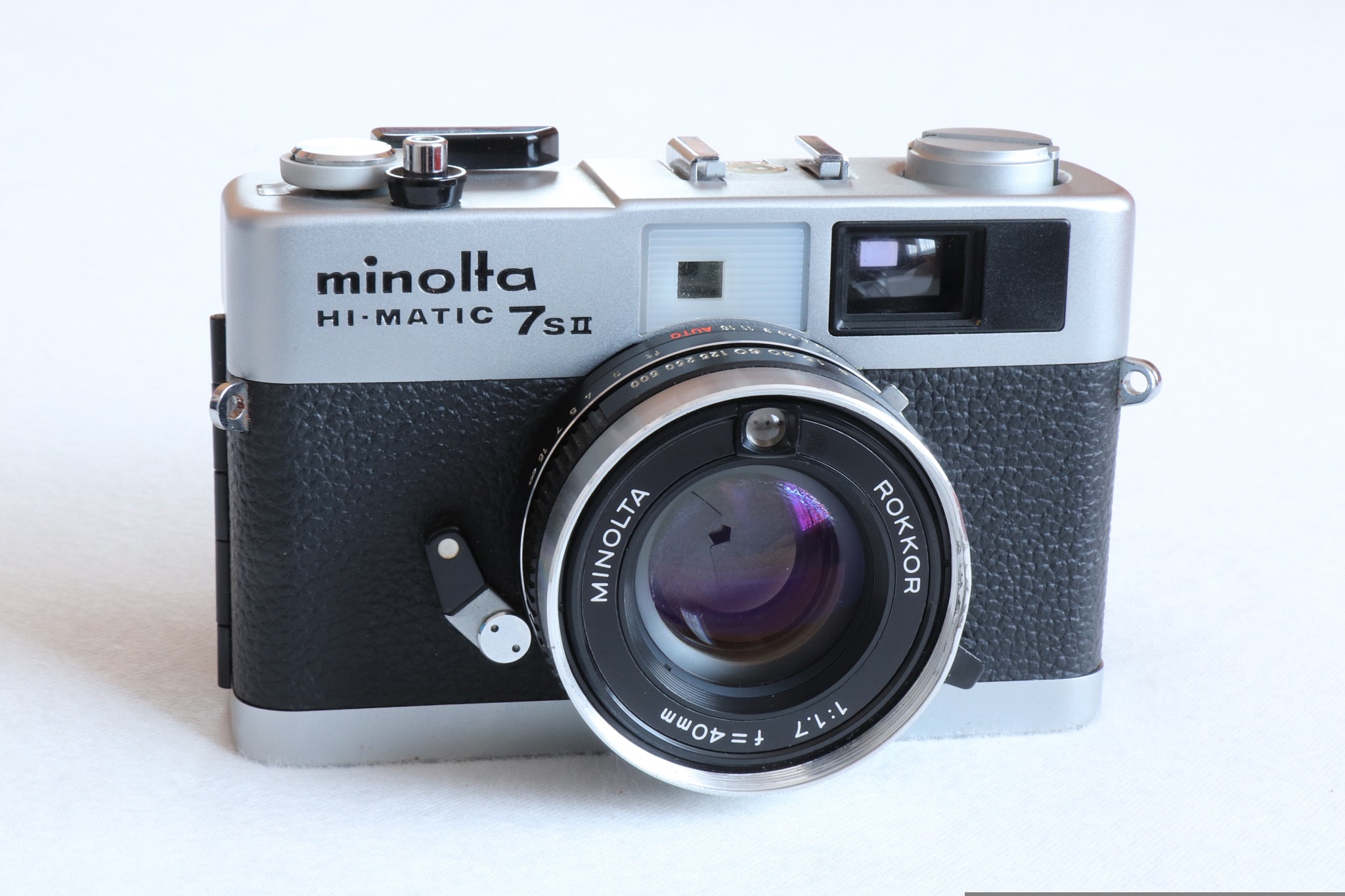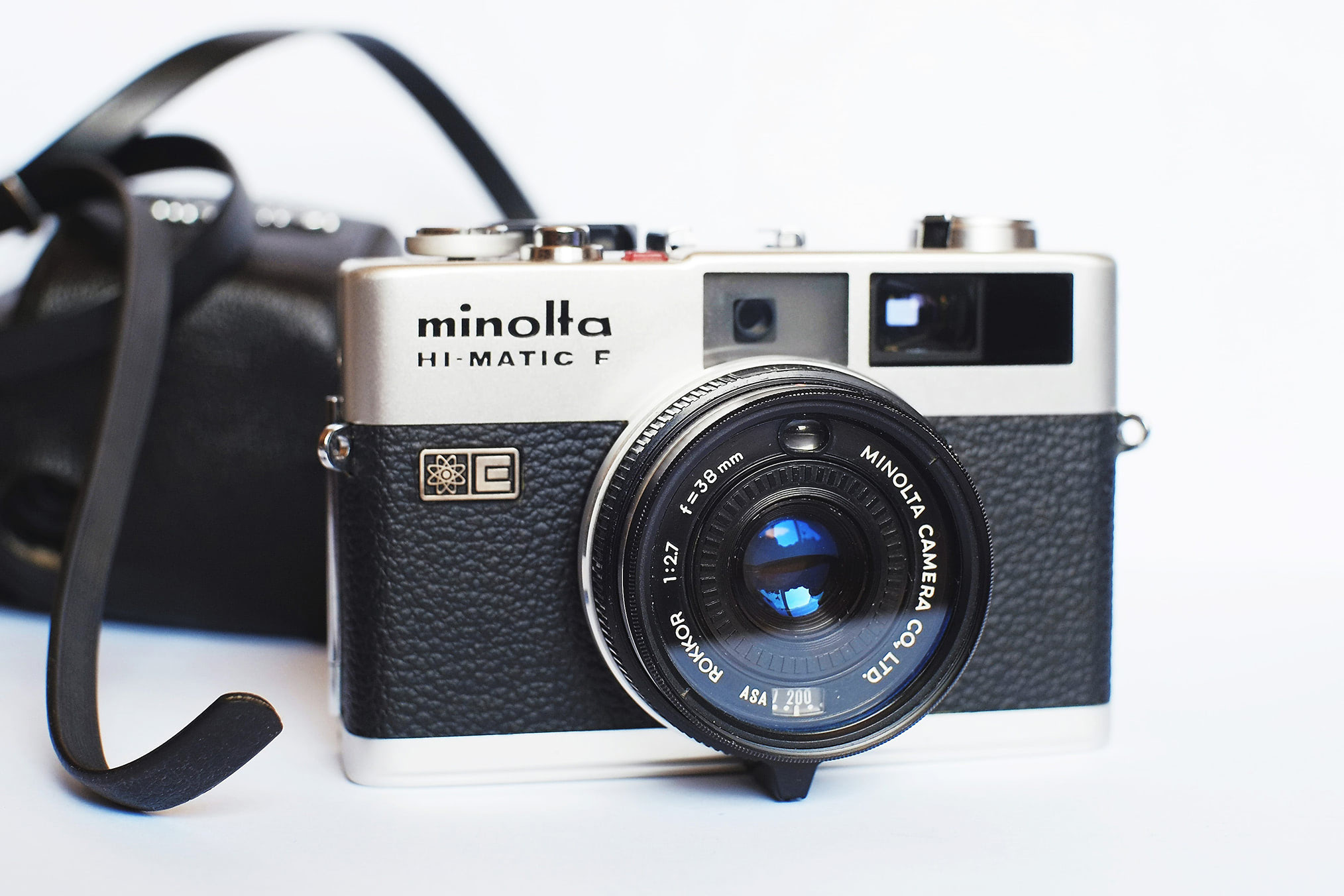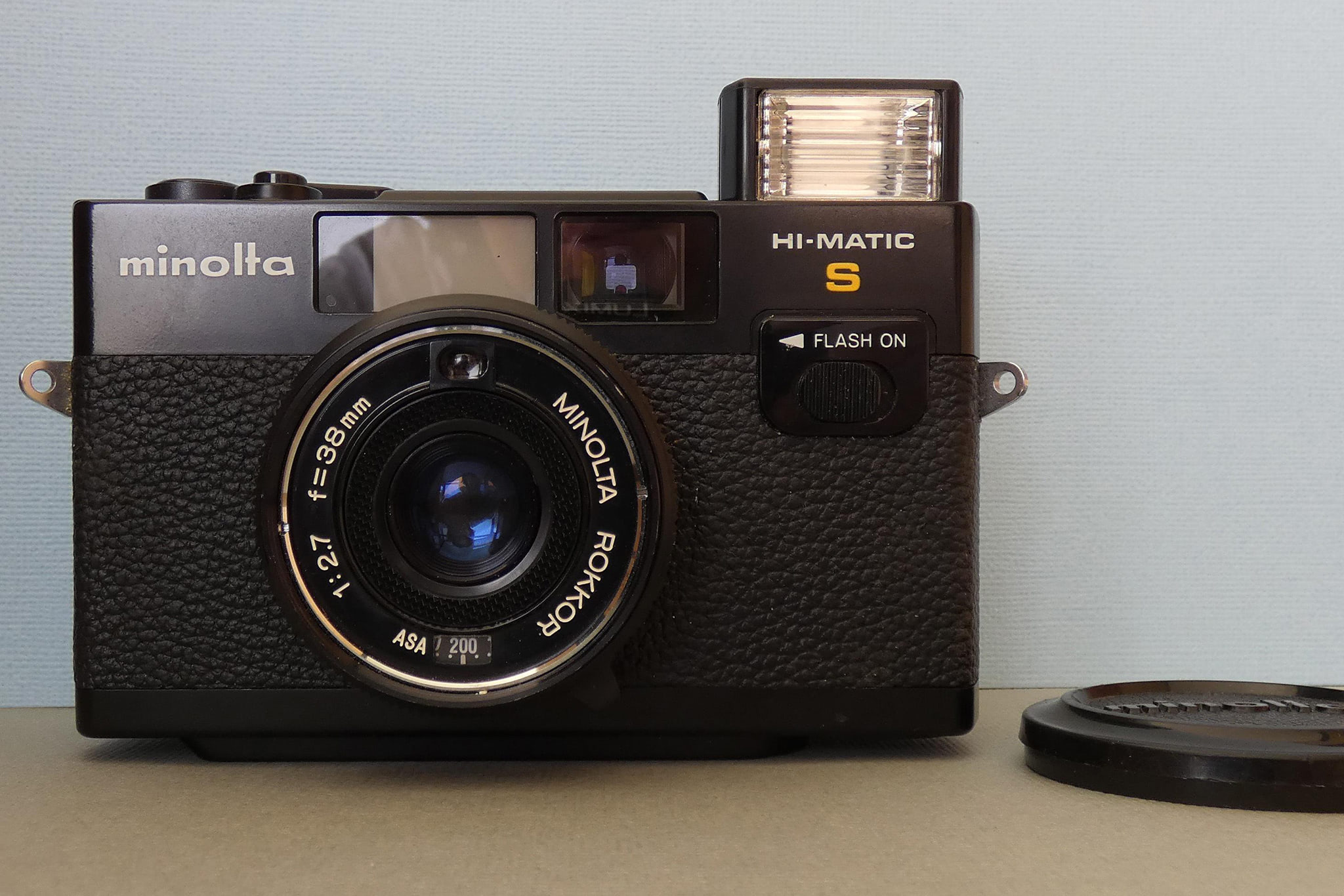
The Minolta Hi-Matic E is a rangefinder camera. It was introduced in the early 1970s and is part of the Hi-Matic series. The camera was produced in a factory in Japan.
The camera comes with a fixed Rokkor lens. The focal length is 40 mm. The widest aperture is f/1.7, and it can be stopped down to f/11. When focusing manually, the photographer is assisted by the rangefinder. The closest focusing distance of the lens is 80 cm. A filter or lens hood can be screwed onto the 49 mm thread.
The Minolta Hi-Matic E has a built-in exposure meter. It is designed for an ISO range of 25 to 500. Shutter speed and aperture are set automatically by the camera. The Seiko shutter supports exposure times from 1/1000 second to 2 seconds. The camera does not have a manual mode.
An external flash can be used on the PC flash port or hot shoe for pictures. The Japanese 35mm camera has a thread for a tripod. Additionally, there is a port for a cable release and a self-timer. The self-timer has a lead time of ten seconds. In these ten seconds, you have to be in position for the picture.
The dimensions of the housing are 12.4 x 7.7 x 6 cm. It weighs 560 grams without batteries. The camera requires two Mallory RM-640 batteries.
Films for the Minolta Hi-Matic E
Nothing works with the Minolta Hi-Matic E without 35mm film. After each shot, the film must be wound to the next free area. There is a quick-release lever on the top for this purpose. When the film is full, usually after 36 frames, it has to be spooled back into the cartridge with a crank.
Of course, there are still a variety of 35mm films available for this Japanese camera. A good choice for the model for color photography, for example, is the Kodak Portra 160*. If you want to stay monochrome with your photos, the Ilford HP5* is not bad.