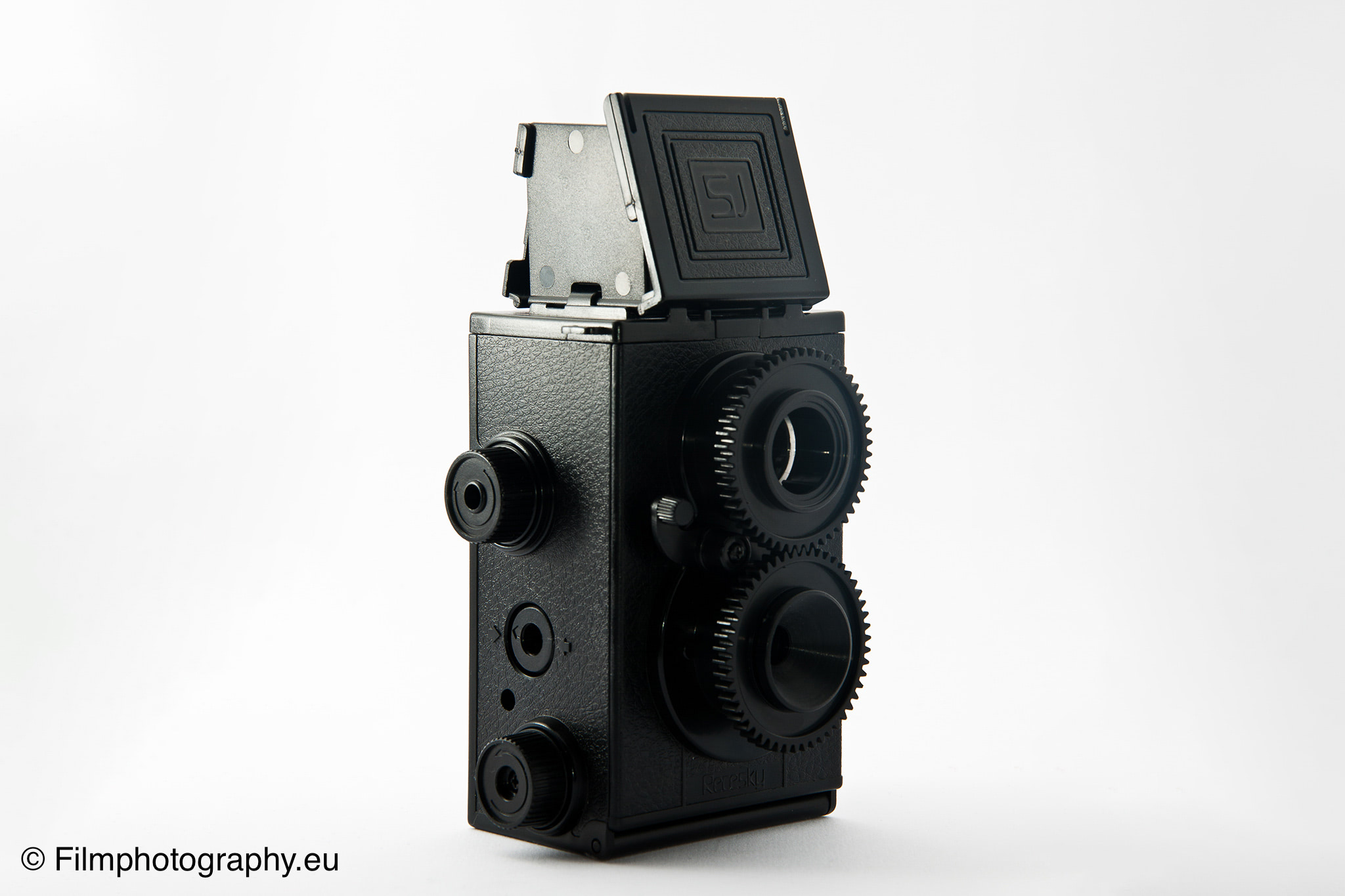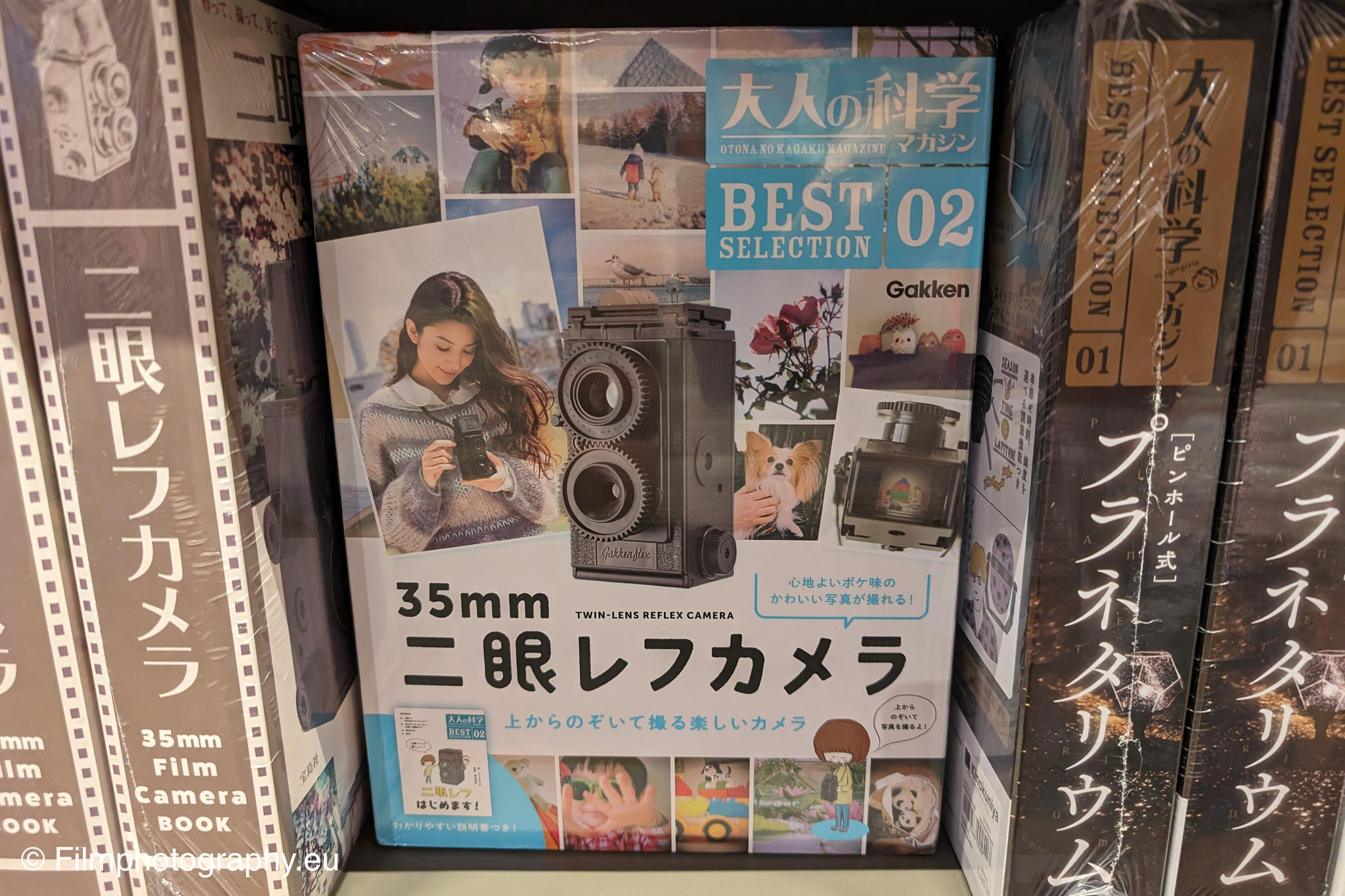
The Gakkenflex, a plastic camera that takes pictures in 35mm TLR format, was first published in the Japanese magazine "Otona no Kagaku" published by Gakken. The camera, with the name "Gakkenflex" on the front, was included in issue #25 of October 30, 2009 and was designed as a kit.
Although the original magazine may be difficult to obtain, replicas such as the "Recesky TLR" and the "Fotodiox TLR" are available online.
The kit's accompanying papers describe the camera's specifications: a fixed aperture of f/11 and a shutter speed of 1/125 second. If one component is omitted, the camera becomes slightly faster.
The lens consists of a simple plastic lens with a meniscus shape. Focusing is done simultaneously for the recording and viewfinder lenses via external gears, similar to the way the Ricohflex with gear lens or the Lubitel works.
The simple lens construction produces images with a strong sharpness gradient, reminiscent of the tilt-shift effect. The camera is essentially a toy model.
No batteries are required to operate the camera.
Films for the Gakkenflex
What film is recommended for the Gakkenflex? The camera is designed for use with 35mm film. A large selection of color and black and white films is still available for this format.
Easily available online and suitable for the Gakkenflex are, for example, the Ilford XP2 Super* for attractive black and white shots and the Kodak Portra 400* for bright color photos. Experience reports and tests prove that both films are suitable for different subjects.
Color films are developed using the C-41 process. This process is offered by all photo labs that develop 35mm films.
The camera's image size is 24 mm x 36 mm. With this exposure area, 36 images can usually be taken on a standard film (135-36). Since the camera does not have an automatic film transport, the film must be wound manually.