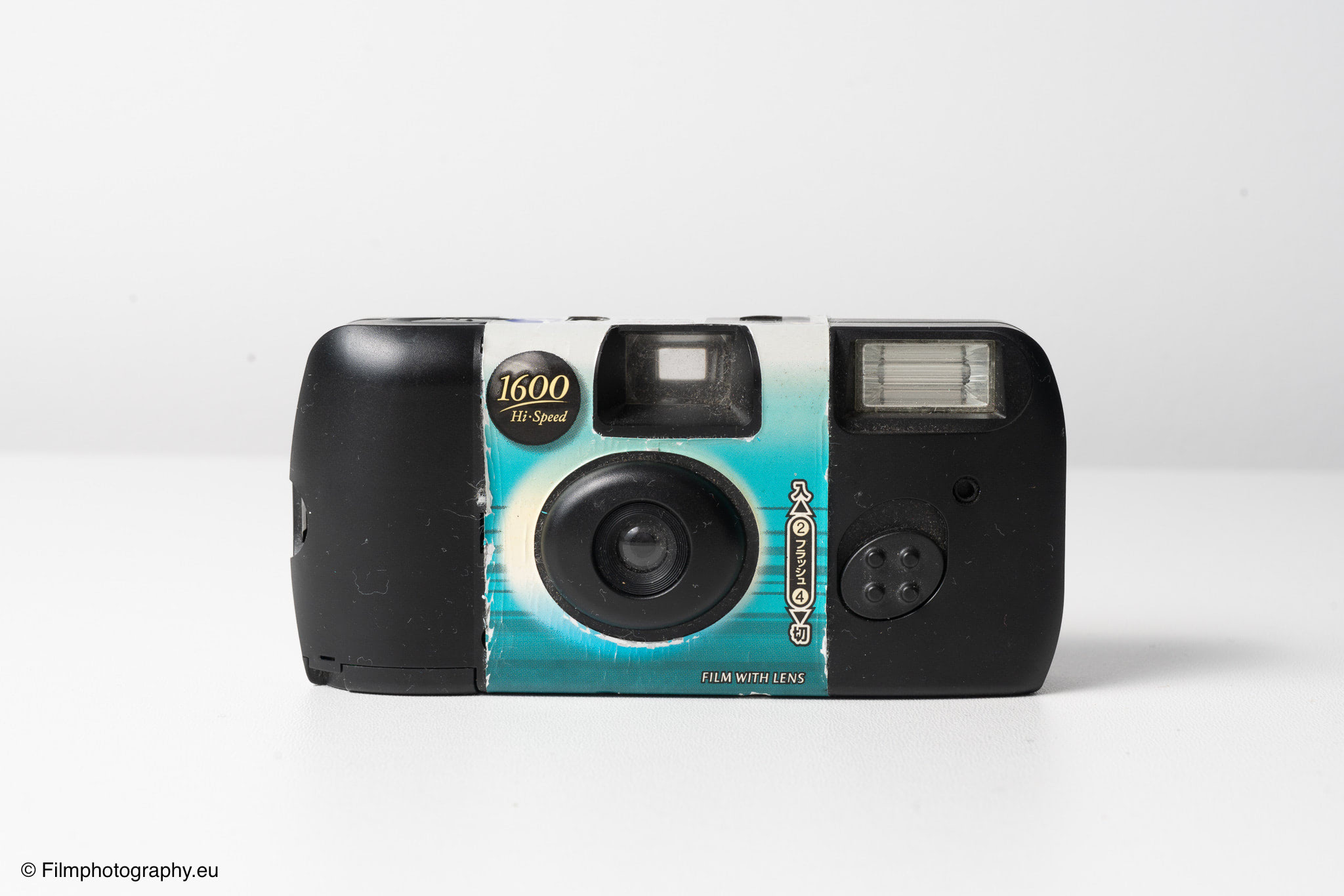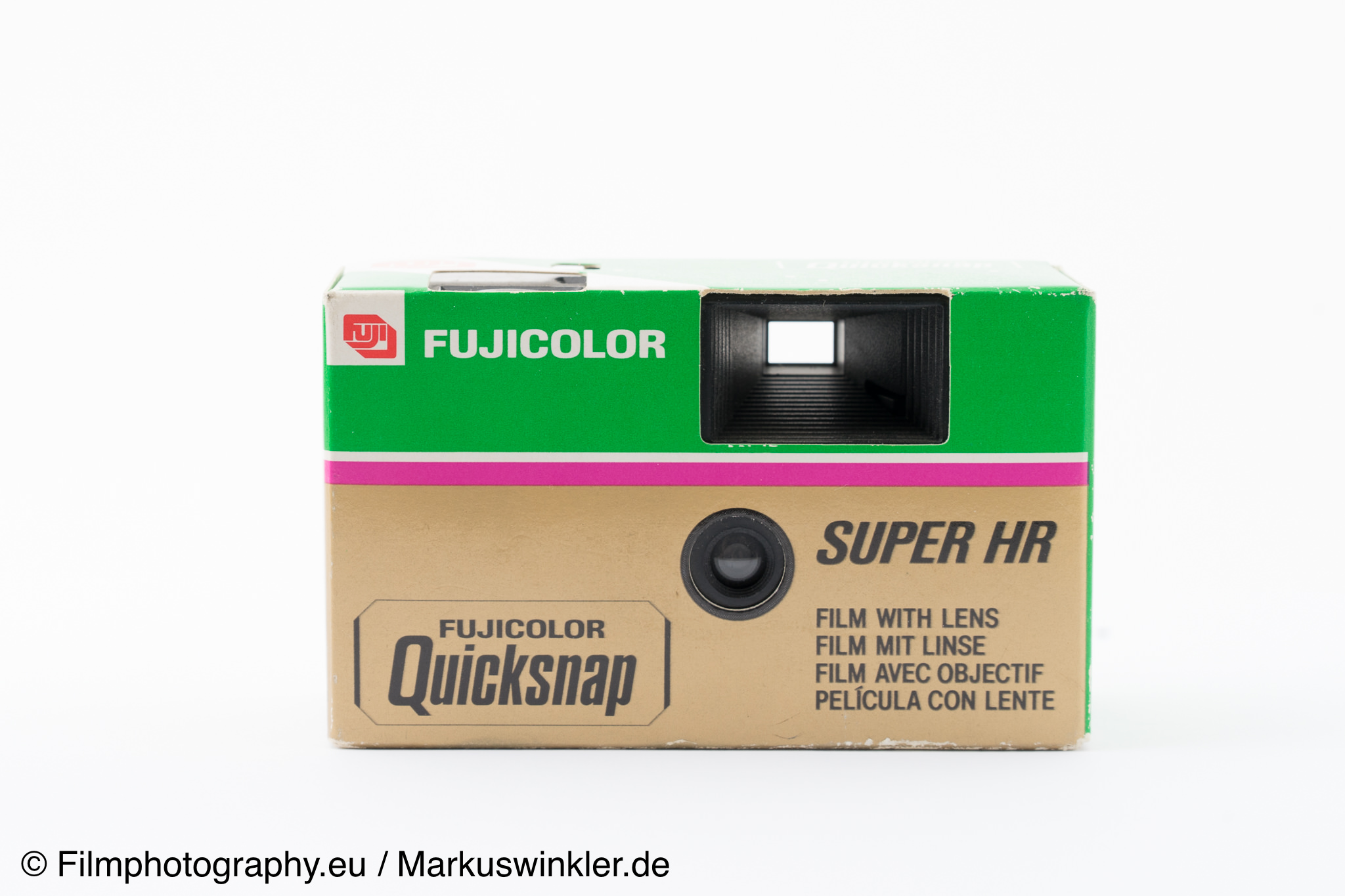
The Fujicolor Utsurundesu 400 Extra (officially in Japanese as Fujicolor 写ルンです 400 Extra) is an analog disposable camera by the Japanese manufacturer Fuji Photo Film (now Fujifilm). This model belongs to the well-known Utsurundesu product series, which was marketed outside Japan mostly under the name QuickSnap, and dates from around the turn of the millennium.
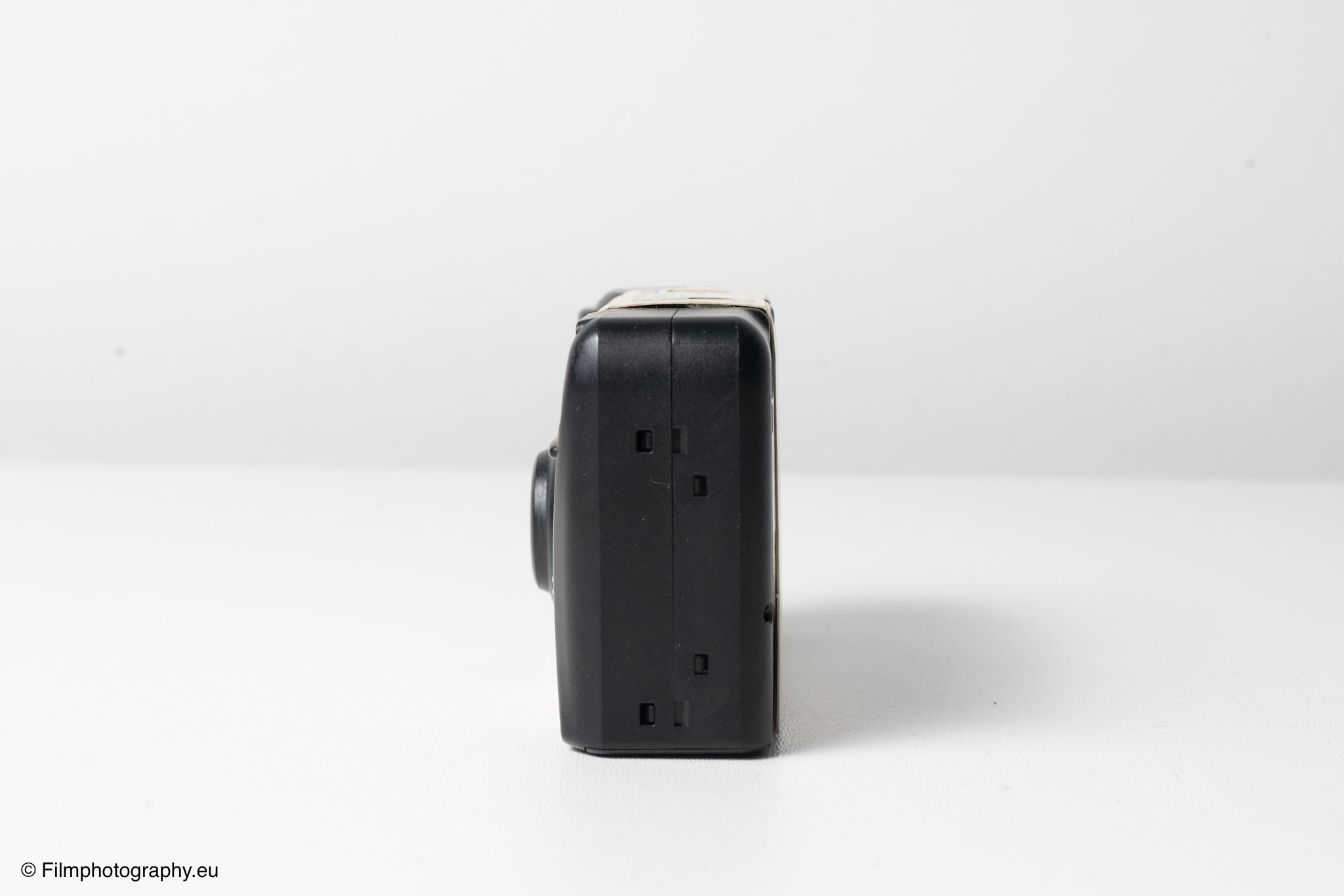
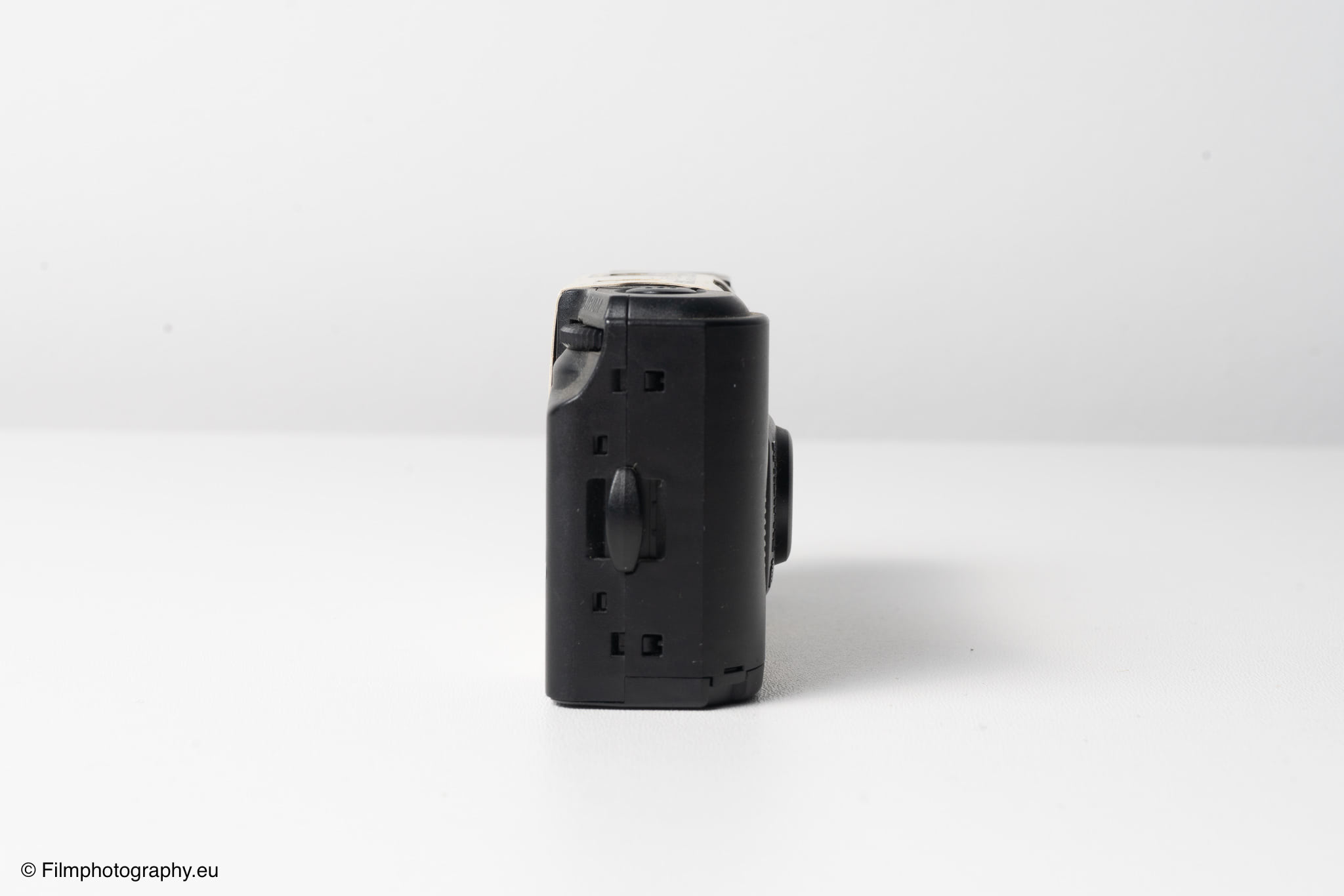
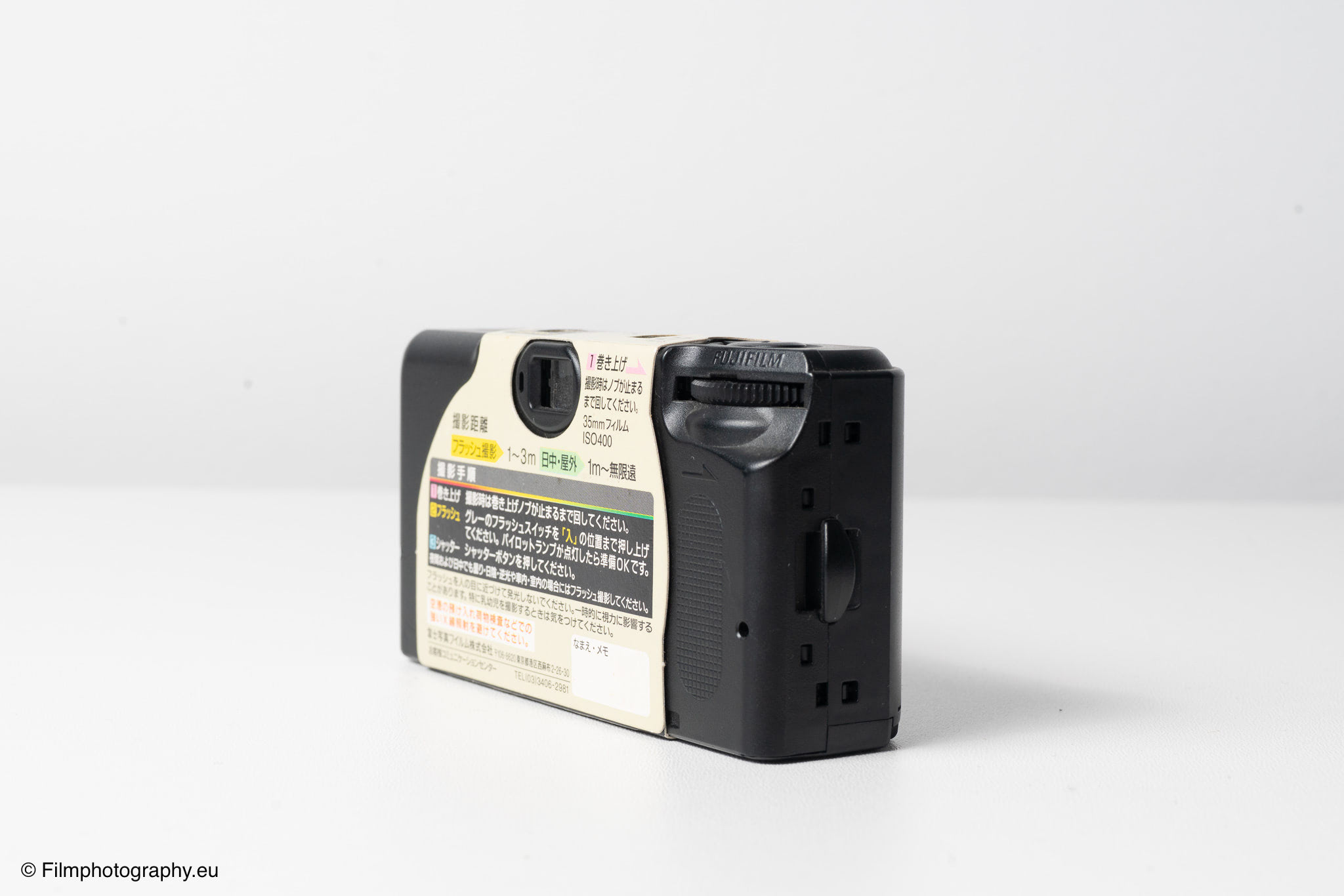
Features and Body Design
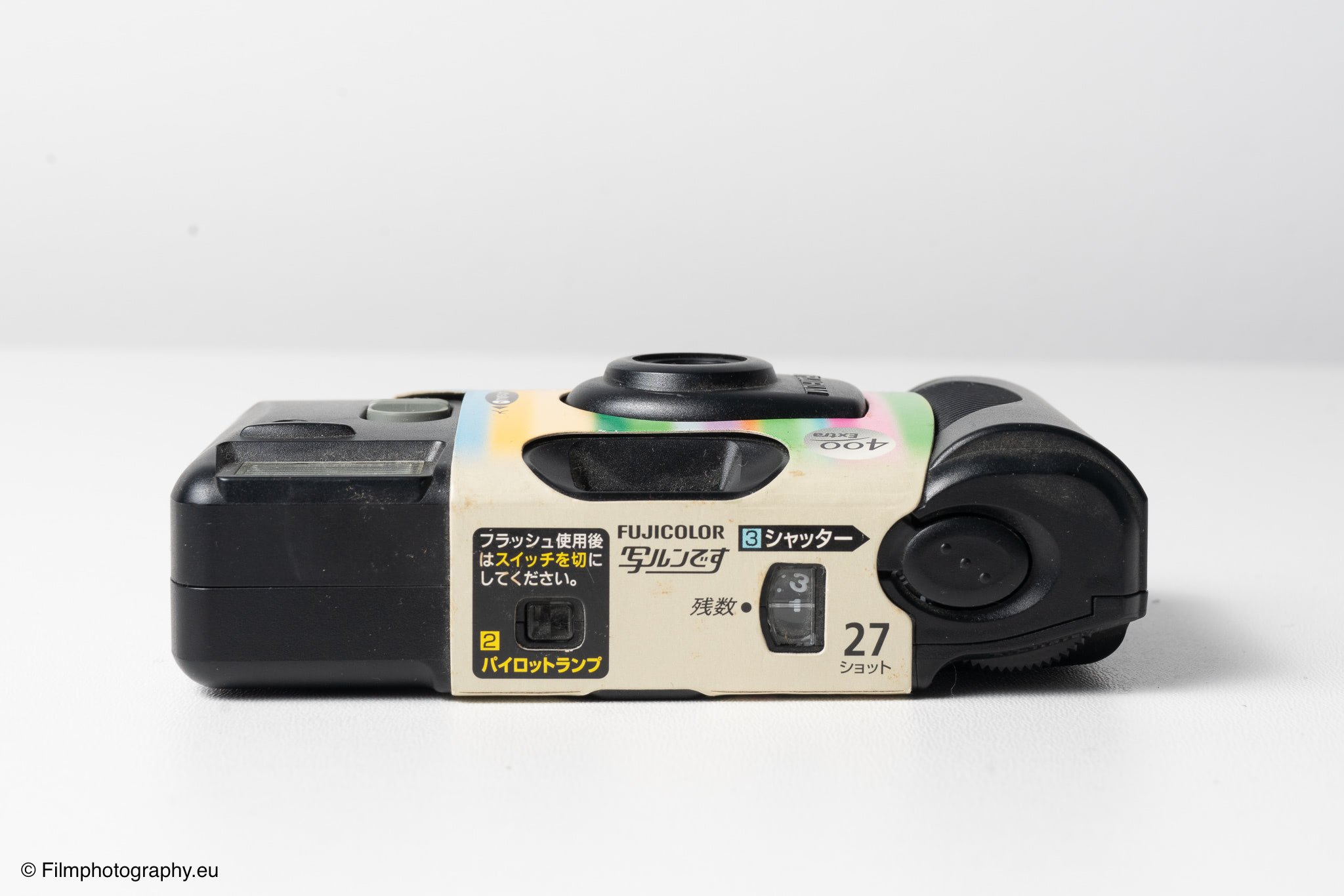
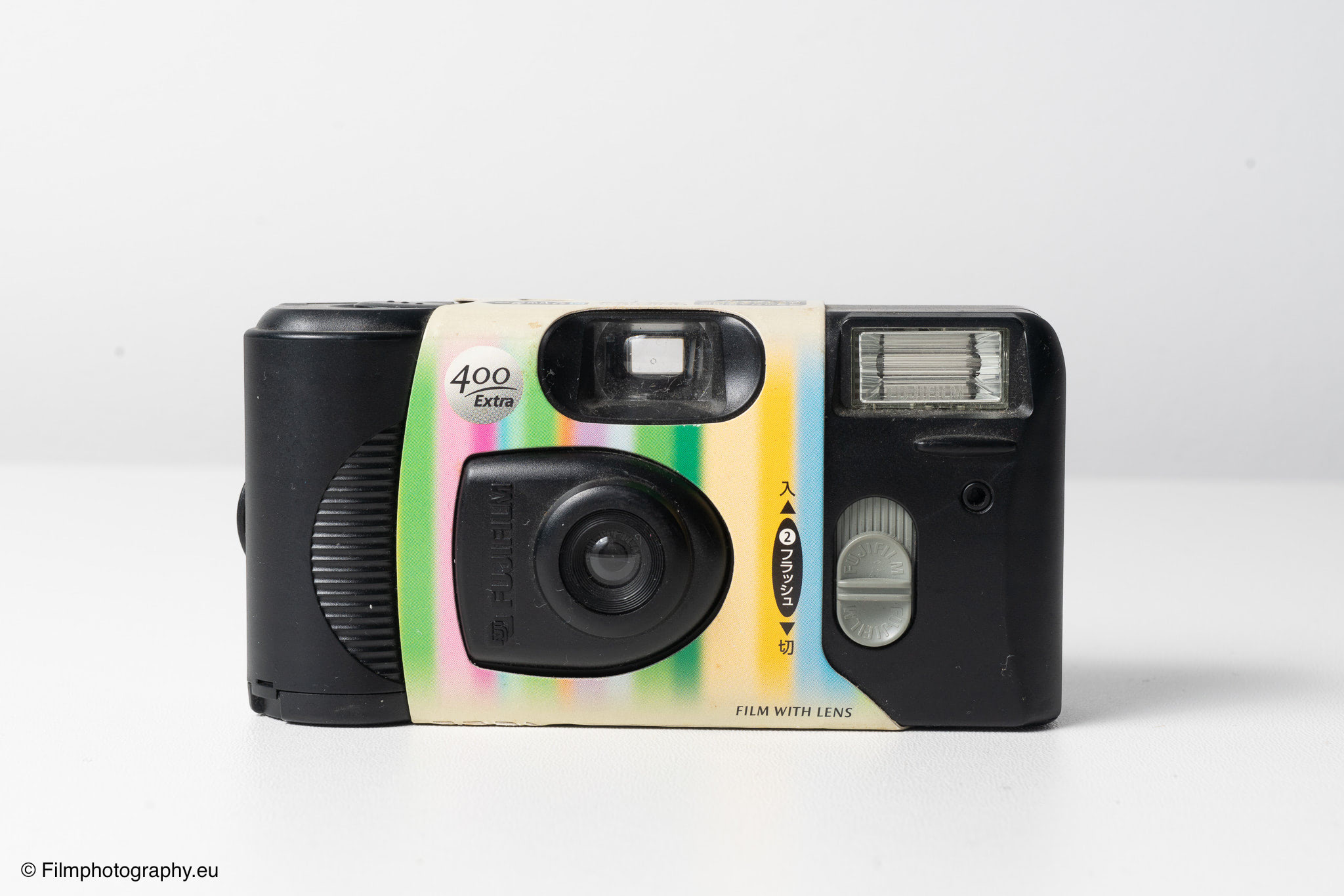
The Utsurundesu 400 Extra model features a compact, slightly rounded black plastic body adorned with a characteristic, colorful paper band. The design in pastel tones with stripes in green, yellow, blue, and pink is typical for the marketing of photo products in early 2000s Japan.
Inside the camera, a color negative film in classic 35mm format with an ISO 400 sensitivity is permanently installed. This film offers a balanced sensitivity suitable for both outdoor daylight shots and indoor photography. The model is designed for a total of 27 exposures.
The built-in fixed-focus lens requires no manual distance adjustment. Without flash, sharpness is achieved from about one meter to infinity for outdoor and daytime shots. The shutter speed and aperture are fixed, reducing user operation to just pressing the shutter button.
Controls and Flash Function
On the front, there is a prominent gray sliding switch to activate the integrated flash. The symbols for On (入) and Off (切) indicate the switch position. A small green ready lamp on the top signals flash readiness once the capacitor is charged. According to the manufacturer, the flash range is between one and three meters.
On the top, besides the shutter button, there is a small mechanical counter showing the remaining exposures, and the typical gray wheel for advancing and tensioning the film for the next shot.
Back Side and Safety Instructions
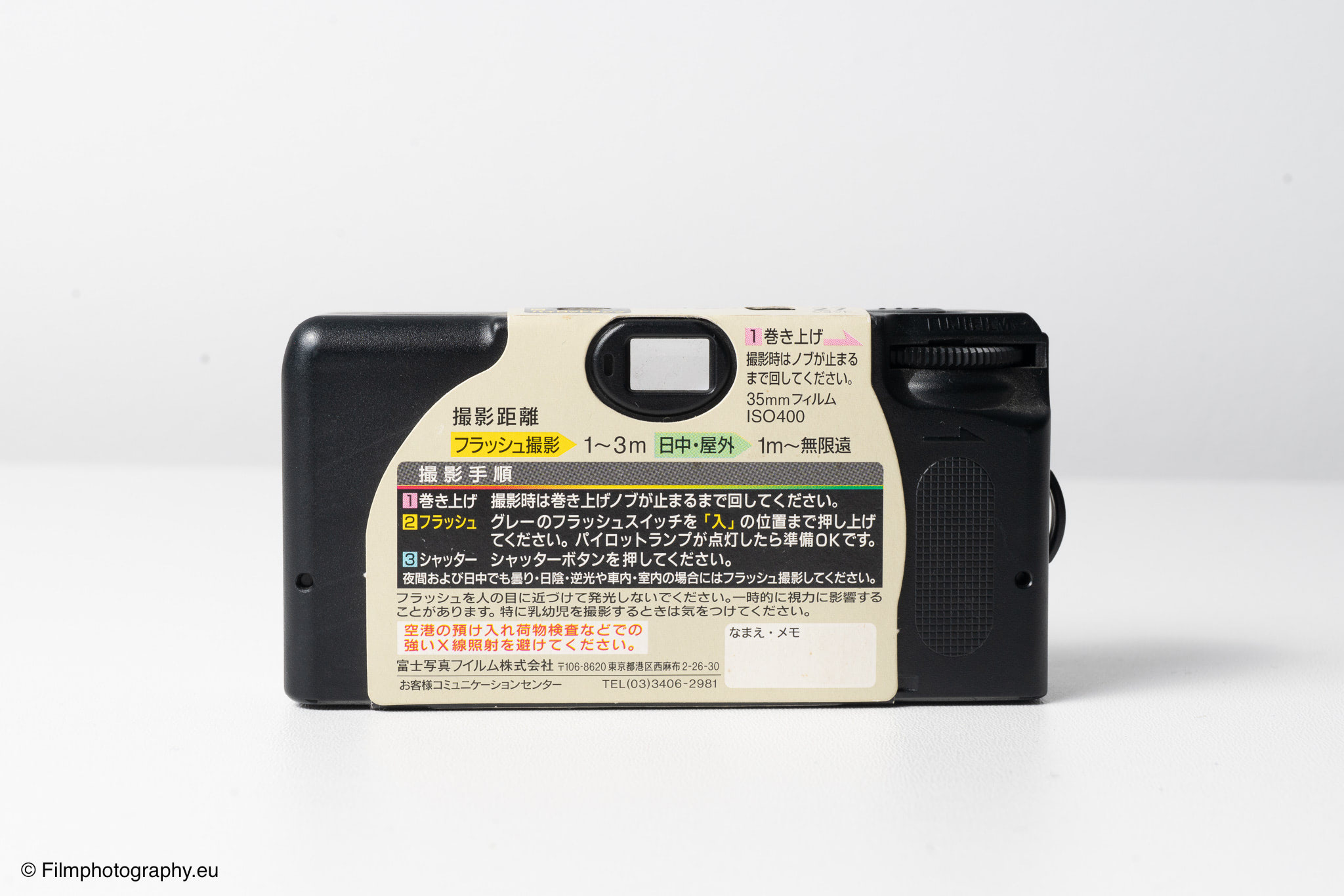
The back of the body features detailed Japanese operating instructions. These describe in simple steps the process from advancing the film (1) to turning on the flash (2) to pressing the shutter (3).
Additionally, a red-highlighted warning on the back cautions against damage from airport baggage checks, as strong X-rays can harm the unexposed film.
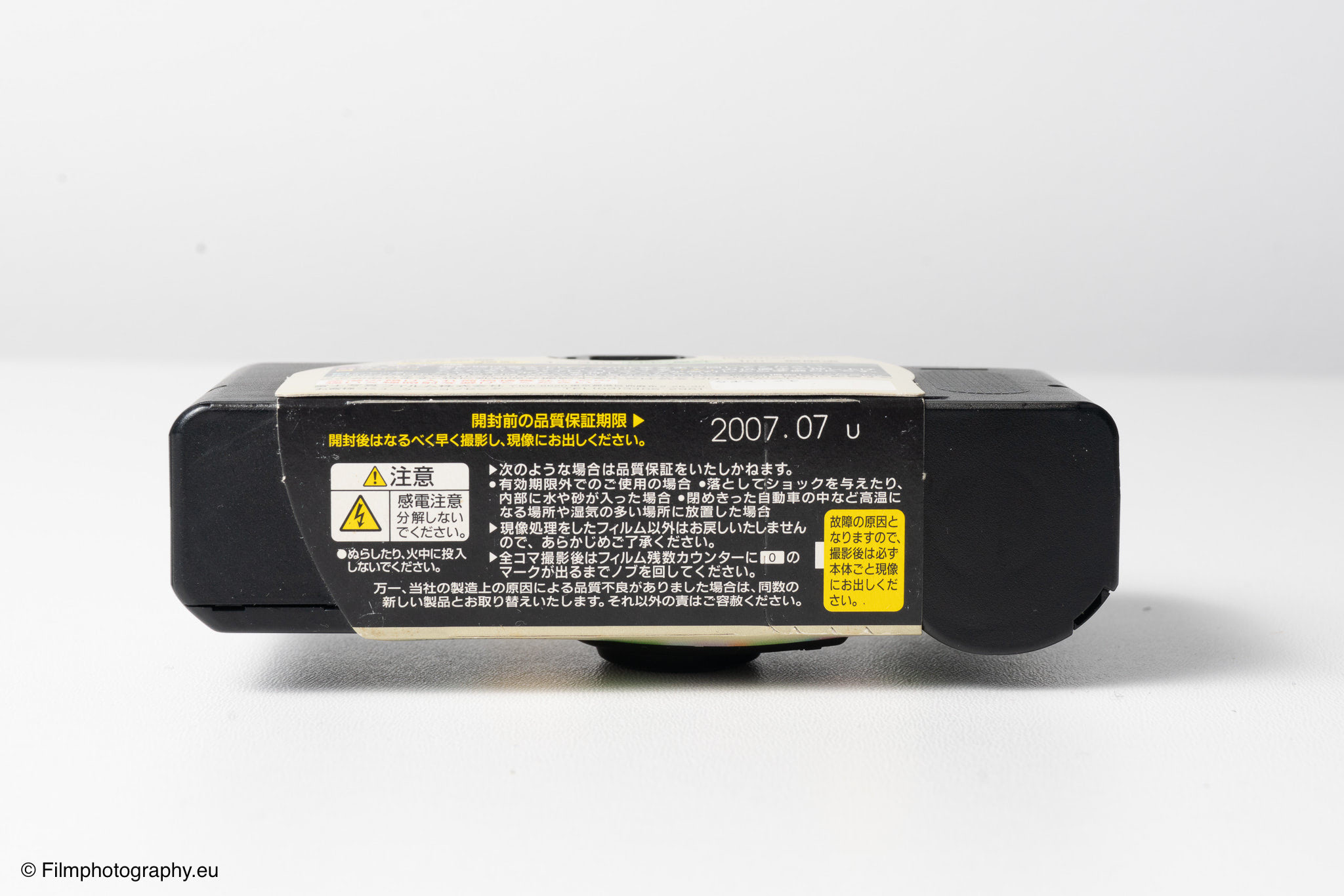
At the bottom of the band, the original manufacturer name Fuji Photo Film (富士写真フイルム株式会社) with its then-headquarters in Tokyo (Nishiazabu) is noted, placing production before the comprehensive corporate restructuring in 2006.
Film Development
After full exposure, the camera cannot be reused. The entire body is handed over to a photo lab for film development, where the film is extracted and processed using the standardized C41 process. In the end, you usually receive photo prints of the images.