The Fujicolor Foto Jack, a disposable pocket film camera manufactured by Fujifilm, was introduced to the Japanese market in 1986. At the time, photo cameras were very expensive in Japan, so Fujifilm struck a chord with its affordable disposable cameras. These cameras were simply constructed, consisting of a film cassette with a lens, shutter button and housing, and were branded 写ルンです (Utsurundesu), which means "it really takes photos".
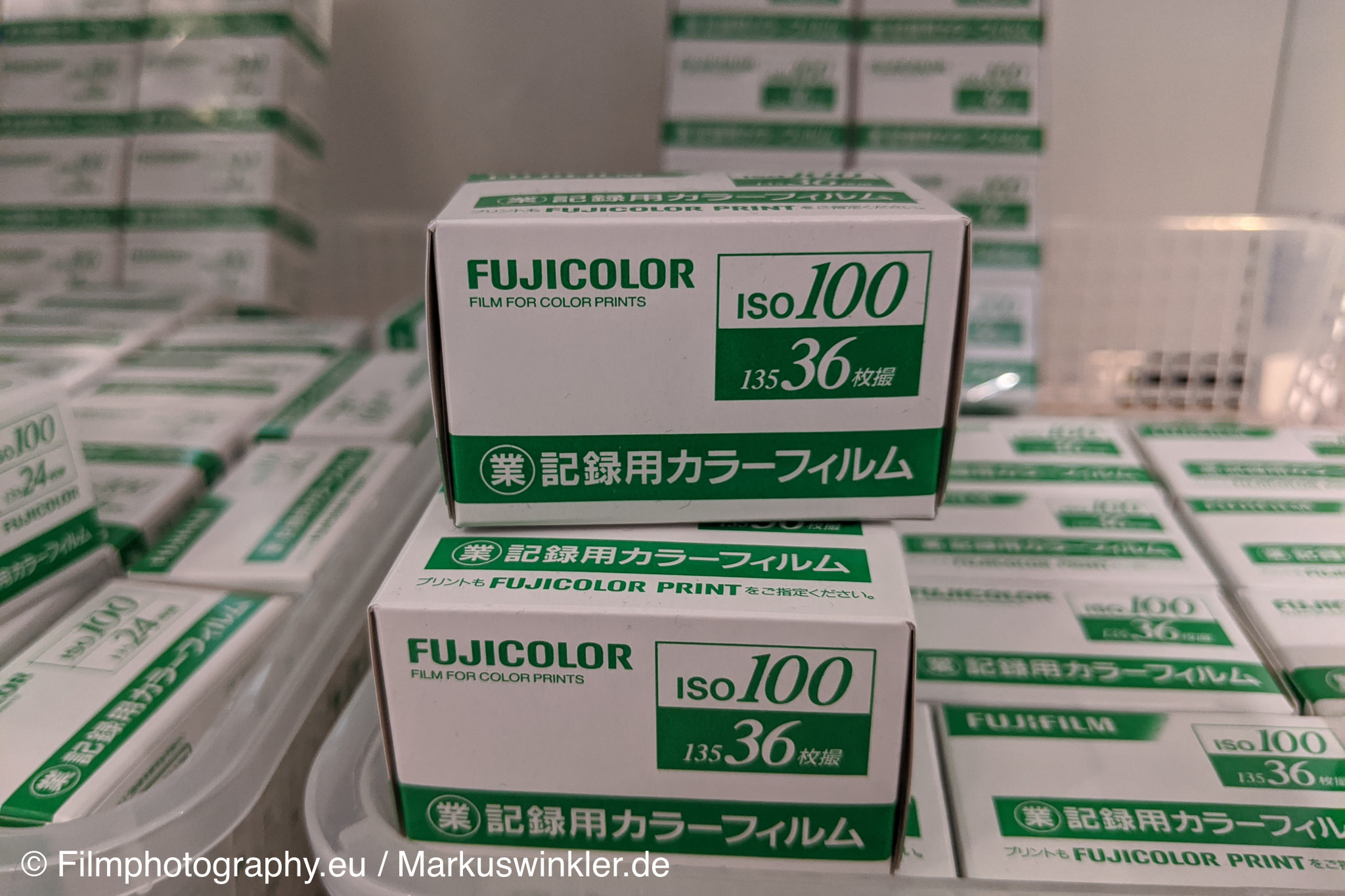
At the time, Foto Jack was aimed at a male audience. With the “Picco” there was a variant for young people. The design of the Fujicolor Super HR 100 is based on a film box. All models have the same functionality.
The success of these cameras did not go unnoticed by Kodak. Kodak, then facing stiff competition in the Japanese market, took note of Fujifilm's focus on the American market. After Fujifilm planned to introduce its disposable cameras in the United States in 1987, Kodak responded by unveiling the Fling just hours before Fuji's announcement.
In the spring of 1987, Fujifilm introduced the Fujicolor Quicksnap, a 35mm disposable camera that sold for about $10. Kodak then tried to attract customers by using the pocket film format, but despite the lower price of $6.95, it was unable to convince, due, among other things, to the lower image quality. Kodak then introduced a 35mm version of the Fling in 1988.
These cameras are considered pioneers of disposable cameras. However, Kodak's pocket film variant was discontinued in 1989 because models for the 35mm format were much more popular. In the following years, various variants of disposable cameras were introduced, including models with flash and for underwater photography.
Functions
The Fujicolor Foto Jack has a built-in lens without focus settings, although a distance of at least 120 cm from the subject is recommended for optimal image quality. The exposure must be measured externally as the camera does not have a light meter. The aperture and shutter speed are fixed, often at f/8 and 1/100 second, which is good for daylight photography. The camera does not have a built-in flash, a self-timer or a tripod mount. Batteries are not required.
The Fujicolor Foto Jack uses 110 pocket film with a sensitivity of ISO 200 for color photography. The film is developed using the C-41 process, which is possible in most photo laboratories. The film is advanced manually.
Although this camera is no longer manufactured, there are 35mm format alternatives from manufacturers such as Ilford, Lomography, Kodak and Fujifilm.