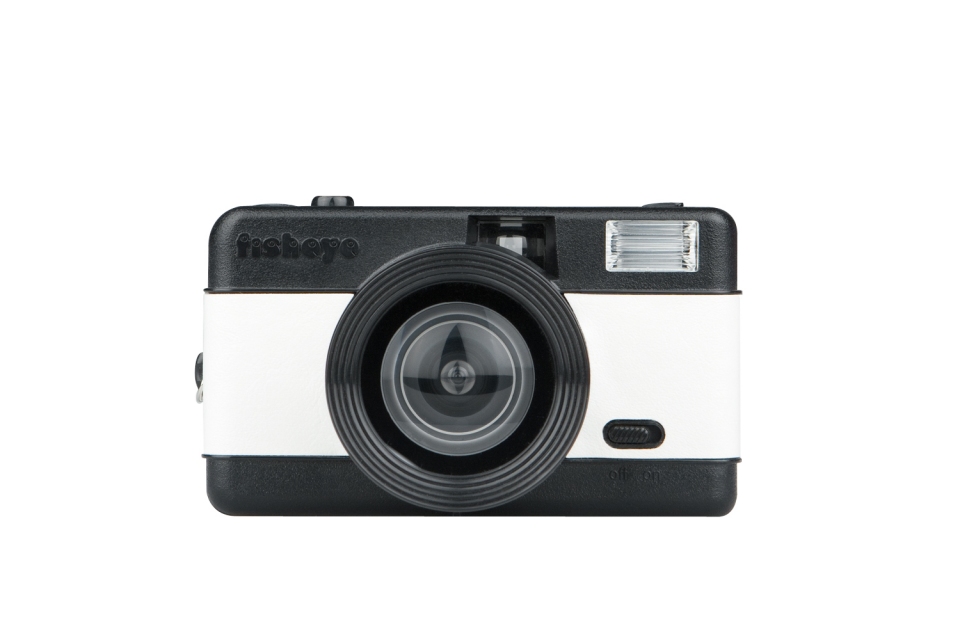
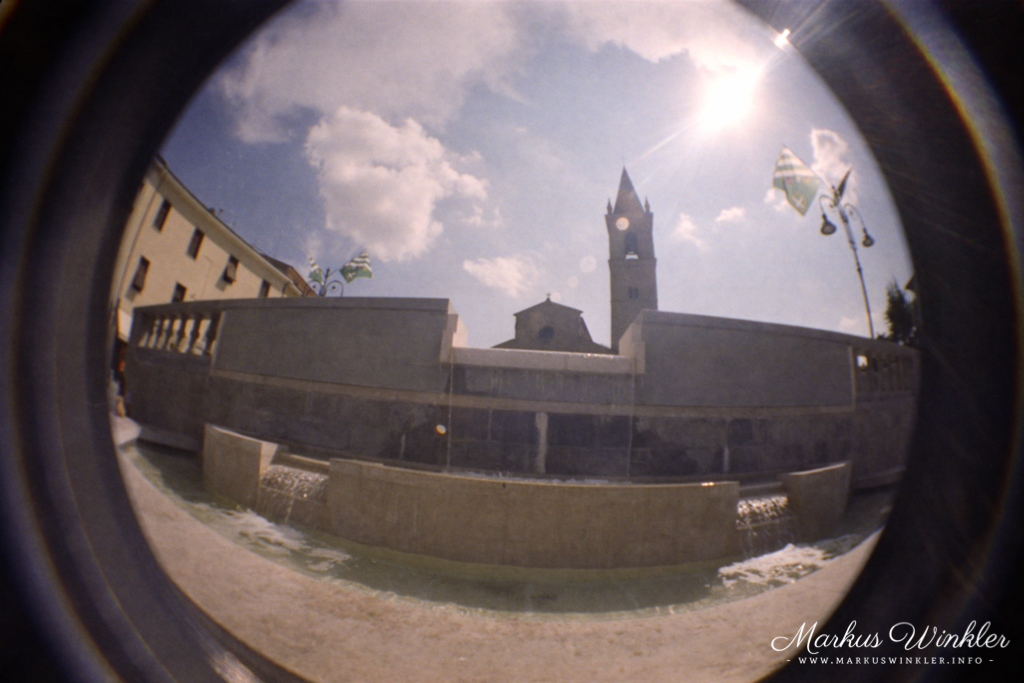
The Fisheye One is a 35mm camera with a fisheye lens (=very wide-angle lens). It was the first 35mm camera with a built-in fisheye lens. The fisheye lens makes it possible to get very close to your subject, which is also one of the rules of lomography. The camera is made of lightweight plastic.
The Fisheye One comes with a built-in flash, powered by an AA battery (eBay / Amazon*). When using the flash, be careful not to darken part of the image, as the lens will cast a shadow on the image.
The 35mm camera supports only one exposure time, about 1/100 s, and one aperture, f8, so ISO 400 film is advisable. Also, when transporting the camera, make sure that it is not cocked and accidentally triggered. This problem has been fixed with the Fisheye No. 2.
The fisheye camera needs 35mm film (eBay / Amazon*).
Accessories
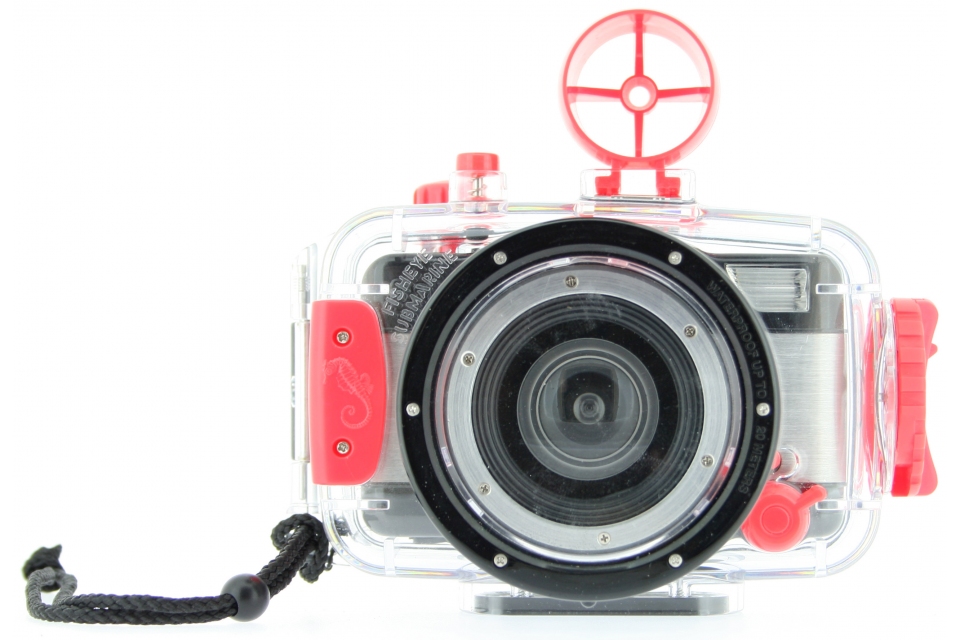
The Fisheye Submarine is an underwater housing for the Fisheye One. This housing make diving trips up to 20 meters deep possible. With a lever can also turn on the flash underwater.
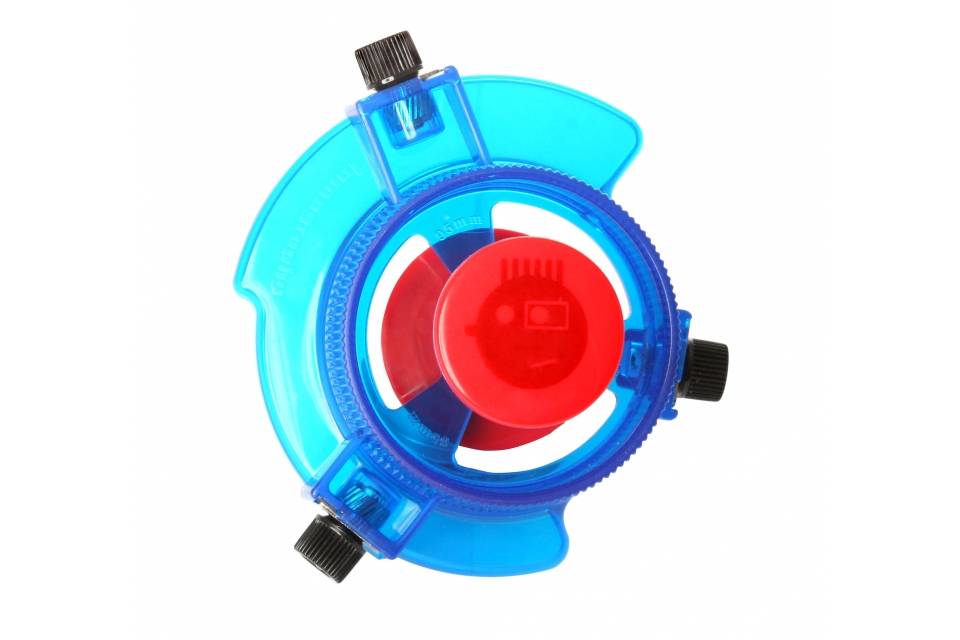
The Fisheye Circle Cutter is a cutter for the prints of the fisheye camera. The small razor blades allow to cut a perfect circle.
The package also includes 30 photo clips and a poster.
Films for the Fisheye One
35mm film is exposed in the Fisheye One. 35 mm films are still produced today. They can be developed in most laboratories. Great films for the Fisheye One that are still available today are the Kodak Portra 160* for colour images and the Kodak T-Max 100* for b/w images. Test reports confirm that both films can be used in a wide range of shooting areas and deliver good results. Especially for the 35mm format there are other producers of film material.
The colour film is developed in the C-41 process. The C-41 process is offered by almost every photo lab. Most drugstore chains in Germany offer the development of colour film. A suitable black and white developer is required to develop black and white film properly. Detailed instructions should be included in the film package.
Sample photos
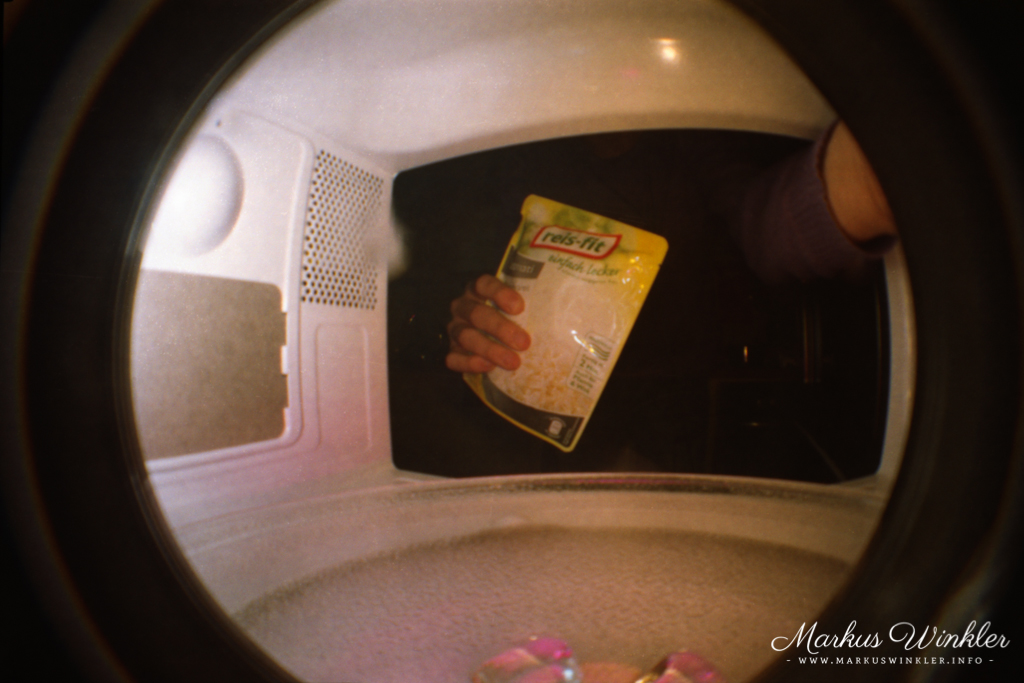
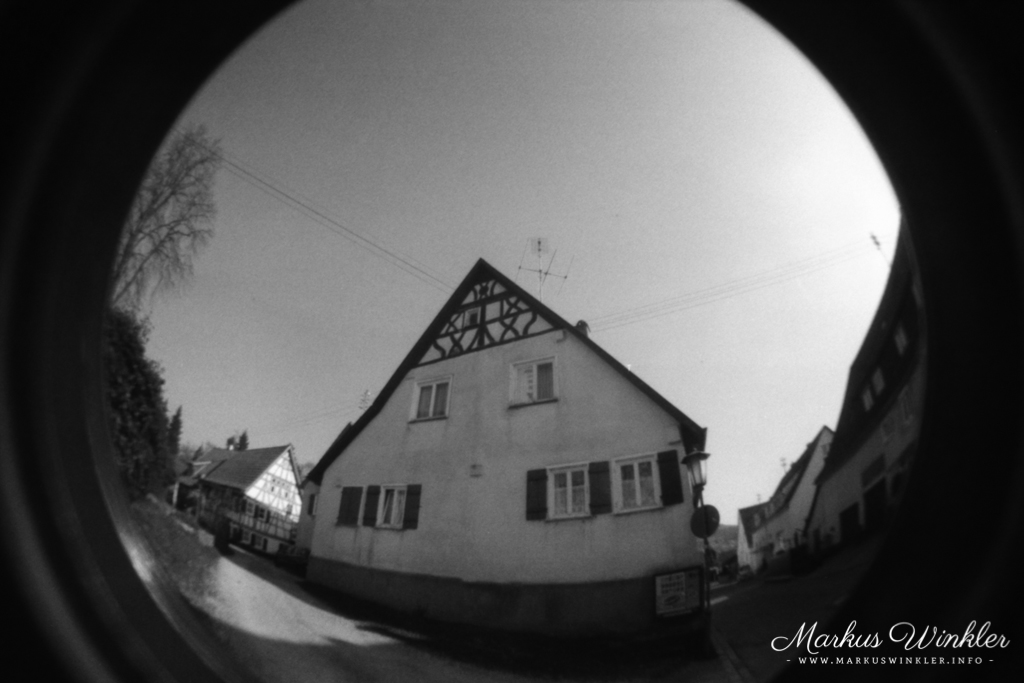
Technical datasheet
| Attribute | Specification |
|---|---|
| Type of Camera | Fisheye camera |
| Film format | 35mm |
| Film transport | Manual |
| Film transport mechanism | Thumbwheel |
| Focal length | 10 mm |
| Widest aperture | f/8 |
| Minimum focus distance | 10 cm / 0.328 ft |
| Focus | Fixed |
| Exposure times | 1/100 second |
| Auto DX (Film sensitivity) | No |
| Date imprinting | No |
| Flash | Integrated flash |
| Flash sync speed | 1/100 s |
| Tripod mount | No |
| Cable release thread | No |
| Self-timer | No |
| Connection for camera strap | Yes |
| Power supply | 1x AA battery |
| Country of production | China |
| Estimated value / Used price | 39,03 Euro Estimate based on used prices of 5 offers (possibly with different scope of delivery and/or condition). As of May 18, 2026 |
| Average used price in the year 2024 | 55,65 Euro (59.53 US-Dollar) |
| Average used price in the year 2025 | 50,25 Euro (54.12 US-Dollar) |
FAQ about the Fisheye One
Is the Fisheye One camera easy to use, even for beginners?
Yes, the Fisheye One is quite straightforward. It has a fixed aperture and shutter speed, simplifying the shooting process. Its lightweight plastic build also makes it very portable and user-friendly.
What kind of lens does this camera have?
It features a fisheye lens, which is a very wide-angle lens. This allows you to get incredibly close to your subject while still capturing a wide field of view, creating unique and interesting perspectives.
Does the camera have a flash?
Yes, it has a built-in flash powered by a single AA battery. Be mindful of potential shadows cast by the lens when using the flash, as it can darken parts of your image.
What type of film does the little camera use?
The Fisheye One uses standard 35mm film. ISO 400 film is recommended due to its fixed aperture and shutter speed. Both color and black and white films work well.
Can I take underwater pictures with this device?
Not directly, but there's an optional underwater housing called the Fisheye Submarine available that allows you to take pictures underwater up to 20 meters deep.