For some time now, the drugstore chain dm has been offering a practical service for color film development: In addition to classic photo prints and negatives, customers also receive their images as digital scans for download – at no extra cost. But how exactly does the process work, what does it cost, and what quality are the scans?
How It Works: Step by Step
The process of getting a film developed at dm is straightforward and has been tried and tested for years.
- Prepare the order bag: In every dm store, you'll find special paper bags for photo orders at the photo counter. Take one of these "order bags," fill in your personal details on the front, and check which services you want. It's important to only put one film or disposable camera per bag.
- Select prints: You can choose between different formats for your photo prints, typically from 9 x 13 cm to 13 x 18 cm. You also have the choice between matte and glossy photo paper.
- Submit the order: Place the film roll in the bag, seal it, and drop it into the designated box in the store. Keep the receipt with your order number safe.
- Wait and check status: Now patience is required. The processing time for development is usually between 7 and 10 working days. You can check the status of your order online at any time using the data from your receipt at https://www.fotoparadies.de/service/auftragsstatus.html#/.
Costs for Development and Scans
One of the biggest advantages of the dm service is the price. The pure development costs for a color 35mm film are very affordable. According to the price list from May 2025, development costs €2.95, plus the cost of the initial prints. The costs for digitizing the images and providing them as a download are already included in this service. For a print in 9 x 13 cm format, there are additional small costs per image. You can find the exact and most current prices directly on the order bags or in the price list in the store.
What's Better: Matte or Glossy Photo Paper?
The decision between matte and glossy paper ultimately depends on personal taste. Here's a little guidance:
- Glossy photo paper: Makes colors appear particularly brilliant and vibrant. Details often seem sharper. The downside is that it reflects strongly and fingerprints are quickly visible.
- Matte photo paper: Looks more elegant and understated. It hardly reflects light and is insensitive to fingerprints. Color reproduction is more natural.
Collection and Download of Digital Images
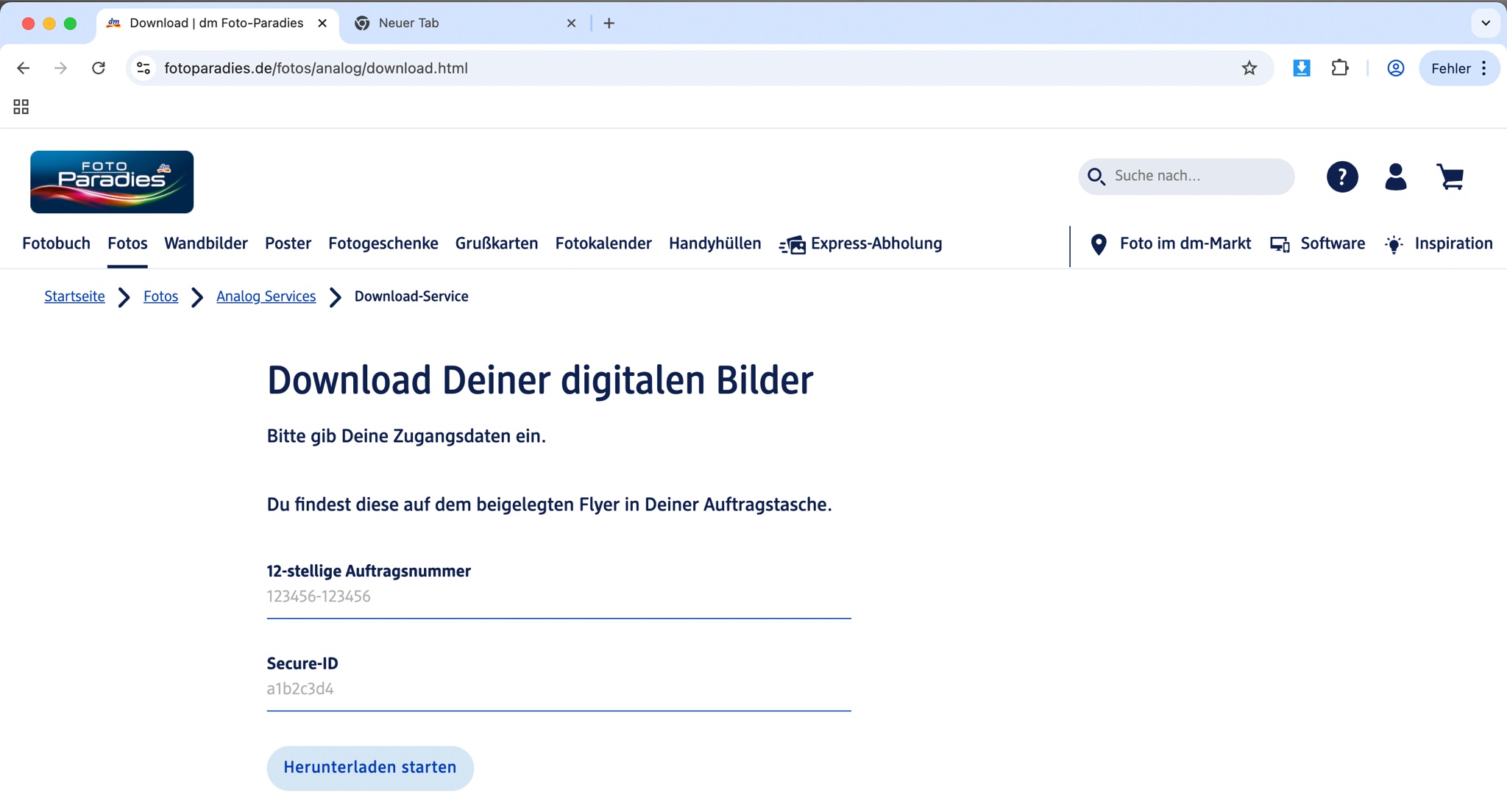
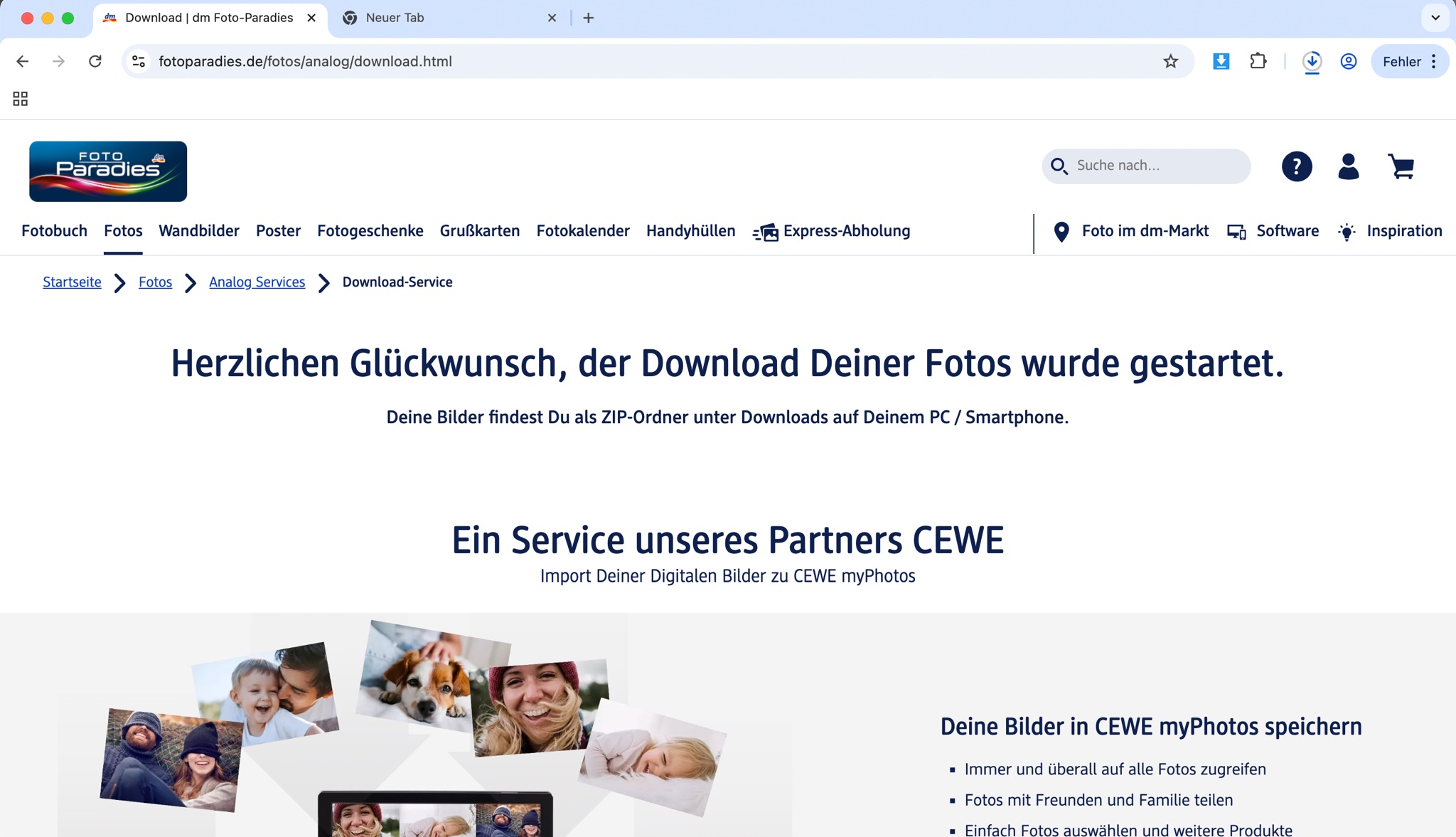
Once your order is ready, you can pick up your photos at the dm store. In the photo bag, along with the developed negatives and the ordered prints, you'll find a slip with the access data for the digital download. On the specified website, enter your order number and a password (often referred to as Secure-ID). Then the download of your images as a compressed ZIP file begins. It's important to know that the download link is only available for a limited period of six weeks.
Quality and Resolution of the Scans
So what do the scans from dm look like and what purposes are they suitable for?
In landscape format (3:2), the images have a resolution of 1536 x 1024 pixels. This corresponds to about 1.57 megapixels. This resolution is perfectly adequate for many purposes:
- Viewing images on screen or TV
- Sharing on social media platforms
- Creating smaller prints (up to about 10 x 15 cm)
- Digital archiving of memories
However, for more demanding applications, this resolution reaches its limits. If you plan to print your images in large format, enlarge sections, or professionally retouch them, the quality of dm scans is often insufficient. For higher quality, it is recommended to scan the negatives yourself with a dedicated film scanner or to commission a professional service.
Sample Images and Conclusion
The quality of the photos is of course significantly influenced by the camera used, the lens, and the film material. For the sample photos shown here, a simple AgfaPhoto Analogkamera and a Kodak Color Plus 200 film were used. The AgfaPhoto is a simple, reusable analog camera aimed at beginners. The Kodak Color Plus 200 is a popular and inexpensive color film known for its pleasant, warm, and saturated colors as well as its versatility in daylight. It is developed with the standard C-41 process, making it ideal for drugstores.
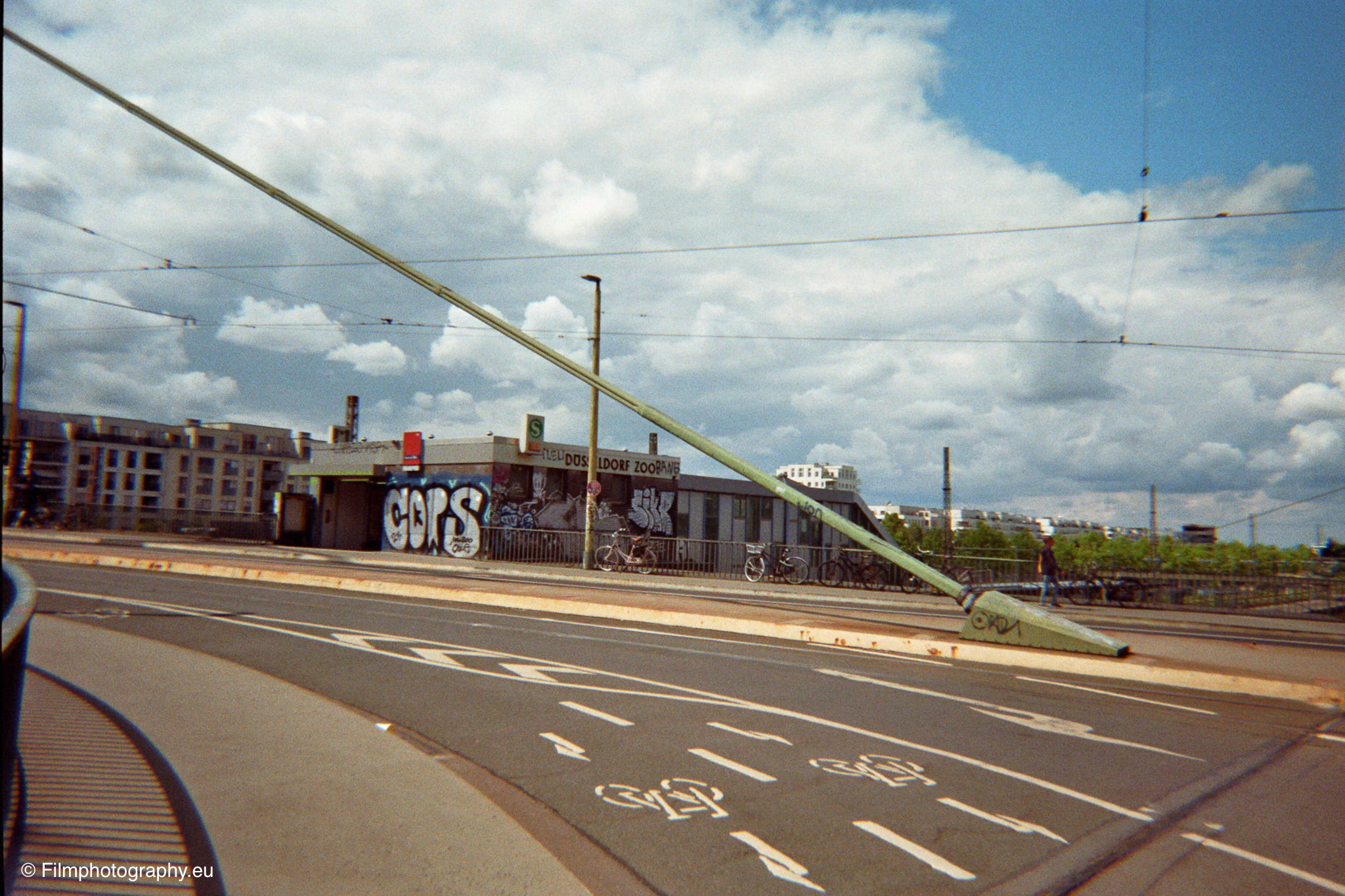
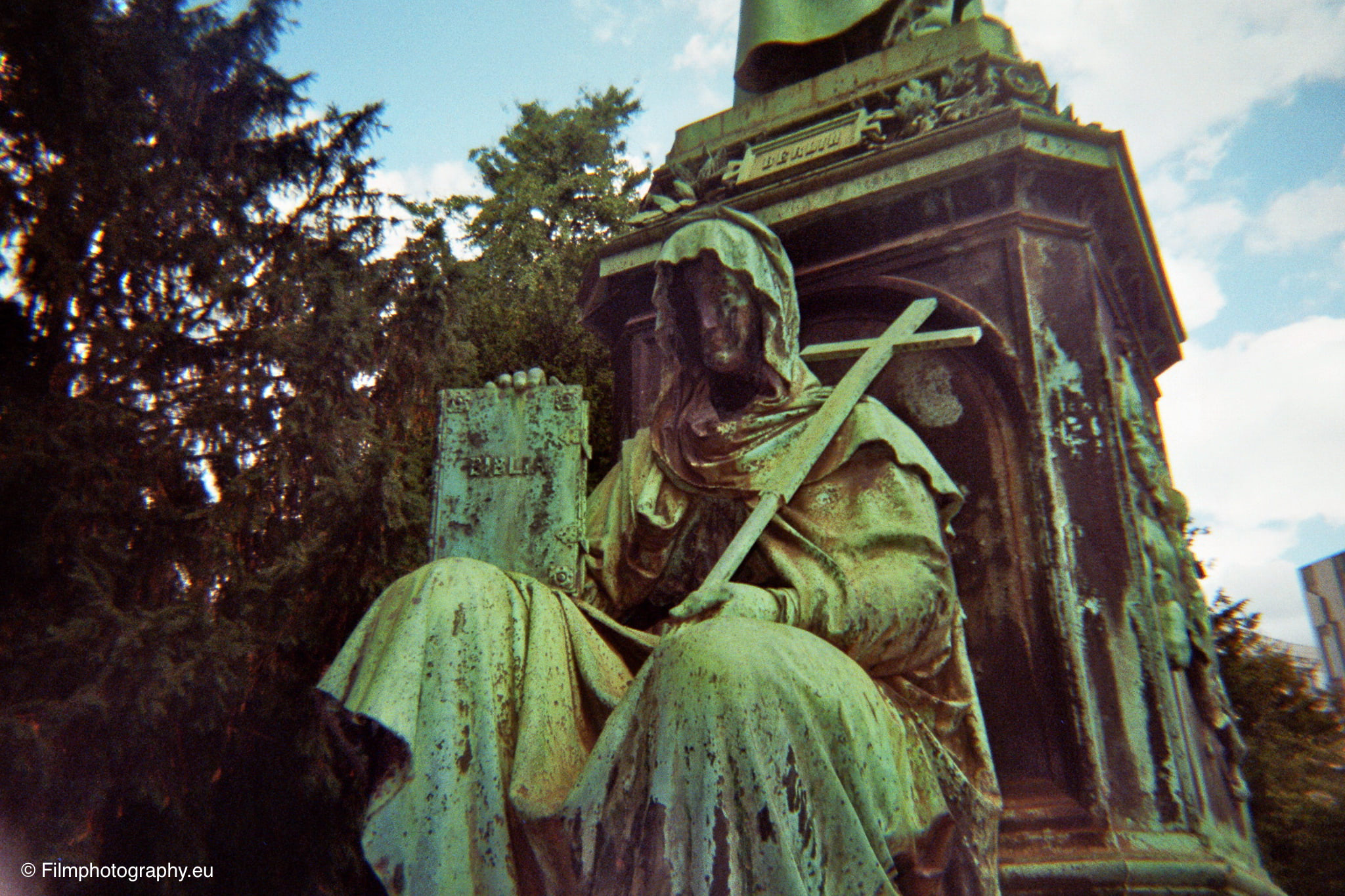
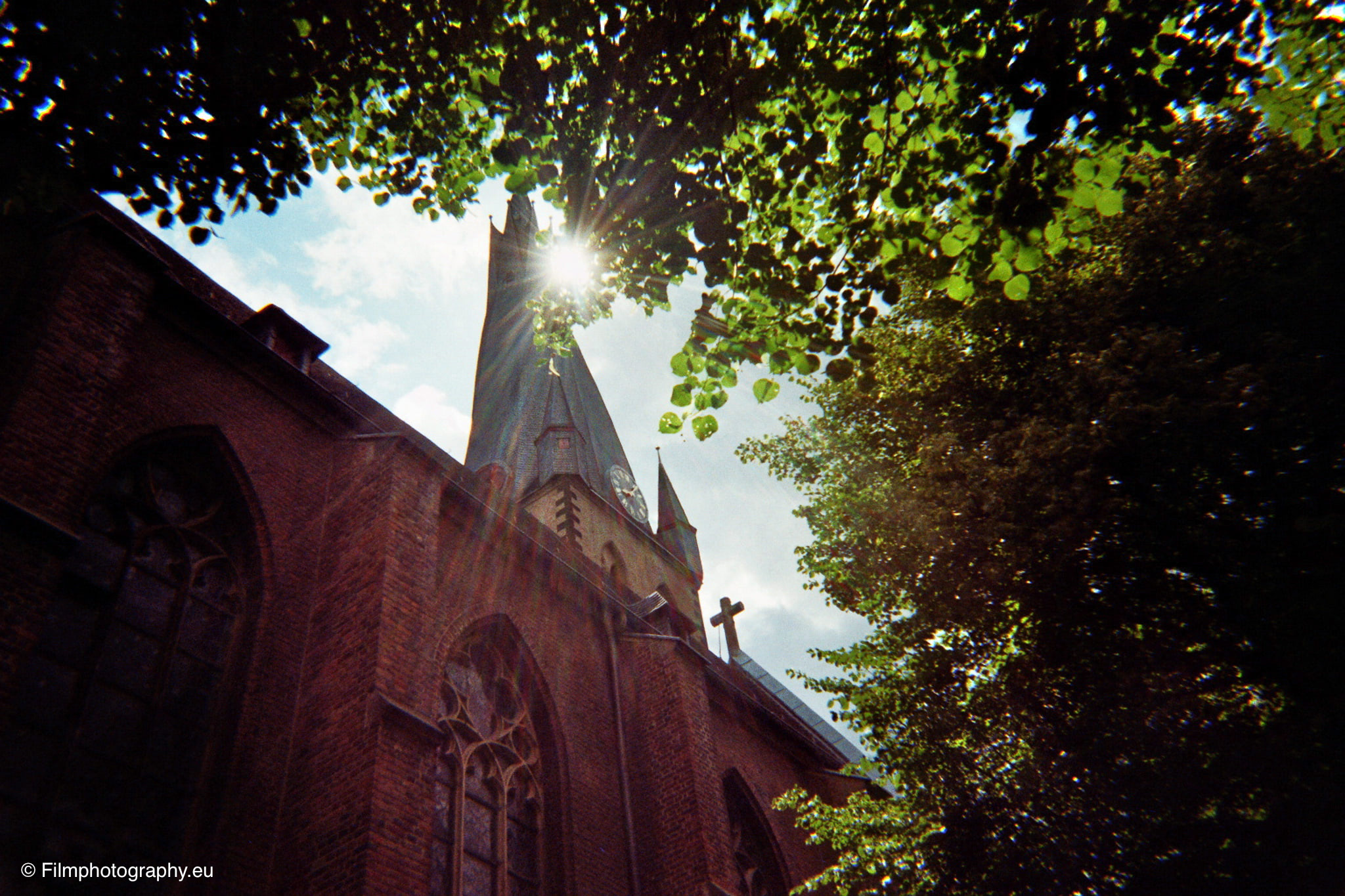
Conclusion: The photo service from dm is an excellent, cost-effective, and convenient way for hobby photographers to get their analog films developed. The combination of physical prints, negatives for archiving, and free digital scans for quick, uncomplicated use makes the offer particularly attractive.