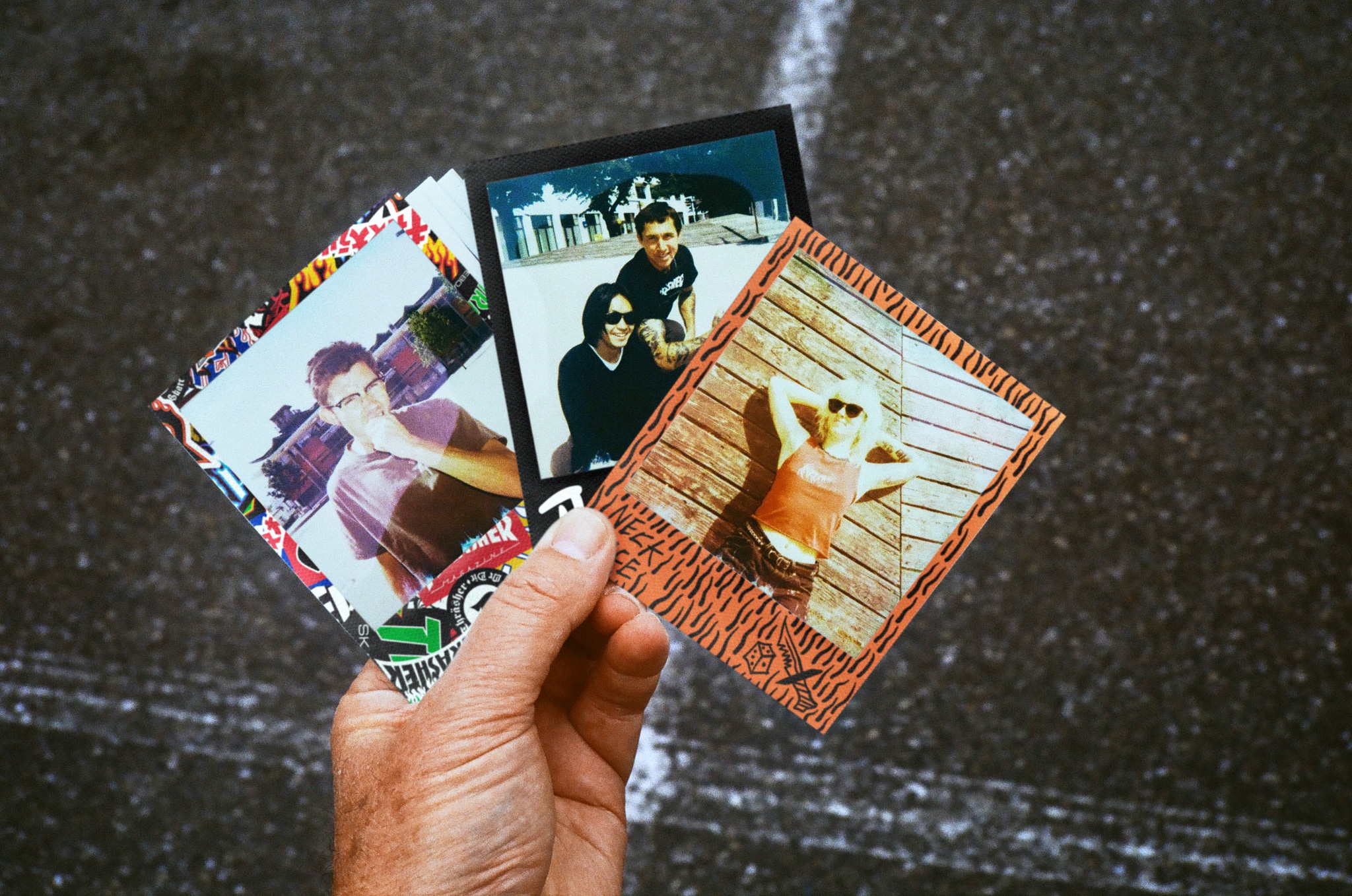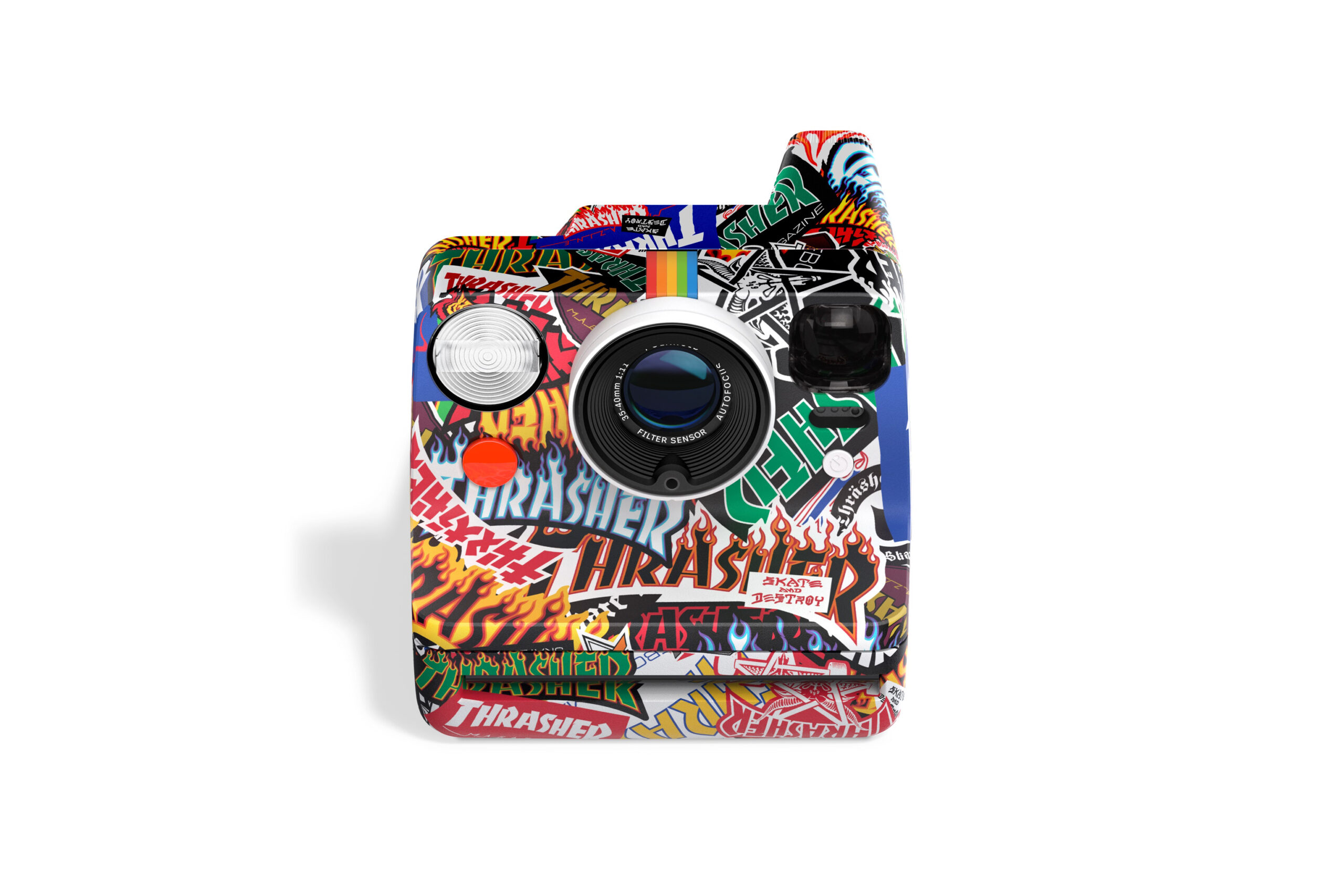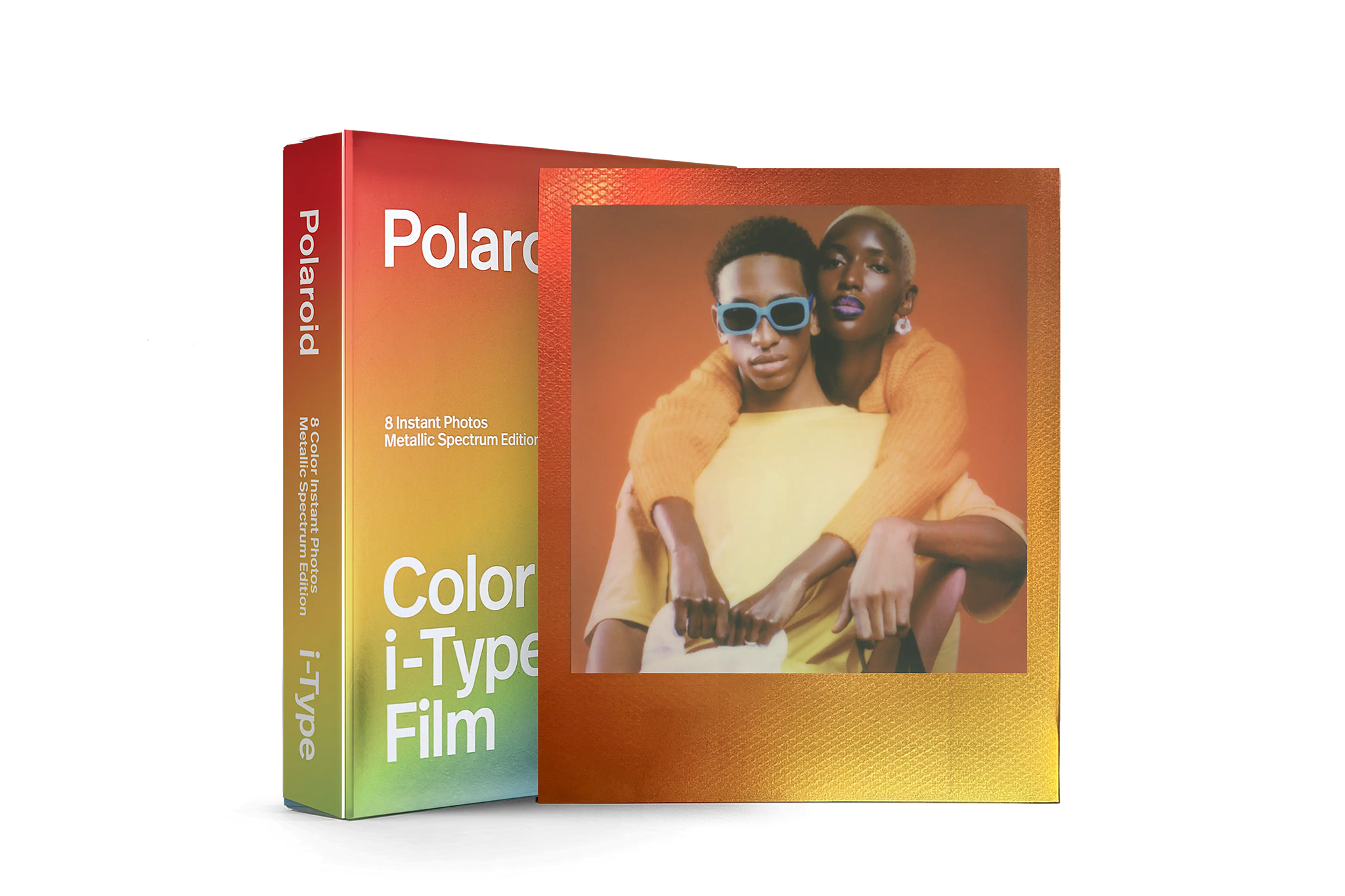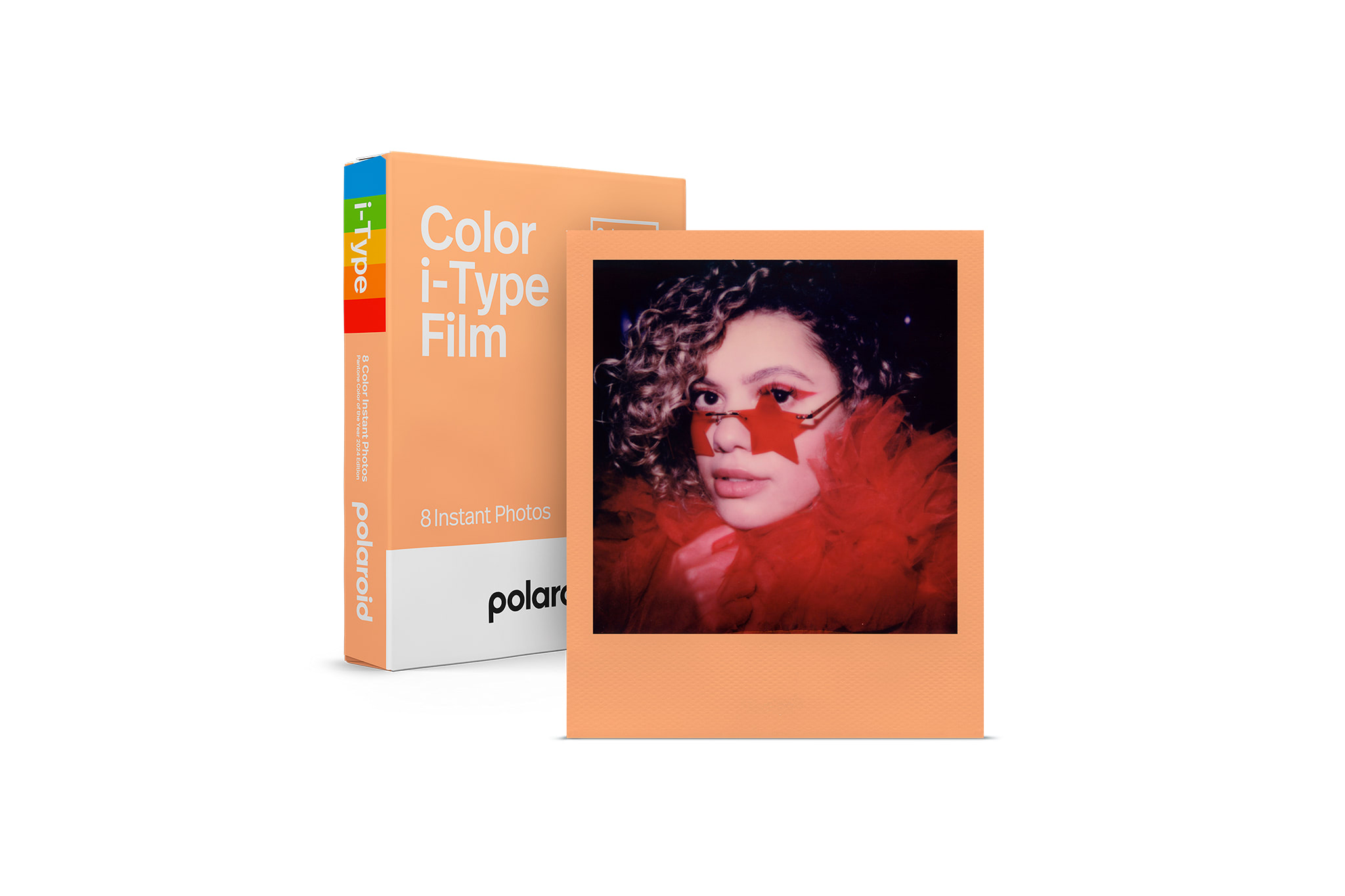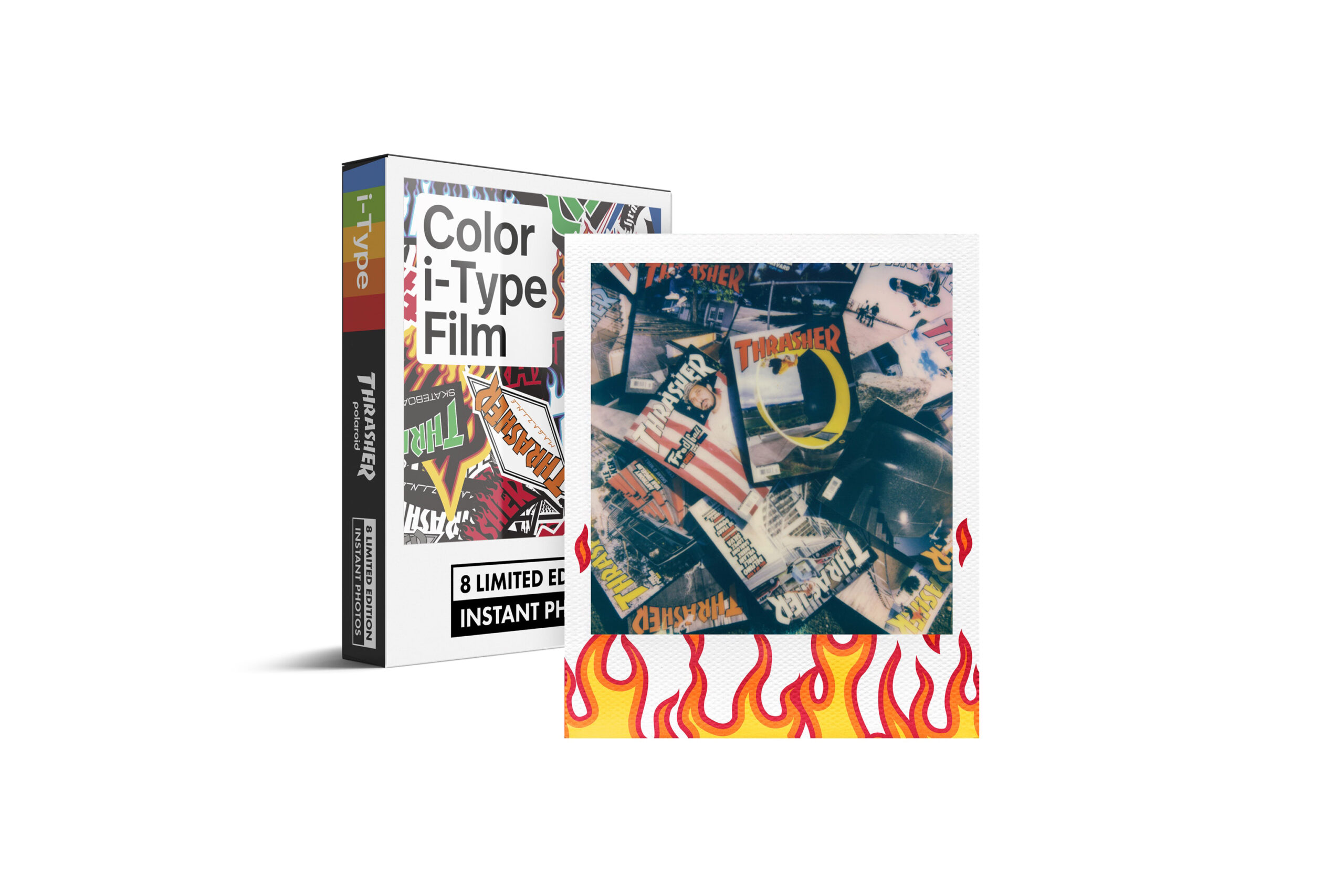
The Polaroid Color i-Type Film Thrasher Edition is a color negative instant film released in September 2025 by the manufacturer Polaroid. The edition was created as part of a comprehensive collaboration between Polaroid and the US skateboard magazine Thrasher. Additionally, a Special Edition of the Polaroid Now Instant Camera was produced.
A key distinguishing feature of this special edition is the departure from traditional white frames in favor of graphically designed frames created by street artist Neckface.
Compatibility
The film is based on Polaroid's i-Type technology, which was specifically developed for modern generations of instant cameras. Unlike classic film formats such as Polaroid 600, i-Type films do not contain an integrated battery in the film cartridge, as compatible cameras have their own internal batteries. This makes the film more environmentally friendly to produce and reduces production costs.
The film has a nominal sensitivity of ISO 640 and is optimized for use in daylight or with electronic flash. The square image format corresponds to the classic Polaroid size of 79 mm × 79 mm, while the overall size of the carrier material is 107 mm × 88 mm. The material is compatible with modern camera systems such as the Polaroid Now, Now+, I-2, the Polaroid Flip, and the Polaroid Lab.
Design
The Thrasher Edition includes a total of eleven different frame designs, which are randomly distributed across the eight instant pictures per pack. The design takes up the flame motif typical of skateboard subculture and was realized by artist Neckface, known for his distinctive style with humorous, often dark illustrations.
The frame motifs range from flaming patterns to graphic lettering in warm red, orange, and yellow tones. The goal of this design is to give analog shots an individual frame through the combination of classic image aesthetics and street art, visually standing out from standard products.
Development
As is common with modern Polaroid color films, chemical development begins immediately after the exposed image is ejected from the camera. During the development time, which takes about 10 to 15 minutes at an optimal room temperature of around 21 degrees Celsius, the image must be protected from direct light.
The film delivers color reproduction with slightly reduced saturation and a warm tone, characteristic of the manufacturer's current chemical composition.