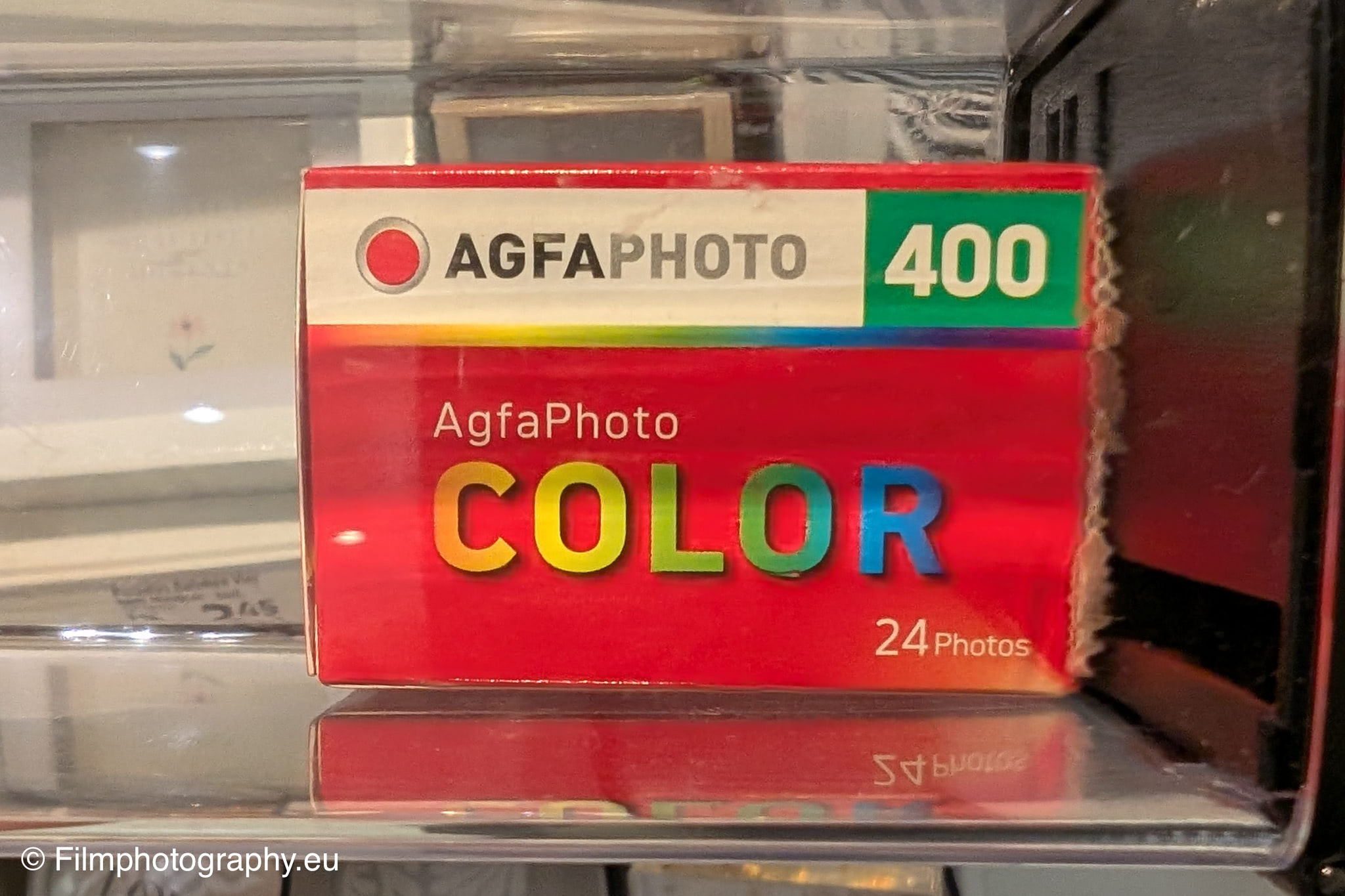

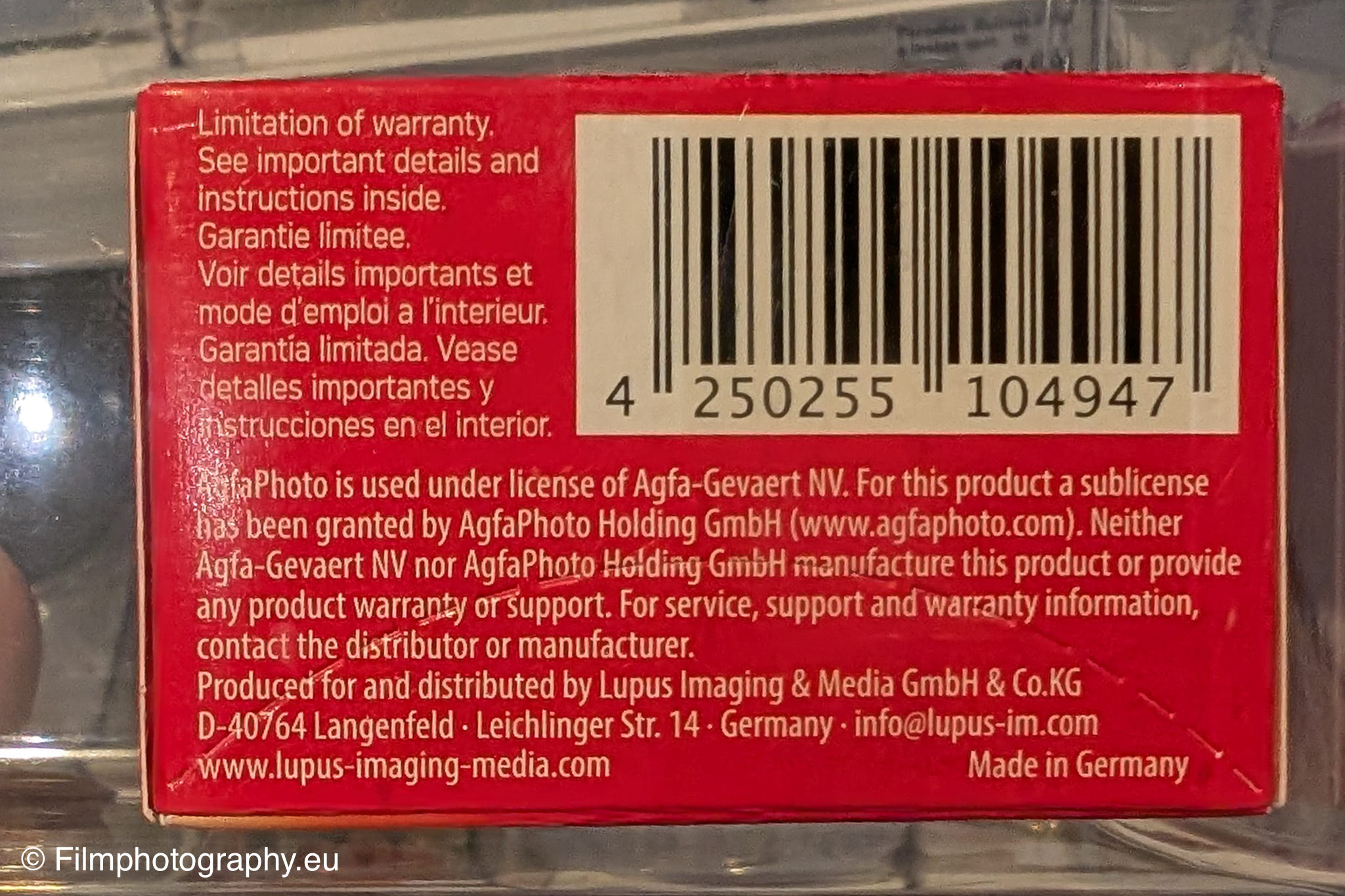
The AgfaPhoto Color 400 is a color negative film in 35mm format, characterized by a distinctive aesthetic and an interesting brand history. The film is distributed under the well-known AgfaPhoto brand. Since the original manufacturer Agfa-Gevaert withdrew from the consumer film business as early as the early 2000s, the brand name is now used under license agreements (including by Lupus Imaging & Media) for modern photographic products.
Background and Production
The packaging of the AgfaPhoto Color 400 bears the origin designation “Made in Germany.” In expert circles and photo communities, it is assumed that the film material is coated at InovisCoat GmbH in Germany.
Due to its chemical and optical properties, the film is considered to be closely related to the Wolfen films (especially the Wolfen NC400 from ORWO). A striking feature of the developed film strip is the absence of the classic, strongly orange masking known from conventional color negative films. Instead, the film base has a rather grayish substrate with a slight green or cyan cast, which suggests formulas from the motion picture film sector (cine film).
Film Properties and Image Aesthetics
The film's sensitivity is rated at ISO 400. This medium to higher light sensitivity makes the film a versatile companion for various lighting conditions. While low-sensitivity films (such as ISO 100) are primarily intended for bright sunlight, the ISO 400 rating enables photography under changing conditions.
The AgfaPhoto Color 400 is therefore suitable for overcast skies, shady subjects, or street photography in the late afternoon. Thanks to the integrated DX coding on the film cartridge, most electronic cameras can automatically read the sensitivity.
Storage and Handling
In order to ensure that the quality of the film material is not impaired over time, proper storage of the unexposed film is important. It is recommended to store the film in a cool, dry, and light-protected place.
For long-term archiving, storage in a refrigerator is also an option. However, before use, the cooled film should have sufficient time to acclimate to ambient temperature to prevent condensation from forming on the emulsion. To avoid latent image degradation and color shifts, exposed film should be developed as promptly as possible.
Developing the Film
To make the finished images visible, the film must be developed using the standardized C-41 process. Since this is the most common process worldwide for color negative films, development can easily be carried out in almost any professional lab, at drugstores, or even at home with a suitable development kit and precise temperature control.
Formats and Camera Compatibility
The AgfaPhoto Color 400 is primarily offered as 35mm film (Type 135) and is standardly available in a 24-exposure configuration. The classic frame format is 24x36 mm.


