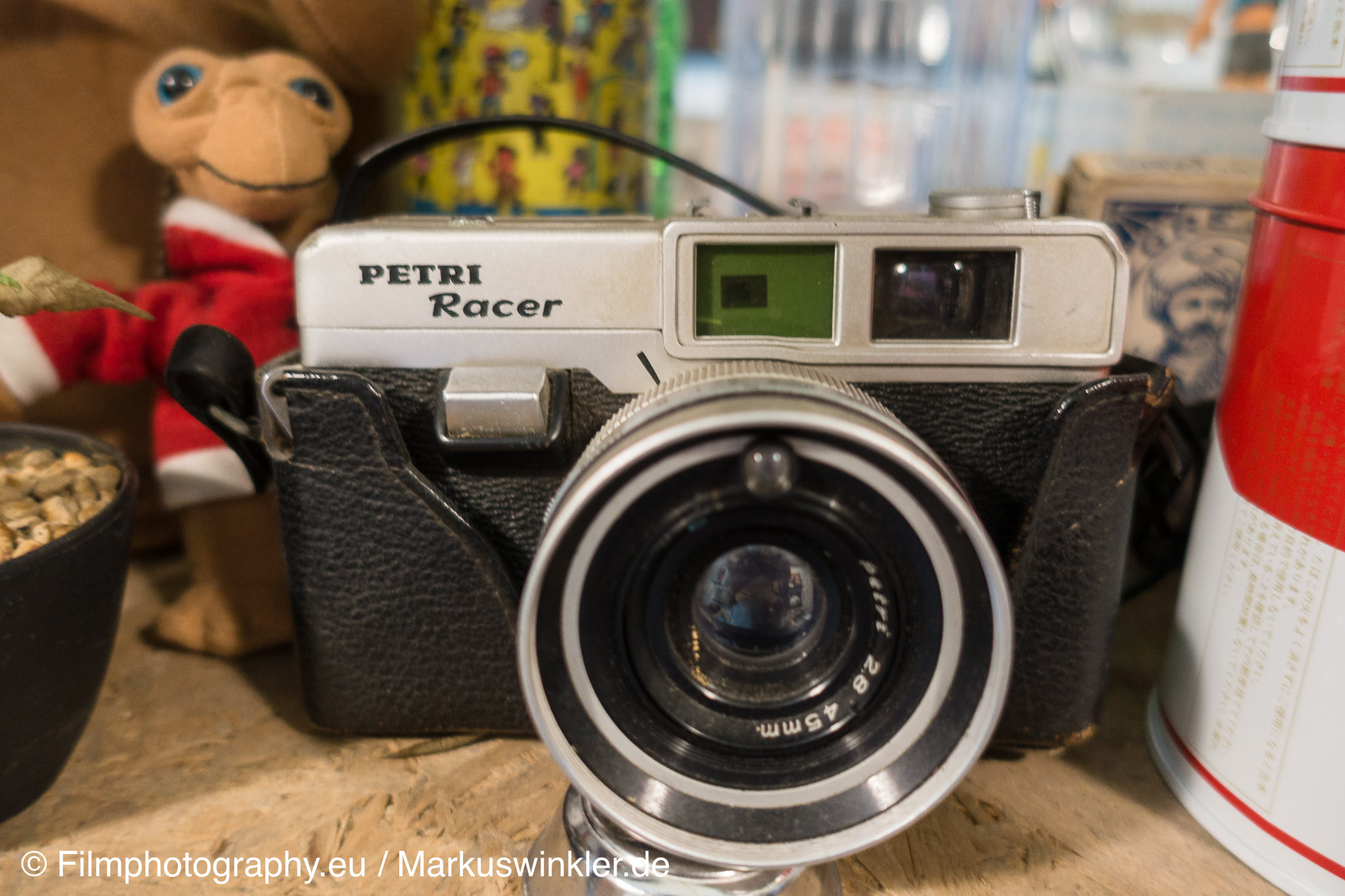
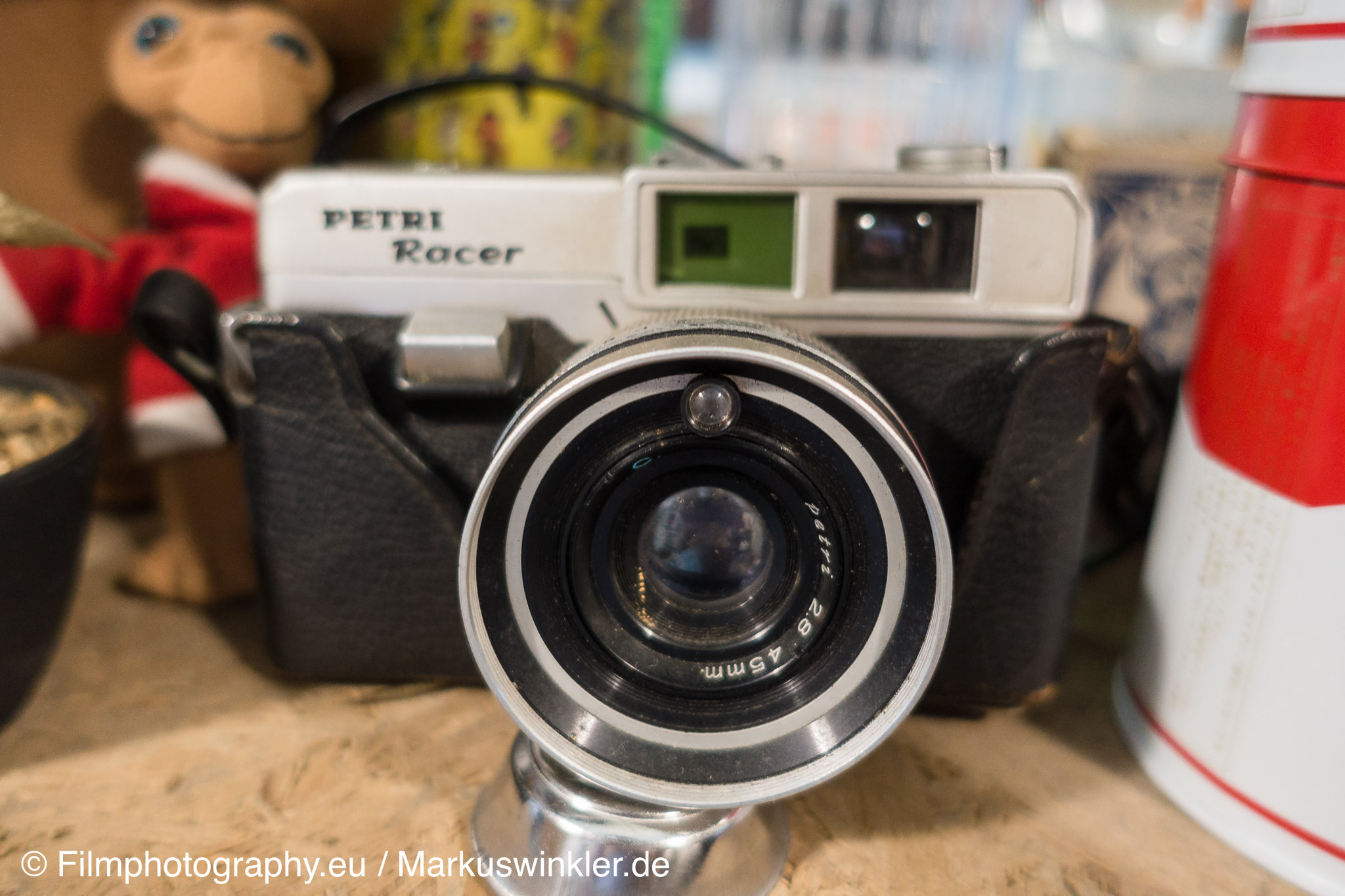
The Petri Racer is a camera from Petri. It was introduced in the mid-1960s. The viewfinder camera was produced in a factory in Japan.
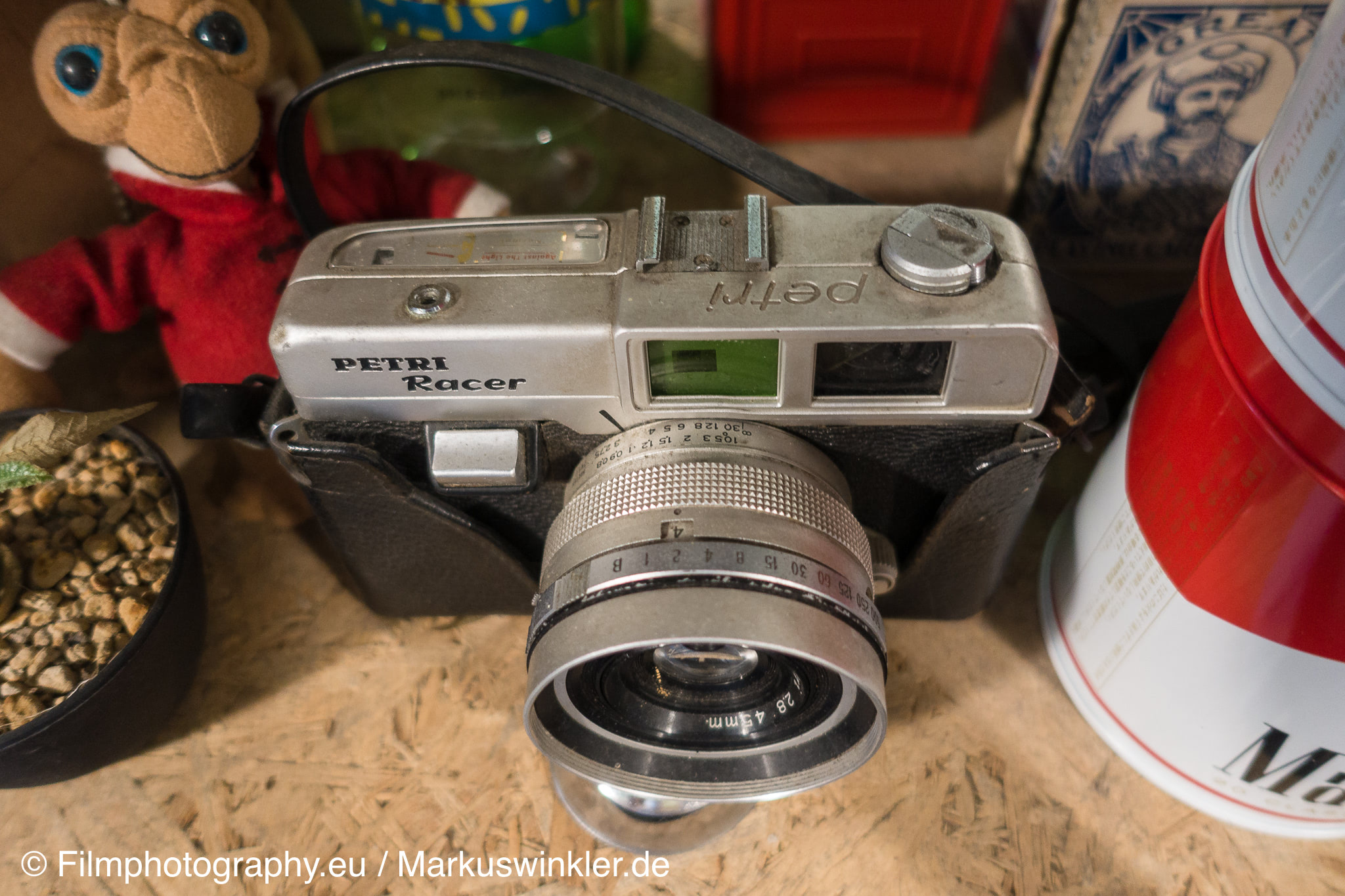
The camera comes with a fixed lens with a fixed focal length. The focal length is unchangeable and is 45 mm. The largest available aperture is f/2.8 and the smallest is f/16. Some models come with a maximum aperture of f/1.8. The camera does not have an autofocus system. Therefore, you have to focus by hand. The minimum distance to the subject is 80 cm.
The Petri Racer has a light meter. It is designed for films with a sensitivity of ISO 25 to ISO 800. The film speed is set manually. There is no automatic exposure. The exposure time can be set manually. The aperture is also freely selectable. The shutter speed can be set from 1/500 second to 1/2 second.
According to the manual, the Petri Racer measures 12.5 x 7.8 x 7.1 cm. It weighs 530 grams. A Mallory RM-625 battery is responsible for the power supply. A flash can be connected to the camera via cable. It can also be mounted on a tripod. For group pictures, there is a self-timer with a lead time of ten seconds.
Films for the Petri Racer
35 mm film is required for the Petri Racer. Films for this film format are still being produced and can be processed by most photo labs without any problems. Possible films for the Petri Racer that can still be bought today are the Kodak Gold 200* for colour photos and the Ilford FP4 Plus* for b/w images. Both films are well suited for everyday use and perform well in test reports. They deliver classic images that one expects from photos on film. Of course, there are other films that can be used with the Japanese camera.