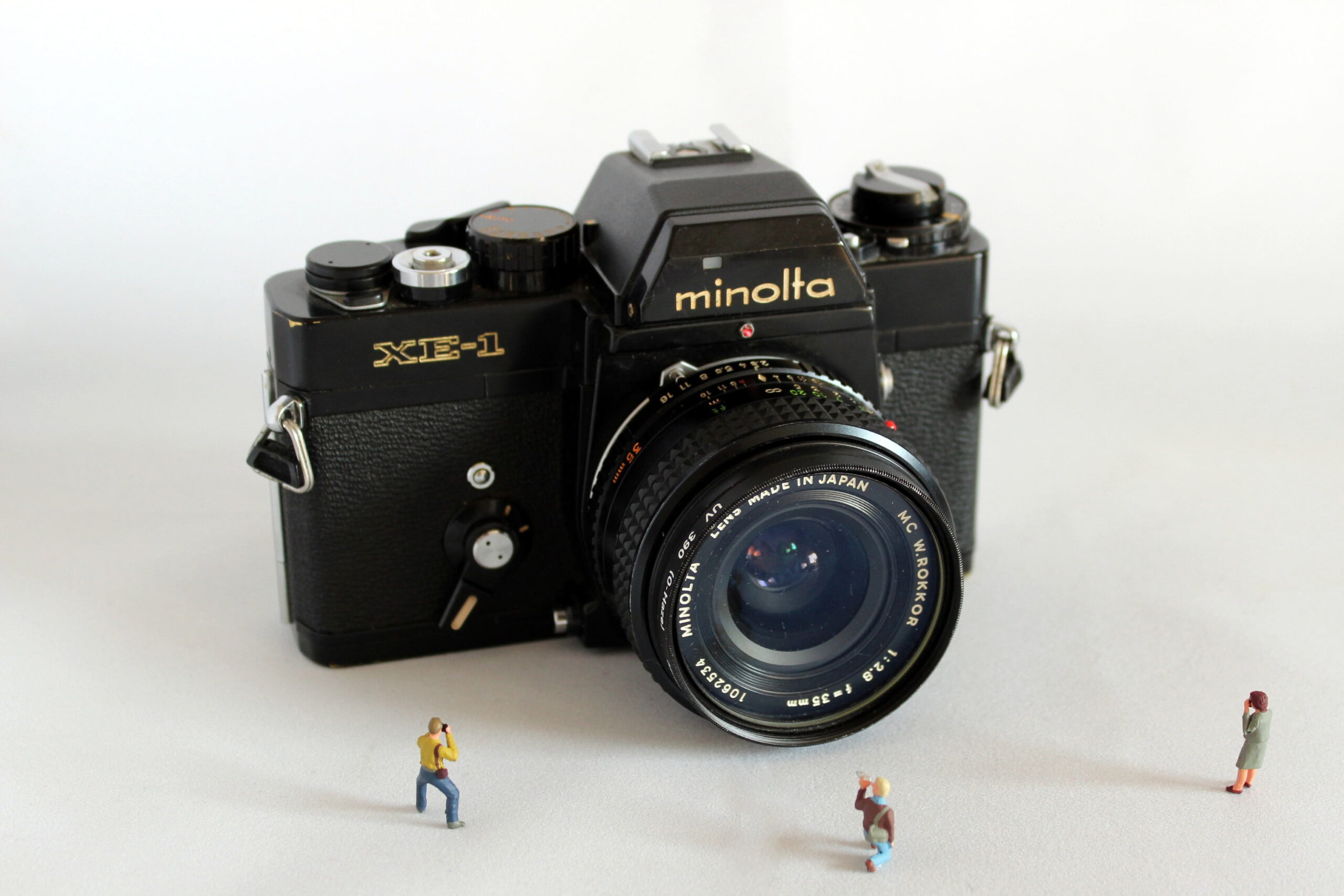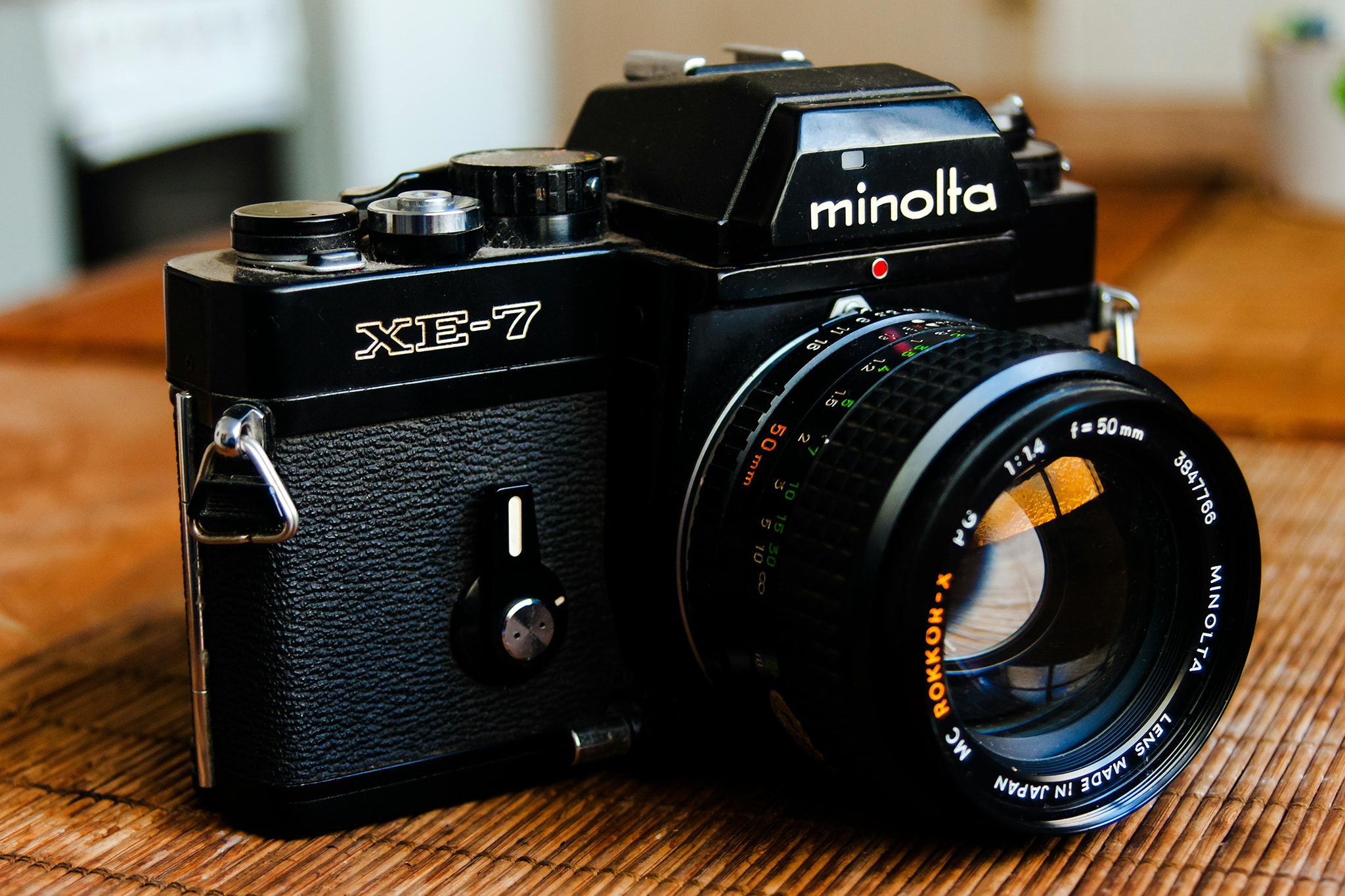
The Minolta XE-7 is a 35mm SLR camera. It was introduced in the 1970s and sold to photographers in North America. The model was produced in a factory in Japan. There, it could be purchased as the Minolta XE. In Europe, the model was available as the XE-1.
The lenses of the 35mm camera can be interchanged. It comes with a Minolta SR bayonet. Most often, the 35mm photo camera comes with the Minolta MC Rokkor-X 50mm f/1.7. Of course, there is a wide range of other lenses for this mount. You will have to manually focus the lens on the subject you want to shoot.
The Minolta XE-7 has a light meter. It is designed for film from ISO 12 to ISO 3200, and the correct exposure is measured by the SLR lens. The shutter speed and aperture can be selected by the photographer. However, there is also an automatic exposure mode. In this case, one selects the aperture and the shutter speed is set automatically.
The shutter supports shutter speeds from 1/1000 second to 4 seconds. There is also a Bulb mode for long exposures. It is advisable to use a cable release and mount the camera on a tripod.
An external flash can be connected via the hot shoe. There is also a PC flash connection. The photo camera has a built-in self-timer. Depending on how far you move the lever, the longer the lead time before the picture is taken. The camera also has a multiple exposure mode.
The camera body measures 14.8 x 9.7 x 6.1 cm and weighs 775 grams without film and lens. The camera requires two 1.5 V silver oxide batteries.
Films for the Minolta XE-7
What is needed for the Minolta XE-7 is photographic film. Films for the 35mm format are used. This type of film is still produced and can be processed by most photo labs without any problems. One option for the Japanese SLR for color images is the Kodak Portra 160* and the Ilford FP4 Plus* for black and white photos. There are, of course, other manufacturers of 35mm film on the market.
The negatives of the Minolta XE-7 have a size of 24 mm x 36 mm. So normally 36 pictures fit on one film roll. The film transport is mechanical. The return transport of the film material into the cartridge is also done by hand.