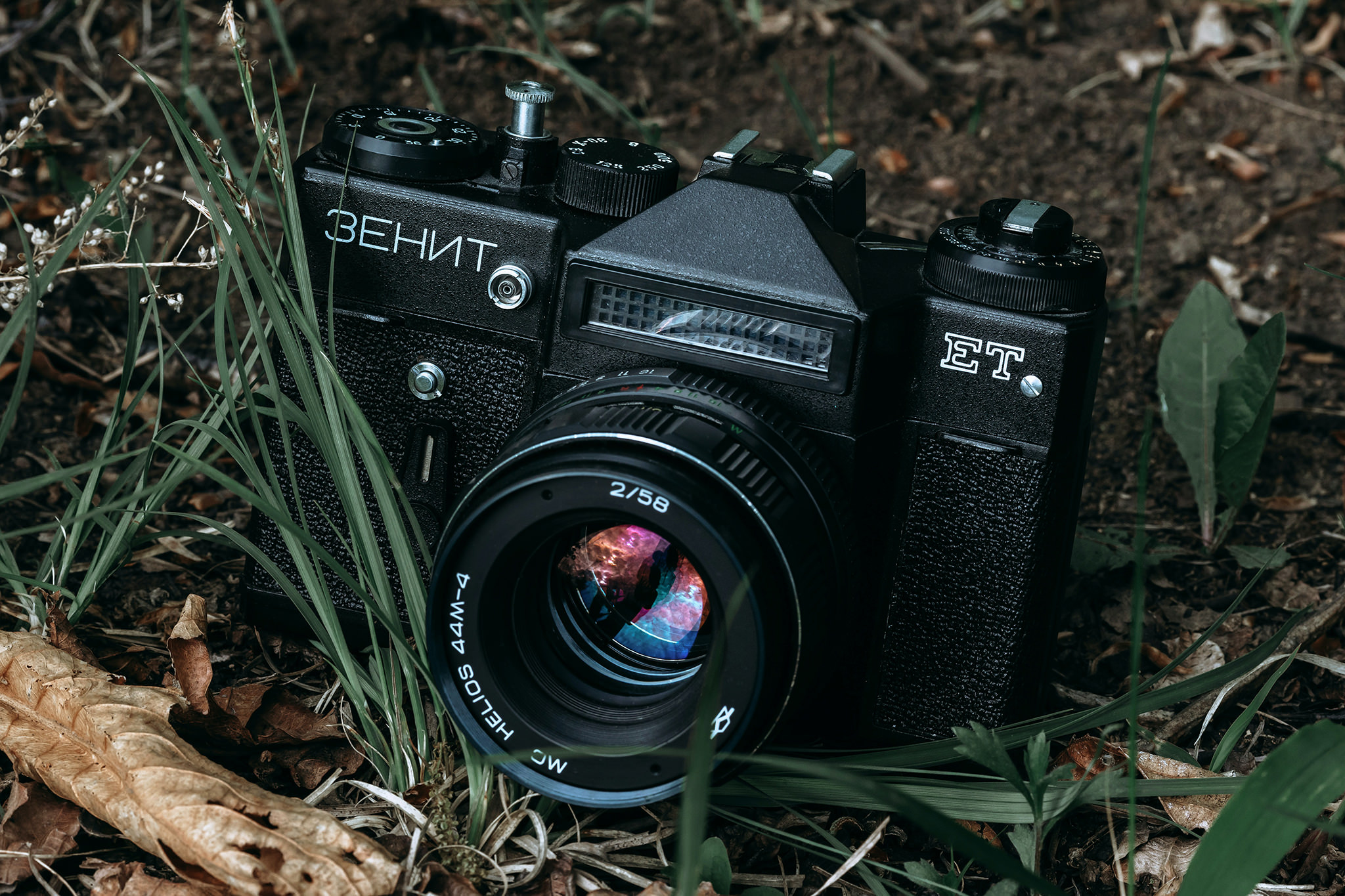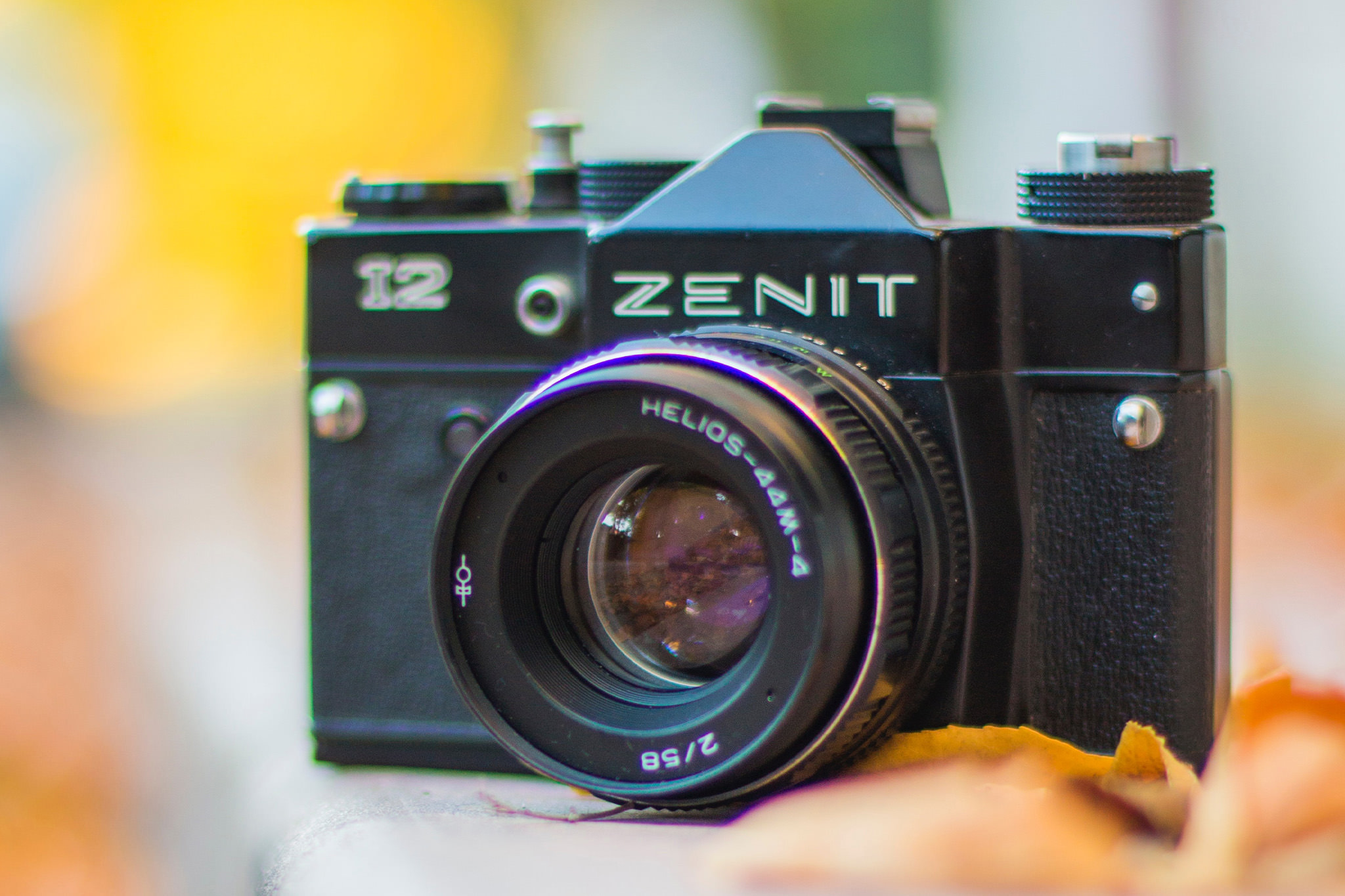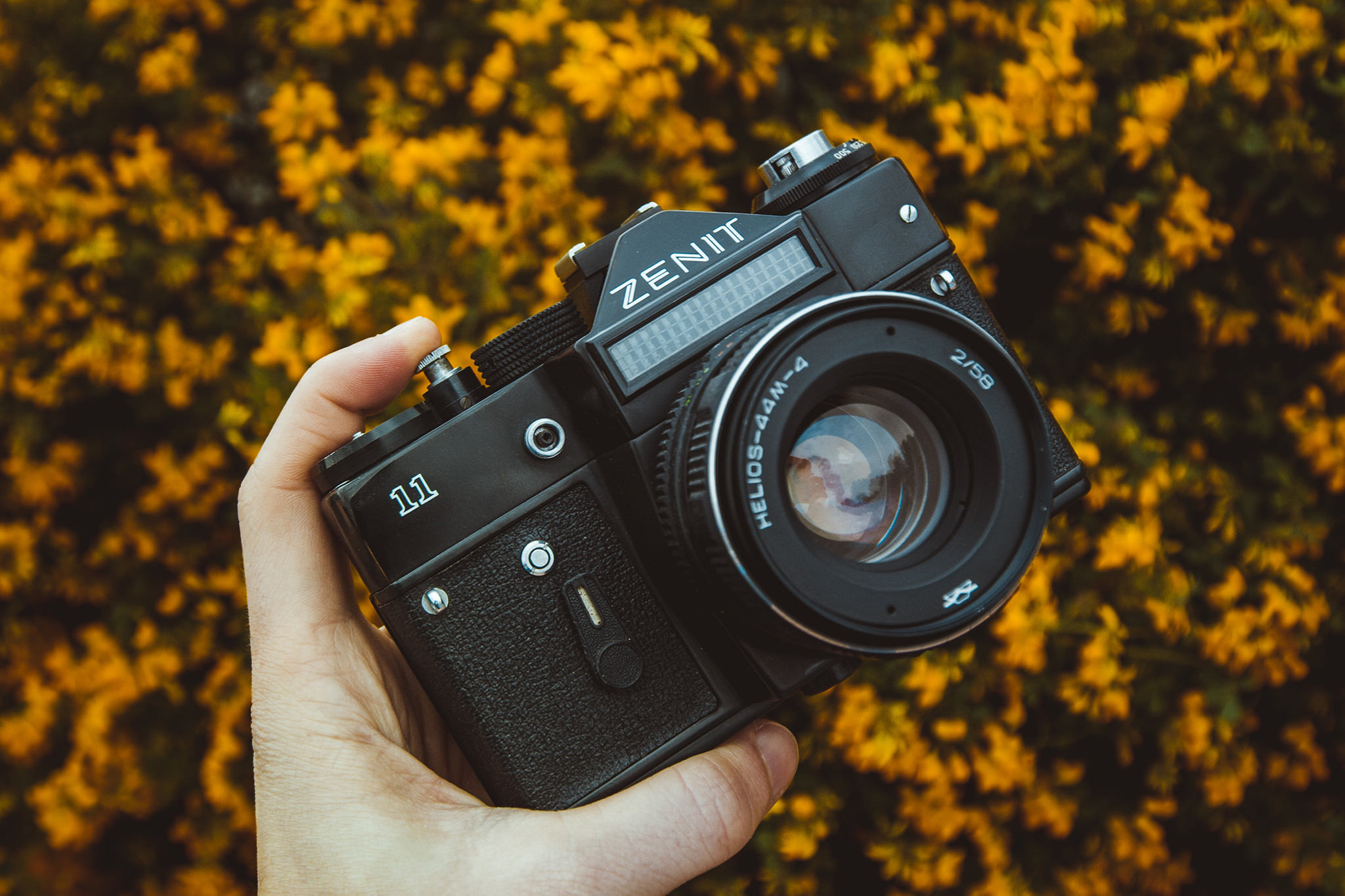
The Cosmorex SE model represents a proven analog SLR camera that was originally introduced to the market under the name Zenit. Their production facility was in the former Soviet Union, more precisely in the KMZ factory. This renowned institution promoted the product under a special name "Zenit EM".
A significant feature of the Cosmorex SE model is the lack of an autofocus function, which makes manual focusing necessary. Its flexibility is reflected in the ability to use different lenses using an M42 thread, a standardized and manufacturer-independent connection for interchangeable lenses. This thread followed as a further development of the M39 thread and was produced by prominent companies such as Pentax, Pentacon, Zeiss and of course KMZ.
This robust camera integrates a light meter that enables through-the-lens exposure metering (TTL), supported by a selenium light meter. This particular type of light meter does not require batteries, but may become inoperable after a period of use. It offers photographers the freedom to adjust aperture and exposure time as desired, with time options ranging from 1/500 to 1/30 of a second and aperture settings varying depending on the lens chosen.
The Cosmorex SE features a bulb function that allows variable long exposures. It also allows external flash units to be connected via a PC flash socket. For increased stability and comfort, the camera can be mounted on a tripod and also offers a cable release connection and a self-timer.
As a fully mechanical tool, the Cosmorex SE is completely independent of batteries, making it an ideal companion when traveling and vacationing.
Film options for the Cosmorex SE
The Cosmorex SE works precisely with 35mm films, especially 35mm films, which can still be purchased from various manufacturers. Recommended options include the Kodak Ultramax 400* for color photography and the AgfaPhoto APX 400* for black and white photography, both of which guarantee solid results when combined with this SLR camera.
The color film is processed using the widely used C-41 process, while the black and white film is processed in a suitable black and white developer. The negative formats measure 24mm x 36mm, and standard 135-36 film typically holds 36 exposures. It is up to the photographer to advance the film manually to enable the next image capture.