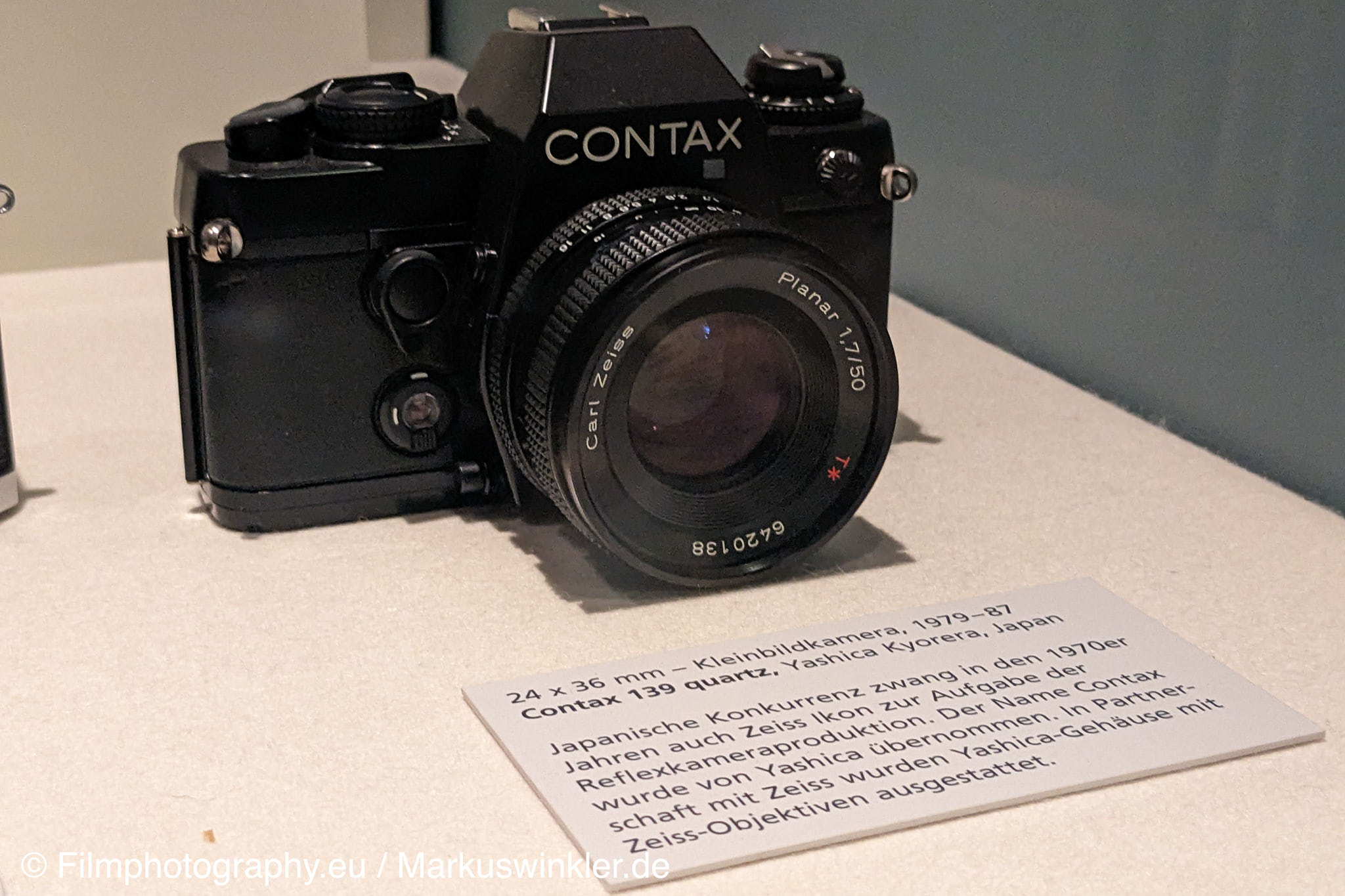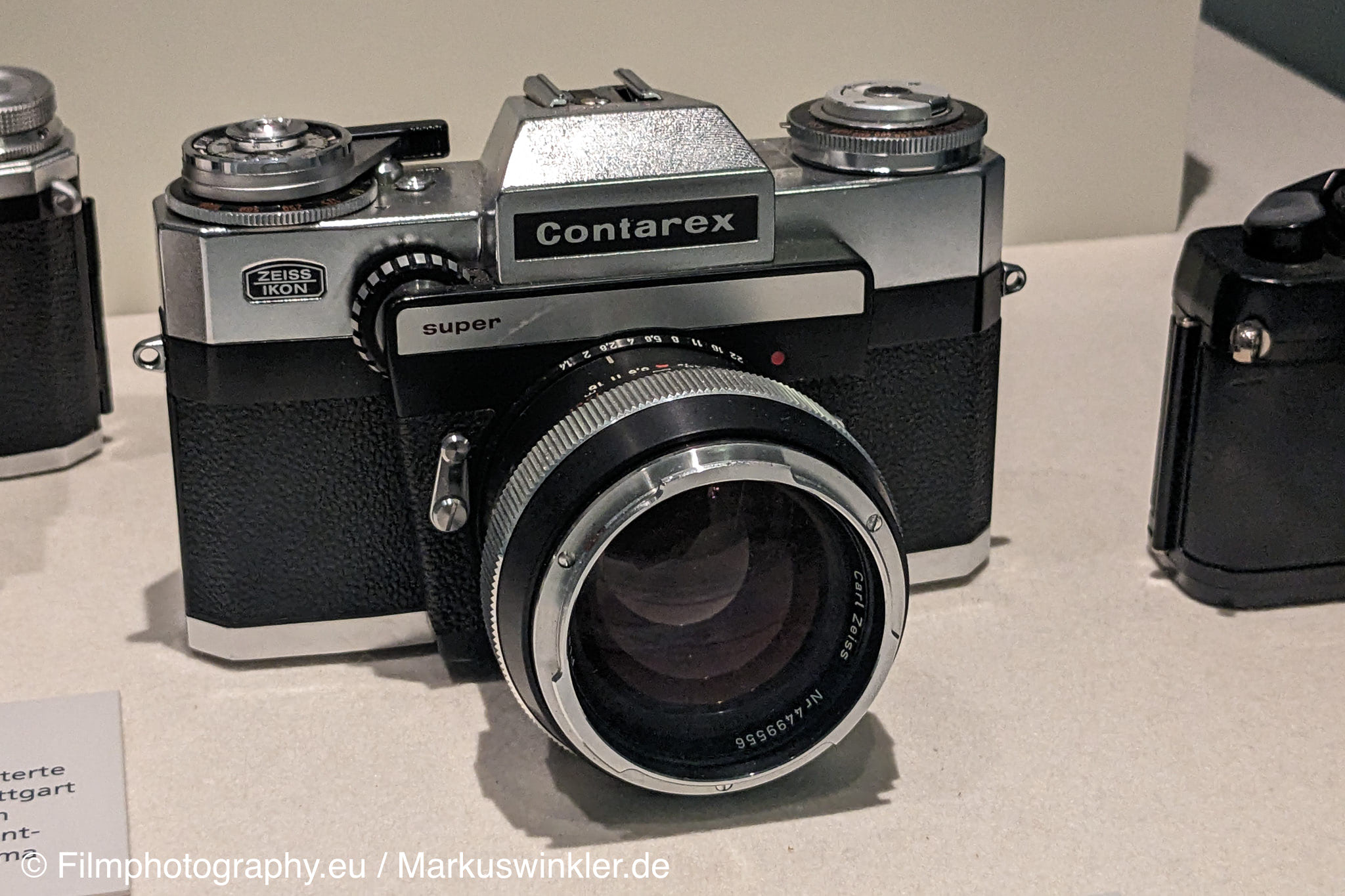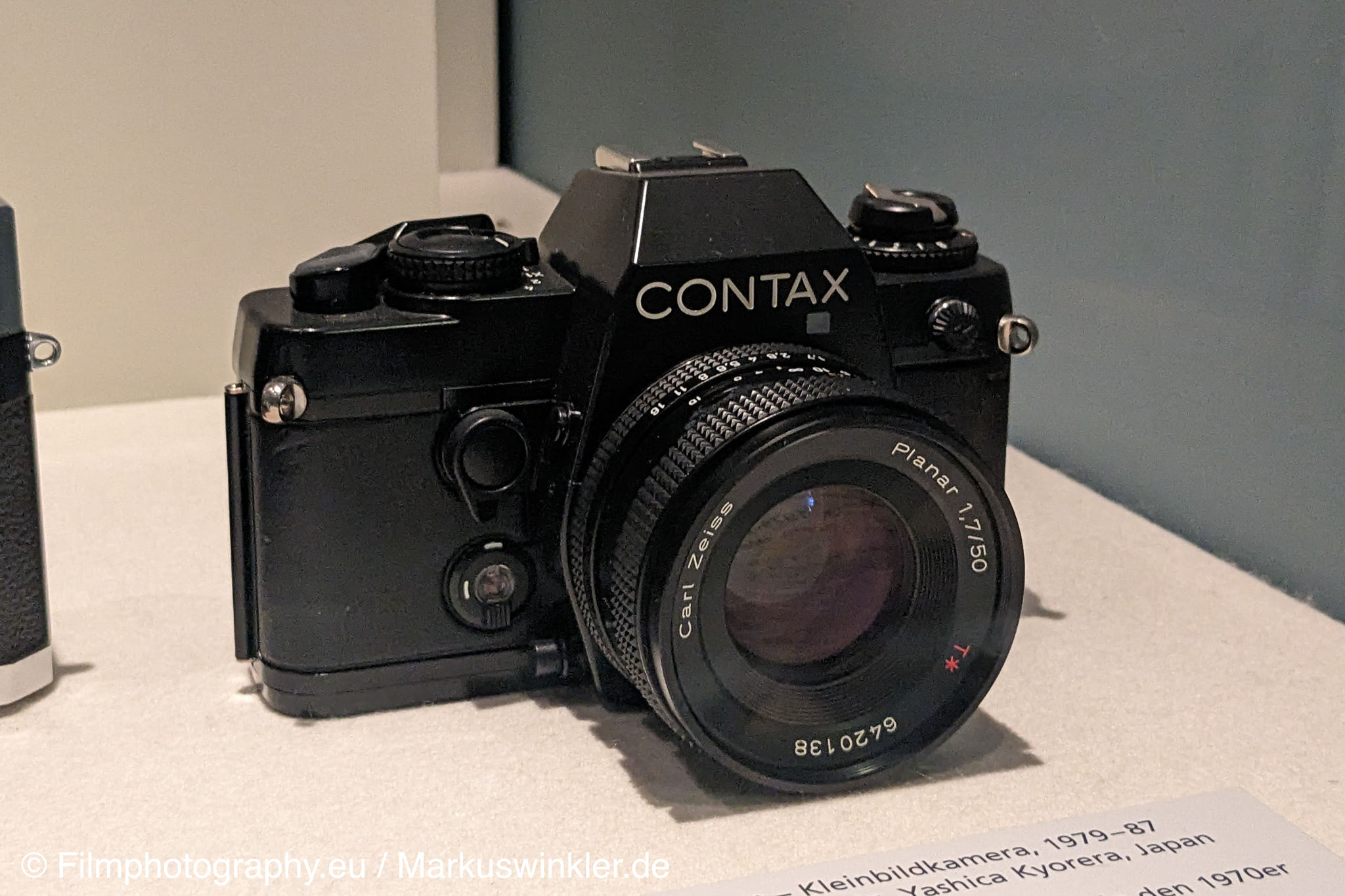
The Contax 139 Quartz is an analog 35mm SLR camera for the 35 mm film format. The model appeared on the market in 1979 and was created as part of the collaboration between Yashica and Carl Zeiss. The design of the camera body was carried out by Porsche Design.
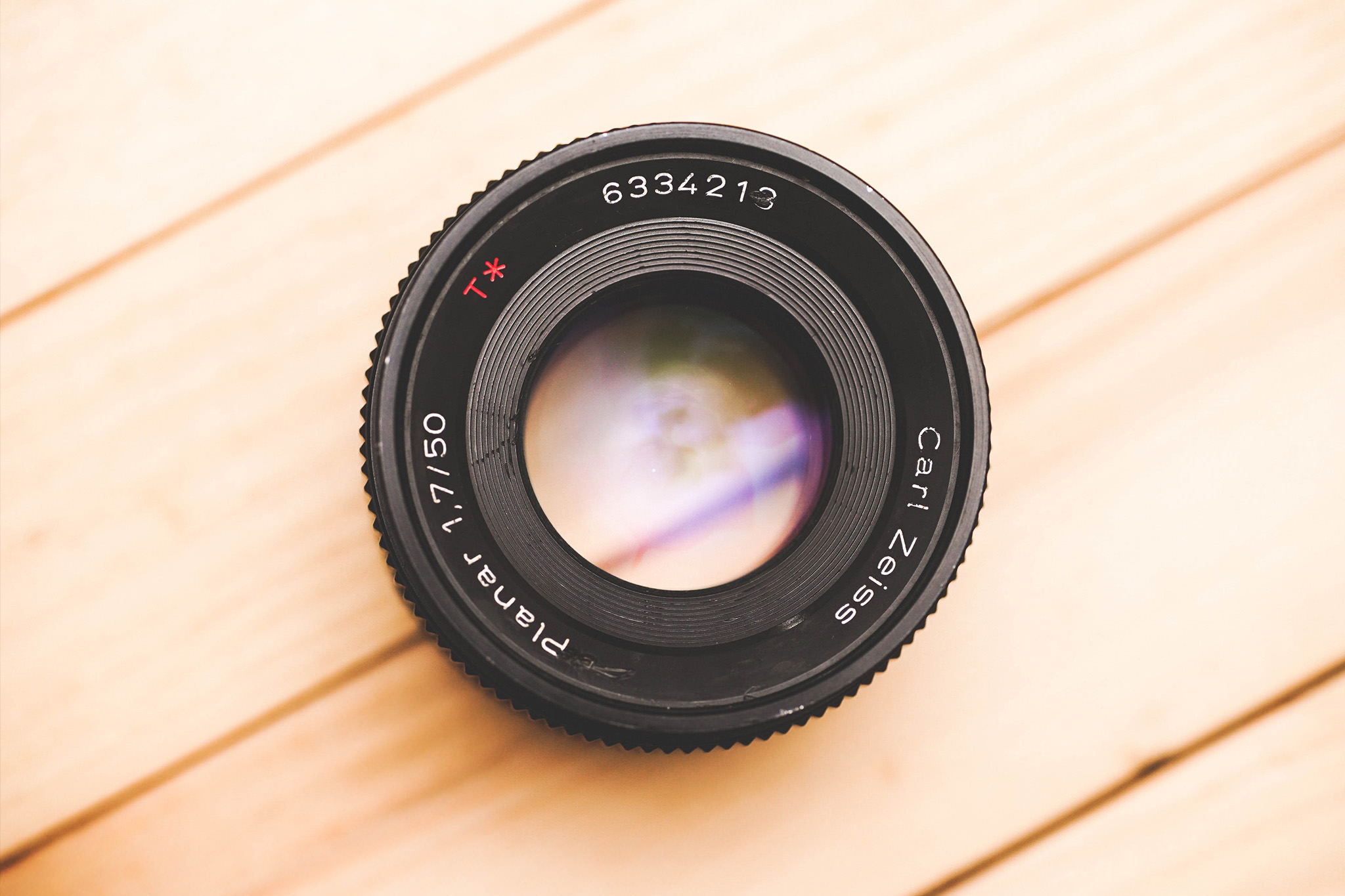
The body features the Contax-Yashica mount, which allows the use of Carl Zeiss T* lenses and Yashica lenses. As standard lenses at launch, the Planar T* 50 mm with f/1.4 aperture and the Planar T* 50 mm with f/1.7 aperture were offered, among others.
The exposure time is controlled by a vertically traveling metal-blade slit shutter. An integrated quartz crystal serves as the clock generator for the release sequences and time control. In aperture-priority auto mode, the electronics continuously adjust the shutter speed from 1/1000 second to 11 seconds.
In manual operation, fixed shutter speeds from 1/1000 second to 1 second as well as setting B for long exposures can be selected. The release button works electromagnetically. On the side of the body there is a socket for electronic cable releases as well as infrared and radio receivers.
The exposure metering is done through the lens at full aperture using a silicon photodiode with center-weighted characteristics. With ISO 100 and a lens with f/1.4 aperture, the metering range covers EV 0 to EV 18. The adjustable ISO range spans from ISO 12 to ISO 3200.
For manual adjustments, the camera has an exposure compensation dial from +2 to -2 EV. On the front there is a lever for exposure memory lock, which can be locked for continuous exposure value acquisition. A button on the front of the body activates the exposure display for 10 seconds.
An integrated release button on the exposure compensation dial enables multiple exposures on the same frame.
The viewfinder is designed as a fixed roof pentaprism with silver coating. It shows 95 percent of the actual image area and offers a magnification of 0.86x with a 50 mm standard lens. The focusing screen includes a horizontally split-image rangefinder, a microprism ring, and a surrounding matte field. At the top of the viewfinder, the selected aperture is displayed through an optical window. Along the right edge of the viewfinder, an LED bar indicates the shutter speed.
In manual mode, a blinking LED shows the selected speed and a steady LED indicates the recommended speed. A green LED serves as a ready and control indicator for dedicated system flash units. When the battery voltage drops, the blinking frequency of the LEDs halves from 4 Hz to 2 Hz.
The flash system enables direct TTL light metering at the film plane via a separate photosensor in the camera base. When using compatible flash units from the Contax TLA series, the output is automatically controlled through the internal metering.
As soon as the flash unit is ready, the camera automatically switches to the sync speed of 1/100 second in auto mode. The usable ISO range for TTL flash photography is from ISO 25 to ISO 800. For standard flash units, a center contact on the accessory shoe and a PC flash terminal are available. Manual flash units can be synchronized at shutter speeds of 1/60 second or slower.
Film transport is achieved via a mechanical rapid advance lever with a 135-degree throw and a 30-degree standby position. The frame counter adds and resets to the starting point when the back cover is opened.
The electronic self-timer is quartz-controlled with a 10-second delay, and a red lamp on the front of the body blinks faster 2 seconds before release. At the lens mount base there is a button for visual depth-of-field preview. The back cover is removable and can be replaced with the data back D-6. On the bottom of the body, the Winder 139 can be attached, which advances film at up to 2 frames per second.
Power is supplied by 2 silver oxide batteries with 1.5 volts each, such as SR44, or equivalent alkaline cells of type LR44 (eBay / Amazon*). Without electrical voltage, the shutter will not release.
The camera body measures 135 mm in width, 85.5 mm in height, and 50 mm in depth, weighing 500 grams without the lens. On the back of the body there is a memo holder for film box ends with an integrated table for comparing ASA and DIN values.