Which of the countless SX-70 cameras should I choose?
Once you have decided on an instant camera and want a camera for the SX-70 format, you have already narrowed down the circle of possibilities considerably. Nevertheless, there are still many left, and in this article I would like to try to help with the decision.
Generally, SX-70 cameras can be divided into two camps: folding and non-folding models.
The Polaroid SX-70 is probably the best-known camera for this format. Some claim it is the best instant camera.
The Polaroid SX-70 is a single-lens reflex camera that can be folded up after taking a picture. This gives it a small pack size for the size of the film format.
The instant camera sets the aperture and shutter speed automatically, but focusing is manual. The play with depth of field when focusing manually is a lot of fun with the SX-70.
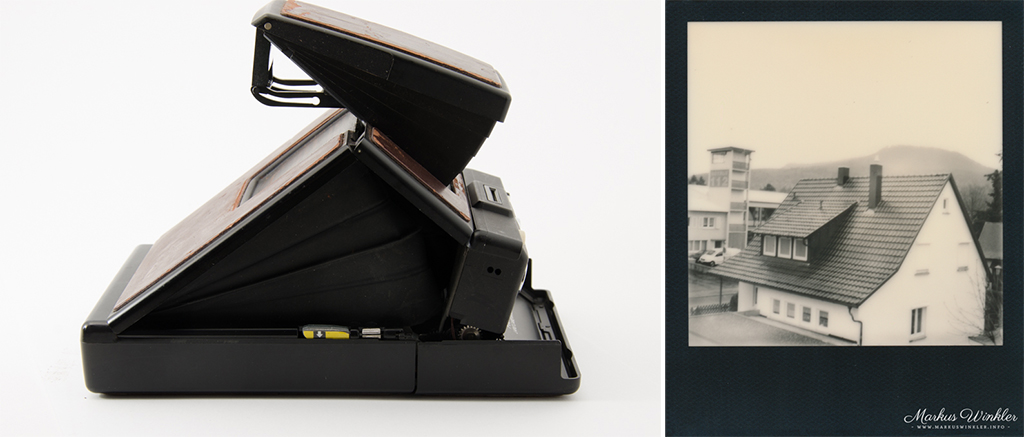
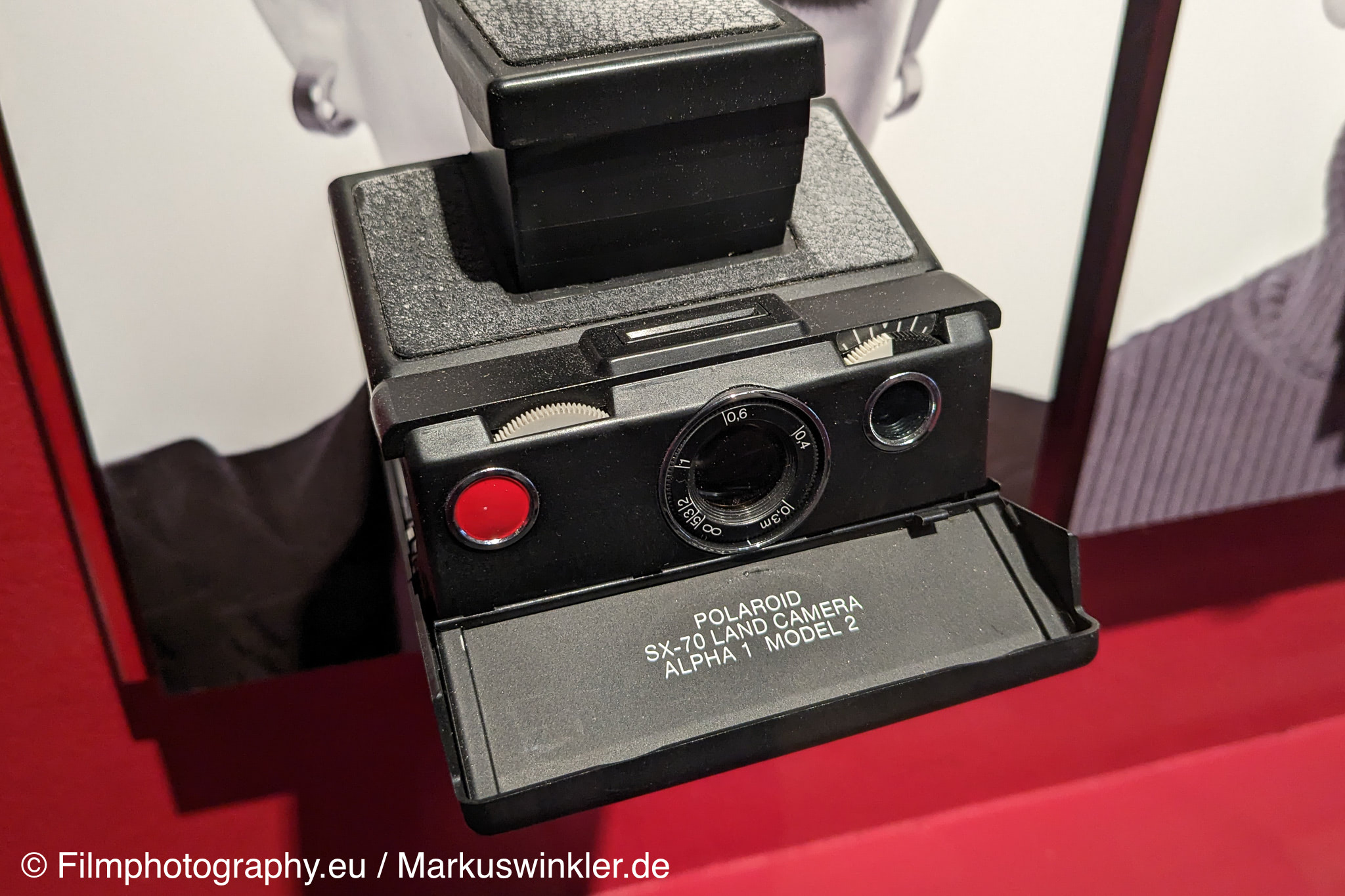
There are several models of the Polaroid SX-70 that differ in minor details, but they are identical in their main features. Before buying, you should of course inform yourself exactly about the specific model.
The two major exceptions are the Polaroid SX-70 Model 3 and the Polaroid SX-70 Sonar OneStep.
The Polaroid SX-70 Model 3 is identical in construction to the other models, but it is not really an SLR. You do not look directly through the lens, but through a simple viewfinder. Focusing must therefore be done using the distance markings around the lens. This loses much of what makes the Polaroid SX-70 special, but it is usually available at a lower price.
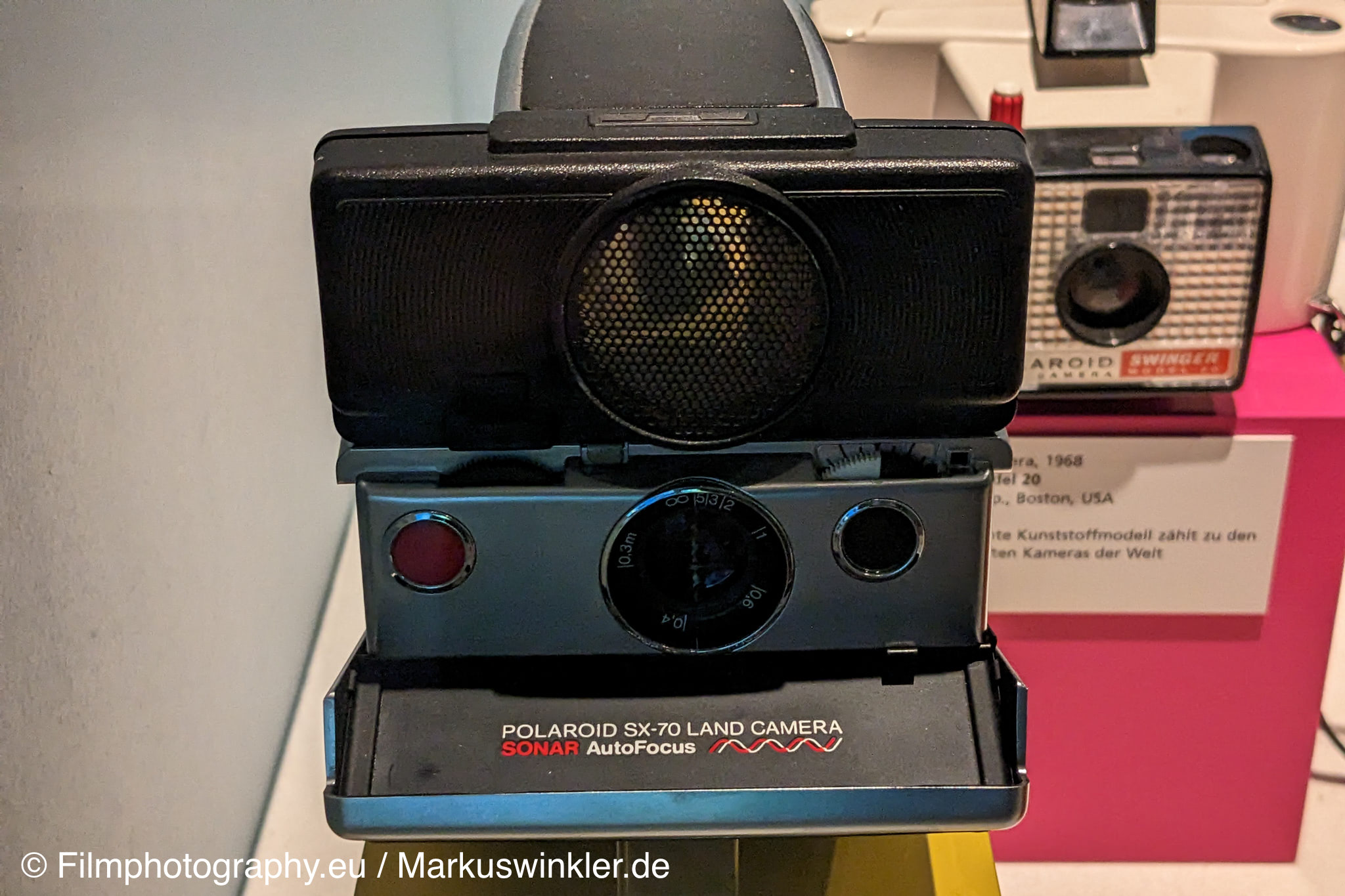
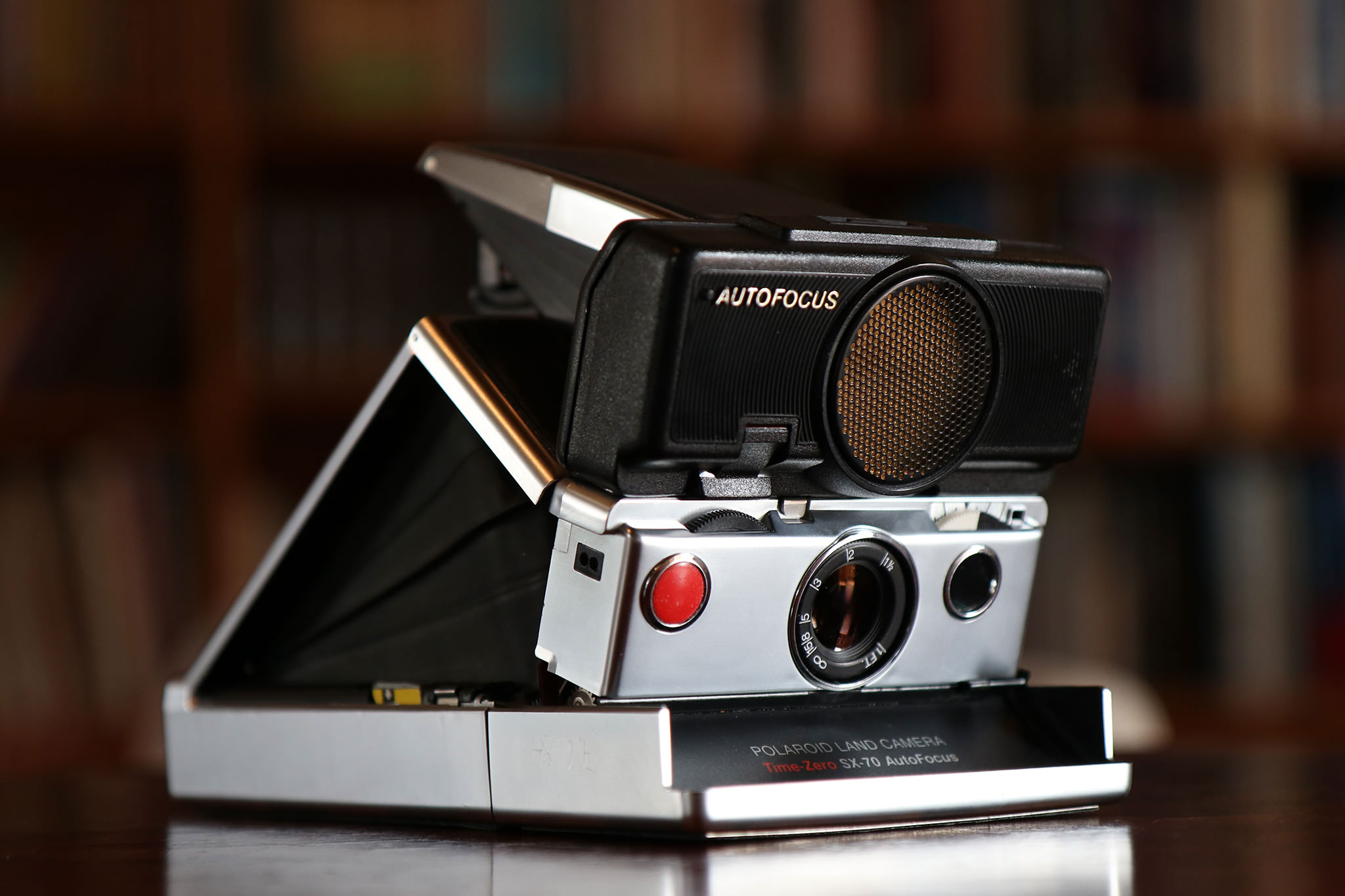
The Polaroid SX-70 Sonar OneStep (or TimeZero SX-70 AutoFocus, TimeZero SX-70 AutoFocus Model 2) is equipped with autofocus. The camera emits sound waves that are reflected by the subject and return to the camera. This determines the distance and sets it directly.
The advantage of this autofocus system is that it does not depend on light and therefore works even without light. A disadvantage, for example, is that it has problems focusing through glass panes. However, the mentioned models offer the option of focusing completely manually.
The non-folding models, who would have thought, cannot be folded. Therefore, they are naturally not as compact as the Polaroid SX-70. The advantages from my point of view are that they are easy to use, inexpensive, and because they are quite simple in construction, they are also less prone to defects.
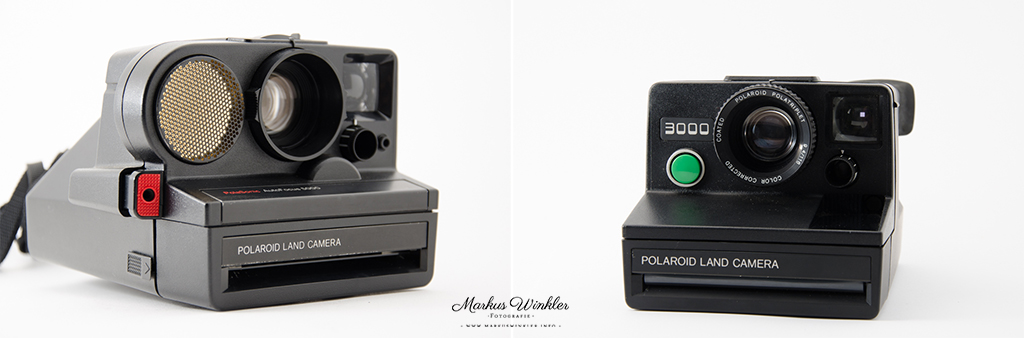
The Polaroid 1000, 1500, 500, Revue 1001, Polaroid OneStep, Supercolor 1000, Instant 1000, and other versions of these are the simplest models. You can do nothing more than look through the viewfinder and press the shutter button. The rest, like setting aperture and shutter speed, is done by the camera itself.
With the Polaroid 2000 / Polaroid Pronto!, you can focus manually, but the distance must be estimated. The Polaroid 3000 / Polaroid Pronto! RF makes this process easier with the help of a rangefinder.
The "most modern" models are the Polaroid Supercolor AutoFocus 3500, Sonar AutoFocus 5000, Polaroid Pronto! Sonar OneStep/TimeZero Pronto AF. These are equipped with autofocus (sonar).
Conclusion
Which camera should you buy now? The non-folding models are nice, but not the cream of the crop. They look good, are inexpensive, and do their job, but they are not much different in image quality and usability from the Polaroid 600 cameras. The 600 models also have the advantage of higher film sensitivity and usually a built-in flash.
I would simply recommend a folding Polaroid SX-70 for this film format. It is not only an impressive piece of technology and a part of history, but you can also take great pictures with it. If you photograph a lot of moving subjects, like children, I would recommend one of the models with autofocus.
Notes
Films
The great thing about SX-70 cameras is that you can also use films for Polaroid 600 cameras. So if you have a camera for both formats, you can simply buy 600 films* and don't necessarily need the special SX-70 films*.
The "catch" is that the 600 films have a higher sensitivity than the SX-70 films.
However, using an ND filter placed in front of the lens or over the film is no longer an obstacle.
Impossible offers the latter, where a dark foil is simply "placed" over the film cassette before inserting the film into the camera, adjusting the sensitivity accordingly.
The advantage over a filter screwed in front of the lens is that the view through the viewfinder on SX-70 SLRs is not darkened, and you can still use other filters, such as a close-up filter.
Flash
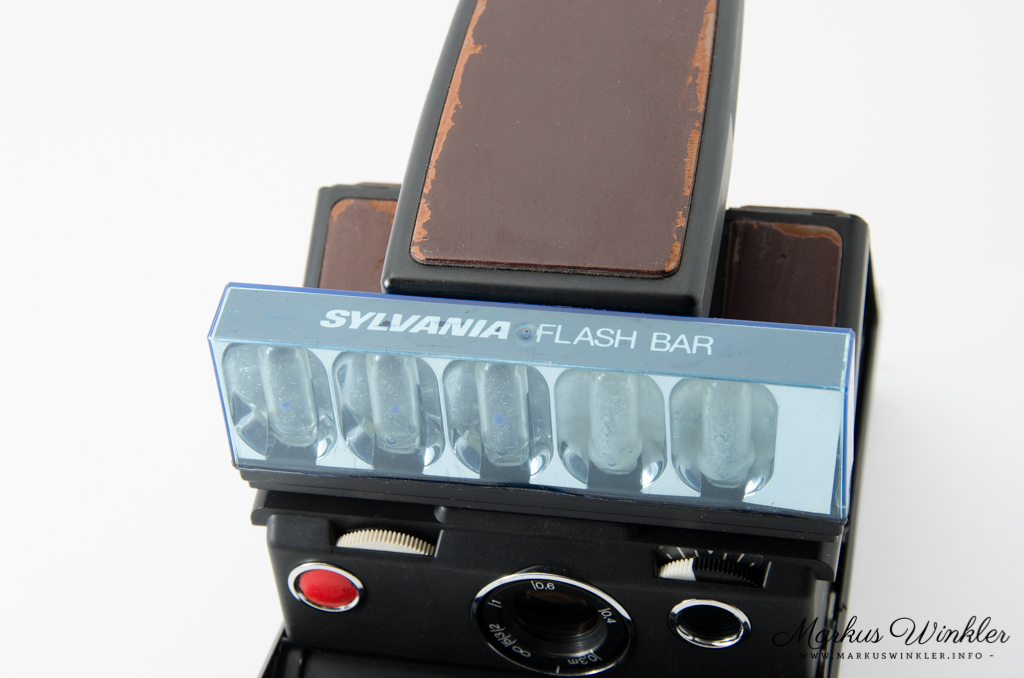
All mentioned cameras have a Flashbar socket. You insert Flash Bars into this socket, which allow you to flash ten times and then need to be replaced. They are no longer manufactured, so it is advisable to look for a reusable flash unit. For example, a used Polatronic 1 for the 1000 series cameras. Or you can get the Impossible Flash Bar by Mint for your instant camera, which you can buy new.
Batteries
You don't have to worry about power supply. The batteries for Polaroid SX-70 cameras are located in the film cassette. With each new cassette, you also get a new battery.