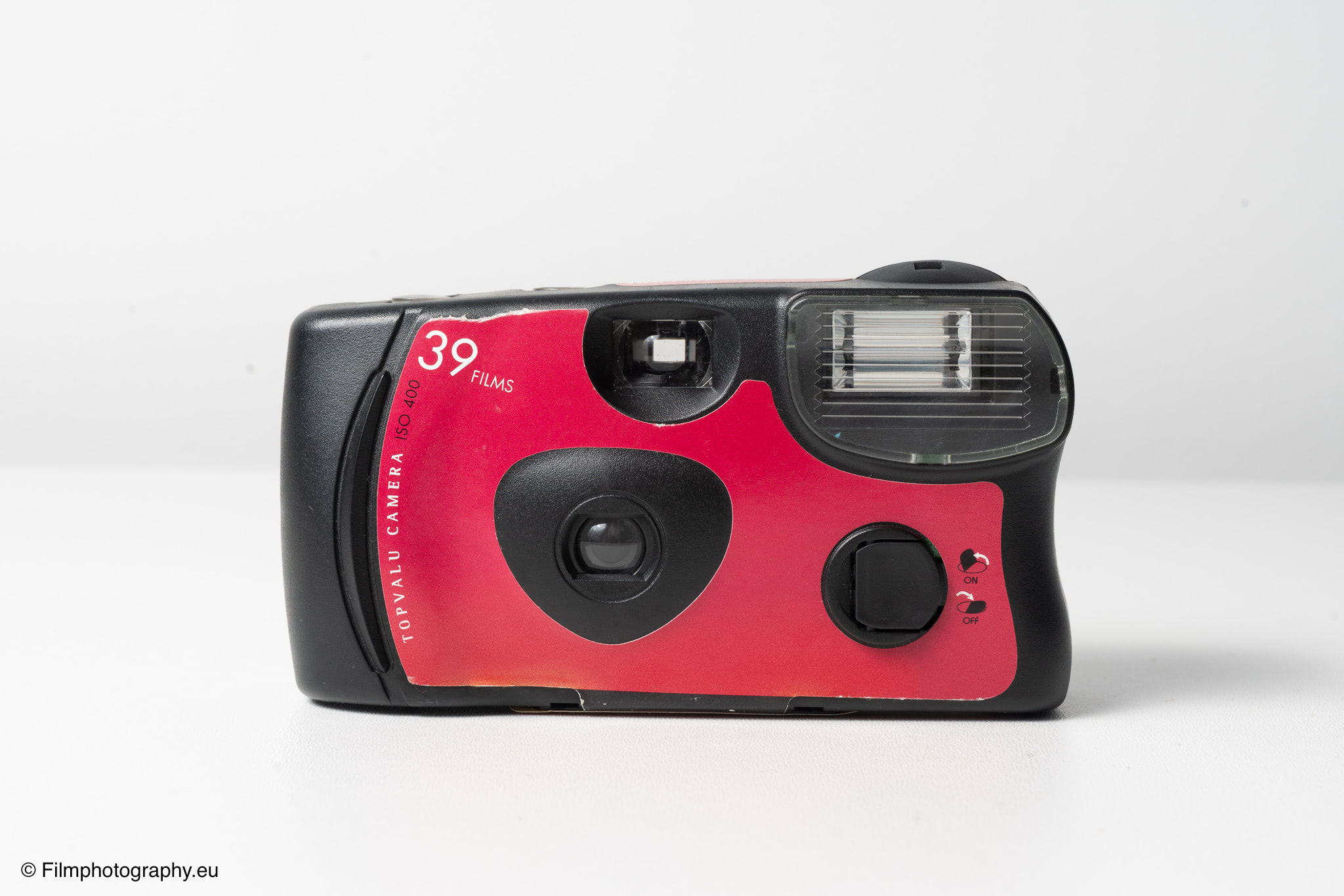
The Topvalu disposable camera (officially sold in Japan under the name Topvalu Tsukaikiri Kamera) is an analog 35mm disposable camera from the Japanese retail giant Aeon. It was offered under the company's own house brand Topvalu and distributed through the group's extensive supermarket network and the then-affiliated Jusco stores. The model offered consumers a cost-effective way to take everyday snapshots and vacation photos.
Features
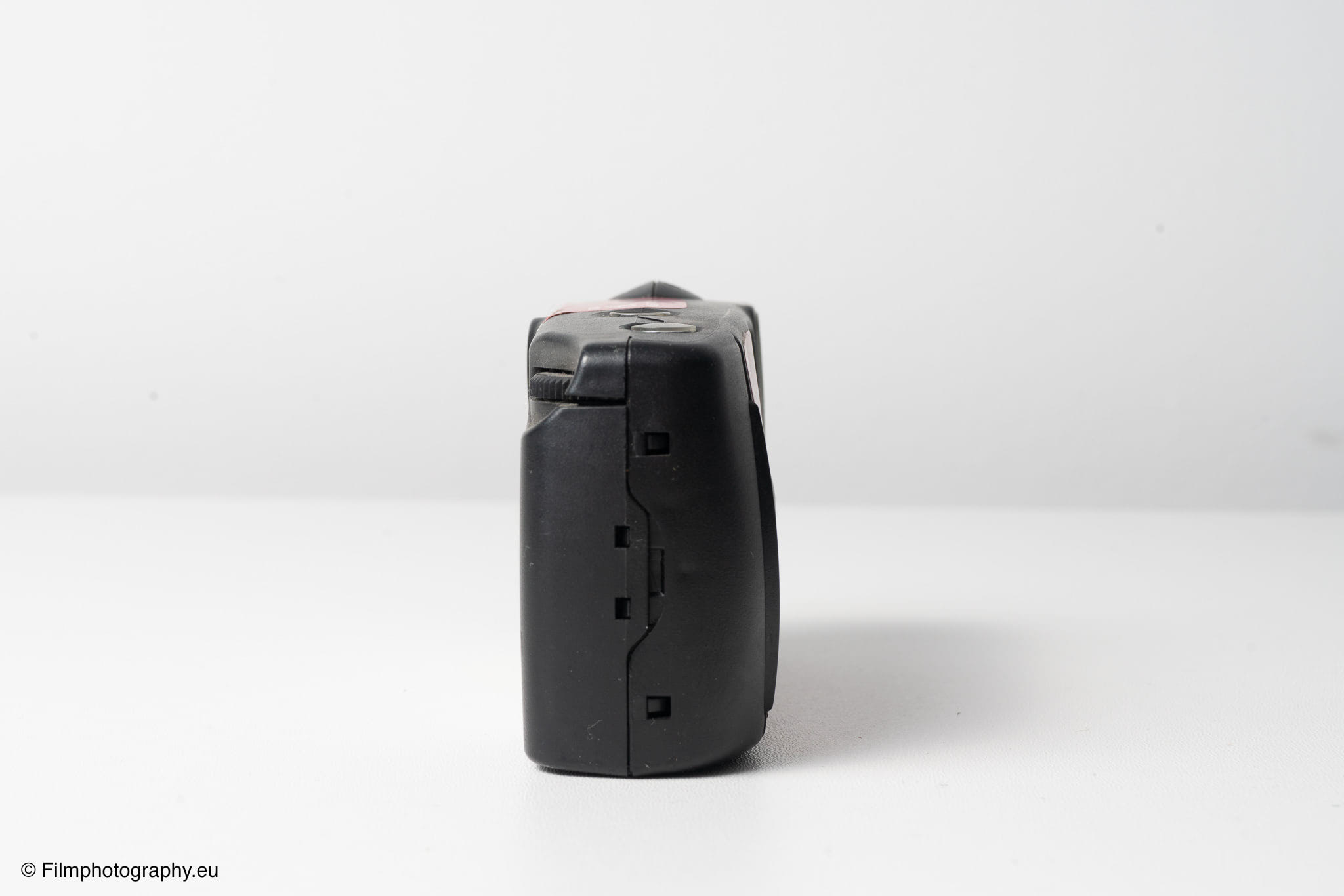
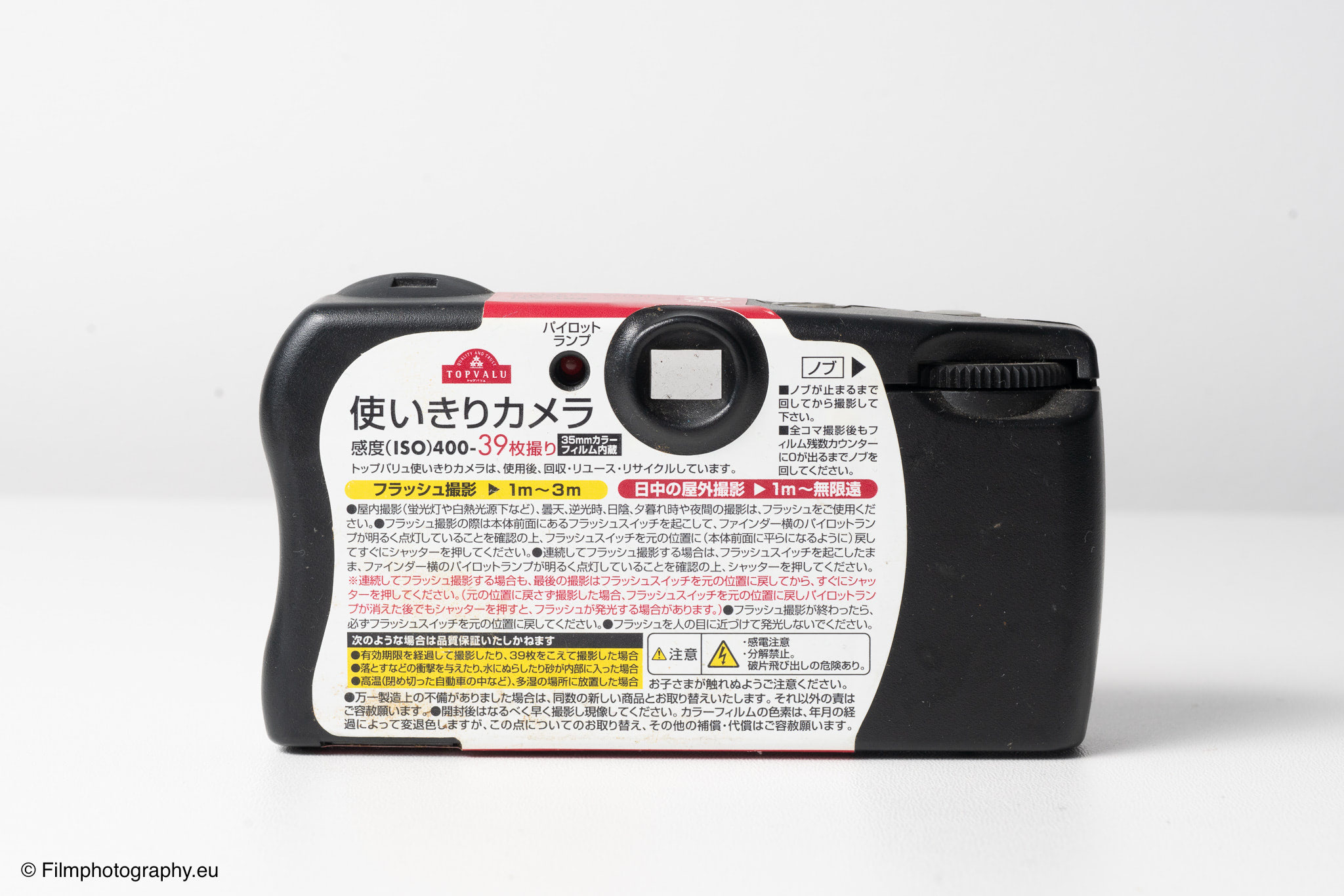
The technical construction of the camera focused on simple everyday handling. The body was equipped with a fixed plastic lens. Since it was a fixed-focus lens, manual focusing adjustments were completely unnecessary. Subjects at a distance of about one meter to infinity were automatically rendered sharp. Precise focus adjustment was not possible due to the design.
The camera was designed without a light meter. Aperture and shutter speed remained factory-set and unchangeable.
To enable indoor shots or in difficult lighting conditions, the camera had a built-in flash that could be activated via a switch on the front of the body. The necessary power came from an internal battery.
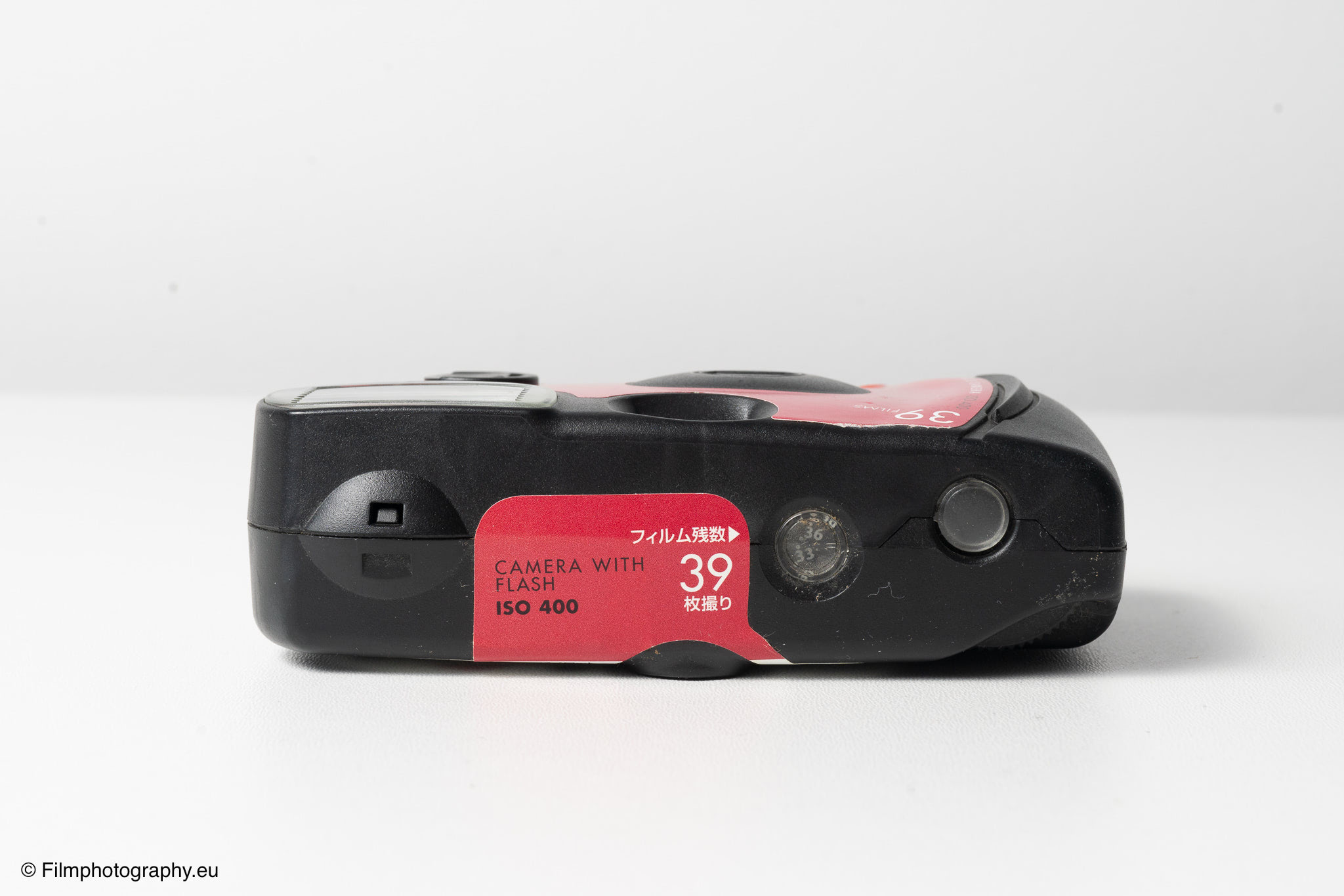
The recording medium was a color negative film with an ISO 400 sensitivity, standardly designed for 27 exposures, although variants with 39 exposures were also occasionally offered.
Background and OEM Manufacturing
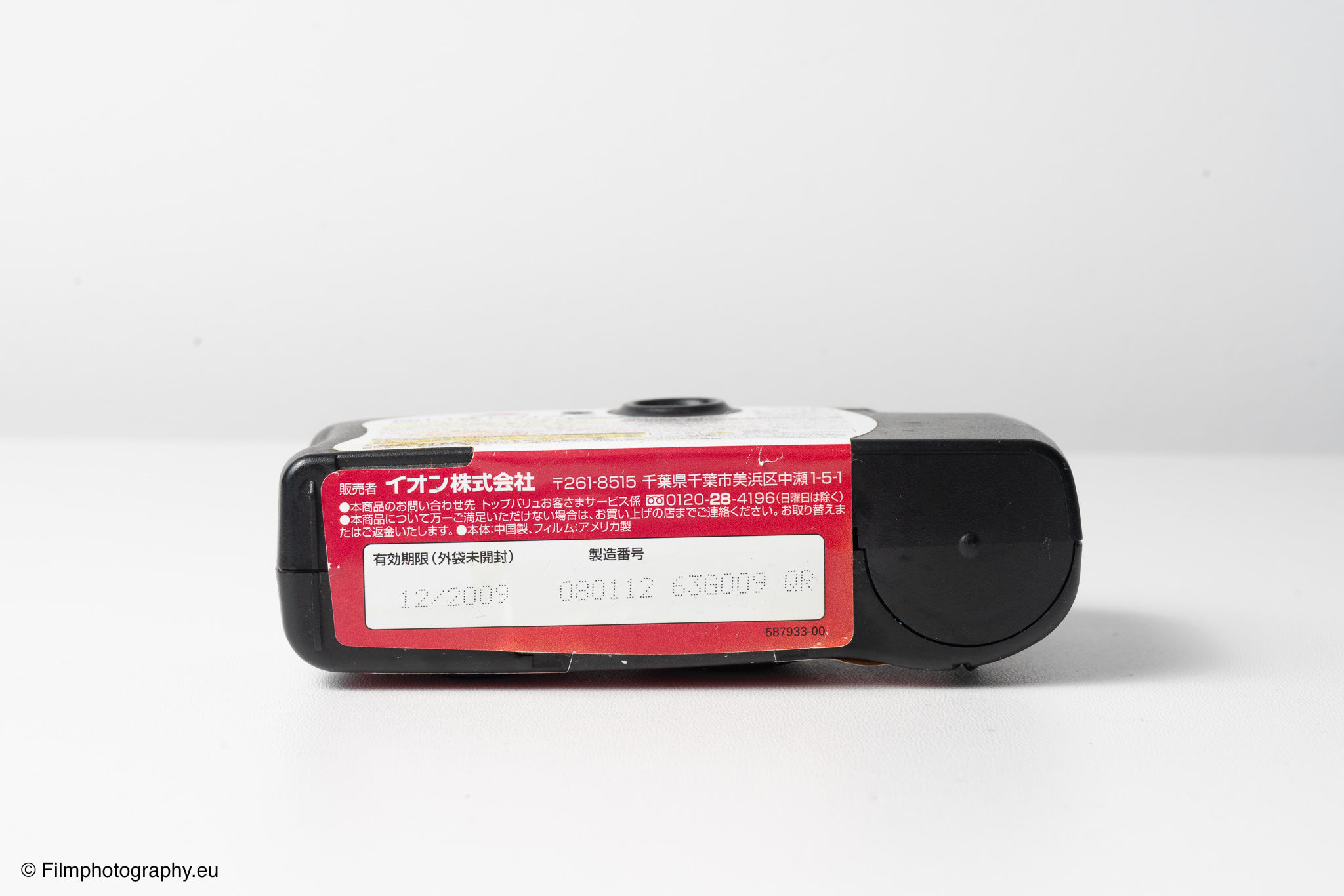
The retail company Aeon uses its house brand Topvalu to offer everyday consumer goods at low prices. Since Aeon does not operate its own production facilities for optical devices, the camera was manufactured through an OEM cooperation. China is indicated as the country of manufacture. The film material comes from the USA.
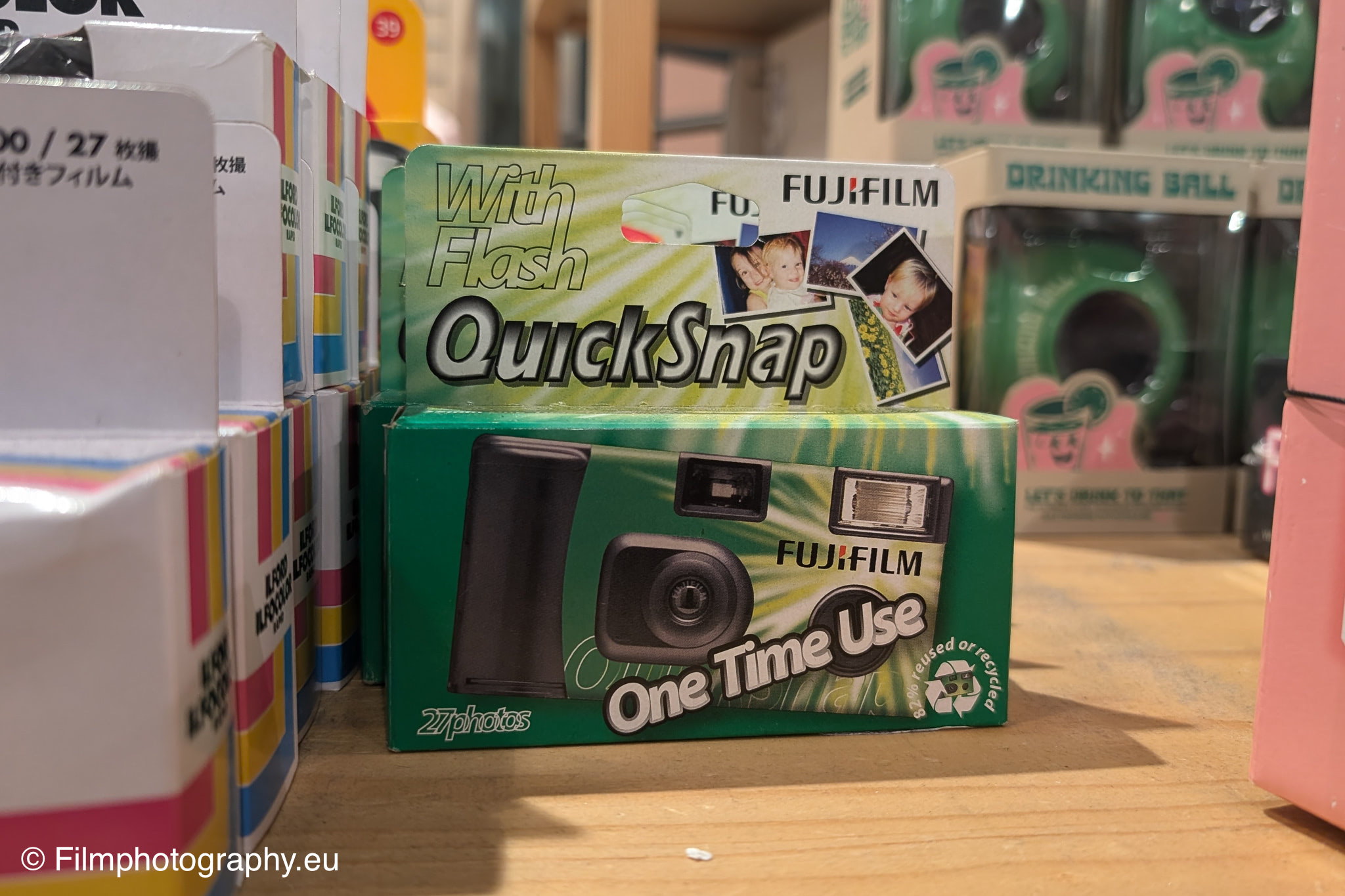
In terms of construction, the body design and internal mechanics resembled in many aspects the models of established photo brands such as Kodak, which is why collectors often assume a technical relationship to models like the Kodak FunSaver.
Film Development
After the film was fully exposed, it remained protected inside the camera body. For film development, customers handed over the entire camera to a photo retailer, an Aeon store, or cooperating convenience stores.
In the lab, the housing was opened to remove the color negative film. Development was carried out using the standardized C41 process. Customers then received the developed prints on photo paper.
Today, historical finds of this camera, whose expiration date has usually passed in the 2000s, are used by analog photography enthusiasts for creative experiments due to the characteristic color shifts and grain.