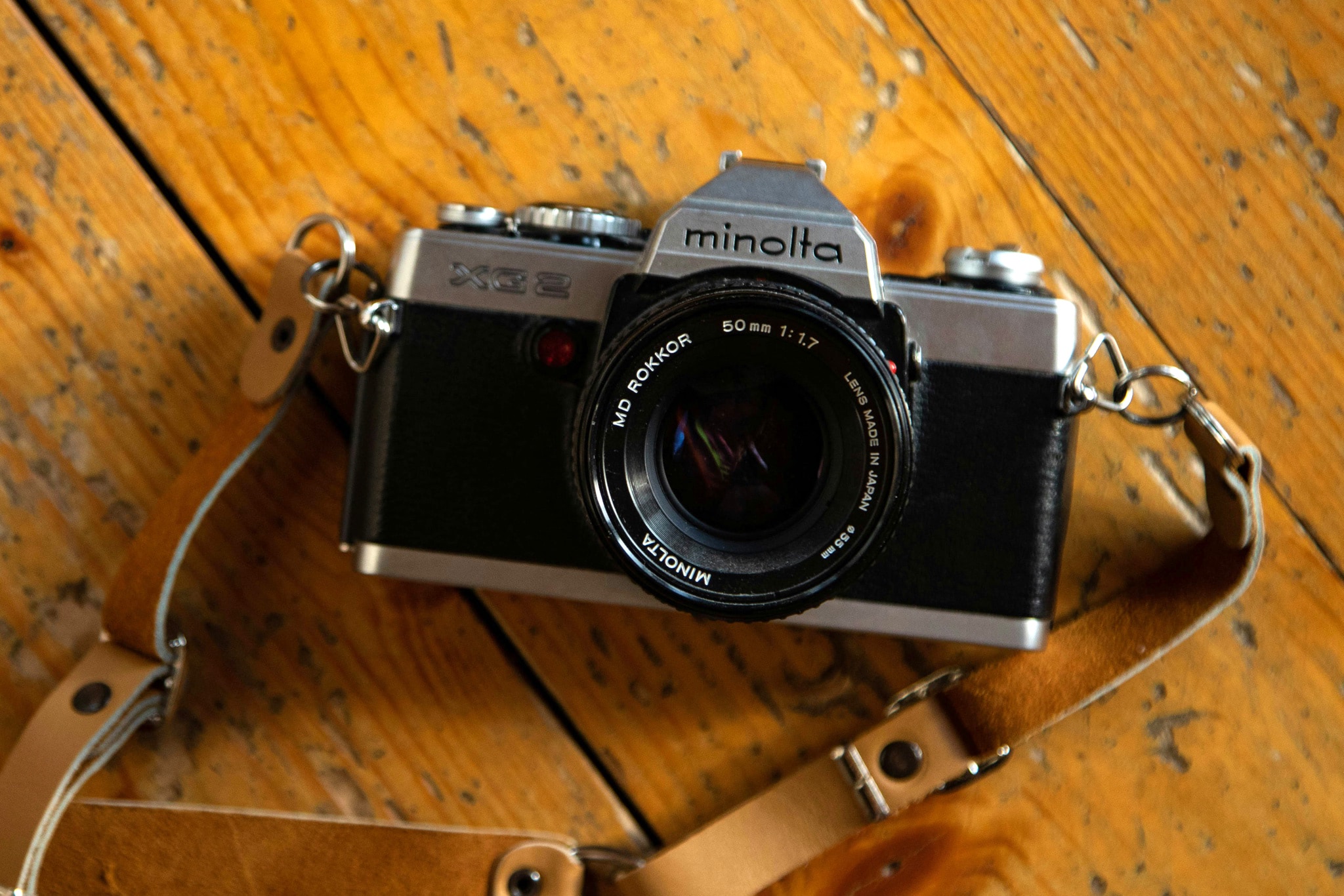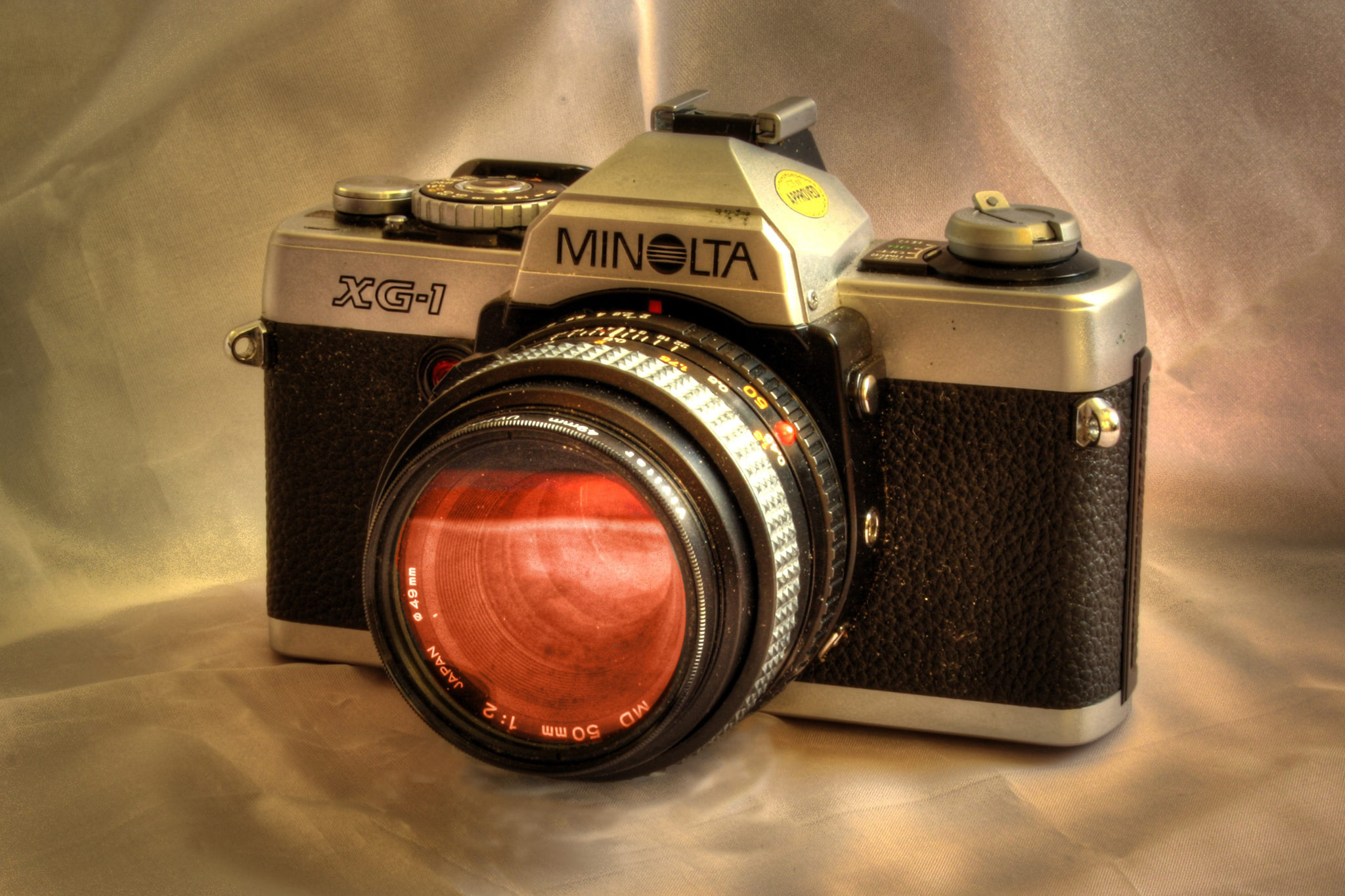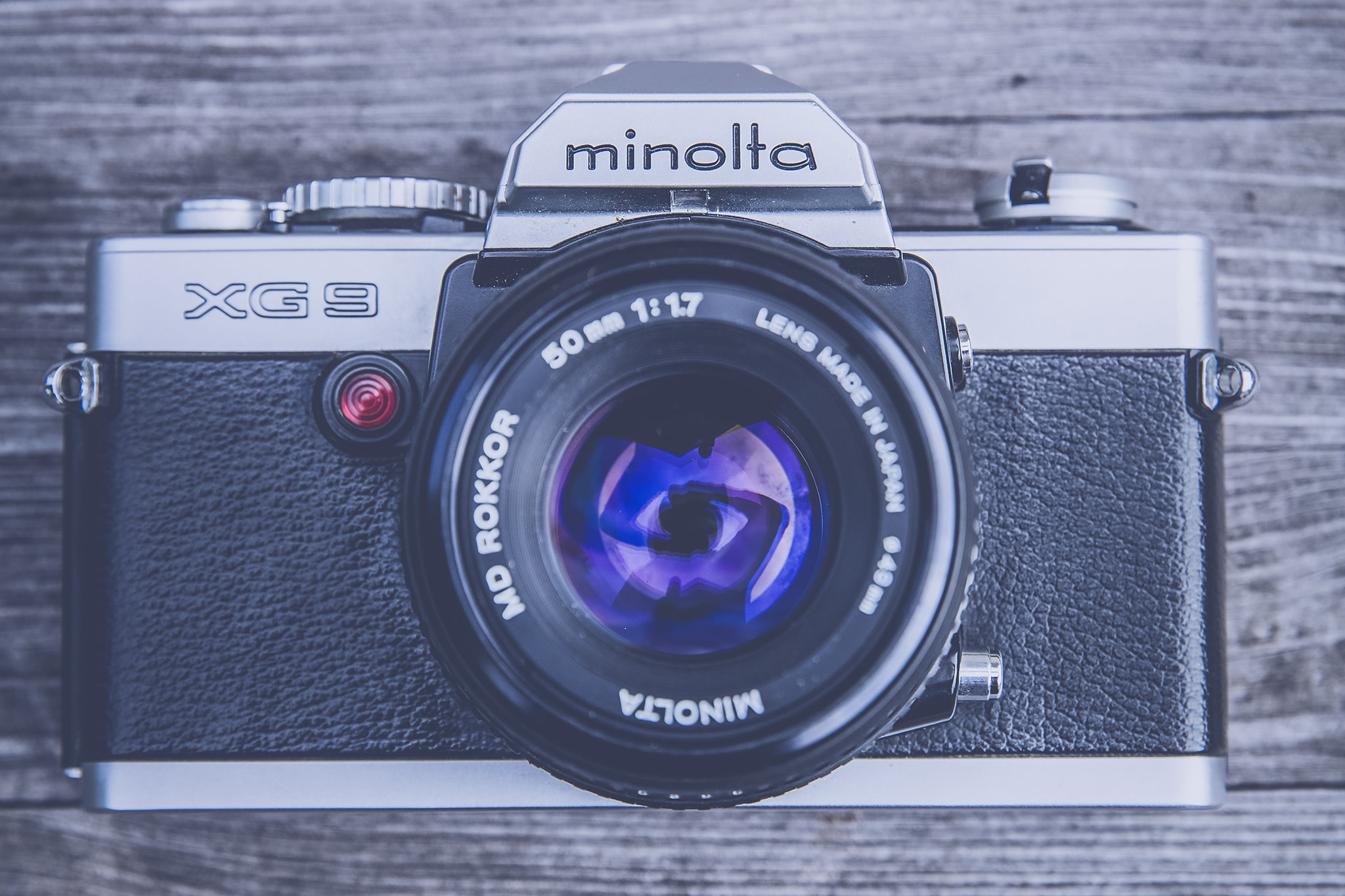
The Minolta XG-S is a 35mm camera from Minolta. It belongs to the group of SLR cameras. The model was assembled in a factory in Japan. It was also sold to photographers there. Outside the Asian country, it was available under the name "Minolta XG 9".
In terms of functions, it is very similar to the Minolta XG-E. There are some innovations in this model. For example, this model displays the set aperture in the viewfinder. A dimmer button has been added and an "Acute Matte" focusing screen replaces the Fresnel screen.
What has remained the same is the ability to interchange the lens. Lenses with the Minolta SR bayonet can be used with the camera. There are a variety of lenses available for this lens mount. The model does not have an autofocus system yet.
However, there is electronics for exposure metering. The camera is equipped with an automatic exposure control, which should make taking pictures easier. You set the aperture and the camera technology selects the shutter speed. There are values between 1/1000 second and 1 second.
In addition, there is a manual mode. In this, the exposure values can be set freely. There is also a bulb mode for long exposures. Here, the camera should be mounted on a tripod to get blur-free pictures.
A flash can also be connected. Either by cable or via a hot shoe on the top of the housing. The fastest shutter speed when using a flash is 1/60 second.
The Minolta XG-S has a built-in light meter. It is designed for films from ISO 25 to ISO 1600. Exposure metering is done through the lens. The aperture and exposure time can be selected by the photographer at will.
A self-timer is available. The lead time is a maximum of ten seconds. The SLR camera can also be triggered via a cable release.
According to the manual, the dimensions of the Minolta XG-S are 13.8 x 8.8 x 5.2 cm. It weighs 500 grams. The camera requires two SR44 batteries (eBay / Amazon*) or similar 1.5V button cells. These batteries are quite easy to obtain.
Films for the Minolta XG-S
The Minolta XG-S uses 35mm film. These films are still manufactured and can be obtained from almost any developing lab. You can theoretically use any film between ISO 25 and ISO 1600, and these values are supported by the exposure meter.
Nice films for black and white or color images are the Kodak T-Max 400* and the Kodak Portra 400*. Both films deliver solid results and convince in test reports. Films from other manufacturers can of course also be used with the camera. There is still quite a large selection here.
Kodak's color film is processed in the C-41 process. The C-41 process is offered by almost every photo lab. For example, you can get your films developed at most drugstores. The development of the black and white film must take place in a real black and white developer. Instructions are available for most films.
The film transport is mechanical. However, a motor is available as an accessory to further transport the film. A counter provides information about the number of photos already taken.