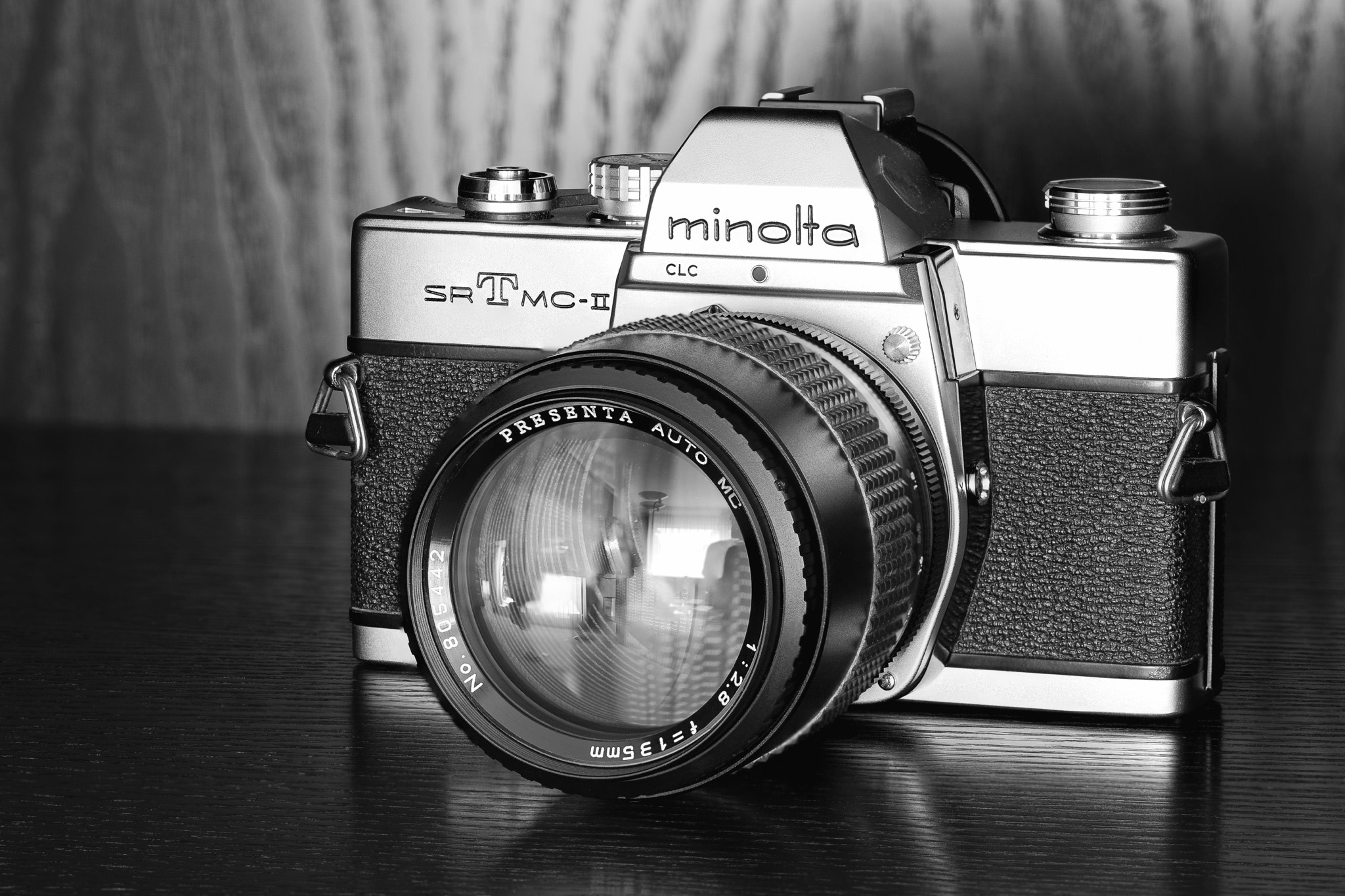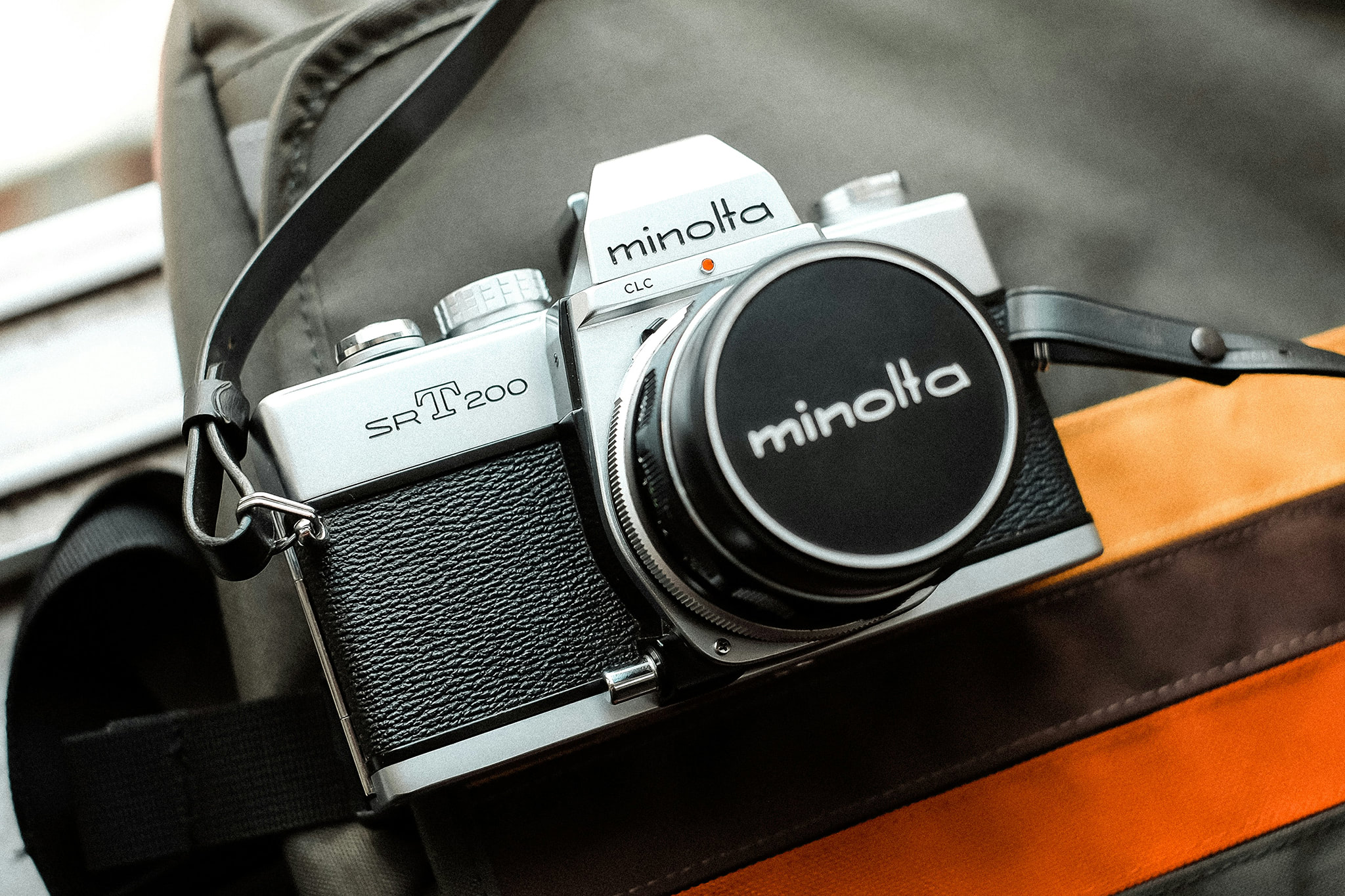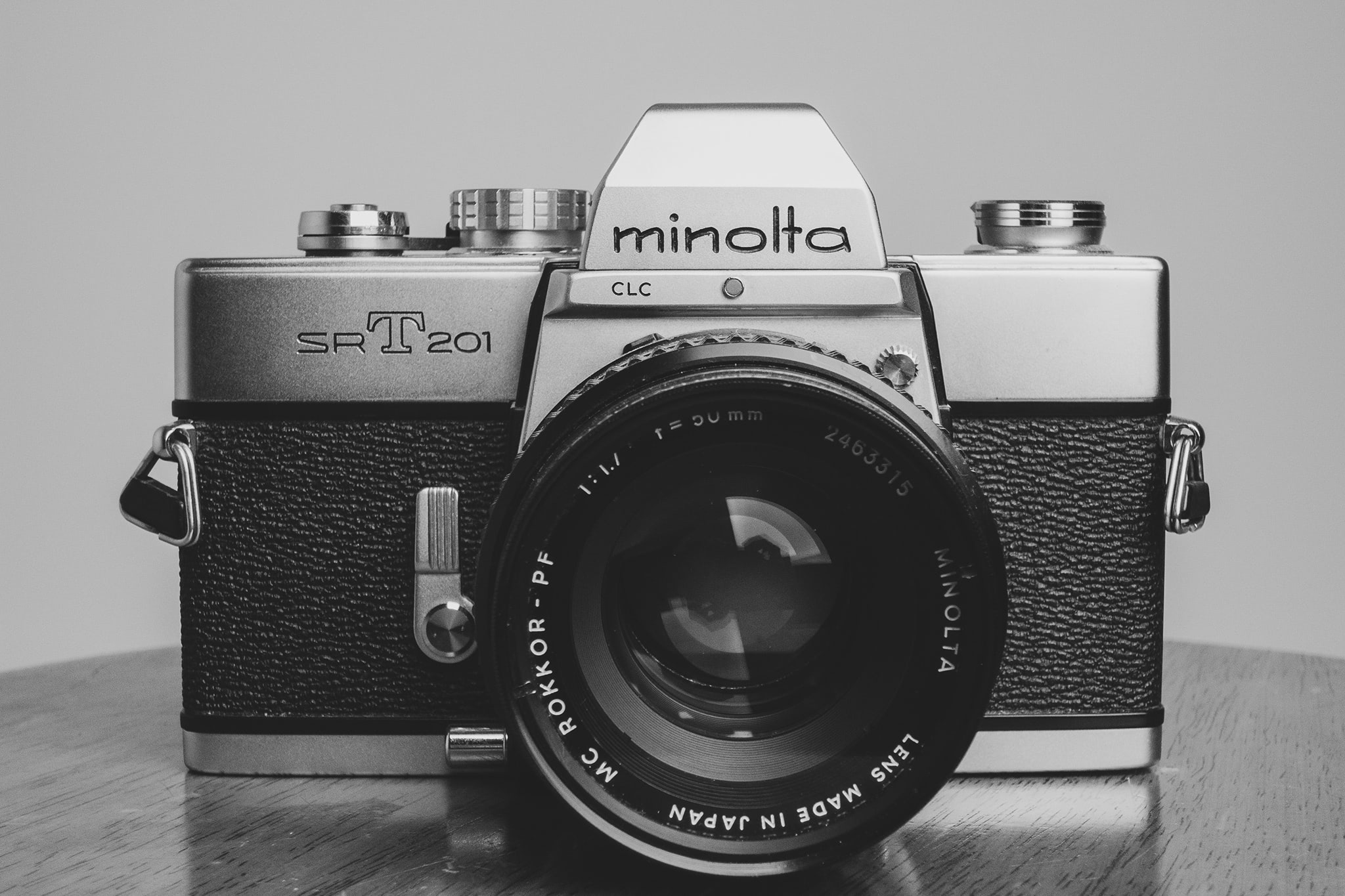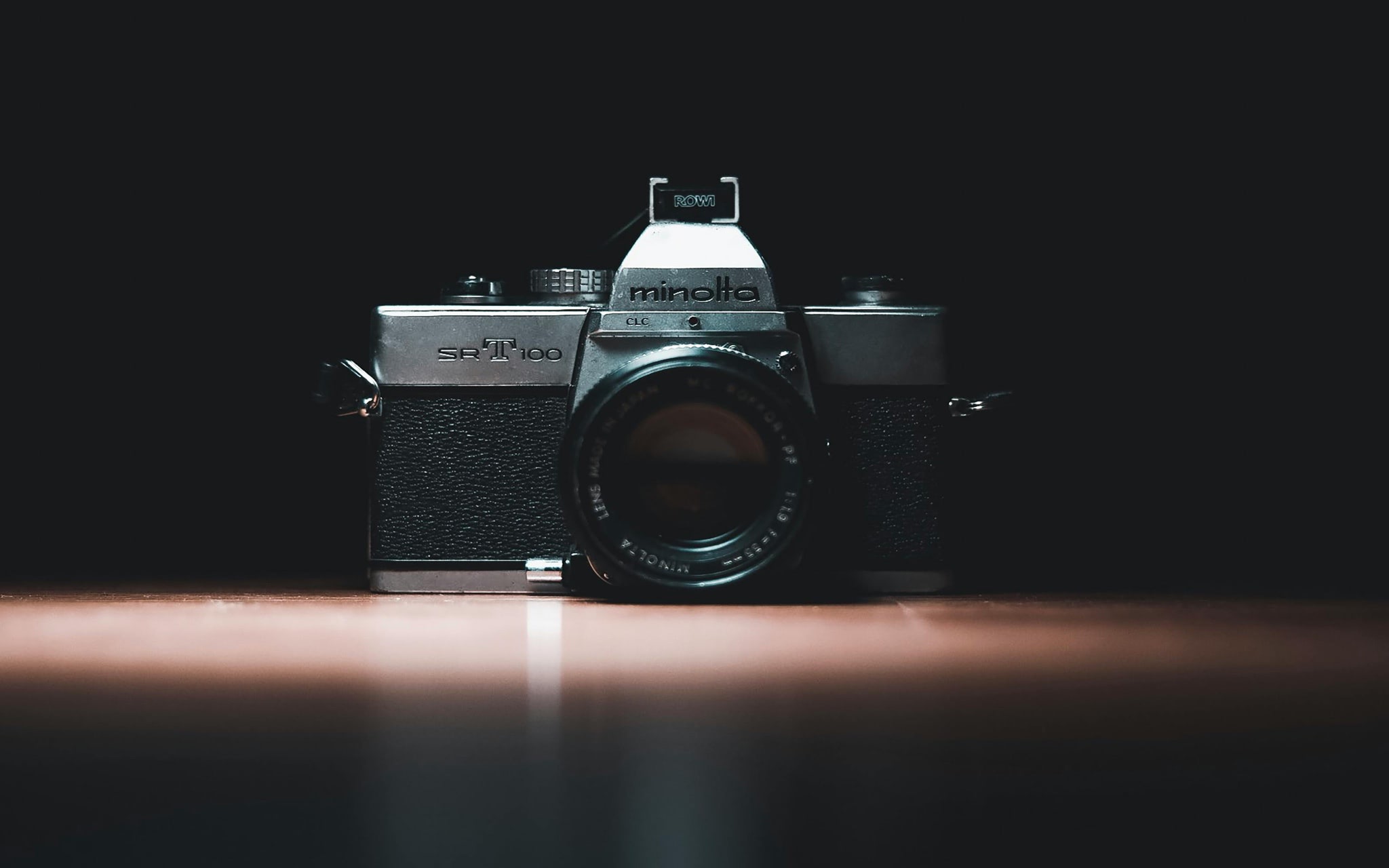
The Minolta SR-T SC-II is an SLR camera. It was built by Minolta from 1977 to 1980. It is the successor of the Minolta SR-T SC. The model was sold exclusively at Sears. A similar model was sold at K-Mart and J.C. Penney under the name "Minolta SR-T MC-II".
The entry-level photo camera came with interchangeable lenses. For this, a Minolta SR bayonet was installed. Often, the camera was sold together with the Minolta MD Rokkor-X 50mm f/1.4. As usual in this time, the focus has to be set manually on the camera. There is no autofocus system.
The 35mm camera has a built-in light meter. It is designed for films with a sensitivity of ISO 6 to ISO 6400. As with most SLR cameras, the exposure is metered through the lens. The exposure time and aperture can be freely selected. There is no automatic exposure control on this model.
The shutter in the camera is designed for times from 1/1000 second to 1 second. If you want to take long exposures, you can use the Bulb setting. For this, you can also mount the camera on a tripod. A cable release can also be connected to the shutter release.
An external flash can be used via the hot shoe or PC flash connector. When using a flash, the exposure time must be 1/60 second or longer.
Measuring 14.5 x 9.5 x 4.75 cm, the Minolta SR-T SC-II weighs 675 grams according to the manual. A 1.35 V mercury battery is responsible for the power supply. The battery is only needed for the light meter. The rest of the works mechanically.
Films for the Minolta SR-T SC-II
The film transport is also mechanical. There is a quick release lever for this. This must be operated after each exposure. At this step, the frame counter also jumps forward. The negatives of the Minolta SR-T SC-II have a size of 24 mm x 36 mm. On a normal film (135-36) about 36 pictures fit.
The camera exposes 35 mm format films. 35 mm films are still easy to get today and are developed by most photo labs. A 35mm film for color photography is the Kodak Portra 400*. A possible black and white film is the Ilford HP5*. Both films are well suited for everyday use and can convince is test reports. Of course, there is a wide range of additional suitable films for this camera.
The development of the color film is done in the C-41 process. This process is offered by most professional photo labs. For example, you can get your films developed at most drugstores. The development of the black and white film must take place in a real black and white developer. Instructions are available for most films.