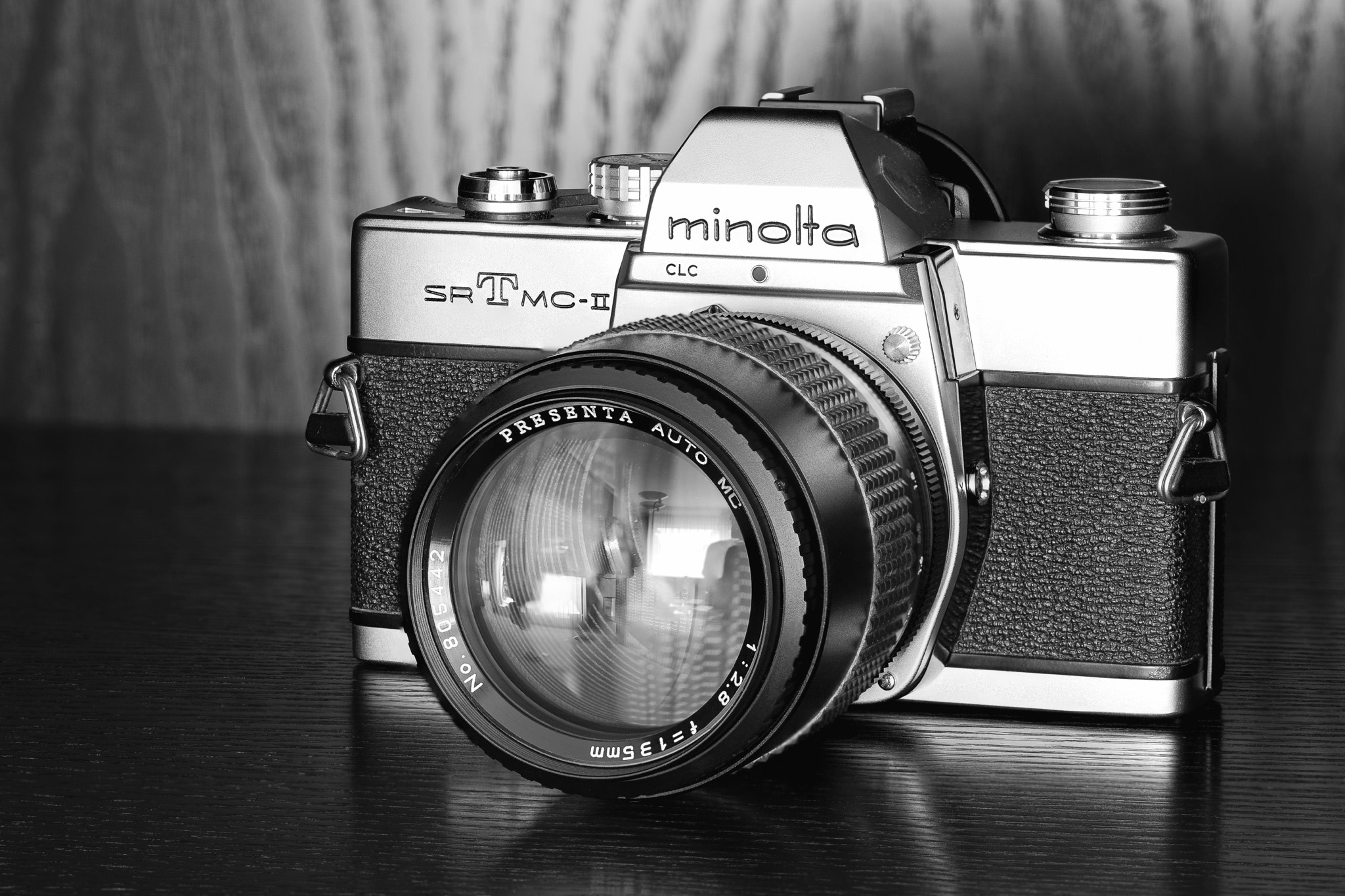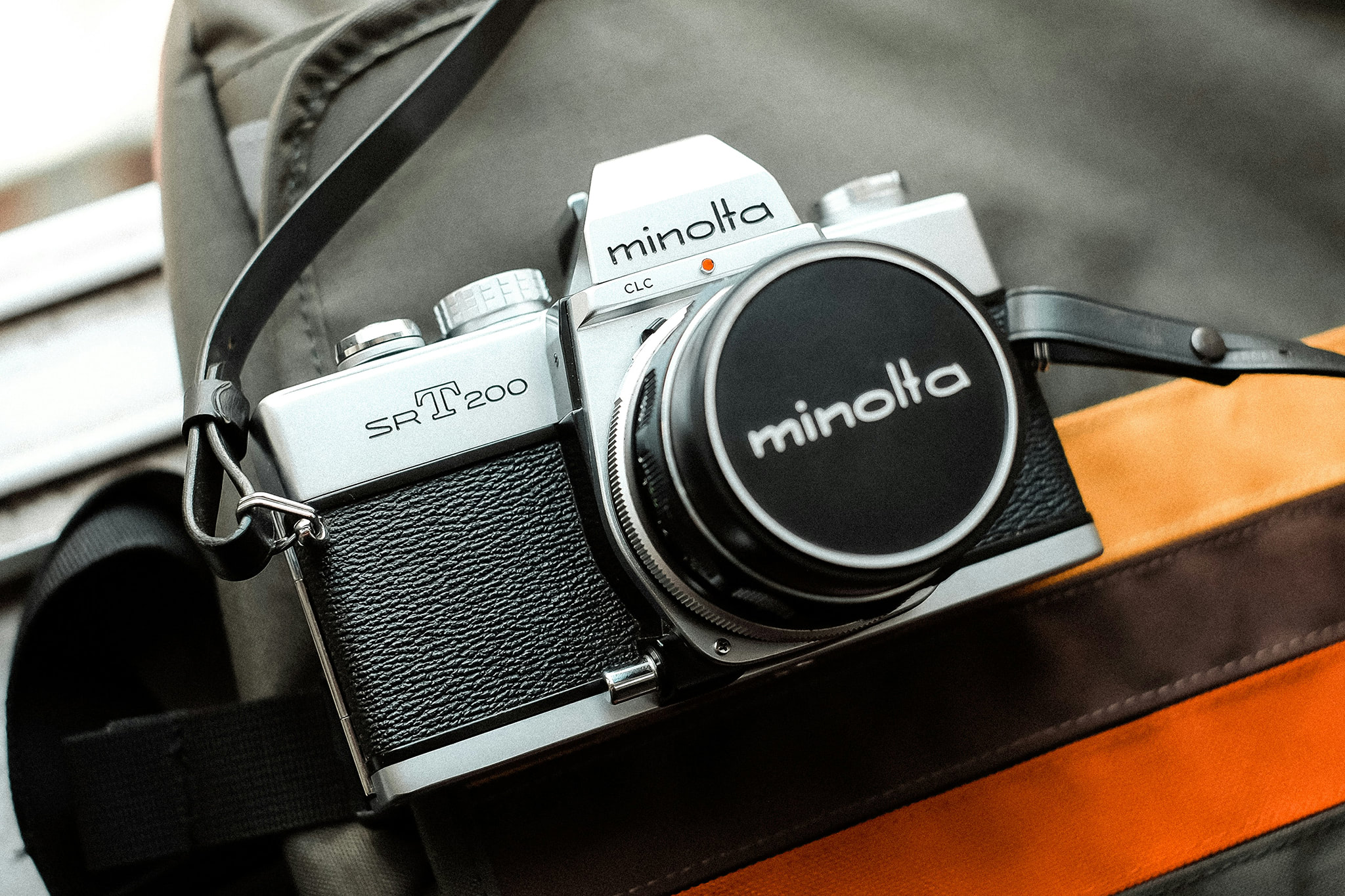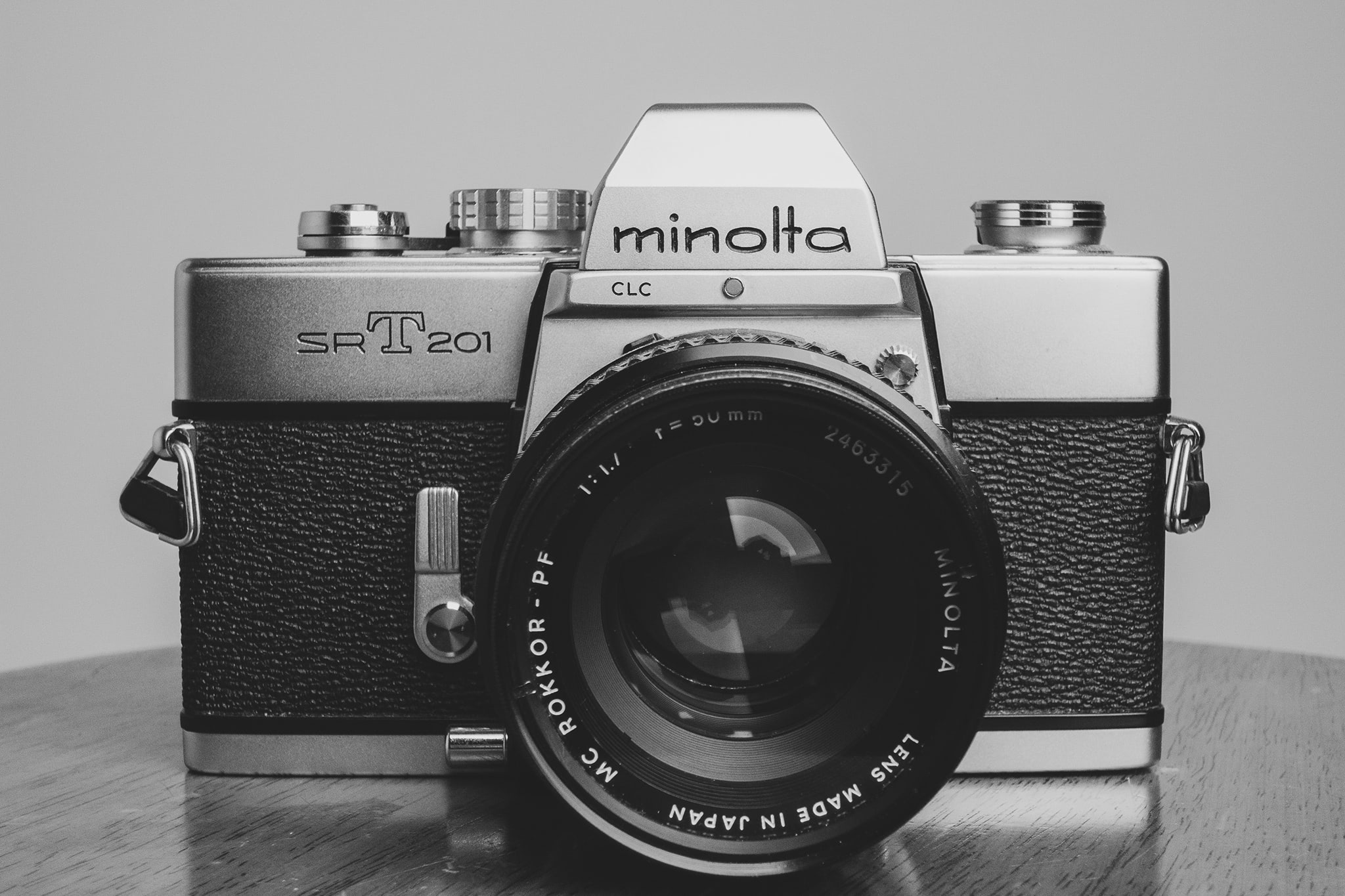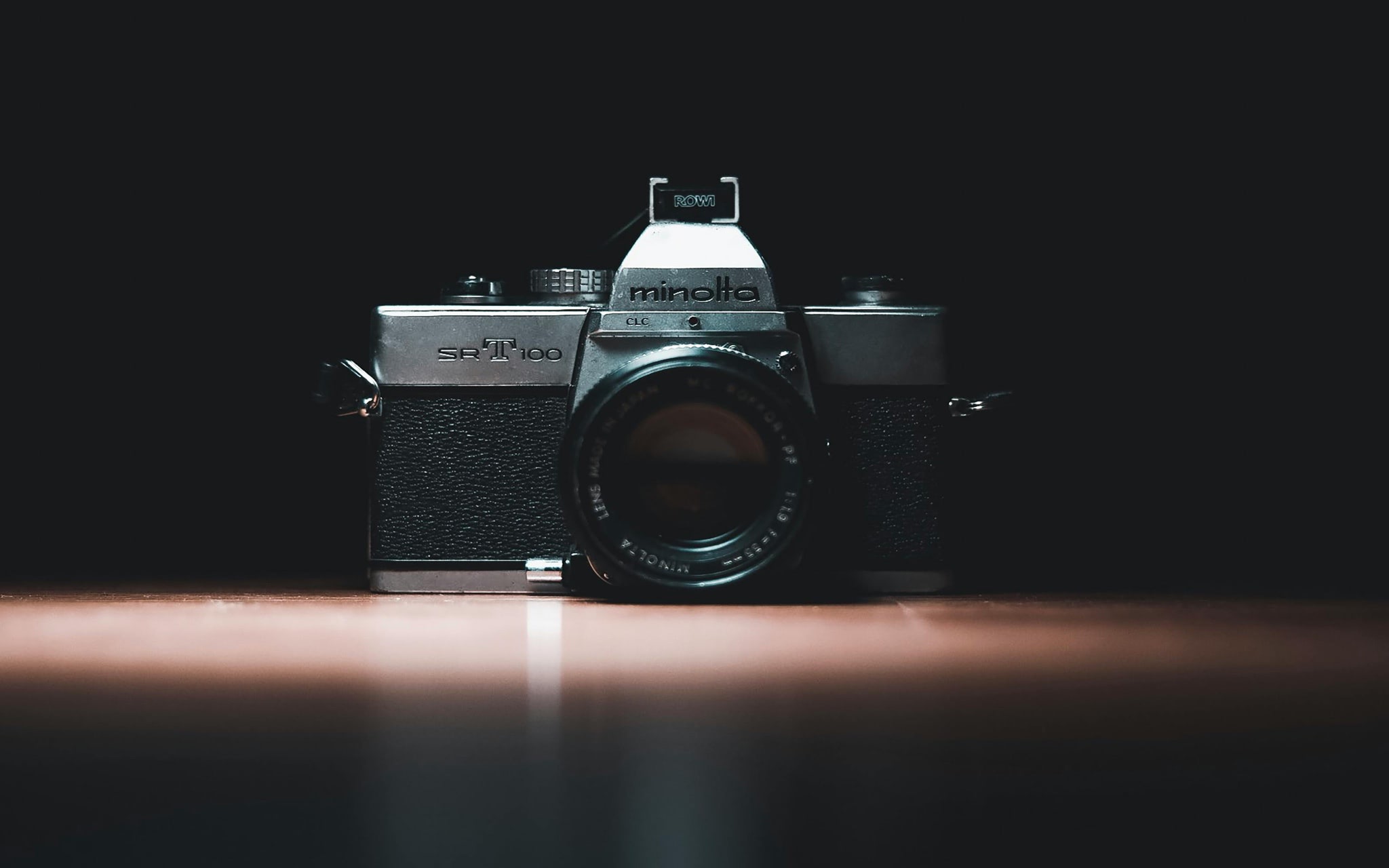
The Minolta SR-T 200 II is an SLR camera for the 35mm format. It was manufactured in a factory in Japan from 1977 to 1981. The model was positioned by Minolta in the USA as an entry-level camera. Outside of North America and Japan, the model was also offered as the SR-T 100X. This model should not be confused with the SR-T 200.
The lenses of the camera are interchangeable. For this purpose, a Minolta SR bayonet was installed. The camera was often offered with the Minolta MC Rokkor 50mm f/2 lens at that time. An autofocus system is not present on this analog camera.
The 35mm camera is equipped with a built-in light meter. It is designed for films with a sensitivity of ISO 6 to ISO 6400. The exposure is measured through the lens. The exposure time and the aperture can be freely selected. There is no automatic exposure control that automatically selects the two settings.
The 35 mm photo camera has a shutter with Bulb mode. In the Bulb setting, the shutter remains open as long as the photographer holds the shutter button down. Normal shutter speeds range from 1/1000 second to 1 second. Via hot shoe, an external flash can be used with the 35mm camera.
There is a thread for a tripod on the bottom of the camera. A cable release can then also be connected for long exposures. According to the instruction manual, the dimensions of the Minolta SR-T 200 II are 14.5 x 9.5 x 4.75 cm. It weighs 675 grams. A 1.35 V mercury battery is responsible for the power supply. The batteries are only needed for the light meter. Otherwise, the camera works completely mechanically.
Films for the Minolta SR-T 200 II
Also mechanical is the film transport of the camera. The Minolta SR-T 200 II uses 35mm film. About 36 frames fit on a roll of film. The number of frames is displayed on the top. The negatives have a size of 24 mm x 36 mm.
Possible films for the Minolta SR-T 200 II that can still be purchased today are the Kodak Portra 400* for color images and the Kodak TRI-X 400* for black and white images. Both films deliver convincing results and do well in test reports. The color film is developed using the C-41 process. This development process is offered by most laboratories.
A number of other manufacturers also produce new films for this format. Other manufacturers include Ilford, Rollei, Adox and also Fujifilm.