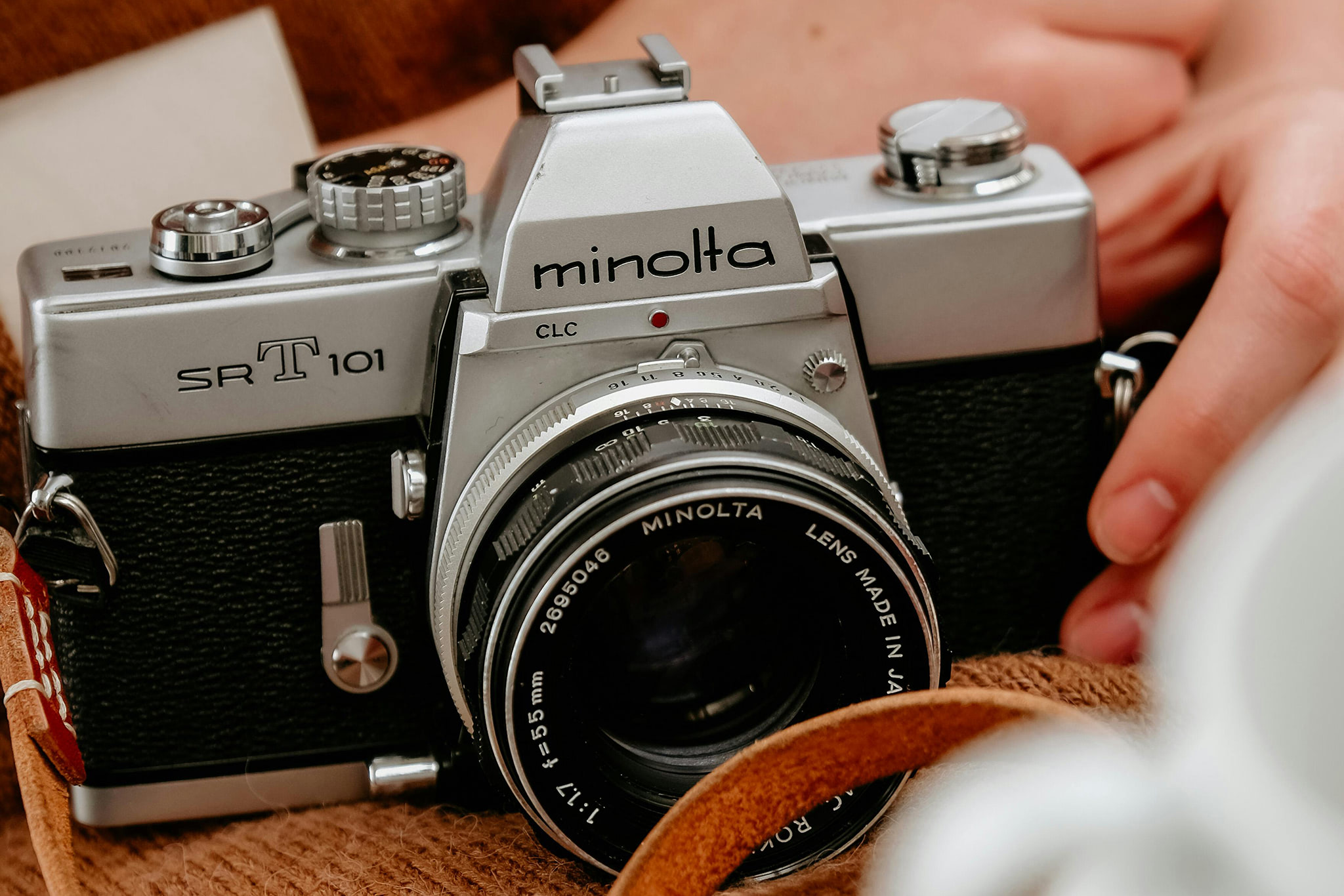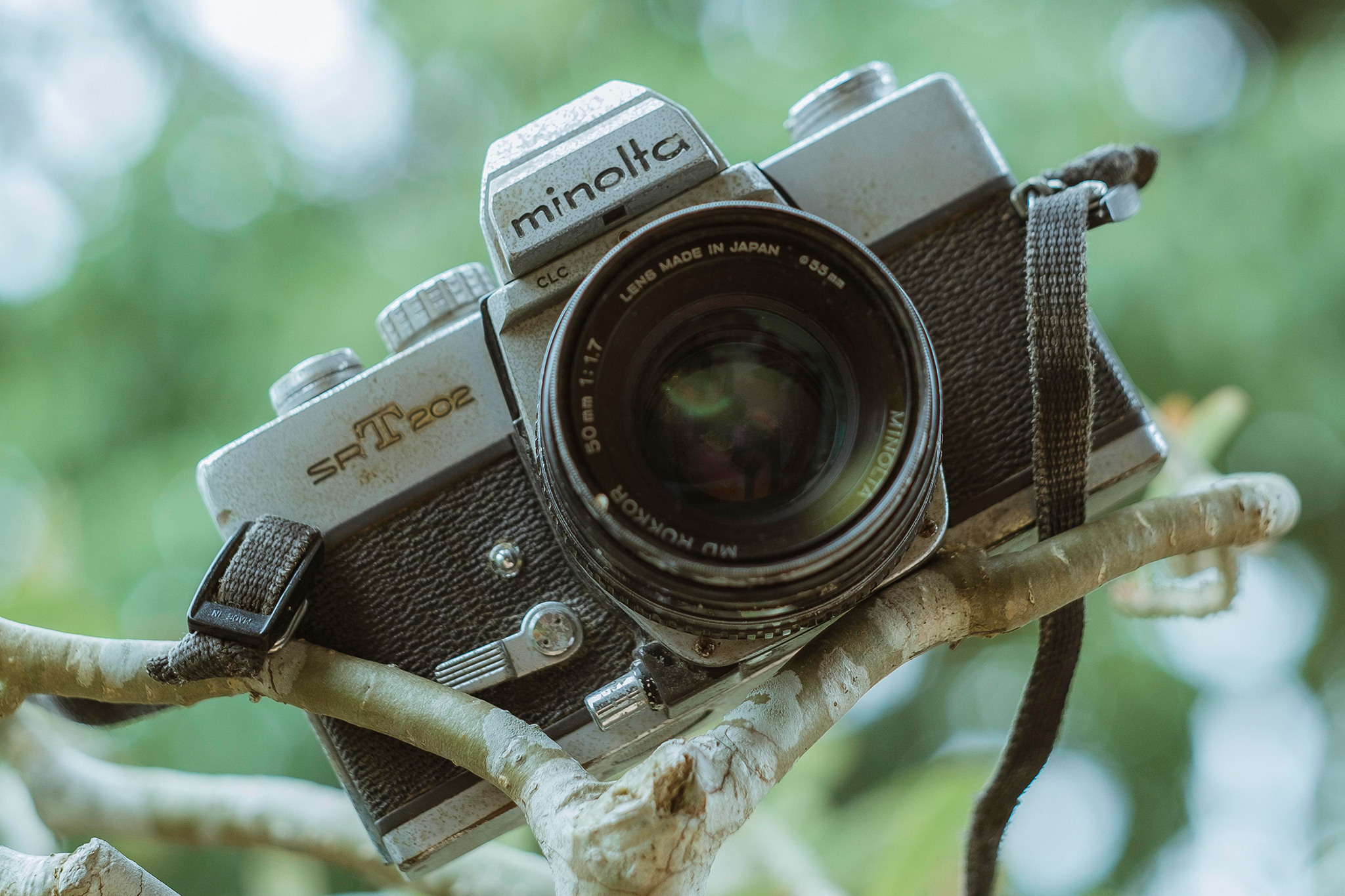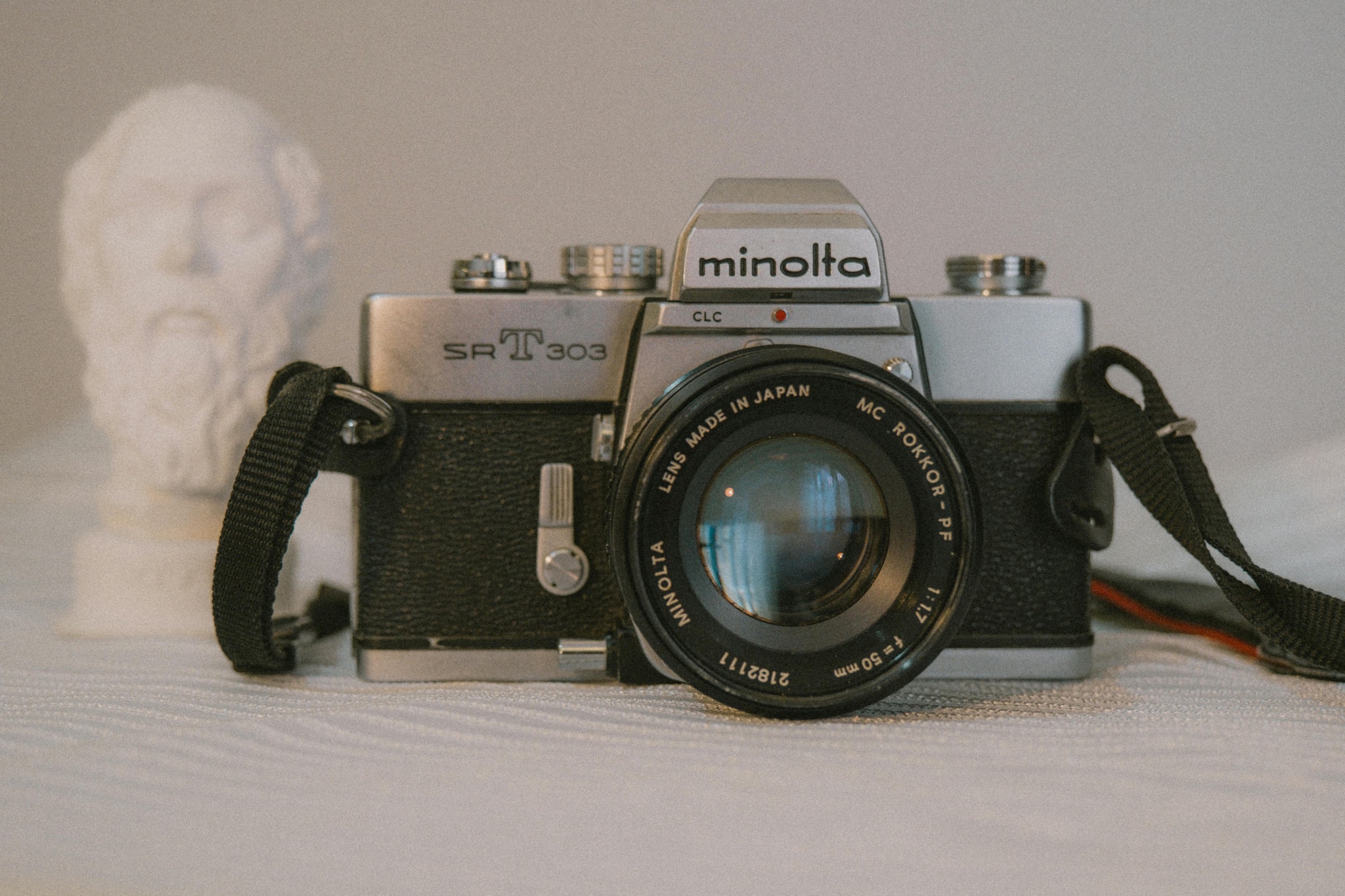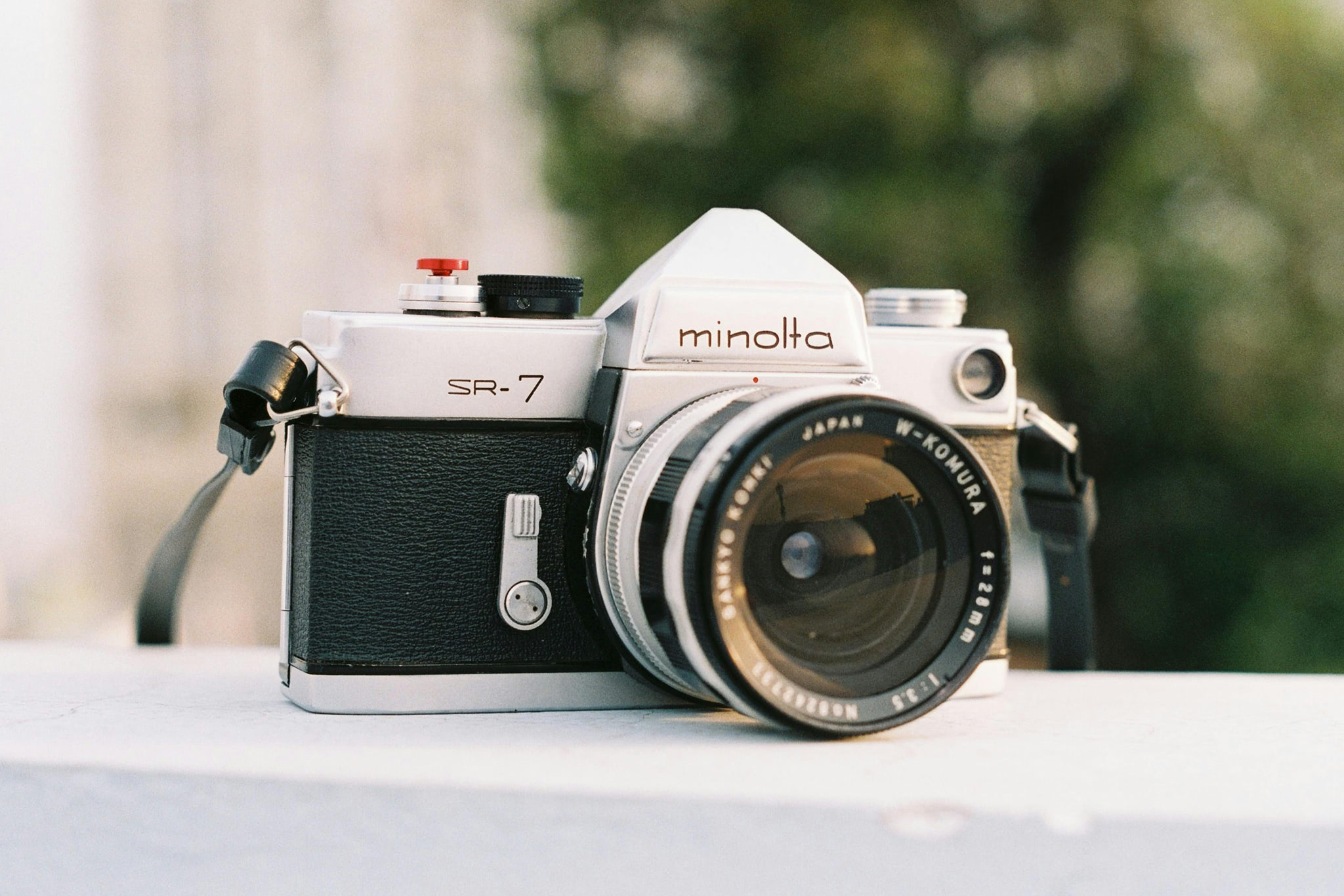
The Minolta SR-7 is an SLR camera. It was built by Minolta from 1962 to 1966. It is the predecessor of the Minolta SR-T 101 and was the successor of the Minolta SR-3. The model was produced in Japan.
The lens of the camera is interchangeable. For this purpose, a Minolta SR bayonet was used. In many cases, the camera comes with the Minolta Auto Rokkor-PF 1:1.4 f=58mm. The Minolta SR-7 has no autofocus. Therefore, you have to focus by hand.
The SR-7 was the first SLR camera from the Japanese company with a built-in light meter. It can be used with films from ISO 6 to ISO 6400. On the top of the camera is the exposure meter display. Depending on the set shutter speed, the camera technology recommends a suitable aperture. This value can then be set by the user. The exposure settings are not set automatically.
The available exposure times of the cloth shutter are 1/1000 second to 1 second. There is a bulb mode for long exposures. For long exposures, selfies or group photos, you can mount the camera on a tripod. A connection for a cable release and a self-timer are also available. An external flash can be connected to the PC flash socket.
The camera requires a PX625 mercury battery (eBay / Amazon*). These batteries are no longer sold in Europe. As an alternative, you can reach for the Weincell batteries (eBay / Amazon*).
Films for the Minolta SR-7
According to the instruction manual, the Minolta SR-7 is designed for 35mm film. The film is manually advanced after each frame. A motor for film transport did not exist at that time. The number of frames already taken is shown by a counter.
For this film format, there is still a good selection of material for color and black-and-white images. Possible films for the Japanese SLR are the Fujifilm Superia 400* for color images and the Ilford HP5* for stylish black and white images. Both photo films can convince in professional tests and guarantee reliable results in everyday life and when traveling. Of course, there is a wide range of additionally suitable films for this camera. The film only has to be within the range of possible ISO values of the light meter.